


.. .. dere has been lotsa horror stories .. .. assaults robberies even murders  .. .. crime is thru da roof even in cities dat used ta be safe .. ..
.. .. ya gots any oder ideas? .. ..
.. .. plus all uv dis is reported ta da IRS .. ..
gud luck 
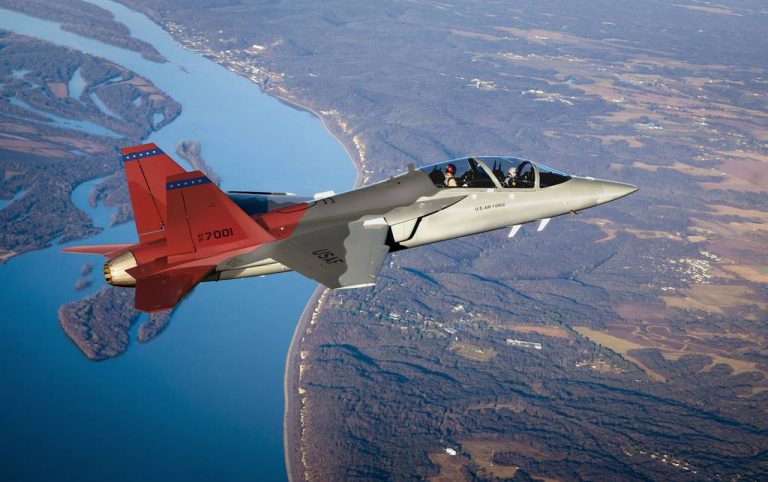
WASHINGTON — Problems with the T-7A Red Hawk, including a potentially dangerous escape system and ejection seat, have caused the U.S. Air Force to push back a production decision and deliveries of the service’s next jet trainer aircraft.
The Air Force said in an email to Defense News that it now expects to make a decision on producing the T-7A in February 2025, and for the aircraft’s manufacturer Boeing to start delivering them in December that year. The schedule shift means the aircraft will now arrive at least two years later than the service originally intended.
It is the latest slide in the T-7′s schedule, after a December acknowledgement that problems with the aircraft’s design and testing caused the plane’s production to slip into 2024.
The delay was first reported by Air and Space Forces Magazine.
A Boeing spokesperson confirmed the re-baselining of the T-7′s schedule in an email to Defense News. “Our goal remains to get this new critical training capability in the hands of pilots,” the company said.
The Air Force plans to buy 351 T-7s to replace the T-38 Talon jet trainer, which the Air Force has flown since the early 1960s and is rapidly showing its age. The Air Force in 2018 awarded Boeing a $9.2 billion contract to build the new trainer.
Boeing touted the T-7′s digital design process and advanced manufacturing techniques as a potential model for designing and building aircraft faster and with fewer risks and defects. But problems, including concerns over the aircraft’s ejection seats and other emergency egress systems, have slowed progress.
The T-7 was designed to accommodate pilots with a wider range of body types and heights, as well as both male and female pilots. For years, Air Force aircraft and their cockpits were designed with fitting only men in mind, and women frequently found it difficult to receive clearance to fly.
But tests showed the T-7′s emergency escape system could be dangerous for some pilots. The Air Force said last December that 2021 tests found some ejecting pilots could be at a high risk of concussions, unsafe acceleration when parachutes open, or losing their visor at high speeds.
The escape system, as well as glitches with the T-7′s flight control software, led to the schedule slip announced last year. Boeing said in December that a fix to the flight control software problems was expected to head into testing in early 2023.
The Air Force said this month that it and Boeing began to re-baseline the T-7′s schedule in June 2022 to take into account delays caused by problems, including testing and hardware qualification challenges, aerodynamic instabilities such as a now-resolved “wing rock” problem, critical parts shortages caused in part by the pandemic, the escape system problems, and Boeing’s “inability to rapidly correct deficiencies.”
Wing rock refers to a problem in which the T-7′s wings could have dangerously rocked back and forth along the roll axis.
The risk assessment led the T-7 program office to recommend the Milestone C decision change to February 2025, which means the service now expects the first production aircraft to be delivered in December 2025.
Because a decision on production isn’t expected to occur until 2025, the Air Force said it opted to strike procurement funding for the program’s low-rate initial production in the fiscal 2024 budget request. The service originally expected to spend $322 million on procurement of the T-7 next year, according to documents accompanying the FY23 budget request.
The Air Force said it and Boeing are now confident the T-7′s escape system will be safe and effective, after making improvements to the system and testing. Minor adjustments to the seat have increased safety and reduced the risk to pilots, the Air Force said. The service said it and Boeing will also keep studying the ejection seat’s performance through the rest of this year to find other ways to improve the technology.
The Air Force said Boeing’s first two production-relevant T-7s are undergoing test flights at Boeing’s facility in St. Louis, Missouri.
Boeing is finishing construction of five engineering and manufacturing development T-7s, the Air Force said.
Boeing said those aircraft are expected to start their flight tests this summer in St. Louis. The Air Force said the first three are then scheduled to move to Edwards Air Force Base in California, where they will undergo flight testing in September.
Stephen Losey is the air warfare reporter for Defense News. He previously covered leadership and personnel issues at Air Force Times, and the Pentagon, special operations and air warfare at Military.com. He has traveled to the Middle East to cover U.S. Air Force operations.
In a survival situation, personal hygiene may not be a top priority initially, but eventually, it becomes a luxury. According to survivors of war or disasters, even small amounts of deodorant, shampoo, or toothpaste were more valuable than food.
While these items may not be readily available post-disaster, it’s wise to create and store your own emergency supply for personal use or bartering. The homemade products listed in this article are chemical-free and beneficial for your health, reducing your dependence on commercial substances.
Coconut oil is a crucial ingredient in several of these DIY products, as it possesses antibacterial and antimicrobial properties, making it an excellent base for personal hygiene items. To obtain the best benefits, use organic, unrefined oil, or expeller-pressed oil if you don’t want the coconut smell. Despite its cost, the health advantages of coconut oil are remarkable.
In a survival scenario, personal hygiene may not be the first thing that comes to mind. However, maintaining good personal hygiene is crucial for several reasons.
Firstly, good personal hygiene helps to prevent the spread of diseases. In a survival situation, access to medical facilities may be limited, making it even more critical to prevent illnesses from occurring in the first place. Basic actions such as washing hands frequently, keeping wounds clean, and brushing teeth regularly can help to prevent the spread of germs and bacteria.
Secondly, good personal hygiene can help to boost morale and mental health. When you’re in a stressful and challenging situation, it’s essential to take care of your mental health. Maintaining good personal hygiene can help to boost your self-confidence, reduce stress levels, and improve your overall mood.
Thirdly, maintaining good personal hygiene can help to prevent insect bites and infections. Insects such as mosquitoes, ticks, and fleas can carry diseases, and maintaining good personal hygiene can help to reduce the risk of being bitten. Keeping your skin clean and wearing clean clothing can also help to prevent infections from occurring.
Fourthly, good personal hygiene can help to conserve water. In a survival situation, water may be scarce, and every drop counts. By practicing good personal hygiene, such as taking quick showers or using a damp cloth to clean yourself, you can conserve water and make it last longer.
Lastly, good personal hygiene can also increase your chances of survival by making you less attractive to predators. Animals are attracted to the smell of sweat, urine, and feces, and maintaining good personal hygiene can help to reduce these odors and make you less appealing to predators.
To maintain good personal hygiene during a survival scenario, there are several essential steps that you can take. Firstly, keep yourself clean by washing your hands, face, and body regularly. Secondly, maintain good dental hygiene by brushing your teeth and flossing regularly. Thirdly, keep your clothes and bedding clean by washing them frequently. Fourthly, keep wounds clean and covered to prevent infections. Lastly, avoid sharing personal hygiene items with others, such as towels or razors, to prevent the spread of germs.
Maintaining good personal hygiene is essential during a survival scenario. It can help to prevent the spread of diseases, boost morale and mental health, prevent insect bites and infections, conserve water, and increase your chances of survival. By taking the necessary steps to maintain good personal hygiene, you can help to keep yourself healthy, safe, and increase your chances of survival in challenging situations.
During a survival scenario where you may not have access to commercial personal care products. In such situations, it is essential to know how to make your own personal hygiene products to ensure you maintain proper hygiene to avoid health issues. Now let’s see what personal hygiene items you can make at home.
One of the most important personal care products is deodorant. Although it may seem like a luxury, it is essential for maintaining good hygiene, and making your own deodorant is easy. A homemade deodorant recipe using coconut oil is highly effective in controlling underarm odor. Coconut oil has antimicrobial properties that help fight odor-causing bacteria. To make your deodorant, combine ¼ cup arrowroot powder or cornstarch, ¼ cup baking soda, and approximately 7 tablespoons of coconut oil. Mix the ingredients until a nice thick paste forms, similar to store-bought deodorant. Store it in a jar or other container, and apply a teaspoon or two under each armpit.
Another personal hygiene product that is easy to make is a body lotion bar. This moisturizing bar is similar to soap but leaves a nice layer of moisturizer on your skin when applied. The recipe calls for 1/3 cup of coconut oil, 1/3 cup of shea, mango, cocoa, kokum, or illipe butter, or any combination of these, 1/3 cup of beeswax, 1 teaspoon of vitamin e oil, and a few drops of essential oil. Heat the ingredients in a glass jar placed in a pan of warm water, pour it into molds, and allow it to cool before removing and storing.
 An antiseptic ointment is also important to have in your survival kit. This ointment has antibacterial, antifungal, antibiotic, antiviral, and analgesic properties. The recipe calls for 2 ounces of beeswax, 1 cup of coconut or almond oil, ½ teaspoon of tea tree oil, ½ teaspoon of vitamin E oil, 1 ounce of jojoba oil, 24 drops of lavender essential oil, and 12 drops of lemon essential oil. Combine all the ingredients, warm slightly to liquefy the mixture so the oils meld, and store it in an airtight tin or jar. This ointment is effective in treating cuts, skin irritations, or any other condition that requires a salve.
A soothing sunscreen lip balm is also essential in a survival scenario. Exposure to the sun can cause chapped lips, so it is necessary to have a balm that will protect your lips. To make your own lip balm, combine 3 tablespoons of coconut oil, 3 drops of tea tree oil, 3 drops of lemon oil, and 1 tablespoon of shea butter. Store it in an airtight tin in a cool, dry place and apply as often as necessary.
Homemade toothpaste is easy to make and highly effective in maintaining oral hygiene. Salt is one of the best disinfectants that can be used to remove food particles and buildup from your teeth. To make toothpaste, combine 1/3 cup baking soda, 1 teaspoon unrefined sea salt, 1 teaspoon peppermint extract, and about 2 tablespoons of water. Mix the ingredients to create the consistency of toothpaste, store it in an airtight tin or jar, and use it like regular toothpaste.
Personal hygiene is crucial in a survival scenario, and knowing how to make your own personal care products is essential to maintain good hygiene. The recipes mentioned above are easy to make, chemical-free, and highly effective. Having these products in your emergency supply not only helps maintain personal hygiene but also eliminates the need to depend on commercial substances.
Recommended resources for preppers and homesteaders:
How to make green cleaners for your household
Ingenious DIY projects for a Self-Sufficient Homestead
How to clean your home with borax
A DIY Project to Generate Clean Water Anywhere

I love conspiracy theory. It is fun to ponder what if’s. I stumbled across this today. I’m going to have to get the book. Interesting points but I think the main drawback would be Hitlers narcissistic and megalomaniac nature. I can’t see him living out his days in anonymity in the Argentine mountains.
In 2009, Corsi pointed out, Nicholas Bellatoni, the Connecticut state archaeologist, was allowed by the Russian Federation State Archive in Moscow to examine skull fragments the Russians have claimed for decades are proof Hitler committed suicide.
Bellatoni’s startling findings prompted Corsi to investigate further.
“What caused me to question Hitler’s suicide was Bellatoni’s DNA analysis that proved conclusively the skull fragments belonged not to Hitler, but to a 40-year-old woman unrelated to Eva Braun,” Corsi said.
Examining declassified FBI and U.S. military intelligence files, Corsi makes a compelling case that U.S. investigators suspected from the beginning Hitler had escaped. For political purposes, the evidence indicates, they were willing to go along with the cover story that in the final days of World War II, Hitler married his mistress, Eva Braun, and the two took their lives in a joint-suicide ritual just before the Soviet army entered Berlin.
But the truth is, no one actually saw Hitler commit suicide. There are no photographs documenting a joint suicide of Hitler and Eva Braun, and the bodies of the two were never recovered or preserved for positive identification.
In “Hunting Hitler,” Corsi posits Hitler made his way to Argentina with the help of U.S. intelligence agents that had been secretly working with the Nazis since 1943. Allen Dulles, then an agent of the Office of Strategic Services, or OSS, the predecessor agency to the CIA, was communicating secretly with top Nazis from his office in Bern, Switzerland, Corsi said.
Corsi brings to light many troubling questions, including:
Hidden away in the National Archives, Corsi found a U.S. naval intelligence report written July 18, 1945, by the Naval Attaché in Buenos Aires who notified Washington there was reason to believe U-530 had landed Adolf Hitler and Eva Braun in the south of Argentina before the submarine journeyed on to surrender at Mar del Plata.
Corsi had newspaper reports translated of Hitler and Braun being welcomed by wealthy Nazi sympathizers among Argentina’s large German community. The Germans there had constructed a mansion hidden away in the dense mountain forests of Bariloche to provide the Nazi führer with comfort and security in his elder years.
Read more at Shocking evidence Hitler escaped Germany
COLORADO SPRINGS, Colo. — Weary of the annual tradition of waiting for Congress to approve a budget before kick-starting new programs, Air Force Secretary Frank Kendall is proposing a workaround.
Kendall told reporters April 19 at the Space Foundation’s Space Symposium in Colorado Springs, Colo., that the service has submitted a legislative proposal that would give the Air Force and Space Force authority to start programs or speed existing efforts without formal approval from lawmakers.
“What it would do is it would give the department the authority to, in places where we’re surprised technologically or we see technological opportunity, to initiate the early phases of a program without waiting for Congressional approval,” he said.
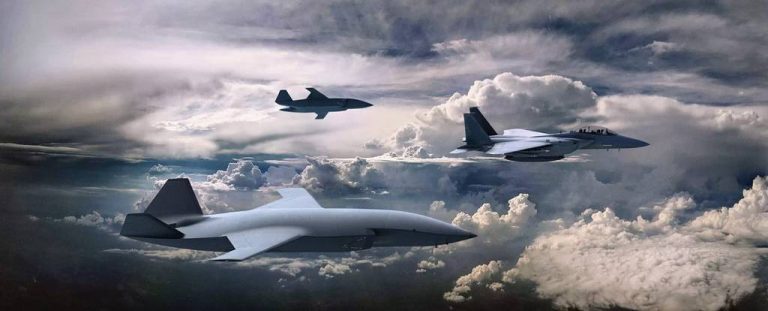
The Air Force last month released its fiscal 2024 budget request, which includes funding for the Space Force and contains 12 new programs service officials identified as needed capabilities. Among those is the Collaborative Combat Aircraft program, a fleet of as many as 1,000 drones that could perform a number of missions, from strike to surveillance to electronic warfare.
Now, the Air Force has to for Congress to sign off on its proposal, a process that likely will continue through the end of this year and into next.
“A year has passed since we’ve done the analysis,” Kendall said. “Time is going by and all those things that we worked hard to understand and formulate good solutions to, we’re not able to act on them.”
The proposal, which the Defense Department sent to Congress on April 12, includes language that says, “the effort cannot be delayed until the next submission of the budget without harming the national defense.”
Kendall said he’s had positive conversations with lawmakers about the request.
While the authority the Air Force wants would allow the service to quickly begin work on initiatives, Kendall said there would be limits on how far they could go without sign-off from the Hill. Program offices could only conduct activities like early requirements studies, risk-reduction and design work.
And because the authority would apply to a program’s early phases, Kendall insisted the proposal is “essentially free,” requiring only small funding shifts between existing accounts.
The Pentagon’s budget process has long been a target for criticism. As Kendall noted, it requires planners to lay out new programs more than two years before receiving funding, often causing major modernization programs and technology development to lag. While there have been calls for budget reform since its inception, an urgency to fix the system has grown in recent years, with critics citing it as a leading impediment to quickly fielding commercial technology to military users.
Recognizing these concerns, Congress directed the creation of a Commission on Planning, Program, Budgeting and Execution Reform — a 14-member panel that is crafting ideas for streamlining the funding approval process. It expects to release an interim report in August and is on schedule to make its formal recommendations by March 2024.
Courtney Albon is C4ISRNET’s space and emerging technology reporter. She has covered the U.S. military since 2012, with a focus on the Air Force and Space Force. She has reported on some of the Defense Department’s most significant acquisition, budget and policy challenges.
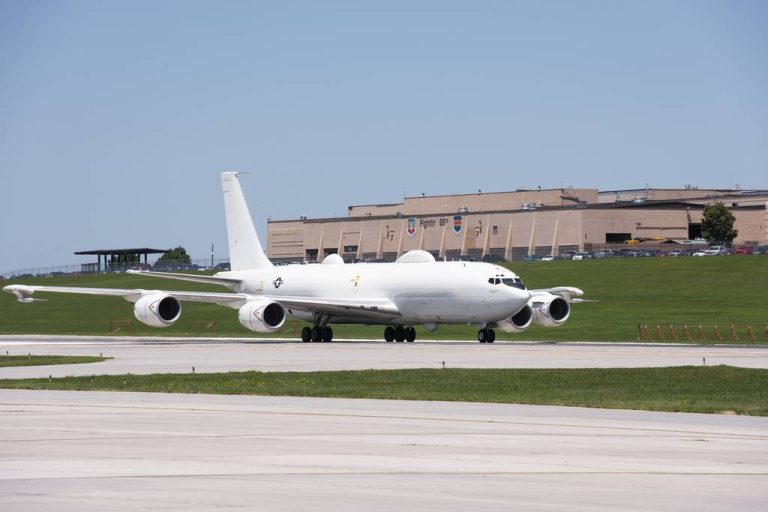
WASHINGTON — The U.S. Air Force and Navy on Wednesday morning conducted a test launch of an unarmed Minuteman III intercontinental ballistic missile in California using an airborne control center.
The weapon, which contained a test reentry vehicle, was controlled from an Airborne Launch Control System in a Navy E-6B Mercury aircraft, the Air Force said in a statement.
Airmen from the 625th Strategic Operations Squadron from Offutt Air Force Base in Nebraska and Navy aircrew were aboard the E-6. Airmen from the 341st Missile Wing at Malmstrom Air Force Base in Montana also served on the task force supporting the test launch, which took place at Vandenberg Space Force Base in California.
“Strategic deterrence is the most critical mission in our Air Force and the cornerstone of America’s defense,” Air Force Global Strike Command head Gen. Thomas Bussiere said in the statement. “This test launch reinforces what our allies and partners already know: We’re always ready to defend the United States with combat-ready nuclear forces anytime, anywhere, on order, to conduct global strike.”
The Air Force said the Minuteman’s reentry vehicle traveled about 4,200 miles to the Kwajalein Atoll in the Marshall Islands.
This was the first Minuteman test since Feb. 9, and the first time a test involved the use of the airborne control center since Aug. 16. The Air Force regularly conducts unarmed ICBM tests to ensure the missiles are functioning properly, and the service said this test was not in response to current world events.
The Air Force said Wednesday’s test verified the ICBM’s accuracy and reliability, and produced data that the Defense Department, Energy Department and U.S. Strategic Command will use to ensure the military’s nuclear missile enterprise is safe and secure.
Col. Chris Hughes, commander of the 377th Test Evaluation Group, said the test of the Airborne Launch Control System validates the military’s ability to strike targets anywhere and at any time, if the president deems it necessary. The test also ensures the military has redundancy in its ability to control ICBMs and shows the Air Force’s ability to work together with the Navy, he added.
The Navy now has 16 E-6s that carry out the Navy’s TACAMO, or Take Charge and Move Out, mission, which allows top U.S. leaders, including the president, to control nuclear forces such as nuclear-armed submarines.
But the E-6 fleet is aging, and the Navy says it must replace the aircraft with a new type. Northrop Grumman, Lockheed Martin’s Skunk Works, and Raytheon Intelligence and Space are among the companies working together to bid on the E-6 replacement, now referred to as E-XX.
Northrop Grumman officials told reporters at the Navy League’s Sea-Air-Space conference on April 3 that the Navy wants the E-XX to be a modified C-130J-30 Super Hercules, which has an extra 15 feet in its fuselage.
The Air Force and Northrop Grumman are also developing a successor to the Minuteman III, the LGM-35A Sentinel, which is expected to reach initial operational capability in 2029. The Air Force said it will keep operating the Minuteman III until the Sentinel reaches full capability in the mid-2030s.
Stephen Losey is the air warfare reporter for Defense News. He previously covered leadership and personnel issues at Air Force Times, and the Pentagon, special operations and air warfare at Military.com. He has traveled to the Middle East to cover U.S. Air Force operations.
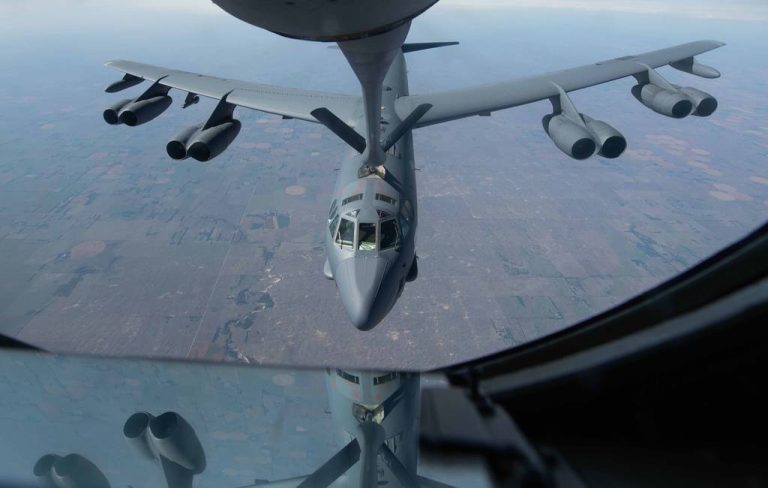
WASHINGTON — The U.S. Air Force expects to seek a Milestone B decision on the program to put new engines on B-52H Stratofortress bombers in September.
The completion of the Milestone B review will allow the Commercial Engine Replacement Program to begin engineering and manufacturing development as well as transition away from the middle tier of acquisition rapid prototyping effort under which it now operates, service acquisition chief Andrew Hunter told lawmakers Tuesday.
“I have a fairly high degree of confidence we’ll be ready in the fall” for the program to enter the engineering and manufacturing development phase, Hunter said at a hearing before the House Armed Services Committee’s sea power panel.
Rolls-Royce and Boeing are working on the effort to replace the B-52H’s current Pratt & Whitney-made, decades-old TF33 engines with new F130 engines. This is meant to keep the Cold War-era bomber — the newest of which entered service in 1962 — flying into the 2050s as the B-52J.
Hunter said the B-52′s new commercial-derivative engines will be able to use a broader supply chain than the current TF33 engines, which frequently break and have problems with parts availability.
The Commercial Engine Replacement Program, or CERP, will also update the B-52′s flight systems, cockpit throttles and displays, Hunter said.
Another planned upgrade to modernize the B-52′s radar will “dramatically improve” the bomber’s situational awareness and ability to accurately strike targets, he added. Communications upgrades are also meant to increase the bombers’ ability to exchange data and collaborate with other Air Force aircraft or units to strike targets.
“It’s all three programs working together,” Hunter said. “When you look at it, this is an almost complete overhaul of the mission systems of the B-52, and that is what will enable it to operate well into the future.”
Part of CERP’s current rapid prototyping effort involved creating a digital twin of the new engine to test it and catch problems before engines are physically built. Hunter said this digital prototyping work has “done quite a bit of risk reduction on the program.”
Rolls-Royce is also testing the new F130 engines at an outdoor test facility at NASA’s Stennis Space Center in Mississippi, the company said in March.
Hunter told lawmakers that as part of that testing work, Rolls-Royce put a pair of F130 engines in a pod that simulates the pylons from which they will hang on the B-52, and conducted test runs of the engines. Those tests yielded information on how well the engines perform and what kind of vibrations they create when running.
Once CERP completes Milestone B, Hunter said, it will become a formal acquisition program of record.
Lt. Gen. Richard Moore, the Air Force’s deputy chief of staff for plans and programs, said in a potential war against China, the service wouldn’t expect the B-52 to fly in dangerous, contested airspace the way the stealthy B-21 Raider would. Instead, Moore said, the B-52 would use its considerable payload capability to fire standoff munitions out of range of Chinese defenses.
Moore said the Air Force has not decided whether to pursue a future “clean-sheet” bomber to replace the B-52 in the decades to come. The service is first focusing on deciding how many B-21s it will end up buying, and is working on the Next Generation Air Dominance fighter system, as well as next-generation refueling and mobility aircraft, Moore explained.
The Air Force decided to dramatically accelerate acquisition of its next-generation aerial refueling system by about 15 years due to the increasing threat from China, Moore added.
“Certainly the same thing could happen to the bomber portfolio,” Moore said. “If we find out there’s an emerging threat that the B-21 is not capable of handling, we would look to replace or add to the bomber fleet with something that could handle that threat.”
The Air Force isn’t there yet, Moore noted, and the service believes the B-21 will be able to handle the threats on the horizon. If the Air Force decides it needs to bolster its capabilities to handle an emerging threat, Moore explained, it would probably update its weapons rather than its airframes.
“What we see from the Chinese is rapid spiraling of weapons capability, and I think that might be a more likely place where we would attempt to counter the threat, rather than a clean-sheet design,” Moore said. “But I certainly wouldn’t rule that out, and it may be that we don’t have a choice.”
Stephen Losey is the air warfare reporter for Defense News. He previously covered leadership and personnel issues at Air Force Times, and the Pentagon, special operations and air warfare at Military.com. He has traveled to the Middle East to cover U.S. Air Force operations.