Menendez maintains hold on Turkey F-16 jets despite Sweden NATO deal

0

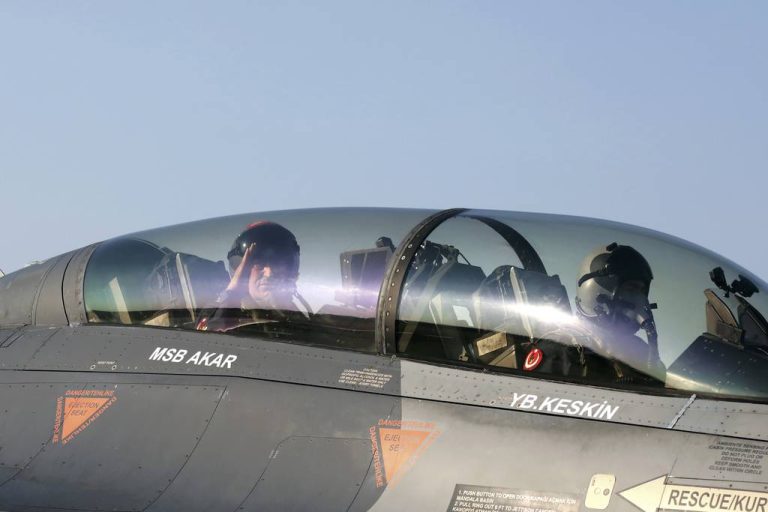
WASHINGTON ― A key senator is refusing to lift his longstanding hold on the sale of 40 Block 70 F-16 fighter jets to Turkey despite the Biden administration’s announcement last week that it wants to move forward with the deal. The $20 billion potential sale also includes 80 modernization kits.

National security adviser Jake Sullivan said the sale would proceed last week after President Recep Tayyip Erdoğan announced at the NATO summit in Lithuania that Turkey would ratify Sweden’s NATO accession bid. But Sen. Bob Menendez, D-N.J., told Defense News on Tuesday that he continues to use his position as Foreign Relations Committee chairman to block the sale.

“I’ve always said that the ratification of Sweden, which should naturally occur, is not the sine qua non of why I would lift the hold on F-16s,” Menendez said. “There’s bigger issues than just that alone.”

The U.S. State Department has held conversations with Menendez on his F-16 hold in recent weeks. Menendez told Reuters last week that if the Biden administration “can find a way to ensure that Turkey’s aggression against its neighbors ceases, which there has been a lull the last several months, that’s great but there has to be a permanent reality.”

Greece in recent years has frequently complained of Turkish incursions into its airspace, and Erdoğan is slated to attend the opening of a new airport in Turkish-occupied northern Cyprus on Thursday.

Cyprus was divided in 1974 when Turkey invaded in the wake of a coup aimed at union with Greece. Turkey recognizes a Turkish Cypriot declaration of independence.

Turkey has also used F-16s in attacks on U.S.-backed Kurdish groups in northern Syria.

Further complicating matters, Erdoğan has said Turkey will not ratify Sweden’s NATO membership until October at the earliest because the Turkish parliament has a two-month summer recess in August and September.

Six members of the congressional Hellenic and Armenian caucuses sent a bipartisan letter to Secretary of State Antony Blinken last week urging the Biden administration to attach “clear and substantive mechanisms to provide for the pause, delay or snapback” to the F-16 sale “if Turkey engages in actions that threaten or undermine U.S. national security interests and the unity of the NATO alliance.”

“While we welcome the present pause in Turkey’s destabilizing actions in the region, it is important to stress the Erdoğan government has not changed policy,” they wrote in the letter led by Rep. Chris Pappas, D-N.H. “The impression that Turkey has improved relations with NATO ally Greece is belied by the fact that Ankara maintains a casus belli against Athens.”

Greece is also pushing to join Lockheed Martin’s F-35 fighter co-production program; the U.S. kicked Turkey out of it in 2019 after Turkey purchased the Russian-made S-400 missile defense system. The U.S. fears the S-400 radar system could allow Moscow to spy on the stealth fighter jets. Both Turkey and Greece have lobbied against the respective U.S. aircraft sales sought by their neighbor.

Menendez’s home state of New Jersey boasts the sixth-largest Greek American population in the U.S. and the fourth-largest Armenian American population.

Despite his opposition to the F-16 sale, Menendez in April permitted a $259 million sale of avionics software upgrades for Turkey’s current F-16 fleet.

“I’m opposed to F-16s, but this is not a sale of F-16s,” Menendez told Defense News after the State Department approved the avionics kit sale. “It’s a sale to ensure the interoperability of existing aircraft in the NATO command structure, and for that reason I support it.”

Even if the F-16 sale eventually clears Congress, it’s unclear when Turkey would receive its new aircraft due to a manufacturing backlog for the in-demand jet.

For instance, Taiwan is also waiting on 66 F-16s, which is an approximately $8 billion portion of a broader backlog in overall U.S. arms sales to the Asian nation that has run up to $19 billion.

Bryant Harris is the Congress reporter for Defense News. He has covered U.S. foreign policy, national security, international affairs and politics in Washington since 2014. He has also written for Foreign Policy, Al-Monitor, Al Jazeera English and IPS News.

Dearth of jamming gear follows years of ‘autopilot,’ says Rep. Bacon

0

WASHINGTON — The U.S. military is failing to speedily develop and deploy electronic warfare equipment amid a global competition for electromagnetic spectrum supremacy, according to a congressman who served in the Air Force for more than two decades.

After years of putting electronic warfare on “autopilot,” troops’ ability to now jam and spoof and spy from afar has “withered,” said Rep. Don Bacon, a Nebraska Republican and former director of intelligence, surveillance and reconnaissance strategy, plans, doctrine and force development.

“I’m seeing, mainly, a lot of talk, a lot of thinking going on behind closed doors,” Bacon said at a July 18 event hosted by the Hudson Institute, a think tank. “I don’t see the output, the actual combat capability output that we need.”

U.S. prioritization of high-end electronic warfare systems dropped following the Cold War. It has since experienced a resurgence, as competition heats up with world powers such as China and Russia. Modern militaries rely on the electromagnetic spectrum to communicate, guide weapons, navigate and other crucial tasks.

“By the time I was a colonel, a brigadier general, it was clear we let things atrophy to a large degree and Russia and China in many areas had surpassed us, because they were focused on it,” Bacon said. “We’re just too slow. It shouldn’t take us five years, six years to turn the ship around.”

Bacon was promoted to colonel in 2005 and brigadier general in 2011, according to his Air Force biography. He was first elected in 2016 and serves on the House Armed Services Committee.

The lawmaker’s remarks echo those made by Air Force Gen. CQ Brown, President Joe Biden’s pick to be the next chairman of the Joint Chiefs of Staff.

Brown earlier this month warned Congress in written testimony that the military has lost electronic warfare “muscle memory” after spending years fighting lesser-equipped forces, especially in the Middle East. Such diminishment, Brown added, leaves troops vulnerable.

The Air Force last year announced a “sprint” to identify and address electronic warfare deficiencies. Prior to that, the service activated the 350th Spectrum Warfare Wing, populated with electromagnetic specialists and technical experts.

More recently, the 556th Test and Evaluation Squadron completed initial ground and flight testing of an MQ-9A Reaper drone fitted with the Angry Kitten ALQ-167 Electronic Countermeasures Pod.

The successful trials in Nevada focused on providing electronic attack from the Reaper, a General Atomics Aeronautical Systems product typically used to collect intelligence or conduct reconnaissance. The jammer pod is derived from technology developed by the Georgia Tech Research Institute.

Colin Demarest is a reporter at C4ISRNET, where he covers military networks, cyber and IT. Colin previously covered the Department of Energy and its National Nuclear Security Administration — namely Cold War cleanup and nuclear weapons development — for a daily newspaper in South Carolina. Colin is also an award-winning photographer.

F-35 delivery delays to cost Lockheed hundreds of millions in 2023

0

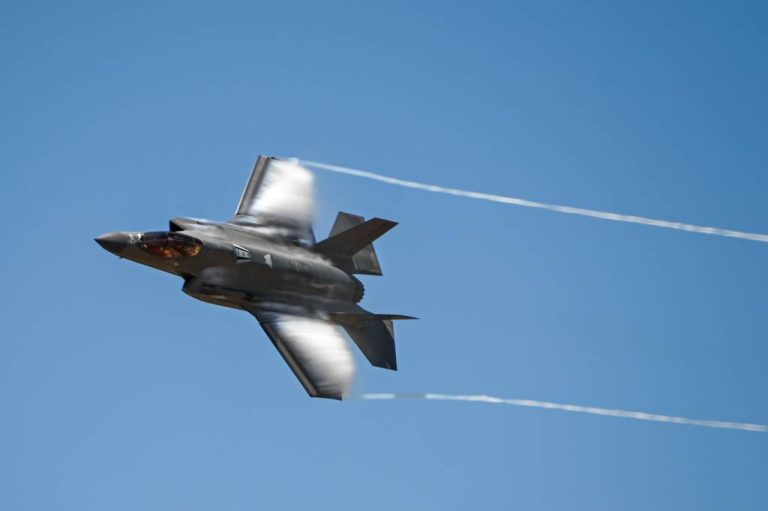
WASHINGTON — Problems with the F-35 Joint Strike Fighter’s newest upgrades will cause the aircraft’s manufacturer to miss its 2023 delivery goal by up to roughly 50 jets, Lockheed Martin officials said Tuesday.

The delays could bring down Lockheed’s revenue for 2023 by hundreds of millions of dollars.

Lockheed originally planned to deliver between 147 and 153 fighters this year. But software problems with the upgrades known as Technology Refresh 3, or TR-3, are causing significant delays. The Pentagon announced in June that it would not accept newly built F-35s with TR-3 until the upgrades are completely ready.

Lockheed CEO Jim Taiclet said in an earnings call with investors Tuesday that the company now expects to deliver 100 to 120 F-35s this year, given the TR-3 software issues.

Jay Malave, Lockheed’s chief financial officer, said the delivery delays will cost the firm between $210 million and $350 million this year, depending on how soon the company can start delivering fighters enabled with TR-3.

However, the company has not slowed production on the F-35, Malave added, and will store completed jets until they’re ready for delivery.

“There won’t be a production lag,” Malave explained. “There’ll be just a delivery lag based on the completion of the software integration testing that has to be done in the air.”

Next year, he added, Lockheed will likely end up delivering more than the 156 fighters it previously planned to build and deliver in 2024.

“Our team remains fully dedicated to delivering the first TR-3 aircraft in 2023,” Taiclet said. “We have completed 58 flight tests on four different aircraft in the TR-3 configuration, including a successful flight test for the most recent software release that happened in May.”

TR-3 is the program’s name for a package of upgrades that are intended to give the F-35 better displays, computer memory and processing power, and is necessary before a more extensive modernization known as Block 4 can be added. Block 4 will allow the F-35 to carry more long-range precision weapons, improved electronic warfare capabilities and better target recognition.

The U.S. Air Force in January conducted the first test flight of a TR-3-enabled F-35.

But the schedule for rolling out TR-3, originally due in April 2023, has slipped. The F-35 Joint Program Office now expects it to arrive in December 2023 at the earliest, or perhaps April 2024.

Development and initial production of TR-3′s hardware was originally slow, the F-35 Joint Program Office said, but hardware issues are now resolved. Lockheed Martin is now building F-35s with TR-3 hardware installed.

But the JPO said last month that TR-3′s software, and getting it to work with the fighters’ new hardware, is proving difficult. Taiclet first said the TR-3 issues would lead to fewer deliveries in an April earnings call, but at that time described the scope of the problem as a “fraction” of the total 2023 deliveries and said it was expected to have “little to no” effect on the company’s aeronautics revenues or profits.

Tuesday’s comments were the company’s first that indicate the full scale of the delivery halt’s impact.

The Pentagon is still accepting deliveries of TR-2-enabled F-35s. Taiclet said the company delivered 50 such F-35s in the first half of the year.

Malave said the company is running extra shifts and sending its experts to other businesses and suppliers to ensure the F-35 program stays on track. He also noted Lockheed and the Defense Department have enough pilots to conduct acceptance flights to clear those newly built jets for delivery once they are ready.

Lockheed expects to get back to delivering 156 F-35s annually in 2025, Taiclet said.

Stephen Losey is the air warfare reporter for Defense News. He previously covered leadership and personnel issues at Air Force Times, and the Pentagon, special operations and air warfare at Military.com. He has traveled to the Middle East to cover U.S. Air Force operations.

If you don't have a portable genset, best get it soon – while you can

0

12ft | Not Just Gas Stoves: Biden Admin Rule Would Outlaw Nearly All Portable Gas Generators

Your FedGov is now openly at war with the citizens under the guise of "Climate Change:".

Wanna cleanup the climate?? – stop importing stuff of China and India.

How to survive a hostage situation

0

In our modern era, we find ourselves living amidst a persistent and escalating wave of criminal activity. While instances of hostage-taking and kidnapping haven’t seen a dramatic upsurge as other crimes in our country, such situations do occur, and unfortunately, the general public has no idea how to act or respond when faced with such scenarios.

Though the probability of falling victim to abduction or being held hostage remains relatively small, it is of utmost importance to be equipped with the knowledge of what to do if such a harrowing event were to occur.

Thankfully, there are a number of proven strategies that you can readily adopt to significantly enhance your chances of survival in such distressing circumstances. By familiarizing yourself with these strategies, you can improve your chances of emerging alive and unharmed.

Hostage situation scenarios

There exists a range of diverse hostage-takers, each with their own distinct motivations. These captors can be categorized into several primary types: terrorists (domestic or foreign), military and paramilitary personnel, opportunistic criminals, and individuals suffering from mental illness.

Now, when it comes to hostage situations, four primary types can be identified, each with its own defining features:

Barricade:

This form involves the hostage takers firmly holding their captives at a clearly discernible location, utilizing their lives as a bargaining chip to achieve their goals. This particular method is often favored by terrorists seeking widespread attention. Such scenarios are highly charged, as the hostage takers themselves become, in a sense, captives to the responding authorities. In the 70s and 80s, the most common scenario of barricades was a plane hijacking.

In recent years, in July 2016, a sniper barricaded himself inside a building in downtown Dallas, Texas, during a protest rally. He opened fire on police officers, resulting in multiple casualties. Negotiations with the hostage taker continued for several hours before the authorities deployed a robot with an explosive device, resulting in the death of the suspect.

Containment:

This type of hostage situation arises when a group finds itself surrounded and confined by a larger force that maintains control over the area. As long as those being contained remain stationary, violence can be averted. In such cases, the hostages are not directly controlled except within the confines of the containment zone. Probably the most common scenario of containment that people are familiar with is a bank heist gone wrong. However, there are other types of containment scenarios that make the news as well.

In April 2013, two individuals carried out a bombing at the Boston Marathon, which resulted in a chaotic situation with multiple casualties. During the subsequent manhunt, one of the perpetrators, Dzhokhar Tsarnaev, was found hiding in a boat in Watertown, Massachusetts. A containment zone was established, and after a standoff, Tsarnaev was apprehended by law enforcement.

Kidnapping:

Kidnapping encompasses the illegal act of forcibly removing or transporting an individual against their will. Motives behind such acts can range from financial ransom, political leverage, furtherance of other criminal activities, or even as part of a dispute regarding child custody. Terrorists, in particular, may resort to kidnapping with the objective of securing the release of political prisoners or incarcerated terrorists. While, for example, kidnapping is a common occurrence in Latin America, there are also domestic cases that gain the media’s attention.

In January 2019, Jayme Closs, a 13-year-old girl from Barron, Wisconsin, was kidnapped from her home after her parents were murdered. She was held captive by the perpetrator for 88 days before managing to escape. The case received widespread attention, and Jayme’s safe return was celebrated as a successful recovery.

Human Shields:

Within military and political contexts, the concept of human shields involves intentionally placing non-combatants in or around targets of combat in order to dissuade the enemy from attacking those targets. This tactic may also involve using non-combatants as shields for combatants during assaults, compelling them to march ahead. Criminals may also resort to taking hostages as human shields.

In August 2020, a hostage situation unfolded at a bank in St. Cloud, Minnesota. A suspect held five bank employees hostage, using them as human shields to prevent law enforcement intervention. After an hours-long standoff, a SWAT team successfully resolved the situation, rescuing the hostages and apprehending the perpetrator.

The above examples demonstrate that hostage situations can occur in different contexts within the United States, ranging from acts of terrorism to domestic incidents. Each situation poses unique challenges for law enforcement, requiring strategic negotiation, containment, and, when necessary, tactical operations to ensure the safety of the hostages and bring the crisis to a peaceful resolution.

Typically, a hostage situation unfolds in distinct stages, which include planning and surveillance, the actual attack leading to the capture and restraint of hostages, movement (typically observed in kidnapping cases), the period of captivity, and, ultimately, the release of the hostages.

While captors exhibit considerable variability in their behavior, it is crucial to anticipate the possibility of physical restraints and sensory deprivation, verbal mistreatment, threats of harm and death, interrogation, indoctrination or brainwashing attempts, sleep deprivation, and at times, physical and sexual abuse. The response and adaptation to captivity vary significantly among individuals.

Six main stages, each characterized by their own approximate durations, have been identified by experts as follows:

Startle and/or panic  – which is the initial stage that can last from a few seconds to a few minutes. In this stage, the victim doesn’t fully grasp the gravity of the situation, and panic replaces reasoning and logic.

Disbelief – This is the following stage which can last minutes to hours, and during this stage, while the victims begin to comprehend what is going on, there is still a general disbelief feeling. The “is this really happening to me” type of feeling and questioning.

Hyper-vigilance and anxiety – This stage can last hours to days, depending on the hostage situation, and during this stage, the victims have a hard time finding their rhythm. During this stage, anxiety can become such a big burden that it prevents the victim from figuring out a way out or planning an escape plan.

Resistance and/or compliance – This stage can stretch from a few days to a few weeks, and the victims will either do as they are told without putting too much of a fight or protest, and they try to make things harder for the hostage-takers (at least that’s what they believe). During this stage, compliance usually follows, even if it’s often enforced by the captors.

Depression and despair – This is perhaps one of the most difficult periods as it sets the stage for the next phase, and it can take weeks to months. During this stage, people’s mind and spirit often breaks as a mix of depression and despair gradually takes hold of them. Some experts believe that during this stage, the basis for Stockholm syndrome is formed.

Gradual acceptance – This stage can take months to years to set in, and during it, some sort of relationship is built between the hostages and the captors. This is the stage when the Stockholm syndrome grows, and it creates an unhealthy relationship between the two parties involved.

Surviving the ordeal

srvive a hostage situation surviving the ordeal

Surviving a hostage situation is, to a large extent, a matter of chance and varies depending on the type of hostage taker and the specific circumstances involved. The initial 45 minutes of a hostage situation are considered the most perilous, as both captors and hostages are highly stressed and prone to impulsive actions.

However, as time passes, the chances of being released alive generally increase, especially if you are being held for bargaining or ransom purposes. The following guidelines are based on the experiences of previous hostages and field experts following my research on this topic. It is important to note that every situation is different, and they should be seen as general principles rather than rigid rules.

Seize escape opportunities: Your best chance for escape may occur during the initial capture while you are still in a public space. The situation is likely to worsen once you are in private with your abductor(s). If escaping is impossible or too risky, attempt to attract attention and alert authorities discreetly by making as much noise as safely possible.

Maintain situational awareness: Always be aware of your surroundings and potential escape opportunities, especially during transit. Develop an escape plan in advance and consider possible evasion routes before attempting to escape. The goal is to get outside the perimeter controlled by hostile forces. Oftentimes, it is impossible to develop an escape plan if you don’t know the area and if you are not familiar with the surrounding architecture.

Regain composure and stay focused: If you are taken hostage, try to regain your composure as soon as possible. Maintain a clear mind and concentrate on survival. Explicit resistance is generally counterproductive in a hostage situation and can make you a target. Stay calm, control impulsive behavior, and follow instructions. Research shows that individuals who appear threatening to captors are more likely to be harmed or neutralized.

Pay attention to everything: Pay attention to your surroundings, the route taken while being transported (if applicable), the layout of the building where you are held, and details about your captors. Memorize relevant information such as routines, physical descriptions, accents, names, and any identifying factors. This information can be valuable for authorities and aid in assessing and planning any escape attempts.

Form a connection: Try to establish a positive connection with your captors. Hostage takers often view hostages as expendable objects, so it is important to gain their respect and humanize yourself. Maintain your dignity and engage in non-threatening communication. Oftentimes, you will be allowed to discuss topics such as family and common interests. However,  you should avoid sensitive or political issues. Once a connection is established, you can cautiously make reasonable and low-key requests for items of convenience.

Maintain hope: Be prepared for an extended period of captivity. Set goals and strive to maintain some control over your environment to alleviate feelings of hopelessness. Keep your mind active and engaged. You will need to maintain physical well-being, so you need to eat and exercise as much as possible. Eating and exercising not only helps you keep your strength, but it also helps counteract the effects of stress. Never lose hope since that’s a dead end.

Communicate with fellow hostages: If you become aware of other hostages in the same building, find ways to communicate with them. Be tolerant and supportive of one another, refraining from venting frustrations on fellow captives. If you are in the same room/building, try to keep everyone’s spirit up because desperate people will make mistakes. Also, do not perceive emotional breakdowns in others as a weakness.

If you are interrogated, the best thing to do is cooperate and avoid being antagonistic or hostile toward your captors. Remain polite and control your temper. Provide concise answers and discuss non-essential matters, being cautious about divulging substantive information. Beware of the “good cop/bad cop” routine, a common interrogation technique. If forced to present terrorist demands in writing or on tape, clearly state that those demands are coming from the captors.

Remember, surviving a hostage situation is an intricate and unpredictable challenge. These guidelines aim to enhance your chances of survival, but each situation requires careful assessment and adaptation to the specific circumstances at hand.

A few notes about the Stockholm Syndrome

Pay attention to signs of Stockholm Syndrome, also known as capture bonding, which is a psychological phenomenon where hostages develop empathy and sympathy towards their captors or their captors’ cause.

The term “Stockholm Syndrome” originated from an incident in Stockholm, Sweden, where bank robbery victims defended their captors and refused to testify against them in court after being released. However, it’s important to note that the majority of hostages do not develop Stockholm Syndrome.

There are various studies concluding that hostage-taking incidents identified three necessary factors for the syndrome to develop:

The crisis situation must last for several days or longer.

The hostages are not isolated. They are not confined to a separate room by the captors. The constant interaction with the captors is a critical factor that leads to the syndrome.

The captors demonstrate some kindness and/or refrain from harming the hostages.

Furthermore, these studies revealed that individuals who often feel helpless in other stressful situations or are willing to do anything to survive are more susceptible to developing Stockholm Syndrome if they become hostages. On the other hand, hostages who experience abuse from their captors typically feel anger towards them and are less likely to develop the syndrome.

It’s worth noting that Stockholm Syndrome can manifest as a two-way phenomenon, with captors developing empathy towards their hostages. In some cases, hostages have been able to utilize this dynamic to their advantage, negotiating concessions and even securing their release from their captors.

It’s essential to be aware of the existence of Stockholm Syndrome and its potential influence on hostage situations, but it’s important to approach each situation with caution and consider the individual dynamics and variables involved.

svmd longbanner1

The rescue and release stage

During hostage situations, the process of rescue and release requires patience. It’s important to note that most hostage-taking scenarios conclude without loss of life or physical harm to the captive.

Attempting to escape should only be considered if success is certain. If you manage to escape and find yourself outside of the United States, seek protection at an American Embassy or Consulate. If that is not feasible, approach a host government or a friendly government office for assistance. This, of course, requires a little bit of research on your side, and you should be aware of the things mentioned before you step foot on foreign soil.

Rescue operations follow when negotiations have failed, and this phase is known to be the most perilous. It is often observed that more hostages are harmed during rescue attempts than are executed by the hostage takers.

Rescues are executed with the principles of close-quarters battle (CQB): speed, surprise, and violence of action. There will be no prior warning given. During a rescue attempt, the lives of hostage takers, hostages, and rescue forces are all at risk, and the rescuers will be under immense stress.

In such a situation, it is crucial to avoid being caught in the crossfire. Refrain from running and instead drop to the floor and remain still. Make no sudden movements that might be perceived as hostile by the rescuers. Keep your hands clearly visible and empty. Comply with all instructions given to you.

Expect to be treated as a hostage taker initially until the rescuers can confirm your status, as it is not uncommon for hostage takers to disguise themselves as hostages. Cooperate when being handcuffed and searched.

After your release, it is advisable to avoid media exposure until you have been properly debriefed. Unintentionally sharing details could create difficulties for any remaining hostages. Additionally, be aware of the possibility of Stockholm Syndrome influencing your thoughts and emotions.

If approached by the press, focus your comments on expressing your happiness about being free and your anticipation of reuniting with your family and friends.

In summary, during the phase of rescue and release, it is crucial to prioritize safety, follow instructions from rescue forces, and be mindful of the potential psychological effects of the situation.

Moving forward

moving forward after a hostage situation

The journey from being a hostage to reclaiming freedom is not always a smooth transition. Each individual’s experience may vary, but the ability to cope with recovery is generally influenced by the duration and severity of the captivity.

It’s important to recognize that the pressure to appear resilient can sometimes conceal underlying difficulties in readjustment. Stress reactions stemming from the captivity can manifest long after the release, and it’s common for former hostages to be unaware that these reactions are a result of their ordeal.

Reintegration problems can have a profound impact on one’s life as well as the lives of their loved ones. Fortunately, seeking assistance from professionals experienced in post-traumatic stress can often provide relief and support in overcoming these challenges.

Useful resources to check out:

Recommendations To Protect And Keep Seniors Safe In Their Homes

Knowledge to survive any medical crisis situation

Sexual Assault, Self-Protection Strategies For Women

How To Build The Invisible Root Cellar and use it as Safe Room

Participation thread – Things that were right from the start.

0

Some things don’t need improvement. There’s lots of talk about making a better mouse trap. It’s about the same as John Moses Browning’s 1911. People alter them and change them, but are they better?

I’ll start the list of things that have worked right from the start. They work today, they’ll work 100 years from now.

Mouse trap – Patented by William C. Hooker in 1874.

Schrader valve – Patented 1893. Chances are you have one holding the air in every tire on your car. So does everybody else.

Berdan primer – Invented by an American in 1866 and used by the British.

Boxer primer – Invented by a Brit in 1869 and used in Americans.

Rimfire primer – Invented in 1845 by Louis-Nicholas Flobert. Still works just fine.

Spark plug – Slight changes since 1860. Only Ford really messed it up.

Incandescent mantle – Welsbach patents go back to 1887.

Bits, blinders and saddles – 1000 BC? I haven’t seen anything “new” in my lifetime.

I know there are many many more. There have to be medical innovations, homestead tools, aviation supplies and a myriad of other inventions that were just simply right from the start.

Let’s see what you’ve got. Post your items with a brief description of when it was invented.


For Sale – Save Big on keystone Meat: Flat 10% off on 10/12/24 packs

0


Freeze Dried Food
Canned Meat
Berkey Water Flters
Sea Eagle Boats
Bikes

[​IMG]
[​IMG]
[​IMG]
Flat 10% Off on Keystone Meats
Buy 10/12/24 Packs
Use Code “Keystone10%” During the Checkout process

**Offer Valid for next 7 Days

[​IMG]
Keystone Meats All Natural Canned Turkey, 28 Ounce
Listed Price $142.99
Effective Price after Discount- $128.65
Buy Now
[​IMG]
Keystone Meats All Natural Canned Beef, Ground, 14 Ounce
Listed Price $89.99
Effective Price after Discount-$80.99
Buy Now
[​IMG]
Keystone Meats all Natural Ground Beef 28-oz Can
Listed Price 275.99
Effective Price after Discount-$248.39
Buy Now
[​IMG]
Keystone Meats All Natural Canned Chicken, 28 Ounce
Listed Price $135.99
Effective Price after Discount-$122.39
Buy Now
[​IMG]
Keystone Meats All Natural Beef 14.5 Ounce
Listed Price $175.99
Effective Price after Discount-$158.39
Buy Now
[​IMG]
Keystone Meats All Natural Canned Beef
Listed Price $169.99
Effective Price after Discount-$152.99
Buy Now
Explore More Keystone Meats

Explore us More..
[​IMG]

[​IMG]

[​IMG]​

Biden Campaign to Appear Alongside Hanoi Jane

0

being a vet that served in country… this does NOT make me happy….

Event comes one week after Biden hosted veterans outreach roundtable

The Biden campaign, which has bombarded President Donald Trump with attacks about his respect for U.S. soldiers, will be campaigning this weekend with Jane Fonda, a celebrity best known for fraternizing with enemy troops during the Vietnam War.

Democratic vice-presidential candidate Kamala Harris is set to join Fonda at a Saturday virtual event held by progressive advocacy group Supermajority. The event—titled “Supercharge: Women All In”—will “bring together thousands of women to laugh, sing, dance, and celebrate women’s political power,” according to the group’s website.

Fonda traveled to North Vietnam in 1972 as part of an anti-war protest that saw her pose for photos with enemy troops on an anti-aircraft gun. The photo sparked outrage among Vietnam veterans, earning her the nickname “Hanoi Jane.” Fonda’s public appearances remain subject to controversy—a group of Ohio veterans called on the actress to donate her $83,000 speaking fee to the families of fallen soldiers ahead of a May appearance at Kent State University.

Harris and Democratic presidential nominee Joe Biden have criticized President Donald Trump on veterans’ issues in recent weeks. During a September “veterans roundtable,” Biden criticized Trump for ignoring “the bounty on the heads of Americans in Afghanistan,” referencing a slew of June reports that claimed Russia bribed the Taliban to kill U.S. servicemen. One day before the roundtable, Marine Corps general Frank McKenzie—who oversees military operations in the region—told NBC News that a review of U.S. intelligence failed to corroborate the alleged bounties.

Harris promoted the roundtable in a tweet, saying American veterans “sacrifice so much for our nation and deserve our respect and gratitude, both while on active duty and after.” The Biden campaign did not respond to a request for comment on her upcoming appearance with Fonda.

Fonda has long supported Harris financially, contributing nearly $6,000 to the Democrat’s Senate campaign since 2016. The actress also gave $1,000 to the Biden Victory Fund in June after donating a combined $10,300 to Sens. Elizabeth Warren (D., Mass.) and Amy Klobuchar (D., Minn.), Democratic governors Steve Bullock (Mont.) and Jay Inslee (Wash.), and billionaire Tom Steyer during the presidential primary.

Saturday’s event will also be attended by Warren, twice-failed presidential candidate Hillary Clinton, Sen. Bernie Sanders (I., Vt.), and House Speaker Nancy Pelosi (D., Calif.). It will feature a “yelling room where participants are encouraged to scream out their emotions,” according to event organizers.

Supermajority was launched in 2019 by a group of progressive activists, including former Planned Parenthood president Cecile Richards and Black Lives Matter cofounder Alicia Garza. The group has raised $2.5 million in 2020, with $2 million coming from liberal billionaire George Soros’s Democracy PAC. Supermajority aims to train and mobilize “a community of all ages, races, and backgrounds to fight for gender equality together,” according to its website.

Fonda in 2017 said she does not regret her trip to Hanoi during the Vietnam War but does regret the infamous photo with North Vietnamese troops. She added that while she is not “proud of America today,” she is “proud of the resistance.”

“I’m proud of the people who are turning out in unprecedented numbers and continue over and over again to protest what Trump is doing. I’m very proud of them, that core,” Fonda said.

Biden Campaign to Appear Alongside Hanoi Jane – Washington Free Beacon


Turkish Aerospace, Aselsan ink $2B in deals to upgrade F-16 jets

0

ANKARA, Turkey — Turkish Aerospace Industries has signed two contracts worth nearly $2 billion with the country’s largest defense company to upgrade F-16 fighter jets.

The deals announced by Aselsan, a military electronics specialist, were for $1.2 billion and 20.7 billion liras (U.S. $789.2 million).

The Biden administration has backed Turkey’s desire to buy 40 new F-16s as well as modernization kits from the U.S. It’s a move some in Congress, most notably Senate Foreign Relations Committee Chairman Bob Menendez, D-N.J, have opposed over Turkey blocking NATO membership for Sweden, its human rights record, its relations with Greece and other concerns.

Neither TAI nor Aselsan revealed details of the contracts, inked July 13. But a government procurement official and sources with the businesses told Defense News that the contracts are related to a program to upgrade Turkey’s aging F-16s, starting with the Block 30 level.

The upgrade program will include a new mission computer, an active electronically scanned array radar and new avionic suites for about 150 Turkish F-16 aircraft. The program will also include new cockpit color displays, a new indigenous identification friend or foe system, a new system interface unit, a hydraulic fuel gauge, new radar warning receivers, and an inertial navigation system.

The backbone of the upgrade program is a subsystem dubbed Ozgur (”free” in English) that aims to develop and produce Turkey’s first AESA radar, which Aselsan officials hope will extend the flight time for some of the country’s F-16 aircraft by half, to 12,000 hours.

Per upgrade plans, the AESA radar will first be retrofitted onto the Akinci, a drone built by TAI; then on a batch of 36 F-16 Block 30 aircraft; and, in the longer term, the TF-X, Turkey’s first indigenous fighter jet in the making. Block 30 is the only F-16 model whose source codes are available to Turkey.

“This deal has two implications: One, it is part of Turkish efforts to balance Greece’s increasing air superiority over the Aegean Sea, especially by buying new French-made Rafales; and two, once [the upgrade is successful and the aircraft is] combat proven, it may pave the way for Aselsan and TAI to penetrate into the world’s large F-16 modernization market,” said Ozgur Eksi, who runs the media outlet TurDef.

In 2019, Turkey requested the Link 16 tactical data link, among other technology, for 199 F-16 jets. Then, acording to January 2023 media reports, the Biden administration “informally notified Congress of its intent to sell 40 new F-16s in the Block 70/72 Viper configuration (F-16Vs) and Viper upgrade packages for 79 existing fighters, along with 900 air-to-air missiles and 800 bombs, at an estimated total value of $20 billion,” a document from the Congressional Research Service noted.

And in April, the U.S. State Department publicly approved the sale of equipment and services to Turkey in support of upgrading the European nation’s F-16 fleet in a potential deal worth an estimated $259 million. The Congressional Research Service wrote this possible sale appears to include the Link 16.

The Turkish Air Force declined to comment for this story, citing national security.

Aselsan is the biggest defense company in Turkey, and the 49th largest in the world based on defense revenue, according to the Defense News Top 100 list.

The company reported its total sales in 2022 reached 35.3 billion liras, and that its pretax depreciation and interest profit was 9.5 billion liras, a 77% rise from the year prior. Its net profit in 2022 rose by 70% to 11.9 billion liras.

Aselsan also reported that, during fiscal 2022, it successfully “localized/nationalized” 160 systems, meaning the business indigenously produced technology that the country was previously importing. Overall, the company boasts to have done so for a total of 670 systems.

For its part, Turkish Aerospace Industries ranked 67th on the Top 100 list.

After his re-election on May 28, President Recep Tayyip Erdoğan shuffled the government’s procurement hierarchy. Ismail Demir, who led the Presidency of Defence Industries, or SSB, was appointed board chairman of government-controlled steel and iron producer Kardemir. Haluk Gorgun, Aselsan’s CEO, replaced Demir.

A June 22 statement from the company said Aselsan’s new CEO is Ahmet Akyol, formerly the firm’s deputy general manager. He continues to serve as a board member at Aselsan.

Akyol is a computer engineer who underwent training at the U.S. college Stanford University and the U.K. school Cranfield University.

Akyol has a background in industry and government, having worked at military software provider Havelsan and simulation specialist Quantum3D, and with the Ministry of Industry and Technology as well as the Ministry of Defense, plus the state scientific research agency Tubitak. He also previously served as the head of electronic warfare and radar systems at the SSB (then known as SSM).

The Associated Press contributed to this report.

Burak Ege Bekdil is the Turkey correspondent for Defense News.

Natural remedy for Parasites | Survival Monkey Forums

0

I bet you didn’t know that parasites are our planet’s most prevalent life form or that elephantiasis—a tremendously disfiguring disease—is caused by roundworms. Or that roughly 209 million people around the globe are infected with pinworm.

The truth is that parasites are nearly unavoidable and way more present than most of us dare to imagine. You read that right. They are common! They are in our water supply, dirt, food and more.

In fact, many diagnosed and undiagnosed health issues can actually be from undetected parasitic infections. Humans can become the residence of over 300 different kinds of parasitic worms and over 70 species of protozoa.

Parasites In Humans

Obviously, discussing over 370 kinds of parasites would take a lot of time, so instead, let’s briefly discuss the top five parasites in the U.S., according to the CDC:

Chagas disease: Trypanosoma cruzi, the parasite that causes Chagas disease, has infected more than 300,000 people in the United States, and more than 300 infants are born yearly with it. The triatomine bug bites a human and then deposits its excrement in the opening, which is how Chagas disease spreads. Long-term digestive, cardiac and neurological conditions can result from Chagas disease.

Toxoplasma gondii: Toxoplasma is frequently transmitted by playing with or caring for cats, hence the nickname “cat poop parasite.” More than 60 million Americans have toxoplasma gondii infections that are persistent. Additionally, unwashed fruits and vegetables and undercooked meat can harbor the parasite. Toxoplasma can increase the chance of birth defects if a pregnant mother is infected.

Trichomoniasis: Trichomoniasis is a sexually transmitted infection prevalent in the United States, though it is very treatable. In the United States, 3.7 million people are affected by the protozoan parasite, but only about 30% of people will have symptoms.

Toxocara: The good news about this one is that approximately 13.9 percent of the population has antibodies that will fight against this parasitic infection. But for the rest of us… we risk contracting it whenever we touch a cat or a dog. Most of these infections occur in children, who often subsequently suffer from eye disease and even blindness.

Cysticercosis: The brain and muscles of people are among the regions affected by this tapeworm parasite, and it comes from eating raw pork. This parasite’s larval cysts develop inside the body and cause seizures and other problems. Every year, at least 1,000 people are hospitalized with cysticercosis in the United States.

Now… that was some brutal truth, but necessary to know because you really don’t want to let parasites live in your body. Besides, plenty can be done to remove parasites naturally. And that is what we’re discussing today.

The Importance of Parasite Detox

Not only can many parasites be removed with natural parasite protocols, but you may even want to consider doing it regularly, like once a year.

Listen, it’s better just to accept that you’re highly likely to contract one or some of the little squirmers sometime in your life. Some people don’t want to know about it, and maybe it’s true… you could go your whole life and never experience a single symptom. But whether you know about them or not, they affect you one way or another. Moreover, parasites can be behind perpetual health issues like anemia, digestive problems, and chronic fatigue.

Here are more health problems links to parasites you may not have known about:

• Joint and muscle pain
• Skin problems (such as skin rashes)
• Sleep problems and restlessness
• Auto-immune disorders
• Stomach pain
• Neurological disorders
• Fever
• Eye problems
• Bedwetting
• UTI’s
• Teeth grinding
• Intestinal issues (like leaky gut)
• Nausea and vomiting
• Seizures
• Headache and disorientation

Several variables affect how parasites act, like the type of parasite, your health, age, and the duration of the infection. However, many multifaceted herbs can be used for multiple parasitic infections. For example, walnut hulls are known to kill: ringworms, threadworms, gut protozoa, fungus, pinworms, tapeworms, and other intestinal parasites. So, if you think it may be time to do a little parasite cleanse, you might find the below home remedy for killing parasites rather helpful.

Many herbs and foods can be used to kill off parasites, like garlic, pumpkin seeds, coconut oil, thyme, wormwood and oregano. Adding these herbs and foods to your diet will help double your parasite detox efforts over the next few weeks. You should also steer clear of sugar and grains… even fruits, because these things are food for parasites. Stick to vegetables, seeds, and nuts while on your parasite cleanse for the best results.

Natural Remedy for Parasite Cleanse

Ingredients and their purpose:

• 10 drops cinnamon oil or 1 teaspoon powdered – kills disease-causing fungi, viruses, and parasites and is antibacterial and soothing to the digestive tract.
• ½ teaspoon powdered ginger – the volatile oils and abundant antioxidants in ginger fight several parasites, including giardia. It’s also antibacterial, antifungal, and calming to the digestive tract.
• 6 whole cloves – Cloves can dissolve the casing around parasitic eggs. Studies have proven the beneficial effects of clove against the intestinal protozoans Blastocystis and Giardia and the blood fluke Schistosoma.
• 7 drops of olive leaf extract – Olive leaf extract fights over 50 common disease-causing organisms, including herpes, influenza A, Polio, Salmonella typhimurium and Candida. It also eradicates Amoebi, cryptosporidia, giardia, pinworm, tapeworm, ringworm, malaria protozoa and roundworm.
• 7 drops of black walnut hull extract – kills worms mentioned above, Acanthamoeba, and the protozoan Toxoplasma gondii—works on adult parasites, larvae, and eggs.
• 1 teaspoon base herb – like raspberry leaf, white peony, or lemon balm leaf.

Instructions:Heat water to a scald. Meanwhile, add your base herb, ginger, and clove buds to a tea ball or cloth.

2. Once your water is ready, pour it over the tea ball and let it steep for 5-7 minutes. Meanwhile add the cinnamon oil, olive leaf, and walnut hull extract to the tea.

3. This herbal parasite remedy is potent. You can add a bit of stevia extract or monk fruit sweetener if you want to sweeten it up a bit, but avoid honey or sugar as these only feed parasites. If it’s too spicy maybe use less cloves too.

How to Use

The following recipe is for an anti-parasitic tea that you can drink once daily to help kill off and eliminate multiple parasites.

After completing a parasite cleanse, it is usually advisable to allow some time before starting another one. For maximum parasite detox, drink your homemade parasite tea every day for two weeks, then take a week off, followed by another two weeks on the tea. Then resume your diet as usual. This allows the body to rest and replenish its natural balance. Depending on the individual and their circumstances, this rest period can range from a few weeks to several months.

It’s important to remember that prevention is crucial when it comes to parasitic infections. Practicing good hygiene, maintaining a healthy diet, and ensuring proper food preparation can all contribute to reducing the risk of parasitic infections.

If you suspect you have a parasitic infection or have concerns about parasites, it’s best to seek guidance from a healthcare professional to determine the appropriate timing for subsequent parasite cleanses based on your specific needs.