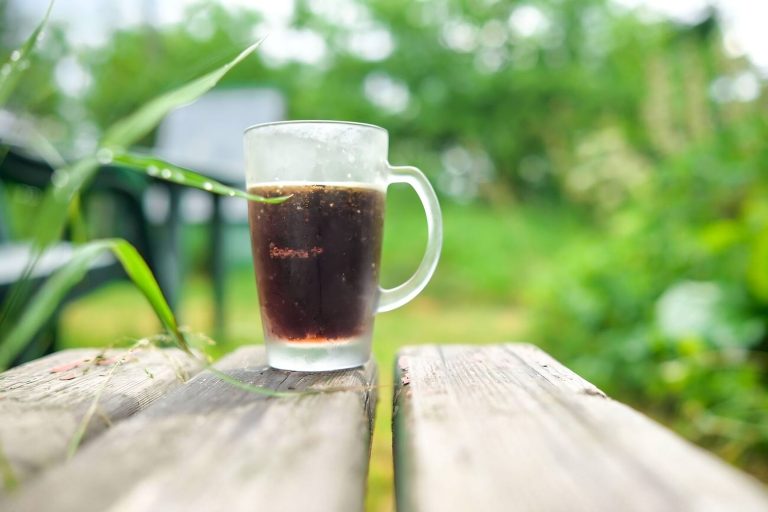
Living in an area where microbreweries flourish like thriving oases in every major town, our family couldn’t resist immersing themselves in the uniquely American experience of homemade root beer.
Despite the abundance of delights our homestead offered, from fresh goat’s milk and pressed cider to a flourishing tea garden, root beer quickly became our kids’ ultimate favorite beverage. It was no surprise, then, when my husband was given the chance to shine during show and tell, he eagerly chose to explore the art of crafting root beer from scratch.
This presented the perfect opportunity to engage him in a delightful botanical scavenger hunt and introduce some fundamental brewing skills.
A little bit of root beer history
Today, we commonly associate root beer with a sugary soda, but its historical origins tell a different tale. While botanical infusions have been crafted since time immemorial, sassafras, being native to North America, made root-based beverages with this unique ingredient relatively scarce in Europe.
European traditions, however, included the production of “small beers” – fermented drinks with minimal alcohol content. Upon the Europeans’ arrival in North America, these techniques melded with the culinary and medicinal sassafras beverages of various Native American tribes, gradually giving rise to the commercial root beer we cherish today.
In the early days of Colonial America, root beverages served as one of the many low-alcohol alternatives that were deemed safer to consume than the often-contaminated surface water. These concoctions were praised for their perceived health benefits, thanks to the addition of medicinal herbs.
While root beverages had a long history, it was Charles Hires, a 19th-century pharmacist, who is widely credited with creating what we now know as root beer. Hires crafted the first marketable recipe, initially selling packages of dry “Hires Root Tea” in his store.
When the Centennial International Exposition of 1876 took place in Philadelphia, Hires cleverly renamed his product from “root tea” to “root beer” to appeal to the working class. As time passed, he further refined the formula, developing a liquid concentrate, and ultimately began bottling the finished soda for sale.
However, in 1960, the U.S. Food and Drug Administration intervened, banning the use of real sassafras in commercial root beer and other foods due to concerns over the carcinogenic properties of a compound found in the root bark called safrole. Wintergreen, which shared a similar flavor profile with sassafras, quickly became a suitable replacement. Nowadays, most root beers forego both sassafras and wintergreen, opting for artificial flavorings instead, as they are more shelf-stable.
Yet, returning to our homestead, our family’s root beer-making tradition is quite different. We create a low-alcohol, fermented infusion using a delightful assortment of homegrown and wild-harvested herbs, barks, and berries, resembling the historic small beer more than modern commercial root beer.
During the initial two weeks of refrigeration, it remains perfectly safe for kids to enjoy. However, should it sit longer (a rare occurrence in our household), the alcohol content gradually rises. Our root beer recipe, shared below, avoids sassafras and sarsaparilla, instead, we embrace the use of spicebush and black birch, both of which thrive in our backyard and offer scents and flavors akin to the more traditional ingredients.
How to make your own root beer – Root beer recipe
Ingredients:
- 2 ½ quarts water
- 1 cup raw sugar 1
- package top-fermenting ale yeast (or commercial bread yeast)
- 0.6 ounce black birch bark or wintergreen leaves
- 0.6 ounce spicebush bark from young twigs
- 0.3 ounce dandelion root
- 0.3 ounce white birch bark
- 0.3 ounce wild or black cherry bark
- 0.3 ounce licorice root
- 0.3 ounce juniper berries
- 1 tablespoon grated ginger root
- 1 cinnamon stick
- 1 tablespoon packed hops flowers
- 4 to 5 flip-top bottles
What we did:
My husband and I embarked on an exciting scavenger hunt through our backyard and the surrounding area, collecting an array of ingredients for our homemade root beer. To keep everything organized, he created name cards to label each baggie.
Our quest led us to unearth dandelion roots, scrape bark off white birch trees, and gather fresh black birch twigs (which we couldn’t resist munching on), as well as young spicebush twigs. We even braved the curious goats to pick a handful of juniper berries.
Back in the kitchen, I read the recipe aloud while he diligently prepared the ingredients. He skillfully scraped the bark off the wintergreen and spicebush twigs, chopped the dandelion root, and grated the ginger root. The birch bark, cherry bark, and dried licorice root were broken into smaller pieces, and the juniper berries were carefully picked and crushed.
Once we had everything ready, my husband added each wild-harvested ingredient one by one into a large sauce pot, followed by the measured water.
With the stove on, we brought the infusion to a rolling boil, then reduced the heat and let it simmer with a lid on for 20 minutes. After turning off the heat, we left the infusion to cool down and steep overnight, allowing its flavors to intensify.
The next day, we meticulously strained the botanicals from the liquid, then added 1 cup of raw sugar, stirring until it dissolved completely. With great care, my husband poured the infusion into recycled flip-top soda bottles, adding a pinch of dry yeast to each before sealing them.
Before filling the bottles, we made sure to sterilize everything that would come into contact with the infusion to avoid any contamination. Equipment and containers were thoroughly sanitized by running them through the extra-hot cycle of the dishwasher, soaking them in iodine or grain alcohol, or boiling them for 10 minutes.
After capping the bottles, we placed them in a warm spot to start the fermentation process, which would take 2 to 3 days. Once satisfied with the fermentation, we moved the bottles to the refrigerator to slow down or halt the yeast activity altogether.
While some ingredients were not readily available in our surroundings, we purchased them from a local health food store. Additionally, we made a few substitutions; for instance, we used spicebush instead of sassafras, and Virginia juniper instead of the common European variety. This illustrates that homemade root beer recipes are versatile and can be tailored to suit locally available plants and personal taste.
Just like in the past, where each region had its favorite root beer recipe passed down through generations, you now have the foundation to create your unique family recipe, becoming a cherished part of your homestead’s history.
What to forage for your own root beer

Discover an array of delectable ingredients that can be used to create your very own root beer. Explore the offerings found in your local surroundings and embark on a delightful experiment, utilizing the measurements provided in this article as a helpful starting point. Delve into the world of flavors until you discover the perfect combination that truly satisfies your taste buds!
Roots and Herbs
Dandelion (Taraxacum officinale): Found in open fields and gardens, dandelion roots should be harvested in the early spring or late fall when they are most potent.
Greater burdock (Arctium lappa): Growing along roadsides and in disturbed areas, the roots of greater burdock are best harvested in the late summer or early fall.
Licorice (Glycyrrhiza glabra): Native to Europe and Asia, licorice root can be harvested in the autumn from plants that are at least three years old.
Black or sweet birch (Betula lenta): Commonly found in eastern North America, the bark can be collected in the spring or early summer when it’s most aromatic.
Spicebush (Lindera benzoin): Indigenous to the eastern United States, spicebush bark is best gathered in the late summer or early fall.
Black cherry (Prunus serotina): Widely distributed across North America, the bark can be collected in the spring or early summer when the sap is flowing.
Sassafras (Sassafras albidum): Native to eastern North America, sassafras roots and bark are typically gathered in the spring or fall.
Spices
Ginger (Zingiber officinale): The rhizomes of ginger are available year-round and can be found in most grocery stores.
Cinnamon (Cinnamomum verum): Harvested from the inner bark of the Cinnamomum verum tree, cinnamon is commonly available as dried sticks or ground powder.
Clove (Syzygium aromaticum): Derived from the flower buds of the Syzygium aromaticum tree, cloves are easily accessible in most spice sections.
Juniper (Juniperus communis): Juniper berries can be harvested in the late summer or fall from juniper shrubs found in temperate regions.
Wintergreen (Gaultheria procumbens): Commonly found in the forests of North America, wintergreen leaves and berries can be collected during the summer and fall.
Other Ingredients
Barley (Hordeum vulgare), malted: Barley can be purchased as malted grains from brewing supply stores or specialty markets.
Honey: Honey is widely available in stores and can also be sourced directly from local beekeepers.
Molasses: Molasses is a byproduct of sugar refining and can be found in most grocery stores.
Sugar, raw: Raw sugar can be obtained from supermarkets or health food stores.
Top fermenting ale yeast, or commercial bread yeast: Both types of yeast are readily available in stores, with commercial bread yeast being the more common option for homemade root beer.
Concluding

Making your own root beer is not only a fun and rewarding experience but also a journey of exploration and creativity. With the list of delightful ingredients at your disposal, sourced from your nearby environment, you have the freedom to customize your root beer to suit your personal preferences.
Embrace the joy of experimentation, using the provided guidelines as a stepping stone to crafting a unique and delicious root beer that will leave you and your loved ones savoring every sip. So, let your imagination run wild, and embark on this delightful adventure to create your very own signature root beer that will undoubtedly become a cherished and refreshing addition to your beverage repertoire.
Cheers to the art of homemade root beer!
You may also want to check:
Step by step guide to home brewed beer
Knowledge to survive any medical crisis situation during a major disaster
A few wild beverages you should try
The vital self-sufficiency lessons our great grand-fathers left us