This media resource describes how a passive rainwater system can be designed and constructed.
The Canberra Environment Centre website has a variety of resources for sustainable gardening from a permaculture perspective.

This media resource describes how a passive rainwater system can be designed and constructed.
The Canberra Environment Centre website has a variety of resources for sustainable gardening from a permaculture perspective.

I had been dreading doing this one just because I would have to trench 350 feet through the woods and there are some big trees with BIG roots.
I cleared it out with the Bigger M5660 Kubota bucket and 6 hook root ripper. The Ripper did a decent job of pulling most of the annoying little roots out and by making the trench looking like a drunk following a snake doing the work I avoided the worst of the big oak roots. A stright shot would have saved me 100 feet of pipe and electric cable but…

Thought I would join. I was looking for a new survivalist/prepper forum to call home and found this place. I use to be a member over at survivalist boards until things got stupid over there. I tried going back a few times, but the place is just not the same. Woke is everywhere and I try to avoid it at all costs.
Anyways, thank you for having me.
Radio
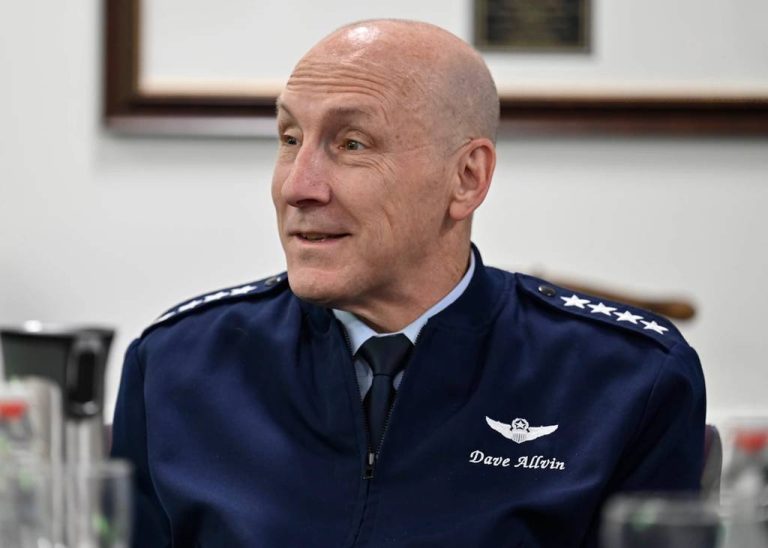
President Joe Biden has tapped Gen. David Allvin as his nominee to serve as the next Air Force chief of staff, the White House announced Wednesday.
That puts Allvin, who has served as Air Force vice chief of staff since November 2020, in line to lead the service in the midst of a massive paradigm shift to prepare its troops and equipment for a new era of war.
If confirmed by the Senate, the career mobility pilot and strategist would replace Gen. CQ Brown, the current Air Force chief of staff who is nominated to chair the Joint Chiefs of Staff.
Air Force Times first reported in May that Allvin was the Air Force’s internal pick for chief of staff, the frontrunner among candidates that included U.S. Transportation Command boss Gen. Jacqueline Van Ovost and Pacific Air Forces boss Gen. Kenneth Wilsbach.
Sources described him as a well-read, professorial leader with the self-discipline and Washington know-how to make an impact.
As head of the third-largest branch of the armed forces, Allvin would manage a $180 billion budget and 689,000 uniformed and civilian employees around the world over the course of a four-year term. He would also hold one of eight seats on the Joint Chiefs of Staff.
The Air Force is asking Congress to grant it a $185 billion budget in fiscal 2024 and green-light the next phase of a sweeping plan to retire hundreds of older aircraft that leaders say will be ineffective in future wars.
Allvin will inherit “a lot of the same problems” that Brown has faced, one retired four-star told Air Force Times, “which are primarily how to convince the system that, after 30 years of underfunding the Air Force, it’s going to take some fairly drastic measures to let them catch up with the efforts China has made.”
The new chief will also play a key role in reversing the Air Force’s struggle to recruit and retain airmen — particularly pilots, maintainers and cyber operators.
The four-star earned his officer commission from the U.S. Air Force Academy in Colorado in 1986, according to his official biography. He learned to fly cargo aircraft before becoming a test pilot, training wing commander, and head of the 618th Air and Space Operations Center — Air Mobility Command’s hub for tasking tanker and airlift missions around the world.
Allvin has also risen through command jobs and strategy and planning roles at the Pentagon, Air Force headquarters, U.S. European Command, the United Nations and NATO. He has amassed more than 4,600 flight hours in nearly a dozen airframes.
It’s a good year for the vices: Each of Biden’s nominees to lead the Army, Navy, Air Force and Marine Corps currently serve as the No. 2 officer in their respective branches.
Air Force Times previously reported that Lt. Gen. Jim Slife, the Air Force’s deputy chief of staff for operations and a leader in the special operations community, was also on deck to replace Allvin as vice chief of staff. It’s the first time in more than a decade that neither the Air Force chief of staff or its vice chief would hail from a fighter background.
Still, it’s unclear how soon Allvin may be able to take the top job. He joins nearly 300 military officials who are ensnared in Alabama Republican Sen. Tommy Tuberville’s monthslong hold on Pentagon nominees in protest of the department’s abortion-related policies.
The Air Force and the White House did not comment on the nomination by press time.
Rachel Cohen joined Air Force Times as senior reporter in March 2021. Her work has appeared in Air Force Magazine, Inside Defense, Inside Health Policy, the Frederick News-Post (Md.), the Washington Post, and others.

WASHINGTON — Two large defense contractors are teaming up to work on an intelligence-collecting jet the U.S. Army considers vital to its future long-range spying and targeting abilities.
L3Harris Technologies and Leidos on July 25 said they would collaborate on a proposal for the Army Theater Level High Altitude Expeditionary Next Airborne-Signals Intelligence venture, or ATHENA-S.
The Army is in the midst of an aerial reconnaissance overhaul, moving away from Cold War-era aircraft and toward a future featuring advanced sensors, flights at higher altitudes and insights gathered from deeper distances. The ATHENA — of which there are the variants “S” and “R” — is part of the push.
“The Leidos-L3Harris team focuses each of our companies’ extensive and diverse talents to achieve mission success with ATHENA-S,” Tim Freeman, a Leidos senior vice president and airborne solutions operations manager, said in a statement. “With our combined integration, investment, engineering and design expertise, we look forward to producing a highly-configurable platform with more ISR capabilities to create an operational picture of the battlefield.”
The companies said they would together fit two Bombardier Global 6500 jets with radar, electronic and communications intelligence equipment tailored to ATHENA-S specifications. The aircraft are intended to support Army missions within European Command’s area of responsibility, which includes Ukraine and Russia.
L3Harris and Leidos are already involved with other Army intelligence, surveillance and reconnaissance programs, namely the Airborne Reconnaissance and Electronic Warfare System, or ARES; and an airborne reconnaissance intelligence system dubbed ARTEMIS.
The former has been dispatched to the Pacific, a priority region for the Biden administration. It has logged more than 130 flight hours. The latter has been sent to Europe, where it’s recorded more than 2,000 hours of operation.
The Army is beefing up its information-collection arsenal as the Pentagon prepares for a potential conflict with Russia and China. Fights with either power would cover a vast distance and require mass amounts of troops, a pivot away from the more surgical counterinsurgency campaigns of the past. The conditions are driving a demand for what’s known as deep sensing: the capacity to find, monitor, target and kill from greater distances and with finer precision.
“In simplistic terms it is we, as a country, who need to understand the environment that we’re going to operate in as robustly as possible from as far away as possible,” Mark Kitz told C4ISRNET in June, when he was the service’s program executive officer for intelligence, electronic warfare and sensors. Kitz now leads Program Executive Office Command, Control and Communications-Tactical.
“That’s critical,” he added, “not putting any of our systems or soldiers at risk, and doing it in a way that we can understand the operating space at very long distances, especially when you look at Indo-Pacific Command, especially when you look at the target environment in Ukraine.”
Colin Demarest is a reporter at C4ISRNET, where he covers military networks, cyber and IT. Colin previously covered the Department of Energy and its National Nuclear Security Administration — namely Cold War cleanup and nuclear weapons development — for a daily newspaper in South Carolina. Colin is also an award-winning photographer.

WASHINGTON — The U.S. Air Force is expanding its partnership with a professional drone-racing league that touts a tech-savvy fan base, which leaders believe will likely engage with and potentially enlist in the military.
The Drone Racing League’s 2023-2024 season will for the first time feature an Air Force-endorsed pilot and flight deck, capping seven years of growing collaboration. An inaugural STEM day is also planned, during which children and young families can learn about tinkering and piloting.
The exposure to science, technology, engineering and mathematics — key to twitchy, physics-based drone racing — could help shape future airmen, the service argues.
Military recruitment efforts have struggled for years: The Army missed its fiscal 2022 recruiting goal by roughly 15,000 new soldiers, and the Air Force this year is expected to fall about 10% short of its own target. The reasons vary: Fewer Americans are meeting basic fitness standards, a healthy job market is luring candidates away from signing up and overall confidence in public institutions has sharply contracted.
Brig. Gen. Christopher Amrhein, the commander of the Air Force Recruiting Service, told C4ISRNET that the Drone Racing League’s patrons are part of an ideal pool from which to seek recruits.
“The competition is spectacular, the content is immersive and educational, and the league engages a coveted audience of young, high-energy tech-setters who have a passion for flight, innovation and technology,” he said July 26. “They are future U.S. Air Force recruits and airmen, and a core reason why we continue to renew our partnership with DRL year after year.”
The Drone Racing League defines “tech-setters” as 16- to 34-year-olds not attracted to legacy sports like football, baseball and basketball. Instead, the demographic gravitates toward technology, competitive gaming and simulation.
The DRL racing premise is deceptively simple: A pilot must maneuver a drone from a first person point of view through an obstacle course as quickly as possible and in competition with other fliers. Points are dished out based on results.
Competitions are held in stadiums across the globe and in the virtual realm, via the DRL Simulator, a realistic video game.
The DRL Simulator already features an Air Force workbench, where players can construct custom racing drones, and the Air Force Boneyard maps, where players can zoom through a deserted airport in the daytime or darkness.
The league’s metrics show more than 80% of fans favor collaboration with the Air Force, a long-standing partner. Internal data also show fans are 30 times more likely to engage with the service on social media channels. Previous races logged 260 million global streaming views.
“Really from day one, we’ve seen this endemic fit of the Air Force wanting to recruit the best and brightest,” DRL President Rachel Jacobson told C4ISRNET in an interview. “When you look at this tech-setter audience that we call our fans, you see that they are wired to love technology, innovation, engineering, precision, sports — all of these areas that have become valuable skill sets for the Air Force.”
Interest in drones has ballooned in recent years alongside their prevalence within militaries, police departments and hobby groups. The global commercial drone market is expected to reach $38 billion by 2027, according to Statista, a data-gathering and analysis firm.
As the U.S. military increasingly leans into uncrewed technologies, it will require well-versed engineers, technicians and remote pilots. Such a cohort is familiar to the Drone Racing League.
“As a technology-powered sport, STEM is at the heart of everything we do. It’s literally the beating heart of DRL,” said Jacobson, a former NBA business development executive. “From the drones to the radio networks, our expert engineers are hand-developing every piece of technology that makes our high-speed drones available.”
Colin Demarest is a reporter at C4ISRNET, where he covers military networks, cyber and IT. Colin previously covered the Department of Energy and its National Nuclear Security Administration — namely Cold War cleanup and nuclear weapons development — for a daily newspaper in South Carolina. Colin is also an award-winning photographer.

Since prepping has gained popularity as a practical lifestyle choice, many individuals find themselves drawn to the idea of self-reliance and preparedness. However, for some, convincing their spouse or partner to embrace prepping can be a daunting task. The prospect of engaging in prepping efforts may initially evoke skepticism, reluctance, or even opposition, as it involves significant changes in mindset and daily routines.
In this article, we will explore the art of persuading your significant other to embark on the journey of preparedness with you. While the path to mutual prepping enthusiasm may seem challenging, it is not insurmountable. With the right approach, understanding, and open communication, you can successfully encourage your spouse or partner to join forces and share the responsibility of securing your family’s future.
From addressing concerns and debunking misconceptions to highlighting the benefits of preparedness, we aim to equip you with the knowledge and tools necessary to inspire your loved one to embrace this invaluable way of life.
Remember, true preparedness extends beyond tangible supplies; it encompasses unity, trust, and cooperation between partners, reinforcing the foundation of a strong and resilient relationship.
In a world captivated by dramatic portrayals of survivalism in movies and TV shows, the concept of prepping has often been misrepresented, perpetuating misconceptions that can deter potential preppers.
When you discuss the concept of prepping with your partner, it is crucial to dispel these myths and shed light on the true essence of prepping—a practical and proactive approach to preparedness that extends beyond the realms of gloom and doom or fearmongering.
Contrary to the Hollywood narrative, prepping is not about living in an underground bunker, dressed in combat gear, and preparing for the apocalypse. While such depictions may entertain audiences, they often create a distorted image of preppers as extreme individuals driven solely by fear and paranoia. In reality, prepping is a responsible and balanced lifestyle choice focused on readiness for a range of potential emergencies.
Preppers do not live in constant fear, rather, they embrace the concept of “hope for the best, prepare for the worst.” By proactively acquiring essential skills, knowledge, and supplies, they cultivate a sense of security and self-reliance, ensuring they can face adverse situations with confidence. Prepping encourages a proactive attitude that empowers individuals to tackle challenges head-on, rather than succumbing to fear-induced inaction.
Furthermore, prepping is not an all-or-nothing pursuit. It is a customizable lifestyle that can be tailored to individual needs and circumstances. Some preppers may focus on short-term emergencies, such as power outages or natural disasters, while others may prepare for long-term disruptions, such as economic instability. The diversity in prepping approaches reflects the uniqueness of each prepper’s situation and aspirations.
Prepping is also not an isolated journey. Contrary to the lone-wolf stereotype, many preppers emphasize community involvement and networking. They understand the value of collaboration and support during challenging times. Building a strong community network fosters resilience and fosters a sense of unity that transcends individual prepping efforts.
The essence of prepping lies in preparedness as a way of life. It instills valuable life skills like resourcefulness, adaptability, and problem-solving, which prove beneficial in both emergency and everyday situations. By dispelling myths and misconceptions, we can embrace prepping as an empowering lifestyle choice, one that promotes a more self-sufficient and resilient society.
Initiating a conversation with your partner about prepping can be a sensitive and essential discussion. When approaching this topic, honesty, empathy, and a focus on shared values will help create an open and understanding space. Consider the following steps to communicate your motives for becoming a prepper and emphasize the importance of safety and security as a team.
Begin by expressing your genuine concerns about potential challenges or emergencies that life might present. Emphasize that your intentions are rooted in ensuring the well-being of both of you and any loved ones involved.
Prepping is not about succumbing to fear or becoming obsessed with doomsday scenarios. Instead, it’s a practical and responsible approach to preparedness, involving acquiring essential skills, knowledge, and supplies to face various situations with confidence.
After you’ve addressed any misconceptions about prepping, which might have been influenced by misrepresented media portrayals. Clarify that prepping doesn’t require radical lifestyle changes but rather involves gradual adjustments and small preparations that can make a significant difference in times of need.
Share the benefits of being prepared, such as increased self-reliance, adaptability, and peace of mind. Make it clear that you envision this journey as a team effort where you can collaborate and make decisions together. Assure your partner that their opinions and input are valued and you want to work hand in hand to create a plan that aligns with both your needs and comfort levels.
During the conversation, be understanding and patient if your partner expresses concerns or reservations. Remember to focus on shared values of responsibility, security, and looking out for one another. Highlight how being prepared can strengthen your bond as a couple and foster a sense of unity.
Reassure your partner that your motives for prepping stem from a deep love and care for them. Affirm your commitment to their well-being and to facing whatever the future holds together as a strong, prepared team.
By approaching the conversation with respect, empathy, and a focus on shared values, you can create a positive and understanding space for discussing your motives for prepping and fostering a joint commitment to safety and security. Remember, this is not about instilling fear, but rather about being proactive and responsible in facing life’s uncertainties together.

As you and your partner begin the journey of prepping, it’s essential to provide reassurance by starting with small, manageable steps that won’t strain your budget or overall lifestyle. Taking a gradual approach can help ease any concerns and ensure that both of you feel comfortable and committed to the process.
To begin, engage in an open and honest conversation about your prepping goals. Sit down together and discuss the specific areas you want to focus on, whether it’s creating an emergency supply kit, learning basic survival skills, or developing a family communication plan. By setting clear goals together, you can create a sense of unity and purpose in your prepping efforts.
Next, consider incorporating prepping into your everyday life in a way that aligns with your existing budget and lifestyle. Start by identifying items you may already have at home that could be useful for emergency situations. Repurposing household items, like empty containers or camping gear, can be a cost-effective way to build your emergency supplies.
In addition to repurposing, focus on making small, mindful purchases that won’t break the bank. Look for deals, discounts, or sales on essential prepping items, and gradually build your supply kit over time. By spreading out your purchases, you can ensure that prepping doesn’t have a significant impact on your monthly budget.
Consider integrating prepping into your regular activities and hobbies. For example, take a first aid or survival skills class together, which can be both educational and fun. Learning together can strengthen your bond and make prepping feel like a shared adventure rather than a burden.
As you progress, involve your partner in the decision-making process. Listen to their thoughts, concerns, and suggestions, and be open to compromise. Remember that prepping is a collaborative effort, and your partner’s input is valuable in shaping your preparedness plans.
Above all, reassure your partner that prepping is about preparedness, not paranoia. Emphasize that taking small steps towards being ready for potential emergencies can provide peace of mind and a sense of control in uncertain times. Remind them that prepping is a responsible and proactive way to safeguard your shared future and the well-being of your loved ones.
Creating a sense of unity within your family through prepping is a powerful way to foster communication, cooperation, and a shared commitment to preparedness. By involving every member, you can transform the process into a bonding experience that strengthens your family’s resilience and readiness for any challenges that may arise.
Start with a family meeting: Gather your family for a prepping-focused discussion. Explain the importance of preparedness and how it benefits each member. Encourage open communication, allowing everyone to share their thoughts, concerns, and ideas about prepping. By involving every family member from the beginning, you set the stage for a collaborative approach.
Assign roles and responsibilities: Allocate specific prepping tasks to each family member based on their interests, skills, and abilities. Whether it’s organizing the emergency supply kit, researching survival skills, or developing a communication plan, involving everyone in the process empowers them to take ownership of their role in family preparedness.
Make prepping fun and educational: Turn prepping into a family adventure by organizing educational activities related to preparedness. Consider family outings to learn wilderness survival skills, attend first aid workshops, or explore gardening for self-sufficiency. Creating enjoyable experiences will instill a positive mindset and make prepping an engaging and educational journey for everyone.
Involve children at their Level: For younger children, prepping can be introduced through age-appropriate games, stories, and role-playing activities. Teach them about basic safety measures and help them understand the importance of being prepared without instilling fear. As they grow older, involve them in more hands-on tasks and discussions.
Hold regular family drills: Conduct mock emergency drills, such as fire drills or evacuation exercises, to practice your family’s response to potential crises. Make these drills interactive and engaging, using them as opportunities to refine your preparedness plans and enhance communication within the family.
Set family goals and celebrate achievements: Establish prepping goals as a family, and celebrate milestones achieved along the way. Acknowledge the efforts of each family member, regardless of their age or role, and reinforce the idea that everyone’s contribution is valued in creating a secure and resilient family unit.
Encourage communication and adaptability: Foster an environment of open communication where family members feel comfortable expressing their concerns and ideas about prepping. Emphasize the importance of flexibility and adaptability in your preparedness plans, as circumstances may change over time.
Hold regular family meetings: Schedule periodic family meetings to discuss prepping progress, share new insights, and address any challenges that may arise. These meetings provide an opportunity for family members to stay engaged, updated, and involved in the ongoing prepping efforts.
Lead by example: As a parent or guardian, set a positive example by actively participating in prepping tasks and maintaining a proactive attitude towards preparedness. Your enthusiasm and dedication will inspire and motivate other family members to take prepping seriously.
By involving every member of your family in the prepping process, you not only enhance your family’s ability to face emergencies but also foster a strong sense of unity and communication within your household. As you work together towards a common goal, you’ll find that prepping becomes more than just a practical exercise—it becomes a journey that strengthens your family bonds and prepares you all for whatever the future holds.

When I’m discussing with others about prepping and what needs to be done to become a prepper, I always mention the fact that this lifestyle requires some sacrifices. No matter how well-intended you are and how much you try to convince those around you that all the time and effort you put into prepping is for their own well-being, not everyone may resonate with you.
Some preppers still have a hard time convincing their partners that this is the way to go, and they have to be realistic about their expectations. However, even if your significant other is not one hundred percent on board with your plans, that’s no reason for quitting.
In fact, many folks out there understood this a while back, and they figured out ways to live with a “difficult” partner. They know that they will have to carry others, sort of speaking, when the brown stuff hits the fan, and they have no problem in doing so. Our family members are the ones worth fighting and sacrificing for, and in a broad way, that’s what prepping is all about. It’s more about them than it is about us.

Embracing prepping as a lifestyle choice is about much more than just stockpiling supplies or succumbing to fear. It’s a proactive approach to preparedness, driven by a genuine desire to safeguard our loved ones and ourselves in the face of uncertainty. Throughout this journey, effective communication with our partners is essential, as it fosters understanding, unity, and mutual support.
Dispelling misconceptions surrounding prepping and involving our partners in the decision-making process helps build a strong foundation for shared preparedness. By taking small, manageable steps together, we can integrate prepping into our daily lives without straining our budgets or disrupting our existing routines.
Through open communication and a commitment to working together, we can create a resilient, supportive family unit equipped to face any challenges that may come our way. Remember, prepping is not about instilling fear; it’s about embracing preparedness with hope and confidence in our ability to overcome adversity.
You may also want to check this:
Knowledge to survive any medical crisis situation during a major disaster
Surviving drought – How to obtain water from air!
A few survival foods everyone should learn how to make
The vital self-sufficiency lessons our great grand-fathers left us
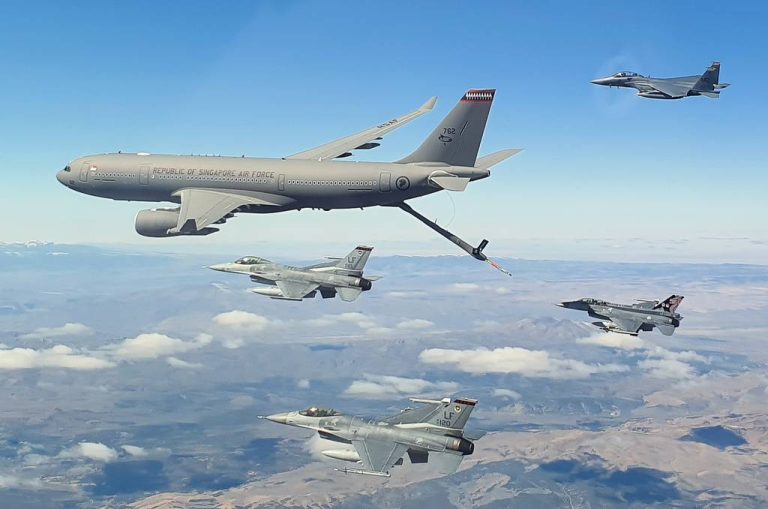
VICTORIA, British Columbia — The Canadian government has increased the number of strategic tanker transport aircraft it is ordering from Airbus as it shores up its contribution to the defense of North America.
Last year, Canadian officials said they were committing to the purchase of four new A330 Multi Role Tanker Transports for its fleet, and negotiations were underway with Airbus. Meanwhile, the country acquired two used A330s from International Airfinance Corp., a global aircraft leasing company.
But on July 25, Canadian Defence Minister Anita Anand announced the government is buying three more used A330s from International Airfinance, and that it selected Airbus Defence and Space to convert the now-five used aircraft into strategic tankers.
Canada’s contract with Airbus, which covers delivery of the four new A330s and conversion of the five used aircraft, is worth about CA$3.6 billion (U.S. $2.7 billion). The used aircraft are currently configured for long-haul commercial use.
Anand noted that the initiative will allow the Royal Canadian Air Force to enhance its sovereignty operations, including in the Arctic. It will also strengthen Canada’s air-to-air refueling support for North American Aerospace Defense Command operations and NATO, she added.
“The additional air-to-air refueling initiative is an integral part of Canada’s investments in NORAD modernization,” Defence Department spokesman Dan LeBouthillier said.
Last year, the Canadian military found the Airbus A330 was the only aircraft that met its requirements. As a result, the nation issued a formal request for proposal for the planes to Airbus on May 13, 2022, and negotiations began.
The aircraft will be able to refuel current Royal Canadian Air Force CF-18 fighter jets as well as the F-35 aircraft on order, Le Bouthillier said. The tankers will also be able to refuel various U.S. military aircraft.
The new planes are expected by 2027.
Canada is also buying a new simulator as part of the same program, but the government did not release further details.
“The A330 MRTT perfectly matches Canada’s needs to protect its sovereignty as well as to enhance operations both in the North American Aerospace Defence Command as well as in NATO,” Mike Schoellhorn, CEO of Airbus Defence and Space, said in a July 25 statement.
The new fleet will replace the existing CC-150 Polaris aircraft, which have been in operation since 1992.
David Pugliese is the Canada correspondent for Defense News.


