DAYTON, Ohio — With pressure on the U.S. Air Force to field its upcoming fleet of E-7A battlefield management aircraft as quickly as possible, the service is leaning heavily on advance procurement.
The Air Force wants to have a fleet of up to 26 of the Boeing-made command-and-control aircraft by 2032 to replace the aging E-3 Sentry. The latter’s airborne warning and control capabilities are lagging, and the fleet is nearing the end of its life. The Air Force is now retiring half its fleet of 31, though some lawmakers last year expressed concern that could leave the service with a capability gap.
But the Air Force’s ambitions to swiftly replace the E-3 in time for a potential fight against China, perhaps later this decade, are running into the realities of production limitations.
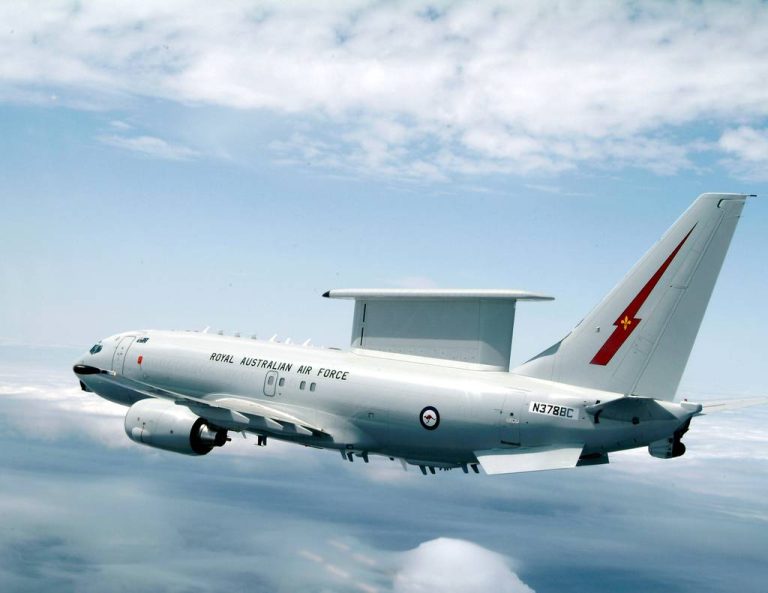
In a discussion with reporters at the Air Force’s Life Cycle Industry Days event in Dayton, Ohio, the program executive officer for digital services, Steven Wert, outlined steps the Air Force is taking to accelerate advance production and delivery of crucial components for the E-7 in hopes of speeding up the timetable for completing the planes.
The Air Force is now focusing on how quickly it can build the first E-7, Wert said — but there are limitations. Boeing first has to build the airframe using a 737 tube manufactured by Spirit AeroSystems in Wichita, Kansas; beef up its structure to be able to support the massive multirole electronically scanned array, or MESA, radar; add its mission systems; and then test and certify its airworthiness.
The Air Force is working to accelerate the process of building subsequent E-7s, largely through funding for long-lead items. By purchasing critical components in advance and making them available before they’re actually needed, the Air Force wants to ensure production lines don’t slow down while manufacturers wait for parts to arrive.
Wert pointed to a July 26 service announcement that the Air Force will issue a sole-source award for an unspecified amount to Boeing so it can buy more long-lead items for the low-rate initial production of the E-7, which is expected to begin in fiscal 2025.
Wert said Monday this advance procurement will cover multiple key areas, including the E-7′s airframe, its conversion and structural strengthening, and the MESA radar, which is nicknamed “top hat” for its distinctive shape.
The Air Force’s list of unfunded priorities for the FY24 budget asks for another $596 million for E-7 advance procurement funds.
Boeing said earlier this year that once the Air Force’s E-7 program is fully up and running, it plans to build at least four annually.
Wert said the production of the massive Northrop Grumman-made MESA radar is one of the limiting factors on E-7 production. The company can now build two radars per year, and is looking to expand that production capability to four.
The Air Force is also working with Boeing to find ways to keep the E-7′s cost down, Wert said, by ensuring its software architecture is modular and easily supportable, for example. The Air Force has assigned some of its own software developers from Tinker Air Force Base, Oklahoma, to directly work with Boeing on the E-7′s software, he added.
Above all, he explained, the Air Force doesn’t want the E-7 to repeat its experience with the Boeing-made E-3 Sentry program, where the service had to go back to the original manufacturer for any changes.
Other countries have shown interest in buying E-7s, increasing the pressure on Northrop to produce more radars, Wert noted. Northrop is already investing in ways to double its radar production capacity, he said, and the company could find ways to go even further.
“We may very well be very busy,” Wert said.
Stephen Losey is the air warfare reporter for Defense News. He previously covered leadership and personnel issues at Air Force Times, and the Pentagon, special operations and air warfare at Military.com. He has traveled to the Middle East to cover U.S. Air Force operations.
Bill Barr: I think it’s a legitimate case. I think, unlike the document case, it’s going to have issues of proof. It’s a more complicated case. They’re not attacking his First Amendment right. He can say whatever he wants, but that does not protect you from entering into a conspiracy. All conspiracies involve speech, and all fraud involves speech.
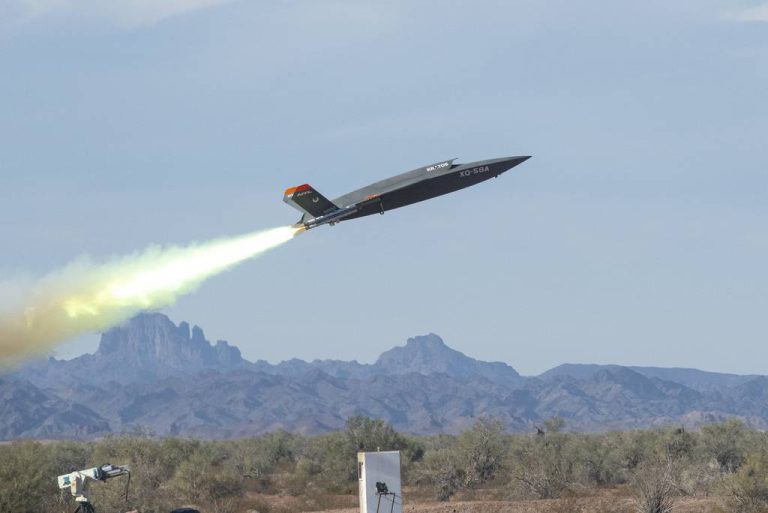
WASHINGTON — Artificial intelligence software successfully flew an XQ-58A Valkyrie drone, the Air Force Research Laboratory announced Aug. 2.
The U.S. lab led the three-hour sortie on July 25 with test units at the Eglin Test and Training Complex in Florida. The flight followed two years of work and a partnership with Skyborg Vanguard, a team made up of personnel from the lab and the Air Force Life Cycle Management Center with the intent of creating unmanned fighter aircraft.
“This sortie officially enables the ability to develop [artificial intelligence and machine learning] agents that will execute modern air-to-air and air-to-surface skills that are immediately transferrable to the CCA program,” said Col. Tucker Hamilton, the chief of AI test and operations with the Air Force. The CCA program, or collaborative combat aircraft, was designed to create combat drones that can operate with piloted aircraft.
The lab’s Autonomous Air Combat Operations team created algorithms for the flight that took millions of hours to mature in simulations, during sorties with the X-62 VISTA experimental aircraft, while working with the XQ-58A, and during ground test operations, according to the announcement.
Previous flights of the XQ-58A Valkyrie have supported the Air Force’s effort into loyal wingmen research. Kratos Defense and Security Solutions produces the drone.
The Air Force Research Lab is the service’s primary scientific research and development center responsible for the discovery, development and integration of cost-effective warfighting technologies for the country’s air, space and cyberspace forces.
“AI will be a critical element to future warfighting and the speed at which we’re going to have to understand the operational picture and make decisions,” Brig. Gen. Scott Cain, the lab’s commander, said in the announcement. “AI, Autonomous Operations, and Human-Machine Teaming continue to evolve at an unprecedented pace and we need the coordinated efforts of our government, academia, and industry partners to keep pace.”
Georgina DiNardo is an editorial fellow for Military Times and Defense News and a recent graduate of American University, specializing in journalism, psychology, and photography in Washington, D.C.
Are you looking to give your outdoor space a much-needed makeover this spring? Lawn renovations add a magical atmosphere to your home’s overall look and feel.
Several elements go into making a successful lawn renovation, whether you’re considering installing brand-new grass, redoing existing hardscaping, or adding decorative structural features such as flower beds.
In this article, we’ll discuss the key factors to consider when revitalizing your yard. So, grab what you can, and let’s get this thing started!
Lawn Renovation Checklist
Assessing Your Current Lawn and Landscape
The first step in any successful lawn renovation is assessing what you currently have. This includes the condition of your lawn and the existing features on your property. In terms of grass, take some time to look closely at it. Is it patchy and thin in some areas? Do you see a lot of weeds or bare spots? To prevent wasting time and money, it’s essential to identify any underlying problems that need to be addressed before making any significant changes.
Additionally, take the time to look at existing hardscaping features such as pathways, patios, and retaining walls. Do they need to be repaired or completely replaced? Are there areas that could be enhanced with decorative elements like walkways and benches? Having a clear vision of what you want can help guide your decisions.
Divide and Conquer: Plan every sector of your lawn floor!
Breaking your lawn floor into smaller segments or sections helps to keep the renovation process organized and efficient. Start by drawing out a scale map of your property, including all existing features and potential features you might want to add. This can help you understand the space available for new additions and where certain items should go.
For example, flower beds should be placed away from areas with tremendous foot traffic. Additionally, consider how much sun vs. shade each site receives and plan accordingly for what types of plants thrive in each environment.
Another example would be incorporating a shed or a patio. If you create a paved area, how much room should you leave around it for furniture and other items? Thinking through these details ahead of time will save you from making unnecessary changes for a successful lawn renovation process.
Hiring the Right Landscaping Firm
Once you have a clear vision for your renovation, it’s time to search for reputable landscapers in your area. This is one of the most important decisions you’ll make, so research and choose the firm that best suits your needs. Listed below are some of the qualifications you must look for when examining a firm:
Good reviews from past customers — Honest reviews from numerous customers are often reliable sources of judgment for landscaping firms.
Quality of work — Ask for photos of their previous projects to get a good idea of what results you can expect.
Professionalism and customer service — Do they respond quickly with answers to your questions? Are they open to suggestions and willing to adjust the plan according to your needs?
Cost — Make sure that their services are reasonably priced.
Insurance coverage (in case of any accidents or damage) — Ensure that the firm is adequately insured and that you won’t be liable for any injury or damage during the renovation process.
To give you an edge in this department, Heroes Lawn Care is among the one-stop landscaping shops when it comes to aiming for successful lawn renovations. The right professionals are sure to bring the lawn and landscaping of your fantasies to reality!
Selecting your overall floor design
Before digging into the details of which types of plants and materials to use, you’ll need to decide on a general floor design for your lawn. This includes selecting different features such as pathways, ponds, flower beds, and grass.
This step helps create visual harmony throughout your landscape. It requires careful consideration for it all to work together. In addition, it’s essential to consider how much maintenance each feature requires. For instance, grass may require more upkeep than loose gravel or stone pathways.
Remember that the harmony of all the features you plan on integrating will dictate the overall feel of the lawn of your dreams. Therefore, it is only fair to focus on the vibe you are trying to induce.
Plant and Grass Selection
The types of plants you select should be based on your climate. Since your area may have different soil conditions and varying temperatures throughout the year, choosing well-suited plants for your region is essential.
Grass
The grass is an integral part of any successful lawn renovation. Many different types of grass are available, each with its own characteristics and requirements. It’s essential to thoroughly research the various kinds to ensure you select the one that best fits your climate and specific needs. To fill you in, here are some grass options you may want to look into:
Bermuda grass – This type of grass is known for its durability and ability to hold up in hot, dry climates.
Fescue – A cool-season grass that’s great for areas with cooler winters.
Zoysia – This warm-season grass provides excellent shade tolerance and pest resistance.
Flowers
When selecting flowers, choosing varieties that can survive in your climate is important. Additionally, it would help if you researched which plants attract beneficial insects and pollinators to your yard. Doing so will ensure that your garden will look great and be a haven for wildlife. To make things easier, here are some flowers varieties you can consider:
Daisies – These bright and cheerful flowers are great for attracting pollinators.
Cosmos – These easy-to-care-for plants will add texture and color to your garden.
Marigolds – Not only do marigolds have a wonderful scent, but they also help protect other plants from pests.
Structural Installations
Once the basic floor design is in place, it’s time to consider the structural installations, such as a patio, shed, fencing, and retaining walls. These components will help create a sense of order and structure while adding value to your home.
When selecting materials for these structures, opt for good-quality ones that still fit within your budget. Additionally, consider the maintenance requirements for each material and choose ones that are easy to clean or repair when necessary.
Let there be light!
If you plan to be outside in the evening, outdoor lighting is essential for your definition of a successful lawn renovation. Not only will it create a more inviting and safer space, but it can also help enhance your landscape’s visual appeal.
When selecting lights, opt for ones that are energy-efficient and long-lasting. Many different types of light fixtures are available on the market, such as string lights, spotlights, and post lights. Choose ones that can withstand the elements and add a style touch to your lawn
Finishing touches
The finishing touches often make all the difference when turning an ordinary space into something special. Consider adding outdoor furniture, rugs, planters, or wall decorations to help you create the perfect outdoor oasis.
When selecting furniture, make sure it fits your aesthetic and is comfortable and waterproof. Add colorful rugs to soften hard surfaces, and choose planters of varying shapes and sizes to add texture and color. Finally, hang wall decorations such as canvas art or an outdoor mirror. These will help bring a sense of life to your yard and can take the overall look of your landscape to a whole new level.
Advantages of a Healthy and Well-maintained Lawn
Sure, a lawn renovation may seem like an expensive investment, but it can be worth it in the long run. A well-maintained lawn is not only aesthetically pleasing but also has numerous benefits to offer, such as:
Improving air quality – Plants are natural air purifiers and will help keep the air around your home clean.
Keeping allergies at bay – A healthy and well-maintained lawn can act as a barrier for allergens. This will help reduce sneezing and itching due to airborne pollen and bacteria.
Boost your home’s value – A beautiful lawn can raise the price of your property by adding visual appeal.
These advantages are just a few reasons why investing in a successful lawn renovation project is worth your time and money.
Key Takeaway
A successful lawn renovation can help make your outdoor space look its best while providing numerous benefits, such as improved air quality, reduced allergies, and increased home value. Selecting the correct type of plants, grass, and structural installations is vital to creating a beautiful and healthy lawn that will last years. Remember the finishing touches, too! Outdoor furniture, rugs, and decorations can take your property to the next level.
In general, a well-maintained lawn requires regular upkeep, but if done correctly, it can make an incredible difference in transforming your outdoor space. So wear some gardening gloves and prepare to create the lawn of your dreams!
Massachusetts was regularly electing Republican AG’s right up to 1969. After 1969, the state of Massachusetts has not seen a single Republican AG.
Why is this?
Having always lived in Massachusetts, and Massachusetts being the cradle of the Revolution, I have suspected (but cannot prove) that the Globalists picked Massachusetts as the first state they’d like to conquer. They wanted to first overthrow the cradle of the Revolution. The Revolution being the one (and only) war that overthrew their power and gave freedom to the common man, instead of the King. I suspect that they wanted to break the revolutionary spirit of Massachusetts first, as a symbolic gesture.
Perhaps this social engineering effort began in 1969?
How did they systematically turn the state blue? Were elections simply stolen? Was it a social engineering operation? Was it the 1960s counter-culture revolution? Was it a mix of several strategies at once?
Something definitely happened here in Massachusetts to turn the tides from Red to Blue so abruptly, dramatically and permanently.
I think there’s a bigger story with how Massachusetts turned blue. I’m not sure what it is. There’s something fishy here. I suspect a larger Globalist social-engineering conspiracy. I do not accept that it happened organically.
Tomatoes and Peppers are our primary staple vegetable. Apples, Peaches and Plums our primary fruits. Strawberries and Black Berries our primary berries. Beef, Pork, Poultry and Fish in that order our primary meats.
Do you buy or produce your own or a mix of store and farm/garden? I think we all know I take the produce my own at around 94-97 Percent of what we eat we raise here but do keep a pretty large selection of dry and commercially canned goods.
How do you preserve your food if you do?
What is your stored food rotation time cycle? IE I have a 3 year rotation and always have at least 2 years in reserve by rotating oldest to front newest to rear on the shelves. If say everything fell apart in the world right now and the supply chain came to a complete stop I have 2.5 years of food I preserved and another year of grocery store stuff.
Do you keep a running inventory of what you have? I have a sheet on a clip board that gets whatever I take out checked so I look at the sheet and know what I have or don’t have.
Are your food reserves secured under lock and key?
Just curious how other folks do it or if they bother being a food aggressive hoarder like me or if I am just weird
I am told I am a bit extreme on the food and food preservation. Like for the last two weeks and for the next 5 weeks I have and will be processing 200 pounds of tomatoes twice per week. This is part of what I picked today. The equipment long ago paid for itself. And I save a ton of money by not having to buy much in the way of groceries. There is another black flat and a half in the wagon outside. The one in the pic weighs in at 90 pounds. Also 30 pounds of Gypsy Peppers, 10 pounds of Cayenne, 12 pounds of really hot Jalapeno and god knows how many pounds of Zucchini LOL. Thank GOD apples, peaches, Plums and Berries are done…… Well mostly done I still have the October apples to press and make juice and cider with. But all the dehydrated, pie filling and jellies and jams are done! I only did 48 quarts each of new potatoes, green beans, carrots and beets this year. I did go kind of overboard with the Kraut this year and did 115 quarts of it, really nice stinky well fermented batches this year I still have 2000 pounds of beef in the freezers from last year so I am going to sell the steers I finished for myself this year. I am really trying to take two more chest freezers offline. If I can get the last two of the older ones unplugged I pretty much won’t have a electric bill for the containers. Those last two old freezers are kind of electric hogs.
And I am still making pasta sauce from what I picked 3 days ago…. And Finally down to the last two pots to cook down!
I have quite a bit invested into my food processing equipment and yes a lot of it was used commercially preparing stuff for the food trucks. But I always took care of our needs before the business needs and the equipments primary function was for meeting our needs. The Food Trucks, Market Stands and Meat Broker Wagon started out as a way to get rid of our surplus and make a little money…… I can’t help it that it grew out of hand
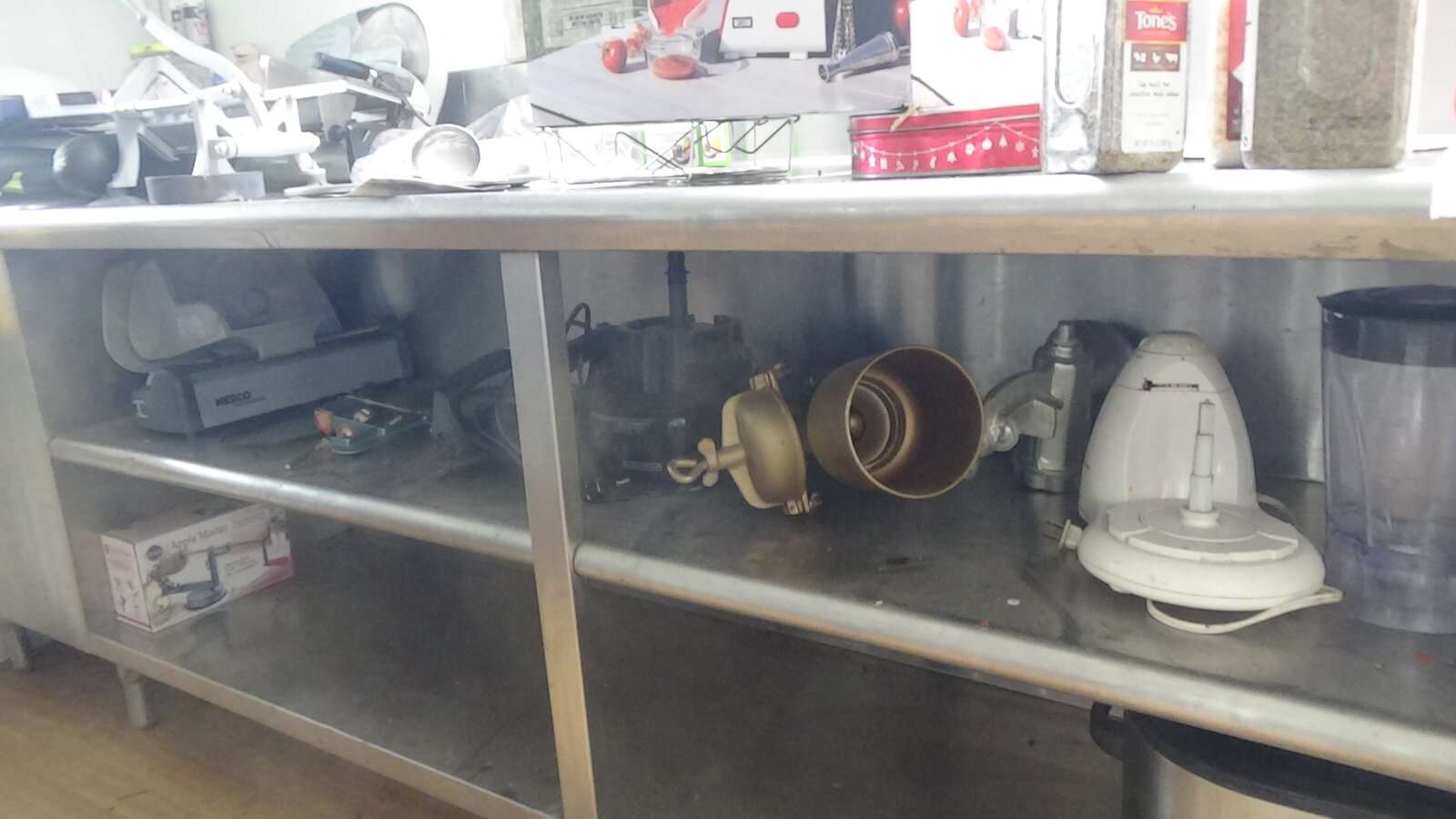
Since July 2020 when I said screw trying to do business in the Covid Restrictions, the commercial kitchen has only been used for processing and preserving our personal foods. I have kept it and the trailers Certified and Inspected in in case I get a wild hair to roll out and sell again. LOL right now it has kind of became a catch all as I am reorganizing the storage container and stuff kind of landed in the kitchen.
I make and vac pac a lot of this over the summer and fall. Hot Sausage Stuffed Gypsy Peppers. Sweet Gypsy Peppers with my Firecracker Sausage. Poke a hole in the top of the bag, heat for 3 minutes in the microwave and instant lunch. Warms you up on a cold winter day or makes a 100 degree day feel a lot cooler
And I learned today that my Corporate Business office make the new Health Inspector uncomfortable. She mentioned something about crazy gun nut and misogynistic as she was leaving I don’t think she appreciated my office wall deco Doesn’t everyone keep a gun or many hanging on their office all?????
DAYTON, Ohio — The U.S. Air Force expects to release its formal request for information for a KC-135 tanker recapitalization in September, which will pave the way for an official acquisition strategy for the program it previously referred to as a “bridge tanker.”
In a roundtable discussion with reporters at the service’s Life Cycle Industry Days event in Dayton, Ohio, the deputy program executive officer for mobility aircraft, Scott Boyd, outlined the force’s plan for the next two stages in a major overhaul of its tanker fleet.
But, Boyd cautioned, much remains undecided over how to eventually field an advanced refueling aircraft it now calls the next-generation aerial refueling system, or NGAS.
The Air Force originally referred to its two final stages as KC-Y, or the bridge tanker, and KC-Z, following its procurement in recent years of the KC-46. Those three modernization stages are to replace the service’s legacy KC-135 Stratotanker fleet.
The Air Force initially had loose plans for KC-Z to arrive in the 2040s. The service originally planned to buy about 150 tankers as an interim step until then — possibly more KC-46s, although Lockheed Martin is pitching its LMXT strategic tanker, based on Airbus’ A330 Multi Role Tanker Transport, as an alternative.
However, in March the Air Force shifted course on its future tanker modernization effort. Top leaders announced plans to speed up the acquisition of its most advanced future tanker, which was redubbed NGAS, to the mid- to late-2030s, and to cut in half the number of interim tankers it would buy.
Top service officials worry China’s advancing air capabilities will make it increasingly difficult for existing tankers to survive in highly contested airspace, and that a more advanced, survivable refueling aircraft able to operate in combat zones will need to hit the fleet sooner than anticipated. Air Force Secretary Frank Kendall said in March that NGAS would require a new design, not derived from a commercial aircraft, and that a blended wing design is a possibility for its body.
During Monday’s roundtable, Boyd stressed the service’s acquisition strategy is not set in stone.
“Doesn’t matter what any person, senior leader, otherwise has said: We don’t know what our acquisition strategy is,” Boyd said. “We’ve engaged with Congress on that as well to try to make clear that we still don’t know what our strategy is.”
But Boyd said the Air Force is working through a process on joint capabilities, integration and development in order to get the final requirements for the interim tanker approved by the Pentagon.
U.S. Air Force Staff Sgt. Joshua Poticha marshals a KC-46A tanker at Pease Air National Guard Base, N.H., on Dec. 11, 2020. (Tech. Sgt. Aaron Vezeau/U.S. Air National Guard)
That should be finished by the end of September, he said, and the Air Force expects to release the request for information around the same time or shortly afterward, including what requirements the Air Force wants from industry.
“That will be the first time anyone in industry has seen the formal Air Force requirement and can have a chance to respond,” Boyd said. “Everything we’ve done prior to this, with engaging with industry, has been based on draft documents, draft requirements, ideas of requirements. That’s why that’s sort of a milestone event, to finally engage with a real requirement.”
Industry will then respond to the Air Force’s solicitation with data including estimates on how quickly a company could deliver an aircraft if selected, Boyd said. The Air Force will then use all that information from industry to finish its business case analysis and settle on its long-awaited acquisition strategy.
Boyd said the Air Force expects to have its strategy finalized and approved around the third quarter of fiscal 2024. He noted the service is leaving that window for finalizing the strategy as wide as possible because there are potential unknown factors.
Top Air Force leaders, such as Kendall and acquisition chief Andrew Hunter, have repeatedly suggested the service might forgo a competition for this wave of tanker recapitalizations and instead go straight to buying more KC-46A Pegusus tankers from Boeing.
Boyd said Monday that the Air Force needs to study market research, evaluate feedback it collects from industry and complete a business case analysis. All those steps will happen no matter what path the Air Force takes, he explained, and the service will consider all life cycle costs as part of this business case analysis.
The Air Force’s requirements for the recapitalization won’t make a KC-46 choice a foregone conclusion, Boyd said, but it will remain to be seen whether the market research shows a viable competitor exists, other than the KC-46.
He suggested Kendall’s and Hunter’s remarks reflect a recognition that the requirements going into the interim tanker recapitalization’s process “are not revolutionary” and don’t require a new aircraft.
“When they recognize that, I think that sort of helps influence how they talk about the program,” Boyd said. “It can be potentially satisfied by the [KC-46], but we still have to do our due diligence.”
Boyd noted he has not felt pressure from lawmakers or elsewhere within the Air Force to shift course on the recapitalization.
He also said the name change did not represent “some dramatic shift” in the Air Force’s approach, but largely reflected the accelerated timeline for tanker modernization.
The Air Force is still figuring out what NGAS will be, Boyd said. In early fiscal 2024, he added, the Air Force will start its formal analysis of alternatives, which is expected to produce recommendations on what would be needed to meet the service’s goals for NGAS. The service believes it could field an NGAS tanker as early as 2035, he noted.
Even though the service has dramatically accelerated its NGAS schedule, Boyd explained, it will still need the KC-135 recapitalization as an interim step.
Hanging over the process is the service’s decision to slash the number of purchased interim tankers to 75. And, Boyd said, it remains to be seen whether the Air Force will strike the right balance between that reduced buy and when NGAS might actually arrive.
“If we end up getting 2035 wrong, then perhaps we got the quantity of what we needed [on KC-135 modernization] wrong,” Boyd said. “That’s everyone’s concern — Air Force has that same concern, Congress has that concern, industry certainly has that concern.”
Stephen Losey is the air warfare reporter for Defense News. He previously covered leadership and personnel issues at Air Force Times, and the Pentagon, special operations and air warfare at Military.com. He has traveled to the Middle East to cover U.S. Air Force operations.
WASHINGTON — Bombs boom. Tanks trundle. Fighters fly. All are visible to the human eye and are familiar images of war.
But invisible battles are fought, too. And as the U.S. prepares for potential conflict with China in the Indo-Pacific or with Russia in Europe, the value of the electromagnetic spectrum is proving paramount. Militaries rely on the unseen energy to communicate, guide weapons, spoof and spy, and more.
The U.S. military in 2021 activated the 350th Spectrum Warfare Wing, a first-of-its-kind entity aimed squarely at spectrum dominance and related electronic warfare equipment. Headquartered at Eglin Air Force Base in Florida, the wing is staffed by engineers and EW specialists, including its commander, Col. Joshua Koslov.
In an interview with C4ISRNET, Koslov discussed the importance of his wing; its ties to the Pentagon’s connect-everything campaign known as Joint All-Domain Command and Control, or JADC2; and concerns expressed by at least one Air Force senior leader that the U.S. is losing its EW “muscle memory.”
The conversation below was edited for length and clarity.
What makes the 350th Spectrum Warfare Wing special? Why was this wing necessary?
There wasn’t a commander who was focused on Air Force electronic warfare types of activities. So they needed to put all that into one place, where we can develop the tactics, the techniques, the procedures, the thought processes and deliberately develop the people to be able to inform war plans and budgets in order to make sure that we gain the advantage that we need to in the spectrum. And that’s what the 350th Spectrum Warfare Wing’s job is.
U.S. Air Force Col. Joshua Koslov at Eglin Air Force Base, Florida. (Samuel King Jr/U.S. Air Force)
We have three primary missions. What we do is rapidly reprogram. We do target waveform development, and then we do assessment. What that is, is really a circle of the things we have to be able to do in the spectrum.
The adversary is going to react to what we’re doing, we have to be able to reprogram our systems quickly based on that reaction, and we have to develop new capability in order to attack new systems that come online from our adversaries, and then we have to be able to understand, from a readiness perspective, from tooth to tail, on data production, data reception to data transmission, how good are we in the spectrum.
That’s the focus of this wing, and that’s what’s going to make us win if we have to fight a peer competitor.
EW has been thought of as a supporting effort, not necessarily something that leads the way. Is that still accurate, or how has the thinking changed?
That’s a really good question, and it’s at the root of why we exist as a wing.
What has changed is the importance of the spectrum environment. When we were fighting in the global war on terror, we were fighting against an enemy that really couldn’t reach out and touch us. And so things got easier. And the way we use the spectrum was a different way than we need to against a near-peer, when we’re breaking down the door of integrated air defense systems, and like systems, that have the opportunity to or the ability to kill our forces.
So we realized we had a deficit, and we created the electromagnetic superiority strategy and identified a lot of tasks that the Air Force and the Department of Defense, writ large, had to accomplish in order to regain complete advantage in the spectrum. Part of that is an understanding that our systems and our adversary systems rely heavily on the spectrum.
This wing is a little unique in a sense that we focus on the Air Force, but I am a joint and coalition wing, and the spectrum itself is inherently coalition, inherently joint. It’s a common. And our adversaries are building weapons systems that rely on it, just like we are.
If you can dominate and control it — whether totally or in pockets of excellence — you’re going to win engagements and battles and wars.
So I think the way that I talk about it all the time is that where we need to go with the spectrum is: We can use EW to achieve the joint force commander’s objectives across the scale of conflict, from competition to high-end conflict.
How have you and your team folded EW into Air Force and joint exercises recently? What does that actually look like?
EW, from a platform perspective, has always been part of our training exercises. However, what we’ve done recently is we have amplified the amount of rapid reprogramming and data transfer in our exercises. I’ve attempted to have our blue forces pay a penalty — a stiff penalty — for not responding correctly.
I view this wing as an operational warfighting wing; our weapon is going to be data, EW data. And we’re integrating that now.
A challenge for that is that it’s very hard, in the EW world where things are highly classified, to really wring out all of the tactics, techniques and procedures. So we’re also really influencing the development of a virtual environment that fully encompasses the way we can train and operate in the spectrum.
What makes training effective is being able to assess and debrief at the end of the day. What makes that transition from your question about ‘EW sort of being in the background and you can’t see it’ is the ability to assess and then, in debrief, provide tactics that are accessible and understood by the team, in order to build that confidence, so that you can prove to the joint force commander that you can meet his objectives with using electronic warfare capabilities.
Air Force Gen. CQ Brown told Congress recently the U.S. was losing its EW muscle memory, which could leave troops vulnerable. Do you agree with that assessment, and what can be done to rebuild those muscles?
I absolutely agree with that, because that’s why this wing exists, to rebuild that muscle memory. That’s our charge. It’s, for the United States Air Force through the United States Air Force Warfare Center, to raise our EW game across the force.
We do that in a very focused effort based on our pacing challenge campaign plan. We do that through developing training, tactics and assessment procedures that increase the readiness of the force.
I think where we have to focus is on the highest-end or most difficult problems, because I believe in the lesser-included threat, which means if I could do it at the highest end, I should be able to adapt to lower-end threats.
Is there any electromagnetic spectrum-related tech you see China or Russia or any other competitor or adversary developing that is particularly troubling to U.S. interests?
Russia and China — China specifically — have invested very significantly in EW capabilities and other capabilities, like intelligence, surveillance and reconnaissance and cyber, in places where they think they can find our soft underbelly of weakness.
Everyone has recognized that the future of warfighting is about data, is about the spectrum. So we’re all rushing toward the same objective of being able to fight and win in the spectrum.
RELATED
Each of them, our adversaries, have approached the problem a little bit differently. But they’re definitely raising their game. Where I would assess the places where we need to continue to focus is on our attack capability and on our ability to rapidly change in the environment.
We are in this era of JADC2. How do you see protection of those critical networks proceeding? How can the Air Force or EW operations help foster that widespread connectivity the Pentagon wants?
First off, defense is critical, right? My flippant answer to you is the best defense is a good offense, and we’ve got to get better on offense, and we’ve got to get better at closing kill chains faster. That’s No. 1.
The second part of that is: I have five things that are super critical to the success of this wing. And they’re those foundational things that I talked about earlier.
The first one of those is crowdsourced flight data. What that is, is prioritizing the assets that have the best data collected off our adversary systems and getting them into one place so then I can manipulate that data and create new capability against that data.
In order to do that, it requires a data architecture, multi-classification that’s capable of doing that and housing that data and allowing access to the folks that need it. Then the most important part of that is what we affectionately call electromagnetic battle management, as part of the Air Force’s Advanced Battle Management System.
I need to be able to communicate that data off those prioritized jets to the reprogramming centers and the capability builders and then be able to communicate that back out to the warfighters before their next combat sortie. What will make that easier is a fully realized ABMS and making sure that EW requirements are integrated into the Air Force’s ABMS and the joint force’s JADC2 architecture.
A visualization of the Pentagon’s Joint All-Domain Command and Control concept, which aims to better connect sensors and shooters across vast distances. (Photo provided/Raytheon Technologies)
One of the ways that we’ll be able to do that faster is a buzzword. It’s cognitive EW.
There are folks out there that will talk about cognitive EW as it’s out at the edge of combat, and it’s making its own decisions and jamming things and that kind of stuff. That future will happen. I think it’s probably 10 to 15 years away to happen at the scale that we talk about sometimes in articles and stuff.
But really what I’m talking about is once you have all that data pulled up, and you’ve communicated it using electromagnetic battle management — the algorithms to scroll through terabytes of data quickly, to identify the critical things that we need to work on, and then be able to get that information back out to the edge as quickly as possible.
The final piece, the fifth thing, is being able to assess that tooth-to-tail process, both for speed and accuracy, in order to be able to codify risk for joint force commanders when they’re trusting us to meet their objectives.
Colin Demarest is a reporter at C4ISRNET, where he covers military networks, cyber and IT. Colin previously covered the Department of Energy and its National Nuclear Security Administration — namely Cold War cleanup and nuclear weapons development — for a daily newspaper in South Carolina. Colin is also an award-winning photographer.





 I still have 2000 pounds of beef in the freezers from last year so I am going to sell the steers I finished for myself this year. I am really trying to take two more chest freezers offline. If I can get the last two of the older ones unplugged I pretty much won’t have a electric bill for the containers. Those last two old freezers are kind of electric hogs.