A couple of nights away….

0

….with my best mate, no hunting however. With all the shyte the world/life is throwing at me just now it was great to spend a few days/couple of nights with my best friend of over 40yrs now disconnected from the rest of the world !!

upload_2023-8-23_15-48-57.

[​IMG]

upload_2023-8-23_15-48-57.

Its old coastal rain forest… I have driven close to the area often since I was a kid but never went in….

[​IMG]

upload_2023-8-23_15-48-57.

[​IMG]

upload_2023-8-23_15-48-57.

[​IMG]

upload_2023-8-23_15-48-57.

[​IMG]

upload_2023-8-23_15-48-57.

[​IMG]

upload_2023-8-23_15-48-57.

This guy was skulking around being cranky….

[​IMG]

upload_2023-8-23_15-48-57.

[​IMG]

upload_2023-8-23_15-48-57.

[​IMG]

upload_2023-8-23_15-48-57.

My mate up trying to start a fire with his glasses…

[​IMG]

upload_2023-8-23_15-48-57.

Just needed a liver and a nice chianti….

[​IMG]

upload_2023-8-23_15-48-57.

Cold nights but stayed warm..

[​IMG]

upload_2023-8-23_15-48-57.


50 BMG Ammo Identification Chart

0

Ammunition for use in machine guns is issued in metallic link belts. Link belts are made of units of cartridges and links. Each link has two loops fitted around a single cartridge and one loop fitted around an adjacent cartridge. Each cartridge in a metallic link belt has two links attached to it, except the end cartridges.

Cartridge links are made of steel which is processed to prevent rusting. They are manufactured and tested to assure satisfactory ammunition feeding and functioning under all service conditions. M2 and M9 links are manufactured with closed loops. When assembled with the cartridge in belts, the links fit on the cartridge shoulder. The tapered front loops of the links are positioned firmly on the cartridge shoulder to hold the cartridge in proper alignment for feeding into the weapon. The design required the cartridge to be extracted from the rear and dropped into position for moving into the chamber for firing. Weapons designed for the links require additional space in the rear of the receiver for retraction. M2 and M9 links are used with the M2 machine gun only.

You may also be interested in this: Short Range Media Penetration by 50 BMG AP Rounds | Survival Monkey Forums

or this book: The Ultimate Sniper, John Plaster, Amazon.com: The Ultimate Sniper: An Advanced Training Manual for Military and Police Snipers (9781581604948): John L. Plaster: Books

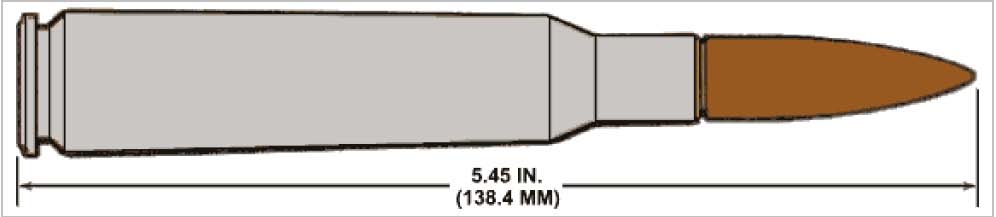
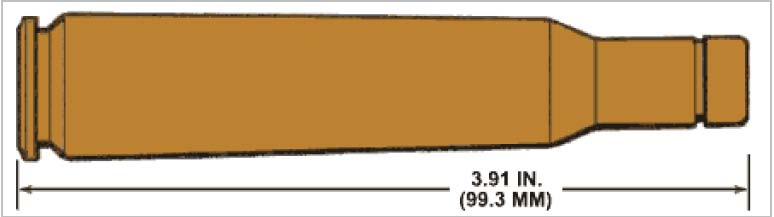
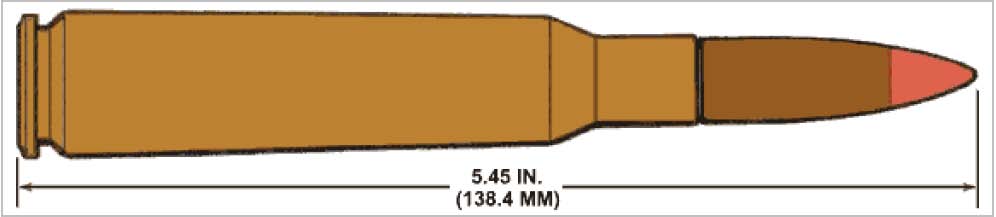
[​IMG][​IMG][​IMG]

Cartridge, Caliber .50, Ball, High Pressure Test, M1

[​IMG]
Used by all .50 Browning weapons. The cartridge is intended for use in proof testing weapons during manufacture, test, or repair. The cartridge is identified by a stannic-stained (silvered) cartridge case. Type Classification: STD – OTCM 36841

[​IMG]
Cartridge, Caliber .50, Blank, M1

[​IMG]
Used by the M2 machine gun (flexible only). The cartridge is used to simulate firing in training exercises. The cartridge is identified by the absence of a bullet and has crimped cartridge case mouth. Type Classification: CONT – OTCM 36841

[​IMG]
Cartridge, Caliber .50, Incendiary, M1

[​IMG]
Used by M2 and M85 machine guns. For incendiary effect, especially against aircraft.

Upon impact with a hardened or armored target, the incendiary composition bursts into flame and will ignite any flammable material. Incendiary composition: 34 grains (2.2 gm) IM 11 The cartridge is identified by a blue bullet tip. Type Classification: OBS – MSR 11756003

[​IMG]
Cartridge, Caliber .50, Tracer, M1

[​IMG]
Used by M2 and M85 machine guns. The tracer is intended to permit visible observation of the bullet’s in-flight path or trajectory to the point of impact. Limited to continental US for training purposes only.

Trace range: 1,969 yards (1,800 m) Tracer: R256

The cartridge is identified by a red bullet tip.

Type Classification: OBS – MSR 11756003

[​IMG]
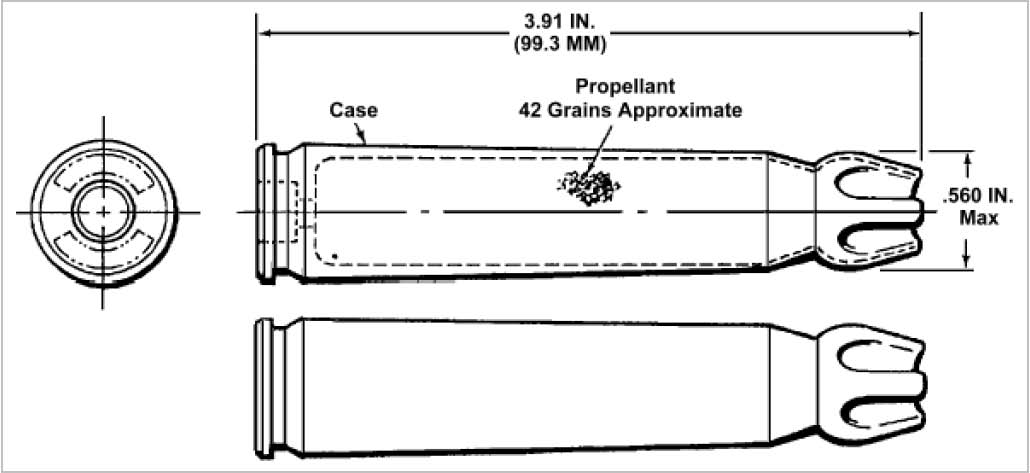
Cartridge, Caliber .50, Blank, M1A1

[​IMG]
Used by the M2 machine gun with the M19 Blank Ammunition Firing Attachment, the M85 machine gun with the M20 Blank Firing Attachment, and the M107 Long Range Sniper Rifle. The cartridge is used to simulate firing in training exercises.

.50 Caliber Browning (12.7 x 99 mm) Ammunition (5 of 13)3/10/2005 4:09:19 PM

The cartridge is identified by the absence of a bullet. The M1A1 differs from the M1 in that the M1A1 has a rosette crimp at the mouth.

Type Classification: STD – MSR 02806015

[​IMG]
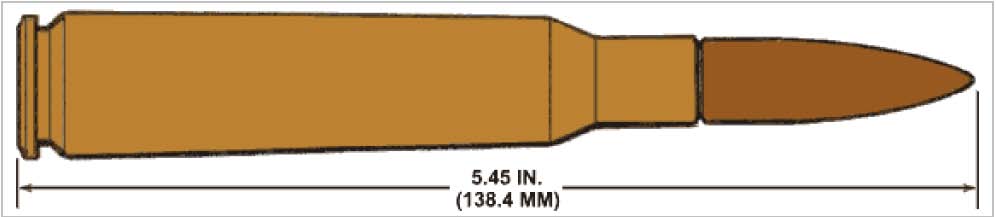
Cartridge, Caliber .50, Ball, M2

[​IMG]
Used by M2 and M85 machine guns. The cartridge is intended for use against personnel or unarmored targets. The cartridge is identified by a plain bullet. Type Classification: STD – OTCM 36841

[​IMG]
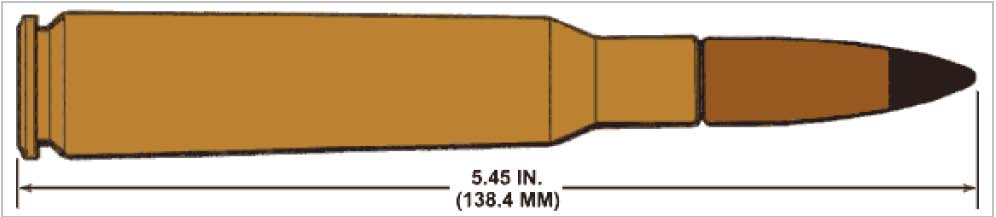
Cartridge, Caliber .50, Ball, Armor Piercing, M2

[​IMG]
Used by M2 and M85 machine guns. The cartridge is for use against light-armored or unarmored targets, concrete shelters, and similar bullet-resisting targets.

Armor Penetration. 500 meters: 0.75 in (19 mm) 1,200 meters: 0.39 in (10 mm)

The cartridge is identified by a black bullet tip.

Type Classification: OBS – MSR 11756003

[​IMG]
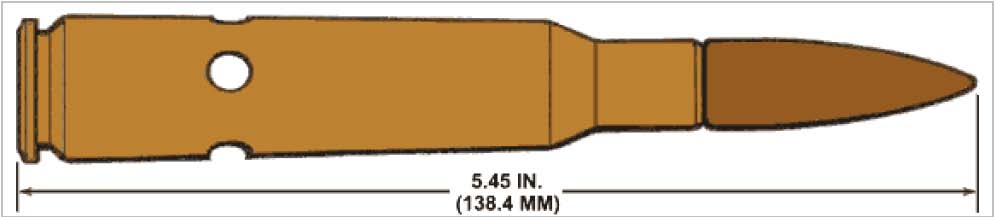
Cartridge, Caliber .50, Dummy, M2
[​IMG]
Used by all .50 Browning weapons. The cartridge is used for practice in loading for simulated firing and for inspecting and testing the mechanism of the weapon.

The cartridge is identified by three drilled holes in the cartridge case and the absence of a primer.

Type Classification: STD – OTCM 36841

[​IMG]
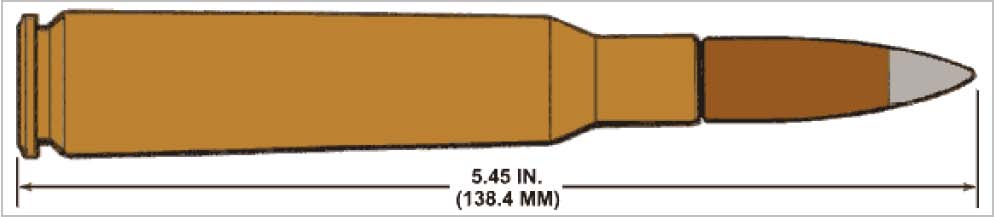
Cartridge, Caliber .50, Ball, Armor Piercing Incendiary, M8

[​IMG]
Used by M2 and M85 machine guns, and the M107 Long Range Sniper Rifle. The cartridge combines the functions of the M2 armor piercing bullet and the incendiary bullet, and is used against flammable targets and light-armored or unarmored targets, concrete shelters, and similar bullet-resisting targets.

Armor Penetration. 500 meters: 0.63 in (16 mm) 1,200 meters: 0.32 in (8 mm)

Incendiary composition: 15 grains (0.97 gm) IM 11

The cartridge is identified by an aluminum bullet tip.

Type Classification: OBS – MSR 11756003

[​IMG]
Cartridge, Caliber .50, Tracer, M10

[​IMG]
Used by M2 and M85 machine guns. The tracer cartridge exhibits a visible trace from a point not greater than 100 yards (91 m) from the muzzle of the weapon to a point not less than

.50 Caliber Browning (12.7 x 99 mm) Ammunition (7 of 13)3/10/2005 4:09:19 PM .50 Caliber Browning (12.7 x 99 mm) Ammunition

1,600 yards (1,463 m) from the muzzle. Tracer: R256 The cartridge is identified by an orange bullet tip. Type Classification: STD – OTCM 37107

[​IMG]
Cartridge, Caliber .50, Tracer, M17

[​IMG]
Used by M2 and M85 machine guns, and the M107 Long Range Sniper Rifle. The cartridge tracer is intended to permit visible observation of the bullets in-flight path or trajectory to the point of impact.

Trace range: 2,679 yards (2,450 m) Tracer: R256

The cartridge is identified by a brown bullet tip.

Type Classification: CON – MSR 11756003

[​IMG]
Cartridge, Caliber .50, Armor Piercing Incendiary-Tracer, M20

[​IMG]
Used by M2 and M85 machine guns, and the M107 Long Range Sniper Rifle. The cartridge combines the functions of the armor piercing and the incendiary bullet, and is used against flammable targets and light-armored or unarmored targets, concrete shelters, and similar bullet-resisting targets. This tracer is dim at near ranges, but increases to bright as it moves further from the gun.

Armor Penetration. 500 meters: 0.83 in (21 mm) 1,200 meters: 0.43 in (11 mm)

Incendiary composition: 27 grains (1.74 gm) IM 161 Trace range: 328 – 1,914 yards (300 – 1,750 m) Tracer: R256

.50 Caliber Browning (12.7 x 99 mm) Ammunition (8 of 13)3/10/2005 4:09:19 PM

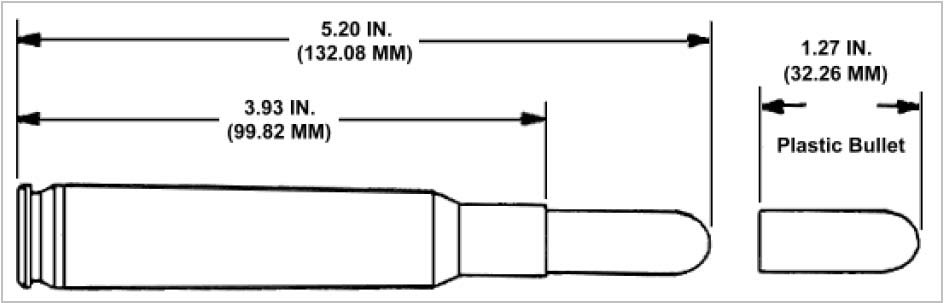
[​IMG][​IMG]
Used by M2 machine gun with the M3 Recoil Amplifier. The cartridge is intended for scaled range training purposes, where range restrictions limit or prohibit the use of one of the other types of live ammunition.

Maximum range: 765 yards (700 m)

The cartridge is identified by the blue bullet and case which are molded into one piece with high density polyethylene plastic.

Type Classification: STD. Type Classification Date: 24-MAY-1983

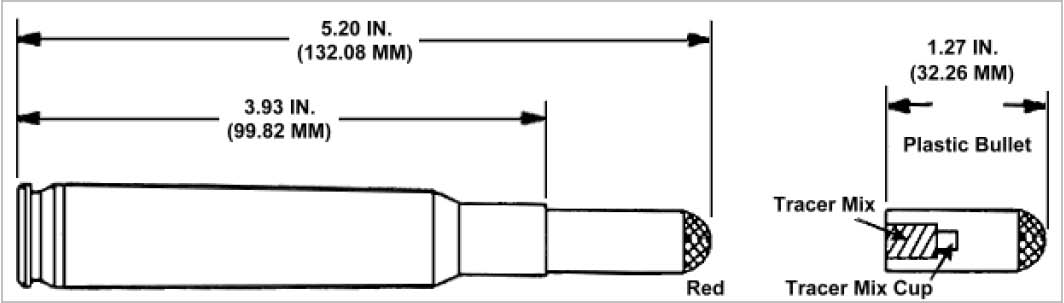
[​IMG]
Cartridge, Caliber .50, Tracer, Plastic Practice M860

[​IMG]
Used by M2 machine gun with the M3 Recoil Amplifier. The cartridge tracer is intended for scaled range training to permit visible observation of the bullet’s in-flight path or trajectory to the point of impact. The cartridge is intended for use with the M858 Plastic Practice Ball Cartridge.

Maximum range: 765 yards (700 m) Trace range: 22 – 164 yards (20 – 150 m) Tracer: DAG9591254/4

The cartridge is identified by a red bullet tip and the blue bullet and case which are molded into one piece with high density polyethylene plastic.

Type Classification: STD. Type Classification Date: 24-MAY-1983

[​IMG]
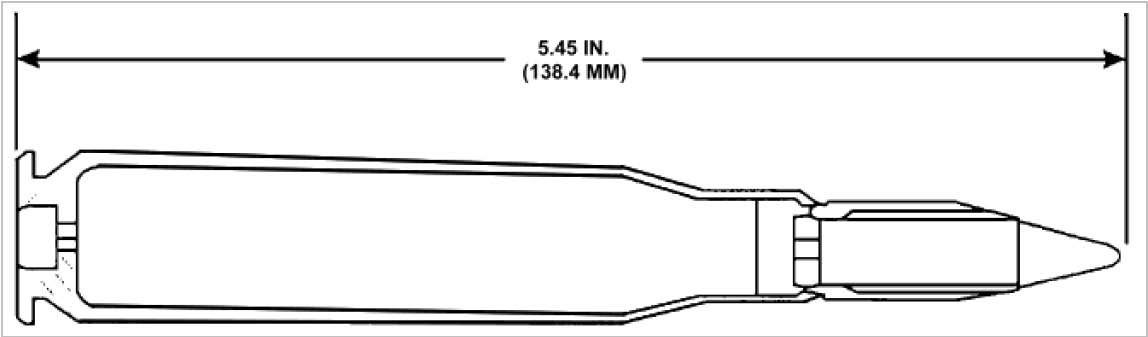
Cartridge, Caliber .50, Saboted Light Armor Penetrator (SLAP), M903
[​IMG]
Used by M2HB machine gun. The SLAP is used in combat against current and future light armored targets and Armored Attack Helicopters (AAHs). The M903 offers the capability to defeat these targets at ranges two to three times that of currently available ammunition.

Armor Penetration. 500 meters: 1.34 in (34 mm) 1,200 meters: 0.91 in (23 mm)

Projectile diameter: 0.30 inches (7.7 mm)

The cartridge consists of a heavy metal (tungsten) penetrator that is sabot-launched at a much higher velocity than standard rounds. The sabot, which is designed to break up at the muzzle to release the penetrator, must also survive the gun environment until launch. It is injection molded of special high strength plastic and is reinforced with an aluminum insert in the base section. The cartridge is identified by an amber sabot (Ultem 1000).

Type Classification: STD. Type Classification Date: 31-MAR-1993. Unit cost: $8.87 (Fiscal Year 2005).

[​IMG]
Cartridge, Caliber .50, Saboted Light Armor Penetrator-Tracer (SLAP-T), M962
Used by M2HB machine gun. For use against light armor vehicles and aircraft with the additional tracer feature. This round is also for use in M1-series Abrams Tank gunnery training using a subcaliber insert.

Projectile diameter: 0.30 inches (7.7 mm) Tracer: R543

The Saboted Light Armor Penetrator with Tracer (SLAP-T), M962 cartridge consists of a tungsten alloy penetrator of the same mass as the Saboted Light Armor Penetrator (SLAP), M903. The sabot, which is designed to break up at the muzzle to release the penetrator, must also survive the gun environment until launch. It is injection molded of special high strength plastic and is reinforced with an aluminum insert in the base section. The tungsten alloy penetrator has a slot in the base to insure full spin-up before separation from the sabot at the muzzle. The penetrator base is cored out to accommodate a trace mix composition.

The cartridge is identified by a red sabot (Ultem 1000).

Type Classification: STD. Type Classification Date: 31-MAR-1993. Unit cost: $12.85 (Fiscal Year 2005).

[​IMG][​IMG]

AMMUNITION EFFECTS
The .50 caliber round is optimized for penetration at long ranges (about 875 yards, or 800 meters). For hard targets, .50 caliber penetration is affected by obliquity and range.

The .50 caliber round can penetrate all of the commonly found urban barriers except a sand- filled 55-gallon drum.

Continued and concentrated machine gun fire can breach most typical urban walls. Such fire cannot breach thick reinforced concrete structures or dense natural stone walls. Internal walls, partitions, plaster, floors, ceilings, common office furniture, home appliances, and bedding can be easily penetrated by .50 caliber rounds.

Number of rounds needed to penetrate a reinforced concrete wall at 25° obliquity.

Penetration capabilities of a single .50 caliber M2 AP round fired from a 45-inch barrel.

[​IMG][​IMG]

You may also be interested in this: Short Range Media Penetration by 50 BMG AP Rounds | Survival Monkey Forums

or this book: The Ultimate Sniper, John Plaster, Amazon.com: The Ultimate Sniper: An Advanced Training Manual for Military and Police Snipers (9781581604948): John L. Plaster: Books

From wiki: .50 BMG – Wikipedia, the free encyclopedia

The .50 Browning Machine Gun (.50 BMG) or 12.7×99mm NATO is a cartridge developed for the Browning .50 caliber machine gun in the late 1910s. Entering service officially in 1921, the round is based on a greatly scaled-up .30-06 cartridge.[citation needed] UnderSTANAG 4383, it is a standard cartridge for NATO forces as well as many non-NATO countries.[1] The cartridge itself has been made in many variants: multiple generations of regular ball, tracer, armor piercing, incendiary, and saboted sub-caliber rounds. The rounds intended for machine guns are linked using metallic links.

The .50 BMG cartridge is also used in long-range target and sniper rifles, as well as other .50-caliber machine guns. The use in single-shot and semi-automatic rifles has resulted in many specialized match-grade rounds not used in .50-caliber machine guns. A McMillan Tac-50 .50 BMG sniper rifle was used by Canadian Army Corporal Rob Furlong of the PPCLI to achieve what was then the longest-range confirmed sniper kill in history, when he shot a Taliban combatant at 2,430 meters (2,657 yards) during the 2002 campaign in theAfghanistan War.[2] This record was surpassed in 2009 in Afghanistan by a British sniper with 2,475 meters (2,707 yards) though using a.338 Lapua Magnum (8.58×70 mm) rifle.[3][4]

A former record for a confirmed long-distance kill was set by U.S. Marine sniper Carlos Hathcock in 1967, at a distance of 2,090 metres (2,286 yd);[5] Hathcock used the .50 BMG in an M2 Browning Machine Gun equipped with a telescopic sight. This weapon was used by other snipers, and eventually purpose-built sniper rifles were developed specifically for this round.

DARPA (Defense Advanced Research Projects Agency) has contracted with Lockheed Martin to develop the EXACTO program, including .50-caliber bullets complete with microprocessors and steering vanes that allow the bullet to adjust its trajectory mid-flight to stay on target when the flight path has been altered by uncontrollable variables, as well as weapons that fire these rounds and monitor their flight. The weapon system is expected to be available in 2015.

A wide variety of ammunition is available, and the availability of match grade ammunition has increased the usefulness of .50 caliber rifles by allowing more accurate fire than lower quality rounds.

History
John Browning had the idea for this round during World War I in response to a need for an anti-aircraft weapon,[citation needed] based on a scaled-up .30-06 Springfield design,[citation needed] used in a machine gun based on a scaled-up M1919/M1917 design that Browning had initially developed around 1900 (but which was not adopted by the U.S. military until 1917, hence the model designation). Armor-piercing incendiary tracer (APIT) rounds were especially effective against aircraft, and the AP rounds and API rounds were excellent for destroying concrete bunkers, structures, and lighter AFVs. The API and APIT rounds left a flash, report, and smoke on contact, useful in detecting strikes on enemy targets.[6]

The development of the .50 BMG round is sometimes confused with the German 13.2 mm TuF, which was developed by Germany for ananti-tank rifle to combat British tanks during WWI; however, the development of the U.S. .50 caliber round was started before this later German project was completed or even known to the Allied countries. When word of the German anti-tank round spread, there was some debate as to whether it should be copied and used as a base for the new machine gun cartridge; after some analysis the German ammunition was ruled out, both because performance was inferior to the scaled-up .30-06 Springfield round and because it was a semi-rimmed cartridge, making it sub-optimal for an automatic weapon. The round’s dimensions and ballistic traits are totally different. Instead, the M2HB Browning with its .50 caliber armor-piercing cartridges went on to function as an anti-aircraft and anti-vehicular machine gun, with a capability of completely perforating 0.875″ (22.2 mm) of face-hardened armor steel plate at 100 yards (91 m), and 0.75″ (19 mm) at 547 yards (500 m).[7]

Decades later, the .50 BMG was chambered in high-powered rifles as well. The concept of a .50 caliber machine gun was not an invention of this era; this caliber (.50) had been used in Maxim machine guns and in a number of manual rapid fire guns such as the original Gatling, although these were much lower power cartridges.

[​IMG]The .50 BMG cartridge.
During World War II the .50 BMG was primarily used in the M2 Browning machine gun for anti-aircraft purposes. An upgraded variant of the M2 Browning machine gun used during World War II is still in use today. Since the mid-1950s, some armored personnel carriers and utility vehicles have been made to withstand 12.7 mm machine gun fire, thus making it a much less flexible weapon. It still has more penetrating power than lighter weapons such as general-purpose machine guns, though it is significantly heavier and more cumbersome to transport. Its range and accuracy, however, are superior to light machine guns when fixed on tripods, and it has not been replaced as the standard caliber for western vehicle mounted machine guns (Soviet and CIS armoured vehicles mount the 12.7mm DShK NSV, which is ballistically very similar to the .50 BMG, but14.5 mm KPV machine guns have significantly superior armor penetration compared to any 12.7 mm round[citation needed].

The Barrett M82 .50 caliber rifle and later variants were born during the 1980s and have upgraded the anti-materiel power of the military sniper. A skilled sniper can effectively neutralize an infantry unit by eliminating several targets (soldiers or equipment) without revealing his precise location. The long range (1 mile+) between firing position and target allows time for the sniper to avoid enemy retribution by either changing positions repeatedly, or by safely retreating.

Power
A common method for understanding the actual power of a cartridge is by comparing muzzle energies. The .30-06 Springfield, the standard caliber for American soldiers in both World Wars and a popular caliber amongst American hunters, can produce muzzle energies between 2,000 and 3,000 foot-pounds of energy (between 3 and 4 kilojoules). The .50 BMG round can produce between 10,000 and 15,000 foot pounds (between 14 and 18 kilojoules), depending on its powder and bullet type, as well as the weapon it was fired from. Due to the high ballistic coefficient of the bullet, the .50 BMG’s trajectory also suffers less “drift” from cross-winds than smaller and lighter calibers, making the .50 BMG a good choice for high-powered sniper rifles.

Cartridge dimensions
[​IMG]The 50 BMG 12.7 × 99 NATO cartridge has a capacity of 290 grains H2O (19 ml). The round is a scaled up version of the .30-06 Springfield but uses a case wall with a long taper to facilitate feeding and extraction in various weapons.

The common rifling twist rate for this cartridge is 1 in 15 in (380 mm), with 8 lands and grooves. The primer type specified for this ammunition is Boxer primer that has a single centralized ignition point (US and NATO countries). However, some other countries produce the ammunition with Berdan primers that have two flash holes.

The average chamber pressure in this round as listed in TM43-0001-27,[8] the U.S. Army Ammunition Data Sheets — Small Caliber Ammunition, not including plastic practice, short cased spotter, or proof/test loads, is 54,923 psi (378,680 kPa). The proof/test pressure is listed as 65,000 psi (450,000 kPa).

[​IMG]
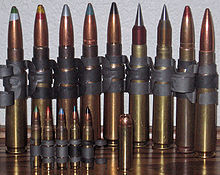
Left to right, rear: Mk211, Spotter, Silver tip (Armor Piercing Incendiary), Blue tip (Incendiary), Black tip (Armor Piercing), SLAP-T, SLAP, Tracer, and Ball. Front row are 5.56×45mm NATOand .500 S&W Magnum for size comparison

Military cartridge types
.50 BMG cartridges are also produced commercially with a plethora of different bullets and to a number of different specifications.

Cartridge, Caliber .50, Tracer, M1
Tracer for observing fire, signaling, target designation, and incendiary purposes. This bullet has a red tip.

Cartridge, Caliber .50, Incendiary, M1
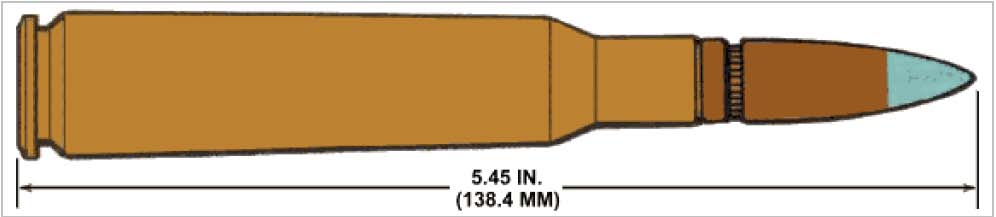
This cartridge is used against unarmored, flammable targets. The incendiary bullet has a light blue tip.

Cartridge, Caliber .50, Ball, M2
This cartridge is used against personnel and unarmored targets. This bullet has an unpainted tip.

Cartridge, Caliber .50, Armor-Piercing, M2
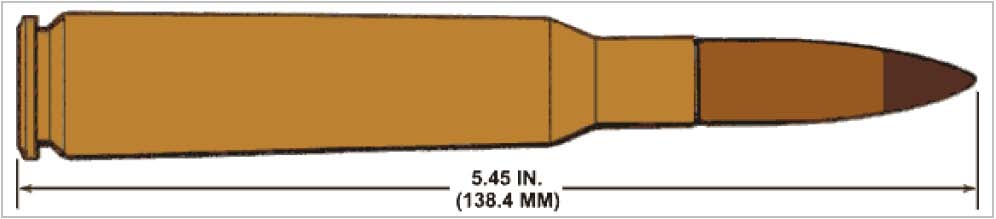
This cartridge is used against lightly armored vehicles, protective shelters, and personnel, and can be identified by its black tip.

Cartridge, Caliber .50, Armor-Piercing-Incendiary, M8
This cartridge is used, in place of the armor-piercing round, against armored, flammable targets. The bullet has a silver tip.

Cartridge, Caliber .50, Tracer, M10
Tracer for observing fire, signaling, target designation, and incendiary purposes. Designed to be less intense than the M1 tracer, the M10 has an orange tip.

Cartridge, Caliber .50, Tracer, M17
Tracer for observing fire, signaling, target designation, and incendiary purposes. Can be fired from the M82/M107 series of rifles.

Cartridge, Caliber .50, Armor-Piercing-Incendiary-Tracer, M20
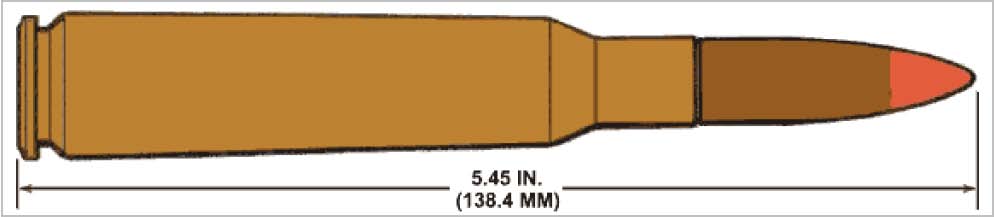
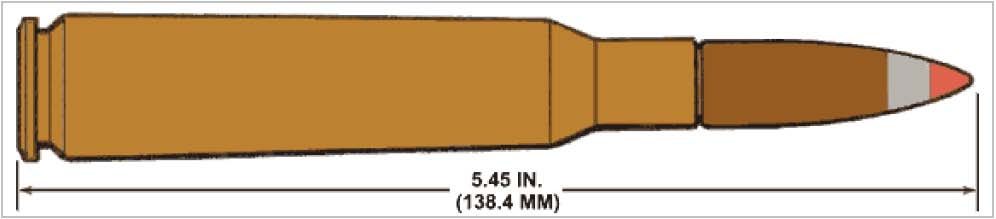
This cartridge is used, in place of the armor-piercing round, against armored, flammable targets, with a tracer element for observation purposes. This cartridge is effectively a variant of the M8 Armor-Piercing Incendiary with the added tracer element. Can be fired from the M82/M107 series of rifles. This bullet has a red tip with a ring of aluminum paint.

Cartridge, Caliber .50, Tracer, Headlight, M21
Tracer for use in observing fire during air-to-air combat. Designed to be more visible, the M21 is 3 times more brilliant than the M1 tracer.

Cartridge, Caliber .50, Incendiary, M23
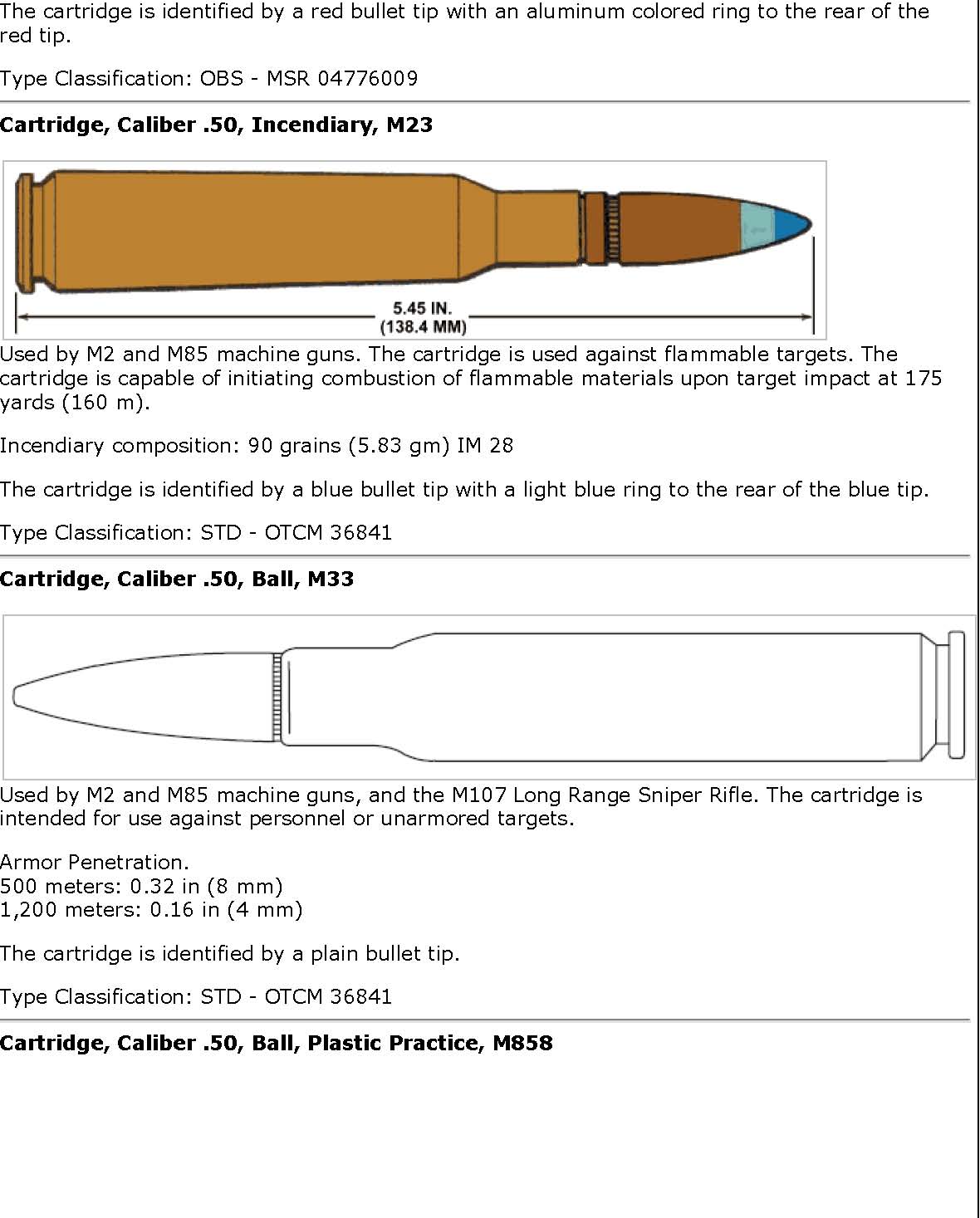
This cartridge is used against unarmored, flammable targets. The tip of the bullet is painted blue with a light blue ring.

Cartridge, Caliber .50, Ball, M33
This cartridge is used against personnel and unarmored targets. Can be fired from the M82/M107 series of rifles.

Cartridge, Caliber .50, Saboted Light Armor Penetrator, M903
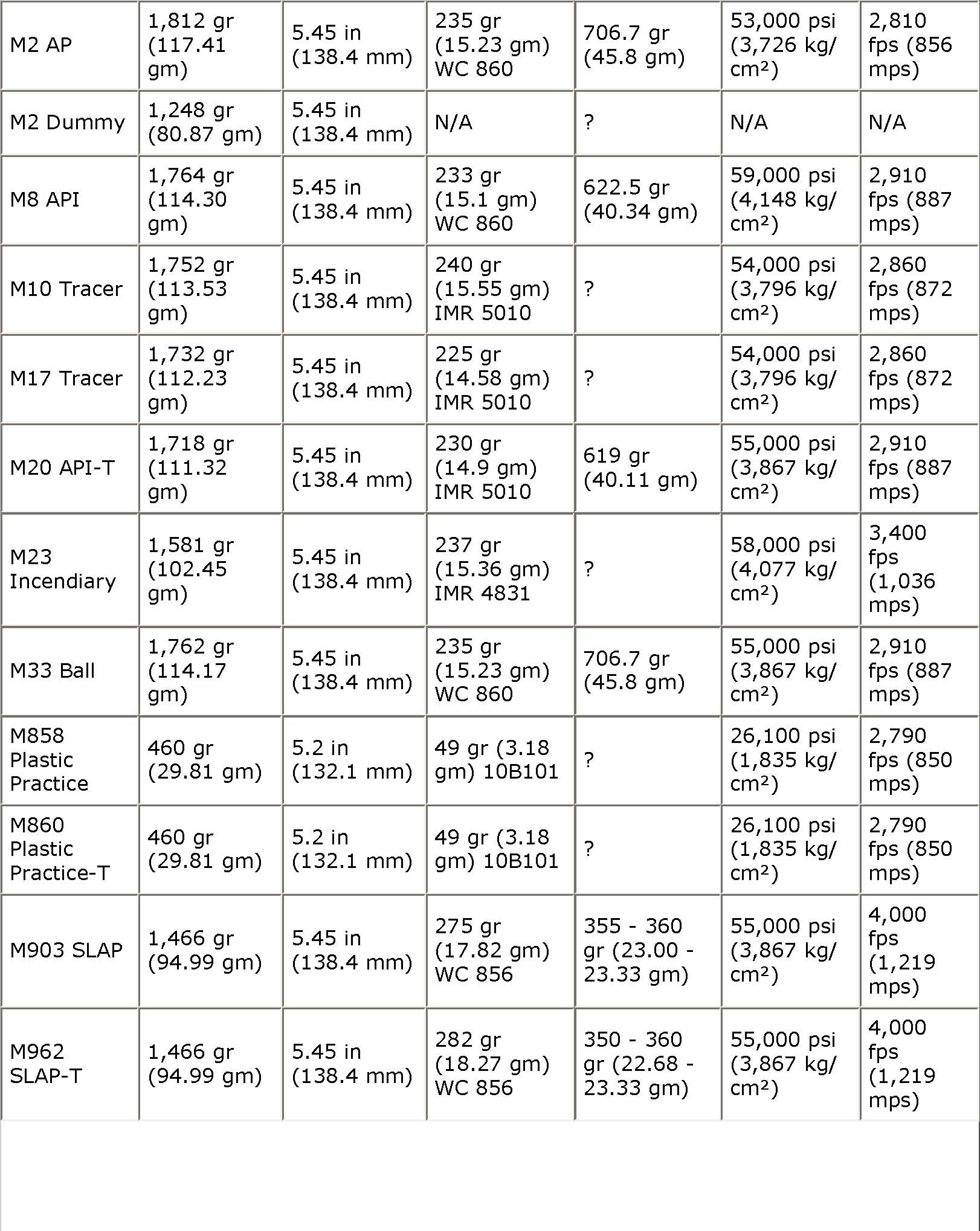
This cartridge has a 355 – 360 gr (23.00 – 23.33 g) heavy metal (tungsten) penetrator that is sabot-launched at a muzzle velocity of 4,000 ft/s (1,219 m/s). The 0.50 in (12.7 mm) diameter sabot is designed to separate after leaving the muzzle, releasing the 0.30 (7.7 mm) penetrator. It is injection molded of special high strength plastic and is reinforced with an aluminum insert in the base section. The cartridge is identified by an amber sabot (Ultem 1000). For use only in the M2 series of machine guns. This round can penetrate 19mm of steel armor at 1500 yards.[9]

Cartridge, Caliber .50, Saboted Light Armor Penetrator-Tracer, M962
Like the M903, this is a Saboted Light Armor Penetrator (SLAP) round, with the only difference being that the M962 also has a tracer element for observing fire, target designation, and incendiary purposes. It uses red colored plastic sabot for identification. For use only in the M2 series of machine guns.

Cartridge, Caliber .50, Ball, XM1022
A long-range match cartridge specifically designed for long range work using the M107 rifle.
Cartridge, Caliber .50, M1022 Long Range Sniper
The .50 Caliber M1022 has an olive green bullet coating with no tip ID coloration. The projectile is of standard ball design. It is designed for long-range sniper training and tactical use against targets that do not require armor-piercing or incendiary effect. It exhibits superior long range accuracy and is trajectory matched to MK211 grade A. The M1022 is ideal for use in all .50 Caliber bolt-action and semi-automatic sniper platforms.[10] The bullet remains supersonic out to 1,500 m (1,640 yd) to 1,600 m (1,750 yd).[11]

Cartridge, Caliber .50, High-Explosive Armor-Piercing-Incendiary (HEIAP), Mk 211 Mod 0
A so-called “combined effects” cartridge, the Mk 211 Mod 0 High-Explosive-Incendiary-Armor-Piercing (HEIAP) cartridge contains a .30 caliber tungsten penetrator, zirconium powder, and Composition A explosive. It can be used in any .50 caliber weapon in US inventory with the exception of the M85 machine gun. Cartridge is identified by a green tip with a grey ring.

Cartridge, Caliber .50, Armor Piercing Incendiary Dim Tracer (API-DT), Mk 257
The .50 Caliber Mk 257 API-DT has a purple bullet tip. The bullet has a hardened steel core and incendiary tip. The .50 Caliber MK257 is used in machine guns M2, M3, and M85. Dim trace reduces the possibility of the weapon being located during night fire and is visible with night vision devices only.[10]

Cartridge, Caliber .50, Armor-Piercing (AP), Mk 263 Mod 2
The .50 Caliber Mk 265 has a black tip. The bullet has a hardened steel core. It is used in machine guns M2, M3, and M85.

Cartridge, Caliber .50, Armor-Piercing-Incendiary-Tracer (API-T), Mk 300 Mod 0
As with the Mk 211 Mod 0, but with a tracer component. This cartridge likely can be used in any .50 caliber weapon in US inventory with the exception of the M85 machine gun, as with the Mk 211 Mod 0.

Cartridge, Caliber .50, Armor-Piercing-Explosive-Incendiary (APEI), Mk 169 Mod 2
This cartridge is used against hardened targets such as bunkers, for suppressive fire against lightly armored vehicles, and ground and aerial threat suppression. It is generally fired either from pilot-aimed aircraft-mounted guns or anti-aircraft platforms both produced by FN Herstal.[12] It is identified by a gray over yellow tip.[13] A tracer variant of it also exists.

Cartridge, Caliber .50, Ball, Mk 323 Mod 0
Created by the Naval Surface Warfare Center Crane Division, this cartridge uses M33 ball projectiles in a polymer case instead of brass. It has a clear polymer case, with a standard brass head fused at the bottom. The Mk 323 can be fired from M2HB/M2A1 machine guns and GAU-21/A aircraft guns with the same performance. It gives a 25 percent weight savings over brass-cased ammunition and allows 40 percent more ammunition to be carried for the same weight. The Mk 323’s polymer casing will be applied to tracer, AP, API, and SLAP projectiles.[14][15]

Links used for feeding machine guns
Two distinct and non-compatible metallic links have been used for the .50 BMG cartridge, depending upon the machine gun which will be firing the cartridges. The M2 and M9 links, “pull-out” designs, are used in the Browning M2 and M3 machine guns. Pull-out cloth belts were also used at one time, but have been obsolete since 1945. The M15-series “push-through” links were used in the M85 machine gun. When the M85 was taken out of service, large stocks of ammunition linked with the M15 link remained in US military storage because of the ease with which linked ammunition can be de-linked and re-linked with different (i.e. in service) links.

Legal issues
The specified maximum diameter of an unfired .50 BMG bullet is 0.510-inch (13.0 mm); while this appears to be over the .50 inch (12.7 mm) maximum allowed for non-sporting Title In small arms under the U.S. National Firearms Act, the barrel of a .50 BMG rifle is only .50 inch (12.7 mm) across the rifling lands and slightly larger in the grooves. The oversized bullet is formed to the bore size upon firing, forming a tight seal and engaging the rifling, a mechanism which in firearms terms is known as engraving. Subject to political controversy due to the great power of the cartridge (it is the most powerful commonly available cartridge not considered a destructive device under the National Firearms Act), it remains popular among long-range shooters for its accuracy and external ballistics. While the .50 BMG round is able to deliver accurate shot placement (if match grade ammunition is used) at ranges over 1,000-yard (910 m), smaller caliber rifles produce better scores and tighter groups in 1,000-yard (910 m) competitions.[16]

In response to legal action against the .50 BMG in the United States and Europe, an alternative chambering was developed. The .510 DTC Europ uses the same bullet, but has slightly different case dimensions. .510 DTC cases can be made by fire-forming .50 BMG cases in a .510 DTC chambered rifle. The new round has almost identical ballistics, but because of the different dimensions, rifles chambered for .50 BMG cannot fire the .510 DTC, and therefore rifles chambered for .510 DTC do not fall under many of the same legal prohibitions. Barrett offers a similar alternative, the .416 Barrett, which is based on a shortened .50 BMG case necked down to .416 caliber (10.3 mm).

A 1999 Justice Department Office of Special Investigations briefing on .50 caliber rifle crime identified several instances of the .50 BMG being involved in criminal activities.[17] Most of the instances of criminal activity cited in the Office of Special Investigations briefing involved the illegal possession of a .50 BMG rifle. The briefing did not identify any instance of a .50 BMG rifle being used in the commission of a murder.

Within the United Kingdom, it is legal to own a .50 BMG rifle with a section 1 Firearms Certificate.[18] Applications requesting firearms in this caliber are not subject to any extra scrutiny compared to smaller calibers.[19]

There have been persistent reports of a belief among some members of the United States Armed Forces that the use of .50 BMG in a direct antipersonnel role is somehow prohibited by thelaws of war. This is incorrect and has been characterized as a myth; writing for the Marine Corps Gazette, Maj. Hays Parks states that “No treaty language exists (either generally or specifically) to support a limitation on [the use of .50 BMG] against personnel, and its widespread, longstanding use in this role suggests that such antipersonnel employment is the customary practice of nations.” Parks theorizes that the myth originated in historical doctrine discouraging the use of the M8C spotting rifle—an integral .50-caliber aiming aid for the M40 recoilless rifle—in the antipersonnel role. This limitation was entirely tactical in nature, having been intended to help conceal the vulnerable M40 and its crew from the enemy before the main anti-tank gun could be fired, but some personnel may have erroneously assumed the existence of a legal limitation on the use of .50-caliber projectiles more generally.[20]

Typical uses
The primary military use of this round is in the Browning M2HB heavy machine gun.

The U.S. Coast Guard uses .50 BMG rifles to disable outboard engines from armed helicopters during interdictions. Similarly, .50 BMG weapons have attracted attention from law enforcement agencies; they have been adopted by the New York City Police Department as well as the Pittsburgh Police. A .50 BMG round can effectively disable a vehicle when fired into the engine block. If it is necessary to breach barriers, a .50 BMG round will penetrate most commercial brick walls and concrete cinder blocks.

In addition to long-range and anti-materiel sniping, the U.S. military uses .50 BMG weapons to detonate unexploded ordnance from a safe distance. The Raufoss Multipurpose round has sufficient terminal performance to disable most unarmored and lightly armored vehicles, making .50 BMG caliber weapons helpful in anti-insurgency operations.

Some civilians use .50 caliber rifles for long-range target shooting: the US-based Fifty Caliber Shooters Association holds .50 BMG shooting matches.[21]

Partial list of .50 BMG firearms
Carbines

  • Barrett M82CQ (a carbine version of the M82A3)
  • Bushmaster BA50 carbine (22″ barrel version of the BA50)

Rifles

  • Accuracy International AS50
  • Accuracy International AW50
  • Accuracy International AX50
  • Anzio Iron Works Anzio-50
  • Armalite AR-50
  • Arms Tech Ltd. TTR-50[22]
  • Barrett M82/M107
  • Barrett M95
  • Barrett M99
  • Bluegrass Armory Viper[23]
  • Bohica MK III AR-15 Upper[24]*
  • Bushmaster BA50[25]
  • ČZW-127
  • Desert Tactical Arms HTI
  • DSR-50
  • East Ridge / State Arms Gun Co. Inc.[26]
  • EDM Arms Windrunner[27]
  • Gepard anti-materiel rifle
  • L.A.R. Manufacturing, Inc. Grizzly Big Boar
  • McMillan Tac-50
  • OM 50 Nemesis[28]
  • POLY-Technologies M99-II[29] and M99B-II[30]
  • PGM Hecate II
  • Pindad SPR-2 and Pindad SPR-3[31]
  • Ramo M600 and M650[32]
  • Robar RC-50
  • Safety Harbor Firearms SHF/R50[33]
  • Serbu Firearms BFG-50 (single-shot bolt-action) and BFG-50A (semi-automatic)
  • Spider Firearms Ferret 50
  • Steyr HS .50
  • TGR Co. LLC $1599 Noreen 50 BMG[34]
  • Ultralite50/Ligamec Corp.[35]
  • Vigilance Rifles Inc. M14 (semi-automatic)[36]
  • Vulcan Armament V50[37]
  • WKW Wilk
  • Zastava M93 Black Arrow
  • Zel Custom Manufacturing/Tactilite[35]

Machine guns

  • CIS 50MG
  • GAU-19
  • M2 Browning machine gun
  • M85 machine gun
  • MAC-58 – did not enter production
  • Rolls-Royce Experimental Machine Gun – only built as prototype
  • WKM-B
  • XM312

Pistols


US Air Force fires ARRW hypersonic in first test since March failure

0

WASHINGTON — The Air Force on Saturday conducted its latest test of a prototype hypersonic AGM-183A Air-launched Rapid Response Weapon, collecting data it hopes will help it develop future weapons that can travel at greater than Mach 5.

The Air Force said in a statement that a B-52H Stratofortress released a full operational prototype ARRW, known as an all-up round, off the coast of Southern California. ARRW is made by Lockheed Martin.

This ARRW test marked the first since a failed test of another operational prototype in March. After an announcement about that test was silent on whether it had achieved its objectives, Air Force Secretary Frank Kendall soon afterwards told Congress it was “not a success.” Kendall also told lawmakers the service was more committed to the HACM than ARRW, and that the ARRW’s future is in doubt, with a decision on whether to continue with the program likely to come as part of the fiscal 2025 budget process.

Hypersonic weapons travel at speeds greater than Mach 5, or more than 3,836 miler per hour, and are highly maneuverable, which makes them difficult to track and shoot down. Lawmakers have expressed concern that the U.S. military has not done enough to develop and field hypersonic weapons, and that the nation may be falling behind Chinese and Russian hypersonic capabilities.

The service said it would not discuss specific objectives of the Aug. 19 test, and did not say whether it considered the test a success. But the Air Force said it “gained valuable new insights into the capabilities” of ARRW, and that the data would help it advance programs such as ARRW and the service’s other major hypersonic weapon program, the Hypersonic Attack Cruise Missile.

The Air Force said the test focused on ARRW’s end-to-end performance, and that it also validated and improved the service’s test and evaluation capabilities to continue to develop advanced hypersonic systems.

In another March hearing, Air Force acquisition chief Andrew Hunter said the Air Force was still planning to conduct the last two ARRW all-up round test flights to collect data for future hypersonic programs.

Stephen Losey is the air warfare reporter for Defense News. He previously covered leadership and personnel issues at Air Force Times, and the Pentagon, special operations and air warfare at Military.com. He has traveled to the Middle East to cover U.S. Air Force operations.

Ukraine war prompts new US air tactics in Europe

0

Nineteen months into Russia’s war on Ukraine, its lessons are shaping how the U.S. Air Force thinks about combat over Europe.

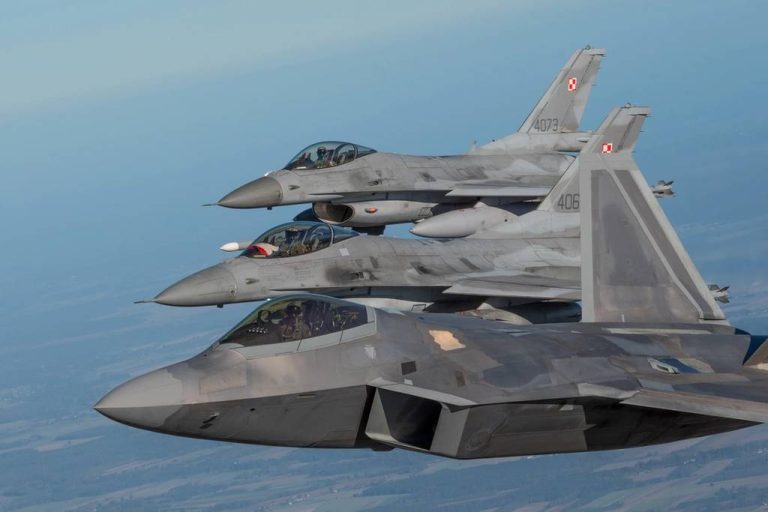
The conflict is pushing the Pentagon to focus on tactics instead of the strategic-level chess moves that have defined the U.S.-Russia military relationship in Europe since the end of the Cold War, Gen. James Hecker, the Air Force’s top officer in Europe, told Air Force Times in a recent interview.

No longer are allied air forces passively circling over Europe for the sake of visibility. U.S. pilots and their counterparts now use air policing missions to practice offensive and defensive maneuvers along NATO’s eastern border.

Struck by Russia’s inability to control Ukrainian airspace and Ukraine’s inability to fully secure it, NATO has begun working through the details of how it would maintain ownership of its own skies while breaking through enemy defenses to secure more airspace.

Hecker said his top priority has become figuring out how to counter air and missile defenses, electronic jamming and other anti-access, area-denial (A2/AD) capabilities, as they are known in military parlance, that would keep the U.S. out of Russian territory.

And it’s a main focus of U.S. and allied discussions at NATO’s highest levels.

A revamp of NATO’s regional security plans led by Army Gen. Christopher Cavoli, the head of U.S. European Command and one of the transatlantic alliance’s two strategic commanders, has spurred a new look at how member militaries would fight future wars if deterrence fails.

Those are “geographically specific plans that describe how we will defend key and relevant places in our alliance” against Russia and terror groups, Royal Netherlands Navy Adm. Rob Bauer, chairman of NATO’s military committee, said in May.

To the greatest extent seen since the end of the Cold War, he said, the alliance is setting goals to develop the capabilities it needs to thwart specific threats, like hypersonic weapons and unmanned vehicles.

“Together this family of plans will significantly improve our ability and readiness to deter and defend against any threats, including on short or no notice, and ensure timely reinforcement of all allies,” NATO said in a statement at its July 11 summit in Lithuania. “We have committed to fully resource and regularly exercise these plans to be prepared for high-intensity and multi-domain collective defense.”

A closer look

For the allied air forces, that requires a closer look at how to defend their own airspace and gain access into an enemy’s. Delegates from each member nation began answering that question at NATO’s first weapons and tactics conference, or “WEPTAC,” at Ramstein Air Base, Germany, July 17-28.

Officials discussed the aircraft and weapons that the alliance would need for the counter-A2/AD mission in Europe, and hashed out techniques airmen would use in the field, Hecker said.

U.S. Air Force officials have pointed to unmanned aircraft, stealthy and long-range assets, and electronic weapons as options to distract or destroy defensive systems and clear the way for more traditional combat aircraft.

“We did a lot of the tactical-level planning for that kind of mission,” Hecker said. “We will use that planning to actually do rehearsals and practices as we continue our enhanced air policing on [NATO’s] eastern border.”

U.S. airmen have begun honing those moves in training sorties with European aircraft on the eastern flank, he said. It’s one example of how allied airpower has evolved alongside the conflict across NATO’s border.

After Russia launched its full-scale invasion of Ukraine in February 2022, armed NATO jets flew around-the-clock air patrols to discourage the conflict from spilling into other European nations. That kept Russian forces at bay but arguably left NATO airmen less ready for conflict, Hecker said.

“If you just do circles with missiles on board, you’re not actually practicing what you’re going to do in combat,” he said.

Once leaders were convinced that the alliance’s airspace was safe, airmen changed tack. Now pilots on patrol also take part in anti-access training along NATO’s border — pairing the deterrent value of an air patrol with the tactical value of real-world practice.

NATO will also put those tactics to the test at a major new training exercise, Ramstein Flag, in Greece at the end of 2024, Hecker said.

“We don’t want to go to war with Russia, and I don’t think they want to go to war with us either,” he said. “But we need to make sure that we have the forces capable of deterring them, so that nothing bad will happen.”

NATO will look for other opportunities to try out new tactics in large exercises, particularly those that combine multiple types of aircraft for more realism, Hecker said.

Those events could include Ukrainian pilots at the end of their training to fly the U.S.-built F-16 Fighting Falcon, he added.

POLITICO reported Aug. 4 that eight Ukrainians who are fluent in English are ready to learn to operate the fighter jet once a syllabus is created by a coalition of European countries and approved by the United States. It’s unclear when that might come to fruition.

Ahead of Ramstein Flag, U.S. Air Forces in Europe will continue trying to reform the classification rules that hinder how it shares combat data with others in NATO, from satellite imagery to targeting information collected by the F-35 Lightning II fighter jet.

“There’s things that we could share when it comes to A2/AD that would make us more integrated … and we could do the mission better, if they knew the capabilities that different countries had,” Hecker said. “We’re getting through some of those barriers and we’re able to brief certain folks on some of those capabilities, so we can fight better … as a team.”

Hecker also wants to ensure the alliance could carry out its combat objectives even if its communications are disrupted. And U.S. airmen can learn from Ukraine’s success at keeping its military aircraft from being targeted on the ground, by continually moving and maintaining a light footprint, he said.

The growing catalog of training events are part of a new era on NATO’s path to grow national investments in the alliance’s mutual defense since 2014.

Asked whether the U.S. should commit additional air squadrons to Europe, Hecker instead pointed to another sign of those investments: the rising number of European countries that have signed onto the F-35 Joint Strike Fighter program.

Within the next 10 years, Hecker said, more than 600 F-35s will be spread across the continent — only 54 of which are slated to be American.

“The European NATO allies are really stepping up to the plate and taking it seriously,” Hecker said. “I think you’re going to see, over the next several years, better tactics, better integration, and all that means better deterrence.”

That growing commitment can ensure a strong military presence in Europe without relying too heavily on the Pentagon, whose top priority is sending forces to deter Chinese aggression in the Pacific.

“You’re never going to have as many forces as you want … but I think we’re sitting in a pretty good position right now,” Hecker said of U.S. airmen in Europe. “I think everyone understands where we are with the National Defense Strategy, and it doesn’t get very heated during those discussions.”

Rachel Cohen joined Air Force Times as senior reporter in March 2021. Her work has appeared in Air Force Magazine, Inside Defense, Inside Health Policy, the Frederick News-Post (Md.), the Washington Post, and others.

Refrain from shooting guns in Chicago between 9 a.m. and 9 p.m

0

Yet another stupid thing coming out of Chi-Raq.
How about tag n’ bag the criminals.
MARIA E. HADDEN is being paid $121,560 a year plus complete benifits for at best a part-time job.

///////////////////////////////////////////////////////////////////////////////////////////////////////
CHICAGO — A North Side community group is calling for people to refrain from shooting guns in Chicago between 9 a.m. and 9 p.m. to reduce the risk to people “not involved in high risk activities.”

The proposal from Rogers Park-based Native Sons, known as “The People’s Ordinance,” was recently promoted in an email newsletter by Ald. Maria Hadden (49th).

Chicago group wants gangbangers to refrain from firing guns between 9 a.m. and 9 p.m. – CWB Chicago


Manned Marine helicopter refuels unmanned helo for 1st time

0

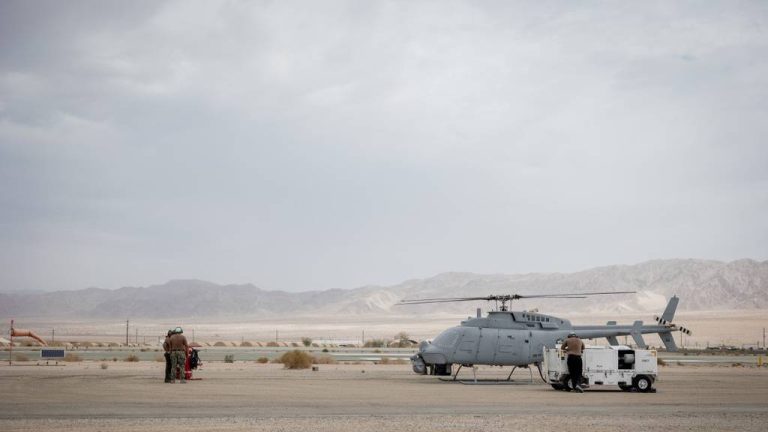
Marines delivered fuel from a traditional crewed helicopter to an uncrewed autonomous helicopter in July for the first time in the history of the Marine Corps or Navy, according to the Corps.

During an exercise at Twentynine Palms, California, a Marine heavy-lift CH-53E Super Stallion provided fuel to an unmanned Navy MQ-8C Fire Scout, as a way to extend the range of the latter aircraft, the Marine Corps said in a Thursday Marine Corps story.

On July 31, the hefty Super Stallion transferred approximately 700 pounds of fuel to the Fire Scout, just under the uncrewed aircraft’s maximum payload, according to the story.

The Super Stallion can afford to hand off that amount of fuel: Its maximum fuel payload is 23,450 pounds. That means the Super Stallion can refuel the Fire Scout multiple times in hard-to-reach areas, keeping the Fire Scout going over longer distances and periods of time, according to the release.

The Fire Scout typically operates from a littoral combat ship, a relatively small Navy vessel designed for operations that take place close to shore, the release said.

But in Service Level Training Exercise 5-23 in the California desert, Marines from Marine Heavy Helicopter Squadron 361 put the unmanned system to the test in a different kind of environment.

“We are in the desert, but the logistical, administrative, and most importantly the tactical lessons learned here are applicable to any clime and place,” Lt. Col. Nathaniel Griggs, the top acquisitions, construction and improvements officer at Twentynine Palms, California, said in the story.

The refueling occurred with both aircraft on the ground, the story said. The Fire Scout came from the Navy’s Helicopter Sea Combat Squadron 21.

In recent years, as it has stared down the potential threat of the technologically sophisticated Chinese military, the Marine Corps has emphasized reconnaissance and counter-reconnaissance, and the role of unmanned aircraft in particular.

The Corps also has contended with what leaders have acknowledged is an outdated, vulnerable logistics system. Fuel and other elements of logistics could come under stress in the more spread-out form of combat for which the service is preparing, new Marine doctrine says.

Irene Loewenson is a staff reporter for Marine Corps Times. She joined Military Times as an editorial fellow in August 2022. She is a graduate of Williams College, where she was the editor-in-chief of the student newspaper.

How to implement layered security for your home protection

0

Integrated security is a holistic approach that combines various protective measures to safeguard individuals, belongings, and valuable assets. In military terminology, this strategy is known as “defense in depth.” The inherent advantage of an integrated security approach lies in its ability to cover the essential aspects of protection, detection, and response by leveraging the strengths of each layer to counterbalance the potential weaknesses of others.

When applied to home defense, an integrated security strategy proves invaluable in fortifying your residence, preserving personal assets, and ensuring the safety of your loved ones. By creating a robust network of interwoven security measures, you create a formidable defense system that deters potential threats and provides peace of mind.

The foundation of home security begins with community deterrence. When criminal activities are discouraged in your neighborhood, your home becomes a less attractive target for various intrusions. Establishing a robust criminal deterrence within your community can be achieved through a neighborhood watch program.

This organized initiative enables neighbors to collaborate in keeping a vigilant eye on suspicious activities and individuals within their vicinity. By implementing an effective communication system, neighbors can share crucial information in a timely manner, utilizing tools such as neighborhood text message groups or private social media pages.

A significant aspect of this first layer of security is simply getting to know your neighbors. Building strong relationships with the people living closest to you ensures they can identify expected visitors and recognize when someone seems out of place.

Additionally, they can help safeguard your home by collecting packages left at your door while you’re away, preventing porch pirates from stealing them and removing flyers left by solicitors, which could otherwise signal your absence from the property.

To get to know your neighbors, you could host a neighborhood block party since few people will say no to free burgers and ice cream. Such parties present an excellent opportunity to bond with your neighbors and foster relationships. In certain communities, the local government or police department might even chip in and provide support for such events, particularly when linked to a neighborhood watch program.

Control and limit access to your property

The subsequent logical phase in a multi-layered home security approach involves restricting and managing access to your property and residence. This is accomplished through various measures, encompassing physical barriers like walls, fences, and doors, along with structural reinforcements, avenues of approach, locks, and security codes. This security layer further comprises sublayers, beginning with the outer layer called the “exterior area,” which refers to the immediate surrounding area of your dwelling.

The inclusion of a physical barrier, such as a sturdy fence or wall, significantly enhances privacy and deters potential intruders. While it may not entirely thwart determined trespassers, it effectively slows them down, making their presence more conspicuous and hindering their attempts to flee with your belongings. Moreover, it directs legitimate traffic toward the proper access points, restricting unauthorized entry.

You should also control access to transitional zones such as the garage and secured interiors like screened porches or gated walkways. Surprisingly, these zones are often vulnerable access points for homes, as they are mistakenly perceived as more secure than they actually are.

For instance, many people leave their garage entry doors unlocked during the day, assuming the closed garage door, held in place by the automatic door opener carriage, provides sufficient security. However, an automatic garage door can be rapidly breached, and often times this is the point of entry for thieves.

It is crucial to keep exterior doors, and windows locked most of the time, especially during nighttime or when you are away from home. While no system can entirely deter determined intruders, locked doors and windows act as a deterrent and can provide crucial response time in the event of a security breach.

Several additional measures can be employed to reinforce interior entry points and impede intruders:

Deadbolts: Properly installed deadbolts penetrate deeply into the doorframe, offering increased surface area for securing the door. Placing a deadbolt higher on a solid wood door, approximately 60 inches from the ground, enhances its resistance to forceful kicks, as it becomes more challenging to target the lock mechanism directly.

Hinges: The hinges represent the weakest component of an exterior door. Typically, hinge screws are only about half an inch long. Replacing these standard screws with 3-inch screws significantly strengthens the door. The same enhancement can be applied to the strike plate screws.

Window bars: Installing window bars or grilles on ground-level windows can be an effective way to reinforce entry points. These bars are designed to withstand significant force, making it extremely challenging for intruders to break through. Window bars not only enhance security but also act as a visual deterrent, deterring potential burglars from even attempting to breach the windows.

Security screens: If you don’t want to install window bars, installing metal security screens over exterior doors and windows introduces an additional layer of difficulty for intruders to overcome before gaining entry into your home. Window film applications can also be utilized to prevent window entry unless the entire piece is pulled out. This imposes additional time constraints on potential intruders, providing your neighbors with extra opportunities to notice suspicious activities.

Window sensors: Another valuable addition to an early detection system is the installation of window sensors. These small devices can be placed on windows and doors and trigger an alert when they detect any attempted entry. Window sensors are discreet and can be connected to your smart home system, allowing you to receive instant notifications on your phone or other devices whenever there’s a breach attempt.

invisible bph banner 2

Give yourself time to act

Prompt detection of an unexpected visitor is of utmost importance. Answering a door without knowing who stands on the other side is akin to playing a risky game of chance. However, a simple device like a peephole can provide a safe way to identify visitors without compromising your position.

For a more advanced early detection system, consider installing motion cameras, motion lights, and smart doorbells like Ring, which are cost-effective and easy to set up. These devices serve as an excellent early warning system and act as strong deterrents. Motion lights not only alert you but also draw the attention of your neighbors. Motion cameras not only notify you of someone’s presence but also offer live views and recorded footage for potential use as evidence. Smart doorbells enable you to interact with visitors even when you’re away from home.

Incorporating an audible alarm system is another valuable measure. Although an audible alarm indicates that someone might have already breached your last layer of controlled access, it alerts you before the intruder approaches you while you’re asleep in bed. To enhance the effectiveness of your alarm system, consider adding an external siren to notify your neighbors as well.

Some individuals rely on dogs for early threat detection, which can be effective as long as the dog has a natural inclination to alert to potential threats or has been trained to do so. Even small dogs can serve as reliable early warning systems when properly trained. However, it’s important to remember that threat detection is the primary goal, not threat elimination. If a dog alerts you to a potential danger, it has fulfilled its role. Any additional protective actions from the dog are beneficial, but ultimately, your responsibility for safety remains with you.

Also, if you want to get a dog to protect your home, there’s quite a bit of work involved with this process. There are certain breeds that are known to be excellent home protectors, and usually, these breeds require training and almost constant attention to keep them on track. Some of these breeds may prove to be too much to handle for certain families, so it’s important to consider all the pros and cons before getting such a “pet”.

Call for help

In case you detect a potential intruder or find yourself dealing with a committed one, it’s essential to call for help as quickly as possible. This means that you should call 911 without hesitating and before trying to figure things out. The swifter the 911 response is initiated, the faster law enforcement can arrive on the scene. Additionally, calling 911 creates a recorded timeline of events, which can be advantageous in legal proceedings if necessary.

During nighttime, keep your cell phone charging on your nightstand to ensure it remains close by and ready for use. Having a couple of old cell phones charged up around the house is also a good idea, as federal law mandates that all cell phones, even inactive ones, must offer 911 call service.

To expedite the 911 activation process in situations where you might be trapped by an intruder, consider investing in a monitored alarm system. Such a system, equipped with a panic button, enables you to activate it immediately and notifies the monitoring company that you are in distress and unable to call or answer the phone.

Depending on your location, some areas may require you to register your alarm system, allowing it to independently dial 911. Registration fees can vary based on your municipality. In the past, cellular systems used to be more expensive, but costs have significantly decreased over the last 5 to 10 years, making them a more affordable option nowadays.

Make or build a safe room

make or build a safe room

Create a designated safe room within your home to ensure the safety of every family member during emergencies. This strategic measure allows you to gather all family members in one location that you can fortify and defend effectively.

To establish a safe room, carefully choose the best strategic location in your home, often found in the master bedroom. A walk-in closet could be turned into a saferoom if needed and stocked . Stock with essential survival items that will sustain you until emergency personnel arrive. These items should include a trauma kit, bottled water, energy bars, a cell phone, and a means of defense.

Maintaining a calm and level-headed response to any situation is vital for survival. Having food and water readily available can significantly help soothe family members experiencing heightened adrenaline responses.

Use lethal force if it comes to that

The ultimate layer in a comprehensive home-defense strategy involves the preparedness to respond to a violent intruder with lethal force. However, simply possessing a firearm isn’t enough; it necessitates meticulous preplanning and cultivating the right mindset to ensure efficiency and effectiveness.

Ensuring that everyone in your household is well-trained in the safe handling of firearms is crucial, regardless of whether they are capable of using one. Taking your children to a shooting range to witness and hear firearms in action can be a valuable educational experience. Teach them the principles of firearms safety and demonstrate how to handle and carry a loaded weapon responsibly.

By familiarizing them with firearms, you eliminate their curiosity about the unknown and instill a healthy respect for these weapons, offering you peace of mind that your child can be trusted around unattended firearms. If they prove responsible enough, they should also know where your guns are located, so they can retrieve them if the situation demands it.

While the bulk of your firearms should be securely stored in a gun safe, having a gun locked away in a basement vault may not be helpful when someone is attempting to breach your front door. For quick access and to deter unauthorized access, consider utilizing hidden storage solutions. These discreet storage options can be placed throughout your home, allowing you to keep firearms within arm’s reach while concealing them from casual observers.

Alternatively, you can opt for a quick-access safe that is openly displayed or partially hidden, holding your preferred home defense firearm. While a thief attempting a quick robbery may identify it (just like they would with a gun safe), they won’t immediately have access to the gun to use it against you or your family.

Lastly, it’s vital to be mentally prepared to use a firearm when necessary. Before reaching for a gun, ensure you have made a conscious decision to defend your life and the lives of your family members. Introducing a firearm into a tense situation while still grappling with the idea of using it can be dangerous. It’s essential to be resolute in your decision, as you don’t want to provide the means for your own downfall.

EC deathzone 620px

Concluding

Implementing a layered home security approach is essential to safeguarding your loved ones and protecting your property. By combining multiple security components, such as community deterrence, controlled access, and early detection measures, you create a formidable defense system that deters potential threats and provides peace of mind.

Additionally, reinforcing interior entry points and establishing a designated safe room further fortify your home against intrusions, ensuring you can respond effectively during emergencies. Remember, knowledge and preparedness are key, and training family members in safe firearm handling contributes to a comprehensive defense strategy.

By adopting these measures, you can significantly enhance your home’s security and create a safer environment for all. Stay vigilant, and always prioritize the safety and well-being of your family.

Other Useful Resources:

The truth about self-defense

Find Out What’s the Closest Nuclear Bunker to Your Home

Seven key elements your home defense plan needs

Knowledge to survive any medical crisis situation during a major disaster

Original Work – Judgement Day (Ark Royal 20)

0

Chapter One: HMS Endeavour, Dyson System (Interior)

Endeavour shook, violently.

Captain Staci Templeton gritted her teeth as the gravity wave crashed against the hull, sending shockwaves through the entire ship. It felt as if the starship was a wet-navy vessel, trying to make her way through rough seas, something she would have sworn impossible before the first gravity wave struck her ship. Red lights flared on the display, Endeavour’s drive field flickering and flaring before quietening down again; she grimaced as she realised the drive nodes were taking one hell of a beating. She had never felt anything like it, even in battle. The damage was starting to mount rapidly.

“We’ve lost two drive nodes,” Lieutenant-Commander David Atkinson reported, grimly. “I’m adjusting to compensate …”

“Get the damage control teams out there,” Staci snapped. In theory, the ship could lose half her drive nodes without losing her drive fields, but she didn’t want to put theory to the test. “We need those nodes repaired or replaced.”

“Aye, Captain,” her XO said. “I …”

The ship shook again. Staci cursed under her breath as new reports flowed into the display. Two of her crew were injured, one fatally … she’d ordered all non-essential personnel to tie themselves down, in hopes of avoiding serious injury, but she suspected the civilians were going to be beaten and battered by the time the crisis came to an end. If it ever did … an entire star had vanished, somehow. She had never seen or even heard of anything like it. For all she knew, the gravity waves were going to keep hammering Endeavour until she came apart at the seams. She didn’t want to think about what might be happening to the remainder of the fleet, or the sphere’s surface. The sphere might be having the first earthquakes in its long history.

“Captain, we are nearing the hatch,” Atkinson reported. “Do we risk passing through?”

“We have to get into open space,” Staci said. The gravity waves appeared to be random, with no discernible pattern. If Endeavour was caught inside the North Mountain … the entire ship might be dashed against the walls and smashed to atoms, something else that should have been impossible. “ Take us through the hatch.”

She sucked in her breath as the display updated, her head swimming as she tried – again and again – to come to terms with the sheer size of the sphere. The North Mountain made Earth’s orbital towers look tiny, the hatch below bigger than an entire planet … it was hard, almost impossible, to force herself to adjust her perspective, to not believe she was plummeting to certain death. It felt as if she’d ordered her starship to ram a planet … the world seemed to shift around her, the gravity field pulsing in a manner that felt weirdly discomforting, as the starship plunged through the hatch and into open space. The drive field twitched – a dull shiver running through the hull – as Endeavour glided through a cloud of dust. The shockwaves had shaken the sphere so badly the layers of surface dust had been blasted into interstellar space …

“Captain, the remainder of the fleet is heading into open space,” Lieutenant Helen Yang reported. “They’re trying to avoid the debris swarms.”

“Communications, raise them,” Staci ordered. The Chinese had surrendered – Admiral He had ordered his crews to hand themselves over to the nearest MNF authorities – but God alone knew what was really going on. No one had expected the alien tech to come into play, let alone an entire star winking out. “Find out who’s in command.”

The display updated, again. Red lights flowed towards Endeavour, icons flickering from red to yellow and back again as the tactical processors attempted to determine what was actually going on. Staci told herself she shouldn’t have been surprised. Dyson One had shattered centuries ago, leaving behind a shell of debris orbiting the star … and now, pieces of debris were being picked up and shoved into interstellar space by gravity shockwaves. She hoped Dyson Two could handle the impact, when the inevitable happened and an immense piece of debris struck the sphere, but she feared the worst. The sphere’s shell might be pretty close to indestructible – the researchers hadn’t found a way to so much as scratch it – yet a piece of debris bigger than Britain or Australia might be enough. Even if it didn’t break the shell, the shockwaves would do immense damage. They might even knock the entire sphere into the star.

Unless the Builders intervene, she thought. But they did nothing to save Dyson One.

“Signal from the fleet, Captain,” Lieutenant Andy MacPhee said. The communications officer didn’t take his eyes off his screen. “Commodore Lafarge has assumed command and is requesting an update from the Admiral.”

“Forward the request to the sphere,” Staci ordered. They’d left Admiral Dismukes on another ship, just in case Endeavour couldn’t make it through the hatch. “And request a full data dump.”

“Captain, the interstellar tramline is still absent,” Helen reported. “I can’t even pick up a hint of its presence.”

Staci grimaced. She’d expected as much, after the tramline had vanished, but she’d hoped …

“Helm, set course for Dyson One,” she ordered. “Best possible speed.”

“Aye, Captain.”

Her terminal updated, again. She glanced at the reports, running her eye down the headings in grim disbelief. The damage wasn’t fatal, thankfully, but it was terrifyingly extensive, the sort of damage she’d expect in a training sim, not real life. There was no rhyme or reason, no pattern … there were damaged sections that were isolated from other sections, internal damage that resembled sabotage or malfunction rather than direct attack. She’d served in combat before – she’d been on ships struck by nuclear warheads or hammered by bomb-pumped lasers – and the damage had been understandable, often predictable. This … she shook her head, trusting her XO and the damage control teams to fix as much as possible before they reached Dyson One. Or where Dyson One had been …

A wave of unreality washed over her as the ship evaded a wave of debris right out of science-fantasy. The idea of hiding in an asteroid cloud was fantastical anywhere else, but here … she sucked in her breath, bracing herself as pieces of space junk, some so large they had fragments of atmosphere, rocketed past. The display kept updating, projecting trajectories … most of the debris would miss Dyson Two, but some would strike the sphere. She hoped – prayed – the Builders would intervene. The MNF was nowhere near big enough to destroy or divert all the debris before it was too late.

We could assemble the entire navy, every navy, and still not have enough ships, she thought numbly. The whole scene was a nightmare. She was tempted to pinch herself just to make sure she wasn’t dreaming. She felt like an ant caught in the midst of human machinery, unsure what was actually going on but all too aware of the dangers. And if one impact knocks the sphere off its axis …

“Deploy four sensor drones,” she ordered, as they glided past another piece of debris. It was tumbling through space languidly, slow and stately compared to a starship, but it would be instantly fatal if it struck the hull. Or the distant sphere. “Try to track all the debris.”

“Aye, Captain.”

Helen looked up. “Captain, Dyson One’s gravity field is still present. I think the star was crushed into a black hole.”

Staci glanced at her. It was insane, but … what wasn’t?

“A black hole,” she repeated. “How?”

“In theory, one can create a gravity field that compresses a star into a black hole,” Helen said, slowly. “There were some … ah, theories that suggested it might be possible to use a gravity well to trigger a fission reaction within Jupiter and turn the planet into a star. If you can compress a star, you can just keep going until you end up with a black hole …”

“And then what?” Staci could understand someone trying to ignite a gas giant, although she doubted anyone would take the risk in a populated system, but creating a black hole? What was the point? It would make one hell of a weapon, she supposed, yet using it here seemed pointless. Worse than pointless. There was a very real risk the process would damage or destroy the second sphere, exterminating uncounted millions of humans – and perhaps other races – who lacked the ability to understand what was happening to them. “Why?”

Helen hesitated. “In theory, again, if you have a black hole at your disposal you could bend space and time into a pretzel. You could create a tramline, or a catapult effect, or …”

“Shit,” Staci said, quietly. She’d seen catapults in action. It was quite possible, at least in theory, to catapult an entire fleet hundreds of light years in a split second, without using the tramlines. Human tech had sent fleets dozens of light years behind enemy lines … she wondered, suddenly, just how far the Builders could send a fleet. A race that thought nothing of dismantling entire star systems might be able to cross the entire galaxy in a single moment. “Are they coming here?”

“It’s possible,” Helen said. “Given enough gravity to play with, they might be able to open a wormhole large enough to swallow an entire planet – or a star.”

“This is all just theory,” Atkinson said, from his console. “For all we know, something went badly wrong …”

Staci doubted it. The MNF had been exploring the sphere for the last few months, pushing buttons without ever knowing what they did … to the point, she reflected sourly, they’d accidentally turned off the interstellar tramline and trapped themselves. And then … they’d worked out how to open the hatch, take control of the fists, and even use them as weapons against their fellow humans. Sure, it was possible the star becoming a black hole was just a huge coincidence, but the odds against it were literally incalculable. A chill ran down her spine as she realised what it might mean, if Helen was right. The Builders were coming home.

If she’s right, she thought, numbly. Or they may be testing us further.

The thought irked her. The command centres in the sphere – on the surface, in the lone planetoid – were little more than intelligence tests. The researchers had speculated they were designed to unlock themselves, when the local humans – or whoever – reached a point they could solve the tests and gain access to the centres. Staci wasn’t sure if she liked that idea or not. On one hand, without gaining access the locals would never be able to design and build anything more advanced than a horse and cart, let alone get into orbit; on the other, it suggested a condescending and calculating attitude towards primitive races that chilled her to the bone. If one regarded oneself as superior, so superior there was no way one’s inferiors could close the gap, it was a very short jump indeed to thinking one had to take care of one’s inferiors, or use them as one pleased. She was all too aware it had been hard, if not impossible, to keep humans from treating the Vesy as noble savages, rather than intelligent beings in their own right, and the gap between the two races was far smaller than the gap between humanity and the Builders.

Contact with us nearly destroyed the Vesy, and much of their culture was lost in the waves of change washing over their world, she thought, grimly. If the Russian deserters hadn’t made contact with the Vesy, it might have been possible to isolate their world and let them develop in peace, but … there’d been no putting the demon back in the bottle. How badly will we be hurt if we make open contact with the Builders?

She tried not to think about it as Endeavour neared the black hole. The gravitational field was little stronger than the star’s gravity field, the slight increase barely noticeable. She suspected hundreds of pieces of debris had been pulled towards the black hole, when the gravity shockwaves had knocked some of the junk out of stable orbits. The sphere had shattered so long ago the debris that hadn’t fallen into stable orbits had fallen into the sun or been blasted into interstellar space, but now … she shook her head as the display updated, revealing a handful of scavenger craft fleeing the dangerously unpredictable system. They’d have to join the MNF, sooner or later, unless they wanted to try to make an impossible crossing to the nearest star. Hell, even if they did, there’d be no guarantee of finding a way home. It was quite possible they’d fly out of the frying pan and find themselves in the fire.

“Communications, shoot them a copy of the general amnesty,” she ordered, quietly. “If they want to come out of the cold, they’re welcome.”

She sighed inwardly. Technically, the MNF was supposed to arrest the intruders; practically, there was no point when there was no way to ship the scavengers back home for trial. If the fleet was permanently stranded in the alien system, they’d need every last pair of hands they could muster … she wondered, suddenly, just what they’d do with the Chinese. They might have staked everything on seizing the system – and she didn’t believe Admiral He’s assertion he’d acted alone, out of a desire to set himself up as an all-powerful warlord – but the MNF could hardly afford to dispose of them. They were trained and experienced personnel, people who couldn’t be discarded … not if there was any other choice.

And they might find a way to rebel again, if we treat them badly, she thought, tiredly. What do we do with them?

It felt like hours before Endeavour finally slipped into the original debris field. The MNF had barely made a start on charting the pieces of space junk, fragments of the shattered sphere, before all hell had broken loose … and now, the charts they’d painstakingly put together were worse than useless. Staci felt uncomfortably cramped as the ship inched through the field, cramped and confined in a manner she’d thought unthinkable. She was all too aware they were passing within bare kilometres of asteroid-like debris, close enough – almost – to reach out and touch. The ship was practically crawling through the field and yet … she shivered, again, as they made it through the shattered shell. Pieces of debris were spinning out of control, some cracking against other pieces like billiard balls; others plummeting down an invisible funnel and spinning straight into the black hole. She’d read a story, once, about a spacecraft that accidentally crossed an event horizon, time slowing down as it plummeted into the black hole …

“Hold position,” she ordered, sharply. They didn’t dare go too close. It was easy to predict the ebb and flow of the gravity field, at least in theory, but no one had ever seen a real black hole. The field might grow stronger with every piece of debris that plunged into the invisible maw, or something else might happen when – if – the Builders arrived. “Deploy additional sensor platforms, then relay our live feed to the MNF.”

“Aye, Captain.”

Staci’s terminal bleeped. “Captain, we have completed preliminary repairs,” Commander Mike Jenner reported. “We’re currently working on secondary repairs.”

“We can fly and fight,” Staci said, although she doubted Endeavour could outrun or outfight a race capable of turning a star into a black hole. They’d seen the fists smash entire starships to atoms and they were tiny, compared to the pieces of debris flying towards Dyson Two. “Injuries?”

Jenner lowered his voice. “Nine dead, seventeen injured,” he said. “Seven were thrown into bulkheads and fatally injured, two have no apparent cause of death. The doctor will carry out an autopsy, once the injured are stable.”

Staci nodded, grimly. Her crew was as medically healthy as any other naval crew – perhaps more so, given the long durations of their voyage – but the civilian complement veered between young and fit and old and decidedly unfit. They’d boarded too many researchers for her peace of mind … she wished, suddenly, they’d brought a pair of passenger liners for the civilians. They wouldn’t have been caught up in the battle to control the system if they’d been based on a civilian ship, with very limited military potential. But the gravity shockwaves might have done immense damage to the civilian-grade drive nodes, perhaps even destroyed them and their ships …

“See to it,” she ordered. She felt unusually tired. She hadn’t felt so rough since she’d taken a sailing ship from Britain to Iceland, a passage so draining it had left her with a new respect for the early explorers who’d sailed the seven seas. “And make sure you get some rest. We don’t know when everything will change, again.”

“Aye, Captain.”

Staci closed the link and stared at the display. The black hole was tiny, impossibly tiny, and yet its gravity field dominated the system. Her sensor crews were having problems trying to track the gravity waves, practically tides, shifting around the gravity nexus. It seemed as though the normal laws of physics were breaking down, tiny flickers of tramline-line patterns coming and going so quickly the sensors could barely keep track of them. It was awesome and terrifying and left her feeling numb, too numb to be aware of what might be coming. And yet …

We are ants before them, her mind whispered. She knew she was brave – she had gone into battle more times than she could count – but the scene before her was daunting. How did one fight a race so advanced they could build Dyson Spheres and compress a star into a black hole? And even if they mean well, they may hurt us just by existing …


HOW TO MAKE YOUR OWN DIY HEALTHY HOMEMADE CHICKEN FEED

0