Air Force pushes for quickstart plan to launch programs without budget

0

WASHINGTON — The U.S. Air Force still hopes lawmakers will approve a proposal allowing armed services to start work on new programs before a budget is passed, a move that could ease problems brought about by a continuing resolution.

Andrew Hunter, the Air Force’s assistant secretary for acquisition, technology and logistics, said Tuesday that the so-called quickstart legislative proposal would allow the service to progress with initial contract work and early-stage program activities — even if a budget isn’t yet passed and the military was forced to operate under a continuing resolution, or CR, limiting its spending to prior year levels.

In an interview at the Pentagon with Defense News, Hunter described complications that CRs present when the Air Force tries to launch new programs. Under a CR, he said, the Air Force can hold informal talks with industry. But arranging contracts and setting up vendor pools is trickier if a formal budget isn’t yet passed, he explained.

The quickstart proposal could change that, he argued.

“Getting to the point where you can actually get on contract and initiate early-stage programmatic activities, that’s what that legislative proposal is really optimized for,” Hunter said. “That’s one reason why we’re continuing to aggressively pursue that with Congress.”

Air Force Secretary Frank Kendall first described this proposal to reporters in April, noting it would only allow program offices to perform preliminary work, such as early requirements studies, risk reduction and design activities.

The original version of the proposal backed by Kendall would have allowed services up to $300 million to start new programs before a budget was passed. It was originally in neither versions of the National Defense Authorization Act proposed to Congress. But Sens. Sherrod Brown, D-Ohio, and Tom Cotton, R-Ark., brought the proposal up for a floor amendment to the Senate’s NDAA version in July.

The version that ultimately made it into the Senate NDAA was a slimmed-down approach to the first proposal, allowing $100 million in new-start funding across the Defense Department. Hunter said the Air Force will continue talking to lawmakers during the conference process to resolve differences between the two NDAA versions in hopes the proposal makes it into the final bill.

Hunter said the inclusion of the proposal in the Senate NDAA was “wonderful, from an Air Force perspective.” And when asked if $100 million was enough, he replied: “It’s a good start.”

“I would hesitate to say it’s not enough until I’ve [proved] that it’s not enough, by executing up to the limit,” Hunter explained. “Having said that, the $100 million isn’t just for the Air Force, sadly; it’s for all of the services. So we’ll have to see how intense the competition is to use the authority. And if it’s really intense, we’ll have to revisit” the proposal.

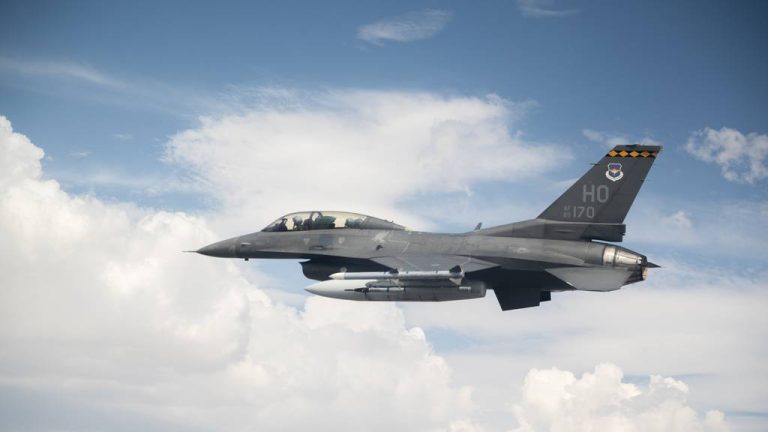
Hunter noted this proposal could come in handy to start up Project Venom, a proposed $50 million program that would allow the service to upgrade six F-16 fighters with autonomous software and experiment with the aircraft’s self-flying capabilities.

If the legislative proposal passes, Hunter said, the Air Force could readjust funding to start working on modifying those jets before a budget is officially passed. The funding could pay for procuring physical parts for the modified F-16s, he added, as well as design and software work.

A proposed experimental operations unit, which would help develop the tactics and procedures to fold autonomous drone wingmen — also known as collaborative combat aircraft — into a squadron, would be harder to fund under the quickstart proposal, Hunter said.

“So much of the work there [in the experimental operations unit] is people, Air Force personnel, and organizational,” Hunter said. “I wouldn’t say there’s not any application to it, but it’s a little more tenuous.”

When using that authority, he added, the Air Force would have to be cautious not to start something it would be unable to finish.

He also said House lawmakers and staffers have expressed concern to the Air Force about the potential effect this proposal would have on the budgetary process.

Some of the changes the Senate made to the proposal when including it in the chamber’s NDAA may address concerns in the House, increasing its chances for passage, according to Hunter. He described the other changes to the proposal, besides the lowering of the funding limit, as “clarifications” that didn’t differ greatly from what the Air Force intended.

“It’s my hope, and my message to the House folks has been, that we think a lot of the concerns that led to this not being in the House version of the NDAA were addressed in the provision that was adopted” by the Senate, Hunter said. “We think it’s ready to go.”

If the $100 million version of this legislative proposal passes, Hunter declined to say whether the Pentagon is likely to pitch another version next year that would expand it beyond the current limit.

“Right now, my job is to persuade them to adopt the authority and then to show them what it looks like in execution,” Hunter said. “I’m going to stick with that for the time being.”

Stephen Losey is the air warfare reporter for Defense News. He previously covered leadership and personnel issues at Air Force Times, and the Pentagon, special operations and air warfare at Military.com. He has traveled to the Middle East to cover U.S. Air Force operations.

Rafales on the upswing? French fighter eyes additional Mideast sales

0

MILAN — The United States’ dominance of the combat aircraft industry could see increased competition as the French hope to bolster their slice of the pie. With a German veto blocking Eurofighter deliveries to Saudi Arabia, and amid Israel’s persistent opposition to any F-35 sale to Qatar, this may be French firm Dassault’s opportunity to further push its fighter in the region.

In July, French Armed Forces Minister Sébastien Lecornu visited Qatar where he met with the emir in hopes of strengthening their strategic partnership through operational and industrial cooperation.

Following the trip, reports emerged that Qatar may opt to purchase an additional 24 Rafale from Dassault, which would bring the country’s fleet to 60, having acquired an initial batch of 24 in 2015 and another 12 in 2017. Although Qatar’s Defense Ministry hasn’t announced its decision, analysts have told Defense News such as sale appears likely.

“That they would come back to the table seeking another order is relatively unsurprising considering they already have the Rafale as well as another French-designed and -built type — the Mirage 2000-5 — in their fighter inventory,” said Dan Darling, the director of military and defense markets at Forecast International.

Qatar would want a fleet of 60 Rafales for two reasons, Darling explained: for stronger deterrence capabilities and for political purposes. There is a political element attached to major defense purchases, he said, where Qatar “buys” influence with the exporting nation and vice versa.

Richard Aboulafia, a managing director at Aerodynamic Advisory who has tracked aircraft programs for more than 30 years, agrees the diplomatic benefits are key.

“They [the Qatari government] view fighter aircraft as an opportunity to purchase a strategic relationship, and given their recent history with Gulf neighbors, these are extremely important for Qatar,” he said, referring to a recent diplomatic crisis that saw several nations accuse Doha of funding terrorist groups. “It isn’t [about] the Rafales.”

Experts, however, diverge over who could be the next customer of the Rafale in the greater Middle East. For Aboulafia, Saudi Arabia appears to be the logical contender, even if the U.S. agrees to sell F-35s to the kingdom.

“They [Saudis] already source F-15s from the U.S. and of course want F-35s. But as they are eager to continue their dual-source decision, they’ll want to buy another aircraft from another provider. Eurofighter tranche 2 is on hold. There’s really nobody else other than France,” he said.

Earlier this summer, while Germany relaxed arms restrictions on Saudi Arabia, it remained firm in blocking deliveries of the Eurofighter to the kingdom. The twin-engine aircraft is made by a consortium of French firm Airbus, British business BAE Systems and Italian company Leonardo.

Germany’s decision appeared to have irked the U.K., given four years ago the British foreign secretary demanded Germany lift its restraints on weapons transfers because they stood to hurt the British defense industry. BAE Systems is one of the largest private sector employers in Saudi Arabia, where it employs 5,300 Saudis — 57% of its total workforce there.

Although Germany’s Eurofighter veto could benefit Dassault in the absence of other competition, Darling said Saudi Arabia may not have a vested interest in the French jet because it fairly recently purchased more than 80 American-made F-15 fighters, upgraded legacy versions, and has expressed interest in buying the F-35 and joining the Global Combat Air Program. The latter is a trilateral effort involving the U.K., Japan and Italy to develop a sixth-generation fighter.

Meanwhile, Saudi Arabia and Iran are trying to improve diplomatic relations, with the latter’s foreign affairs minister visiting the kingdom Aug. 17. However, Gaspard Schnitzler, a research fellow at the French Institute for International and Strategic Affairs, said it’s unlikely this would hinder or stop France from selling the Rafale to Saudi Arabia.

It’s possible pressure from public opinion or potential monetary risks could interfere with such a sale, “but we have to keep in mind that for years now, the Gulf has been one of the major export areas for French weapons,” he added.

A more probable export opportunity for the Rafale, besides in Qatar, would be a top-up order by Egypt in light of the collapsed deal with Russia for Su-35 aircraft that fell through over U.S. sanctions, said Darling. Cairo last placed an order for 30 additional Rafales in 2021, bringing its fleet number to 54.

But no matter how well-placed the Rafale seems, an additional order from Qatar or its neighbors does not necessarily signal a declining demand for the fifth-generation fighter. Aboulafia and and Darling agreed that F-35 interest in the Middle East remains strong.

Several Arab states would indeed purchase the F-35 were it not for Israel’s strict opposition. For instance, Qatar in 2020 reportedly made a formal request for the Lockheed Martin jet, which was closely followed by Israel declaring it would oppose any F-35 sale by the U.S. to the Gulf country. A concrete deal has yet to materialize.

“The main question is whether the U.S. would even be willing to sell the F-35 to Doha. It has been wary about F-35 sales to Arab states, primarily because of its commitment to ensuring Israel’s qualitative military edge over its neighbors and rivals in the region,” Darling said.

The same approach has applied to Saudi Arabia’s interest in the F-35.

“Saudi Arabia would love F-35s, but unless the Biden administration offers them as part of a deal that involves normalized relations with Israel, it won’t happen for a few more years at least,” Aboulafia said. “None of these difficulties are in play in Europe, so European countries can just order F-35s without worry about disapproval.”

Elisabeth Gosselin-Malo is a Europe correspondent for Defense News. She covers a wide range of topics related to military procurement and international security, and specializes in reporting on the aviation sector. She is based in Milan, Italy.

How NOT to respond with PNB, The Cops saved the kid

0

The idiots in the car is how NOT to respond to a PNB>Pulseless Non-Breather.
If the child had died, the 2 idiots in the car would be 100% at fault, the cops saved the kid while the fools were deep in their histrionics.
I love how the cop calmly looks at the idiot in laying traffic and says:will you get up, so someone doesn't run you over :)

DC starting to screen for jury members for Trump trial.

0

Found this photo of the jury pool…

US Air Force general eyes more uses for drone wingmen

0

WASHINGTON — The U.S. Air Force should consider additional uses for its planned fleet of drone wingmen beyond just flying them alongside fighter jets, a top officer said Wednesday.

Lt. Gen. Jim Slife, the service’s deputy chief of staff for operations, made his pitch Wednesday at the Defense News Conference in Arlington, Virginia, suggesting the proposed collaborative combat aircraft could fly alongside the Air Force’s next-generation aerial refueling system. The service hopes to field the planned NGAS tanker by the mid-2030s, said Slife, who the White House on Wednesday nominated to be the Air Force’s next vice chief of staff.

In addition, Slife said, the Air Force could consider what role a CCA might play with the B-21 Raider stealth bomber now being built by Northrop Grumman. Air Force Secretary Frank Kendall last year floated the idea of the B-21 Raider having its own cadre of CCAs, but later dropped that plan after the service concluded it would be prohibitively expensive.

“We shouldn’t foreclose any of those things,” Slife said. “We should keep our options open for how we employ them.”

The Air Force wants to field a variety of collaborative combat aircraft later this decade able to carry out multiple missions, including strike, intelligence, surveillance, reconnaissance and electronic warfare. Air Force officials have also said CCAs could range in cost and complexity, with some expensive and exquisite, while others less costly that the service could afford to lose in combat.

As the Air Force develops CCAs with multiple vendors, it is considering how to fold them into its current squadron structures. Those decisions will also shape how the Air Force uses CCAs in a future conflict, Slife said, warning against locking the technology into organizations that could ultimately hamper potential uses.

“How we organize them will ultimately affect how we think about their utility and what can be done with them at the end of the day,” Slife said. “Might [CCAs] be able to do resupply in a contested area? It probably will. But if you make CCAs organic to our current fighter squadrons, you’re probably not going to be thinking about how we use them for resupply. If you make them organic to a C-17 squadron, we’re probably not going to think about how they can be used for [combat missions].”

“How we think about the organization of CCAs and whether we want to specialize them for certain types of missions depending on their attributes or not — I think it’s really the place that’s ripe for experimentation,” Slife added. “Those will be some of the interesting questions in the years ahead.”

The best ideas for using CCAs probably won’t come from generals, Slife said, but rather captains in the field once they receive the drones.

“As we get an initial tranche of capabilities and we’re able to put in the hands of some crews that are closely associated with the tactical missions, I think they will come up [with] ways to employ them that we haven’t even conceived of,” Slife said.

Slife explained the Air Force will likely use nontraditional acquisition authorities to help it work with multiple vendors on CCAs more quickly, and iterate new versions as the program progresses.

Gen. Mark Kelly, head of Air Combat Command, said during the panel that units in the field could adapt the less expensive versions of CCAs using open-systems architecture to tailor them to missions needed on a particular day.

But the more elaborate CCAs may not have such adaptability, Kelly said.

“We very likely will be into arenas where we have to choose: This day this CCA is going to be a jamming platform, and this day this CCA is going to be a strike platform,” Kelly said. “If you get to a different price point and you get to a different scenario, much like an F-35 — we don’t tell an F-35, ‘Today you’re going to jam this particular waveform, tomorrow you’re going to sense, and the third day you’re going to shoot.’ ”

The Navy and Marine Corps fly their own F-35 fighter jets, and the Navy is also working on its own CCA program. Kelly said that as the Air Force develops CCAs, it will need to ensure it builds them with waveforms that are able to communicate with fighters and other drones flown by sister services and allies.

He said Air Force officials usually talk to counterparts in other services at least weekly about their requirements for CCAs, such as range, payload and sensing capabilities, and their associated costs, in order to ensure interoperability.

Stephen Losey is the air warfare reporter for Defense News. He previously covered leadership and personnel issues at Air Force Times, and the Pentagon, special operations and air warfare at Military.com. He has traveled to the Middle East to cover U.S. Air Force operations.

Upgraded F-35 deliveries could slip to June 2024

0

WASHINGTON — The F-35 Joint Program Office and manufacturer Lockheed Martin on Wednesday said the first fighters upgraded with new capabilities may not be delivered until at least April 2024, and possibly as late as next June.

This means the delivery of fighters with a slate of improvements known as Technology Refresh 3, or TR-3, will be at least a year behind schedule. And it could mean nearly an entire year’s worth of F-35s — perhaps up to 150, if production rates continue at full pace — could be parked at Lockheed Martin facilities until the company can deliver them.

TR-3 is intended to give the aircraft better displays, computer memory and processing power, and is necessary before a more expansive modernization effort, dubbed Block 4, can be added to the fighter. It was originally due in April 2023.

Problems with TR-3′s hardware and software caused its development to slip behind. In a March hearing, the F-35 program executive officer, Lt. Gen. Michael Schmidt, first said TR-3 would arrive in April 2024.

The F-35 Joint Program Office earlier this year said hardware issues had been addressed. But the office later said in June that software issues remained with TR-3, and getting its programming to work with the new hardware was proving difficult.

Lockheed Martin began rolling the first new TR-3-enabled F-35s off its Fort Worth, Texas, production line in July. But because the software remains unfinished, those fighters cannot participate in check flights that are necessary for the Defense Department to accept delivery. Lockheed is now storing these F-35s at Fort Worth.

In June, when the JPO announced the planned delivery halt, it said it expected TR-3 to be ready between December 2023 and April 2024.

JPO spokesman Russ Goemaere said in a Wednesday email to Defense News that it has continued to update U.S. military leaders, international partners and foreign governments purchasing the F-35 “about the progress and challenges observed in testing TR-3 software in flight.”

But, Goemaere added, the TR-3 program still has risks.

“Since our testimony to Congress in March 2023, we have made significant progress in the TR-3 program, but have also experienced challenges with TR-3 software maturity during flight test,” Goemaere said. “Given remaining risk in the TR-3 program, we have updated our forecast for the first delivery of a TR-3 configured F-35 to the time frame between April 2024 through June 2024. We continue to work very closely with industry partners, particularly Lockheed Martin, to address program risk and deliver TR-3 to warfighters.”

Lockheed Martin said in a Wednesday release that it now expects to deliver 97 F-35s, all in the previous TR-2 configuration. The company originally planned to deliver roughly 147 to 153 of the fighters this year.

Lockheed said it is continuing F-35 production, expecting to build 156 this year, while continuing to work on finalizing the development and testing of TR-3′s software.

The company also said it “remain[s] focused on receiving the necessary hardware from our suppliers to deliver this critical combat capability for the F-35,” pointing a finger at L3Harris Technologies’ work on the fighter’s Integrated Core Processor.

“The development of the Integrated Core Processor by L3Harris has driven delays due to unexpected challenges associated with hardware and software development, component and system integration testing and system qualification testing,” Lockheed said. “The hardware development challenges impacted hardware/software integration, compressing the software testing schedule.”

Lockheed said it has sent its employees to L3Harris to speed up the hardware delivery, and is working with RTX to help with its delivery of the next-generation Electro-Optical Distributed Aperture System, another TR-3 component.

Defense News has reached out to L3Harris and RTX for comment.

Lockheed’s prediction that 97 fighters would be delivered this year is also a lower estimate than the 100 to 120 fighters CEO Jim Taiclet offered in a July earnings call.

Tyndall Air Force Base in Florida recently received its first four F-35s as part of its effort to transition from its old training mission to a combat-capable F-35 fighter wing, according to Air Combat Command head Gen. Mark Kelly, while speaking in a panel at the Defense News Conference on Sept. 6 in Arlington, Virginia.

He added that other transitioning units, such as the Alabama Air National Guard’s 187th Fighter Wing, are still likely to get their first new F-35s on time.

Subsequent tranches of F-35s to complete those units’ complements could take a hit from the delay, Kelly said. The severity of the effect will depend on how long it is before F-35s start getting delivered again, he explained.

Kelly said the Air Force remains “in lockstep” with its industry partners on the F-35 and needs to help companies work through this challenge, which he called “way-hard business.”

The delays in a unit receiving new fighters will have a follow-on effect on the Air Force’s ability to manage itself worldwide, Kelly said.

“When a unit converts to a new airplane, usually by the time they get their last airplane, the clock starts and they need to be ready to go a year or so later,” Kelly noted. “That will delay and will impact … global force management.”

The Air Force will use its TR-2 F-35s until the newer configuration becomes available, he said. But in a fight against an advanced military able to employ serious electromagnetic threats, Kelly added, the Air Force must be able to employ the most up-to-date capabilities.

“If we’re going to engage those threats, we’ve got to have the fastest processing, the best jamming,” Kelly said. “That takes a really agile, stable software load to unlock this Block 4 hardware and unlock the EW [electronic warfare] that’s the secret sauce that we’re going to need.”

Lt. Gen. Jim Slife, deputy chief of staff for operations and the nominee to be the service’s next vice chief of staff, said that with the Air Force’s limited fighter capacity, it doesn’t have the ability to choose whether to send a TR-2 or TR-3 F-35 to an unfolding crisis.

“It’s a knife’s edge of capacity that we’re dealing with every day,” Slife said. “It’s frankly, check your pockets and see what you have in your pocket [when an emergency unfolds], and that’s what goes. Getting these jets on time and fielded is absolutely critical to our ability to meet the global demand signal on a day-to-day basis.”

Stephen Losey is the air warfare reporter for Defense News. He previously covered leadership and personnel issues at Air Force Times, and the Pentagon, special operations and air warfare at Military.com. He has traveled to the Middle East to cover U.S. Air Force operations.

How Scotland’s 35-Year Kilt Ban Backfired in Spectacular Fashion

0

The English banned the kilt hoping to do away with a symbol of rebellion. Instead they created a symbol of Scottish identity.

Photo by Ben Stansall/AFP/Getty Images

At the behest of England’s national Anglican church, 1688’s Glorious Revolution—also called the Bloodless Revolution—deposed the country’s last Catholic king. It is widely considered Britain’s first step toward parliamentary democracy. It is less known, however, for setting the table for a kingdom-wide kilt ban decades later.

That year, King James II (he was also James VII of Scotland) became the proud poppa of a baby boy—and England’s parliament was not happy about it. James was Roman Catholic, a deeply unpopular religion, and the birth of his son secured a Catholic lineage that, in the opinion of England’s Anglican parliament, guaranteed a future of religious tyranny. To stop this, the establishment pushed James off the throne and handed the seat to his Protestant daughter and son-in-law, Mary and William of Orange (who ruled jointly as William and Mary). Over the next 60 years, a series of bloody uprisings ensued as James’s supporters, called Jacobites, attempted to restore their anointed Catholic king back to the big chair. Many of these supporters were Scottish.

Scottish Jacobite armies regularly went to battle wearing tartan kilts. A staple of Highland dress dating to the early 16th century, these outfits didn’t resemble the skirt-like kilts we’re familiar with today; rather, these kilts were 12-yard swaths of cloth that could be draped around the body. The garment, which could be looped and knotted to create different outfits to accommodate the fickle Highland weather, was part of a practical workman’s wardrobe. As the politician Duncan Forbes wrote in 1746, “The garb is certainly very loose, and fits men inured to it to go through great fatigues, to make very quick marches, to bear out against the inclemency of the weather, to wade through rivers, and shelter in huts, woods, and rocks upon occasion; which men dressed in the low country garb could not possibly endure.”

Because the kilt was widely used as a battle uniform, the garment soon acquired a new function—as a symbol of Scottish dissent. So shortly after the Jacobites lost their nearly 60-year-long rebellion at the decisive Battle of Culloden in 1746, England instituted an act that made tartan and kilts illegal.

“That from and after the first day of August, One thousand, seven hundred and forty-six, no man or boy within that part of Britain called Scotland, other than such as shall be employed as Officers and Soldiers in His Majesty’s Forces, shall, on any pretext whatever, wear or put on the clothes commonly called Highland clothes (that is to say) the Plaid, Philabeg, or little Kilt, Trowse, Shoulder-belts, or any part whatever of what peculiarly belongs to the Highland Garb; and that no tartan or party-coloured plaid of stuff shall be used for Great Coats or upper coats.”

Punishment was severe: For the first offense, a kilt-wearer could be imprisoned for six months without bail. On the second offense, he was “to be transported to any of His Majesty’s plantations beyond the seas, there to remain for the spaces of seven years.”

The law worked … mostly. The tartan faded from everyday use, but its significance as a symbol of Scottish identity increased. During the ban, it became fashionable for resistors to wear kilts in protest. As Colonel David Stewart recounted in his 1822 book, many of them worked around the law by wearing non-plaid kilts. Some found another loophole, noting that the law never “specified on what part of the body the breeches were to be worn” and “often suspended [kilts] over their shoulders upon their sticks.” Others sewed the center of their kilt between their thighs, creating a baggy trouser that must have resembled an olde tyme predecessor to Hammer pants.

According to Sir John Scott Keltie’s 1875 book A History of the Scottish Highlands, “Instead of eradicating their national spirit, and assimilating them in all respects with the Lowland population, it rather intensified that spirit and their determination to preserve themselves a separate and peculiar people, besides throwing in their way an additional and unnecessary temptation to break the laws.”

By 1782, any fear of a Scottish uprising had fallen and the British government lifted the 35-year-old ban. Delivering a royal assent, a representative of parliament declared: “You are no longer bound down to the unmanly dress of the Lowlander.”

But by that point, kilts and tartan were no longer staples of an ordinary Scottish laborer’s wardrobe. In that sense, the law had done its job. But it also had an unintended consequence: It turned the tartan into a potent symbol of Scottish individuality and patriotism. So when the law was lifted, an embrace of kilts and tartan blossomed—not as everyday work clothes, but as the symbolic ceremonial dress that we know today. The law, which was intended to kill the kilt, very well might have helped saved it.


fallout 4 is on sale

0

Love starting the Fallout games…just can’t keep up with them once I’ve explored most of the major places. That steep climb at the beginning is fun but then resources really become less scarce and your characters power rises too fast. No challenge in it after the first 10-15 hours. The long term build just gets too repetitive too fast. I’d love to see a truly Massive Multi Player Fallout game though.

I like my games much more hardcore. Escape from Tarkov for instance. Brutal. Always scrounging for gear because of the loss mechanic.

I’ve also been playing a lot of PUBG (Play Unknown’s Battle Ground). There’s no really long term grind. It’s an FPS with a twist. Each round players start with basic clothing only. You have to parachute into an island and procure all weapons, ammo, armor & meds. On a timed basis the play area is reduced in size and combat is forced to a random central location. It’s actually a great concept. Game has some stability issues and it’s Unreal4 engine opens it up to way too many cheats. Last man standing kind of thing.


Lankford Exposes Government Waste | Survival Monkey Forums

0

I thought I would post this as a friend of mine sent this to me (evil bastard that likes to ruin my day) so I am sending it onwards, spreading the joy (I’m evil too! :))…watch at your own risk.

On another note…. I think I am done. This nation cannot be saved. It will fail and fall. There is no longer any doubt, and it is indeed well on the way. No, it cannot be saved, the fall cannot be reversed, and will happen come what may. We’ve already gone off the cliff. I think most of our leaders already realize this and simply are trying to squeeze that last bit out of us, out of the nation. Think not? Okay. Hope is a horrid thing or as
Friedrich Nietzsche said, “Hope in reality is the worst of all evils because it prolongs the torments of man.” I would add it slows man’s reaction to accept reality.

So, why get angry? Why rage against something you can’t change? You don’t rage against the weather when it turns against you because it is senseless and achieves nothing and this is the same, at least as strong, because mankind itself is force of nature and avarice is part of man.

So, this was bound to happen, and it has. I think this explains Biden approach to his presidency. Get as much as possible and get out and if they impeach him or charge him, then tie it up in court and wait to die which obviously won’t be long. I must admit, it’s a damn good plan.

My advice? Save yourself the mental anguish and start thinking differently, completely differently, stomp down on hope because there is none. This is a done deal and cannot be reversed. All that remains is trying to do things that could help your future family members…land, farmland, gold, any precious metals, energy would be a good bet…

Lankford Exposes Government Waste in Latest Federal Fumbles Book – YouTube

EDIT: Frankly, I would not be surprised to see the nation turn to a dictator when things get really bad, we’re almost there, out of options. Hell, they might not have a choice! LOL! Don’t laugh, this has happened before…numerous times.


Why Freeze-Drying Might Be Just What Preppers Need

0

In recent years, there’s been a lot of buzz among preppers on social media about a new kitchen gadget. People have been curious about whether it’s worth the price and how well it works for the average prepper.

A few months ago, I took the plunge and invested in a home freeze dryer. Now, I want to share my thoughts on whether it’s a good investment and provide some quick tips to help you with your journey towards food security.

I was initially hesitant to buy a freeze dryer, especially considering the starting price of $2,500 for a small model. This is a significant expense for most families. With two kids and frequent visitors at my place, I thought a medium-sized machine would be a better fit, and so far, it has proven to be a wise choice.

The medium-sized freeze dryer I purchased comes with four stainless steel trays, each capable of holding up to 2 pounds of food. You can often find freeze dryers online at special rates, or you might come across commercial or pharmaceutical-grade machines for sale. However, for the average consumer, the standard home variety is the most suitable. You should select a machine based on your cooking habits and family size. If you’re not used to preparing large quantities of food at once, dealing with a big machine can be frustrating.

According to Harvest Right, with the medium-sized machine, you can freeze-dry about 312 gallons of food per year. To put that in perspective, that’s equivalent to 62 five-gallon buckets. Achieving this output is feasible if you’re willing to run food batches on a daily basis.

Finding Reliable Freeze-Drying Advice

Before you take the plunge into the world of freeze-drying, you might feel tempted to join social media groups to gather insights into the pros and cons of this process. However, I’d like to suggest an alternative approach. Instead of diving into those groups, look for a trustworthy YouTube channel dedicated to freeze-drying, and consider exploring Harvest Right’s official channel.

I personally advise against Facebook groups on this journey. Many of them can be disheartening, and you’ll often encounter harsh criticism for asking questions that have already been addressed within the group. I myself joined several prominent groups before purchasing my freeze-dryer, and the overwhelming number of complaints I came across nearly convinced me to cancel my order.

Once I finally made the investment, my anxiety about the issues discussed in these groups kept me from even turning on my freeze-dryer. I contemplated returning it for a while. In fact, I went two whole months without using the device.

Eventually, I decided to give it a shot before my warranty expired. To my surprise, I discovered that every problem discussed extensively in those groups boiled down to user error. Over the course of 18 months, my machine has functioned flawlessly, except for occasional temperature warnings, which were due to my using it in an outdoor building.

Exploring Freeze-Drying Options

When it comes to freeze-drying, the possibilities are extensive, with over 100 types of food that can be processed (excluding dry goods). If you’re looking to freeze-dry meats, there’s a key tip: trim the fat. Foods rich in fats, high sugar content, and oils don’t freeze-dry effectively, especially for long-term storage.

The magic of freeze-drying lies in its ability to remove up to 98% of the moisture from foods, ensuring the longest possible shelf-life while preserving their original nutritional value. Whether it’s cooked or raw foods, drink mixes, butter, eggs, or even indulgent treats like ice cream and yogurt, freeze-drying is a versatile method.

Beyond the benefits for long-term food storage, freeze-drying can also open up income opportunities. Many entrepreneurs have tapped into this by creating freeze-dried candies like Milk Duds, Skittles, gummy worms, and Jolly Ranchers. These candies can be transformed into crunchy treats by applying heat under vacuum pressure, and they tend to sell exceptionally well at farmers markets and boutique shops.

Freeze-drying can be used to preserve a wide range of foods, including some unusual items that you might not immediately think of. Here are a few examples of unconventional foods that can be freeze-dried:

Cheese: Cheese can be freeze-dried to create crunchy cheese snacks or used as a flavorful addition to soups and sauces.

Olives: Freeze-dried olives make for a unique and tasty snack with a satisfying crunch.

Pumpkin: Freeze-dried pumpkin can be powdered and used to add a burst of flavor and nutrients to various dishes, such as oatmeal or smoothies.

Hummus: Freeze-dried hummus can be rehydrated to make a quick and convenient dip or spread.

Pickles: Freeze-dried pickles retain their tangy flavor and can be eaten as a crispy snack or rehydrated for sandwiches and salads.

Sauces and Gravies: Liquid sauces and gravies can be freeze-dried into convenient powder forms, making them easy to store and reconstitute for meals.

Marshmallows: Freeze-dried marshmallows are a popular choice for adding a sweet and crunchy element to cereals, desserts, or hot cocoa.

Tofu: Freeze-dried tofu can be ground into a protein-rich powder that can be used in various recipes for added nutrition.

Sushi: Freeze-dried sushi ingredients like seaweed and rice can be rehydrated for a unique and portable snack.

Caviar: Freeze-dried caviar maintains its distinctive flavor and texture, making it an interesting addition to gourmet dishes.

Remember that the quality of the final freeze-dried product may vary depending on the food item and the specific freeze-drying process used. It’s always a good idea to experiment and see which unusual foods work best for your taste preferences and culinary creativity.

survivalstockpile1

Choosing a Suitable Location for Your Freeze Dryer

When it comes to where you should put your freeze dryer, there are a few things to keep in mind to get the best results. First, think about noise. The machine itself is about as loud as a window air conditioner, but it gets a bit noisier when you add in the vacuum pump. So, it’s not something you’d want to have in your family room while you’re enjoying a movie night.

Good spots for your freeze dryer include basements, garages, or insulated rooms in separate buildings. For example, I created a well-insulated room in an outbuilding using 4×8 insulation panels. To keep it comfortable year-round, I installed a window air conditioner for the summer and a space heater for the winter. So far, it’s worked perfectly without any issues.

Keep in mind that if you use the machine daily to process food, your electricity bill might go up by a few dollars each month. In my rural area, where I run a few batches per week, I only noticed a small increase in my monthly bill. The impact on your electricity cost depends on how often you’ll be using the machine regularly.

Freeze Dryer Maintenance Simplified

When it comes to maintaining your freeze dryer, one of the key considerations is choosing the right vacuum pump. In the freeze-drying community, this is a hot topic. When I bought my machine, I went for the basic pump, which meant I had to change the pump oil every four or five food cycles.

Changing the oil is a quick task, taking around a minute, and it didn’t feel like too much of a hassle, especially when I considered the $700 I saved by not opting for a more advanced pump at the time. Now, Harvest Right offers the premier pump as the standard choice, an upgrade from what I have.

The premier pump still needs regular oil changes, but it comes with advantages. It’s quieter and offers a wider range of temperature settings, giving you more flexibility if you want to use the machine in a breezeway or garage. While pump oil can be a bit pricey, the good news is that you can filter and reuse it. Additionally, there’s an oil-free pump available, but it comes with a hefty $1,500 price increase.

Practical Tips for Successful Freeze-Drying

practical tips for successful freeze drying

In the past few months, we’ve gained valuable insights through trial and error in our freeze-drying adventures. Here are some straightforward tips to help you get started on your own freeze-drying journey:

Control the Room Temperature: To ensure your machine functions optimally, maintain a room temperature between 45°F and 75°F. Depending on your location, you might need additional heating or air conditioning to keep the temperature within this range. Extreme temperatures can harm your vacuum pump and the machine itself.

Practice Food Safety: Keep your workspace and tools clean and sanitized to maintain the freshness and safety of your food. Avoid cross-contamination during food preparation and freeze-drying. Using precooked, homemade frozen food reduces the chances of common issues associated with home freeze-drying.

Stock Up on Supplies: Depending on your food storage plans, you’ll need various sizes of oxygen absorbers and mylar bags. Dry canning is also an option. If you choose canning jars, use oxygen absorbers and protect the contents from light to preserve their nutritional value.

Invest in a Brita Filter Pitcher: This handy tool allows you to filter and reuse your pump oil indefinitely. Use toilet paper or coffee filters to block the filter tube of the Brita to separate oil from food debris and water trapped in the oil. Many instructional videos online demonstrate this process.

Pre-Freeze Your Food: Speed up the freeze-drying process and prevent messes in your machine by pre-freezing your food. Never mix frozen and unfrozen foods in the machine simultaneously, as it can lead to explosions and messy cleanups.

Save on Costs: Freeze-dry leftovers, canned goods, and foods nearing their expiration date to save money in the face of rising food costs.

One-Pot Meals: Simplify your freeze-drying routine by preparing one-pot meals in your slow cooker or crockpot daily. This approach helps you quickly build up your supply with family favorites.

Regularly Clean Your Machine: After a few cycles, clean your machine. It’s normal to find standing water with food debris at the back of the drying cylinder after defrosting. Using a pump shim to slightly elevate the front of your machine during defrosting can eliminate this issue, allowing for thorough cleaning between runs.

Cook Extra: Plan to cook extra portions of meals like steak, pizza, or baked potatoes. These extras can go straight into the machine, providing a bountiful supply for your family during emergencies.

Keep It Simple: While you might come across software updates, hacks, and complex techniques in the world of freeze-drying, most of these are unnecessary. Focus on simplicity, building your food supply, and enjoying the process. This approach will also help you avoid inadvertently damaging your machine.

A final word

In a world where food costs are steadily rising, and supply chains can be less reliable, having a home freeze-dry machine can significantly boost your food security and independence. It allows you to reduce food waste, preserve your entire garden harvest, and store a wider variety of delicious, nutritious foods that you already enjoy for many years to come.

While a home freeze dryer isn’t the sole solution for establishing a rock-solid, long-term food supply, it’s a valuable tool in your arsenal. We’re thrilled with our decision to invest in a freeze dryer for our family, and if you decide to make the same choice, I believe you’ll be equally satisfied with the benefits it brings to your food storage and overall preparedness.

Suggested resources for preppers:

Harvesting and canning wild greens

The #1 food of Americans during the Great Depression

Survival Foods of the Native Americans

If you see this plant when foraging, don’t touch it!