.45 ACP small and large primer cartridges – Opinions?

0

The argument from the industry a few years ago was that the small primer Federal .45 ACP was more accurate. Blazer just seems to use the small primer cases because they want to stick with just one size. Both make sense. A less energetic primer = less disruption in the powder charge as it ignites, and less variation for the bullseye shooter.

I’ve seen the small primers go from 1-10 to 4-10 over the past few years. There’s just no getting around it. A guy has to be able to load both. The mix of primer sizes is a pain for the Camdex and Dillon 550 user. Hand sorting them is tedious. A primer pocket die and case kicker on a separate bulge buster machine is the best sorting fix I’ve seen.

For the average back-room reloader it just makes sense to be able to load both sizes of primers.
It lets you snatch up whatever primers are available and all the range pick-up brass you find is now useful. I can’t see tradition holding out over economy and efficiency. I think the mix of large to small .45 ACP primed cases will continue to shift in favor of Small Pistol Primers.

It’s not as great a change as we’ve seen from the telegraph and land-line phones to cellular service, or the horse and buggy and pedal bicycle to EV’s, but it is a change that we need to adjust to.


Growing Edible Mushrooms. | Survival Monkey Forums

0

political polls | Survival Monkey Forums

0

  1. Just read Trump is 1 point a head of Cameltoe Harris in some poll. I find that totally unbelievable. Never had ant trust in polls nothing but BS


  2. VisuTrac
    Ваша мать носит военные ботинки
    Site Supporter+++

    I don’t trust poll either. Because I provide the opposite of what I think when I get polled.
    I use to hang up. But now that I’m work from home, unless i’m in a meeting. I’ll put them on speaker and tell them whatever.
    Am i voting for Biden, not just yes but hell yes. You know the drill.
    Anyway, I don’t trust polls because I can’t be the only one fucking the outcome.


survivalmonkey SSL seal


survivalmonkey.com warrant canary

Dassault says Rafale jet production ramp-up hit by supply chain snags

0

PARIS — Dassault Aviation said the production ramp-up of its Rafale fighter jet continues to be impacted by supply chain disruptions in the aerospace industry.

Lifting the Rafale production pace to three a month at the final assembly plant in Mérignac in southwest France “is more difficult right now,” and reaching that rate is more a question of next year than this year, CEO Éric Trappier said at a press conference Tuesday night in Saint-Cloud outside Paris.

Aircraft makers have been struggling with supply chain issues since the end of the Covid-19 pandemic, with Airbus last month cutting its delivery estimates for commercial aircraft in 2024 on a shortage of supplies including structural parts and engines. Dassault Aviation, which also makes the Falcon series of business jets, last year delivered 13 Rafale fighters, two fewer than planned.

“We’re doing everything we can to deliver to our customers on time, but it’s difficult and it’s going to stay that way,” Trappier said. “It’s not just a Dassault issue, if you’ve seen the Airbus announcements and the difficulties of the aeronautical supply chain in all areas.”

The CEO said the company has not caught up the “small delay” in Rafale deliveries last year, but “we haven’t fallen that far behind.” He said the company’s 2024 delivery target requires a production pace of around two jets a month.

Dassault Aviation delivered six Rafale jets to the French Air Force in the first half of 2024, and repeated its target to deliver 20 of the fighters this year. The company had orders for 223 Rafales in its books at the end of June, including 159 new jets for export clients, an increase of 12 aircraft from end-December after an order from Indonesia.

“We have signed contracts for the Rafale, so we have to deliver on time,” Trappier said. “For the moment, that’s what we’re doing. That said, I’m relatively optimistic that we’ll manage to deliver the Rafales in our order book. I’m even ready to take on new orders, so that should reassure you.”

The company has been able to exceed a rate required for three jets per month at its structural parts plant in Seclin, “it’s harder in final assembly,” according to Trappier. The CEO said final assembly is like putting together a Lego kit, with one missing part meaning “you can’t get it right.”

“Our upstream primary parts factories, subcontractors and assembly plants are ramping up to deliver Rafales in line with our contracts, and we still have some capacity to take on new contracts,” Trappier said. “For the time being, it’s final assembly that’s the most difficult.”

The main difficulties are in structural parts as well as a “whole host of supplies and small equipment items,” and Dassault Aviation is providing support to its small and medium-sized subcontractors and suppliers, including by providing staffing and financing, and discussing price increases. The aid doesn’t prevent delays, and the main problem at the moment is delivering aircraft, according to the executive.

Dassault Aviation is in talks with a number of countries for Rafale exports, and is working with French armaments agency DGA for a first contract to develop the Rafale F5 standard, which will team up with a combat drone.

The company is overseeing studies for the fighter component of the Future Combat Air System, and German, Spanish and French teams working together in Saint-Cloud have completed wind-tunnel studies to determine the shape of the future jet at the center of the system. The companies involved now have to agree on dividing the work on the next phase, building a demonstrator aircraft.

Work on the FCAS demonstrator is scheduled to start in 2026, though Trappier said that’s “a theoretical timetable,” as the Germany Bundestag will have to authorize the budget, and France will need a functioning government in place to implement that country’s military programming law.

While Dassault Aviation is getting ready for the FCAS demonstrator phase, the CEO said “we’re far” from having a program. The French aircraft maker is also starting its work on the future Rafale F5 standard, with a proposal for a combat drone that can team with the jet “a little after 2030,” and which is separate from FCAS.

“We have a number of subjects running in parallel, and we’ll see what the states decide,” Trappier said. “We’re pushing ahead with our projects and doing the work for which we’ve signed contracts. After that, there are other contracts to sign tomorrow, so there will be further discussions and negotiations. We’ll see how everything develops.”

Rudy Ruitenberg is a Europe correspondent for Defense News. He started his career at Bloomberg News and has experience reporting on technology, commodity markets and politics.

Boeing says it will shun fixed-price contracts for drone wingmen

0

FARNBOROUGH AIR SHOW — A top Boeing executive said Monday the company plans to keep bidding to make drone wingmen for the Air Force — but not if it means agreeing to a fixed-price contract.

“If it’s a fixed-price development program that requires a ton of maturity … that is a recipe for failure,” Ted Colbert, president and chief executive at Boeing Defense, Space and Security, told reporters at the Farnborough Air Show in England. “It really is. The stuff that we do is really hard, and we’ve got to set ourselves up for success.”

The Air Force wants to create a fleet of autonomous drones known as Collaborative Combat Aircraft to fly alongside F-35s and the future Next Generation Air Dominance fighter. The service is now planning to create a fleet of about 1,000 CCAs to carry out a variety of missions including conducting airstrikes, jamming enemy signals, gathering intelligence, surveillance and reconnaissance, and serving as decoys in combat.

In April, the Air Force awarded contracts to Anduril and General Atomics to design and build the first round of CCAs. A second wave, or as the Air Force calls it, “Increment 2,” will follow, and Boeing plans to bid on it unless it means agreeing to a fixed-price contract.

Under a fixed-price contract, a company agrees to create a system for the military at a set price tag. If the program busts its budget, the company is on the hook for cost overruns.

Boeing has ended up taking billions of dollars in losses on fixed price deals for programs like the KC-46 Pegasus refueling tanker. In an October 2023 earnings call, Boeing chief financial officer Brian West told investors the company has not signed any further fixed-price development contracts, “nor [do we] intend to.”

Boeing’s newfound reluctance to agreeing to fixed-price contracts showed up late last year, when the company was disqualified from the contest to build the replacement for the E-4B Nightwatch “doomsday plane.”

Colbert said the deal to build the Survivable Airborne Operations Center would have entailed agreeing to fixed-price elements and other components that were unacceptable to Boeing. Sierra Nevada Corp. ultimately received the deal to build SAOC for the Air Force.

“We submitted a proposal on that … but we were disqualified,” Colbert said. “And that was it. … There were dimensions of that, that we just cannot sign up for. Especially given the complexity of that particular system.”

And when a program involves “immature technology” or a system that is among the first of its kind, such as CCAs, Colbert said Boeing will need to protect its own interests.

“This isn’t meant to be an adversarial comment,” Colbert said. “It’s about doing it right together with our customer. It’s about us acknowledging that these programs are really tough in the early years.”

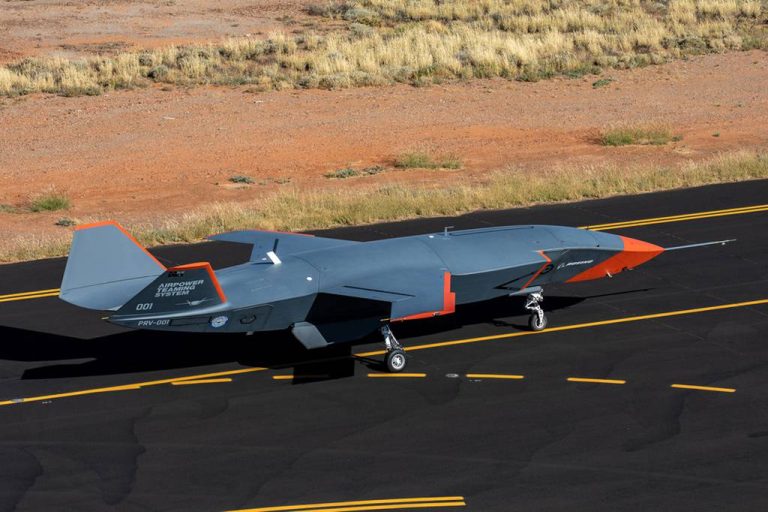
Boeing’s work on the MQ-28 Ghost Bat, an autonomous drone primarily flown by the Royal Australian Air Force, and the MQ-25 Stingray autonomous drone refueler has laid the groundwork for more work on the CCA program, Colbert said.

Colbert predicted the Air Force’s future fleet of CCAs will be made up of a variety of different drones.

“Kind of like your families of car models,” Colbert said. “Small, medium, large, attritable, lethal. That whole market is set up for a lot of competition going forward, and we’re investing to make sure that we can compete in that market.”

Stephen Losey is the air warfare reporter for Defense News. He previously covered leadership and personnel issues at Air Force Times, and the Pentagon, special operations and air warfare at Military.com. He has traveled to the Middle East to cover U.S. Air Force operations.

High Speed High Altitude Aircraft

0

Around 6:15 pm HST, I saw a contrail as I stepped out. It was coming out of the NE. Both seem unusual to me. We don’t have too many contrails in Hawaiian skies. And a high flyer at high speed from that direction seemed unusual.

It passed overhead and crossed about 2/3 of the sky in seconds. No sonic boom.

As it passed overhead, the late afternoon sun made it more visible, even though it was a speck. It was triangular or plane shaped, and the light seemed to show the exhaust making its thrust.

Any ideas?


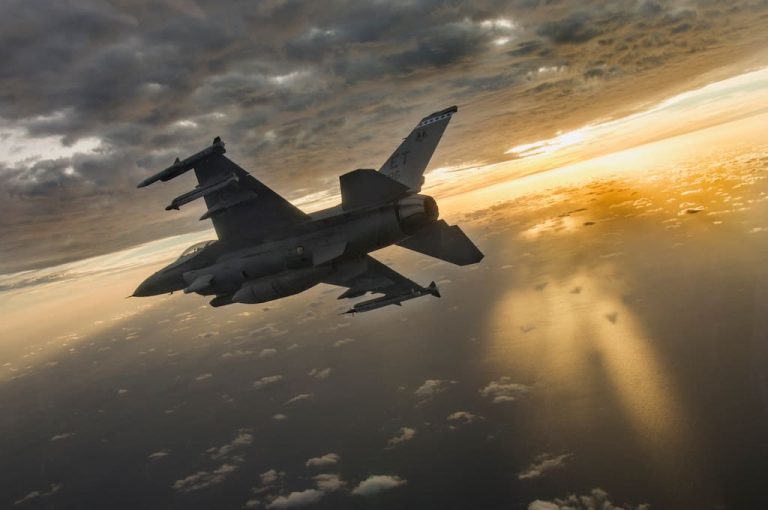
The first of 14 new F-16 fighter jets from the US land in Slovakia

0

BRATISLAVA, Slovakia — Slovakia received on Monday the first two of the 14 new F-16 military jets from the United States whose delivery was pushed back two years due to the coronavirus pandemic and a lack of chips.

President Peter Pellegrini hailed the arrival of the F-16s at the Kuchyna air base in western Slovakia late Monday by saying the F-16s will “significantly contribute to the increase of defense capabilities of our country.”

The rest of the jets will be gradually delivered in two years.

Pellegrini was the prime minister in 2018 when the government signed the $1.8 billion deal to purchase 14 U.S. F-16 Block 70/72 fighter jets in a move meant to replace the obsolete Soviet-made MiG-29 jets.

Under the previous government, Slovakia grounded its MiGs in the summer of 2022 due to a lack of spare parts and expertise to help maintain them after Russian technicians returned home following Russia’s invasion of Ukraine.

Last year, the government approved a plan to give Ukraine its fleet of 13 MiG-29s, becoming the second NATO member country to heed the Ukrainian government’s pleas for warplanes to help defend against Russia’s invasion.

In the absence of its own aircraft, fellow NATO members Poland, the Czech Republic and later also Hungary have stepped in to guard Slovak air space.

The new government led by populist Prime Minister Robert Fico came to power last year after winning the parliamentary election following campaigning on an anti-American platform. It has condemned the donation of the jets to Ukraine and has threatened to sue.

Fico opposes military support for Ukraine and EU sanctions on Russia. Pellegrini’s his close ally.

Here’s How We Keep Our Rural Property Safe

0

Security measures for rural properties differ significantly from those for typical suburban homes. Let’s explore some effective strategies to safeguard your rural property.

If you live on a rural property, especially one with substantial acreage, you might wonder how to secure such a vast area. Here are some practical tips to help you protect your property:

Why is rural property security important?

There are several compelling reasons to secure your rural property:

Unauthorized Gatherings: Long, secluded roads can attract individuals seeking a place for parties.

Hunters and Poachers: Some may trespass to hunt without permission.

Criminal Activity: Remote locations can be tempting targets for thieves.

Curiosity Seekers: People might venture down private roads out of sheer curiosity.

Transient Populations: Homeless individuals or groups might see your property as a potential campsite.

Post-Apocalyptic Concerns: In extreme scenarios, your property could attract unwanted attention.

Understanding the reasons behind the need for security is the first step. Here’s what you can do to enhance the safety of your rural property.

Tips for securing your rural property

Drawing from my own experience of securing a rural property spanning approximately 40 acres, here are some practical strategies I’ve implemented to enhance safety. My private road extends about a third of a mile, and while the buildings are not visible from the main road, it’s essential to remain vigilant.

Driveway Alarms

With only one access road, I’ve found driveway alarms to be invaluable. If you have multiple access points, it’s wise to install alarms on each one. These devices alert you whenever a vehicle enters your road.

I use two eMACROS driveway alarms. The first is positioned further up the road, and the second is closer to the property. When the first alarm chimes, I listen for the second to determine if the vehicle intends to come all the way in. Typically, it’s just a delivery or a familiar visitor, but not always.

These alarms also provide significant peace of mind, especially at night, though they can be a bit bothersome if the snowplow arrives at 4 AM after a snowstorm!

Adequate lighting is a powerful deterrent for anyone attempting to enter your rural property at night. Here’s how I’ve used security lights to protect my property:

Multiple Security Lights

Adequate lighting is a powerful deterrent for anyone attempting to enter your rural property at night. Here’s how I’ve used security lights to protect my property:

It’s not enough to have just one light; more is better. Lighting up the night is a significant deterrent for anyone sneaking onto your property. I use a combination of solar motion lights and conventional AC-powered motion floodlights.

Driving down my rural private road at night, intruders are first surprised by a solar motion floodlight mounted on a tree. It’s unexpected because you’re in the woods, and suddenly, you’re bathed in light. You can be creative and place these lights almost anywhere.

I highly recommend the RAB Stealth motion floodlight. I’ve installed them on all sides of my home, on the garage/shop building, and even around my chicken coop, thanks to underground power lines.

If anyone attempts to approach my rural property at night, they’ll be illuminated along the way.

Enhancing security with cameras for rural properties

The options for security cameras are vast, with various features and price points. The choice depends on your specific requirements.

Personally, I want to monitor my property remotely and stay informed about any activity. My main security camera is an outdoor high-resolution (4K) dome camera, which records and alerts me in multiple ways when it detects movement.

For instance, if my driveway alarms go off while I’m in my office, I don’t need to get up. I can simply open an app on my phone to see what’s happening. More often than not, it’s just a UPS delivery.

Security cameras are a crucial component of rural property security, offering peace of mind and real-time information about any activity on your land.

Walk and Ride Your Property

selfsb b4I make it a habit to traverse my property on foot and by 4-wheeler. While some areas are nearly inaccessible due to dense forest, I cover as much ground as possible. My property includes mountainous terrain, open fields, and woods, making for diverse exploration.

Tracking Clues

I enjoy tracking and often look for animal tracks on my property. Over time, I’ve familiarized myself with the trails various animals use. However, discovering human tracks or signs of human activity is unexpected and a potential security concern. If you find such signs, it’s important to investigate why they’re there. Is it a security issue?

Signs to Watch For

Trash: Finding litter in a specific area could indicate unauthorized access.

Vehicle Tracks: Signs of other ATVs or vehicles can suggest intrusion.

Understanding Access Points

Beyond traditional security measures, it’s essential to understand the various ways people might approach your property, especially in a crisis scenario. While I have one main road in, I also consider other potential access points. Although dense forests, rivers, and swamps limit access on my property, each rural property is unique. Be aware of all possible entry points, even on foot, and allocate more resources to securing those areas.

Having a thorough understanding of your property’s layout and potential vulnerabilities allows you to develop a comprehensive security plan tailored to your specific needs.

Strategic Use of Signs

While I don’t go overboard with aggressive signs, I do employ some strategic signage. Here’s my rationale:

There are many types of “Keep Out” signs, each with varying levels of threat or intimidation. Personally, I prefer to avoid giving the impression that I’m overly aggressive. Instead, I adopt a more low-key approach, fitting in with and contributing to my local community.

Current Signage

I do have signs on hand for when I feel they are necessary. Currently, I use:

“24 Hour Video Surveillance” on the road.

“Video Security System” near the house.

These signs serve as excellent deterrents since no one with ill intentions wants to be caught on camera. This type of signage is practical and understandable for locals, promoting common-sense security without appearing hostile.

By using these subtle yet effective signs, I maintain security while preserving good relationships with my neighbors and the community.

The Role of a Security Dog

the role of a security dog

Regardless of the breed, any dog can act as a deterrent. Larger, more intimidating dogs might scare off intruders more effectively, but even smaller dogs can bark loudly enough to alert you to someone’s presence. Their acute hearing allows them to detect sounds long before you can.

My Experience

Years ago, I had a Mountain Cur, a breed known for its security capabilities. This dog was an exceptional guard dog, making it a great choice for preppers and homesteaders.

Recommended Dog Breeds for Rural Security

German Shepherd: Known for their intelligence, loyalty, and protective nature.

Rottweiler: Strong, confident, and fearless, making them excellent guard dogs.

Doberman Pinscher: Alert, fast, and formidable, they are great for security.

Belgian Malinois: Highly trainable and often used in police and military roles.

Bullmastiff: Large and protective, yet gentle with family members.

Mountain Cur: Versatile working dogs, excellent for rural settings.

Great Pyrenees: Great for larger properties, protective and good with livestock.

Australian Shepherd: Highly alert and excellent for both herding and guarding.

Airedale Terrier: Versatile and vigilant, good for both companionship and security.

Boxer: Energetic, loyal, and protective, good with families and security.

By choosing the right breed, you can enhance the security of your rural property while also gaining a loyal companion.

Drone for Security

I recently bought a DJI Mini 4 Pro drone, initially justifying the purchase for fun. However, it quickly proved valuable for security purposes. Launching it allows me to survey my property and surrounding areas with ease.

Benefits of a Security Drone

Surveillance: I can fly the drone to the main road or any other potential access points to see what’s happening.

Range: This particular drone can fly over a mile away, providing extensive coverage.

Live Feed and Recording: The drone offers real-time video streaming and can record footage for later review. This allows for detailed analysis on a larger screen.

Flight Time: The DJI Mini 4 Pro has a flight time of nearly 35 minutes, depending on usage.

Practical Considerations

Learning Curve: Operating a drone requires some practice, and there are FAA rules to follow.

Regulations: Drones under 0.55 pounds (250 grams) do not need FAA registration. The DJI Mini 4 Pro fits this category, making it a convenient option.

My 2 cents

A drone like the DJI Mini 4 Pro is a versatile and fun tool that adds an extra layer of security to your rural property. By regularly flying it, you can monitor your property effectively, ensuring you stay aware of any potential threats or activities.

invisible bph banner 2

Security Gate

Many rural property owners, especially those with seasonal residences, install gates to control access. A gate is an obvious and effective way to keep vehicles out.

Benefits of a Security Gate

Access Control: A gate restricts unauthorized vehicles from entering your property.

Deterrence: Even a closed but unlocked gate can discourage most people from venturing down your road.

Convenience: A gate can be useful for day-to-day access if you’re willing to open and close it each time you come and go.

Considerations

Emergency Access: Ensure there’s a plan for emergency situations, such as a fire, where first responders need quick access. A locked gate could hinder their efforts.

Automation: For added convenience, consider an automated gate opener to avoid manually opening and closing the gate every time.

A security gate is a practical addition to your rural property, providing an extra layer of security by controlling vehicle access. With thoughtful planning, including provisions for emergencies, it can be an effective deterrent against unauthorized entry while maintaining ease of use for residents.

Firearms for Rural Living

firearms for rural living

If you live in a rural area, you likely own several guns. They are essential tools for various purposes and can also be enjoyed for sport. I use mine for both. With enough land, I have set up my own pistol range and a 100-yard rifle range. Shooting is a fun activity, although the cost of ammunition can be a downside. Thankfully, I stocked up before the recent shortages and price hikes.

Practical Uses

Varmint Control: Firearms are effective for managing pests that threaten crops or livestock.

Protecting Livestock: They are crucial for safeguarding animals like chickens from predators.

Hunting: Hunting is both a practical and recreational use for firearms on a rural property.

Weapons of Last Resort

While it may be uncomfortable to consider, having weapons for worst-case scenarios is important. This means being prepared to defend against human intruders if necessary. Many rural residents own at least one popular sporting rifle for this purpose.

Force Multipliers

For those who can afford it, investing in force multipliers can significantly enhance your defensive capabilities. Consider equipment like:

Helmet-Mounted Night Vision Devices (e.g.,NVG 2K): These allow you to see in low-light conditions.

Laser Illuminators (e.g., Holosun): These devices emit lasers that are visible through night vision, aiding in target acquisition.

Firearms are a crucial part of rural living, serving multiple practical purposes. Additionally, being prepared for worst-case scenarios with appropriate weapons and force multipliers can provide peace of mind and enhanced security.

Conclusion

250X250 V4Securing a rural property requires a blend of strategies to enhance safety. Effective measures include installing driveway alarms, security lights, surveillance cameras, and a security gate. Adding a dog provides both deterrence and companionship, while a drone offers aerial surveillance. Use signage wisely to avoid unnecessary tension, and consider weapons of last resort and force multipliers for extreme scenarios.

By integrating these elements thoughtfully, you can create a comprehensive security plan tailored to your property’s unique needs.

Suggested resources for preppers:

Empowering women with homestead security

If you see this plant when foraging, don’t touch it!

Survival Foods of the Native Americans

They Were Egged On! | Survival Monkey Forums

0