CCP satellites directly over Maui at the time of the fires. 3 different satellites directly over the targets at the exact time the fires occurred:
Romania considers joining French-led Mistral procurement program
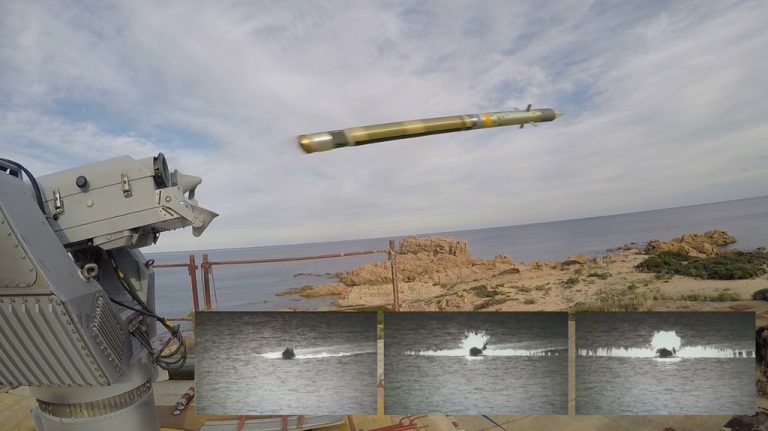
LONDON – Romania is considering joining France, Belgium, Estonia, Cyprus and Hungary in the Mistral procurement program, to bolster its air defenses and border security against possible Russian aggression.
Over the last week, the security situation in Romania has become more turbulent than normal, with the finding of drone debris near the country’s border with Ukraine. The discovery comes amid Russian attacks on Ukraine that have taken place close to this area.
Bucharest has been looking to increase its air defense capabilities for some time now, in particular through previous and ongoing tenders to purchase electronic warfare and counter-drone systems. In recent weeks, the country has turned its attention to Mistral, through which it may obtain the Mistral 3 missile produced by MBDA, a France-based defense firm owned by BAE Systems, Airbus and Leonardo. a Romanian Ministry of Defense source told Defense News.
“MBDA is aware of Romania’s interest in joining this procurement process and is engaged in ongoing discussions with them,” Julien Watelet, a company spokesperson told Defense News on Sept. 14.
The joint acquisition for the Mistral 3 was launched with the letter of intent signed on June 19 during the Paris Air Show by France, Belgium, Estonia, Cyprus and Hungary. Productio of the Mistral will double to about 40 units a month next year.
Watelet added that the program could benefit from the support of the EU and allow scale economies to be achieved, “as to incentivise member states to procure defense products jointly while reinforcing the European Defense Technological and Industrial Base competitiveness.”
It remains unclear how many systems will be delivered to each country and the cost of these purchases. The French-led project is being overseen by the ministry’s procurement arm Direction Generale de l’Armement on behalf of the partner countries.
The Romanian defense official added that the country is also open to other proposals and in the process of assessing additional C-UAS systems both from local and international manufacturers.
In June, Civitas Systems, a Romanian company specializing in border security systems, was awarded a $8.5 million contract from the government to supply an undisclosed number of counter-drone units through the country’s National Recovery and Resilience Plan.
Elisabeth Gosselin-Malo is a Europe correspondent for Defense News. She covers a wide range of topics related to military procurement and international security, and specializes in reporting on the aviation sector. She is based in Milan, Italy.
SAIC hires former Air Force CIO Knausenberger for tech innovation role

WASHINGTON — Lauren Knausenberger, who left her post as U.S. Air Force chief information officer in June, has been hired by Science Applications International Corp.
The company announced her hiring as the chief innovation officer Sept. 14 alongside the tapping of Tim Turitto, who led the team at Microsoft that won the JEDI cloud-computing contract before it was canceled, to be chief of staff for CEO-elect Toni Townes-Whitley.
“These key leaders will be instrumental in ensuring that SAIC continues its legacy of solving the most complex national and global security challenges with diverse technology and talent,” Townes-Whitley said in a statement. “Both are highly accomplished leaders in our industry with strong track records of performance in government and the private sector.”
As the Air Force’s civilian information-technology boss, Knausenberger oversaw data-, artificial intelligence- and cybersecurity-related portfolios and supported some 20,000 personnel. She previously founded venture capital firm Accellint Inc. and worked at American Management Systems and CACI.
SAIC brought in $3.7 billion in defense-related revenue in 2022, earning the No. 31 spot on the Defense News “Top 100″ list of the world’s largest defense contractors. It reaped $3.5 billion the year prior.
The Virginia-based company works closely with the Air Force.
In September 2022, the service brought SAIC into its Advanced Battle Management System Digital Infrastructure Consortium. In January, it selected SAIC to orchestrate software for its cloud-based command and control effort, to the tune of $112 million. The company is also involved in the Cloud One program.
Colin Demarest is a reporter at C4ISRNET, where he covers military networks, cyber and IT. Colin previously covered the Department of Energy and its National Nuclear Security Administration — namely Cold War cleanup and nuclear weapons development — for a daily newspaper in South Carolina. Colin is also an award-winning photographer.
Lockheed’s new F-16 training center Romania could train Ukrainians
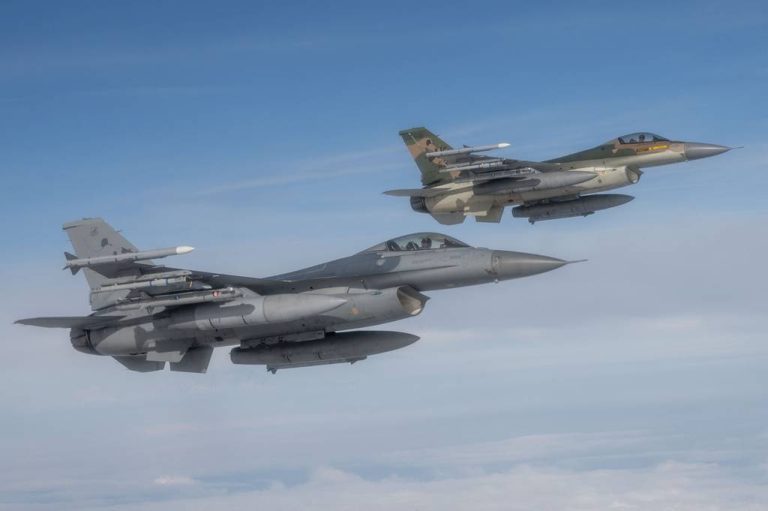
NATIONAL HARBOR, Md. — Lockheed Martin expects to close a contract with Romania to open up its first F-16 flight training center in Europe, which could eventually train pilots from Ukraine.
The planned European Flight Training Center would be the U.S. company’s first in the continent, and in the future could expand to teach pilots from nations other than Romania, OJ Sanchez, Lockheed’s integrated fighter group vice president and general manager, told Defense News in a Sept. 13 interview.
The Romanians “need to train their pilots, and there was no good place to do that, as well as their maintainers,” he said.
Lockheed announced late last month that it had signed a letter of intent with Romania and the Netherlands to establish the European F-16 Training Center. Sanchez said the company is confident its contract with Romania will be signed by the end of the year.
As part of this arrangement, the Netherlands will loan F-16s to Romania for training. Sanchez said the number of aircraft is still being negotiated as part of the larger contract.
Romania also struck a deal with Norway in November to buy 32 used F-16s, which would allow Romania to expand its fledgling F-16 fleet and retire the last of its outdated Soviet-era MiG-21 fighters.
At first, this training center will focus on teaching Romanian pilots to fly F-16s, Sanchez said. But over time, Lockheed hopes more nations could start sending their airmen there — including Ukraine.
“The European Flight Training Center may be a good option for countries like Ukraine, or others who may need that support as they build out their air force needs,” Sanchez said.
Since Russia launched its invasion of Ukraine in February 2022, the embattled nation repeatedly asked NATO nations for modern F-16 fighters to bolster and modernize its air force. Last month, the Netherlands and Denmark announced plans to provide Ukraine with its first F-16s, and the U.S. will help teach Ukrainian pilots to fly them.
Ukraine expects to continue modernizing its air force in years to come, and will need more venues where its pilots can learn to fly western fourth-generation jets. Lockheed sees this Romanian training center as one potential option for Ukraine.
Sanchez declined to offer details such as how many pilots this training center might be able to train annually, saying that information is not ready to be released. He said it’s still too soon to say how soon the training center might start training the first Romanian pilots, but that Lockheed hopes to move quickly after the contract is signed.
But Lockheed plans for the Romanian training center’s curriculum and approach to be largely similar to the Air Force’s international training units. The Air National Guard’s 162nd Wing in Arizona, for example, will start training some Ukrainian pilots to fly F-16s in October. The director of the U.S. Air National Guard predicted at AFA that some Ukrainian pilots could be finished within three months, depending on their skills and experience.
The flight training center in Romania will start with English language training, Sanchez said, since that is “the international language of flying.”
International F-16 training also typically involves basic flight training academics, possibly including flights in a smaller plane like a Cessna to get the students some flight time, he said. After that, pilots have six to 12 months of basic flying in a jet, depending on their level of experience, before they get to specialized flight training in their fighter.
Lockheed Martin’s goal is to have student pilots graduate from this Romanian training center with basic proficiency on an F-16 necessary to join a squadron and be an effective wingman, Sanchez said.
Those pilots would still need further training and development to grow and learn advanced maneuvers after graduation, but Sanchez said that more in-depth training would happen elsewhere.
Lockheed will take the lead on organizing this flight training center, including bringing together partners from European and U.S. companies to conduct flight and simulation training, Sanchez said. The company expects to have several former U.S. airmen in its ranks serve as flight instructors at the training center in Romania.
This will be the first F-16 flight training center Lockheed Martin has set up in Europe, but the company has launched other training centers elsewhere. The Romanian training center will focus entirely on F-16s, but Sanchez left the door open to starting additional centers that could teach pilots to fly other jets such as the F-35.
“Training is always a critical need and enabler,” Sanchez said.
Stephen Losey is the air warfare reporter for Defense News. He previously covered leadership and personnel issues at Air Force Times, and the Pentagon, special operations and air warfare at Military.com. He has traveled to the Middle East to cover U.S. Air Force operations.
Lockheed touts local links in Black Hawk-based helicopter pitch to UK
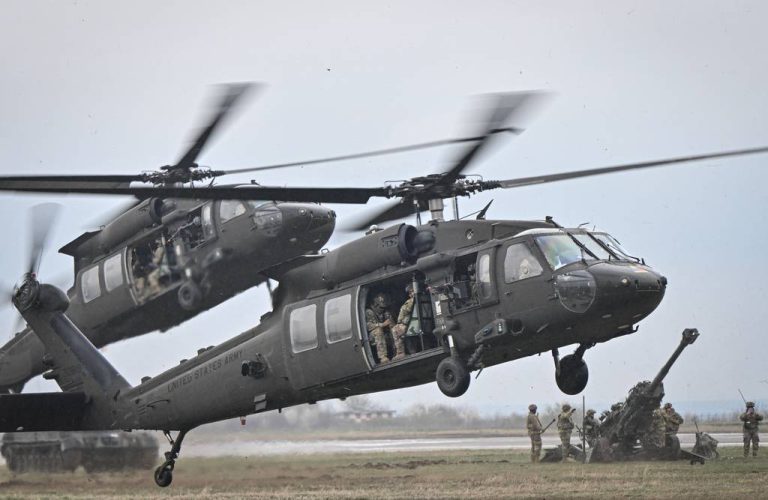
LONDON — Lockheed Martin’s U.K. subsidiary unveiled a local industry team, capped by aircraft assembly lead StandardAero, to support its Black Hawk-based bid for the British military’s New Medium Helicopter program.
The roster of local companies is meant to put a British face on a U.S. military product, with the head of Lockheed Martin UK, Paul Livingston, saying the aim is to have 40% of the prospective program realized in Britain.
The offer responds to a requirement for a new helicopter type, envisaged by the U.K. government to cost more than £800 million (U.S. $1 billion), that will replace four variants that have been in service for decades.
Lockheed is the last of three contenders to announce its industrial lineup for the much-delayed New Medium Helicopter program. Alongside rival bidders Airbus and Leonardo, the U.S.-based company is still awaiting the release of an invitation to negotiate for up to 44 helicopters.
In the meantime, the three contenders have wasted no time dissing their rivals’ industrial offers while talking up the U.K. credentials of their own, with local jobs and an enduring domestic helicopter-making capability becoming key discriminators in their efforts to woo the Defence Ministry.
Italian company Leonardo, which has made helicopters in the U.K. for decades, recently launched a campaign supporting its AW149 bid by labelling its Yeovil factory where the rotorcraft would be built as the “Home of British Helicopter.” And French firm Airbus is proposing to assemble its H175M at its commercial jet wing factory in North Wales.
With a general election expected next year, who wins the industrial argument might go a long way toward deciding who secures the order.
According to Livingston, a win for Lockheed would translate into 600 new, high-skilled jobs in Britain, plus assured work for decades after the delivery of all helicopters. He pointed to the case of the Lockheed-made F-35 jet, parts of which are made in the U.K., as an example of how a U.S.-developed product would help boost the local economy in participating nations.
Livingston took several jabs at the “fragile” competitors’ offerings during a news conference at the DSEI defense show in London, saying the Black Hawk proposal was the only option developed purely for the military.
“Some are designed to survive a bump on an oil rig; ours was designed to survive getting shot at,” he said.
Sebastian Sprenger is associate editor for Europe at Defense News, reporting on the state of the defense market in the region, and on U.S.-Europe cooperation and multi-national investments in defense and global security. Previously he served as managing editor for Defense News. He is based in Cologne, Germany.
Andrew Chuter is the United Kingdom correspondent for Defense News.
BAE Systems, QinetiQ sign pact on drone collaboration
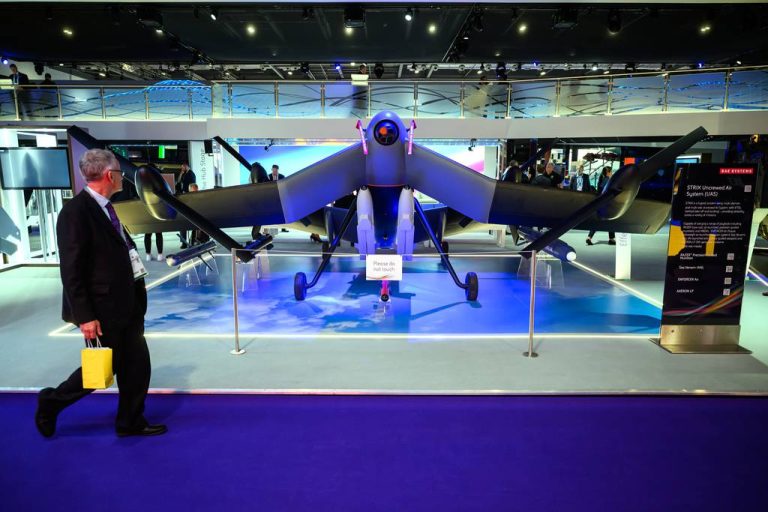
LONDON — BAE Systems and QinetiQ are exploring the possibility of joining forces in the development of uncrewed systems, the two British companies announced Sept. 12.
The companies said they have signed a framework agreement looking at the potential to collaborate in the aerial drones and mission management systems sector.
Coinciding with the potential tie-up, Qinetiq announced it was launching a low-cost, disposable drone development called Jackdaw.
QinetiQ is collaborating with BAE and Inzpire, a mission systems company it owns, in the development of Jackdaw.
Under the framework agreement, signed on the opening day of the DSEI exhibition here, the companies will continue to develop their own uncrewed systems but would be aligned to a common product strategy enabling collaboration on existing and future platforms.
In a joint statement the two British companies said the first stage of the collaboration will “explore the use of BAE Systems’ autonomous mission management system on uncrewed platforms developed by both companies to work alongside each other – and with existing and future crewed and uncrewed combat aircraft.”
The autonomous mission management system gives operators the ability to use a mix of crewed and uncrewed assets collaboratively, all managed by a human.
An agreement is already in place to explore the use of BAE’s autonomous goal-based mission management system on Jackdaw.
Whilst the drone is designed to be reusable, Qinetiq said its low-cost disposable characteristics provide the option to sacrifice it when needed.
Designed for swarming and collaborative autonomous operations including crewed-uncrewed teaming, Jackdaw will eventually be able to undertake missions including reconnaissance, electronic warfare, airborne decoy and threat representation.
Design work has been underway for a while. The first variant on offer will be the disposable drone that is scheduled to be available from the mid-2020s.
Mick Andrae, Qinetiq’s global campaign director for robotics and autonomous systems said the drone concept “leverages QinetiQ’s expertise in low-cost, high-performance aerial targets – such as the Banshee – and is enhanced with autonomous mission management and human-machine teaming capabilities.”
Jackdaw is designed to carry a 30 kg internal payload, have over three hours endurance and fly at speeds of 400 knots and altitudes of 30,000 ft.
Andrew Chuter is the United Kingdom correspondent for Defense News.
Air Force creates task forces to pilot modern deployments
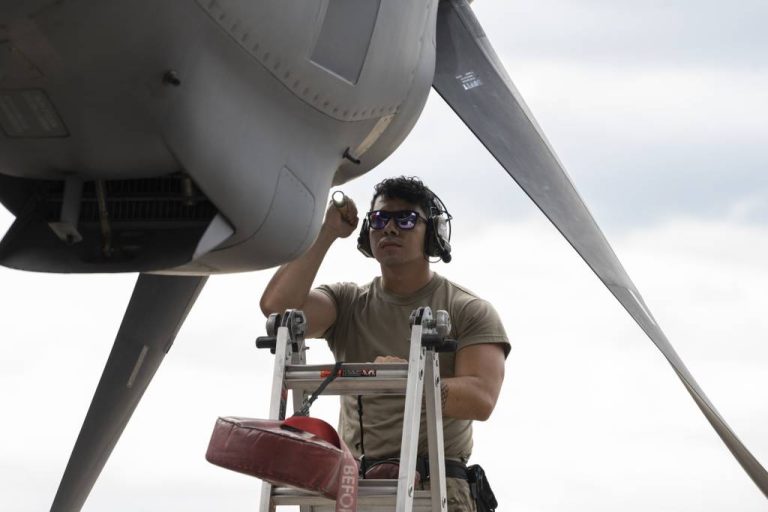
NATIONAL HARBOR, Md. — The Air Force in fiscal 2024 will experiment with further changes to how it deploys airmen, service leaders announced at the Air and Space Force Association’s annual Air, Space and Cyber Conference here this week.
Air Force Secretary Frank Kendall said Monday the service is creating three “air task forces,” or packages of airmen that the Air Force can offer to Pentagon planners to tackle crises around the world.
Two teams will be assigned to U.S. Central Command while a third will focus on the Pacific. Squadrons that become part of those task forces will start training together next summer as part of the two-year cycle now in place to adequately prepare airmen for combat, and begin deploying together in fiscal 2026, according to an Air Force spokesperson.
The Air Force has not said which units will staff the task forces or where they will be located.
The proposal is the Air Force’s attempt to mirror the force packages put forward by the other armed forces — like a Navy carrier strike group — to offer a standard set of combat capabilities to commanders around the globe.
“These are not the final, permanent deployable units we expect to form, but they are a major step in the right direction and we will learn from this experience,” Kendall said.
The service has been refining its idea for new expeditionary teams for months. Air task forces would replace air expeditionary wings and expeditionary air base teams in the evolving lexicon of terms used to describe those who fight America’s air wars on short-notice deployments overseas.
It’s part of an attempt to move away from the longtime approach of deploying airmen piecemeal as jobs open up overseas, or dispatching flying squadrons on a one-off basis without the attached support staff.
Along with more predictable schedules and ample training, the Air Force hopes its budding force-generation model will lead to more capable expeditionary units that can function away from brick-and-mortar bases.
Lt. Gen. Jim Slife, the Air Force’s deputy chief of staff for operations who is nominated to become its vice chief of staff, told reporters here Tuesday that each task force will include four elements: a command staff; mission-generation forces like pilots and maintainers; combat support troops like civil engineering; and base support airmen like security forces and contract specialists.
“We need to build … air task forces that have those elements without drawing from 93 bases,” he said.
Airmen who staff the air task forces are expected to handle tasks that fall outside their usual job description, like cooks that can drive a forklift, Slife said. More specialized jobs, like explosive ordnance disposal or air traffic control, would be left to those who are properly trained to do them.
But the capabilities that an air task force may offer depends on where it’s going, he said.
“If you’re going to [U.S. Indo-Pacific Command] to do a series of exercises, you may not need a substantial force protection capability as part of that task force,” Slife said. “If you’re going to [U.S. Central Command], where there is a large main operating base that is reasonably well-developed, you may not need as many civil engineers as if you were going to build it from scratch.”
Officials believe that more routinely deploying support airmen like security forces and civil engineers will likely mean fewer services at home. That could mean closing one base gate or a runway because there isn’t enough staff to keep them open.
But Slife said that’s a necessary tradeoff for the Air Force to succeed in the modern era of war.
“It largely works in a relatively uncontested environment where you have large, main fixed operating bases that you know are going to be free from attack,” he said of the past approach. “That’s not the world we’re living in anymore.”
Rachel Cohen joined Air Force Times as senior reporter in March 2021. Her work has appeared in Air Force Magazine, Inside Defense, Inside Health Policy, the Frederick News-Post (Md.), the Washington Post, and others.
Cardboard drone vendor retools software based on Ukraine war hacks
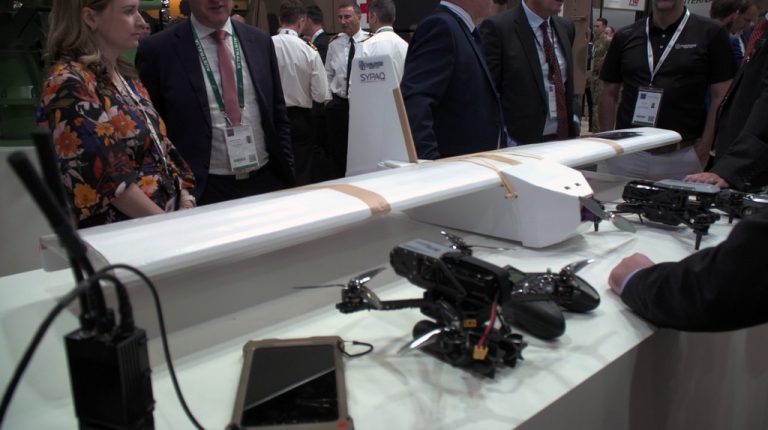
LONDON — Ukrainian soldiers have received hundreds of drones, gifted to them by Australia, to capture surveillance video crucial for preparing missions to retake ground from Russian forces.
The data comes from GoPro cameras strung from holes punched into disposable cardboard drones.
This cheap method of scoping out targets is made possible by SYPAQ’s Corvo Precision Payload Delivery System, which can travel more than 100 kilometers, carry three kilograms of payload, and land within about two meters of its intended landing spot.
“It’s actually designed for a blood bag,” explained Michael Partridge, SYPAQ’s general manager.
SYPAQ created the Corvo Precision Payload Delivery System in 2018, in response to an innovation challenge from the Australian Army to build a low-observable, low-cost drone to deliver resupply goods to remote operators.
The company decided to go with cardboard, which is both cheap and doesn’t catch the attention of enemy radar systems.
The drone’s design features a two-meter wingspan with minimal avionics and a motor module, and a payload bay with a cover that lifts up so the receiver can retrieve the blood bag, repair part, ammunition, radio or whatever else was sent their way.
The drone, which starts out as a flat sheet of cardboard and folds up to take its shape, can then be discarded in the field.
The COVID-19 pandemic put a pause on SYPAQ and the Australian Defence Force’s testing and development of the aircraft. But then two years later, “along came the Russian-Ukrainian conflict, and the Australian government was looking for something they could gift, and they wanted something that was ready to go and didn’t have long lead times,” Partridge said.
“They knew of this because we’ve codeveloped it with them, so we struck a deal and we’ve delivered just over 600 vehicles into Ukraine, and they’re using them quite well,” he added.
The company, based in Melbourne, says there are potential customers in the Middle East that want to buy the Corvo PPDS as a cheap test asset for carrying sensors. Similarly, Australian forces have used it as a dummy for radar system performance checks and calibration.
But Partridge said the Ukrainians’ heavy use of the drone for more complex missions has provided significant feedback that the company us using to improve the mission planning system, user interface and ground control station for the whole family of Corvo drones.
“The Ukrainians are using it certain ways. The most effective way we’re hearing about is they’re literally cutting holes in the bottom and putting GoPros on 10-second timers” to film a short clip when the unmanned systems reach the turnaround point that’s pre-programmed into their GPS. This helps make the drones even harder to detect, as there’s no datalink streaming the video back or receiving navigation instructions.
“They’ve got active imagery that’s 30 minutes old, for a very cost-effective way of doing that,” Partridge said.
The filming tactics require more precise mission planning, however, with Ukrainian officials sending feature requests directly to the manufacturer.
While elements of the control software may change as a result, the cardboard construction is here to stay, Partridge said.
“The cardboard is a cost driver, so that’s exactly what it does, but it also does a very, very good job of enabling the platform. So when you talk about improvements, it’s going to be really hard to find something at a [lower cost-point] that still works,” he said, adding that the cardboard material can even fly in light rain and in humid maritime environments without collapsing.
Three weeks ago, the company released a heavy-lift version that has a greater wingspan and carries six kilograms. And two weeks ago, the company unveiled quadcopter variants that resemble the Chinese-made DJI drones that the U.S. and Australia have banned from their militaries.
SYPAQ is working with United Kingdom-based Tanglewood Group to make the drones available on the market in Europe and the Middle East.
Megan Eckstein is the naval warfare reporter at Defense News. She has covered military news since 2009, with a focus on U.S. Navy and Marine Corps operations, acquisition programs and budgets. She has reported from four geographic fleets and is happiest when she’s filing stories from a ship. Megan is a University of Maryland alumna.
Ukrainian arms importer prioritizes howitzers, drones, ammo
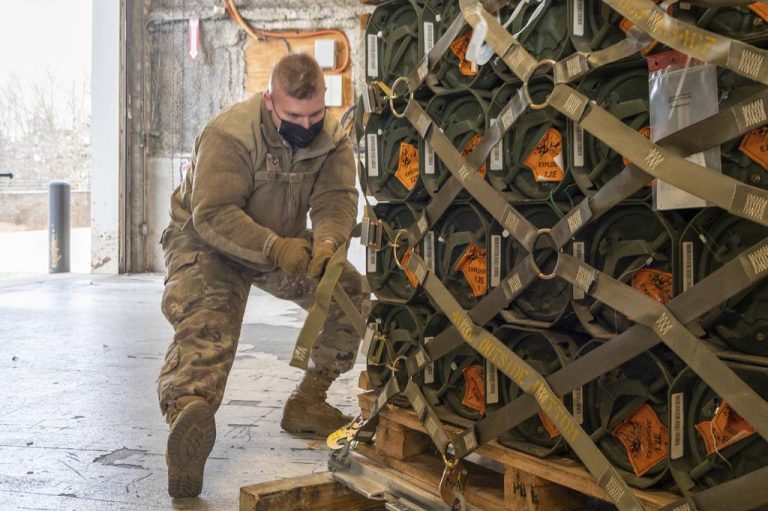
LONDON — Ukraine’s state-run defense company SpetsTechnoExport is pursuing numerous contracts to secure deliveries of weapons and equipment for the country’s military, with multiple rocket launchers, howitzers, armored vehicles, drones and ammunition all high on its priority list.
Oleksii Petrov, the acting director of SpetsTechnoExport, told Defense News the company is holding talks with various Western partners during this year’s DSEI industry show here. The nation’s military requires major deliveries for its wartime efforts, he said.
“With regards to ammunition, we need different types, including 122mm and 125mm, among others,” Petrov said. “Our defense industry is very efficient, but we also need to work with our partners to procure the necessary weapons in large amounts.”
The company specializes in imports and exports of weapons and military gear. It is also developing its own capacities in drones, according to Ivan Sybyriakov, the manager of SpetsTechnoExport’s Unmanned Systems Center.
“Every month, Ukraine and the invader, Russia, lose at least 2,000 drones combined. This creates a major demand for drones, and our center works with both domestic and foreign manufacturers to procure them for the Ukrainian armed forces,” he said.
SpetsTechnoExport continues to look for new drone suppliers, and currently imports unmanned aerial vehicles from a growing group of countries, which includes the United States, Poland, Turkey, Norway, and Lithuania, according to Sybyriakov.
Jaroslaw Adamowski is the Poland correspondent for Defense News.
Dropped 2 new videos.

YouTube removed this one so its on the FB Page It does have some strong language in my rant in the latter part of it. The One on FB actually has me driving the tractor into the pond and pulling mud out LOL and Rant about Shit Birds. Can't believe FB didn't Censor it and YT did. I do have pretty significant speech impediment but can keep it under control fairly well with a lot of thought about it. Reason I don't talk in most of my videos or to anyone on the phone Link on a log chain…