Israel eases gun laws to arm ‘as many citizens as possible’ after terrorist attack

0

Another good move but only 50 or 100 rounds? Hell, that is gone half an hour at the range..

“Furthermore, citizens may be able to receive conditional permits to purchase up to 100 bullets rather than 50, he said.”

“If a similar event were to unfold in America, he thinks the militants would have faced “a lot more resistance” due to high U.S. gun ownership rates. “When bad guys know that you’re armed, they tend to go to the next house,” he said.”

///////////////////////////////////////////////
Israel eases gun laws to arm ‘as many citizens as possible’ after terrorist attack
Ben Gvir announced Sunday that any citizen who meets the requirements to carry a weapon will be able to have a telephone interview rather than an in-person interview and be approved to carry within a week.

Additionally, citizens who did not meet specific renewal requirements or purchase a firearm before their license expired will be able to carry. Furthermore, citizens may be able to receive conditional permits to purchase up to 100 bullets rather than 50, he said.

https://www.gov.il/en/departments/general/firearm-licensing-information


New to the tree from SW Idaho

0

New member long time survivalist. Just looking around for a place to chat and learn…

Here’s a look at the military firepower the US is providing to Israel

0

Within hours of the horrific attack by Hamas, the U.S. began moving warships and aircraft to the region to be ready to provide Israel with whatever it needs to respond.

A second U.S. carrier strike group departs from Norfolk, Virginia, on Friday. Scores of aircraft are heading to U.S. military bases around the Middle East. And special operations forces are now assisting Israel’s military in planning and intelligence.

[Israel-Hamas war misinformation flourishes on X as platform struggles]

The buildup reflects U.S. concern that the deadly fighting between Hamas and Israel could escalate into a more dangerous regional conflict. So the primary mission for those ships and warplanes for now is to establish a force presence that deters Hezbollah, Iran or others from taking advantage of the situation. But the forces the U.S. sent are capable of more than that.

The U.S. is also expediting the shipment of munitions and interceptors for Israel’s fight against Hamas.

A look at what weapons and options the U.S. military could provide:

Missiles for Iron Dome

The U.S. is providing some personnel and much-needed munitions to Israel. Defense Secretary Lloyd Austin announced that a small cell of special operations forces was now assisting Israel with intelligence and planning. They have not been tasked with hostage rescue, contrary to some reporting, a defense official said, but could if they were requested to do so.

The U.S. is also getting U.S. defense companies to expedite weapons orders by Israel that were already on the books. Chief among those is getting munitions for Israel’s Iron Dome air defense system sped along.

President Joe Biden said Tuesday that resupplying Iron Dome munitions and air defense systems was an immediate priority.

“We’re surging additional military assistance, including ammunition and interceptors to replenish Iron Dome,” Biden said. “We’re going to make sure that Israel does not run out of these critical assets to defend its cities and its citizens.”

Iron Dome’s missiles target rockets that approach one of its cities. According to Raytheon, Israel has 10 Iron Dome systems in place to protect its cities. Beginning with Saturday’s attack, Hamas has fired more than 5,000 rockets at Israel, most of which the system has been able to intercept, according to the Israel Defense Forces.

Raytheon produces most of the missile components for Iron Dome in the U.S., and the Army has two Iron Dome systems in its stockpile.

Navy ships and planes

One of the most visible examples of the U.S. response was the announcement Sunday by the Pentagon to redirect the Gerald R. Ford carrier strike group to sail toward Israel. The carrier had just completed an exercise with the Italian Navy when the ship and its crew of about 5,000 were ordered to quickly sail to the Eastern Mediterranean.

The carrier provides a host of options. It’s a primary command and control operations center and can conduct information warfare. It can launch and recover E2-Hawkeye surveillance planes, recognized by their 24-foot (7-meter) diameter disc-shaped radar. The planes provide early warnings on missile launches, conduct surveillance and manage the airspace, detecting not only enemy aircraft but also directing U.S. movements.

An E2-C Hawkeye assigned to the Screwtops of Airborne Early Warning Squadron (VAW) 123 takes off from the flight deck of the aircraft carrier USS Dwight D. Eisenhower (CVN 69), the flagship of the Eisenhower Carrier Strike Group. (U.S. Navy photo by Mass Communication Specialist 3rd Class Anderson W. Branch/Released)

The Ford carries F-18 fighter jets that could fly intercepts or strike targets. The carrier also has significant capabilities for humanitarian work, including an onboard hospital with an ICU and emergency room and about 40 medics, surgeons and doctors. It sails with helicopters that can be used to airlift critical supplies in or victims out.

On Friday, the USS Dwight D. Eisenhower carrier strike group will leave its homeport of Norfolk, Virginia, and sail for the Mediterranean, potentially doubling the Navy’s Israel response.

The Eisenhower had already been scheduled to deploy to the Mediterranean on a regular rotation, and the Ford is near the end of its deployment. But the Biden administration may decide to extend the Ford’s deployment and keep both strike groups out there, White House spokesman John Kirby said Wednesday.

Air Force warplanes

The Pentagon has also ordered additional warplanes to bolster existing squadrons of A-10, F-15 and F-16 squadrons at bases throughout the Middle East and is ready to add more if needed.

Air Force Secretary Frank Kendall said Tuesday at an Atlantic Council event that the service was doubling up by directing units that were about to come home to remain in place and stay there along with their replacements.

The U.S. Air Force already has significant airpower in the region to conduct manned and unmanned operations, most notably in Syria where an Air Force F-16 last week was ordered to shoot down a Turkish drone that was posing a threat to U.S. ground forces operating there.

Kendall also said U.S. Air Force C-17s have landed in and departed from Israel since the attacks. The transport planes were picking up U.S. military personnel who were there for a military exercise that hadn’t started yet when the attacks began, the Air Force said in a statement.

Neither the Air Force nor Central Command would comment on what additional missions U.S. airpower might take on in response to the conflict.

Tara Copp is a Pentagon correspondent for the Associated Press. She was previously Pentagon bureau chief for Sightline Media Group.

10,000 assault rifles purchased for civilian security teams

0

Too late for this week’s events, but still a good move, since the barbarians only respect the power that grows out of the barrel of a gun.
/////////////////////////////////////////////////////////////////////////////
Ben Gvir says 10,000 assault rifles purchased for civilian security teams
National Security Minister Itamar Ben Gvir announced on Tuesday that his ministry is purchasing 10,000 rifles to arm civilian security teams, specifically those in towns close to Israel’s borders around the country, as well as mixed Jewish-Arab cities and West Bank settlements.

The minister, who heads the far-right Otzma Yehudit party, said 4,000 assault rifles had already been acquired from an Israeli manufacturer and will be distributed immediately.

Helmets and bulletproof vests have also been acquired and will be distributed along with the assault rifles.

The step comes after some civilian security teams reported they had no weapons to fight off Hamas terrorists during Saturday’s devastating assault on southern Israel.

In a statement to the press on Tuesday, Ben Gvir said the new weapons and equipment will be distributed to “hundreds of towns” that have civilian security teams, some of which are manned by civilians who also volunteer in the Border Police, the Israel Police’s gendarmerie unit.


Boeing flies upgraded AH-64E Apache for first time

0

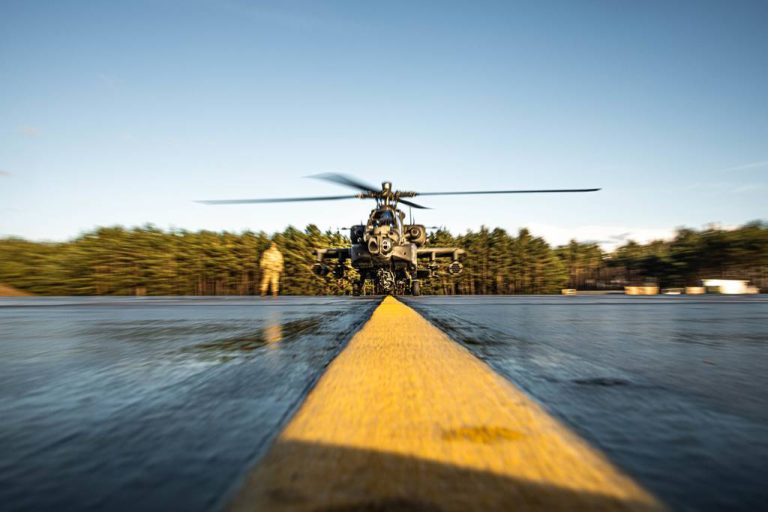
WASHINGTON — Boeing has flown a new version of the AH-64E Apache attack helicopter with upgraded capabilities, the company announced Oct. 11 at the Association of the U.S. Army’s annual conference.

The Version 6.5 attack helicopter, which Boeing went under contract to produce with the U.S. Army in December 2021, includes software updates and improvements to the pilot interface, Boeing said in a statement.

Some upgrades are an optimized route and attack planning capability, enhanced Link 16 features, and an open-systems architecture that will allow for easy technology insertion later on, the company noted.

“We’re very excited about the ongoing development of the V6.5 software as it paves the way for Apache modernization,” Col. Jay Maher, the U.S. Army’s Apache project manager, said in the statement. “V6.5 aligns the entire E model fleet under the same software, streamlining training and maintenance while providing a pathway for sensor/capability parity, and enables the Army to address mandates and critical technologies. Ensuring relevance into the future is a top priority.”

The company is also now working with the Army to integrate the new T901, the engine for the Army’s Improved Turbine Engine Program, built by General Electric Aerospace, Boeing said. The T901, which is intended to replace the engines in Apaches and UH-60 Black Hawk utility helicopters and will be used in the Future Attack Reconnaissance Aircraft, was delayed by more than a year due to issues related to the coronavirus pandemic.

The ITEP engine along with drivetrain and tail rotor improvements will allow the aircraft to fly 135 nautical miles to an objective and stay there for an hour or more and return. The current Apache would likely be able to stay out at an objective for roughly 30 minutes, Boeing has said.

The Army fielded Apache Version 6 helicopters to units beginning in 2021.

Boeing is also looking at upgrade options beyond what is currently on contract. Earlier this year, the company displayed an Apache model at the Army Aviation Association of America’s annual conference in Nashville, Tennessee, with an additional wing pylon to provide additional weapons in a greater variety onboard.

The company also showed a concept for a directed-energy capability on one of the pylons.

Jen Judson is an award-winning journalist covering land warfare for Defense News. She has also worked for Politico and Inside Defense. She holds a Master of Science degree in journalism from Boston University and a Bachelor of Arts degree from Kenyon College.

Geo Political – Threat Analysis: Hamas and Hezbollah Sleeper Cells In the US

0

This report outlines the history of Hamas and Hezbollah activities in the United States and
analyzes the threat of Hamas and Hezbollah sleeper cell attacks onAmerican soil. This report
bases its judgments on open source research and subject matter expertise. Public testimony
before the Senate Intelligence Committee and court documents related to prosecution of Hamas
and Hezbollah activities inAmerica are cornerstones of this report. The authors extend their
gratitude to fellow Urban…

Click to expand…

Belgium agrees to send F-16s to Ukraine, but not before 2025

0

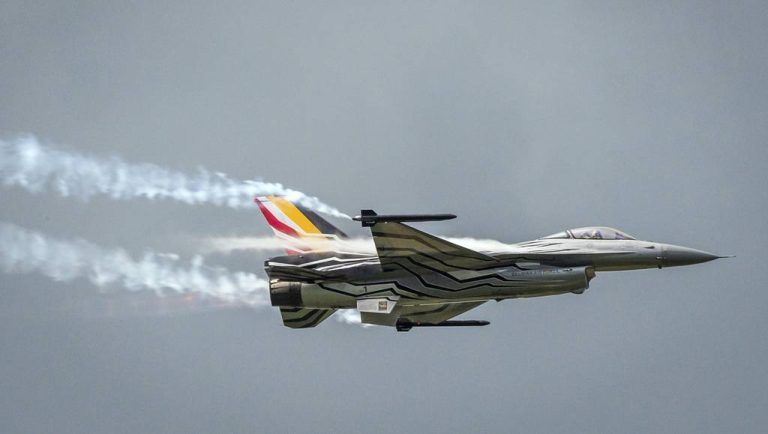
MILAN – The Belgian government said it will provide an undisclosed number of F-16 fighters to Ukraine from 2025, a decision some are calling a compromise between the political factions that make up the country’s ruling coalition.

On Oct. 11, Belgium put an end to the wavering stance it had adopted in recent months on the issue of sending F-16s to Ukraine.

“Belgium from 2025 will be in a position to supply F-16s to Ukraine,” Prime Minister Alexander De Croo told reporters following his meeting with Ukrainian President Volodymyr Zelensky in Brussels.

The official added, however, that such a decision needs to be confirmed by the country’s next government following elections next May.

The announcement originally was made by Defense Minister Ludivine Dedonder on Wednesday in an interview with local broadcaster Bel RTL, during which she explained that the specifics of the agreement will “depend on the build-up of Belgium’s new F-35 capabilities.”

The deal will further entail the training of Ukrainian pilots and mission planners, which will begin in 2024, and two Belgian companies, Sabena Engineering and Patria Bec, will provide essential technical support for the F-16 fleet, according to a Belgian MoD press release. In September, Belgium joined the coalition of a dozen other countries providing F-16 courses.

Rodolphe Polis, press officer at the Belgian MoD, told Defense News that the country currently has 53 F-16s in its inventories.

In 2018, Brussels signed a multi-billion dollar contract with Lockheed Martin for the supply of 34 F-35 fighter jets that are set to replace the aging F-16s it possesses.  However, the timeline for these deliveries has already been delayed.

“In April 2023, Minister Dedonder confirmed that only two F-35s out of the initial four would be delivered during the first quarter of 2024,” Alain De Neve, researcher at the Belgium-based Royal Higher Institute for Defense think tank told Defense News. “This means that the F-16 to F-35 transition could face hiccups, meanwhile Belgium is obliged to maintain an operational fleet of aircraft, particularly for its joint missions in the Baltics.”

Belgium contributes to the surveillance of this airspace as part of NATO’s enhanced vigilance activities and Baltic Air Policing. It was also one of the first international customers of the F-16, receiving its first deliveries over 40 years ago.

The news that the jets will not reach Ukraine before two more years have deceived some observers, as Ukrainian officials have been heavily lobbying for these weapons to reach the war-torn country as soon as possible.

For De Neve, it is somewhat surprising that Belgium would be singled out on this issue.

“The decision to send F-16s to Ukraine represents, as is often the case in Belgium, one based on a compromise between the various political sensitivities that compose the ruling coalition government… This can be a complex process and it is true, out of sync with events,” he said.

However, he argues that the deadline needs to be placed in the broader context of other pledges made by F-16 donating countries.

“As early as January 2023, the Netherlands indicated that they were willing to deliver F-16s to Ukraine, but US approval was crucial, which came in the spring. This means it has been ten months since the first delivery promises were made, and no aircraft has yet been transferred to Ukrainian forces,” De Neve stated.

Government officials have in recent months voiced the growing possibility that the Russia-Ukraine war could turn into a frozen conflict, that may last anywhere between several years to a decade.

Elisabeth Gosselin-Malo is a Europe correspondent for Defense News. She covers a wide range of topics related to military procurement and international security, and specializes in reporting on the aviation sector. She is based in Milan, Italy.

Boeing pitches more upgrades for US Army’s Apache, Chinook helicopters

0

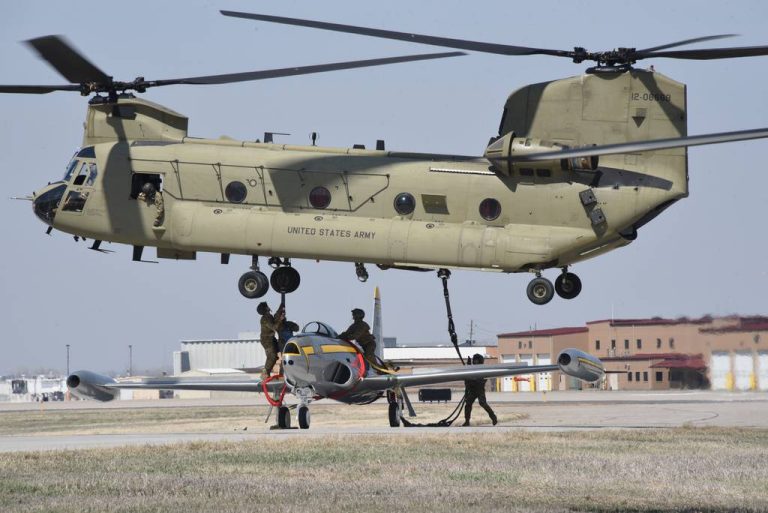
WASHINGTON ­— The U.S. Army is nearing a final decision on whether and how much to invest in Chinook Block II helicopter upgrades, and it’s committed to buying a new engine and the latest software version for the Apaches. But Boeing, which makes both aircraft, is developing and demonstrating more extensive upgrade options in a bid to help the service boost the survivability, connectivity and capability of its legacy helicopters.

Boeing is already helping the Army modernize the decades-old workhorses by adding more carrying capacity to the CH-47 Chinook and greater firepower to the AH-64 Apache. And despite the vastly different missions of the two helicopters, the company’s program offices are leveraging each other’s work to realize these evolutions.

Mark Ballew, the senior director for vertical lift business development at Boeing, told Defense News at the Association of the U.S. Army’s annual conference this week that flight controls is an area where work on the Chinook heavy-lift program is directly affecting the company’s pitch for an Apache attack helo upgrade.

The Chinook has a Digital Advanced Flight Control System, which includes an active parallel actuator subsystem, or APAS, that can get the helicopter into a stable hover and then move the aircraft in 1-foot increments laterally or vertically for a very controlled maneuver. Ballew said this is critical for lift missions in high-dust or other low-visibility environments, or around wires or other hazards. It allows missions to take place more safely and with less work for the crew, he noted.

Even if the Apache doesn’t need to hover to pick up sling-loaded cargo like the Chinook does, there are still reasons to consider putting these APAS controls on the Apache, according to Douglas Sanders, who leads attack helicopter business development at Boeing.

The Apache gunship has to perform reconnaissance, maneuvers, fires and more for its missions — but “not crashing the helicopter is sort of an implied task,” Sanders said. Adding APAS would reduce the workload on crew members and help them focus on conducting their missions safely.

Ballew said Boeing conducts after-action reviews with returning helicopter crews and looks at feedback indicators on the aircraft themselves; there are already indications the Apache crews are pushing the boundaries of what their aircraft can do during some missions.

Sanders explained the APAS hardware is “currently in flight testing in the special operations MH-47, and we’re looking at the [CH-47] Chinook as well. We took a lot of what they developed and said: ‘How can we apply this to the Apache?’ And we’re demonstrating it right over there in our simulator” at Boeing’s booth at the AUSA conference.

Sanders said some of the proposed changes are specific to the platforms. For example, on the Apache, crews returning from deployment have said they don’t need 1,200 rounds of 30mm ammunition, but they do need more fuel and they want more capacity for missiles, spurring some changes to the so-called Modernized Apache design.

But many other efforts have been common across Apache and Chinook aircraft. Both helicopters have the same multifunctional displays, for example.

Sanders said the Apache program wants to move to a large area touchscreen display to make the user interface even easier while further reducing the workload for the crew. He said the large area touchscreen would also fit into the Chinook, should the Army want to make a similar investment across its aircraft types.

Boeing is also pitching common survivability and communications upgrades, which apply to both mission sets and are agnostic to the helicopters’ designs and flight profiles.

Megan Eckstein is the naval warfare reporter at Defense News. She has covered military news since 2009, with a focus on U.S. Navy and Marine Corps operations, acquisition programs and budgets. She has reported from four geographic fleets and is happiest when she’s filing stories from a ship. Megan is a University of Maryland alumna.

Cattail – A Handy Survival Plant

0

The cattail, an unassuming wetland plant, holds a place in our collective consciousness that extends far beyond the boundaries of botanical knowledge or expertise in foraging wild edibles. Its unpretentious presence resonates with people from all walks of life, endearing itself as an icon of seasonal transition and nature’s intrinsic beauty.

Even if you consider yourself far removed from the world of botany or the realm of wild foods, you likely possess a fundamental awareness of the cattail, an awareness that’s rooted in both its visual prominence and its remarkable versatility.

It’s the mature cattail spikes, particularly, that have etched themselves into our cultural memory. Each autumn, they make their debut as indispensable elements in fall decorations, casting their unique charm upon our homes, enlivening festive gatherings, and even making somber appearances at funerals, where they offer a poignant symbol of life’s interconnectedness with the cycles of nature.

However, the cattail’s significance reaches far beyond its role in adorning our lives. Its distinctive form and resilience mean that you don’t need to venture deep into the wilderness to encounter it. If you’ve ever dwelled near a stream, river, or wetland, you’ve probably witnessed the cattail’s unmistakable presence.

The tall, slender, grass-like leaves sway gracefully in the wind, their deep green hue adding a touch of tranquility to the waterside landscape. And then there are those peculiar brown cylindrical flower spikes, which, when fully matured, bear a resemblance to hot dogs perched on sticks, and they stand as one of the defining features of the cattail.

Yet, it’s not merely their aesthetic qualities or their ubiquity that make cattails deserving of our attention. This versatile plant is a multifaceted treasure trove of utility, concealing a wealth of uses and virtues that are not to be overlooked. From sustenance to craft, construction to natural medicine, the cattail’s versatile repertoire is nothing short of extraordinary.

As we delve into its numerous applications and delve deeper into the world of cattails, we’ll soon discover that this humble plant is not only a part of our collective consciousness but a source of knowledge and sustenance that merits a closer look.

Cattail as an edible plant

This unassuming wetland dweller boasts a range of culinary possibilities, making it a valuable resource for those with a liking for foraging and a desire to explore the culinary delights hidden within nature’s bounty.

Green Spikes: A Taste of Spring

During the arrival of spring, the cattail undergoes a remarkable transformation. What were once unassuming green bloom spikes are destined to become the iconic brown cattail stalks that grace our autumnal landscapes. However, during their youthful, green phase, these tender spikes reveal a surprising secret – they are a delectable vegetable waiting to be discovered.

In their green and immature state, these spikes are at their prime for consumption. They offer a delicate, earthy flavor that beckons both foragers and food enthusiasts alike. Preparing them is a simple task, requiring only 10 to 20 minutes of boiling to transform them into a delectable side dish. If you prefer a slightly different culinary experience, roasting these green spikes and buttering them can evoke the essence of corn-on-the-cob, offering a unique twist on a familiar delight. These green spikes are a testament to the cattail’s versatility, showing that it has more to offer than meets the eye.

Yellow Pollen: Nature’s Culinary Treasure

As the cattail’s green spikes mature and grow taller, an intriguing transformation takes place. A fine yellow pollen emerges at the very apex of each flower stalk. This golden treasure is not only a visual delight but also a culinary gem waiting to be unearthed.

Gathering this pollen is a straightforward and eco-conscious process. By simply shaking the heads of the cattail into a bag or draping a neckerchief over the flower stalks, one can collect this yellow pollen without causing harm to the plants themselves. Once collected, the pollen unveils its potential as a culinary ingredient.

This golden pollen can be seamlessly blended with regular flour, infusing it with a delicate, nutty flavor and a vibrant yellow hue. Alternatively, it can be used on its own to craft an array of mouthwatering dishes.

Imagine savoring bread with a sunny disposition, muffins imbued with a warm, natural glow, or pancakes that exude a rich, golden radiance – all courtesy of the cattail’s bountiful pollen. It’s a testament to the versatility of this remarkable plant, showcasing its ability to not only nourish the body but delight the senses with its unexpected culinary offerings.

Unveiling the Secrets of Cattail Rhizomes

banner floyWhile the cattail plant’s green spikes and golden pollen may be more well-known for their culinary potential, hidden beneath the surface lies a hidden treasure – the rhizomes. These subterranean roots, responsible for the cattail’s expansion, hold a wealth of uses and promise a different dimension of nourishment and culinary creativity.

The Underground Realm of Rhizomes

The cattail’s expansion is primarily orchestrated by its extensive network of rhizomes, which are essentially underground roots. These rhizomes stretch horizontally, a mere few inches below the earth’s surface, presenting themselves as sturdy, cylindrical structures. Composed of a fibrous core enveloped by a spongy outer layer, they constitute a rich source of potential sustenance.

Harvesting cattail rhizomes

Harvesting cattail rhizomes is an immersive experience, one that brings you deep into the heart of the swamp. To obtain these precious roots, you must delve into the muck and mire, unearthing the rhizomes from their muddy abode. It’s an endeavor that will leave you far from pristine, so it’s not an activity for those overly concerned with cleanliness.

Once you’ve successfully extracted the rhizomes, a key step in their preparation is to remove the spongy outer layer. What lies beneath is the true prize, the core of the rhizome. Despite its slightly fibrous texture, this inner portion is both sweet and satisfying, offering a unique taste of the swamp’s bounty.

The Culinary Potential

Beyond the initial gustatory revelation, cattail rhizomes can be transformed into versatile flour. This flour exhibits impressive nutritional qualities, with a carbohydrate content of 77 percent, complemented by a respectable 8 percent of protein and 2 percent of fat. In this regard, cattail rhizome flour compares favorably with staples like corn and rice, making it a valuable addition to a diet.

In the culinary history of indigenous communities like the Iroquois, the rhizomes were dried, pounded, and meticulously sifted to separate the fiber from the precious flour. The resulting flour was then employed in the creation of bread, demonstrating the resourcefulness of these communities in utilizing the cattail’s gifts.

Processing Rhizomes: A Method by Euell Gibbons

Renowned naturalist and author Euell Gibbons suggested a method for processing cattail rhizomes that aligns with the principles of sustainability and simplicity. This technique involves filling a large container with cold water and manually crushing the rhizome cores within the water. As you do so, the fiber begins to separate.

The flour, once detached from the fiber, settles at the bottom of the container. This process may be repeated two to three times to ensure the flour is devoid of fiber. The resulting flour can then be employed in wet or dried form, preserving the essence of the cattail for future culinary explorations.

The Cattail Heart

the cattail heart

While the rhizomes are known for their culinary versatility, another hidden treasure lies within the cattail plant – the heart. Located just above the rhizome where a shoot connects, the cattail heart is a significant source of nourishment, presenting an alternative dimension of flavors and textures in the world of wild edibles.

Not a Root, but the Heart

Intriguingly, the cattail heart, despite its name, is not a true root in botanical terms. It’s an outgrowth that emerges just above the rhizome’s connection to a shoot. This somewhat sizeable lump of nutritious carbohydrate material bears a striking resemblance to roots in its appearance and role in the plant’s sustenance.

Preparing the Heart

Cattail hearts are indeed edible in their raw state, and in survival situations, they offer a quick and simple source of nourishment. However, to fully appreciate their culinary potential, it’s common practice to peel them and then proceed with cooking or baking.

This transformation enhances their texture and flavor, making them reminiscent of other familiar vegetables like Jerusalem artichokes, turnips, or potatoes. Seasoning these cooked or baked hearts can elevate them further, offering a delightful and satisfying addition to a meal.

The Culinary Evolution

As the cattail plant progresses through its lifecycle and begins to send forth its towering flower stalk, the starchy core that constitutes the heart undergoes a transformation. It becomes progressively tougher and, regrettably, less palatable. Therefore, the best time to harvest and enjoy the cattail heart is during the plant’s earlier growth stages when it remains tender and full of promise. The evolution of the heart within the cattail serves as a reminder of the ever-changing dynamics in the natural world and the importance of timing and seasonality in foraging and culinary endeavors.

The Shoots

Amid the winter’s chill and the gentle awakening of spring, the cattail plant offers yet another gift to those who understand its culinary potential – the young cattail shoots. These early shoots, harbored within the plant’s green embrace, unveil a world of flavors and textures that can be likened to the vibrant tastes of celery or cucumber.

Harvesting the shoots

Gathering these tender shoots is a straightforward process. To access the delectable core, one must carefully peel back the outer green leaves, revealing the delicate white inner leaves of the young shoot. The most desirable part of the shoot lies in the lower 12 inches, where tenderness and palatability reach their peak. By peeling back the outer green fibrous layers, you gain access to the inner treasure – a crisp, succulent core that beckons with its freshness.

BOR article1

The Cattail’s Culinary Crown Jewel

Among the various edible components of the cattail, the shoots are often considered the culinary crown jewel. They have been likened to the refreshing crunch of celery or the cool crispness of cucumber, offering a unique and delightful flavor profile. Once these shoots are peeled and prepared, they can be embraced in multiple ways.

Whether added raw to salads for a burst of freshness, enjoyed as standalone snacks, or integrated into cooked dishes, such as stews, these young shoots are a versatile addition to the culinary repertoire. It’s no surprise that they have earned the moniker “Cossack asparagus,” attributed to the Cossacks’ pronounced affection for this delectable food.

Nutritional value

Beyond their culinary appeal, cattail shoots are nutritionally rich. A mere 100 grams, roughly equivalent to half a cup, of these shoots contains a treasure trove of nutrients. With 58 milligrams of calcium, 109 milligrams of phosphorus, 639 milligrams of potassium, and 76 milligrams of vitamin C, these shoots are not only a delight to the palate but also a source of essential nourishment.

Unveiling the Potential of Underground Shoots

In the heart of the cattail, yet slightly removed from the starchy core, are the very young, round, and pointed underground shoots. These nascent shoots, which will eventually give rise to the plant’s long, erect leaves, present another intriguing facet of cattail cuisine.

They can be enjoyed both in their raw form, adding a delightful crispness to salads, or incorporated into various cooked dishes. This underappreciated aspect of the cattail’s edible offerings showcases its resourcefulness in offering sustenance throughout its various growth stages.

Other Uses Beyond Food

other uses beyond food

While cattail is renowned for its culinary potential, its utility extends far beyond the kitchen. The long, erect leaves and the downy fluff from mature flower spikes offer a wide array of applications, making this plant a valuable resource in the world of craft, survival, and innovation.

Crafting with Cattail Leaves

The long, upright leaves of the cattail plant serve as versatile materials for crafting. These leaves are instrumental in creating rush chairs, sandals, mats, and an assortment of other craft items. The process begins with the collection of cattail leaves, followed by allowing them to dry, ideally in the shade, to preserve their quality. When the time comes to weave or shape them into desired forms, a touch of moisture can make them pliable.

Cattail leaves can even be transformed into twine, suitable for applications that do not entail constant pressure. While it may not be ideal for cordage in a bow-drill, it finds its place in crafting mats, shade hats, and comfortable sandals.

As the cattail’s brown flower spikes mature, they release a delicate and fluffy down that takes to the wind. This down serves as a natural parachute, effortlessly carrying cattail seeds throughout the swamp, facilitating the plant’s propagation.

However, it is more than just a vehicle for seed dispersal; it can be used to stuff pillows or blankets, providing insulation and comfort. Its lightweight and insulating properties make it an excellent choice for reviving or enhancing the warmth of items like down sleeping bags.

During World War II, resourcefulness led to the use of cattail down (alongside milkweed pods) as a substitute for kapok, a crucial stuffing material used in life preservers and sleeping bags. This transition proved that cattail down, with only slightly inferior characteristics to goose down, was a worthy alternative.

Fire-Starting with Cattail Fluff

The cattail fluff’s utility extends into the realm of fire-starting. When fluffed up, it becomes a superb tinder that readily ignites when subjected to a spark. Whether the spark is generated from a flint and steel or a ferrocerium rod, the cattail fluff readily transforms into a roaring flame. This remarkable feature enhances its role as a valuable resource for survival and bushcraft.

Medicinal and First Aid Applications

Beyond crafting and fire-starting, cattail fluff also finds applications in first aid and medicine. Traditional wisdom suggests that cattail fluff can be used to staunch bleeding. Applying it to wounds and exerting direct pressure has been reported to effectively control bleeding, potentially avoiding the need for stitches in certain cases. Such practical applications underscore the multifaceted nature of the cattail plant.

Additional Uses

BHHSBMar19v2

Cattail’s utility goes beyond crafting, insulation, and fire-starting. The sturdy stalks of the cattail flower spikes can be employed as chopsticks, offering a sustainable and eco-friendly alternative to disposable utensils. Some have even experimented with using these stems for hand drills, though with varying degrees of success.

As a testament to its tenacity and adaptability, cattails can be found year-round in swampy and marshy areas, as well as along the banks of permanent bodies of water, such as streams, ponds, rivers, and irrigation ditches, across the globe. Their prevalence in North and South America, Europe, Asia, and northern Africa emphasizes their significance in both natural ecosystems and the lives of those who recognize their myriad uses.

Useful resources to check out:

A few wild beverages you should try

Knowledge to survive any medical crisis situation

Harvesting and canning wild greens

10 Things Cowboys Carried With Them In The Wild West To Survive

Shield AI unveils V-Bat Teams drone swarm tech, with eye to Replicator

0

WASHINGTON — California-based defense technology firm Shield AI on Monday launched a new drone swarming capability called V-Bat Teams — one it hopes the Defense Department might use for programs such as its Replicator initiative.

V-Bat Teams, which grew out of Shield AI’s experiments with the Air Force’s AFWERX innovation unit that culminated in a demonstration this summer, has at its core the company’s artificial intelligence pilot software dubbed Hivemind. These teams consisting of a handful of V-Bat aircraft are intended to operate autonomously in high-threat environments, without needing instructions or guidance from GPS or communications.

In an interview Tuesday at the Association of the U.S. Army’s annual conference in Washington, Shield AI’s co-founder and president said V-Bat Teams could be a “great fit” with the Pentagon’s Replicator program, which aims to field thousands of autonomous, attritable drones in the next two years to counter China.

Brandon Tseng added that V-Bat Teams would operate with minimal instruction from human operators, beyond the point where the humans tell them what target or mission to pursue. However, the V-Bats would notify humans when they notice something that needs to be brought to their attention.

Tseng said Shield AI conducted the first flight of V-Bat Teams in April and conducted a demonstration as part of the Air Force’s AFWERX autonomy effort in June. That demo, which was announced in August, showed how the Hivemind technology could launch and autonomously control a trio of V-Bats to monitor and surveil simulated wildfires.

V-Bat Teams now include four of the UAVs, Tseng said, but the company hopes to double that capacity every year — to eight in 2024, then to 16, and so on.

Hivemind’s autonomous software is, on its own, already able to control many more V-Bats, Tseng said. The limiting factor on V-Bat Teams comes in the operational logistics of launching multiple drones at once and then landing, he explained.

Sending large swarms of drones into the air isn’t a new trick, Tseng noted, as such demonstrations are commonly done at festivals or other celebratory events. But those are “brittle, dumb drones” that would fall out of the sky or automatically land if they were jammed, he added. Shield AI first focused on creating an intelligent, secure AI pilot in the form of Hivemind, and then the firm worked to add more drones into the mix to carry out different mission sets.

V-Bat Teams will first focus on maritime domain awareness missions, Tseng said, but their use could expand to include the suppression of enemy air defenses, strike operations, escort missions and logistics operations.

With their relatively low cost — Tseng said the V-Bat’s price point comes around the mid-six-figure range — V-Bats could even be used as decoys to lure out enemy fire and take hits that would otherwise target crewed aircraft.

V-Bats are attritable, Tseng noted, which means they could be sent into combat in considerable numbers and the military could easily weather their loss, while still being able to operate intelligently.

Tseng said some of Ukraine’s experiences have shown that throwing waves of basic drones at an enemy isn’t always enough to make a dent. “You need intelligent, affordable mass,” he noted. “Mass for the sake of mass is not helpful; it has very low returns.”

Shield AI aims to sell V-Bat Teams to all U.S. military services as well as foreign customers.

“You’re going to open up a new paradigm of these operations when you have this many aircraft that are able to do it autonomously,” Tseng said.

For now, however, Tseng doesn’t see V-Bat Teams fitting in with the Air Force’s plan to create a fleet of collaborative combat aircraft — autonomous drones that fly alongside crewed fighters such as F-35s. Shield AI is open to looking further into the collaborative combat aircraft program, he said, but what the Air Force has in mind differs from V-Bat’s design.

“We’re open to it,” Tseng explained. “But they want AI-piloted jets, and that’s what they’re focused on before they start thinking about how those AI-piloted jets work with other machines like a V-Bat.”

Stephen Losey is the air warfare reporter for Defense News. He previously covered leadership and personnel issues at Air Force Times, and the Pentagon, special operations and air warfare at Military.com. He has traveled to the Middle East to cover U.S. Air Force operations.