voting n such | Survival Monkey Forums

0

a thought… ya I know dangerous stuff goin on here… :grimacing:

anyways…

saw this article…

# Congressman reveals why ‘Swamp’ took Jim Jordan out of speaker race

Congressman reveals why ‘Swamp’ took Jim Jordan out of speaker race

which talks a bit about individual politicians… and their affiliations and voting records… etc.

and how some APPEAR to be extremely compromised to or by the opposite party…

and a thought came into my mind…

WHY not get someone to track the voting records and words of ALL politicians…

AND also their net worth…

WITHOUT JUDGING them…

just put it all out there for their constituents to see???

a source so to speak of who these people are… it would have to be all verifiable of course!!!

no rumors or stuff like that… would have to watch out for the not legit sources and site…

the idea is to create a more informed vote???


Swiss Banker Calls on Authorities to Arrest Globalists Over Pushing COVID Bioweapon on the Public

0

Swiss Banker Calls on Authorities to Arrest Globalists Over Pushing COVID Bioweapon on the Public

Pascal Najadi, whose father co-founded the World Economic Forum, makes the case for Swiss authorities to end diplomatic immunity for the globalists in the WEF and more.

https://twitter.com/Najadi4Justice/status/1715102503455404318

Pascal Najadi – Wikipedia


More Big Pond Stuff :)

0

I am finding every excuse under the sun to avoid building the brick wall in the house and pedestal for the wood stove…… I hate masonry work and loves the dirt werk

So while the pond is 4′ below the full mark and the South arm is dry on one end and sticky mud closer to the water line. I decided to keep scraping and digging. I am leaving the stumps, they are good fish structure. The big pond unlike the lake and little pond only has one spring feeding it and the flow only keeps up with about 30% of the evaporation. The fact that I am pulling clay powder out of a low spot and am 3 feet down in to the low spot and still pulling bone dry powder….. tells you how dry this Spring, Summer and Fall have been. I cored where I am digging and hit moist 6 feet lower than I am at now.
DSC01046.JPG

The bottom of my sitting log is the full water mark. I am pulling a box full of powdered clay and bucket full every round to the back of the log. After I finish burning the stump to the left of the log out and cut those last two hickory trees in front of it down cut the stumps level with the ground I am going to roll the log to the edge of where I have been digging and scraping. Then grade it with little slop up to the house slab. I am thinking a nice little paver patio behind the log after it is all raised and the area behind the log leveled off.
DSC01056.JPG

I am torn between building dam across from the point to the South Bank. Or building a post oak foot bridge across. The bridge would look cool, the dam would flood to the top of the log. Overall a dam across there would add 2 feet more depth to the woods area make a roughly 1.5 acre 4th pond. Plenty of sopping wet clay I could still pull from the water and I won’t have to build a key. I have virgin gold clay 15 feet deep across there and it would be next to impossible to dig and pack a key anyway. The sopping wet clay would make a great core and as it dries out would pretty much compact itself.
DSC01059.JPG

I am digging around the stumps with the BX Backhoe to get down to clay and to get as much top soil out of the low spot as I can. And ripping out as many of the small annoying tree roots as I can. The little BX Backhoe does pretty good with them up to about 6″ diameter bigger than that they are just going to be part of the bed, unless the box blade rips them up.
DSC01058.JPG

Started today out with a pretty sunrise.
DSC01040.JPG

Ended today with a pretty sunset that made the water look like it is on fire with the reflection. The setting sun moves a little farther to the South every day. Only a few weeks ago it was setting just to the right of the tallest tree behind the Red Maples. When it is setting at the South end of the woods spring will be just around the corner and the sunset will start it trek North behind the woods again not long after. Almost like a natural clock or something LOL.
DSC01072.JPG


Big air compressor that will love you long time

0

I picked up a fairly substantial v4 air compressor that’s slightly used but not used enough to wear the paint off the v-belt groves in the pulley.

I’m thinking it’s going to take some power to turn it over under pressure.
It has paper intake air filters, made in USA. It weighs about 80lb and appears to be all cast iron and steel on the outside.
Not sure what I’ll power it with. Definitely something portable/mobile probably gasoline and probably not electric.


Airbus wins $1.3 billion deal to upgrade, maintain French A330 tankers

0

PARIS — France has awarded Airbus two contracts worth a combined €1.2 billion (U.S. $1.3 billion) to upgrade and service A330 transport aircraft operated by the French military, the company said in a statement Monday.

As part of the deal, Airbus will upgrade France’s A330 Multi Role Tanker Transport aircraft to become communication nodes with command-and-control capabilities as part of their anticipated integration with the Future Combat Air System.

The first upgraded aircraft is expected to qualify for service with the French Air and Space Force in 2028.

“With this new capability of the aircraft, we are preparing the future by transforming the MRTT into an in-flight communications node, as the first building block of the multi-role tanker transport of tomorrow,” Jean-Brice Dumont, the head of military air systems at Airbus Defence and Space, said in the statement.

The so-called Standard 2 upgrade focuses on connectivity and self-protection capabilities, Airbus said. The company is to equip the aircraft with a satellite communications station supplied by fellow French firm Thales, with the aim of staying connected even in jammed environments and extreme weather conditions.

The upgrade will be a stepping stone toward the A330′s integration with the “future air combat cloud” within FCAS, according to Airbus. France and Germany launched the FCAS program in 2017, with Spain joining in 2020. The effort is meant to product cutting-edge aerospace technologies for the European nations.

The other contract includes in-service support for the A330 fleet for 10 years, with an option for two additional years, at the Istres-Le Tubé Air Base in southern France. Under the deal, Airbus will guarantee a level of availability as well as support for aircraft deployed outside France.

France has 12 operational A330s, and three more are on order. Other operators of the A330 include the U.K., Australia, Singapore, Saudi Arabia, South Korea and the United Arab Emirates. Canada has nine of the aircraft on order, including five used airframes that will be converted by Airbus into strategic tankers.

Airbus says the A330 MRTT can carry up to 111 metric tons of fuel to service fighters, including the F-16, F-35 and Eurofighter, as well as large probe-equipped aircraft such as the A400M military transport plane.

Rudy Ruitenberg is a Europe correspondent for Defense News. He started his career at Bloomberg News and has experience reporting on technology, commodity markets and politics.

Lockheed drops US Air Force tanker bid; partner Airbus to go it alone

0

WASHINGTON — Lockheed Martin has ended its effort to compete for an Air Force contract to build the service’s next wave of 75 refueling tankers.

But Airbus, with whom Lockheed Martin had planned to build the proposed LMXT strategic tanker, will still compete for the KC-135 recapitalization. LMXT would have been based on Airbus’s A330 Multi Role Tanker Transport.

“Airbus remains committed to providing the U.S. Air Force and our warfighters with the most modern and capable tanker on the market and will formally respond to the United States Air Force KC-135 recapitalization” request for information, an Airbus spokesperson said in a Monday statement to Defense News. “The A330 U.S.-MRTT is a reliable choice for the U.S. Air Force; one that will deliver affordability, proven performance and unmatched capabilities.”

Lockheed spokeswoman Stephanie Stinn said in an earlier statement the company had decided not to respond to the Air Force’s RFI. The news was first reported by Reuters.

Stinn said Lockheed plans to transition the team and resources working on the proposed LMXT strategic tanker to other programs, including the next-generation aerial refueling system, or NGAS, program.

In a follow-up email, Stinn said the Air Force’s decision earlier this year to accelerate NGAS was one of several factors that led it to drop its pursuit of LMXT and focus on the next-generation tanker, along with other elements in the recent RFI. Lockheed declined to say how much it and Airbus spent to develop LMXT.

Lockheed’s choice to drop out of the tanker competition could increase competitor Boeing’s chances of selling more KC-46 Pegasus tankers to the Air Force for the next phase of the service’s multibillion-dollar effort to replace its legacy KC-135 Stratotanker aircraft.

The Air Force has established a three-stage process for recapitalizing the KC-135, with the now in-process acquisition of 179 KC-46s representing its first phase.

But the service this year reshuffled its acquisition plans for the second and third phases of the tanker recapitalization.

Originally, the Air Force planned to buy about 150 tankers in the second phase, and Lockheed teamed up with Airbus to pitch LMXT for this procurement.

But for at least a year and a half, top Air Force officials including Secretary Frank Kendall have strongly suggested they were leaning towards buying modified KC-46s for the next phase.

And in March, the Air Force announced it was revamping its tanker plans and would cut the planned purchase of second phase tankers in half, to about 75. As part of its new tanker strategy, the Air Force also sped up plans to acquire NGAS.

The Air Force’s surprise slash of the tanker buy was a blow to LMXT. But Lockheed continued to push forward, and in June announced it had chosen a General Electric Aerospace engine for LMXT. A Lockheed official told reporters at the time the company hoped the engine choice would show the Air Force LMXT would be a viable solution for its tanker needs.

The Air Force’s deputy program executive officer for mobility aircraft, Scott Boyd, told reporters in Dayton, Ohio in late July that a KC-46 purchase was not a foregone conclusion. But he said the service would have to see if its market research showed a viable alternative to the KC-46 existed.

Stephen Losey is the air warfare reporter for Defense News. He previously covered leadership and personnel issues at Air Force Times, and the Pentagon, special operations and air warfare at Military.com. He has traveled to the Middle East to cover U.S. Air Force operations.

Online SDR receiver, open for your use

0

W3HFU Westminster MD KiwiSDR (hfunderground.com)

Where I listen to Sw – like VOA Africa service at 15.58. 19M is cooking these days.

US, South Korea and Japan hold first-ever trilateral aerial exercise

0

SEOUL, South Korea — The South Korean, U.S. and Japanese militaries conducted their first-ever trilateral aerial exercise on Sunday in response to evolving North Korean nuclear threats, South Korea’s air force said.

The training held near the Korean Peninsula was to implement the three countries’ earlier agreement to increase defense cooperation and boost their joint response capabilities against North Korean threats, the air force said in a statement.

The drill involved a nuclear-capable B-52 bomber from the United States and fighter jets from South Korea and Japan, the statement said.

South Korea and Japan are both key U.S. allies in Asia, which together host about 80,000 American troops.

The three countries have occasionally held trilateral maritime drills, such as anti-submarine or missile defense exercises, but Sunday’s training marked the first time for them to perform a trilateral aerial drill.

In South Korea, expanding military drills with Japan is a sensitive issue, because many still harbor strong resentment against Japan’s brutal 1910-45 colonial rule over the Korean Peninsula. But the North’s advancing nuclear program has pushed South Korea’s conservative president, Yoon Suk Yeol, to move beyond historical disputes with Japan and beef up a trilateral security cooperation with the U.S. and Japan.

In August, Yoon, U.S. President Joe Biden and Japanese Prime Minister Fumio Kishida met at Camp David in their countries’ first stand-alone trilateral summit and agreed to bolster their defense cooperation to deal with North Korea’s nuclear threats. The three leaders decided to hold annual trilateral exercises and put into operation by year’s end the sharing of real-time missile warning data on North Korea.

Sunday’s drill could draw a furious response from North Korea, which has long bristled at U.S. training exercises with South Korea, calling them an invasion rehearsal and responding with missile tests. The North slammed the Camp David agreement, accusing the U.S., South Korean and Japanese leaders of plotting nuclear war provocations on the Korean Peninsula. North Korean leader Kim Jong Un called Yoon, Biden and Kishida “the gang bosses” of the three countries.

Worries about North Korea’s nuclear program have deepened after it enacted a law that authorizes the preemptive use of nuclear weapons last year and has since openly threatened to use them in potential conflicts with the U.S. and South Korea.

‘liberate’ children for (not good)

0

Conference addresses call to ‘liberate’ children for ‘sex work’

[Editor’s note: This story originally was published by Live Action News.]

By Nancy Flanders
Live Action News

Undercover journalist Karlyn Borysenko was present at the recent Socialism 2023 Conference, where she recorded a Q&A session from a talk on The Politics of Childhood. One question from an audience member revealed a desire on the part of the adults present for children to participate in the “sex industry as part of children’s liberation…”

After the panel had spent an hour discussing liberating children from their parents, a self-described sex work activist named Chanel addressed the panel, which included Johns Hopkins University history professor Jules Gill-Peterson, who has previously received a fellowship from the Kinsey Institute (read Live Action’s four-part series on sexologist Alfred Kinsey’s research, which affects child sexual education today, starting here). Chanel asked (emphases added):

more on site… and they are telling you who they are!

AND the things they are saying… are not good to read about… but worth a read all the same…

Believe them!

Conference addresses call to ‘liberate’ children for ‘sex work’


How to Store Fuel (LP gas, Gasoline, Diesel and Kerosene)

0

Undoubtedly, understanding how to store fuel safely and effectively at home is a prudent practice that can significantly contribute to the smooth operation of various essential household items. Your cars, trucks, tractors, standby generators, propane refrigerator, and kerosene lanterns all rely on a steady and secure fuel supply.

To this end, it is vital to acquaint oneself with appropriate storage methods for various fuel types, such as LP gas, gasoline, diesel fuel, and kerosene. By mastering the art of responsible fuel storage, you not only ensure the continuous operation of these critical assets but also contribute to the overall safety of your home.

How to store various fuel types

LP gas

Understanding how to store fuel, especially when dealing with LP gas, introduces a unique set of challenges. LP gas is renowned for its versatility, capable of powering internal combustion stationary engines, tractors, motor vehicles, and serving in cooking and heating applications. However, it’s crucial to acknowledge the potential hazards associated with LP gas.

For instance, it must be stored under pressure to maintain its liquid state, and even the smallest, invisible leaks can quietly deplete your fuel supply. Furthermore, LP gas, being slightly lighter than air, has a tendency to disperse in a way that can lead to explosive conditions, emphasizing the critical importance of responsible fuel storage and handling.

Gasoline

When it comes to the art of understanding how to store fuel, gasoline brings forth its unique considerations. It remains in liquid form at room temperature, which makes it exceptionally versatile for a myriad of applications. However, storing gasoline for extended periods poses its own set of challenges. Its high vapor pressure leads to rapid evaporation, causing the fuel to go stale in just a few weeks without proper chemical treatment.

Despite having a relatively high ignition temperature, gasoline remains susceptible to ignition with minimal heat. As a result, stored gasoline should be treated with a BHT additive like Sta-Bil and safeguarded against moisture for effective fuel storage. The substantial risks associated with significant quantities of gasoline, including vapor-related accidents like boat explosions and fires, underscore the importance of proper fuel management.

Kerosene

In the realm of understanding how to store fuel, kerosene offers a more manageable and stable option. It tends to be underestimated by many but boasts surprising versatility and stability. Unlike gasoline, kerosene doesn’t evaporate as readily and remains stable in storage without requiring any special treatments. This quality makes it an excellent choice for various applications, including powering pre-1950 farm tractor engines and, when necessary, diesel engines. Moreover, kerosene stoves and refrigerators are readily available alternatives, often preferable from a safety perspective when compared to LP gas models. Proper kerosene fuel storage and handling practices ensure a dependable and secure source of energy for a wide range of needs.

Diesel

Understanding how to store fuel, particularly diesel, presents its own set of unique considerations. Diesel fuel, known for its ease of storage, is increasingly popular among those aiming for self-sufficiency. It’s notably challenging to ignite intentionally and almost impossible to ignite accidentally. Diesel fuel comes in two primary grades: #1 diesel, akin to traditional yellow kerosene, and #2 diesel, which is essentially the same as #2 home heating oil.

Despite its advantages, diesel fuel does have distinctive storage issues. Firstly, it exhibits some hygroscopic properties, meaning it can absorb moisture from the air. The second, closely related problem is the formation of sludge. Sludge forms when anaerobic bacteria thrive in trapped water, consuming the sulfur in the fuel. If left untreated, this sludge can expand until it fills the entire tank, compromising the fuel.

Therefore, stored diesel fuel should be treated with a biocide like methanol or diesel Sta-Bil immediately upon delivery. A unique aspect of #2 diesel is that it dissolves some paraffin wax, which tends to settle out at approximately 20°F, potentially clogging fuel filters.

This “fuel freezing” issue can be mitigated by adding 10% gasoline or 20% kerosene to the diesel fuel, and there are commercial diesel fuel supplements available for the same purpose. Before use, it’s advisable to filter diesel fuel to prevent potential issues.

ssry svp in article v2.1

Ethanol

While ethanol (alcohol) is not commonly considered a primary storage fuel, it’s worth exploring this option, especially for those who distill their own. Ethanol, interestingly, exhibits a remarkable degree of hygroscopy, which means it readily absorbs moisture from the environment. Consequently, when you’re contemplating how to store fuel, ethanol requires special attention. It should be stored in a securely sealed container to prevent any moisture contamination. This property makes ethanol a bit unique among common fuels, and its volatility, on par with kerosene, makes safe storage all the more critical.

One distinct characteristic of ethanol is its behavior when ignited. It burns with an almost invisible blue flame, which sets it apart from other fuels. This unique property can be both fascinating and challenging, emphasizing the need for careful handling and responsible fuel storage.

Considering these factors, it may be practical to adopt a just-in-time approach when it comes to ethanol. Storing the raw materials necessary for distillation and fuel production, and producing ethanol as needed, can reduce the risks associated with stockpiling a significant quantity.

General Fuel Storage: Regardless of the type of fuel you choose to store, it’s prudent to monitor your fuel consumption and base your storage plans around maintaining a 90-day supply. This approach ensures that you have an adequate and manageable amount of fuel on hand to meet your needs, while also allowing you to rotate your fuel stock effectively, adhering to the best practices of fuel storage.

Safe fuel handling

safe fuel handling

When it comes to understanding how to store fuel safely, regardless of the fuel type, a uniform approach is essential. All liquid fuels, whether it’s gasoline or LP gas, demand consistent handling. Begin by selecting a dedicated, isolated storage area, positioned downhill and downwind from other structures. This strategic placement is crucial as fuel vapors, denser than air, will naturally flow downhill, enhancing safety.

For LP tanks, always keep them in open, unenclosed spaces. However, when dealing with liquid fuel tanks, such as those for gasoline or diesel, consider storing them in a well-ventilated building or an open lean-to structure. This not only prevents solar heating from accelerating fuel evaporation but also contributes to overall safety.

For a permanent storage solution, you might consider the use of buried tanks. Set below the frost line, these tanks maintain stable temperatures at around 55°F, effectively inhibiting evaporation and safeguarding against potential threats, from stray (or aimed!) gunfire to brushfires.

Should buried fuel tanks raise environmental concerns, an alternative option is an underground vault. This approach offers the added advantage of enabling periodic tank inspections, ensuring that the fuel remains secure and contamination-free.

Regardless of the location chosen for fuel storage, certain safety measures are universal. Hang a dry chemical or CO2 fire extinguisher on the outside of the building or near the pump. All electrical fixtures should be “explosion-proof,” sealed, and wired in sealed conduit to prevent fuel vapors from coming into contact with electrical sparks. Additionally, a strict no-smoking policy should be enforced, with smoking or carrying smoking materials prohibited within a 50-foot radius of the fuel pumps.

Electrical fuel pumps should be equipped with a heat-sensitive shutoff mechanism to halt the pump in case of fire. Always remember to shut down the engine of the machine being fueled promptly. In the event of spills, clean them up without delay.

Lastly, ensure that you only use equipment specifically approved for the type of fuel in question, as using equipment not rated for the fuel can pose serious safety risks. Proper fuel storage and handling protocols are essential to maintaining a safe and efficient fuel supply.

Fuel storage methods

Liquid fuels, collectively addressed here, demand a systematic approach to their safe how to store fuel. While LP gas is typically housed in pressurized tanks supplied by a dealer and requires only a brief mention, the other liquid fuels share comparable considerations.

One of the simplest methods for how to store fuel is using portable fuel cans. If you’re still connected to the grid and commute for work, these cans provide an economical way to manage your fuel. You’ll need at least three cans: one kept full at all times, one for immediate use, and one for refilling at your earliest opportunity. Regular rotation of these cans ensures that you always have access to reasonably fresh fuel.

selfsb b1

Furthermore, their portability can prove invaluable in situations where your storage location needs to be relocated. Always use approved containers and be mindful not to mix them up. Standard color coding is prevalent for portable cans: blue for kerosene, red for gasoline, and yellow for diesel fuel. However, you can customize the color scheme to your preference, so long as you maintain consistency. Mixing fuels can lead to various complications, such as starting difficulties in a diesel engine if it’s contaminated with gasoline or the risk of an explosion when gasoline is introduced into a kerosene heater. Therefore, it’s essential to maintain uniformity in your fuel selection.

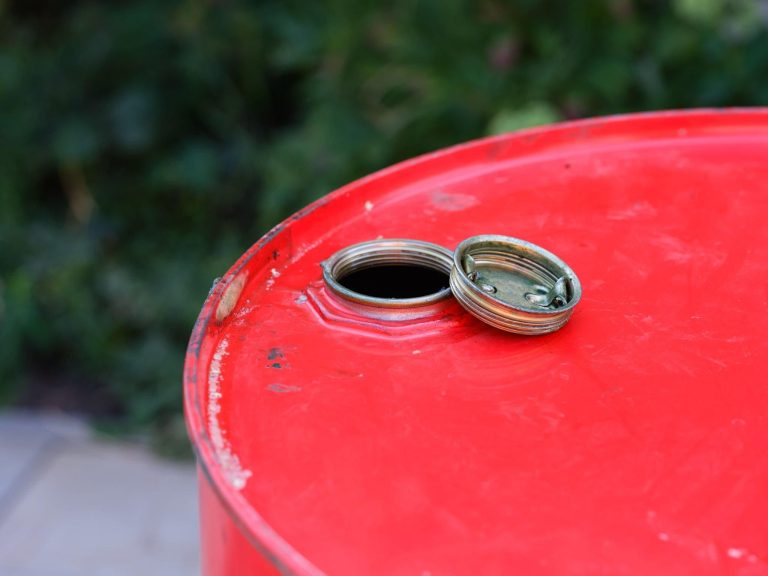
For more extensive storage, a 55-gallon drum, used with a hand pump or set horizontally on a rack, offers a flexible solution for how to store fuel. You can add drums as needed to accommodate your fuel storage requirements. Many fuel dealers impose a 100-gallon minimum delivery, so having at least two drums is advantageous.

You can even fill a drum at a service station, bring it home, and transfer the fuel into your storage drum. The mobility of drums is a valuable asset if you ever need to relocate your storage site. However, keep in mind that drums may eventually rust and develop leaks. It’s advisable to label each drum clearly, especially if you’re storing multiple types of fuel, to avoid any potential confusion.

For those contemplating substantial fuel storage, purpose-built fuel tanks are the preferred choice for how to store fuel. These tanks come in various capacities, ranging from 100 to 10,000 gallons, available in above-ground and underground configurations. In the Northeast, the standard residential 275-gallon fuel tank is a popular selection for how to store fuel. These tanks are obtainable new at plumbing and heating suppliers, typically priced around $450.

Additionally, used tanks can often be obtained for free, along with any remaining fuel. As an additional note, individuals with pickup trucks and reciprocating saws may find opportunities in removing old fuel tanks as homeowners transition from fuel oil to natural gas for how to store fuel. While this work is strenuous, it can be profitable. The removed tanks can be refurbished and resold for more.

Regarding fuel dispensing for how to store fuel, it’s a matter of personal choice. An elevated tank only requires a valve and filter, with gravity facilitating the rest. However, for kerosene and diesel tanks, hand pumps are often preferred due to safety considerations for how to store fuel. Valves can be prone to leaks, and in today’s world, vandalism is a sad reality. Hand pumps offer increased security, particularly when you must leave the tank unattended.

By following these guidelines for the safe storage of fuel, you can ensure a reliable and efficient fuel supply that meets your needs for how to store fuel.

The Author’s Approach to Fuel Storage

the author

My personal approach to how to store fuel revolves around a salvaged 275-gallon tank equipped with a hand pump and filter. This system primarily serves our diesel fuel storage needs. Our main tractor, which runs on diesel, is the cornerstone of our operations. It not only powers our everyday tasks but also drives a PTO (power takeoff) generator for standby power generation.

In addition to our diesel setup, we employ two or three 55-gallon drums for kerosene storage. These drums are equipped with a lift pump for efficient dispensing. We rely on kerosene heaters to complement our woodstove, ensuring comfort and warmth during colder periods.

However, due to my job requiring me to be “off the property,” and the presence of two older gasoline engine tractors, a chainsaw, lawnmower, and various other equipment, we’ve adopted a fuel can system for our gasoline supply. This choice aligns with my preference for not storing large quantities of gasoline, prioritizing both convenience and safety in how to store fuel.

Stephen Harris has written this article for Prepper’s Will.

Suggested resources for preppers and off-gridders:

The latest innovation in solar pannels – 3D technology

The #1 food of Americans during the Great Depression

Find Out What’s the Closest Nuclear Bunker to Your Home