Pratt wins engine-work contract to keep aging B-52, AWACS flying

0

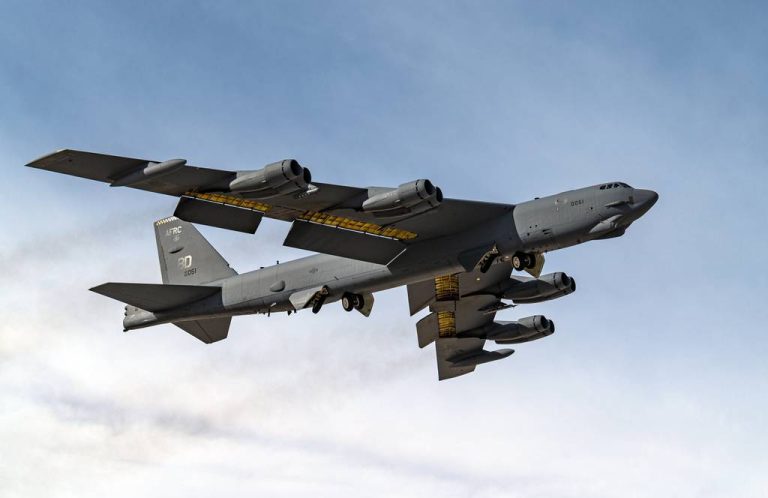
WASHINGTON — The Pentagon this week awarded Pratt & Whitney a sole-source contract worth as much as $870 million to sustain the Cold War-era TF33 engines that power the Air Force’s B-52H Stratofortress and E-3 Sentry aircraft.

The Defense Logistics Agency’s base contract with the company is for six years, with an optional four-year extension, the Pentagon said Tuesday. The initial award value of the firm-fixed-price and cost-type contract is $40.7 million, which the company would cover the first two years.

The contract also has a six-month transition period. If the Pentagon exercises all options with Pratt & Whitney, a subsidiary of RTX Corp., work would be completed in April 2034.

With the Air Force moving to retire its remaining E-3 airborne warning and control system, or AWACS, aircraft and replace the B-52′s six-decade-old engines with a new propulsion system from Rolls-Royce, the contract could cover sustainment for the rest of the TF33′s life.

Pratt & Whitney will sustain nearly 1,000 TF33 engines under this contract, including providing maintenance, spare parts, program management, field service, repairs and engineering support, it said in a statement. Work will take place at Tinker Air Force Base in Oklahoma and other Air Force locations, as well as Pratt & Whitney’s Atlanta-based Southern Logistics Center.

Caroline Cooper, a Pratt & Whitney executive who oversees engine programs including the TF33, told Defense News that the contract will provide new avenues to keep those remaining engines flying.

“We’re looking at … the operational tempo of the aircraft [flying with TF33 engines], and then looking at inherent risks in the supply chain, and wanted to build that upper limit so that we can move quickly and expeditiously to get the men and women in the Air Force what they need,” Cooper said.

One of the most pressing concerns has been keeping the supply of spare parts for the aging engines flowing, Cooper said. The TF33 relied on “mom and pop-type suppliers” making niche parts in low volume, some of whom have gone out of business over the years, she said.

This contract provides funding for Pratt & Whitney to make those hard-to-find parts itself, or find new companies that can fabricate them, she said.

Cooper also said the contract will give the company greater access to the Air Force’s maintenance databases at Tinker and other bases for the TF33, so it can have a better picture of what the engine’s needs are. That can include more up-to-date information on spare parts supplies or what repairs are being conducted – information Pratt & Whitney hasn’t always had in the past, and that could allow the company to forecast what spare parts and engineering support will be needed in the future.

The contract will also provide for more Pratt & Whitney personnel at Tinker’s depot. It will also allow Pratt & Whitney to station teams of engine specialists at bases who would be able to help the Air Force’s uniformed maintainers troubleshoot and fix some of the engine’s trickier repair problems. Cooper said that in the past, Pratt & Whitney has had a smaller team specialists rotate through bases, but this will be a more permanent on-site arrangement.

“We’ll get that intelligence directly from the maintainers, and [will] be able to combine that with our enhanced depot level support team at Tinker,” Cooper said.

Stephen Losey is the air warfare reporter for Defense News. He previously covered leadership and personnel issues at Air Force Times, and the Pentagon, special operations and air warfare at Military.com. He has traveled to the Middle East to cover U.S. Air Force operations.

Transhumanism: The End Game

0

Once again, this topic comes to surface and it's during a time when we've got more insight. Even now, as we face complete annihilation, those of us who have been warning people refuse to give up. We will never submit, we will never forget who we are.

We are the current iteration of humanity, and we are not going to be the last.

"It's very important to understand transhumanism is simply the transitional stage between humanism and post-humanism. Make no…

Transhumanism: The End Game

UAE, Korea Aerospace Industries enter talks for KUH-1E helicopter buy

0

DUBAI, United Arab Emirates — The United Arab Emirates is negotiating the purchase of South Korean helicopters, with the aim of signing a deal by year’s end, according to an official with the manufacturer.

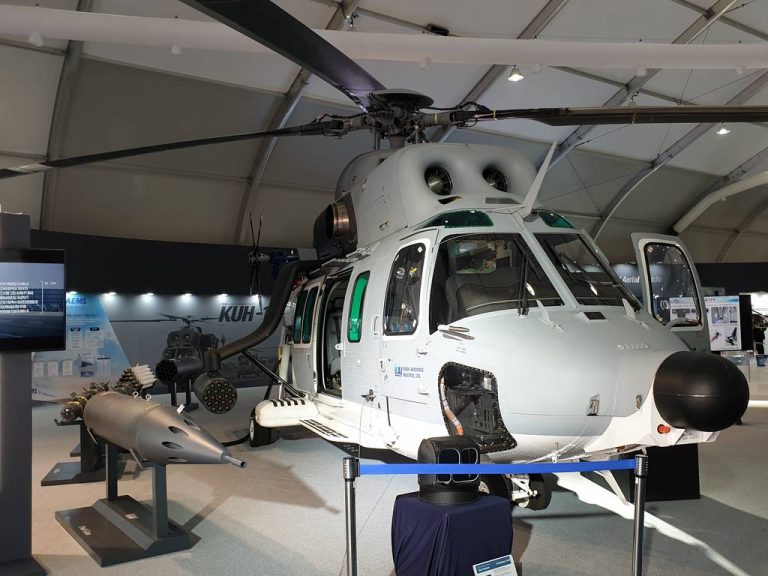
The Emirati military is seeking an undisclosed number of KUH-1E helicopters from Korea Aerospace Industries, Cho Seok Joon, a senior manager with the company’s rotorcraft division, told Defense News during the Dubai Airshow, which runs Nov. 13-17.

The KUH-1E is an export version of the twin-engine KUH-1 Surion. The former can carry 18 people, including two pilots, whereas the latter can accommodate 18 total. The UAE is seeking a maritime variant.

“Instead of the gun present in the KUH, it is equipped with a radar,” Cho noted.

A spokesperson with the Emirati Defence Ministry told Defense News the country is currently evaluating the aircraft.

“At the ministry, we have several layers of tests for all equipment. Once it’s complete, we give our verdict,” the representative said.

The Surion can perform military transport and airfreight missions, among other functions.

The export variant’s power comes from a pair of 1,855-shaft-horsepower GE T700-701K turboshaft engines. It can reach a maximum speed of 147 knots (169 mph) and has a maximum takeoff weight of 19,200 pounds.

Awad Mustafa is a Middle East and Africa correspondent for Defense News.

Movement And Tactics For Your Survival Group – Part I

0

I’m not particularly fond of delving into tactical discussions, mainly because many professionals often label themselves as experts. In my perspective, claiming expertise requires experiencing every conceivable situation, a feat accomplished by very few individuals.

If you’ve encountered every scenario, you’re only an expert in what you’ve faced. Survival doesn’t automatically confer expertise; it just means what you did worked. Personally, I tend to steer clear of such labels.

While much of our discourse on this platform pertains to hypothetical scenarios, if they were to materialize, I’d consider those who emerge unscathed as potential experts. Nonetheless, I maintain my reluctance to discuss tactics, viewing it as a necessary yet undesirable topic.

Now, let’s shift our focus to some fundamental principles that have proven effective in the past. This isn’t intended for seasoned pros or those well-prepared; it’s for those who might be new to this. All movement inherently involves tactics to support it, a concept encapsulated in the term “tactical movement.” Leveraging my background as a career soldier, I’ll draw heavily from my combat experience to share what has worked for me.

Commencing with group movement, particularly in scenarios involving the assembly of parties, the formation adopted depends on several factors for the untrained. These factors include the enemy’s capabilities—whether they’re looters or raiders—the terrain being traversed (urban, rural, open, forested, or restricted), and the number and capabilities of individuals in the moving group.

Considering these factors, let me introduce you to some military formations:

  1. Wedge Formation
  2. File Formation
  3. Line Formation

These three will be our focus as they represent fundamental formations for moving, attacking, and navigating through challenging terrain. I’ll provide a basic overview, leaving it up to you to practice and refine your group’s understanding. Remember, when venturing beyond your survival location, you’re in enemy territory, susceptible to attacks from various ranges.

An essential aspect to grasp is the purpose behind each formation and individual positions within it. It’s designed for comprehensive observation and security, ensuring the entire formation isn’t vulnerable to simultaneous attacks. However, bear in mind that even with a well-thought-out plan, a prepared ambush might throw the entire formation into chaos.

In tactical movement, no one advances without cover. Online images of army wedge formations will depict everything from teams to platoons. While these formations might seem flawless on paper, in reality, every member should be able to see the person in front of them. Maintaining sightlines is crucial; once lost, the unit’s security, observation, and firing capabilities are compromised.

Lastly, let’s discuss the rationale behind different formations for various situations. Consider that in gathering party formations, some members might be occupied pushing carts or carrying heavy loads, affecting their readiness to defend the formation. Always keep these practical considerations in mind.

Wedge Formation:

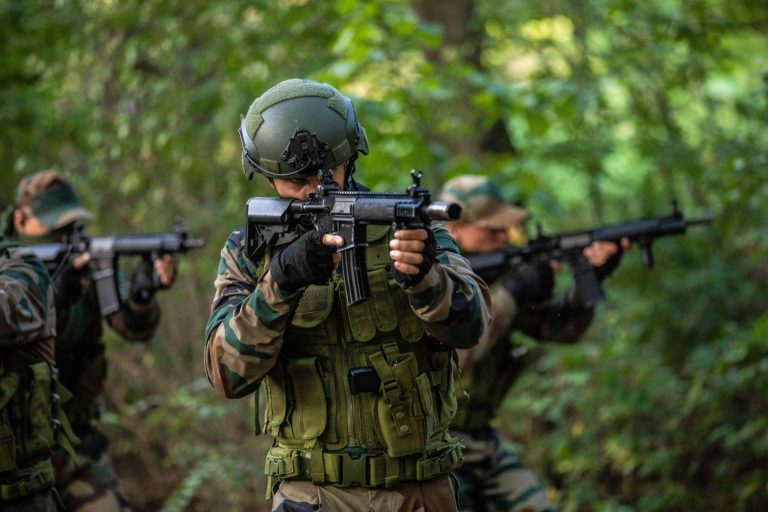
Incorporating the wedge formation provides a tactical advantage by offering the group a 360-degree observation and firing capability. The entire formation can engage targets both to the front and rear, with half the formation able to fire left and right while maintaining their structured arrangement. This versatile formation has proven effective in diverse environments, including open terrains, wooded areas with clear visibility between trees, city streets, hilly landscapes, and situations with limited visibility. As a general rule, in conditions of reduced visibility or when the terrain becomes more constricted, the distance between formation members is decreased. This distance can range from as little as five meters to fifteen or more, depending on the circumstances.

For survival scenarios, the wedge formation accommodates any number of members, and for larger groups, it is advisable to deploy two or more wedges with optimal spacing between them. This setup allows for strategic flexibility, especially if one wedge encounters threats, enabling others to provide cover while the formation maneuvers. It is crucial to practice these maneuvers beforehand, with paintball exercises serving as excellent training opportunities.

References for further reading:

“Leadership in War” by Andrew Roberts

“Small Unit Leadership: A Commonsense Approach” by Dandridge M. Malone

File Formation:

The file formation is specifically designed for use in restricted terrain and under conditions of reduced visibility. Members of the formation maintain the ability to observe and fire to the left or right but have limited capabilities to the front and rear. This formation is employed in dense woods or bushes, as well as in challenging conditions such as fog, snow, night, and extremely narrow city streets or alleys. The distance between formation members is generally based on line of sight.

While not considered an ideal combat formation, maneuvering out of the file formation has been executed when faced with enemy fire. Breaks in contact are common during reduced visibility, and tight control is essential, especially when navigating wooded areas at night. Even with meticulous control, breaks in contact between members are to be expected.

For visuals and a deeper understanding, a simple online search for “army file formation” can provide relevant images and insights.

References for further reading:

“Infantry in Battle” by George C. Marshall

“Military Leadership: In Pursuit of Excellence” by Robert L. Taylor

World War Water Banner1

Line Formation:

Deployed as an assault or search tactic, the line formation offers the advantage of concentrated firepower to the front or rear, though it lacks combat power to the left and right. This formation supports fire and movement or fire and maneuver strategies. A search for “army line formation” or “fire and maneuver” in your preferred search engine will yield illustrative materials.

Leaders typically control the line formation from the rear, ensuring that no part of the formation strays too far ahead or falls behind. As with any formation, regular practice enhances the group’s ability to execute these maneuvers effectively. It is crucial for individual members to avoid tunnel vision or target fixation and remain aware of their position within the formation. Group training exercises, including paintball scenarios and movement over varied terrain, contribute to honing these skills.

References for further reading:

“On Infantry” by John A. English

“Infantry Combat: The Rifle Platoon: An Interactive Exercise in Small-Unit Tactics and Leadership” by John F. Antal

Fire and Movement:

In this tactical approach, individual members of the formation execute brief advances, commonly referred to as short rushes, while being supported by their comrades. Alternatively, a section of the line may make a short rush while the non-rushing section provides cover. The effectiveness of this tactic can be hindered by varied terrain, including short rolling hills or raised ground, as it may lead to temporary loss of sight between the supporting and moving sections. This lapse in visibility can pose a risk of friendly fire casualties during live-fire exercises, a scenario that, regardless of the circumstances, is universally undesirable and unaffordable.

Fire and Maneuver:

A section of the line employs the fire and maneuver tactic by shifting left or right to advance on the enemy flank, with support from the rest of the line. This standard infantry tactic is adaptable to fields, hills, cities, and any terrain conducive to the formation’s use. However, the potential for disastrous friendly fire incidents exists if the maneuvering element loses sight and reappears in the impact zone of the supporting group members. While such incidents have occurred even in well-trained military units, it underscores the importance of precise execution.

Additionally, there are squad or unit overwatch and bounding overwatch tactics. In overwatch, part of the unit moves to a designated point while covered by the remaining overwatching section. Bounding overwatch employs either successive or alternate bounds, contingent on terrain and weapons capability. Exploring images of bounding overwatch online provides visual clarity. These tactics can be practiced effectively using paintballs. It’s essential to note that leadership is crucial in survival situations, requiring constant training and rehearsals, especially if radios are not available.

Maneuvering out of these formations can involve advancing or retreating from the enemy. A cautionary note is reiterated about engaging in prolonged fights due to ammunition concerns and casualties. Having members with combat arms experience is advised for the group’s benefit. If the formation includes a gathering party with carts and encounters enemy fire, the formation engages while ensuring the carts reach safety. The strategy shifts if the group needs to move towards the enemy, with cart-bearing members providing support from a safe distance based on the situation and terrain.

References for further reading:

“Infantry Attacks” by Erwin Rommel

“Small Wars Manual” by United States Marine Corps

Note: While there are countless resources on military tactics, the mentioned books provide foundational insights into infantry tactics and small unit maneuvers.

Recon Patrols:

recon patrol

In the realm of infantry, combat recon patrols serve the critical purpose of gathering intelligence on the enemy’s location, activities, capabilities, and intentions. In the context of a prolonged survival scenario marked by violence, the essence of recon patrols remains unchanged, albeit directed towards a different adversary—looters and raiders. These patrols are instrumental in assessing the safety or threat posed by an area or group of people. Engaging in recon or security patrols significantly reduces the likelihood of being caught off guard by looters or raiders, and the effectiveness of such patrols tends to increase with the size of the group.

Essential Requirements for Conducting a Successful Recon Patrol:

  • Know Your Route and Destination: Familiarize yourself with the route, destination, and necessary equipment for the mission.
  • Master Tactical Movement: Proficiency in executing effective tactical movements is paramount.
  • Move Stealthily as a Group and Individually: Develop the ability to move quietly both as a cohesive unit and as an individual.
  • Proficiency in Camouflage: Acquire the skills to effectively blend into the surroundings.
  • Observation Without Detection: Develop the capability to observe without being detected.
  • Covered Withdrawal if Detected: In case of detection, execute a covered withdrawal without becoming decisively engaged—an intricate task in certain situations.

A practical way to train for these skills is to engage with ex-military veterans in a paintball scenario. This approach allows for understanding the nuances of stealthy movement and observation without detection. Recognize that these requirements can change significantly with variations in terrain, and understanding personal physical limits is crucial. The transition from paintballs to bullets is highlighted, emphasizing that engagements with bullets yield permanent results.

Security Patrols:

banner 2s SOSSecurity patrols are instrumental in safeguarding your survival location, involving small groups of members venturing beyond the immediate area to assess potential threats from looters or raiders. These patrols strategically position themselves to monitor movement over a wide area, armed and prepared to confront any potential threats. When outside the survival location, members should carry seventy-two hours of survival and protective gear.

Key Requirements for Conducting a Successful Security Patrol:

  • Know Your Route and Destination: Prioritize knowledge of your route, destination, and required equipment.
  • Execute Tactical Small Group Moves: Ensure proficiency in small group movements where no one moves without cover.
  • Stealthy Movement as Individuals and Small Groups: Develop the capability to move quietly both individually and as a small group.
  • Hide and Observe Without Detection: Acquire skills in hiding and observing without being detected.
  • Escape if Detected Without Decisive Engagement: In the event of detection, have the ability to escape without becoming decisively engaged.

Security patrols, characterized by a smaller team, share training principles with recon patrols. Both are non-combat oriented, emphasizing the intent not to make any contact or be detected, a goal more achievable in rural areas compared to urban environments. It’s crucial to acknowledge that despite meticulous planning, looter or raider actions may override the original intent of the plan.

References for further reading:

“Bullet Proof Home” by Steve Walker

In the second part of this article I will discuss ambush and raiding tactics so stay tuned.

Suggested resources for survivalists:

Learning The Differences Between The Cover And Concealment Concepts

Find Out What’s the Closest Nuclear Bunker to Your Home

Small Vehicle Options For Hunting, Patrolling Your Property Or Bugging Out

The latest innovation in solar pannels – 3D technology
Price of gasoline

0

Here in north Louisiana
$3.89.9 gal—–$3.99.9 gal gasoline
$4.53.9 gal—-$4.89.9 gal diesel
we are in for some bad times

Secret Service Agent opens fire in Georgetown

0


  1. Seawolf1090
    Retired Curmudgeonly IT Monkey
    Founding Member

    Sounds like that agent is a “loose cannon” causing some major liability concerns.


  2. Yeah, I saw this so what is the real story here? I mean, they start shooting upon seeing a pair of thieves breaking into a car? Geez peas! What about ‘Use of Deadly Force’ etc… this would put you in jail here even in North Idaho!


  3. I thought this stunk too.


survivalmonkey SSL seal


survivalmonkey.com warrant canary

Jacob Chansley Throws His Buffalo Hat Into The 2024 US Congressional Election Ring

0

US Air Force’s Sentinel missile ‘struggling,’ faces rising costs

0

WASHINGTON — One of the U.S. Air Force’s nuclear missile programs is “struggling” and could see costs rise, the service’s secretary said Monday.

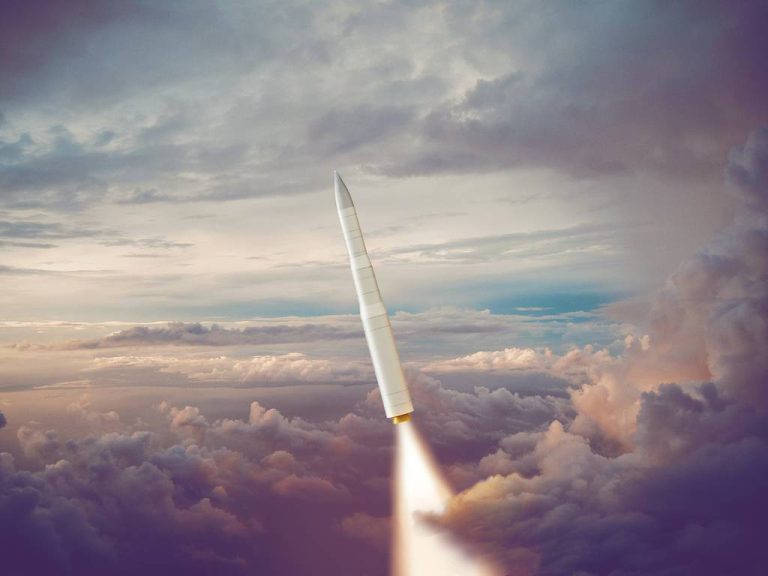
Frank Kendall, speaking at an online event hosted by the Center for a New American Security think tank, said he is “more nervous” about the LGM-35A Sentinel intercontinental ballistic missile than the B-21 Raider stealth bomber. The twin efforts to upgrade the Air Force’s legs of the nuclear triad — both of which are run by Northrop Grumman — are programs that “cannot fail,” he said.

Kendall declined to go into detail about the problems facing Sentinel, citing his recusal from making decisions on the program. Kendall stepped back from the Sentinel and B-21 programs when he became secretary due to his previous consulting work with Northrop.

But the vast scope of the Sentinel program — which includes real estate development; civil engineering; the creation of both communications and command-and-control infrastructure; and the production of the missile itself — has proved challenging, he said.

“Sentinel is one of the most large, complex programs I’ve ever seen,” Kendall said. “It’s probably the biggest thing, in some ways, that the Air Force has ever taken on.”

The Air Force awarded Northrop a $13.3 billion contract in 2020 to develop the Sentinel program — then referred to as the Ground Based Strategic Deterrent, or GBSD — to succeed the LGM-30G Minuteman III, which first deployed a half-century earlier. Sentinel is expected to cost roughly $100 billion in total.

But in the early stages of the program, Kendall said, there was a great deal of uncertainty, particularly on costs. Part of that uncertainty stemmed from the multiple decades that had elapsed since the Minuteman was created.

Kendall said “unknown unknowns” are surfacing that the department will have to work through, including factors related to command-and-control infrastructure, such as the complexes that missileers would use to launch the Sentinel.

Kendall said some costs may rise in the process.

“As we get more into the program, as we understand more deeply what we’re actually going to have to do, we’re finding some things that are going to cost money,” Kendall said. “We’re trying to assess how much of an impact that’s going to have and what kind of adjustments we’re going to have to make because of it.”

The Government Accountability Office released a weapons assessment report in June outlining problems with Sentinel that would cause its rollout to slip from 2029 to sometime between April and June 2030.

GAO highlighted lingering staffing shortfalls, supply chain issues and software challenges.

The Minuteman III program that Sentinel will succeed includes 400 missiles in 450 silos across nearly 32,000 square miles.

Kendall added he is “cautiously optimistic” about the B-21 program. The first Raider carried out its long-awaited first flight on Nov. 10, and Kendall said it has “got a ways to go on the flight testing.”

The B-21 experienced “minor slips internally,” Kendall said, but has for the most part followed the plan he and William LaPlante, now undersecretary of Defense for acquisition and sustainment, put together during their previous tenures in the Pentagon during the Obama administration.

At the time, Kendall was undersecretary of defense for acquisition, technology and logistics, and LaPlante served as assistant secretary of the Air Force for acquisition, technology and logistics.

Stephen Losey is the air warfare reporter for Defense News. He previously covered leadership and personnel issues at Air Force Times, and the Pentagon, special operations and air warfare at Military.com. He has traveled to the Middle East to cover U.S. Air Force operations.

Commercial tanker refuels US Air Force fighters for Singapore exercise

0

WASHINGTON — The U.S. Air Force conducted its first aerial refueling of fighter aircraft by a commercial tanker on Nov. 6.

The commercial refueling of F-16 Fighting Falcons from Osan Air Base in South Korea took place as part of the Commando Sling 23 joint exercise conducted in Singapore. The bilateral training event with the Republic of Singapore Air Force is sponsored by Pacific Air Forces and is intended to improve how the island nation operates with the United States.

This aerial refueling marked a major step forward for the U.S. Air Force’s efforts to broaden this capability. The service has considered augmenting its refueling operations with commercial tankers for several years. Earlier this year, a commercial tanker refueled an E-3 Sentry and an RC-135 Rivet Joint during an Air Combat Command exercise, the service said in a Nov. 9 release.

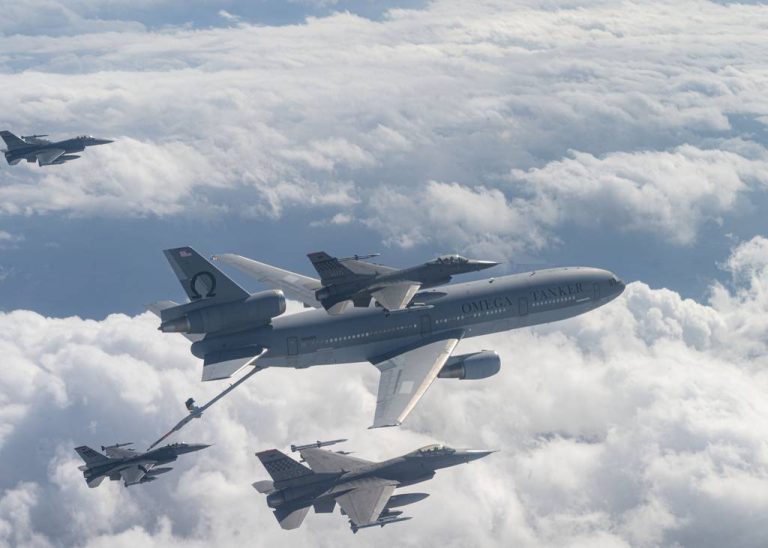
This month’s refueling during Commando Sling was carried out by a KDC-10 aircraft, the service said, and photographs showed the tanker bore the markings of Omega Air Refueling. The Virginia-based company, which formed in 2004, has been a prime contractor to the U.S. Navy for commercial refueling services since 2007. It has also supported the air forces of U.S. allies such as Australia and NATO nations.

Lt. Col. Curtis Holtman, the air mobility operations chief for Pacific Air Forces, said this refueling served as a “proof of concept” to show a commercial tanker can gas up the Air Force’s fighters during exercises and training, while keeping its own tankers available for real-world operations.

“If we can use commercial air refueling to cover the point A to point B movements for exercise participation across unit readiness training, then it frees up our warfighter tanker fleet to be ready to respond for emerging contingency requirements,” Holtman said. “This is another mechanism that we can leverage to increase our warfighter readiness.”

Photographs showed at least four F-16 jets from Osan’s 36th Fighter Squadron flying alongside the Omega tanker on their way to Singapore. The KDC-10 can carry up to 247,000 pounds of fuel to gas up other aircraft.

Holtman said this tanker carried more than 40 passengers and four pallet positions worth of cargo to show how it can also execute airlift missions. The KDC-10 can carry up to 100,000 pounds of freight or passengers.

Holtman said commercial tankers are expected to also refuel F-15C Eagle and F-22 Raptor fighters by the time the exercise ends.

Stephen Losey is the air warfare reporter for Defense News. He previously covered leadership and personnel issues at Air Force Times, and the Pentagon, special operations and air warfare at Military.com. He has traveled to the Middle East to cover U.S. Air Force operations.

Commercial tankers refuel US Air Force fighters for Singapore exercise

0

WASHINGTON — The U.S. Air Force conducted its first aerial refueling of fighter aircraft by a commercial tanker on Nov. 6.

The commercial refueling of F-16 Fighting Falcons from Osan Air Base in South Korea took place as part of the Commando Sling 23 joint exercise conducted in Singapore. The bilateral training event with the Republic of Singapore Air Force is sponsored by Pacific Air Forces and is intended to improve how the island nation operates with the United States.

This aerial refueling marked a major step forward for the U.S. Air Force’s efforts to broaden this capability. The service has considered augmenting its refueling operations with commercial tankers for several years. Earlier this year, a commercial tanker refueled an E-3 Sentry and an RC-135 Rivet Joint during an Air Combat Command exercise, the service said in a Nov. 9 release.

This month’s refueling during Commando Sling was carried out by a KDC-10 aircraft, the service said, and photographs showed the tanker bore the markings of Omega Air Refueling. The Virginia-based company, which formed in 2004, has been a prime contractor to the U.S. Navy for commercial refueling services since 2007. It has also supported the air forces of U.S. allies such as Australia and NATO nations.

Lt. Col. Curtis Holtman, the air mobility operations chief for Pacific Air Forces, said this refueling served as a “proof of concept” to show a commercial tanker can gas up the Air Force’s fighters during exercises and training, while keeping its own tankers available for real-world operations.

“If we can use commercial air refueling to cover the point A to point B movements for exercise participation across unit readiness training, then it frees up our warfighter tanker fleet to be ready to respond for emerging contingency requirements,” Holtman said. “This is another mechanism that we can leverage to increase our warfighter readiness.”

Photographs showed at least four F-16 jets from Osan’s 36th Fighter Squadron flying alongside the Omega tanker on their way to Singapore. The KDC-10 can carry up to 247,000 pounds of fuel to gas up other aircraft.

Holtman said this tanker carried more than 40 passengers and four pallet positions worth of cargo to show how it can also execute airlift missions. The KDC-10 can carry up to 100,000 pounds of freight or passengers.

Holtman said commercial tankers are expected to also refuel F-15C Eagle and F-22 Raptor fighters by the time the exercise ends.

Stephen Losey is the air warfare reporter for Defense News. He previously covered leadership and personnel issues at Air Force Times, and the Pentagon, special operations and air warfare at Military.com. He has traveled to the Middle East to cover U.S. Air Force operations.