Brushbeater Scout & RECCE Course Review

0

Cry Malort and let slip the dogs of war!!!

October Scout & RECCE Course Review

What a great time out in North Carolina this past week, A huge thank you to NC Scout, and his excellent OPFOR Team, for hosting such excellent courses. I have been trying to get out to the Scout and RECCE Courses for quite some time, and along with a couple friends, was finally able to do so. I have attended several of NC Scouts Courses, including RTO, SigInt, and Fighting Carbine, and his teaching style is one of the reasons why I come back. The other is the caliber of attendees that attend.

This course was no exception, great Americans with ages running from late teens to mid 60’s and everything in between. Experience also covered a broad spectrum, from total newbies to experienced former Servicemen. All were helpful and respectful to one another and by the end of the Scout course, a sense of Camaraderie was felt across the board. The choice of gear among attendees was also diverse, and every budget was covered, so don’t make the mistake of thinking you can’t go because you don’t have all the tacticool stuff.

My goal was to simply use what I had assembled over the years and not buy anything just because I was taking a course. That of course is the opposite that I normally do, but I am glad I did. I was able to see first hand what seems to work better than others. Camouflage, was one of those big take-a way’s, more on that later.

Day one – Guerrilla Sniper School

Being a Rifle Instructor for two decades, I enjoy adding tools to my tool box via taking additional marksmanship training when I get a chance. Sometimes you get some great ideas, sometimes you don’t, but this was worth the price of admission. After zeroing at the 25M line using the standard USGI M16/M4 Zeroing Target, he walked us back to 50, then to 100yd, still using that small zeroing silhouette in order to emphasize “Aim Small, Miss Small”. When you use a target that is much smaller than you would at 100 yards, you notice how much smaller your group is compared to using a standard 100yd target. It’s a natural confidence builder. After that, we hit his KD range, that has IPSC style steel targets staggered out at 100, 200, 300, and 400 yards. We shot individually and then as a team. Everybody walked away with far more confidence in their shooting abilities and more knowledge of their chosen rifle/ammo combination.

The next two days and nights were all about instilling the knowledge and skills needed to plan and execute a patrol and conduct ambushes. The camouflage and concealment techniques portion was an eye opener for me, and seeing the vast variety of camo patterns in the woods (day and night) really changed my view point on the matter. I went the no camo route wearing medium brown pants and shirt with a Desert MARPAT boonie hat along with a inexpensive sniper veil. For me, my favorite camo pattern, Woodland MARPAT, was the easiest for me to spot in the NC woods, because it was dark. Others running lighter camo patterns, like Multicam, were harder to spot. We also all had the opportunity to use Thermals to spot a team hiding in the woods. Scope glass was the easiest to spot for me using the thermals, but I was scanning too fast. Others scanned slower, and more methodically, and were able to spot more of the “enemy”.

Patrolling and conducting a raid at night was an interesting challenge, having “City Eyes” and no moon to help with illuminating the property that I knew nothing about. But the vast majority of the 20 + attendees did not have night vision or thermals, so I was not alone. We learned a lot during our first night operation, especially because we had to do it twice! NC Scout puts it simple, “You paid to learn a skill, your not finished until you learn it”, and learn it we did. The second attempt, while not perfect, was much improved, and was made more interesting because of NC Scout shaking up the leadership roles and scrambling up the teams. We were then forced to work with folks we really didn’t know yet, but from there on out we all felt like old friends.

Day 4, RECCE Begins… The Scout course built a foundation, that the RECCE course continued to build on. The amount of information was made manageable by the teaching style. Your not trying to sip water out of a firehose with NC Scout, he gives you the info you need, in the order you need it, so it all makes sense and you can retain it. The remainder of the course bounced between classroom and field exercises where you put your new knowledge to the test, with the last exercise, raiding two targets simultaneously.

From battle drills, to setting up communications, conducting raids and ambushes, exploiting the material gained during the raids, and getting of the X in under 7 minutes, etc etc…. The amount of knowledge and skills gained was immense for a regular Civilian such as myself.

If you have been going back and forth about attending, make it happen, it is more than worth it. I’m mid 50’s with an anti social hip and crappy knees, and despite every inch of the North Carolina Camp being up hill in every direction, I made it with a bit of ibuprofen and a desire to learn more the next day. Folks 10 years my senior also had no issue getting through the whole week, and we all slept very well every night. Keep it simple your first go around and simply bring what is on the recommended items list, don’t worry about high tech, low tech works fine and in some ways maybe better. If you are lucky to be in a group of like minded friends, try to bring them with. If cost is an issue, work together and send the best note taker among you, so they can bring back the wealth of information, so that you can recreate it in your home AO and learn. NC Scout is all about Train the Trainer!

Quit making excuses and get out and train, so that you can help train others!

Training Courses

Garand69


Emergency or Backup heating

0

With the cold weather approaching, I thought about my heat sources. I have a heat pump, but I don't want to burn generator fuel running it should we lose power. Then I have a Big Buddy with 6 20# tanks in reserve. Now I'm considering building an outdoor woodstove for heat and hot water, but I can promise you after growing up filling the woodbox every day, there is no one here that hates dealing with firewood any worse than I do.
For fun, imagine your primary heat source inoperable, either…

Emergency or Backup heating

Steve Kirsch Makes Major Announcement: New Zealand Covid Whistleblower Biggest Bombshell Yet!

0

So funny!

Look at Steve Kirsch’s wikipedia page today, then compare it to his wikipedia page from 2019 (before he started speaking out about the COVID vaccine fraud):

Steve Kirsch – Wikipedia

Steve Kirsch – Wikipedia

Little bit of a different tone? They completely deleted the fact that he made FrameMaker, which is HUGE. Wow. Wikipedia loves to change history.

The guy has a freaking auditorium at MIT named after him! At least, today he does. I’m sure they’re hard at work on that one.


Hunters by the numbers

0

https://stacker.com/your-state/states-most-registered-hunters#1

I wouldn't count 100% on bugging out and eating what one kills

Political Christmas Wish List

0

I am writing my federal Senators and Congressmen giving them my 5 political wishes and I thought I would ask my fellow monkeys. So, you get 3 wishes, as I already got the first 2… What are your 3 political Christmas wishes and I will add the most wanted to my list?

1. Balanced Budget Amendment (to dream the impossible dream)
2. Term Limits Amendment (they did it for the Presidency so obviously this can be done)

A Few Tips For Bugging-Out In Winter

0

Ever wondered about how your family’s journey could be affected if you had to bug out in winter? Winter weather needs a bit of different planning compared to our usual summer trips. If you don’t put enough thought, resources, and strategy into it, your bug out trip might turn into a disaster instead of leading you to a safer place.

Navigating the roads during winter is a reality for many, and it can go south quickly, especially if you’re not accustomed to or ready for such situations. Reflecting on some lessons from my past camping experiences, I thought I’d share some simple tips to keep warm and safely reach your destination when bugging out in winter. And speaking of bugging-out in winter, being prepared for the cold is just the beginning.

Get it Right from the Start

There’s a saying that goes, “failing to plan is planning to fail,” and it holds true, especially when it comes to bugging out in winter. Having a solid bug out plan is crucial because there are countless factors to consider, and time or stress can easily lead to overlooking important details.

Another critical aspect is that you might not always have the luxury of time to carefully prepare and load your bug out vehicles. You might find yourself fleeing with just the clothes on your back. While we hope for the best, some of the items mentioned below can help ensure your vehicle is ready for bugging out in winter.

Making sure all the essentials are in check before leaving your home can make all the difference between a successful trip and a potential disaster. What should you think about before hitting the road? It’s essential to figure this out now, before the possibility of leaving in the middle of the night in harsh winter weather becomes a reality. And speaking of bugging out in winter, early preparation is key.

Know where are you going when you are bugging out in winter

Before delving into the nitty-gritty of planning your bug out trip, take a thoughtful pause to consider the specifics of your destination while packing your supplies. Are you bound for a remote, isolated area, or is your destination closer to civilization?

Another critical factor to ponder is the anticipated weather conditions—will your bug out location be blanketed in snow or encased in ice? It might seem like common sense, but these considerations carry significant weight because your needs and preparations will vastly differ based on whether you’re positioning yourself amidst a bustling community or embarking on the solitary journey down the Moab Road, hundreds of miles away from any semblance of civilization.

The intricacies of your preparation become even more pronounced when contemplating bugging out in winter. The chilling temperatures, potential snow-covered landscapes, and the isolation of your chosen path can significantly impact the supplies and gear you need to ensure a successful and safe journey. So, take the time to assess the unique characteristics of your bug out destination before setting out, especially when winter conditions add an extra layer of complexity to your planning.

Consider the Environment: Fueling Your Fire for Survival

Think about your surroundings—are you in an area where you can gather materials for a fire? Is it a forest or a desert landscape? Assess the shelter options available to you.

Will you be camping under the open sky or finding refuge in a home with operational utilities?

Have weather conditions been relentless, with two weeks of non-stop rain or snow, potentially rendering all available materials drenched or buried?

The practicalities of your fire plan extend further. Do you anticipate needing to transport a week’s worth of firewood, or should you equip yourself with, at the very least, a hand saw or chainsaw for on-site harvesting?

Once your firewood strategy is in place, consider the importance of redundancy—do you have multiple foolproof methods for starting a fire?

A personal anecdote might drive this point home: during a camping trip last January, with temperatures plummeting to 17 degrees, everyone huddled closely to the fire for warmth, emphasizing the critical role of fire-making in winter survival scenarios. So, in contemplating your bug out plan, factor in not just the need for fire but the diverse means to ignite it, especially when bugging out in winter.

Weather Wisdom: Dressing Right and Forecasting Smart

Start your bug out preparations by ensuring you have an accurate weather forecast. With the abundance of weather apps available today, obtaining a reasonable forecast for your destination should be a breeze. However, it’s crucial to plan based on the weather at your intended location, not the comfort of your home. The variation in weather conditions over just a few dozen miles is noteworthy.

Equally important is the attire you choose. Dress for walking, not merely for riding in a vehicle. Anticipate the possibility of having to travel on foot, and make sure your attire is suitable for such a scenario. Imagine being forced to navigate on foot, and you certainly wouldn’t want your kids donned in pajamas and slippers.

This has been a lesson my nephews have heard from me for years—leaving the house dressed appropriately for the weather is a non-negotiable part of being prepared. So, when plotting your bug out strategy, don’t overlook the significance of accurate weather forecasts and the practicality of dressing right, particularly in the context of bugging out in winter.

Navigational Savvy: Charting Alternate Paths for Your Bug Out

When gearing up for remote journeys, standard driving directions won’t cut it. It’s not just about reaching your destination; it’s about having a backup plan in case your primary route hits a roadblock—be it due to weather, accidents, or intentional roadblocks obstructing town entry. What if a fallen tree obstructs your way?

Consider this: the route you took in might not be viable for the return journey, especially if the roads are frozen and the risk of sliding down a mountain is too great. In such cases, forest service roads could serve as a safer alternative to lead you back to safety.

To ensure your navigation is foolproof, it’s wise to rely on both paper maps and a robust GPS-enabled backup like Gaia Maps. If you opt for Gaia, make sure to download the maps onto your device before venturing beyond the pavement. Personally, I’ve prepped by downloading comprehensive state maps, complete with multiple layers displaying public land and MVUM.

And let’s not forget about the company you’re keeping during this bug out adventure. If you’re traveling with individuals you don’t know well, which can be the case on certain trips, it’s crucial to ensure everyone is as prepared as you are.

Travelling with unfamiliar faces warrants a bit of extra caution and communication to guarantee a smooth journey, especially when considering the nuances of bugging out in winter.

ss banner

Vehicle Readiness: More Than Just Winter Survival Gear

Ensuring your vehicle is winter-ready involves more than just stocking basic survival gear; we’ve even dedicated an entire article to crafting the perfect winter emergency vehicle kit. However, when it comes to bugging out, additional considerations come into play.

Recovery Gear is paramount. Imagine a scenario where a group struggles to extract a vehicle from the snow, only to realize they lack a proper tow rope, leading to potentially disastrous consequences. Don’t find yourself in a similar situation—equip your vehicle with a solid recovery kit, as something as simple as a tow rope could make all the difference.

Fuel is a critical concern, especially before venturing away from civilization. Maintaining at least half a tank of fuel is a good rule of thumb. For bug out locations spanning hundreds of miles, a refueling plan becomes essential, as you can’t rely on gas stations being operational.

Consider the vital role of Maintenance/Fluids. While regularly serviced vehicles may only need a quick check, more extreme trips call for backup fluids in case of unexpected breakdowns. Don’t overlook windshield washing fluid, especially the antifreeze variant, which becomes crucial in colder climates.

Tire readiness is often underestimated. Assess whether your tires are equipped to handle the expected terrain or weather conditions. Depending on your journey, you might need all-season tires, snow tires, or even tire chains—items that should find their way onto your comprehensive packing list. Your vehicle’s preparedness is a cornerstone of successful bug outs, especially when navigating winter challenges.

Dress Smart: Winter Apparel Essentials for Bug Out Success

Selecting the right clothing is a critical aspect of bug out planning, and having versatile layers suitable for all activities can be a game-changer. When bugging out by vehicle, you generally have more space to pack essential items compared to being on foot. A cautionary tale from a scenario depicted involved a character who had to leave in haste and lacked a winter coat—a potentially deadly oversight that emphasizes the importance of adequate clothing.

Drawing from personal experience, I once went camping with what I thought was sufficient warm clothing—four layers, to be precise. However, I found myself still chilly, prompting a return to the truck for an additional and different set that finally provided the needed warmth. This underscores the necessity of being prepared with appropriate layers, especially in unpredictable winter conditions.

Planning for your entire party is crucial, particularly if you’re with individuals who might not instinctively consider the cold. I’ve often had to insist that my nephews layer up for outdoor activities, as they tend to leave the house with just a t-shirt and jacket. Ensuring everyone is equipped with the right clothing layers is fundamental to a successful bug out.

Don’t overlook the importance of spare clothing, especially in winter. Socks and shirts can become sweaty, and without dry replacements, warming up becomes a significant challenge. Avoid layers of cotton; opt for wool, a superior insulator that retains heat even when wet.

Accessories like gloves, hats, and sunglasses are often forgotten but can be crucial. Cold hands make tasks difficult, so invest in good gloves and hats that retain heat. Sunglasses aren’t just for the sun; they come in handy in snowy conditions as well.

When it comes to boots and socks, prioritize warm, sturdy footwear designed to withstand the elements. Wool socks outperform cotton, providing better insulation and comfort. Paying attention to these clothing considerations is indispensable for a successful bug out, especially when confronting the challenges of winter.

Keeping Cozy in Winter Bug Outs: Essential Tips

buddy heater

In the realm of winter bug outs, staying warm is a non-negotiable priority, and key considerations revolve around your sleeping arrangements and sustenance.

Firstly, investing in a well-rated sleeping bag is crucial. It serves as your last line of defense in survival situations, so opting for a bag rated well below the forecasted weather is a wise move. Personally, I’ve found success with a military sleep system—an inner sleeping bag within another, both enclosed in a waterproof shell. This combination kept me warm in 17-degree temperatures. It’s essential to note that sleeping bags vary widely in cost, and you don’t have to break the bank; diligent research and reading reviews can help you find a reasonably priced option without compromising comfort.

For those bugging out in winter or engaging in vehicle-dependent travel, a Buddy Heater is a popular accessory. This propane heater can be brought into your tent, elevating the comfort of your sleeping quarters. Safety features, such as automatic shut-off in case of tipping or low oxygen levels, add an extra layer of reassurance. I haven personally tried one in a tent and I consider this to be an crucial comfort item when it comes to winter camping.

Consider the value of survival blankets, particularly Mylar bags. These budget-friendly yet highly effective gear pieces trap body heat, providing a reliable means to keep warm. If someone is experiencing extreme cold, placing them in one of these bags prevents body heat from escaping. An upgraded option is a Bivvy sack, offering enhanced durability.

In terms of sustenance, prioritize high-calorie foods, especially in winter conditions. While overlanders often enjoy hearty meals, winter demands a focus on calorically dense options that generate warmth and provide essential energy. Think hot stews over salads in a winter survival situation.

By integrating these strategies into your winter bug out plan, you can ensure that staying warm is a manageable and effective part of your overall survival strategy.

Connecting in Crisis: Navigating Communication Challenges

Communication is often a lifeline in emergency situations, and the reliability of our cell phones isn’t something we should take for granted. It’s crucial to assess whether you’ll have service at your bug out destination. Traditional prepper communication options include CB, FRS, GMRS radio, and Ham radio. However, it’s vital to understand their limitations and choose the best fit for your needs.

When it comes to long-distance communication, Ham radio emerges as the standout option. If you’re bugging out, having a reliable means to communicate over significant distances is essential. While CB, FRS, and GMRS radios have limited ranges, having any of these can still serve as a vital link to others in case of an emergency. In such scenarios, your concern may extend beyond communicating within your group to reaching out to external parties for assistance.

When crafting your bug out plan, carefully consider your communication strategy. Assess the capabilities and limitations of each radio option, and choose one that aligns with your specific needs and the potential challenges you might face. By doing so, you’ll enhance your overall preparedness and ensure that you have a reliable means to connect with others during critical times.

Concluding

Navigating the intricacies of winter bug-outs requires meticulous planning across various fronts. From clothing layers to communication tools, every detail plays a pivotal role in ensuring a safe journey. Key considerations encompass vehicle readiness, strategic navigation, and the art of staying warm amidst the winter chill.

In the symphony of survival, foresight becomes our guiding light. Winter bug-outs, with their unique challenges, necessitate a delicate balance of anticipation and adaptability. Armed with comprehensive preparations, bugging out in winter transforms from a daunting challenge into a manageable feat—a testament to our readiness in the face of the unknown.

LostWaysB3Recommended resources:

Securing the best wood for fire and shelter

The #1 food of Americans during the Great Depression

How to create a proper winter shelter

How To Build The Invisible Root Cellar

Anduril reveals Roadrunner drone, mum on first US customer

0

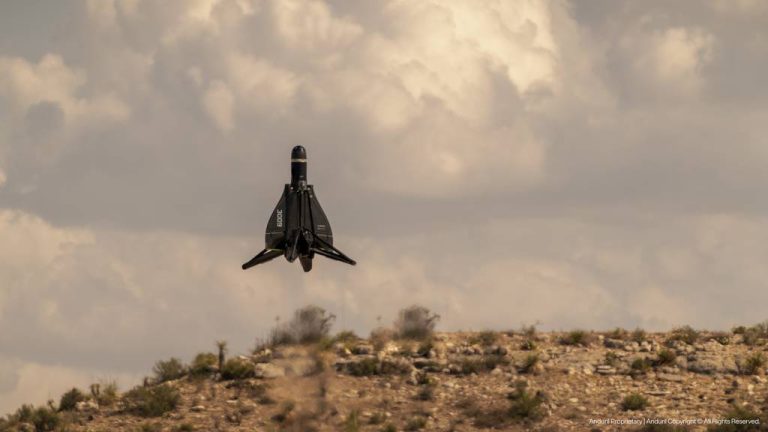
WASHINGTON — Anduril Industries unveiled its latest autonomous system, Roadrunner — a reusable aircraft that can carry a range of payloads, takeoff vertically and intercept and destroy airborne threats.

The California-based technology firm revealed two variants of the system Dec. 1. The baseline Roadrunner can quickly launch and fly at high subsonic speeds and its payloads can be reconfigured for a variety of missions.

Roadrunner-M is a munitions version of the system designed to protect against uncrewed aerial system threats. The company says the vehicle can rapidly locate, track and disable adversary systems and its interceptors can be recovered, refueled and reused if they’re not deployed.

“Instead of having to fire multiple interceptors at one threat, you can now deploy multiple interceptors to go out and loiter, to gather additional intelligence, to be on site in a timely way in the case that you actually want to employ them,” Chief of Strategy Chris Brose told reporters Nov. 28.

Palmer Luckey, founder of Anduril , told reporters during the same embargoed briefing the company has been designing, building and demonstrating the Roadrunner systems with its own funding for two years and is about to begin low-rate production through a contract with a U.S. customer.

Luckey declined to disclose the customer, but said the initial order is for “hundreds of units” and he expects the company will quickly scale into the hundreds of thousands. Brose noted that the U.S. government has been closely watching the effort and Roadrunner has demonstrated operational utility through a rigorous flight test program.

“One of our main motivations as a company has been to prove it and then talk about it,” Brose said. “I think we’re at the beginning of that conversation on Roadrunner.”

The use of uncrewed aircraft systems on the battlefield has expanded in recent years and the Defense Department is working to both leverage the potential of swarming drones in its own arsenal and counter increased threats from adversaries.

The Pentagon established the Joint Counter-Unmanned Aircraft Systems Office to develop a coordinated, long-term response to drone threats in 2019, and in August, Deputy Defense Secretary Kathleen Hicks revealed a new DoD initiative called Replicator to field thousands of autonomous systems over the next two years.

Brose said Roadrunner was designed with both of those challenges in mind.

“We’re very hopeful that the government will see in this capability what we see in it, which is a novel solution that is built to be adaptable to where those threats are going in the near future – which, by the way, has been a process that’s been playing out over the past few years, and it’s just going to get worse,” he said.

Counter-drone systems

Fielding capabilities such as drones and other high-need systems in larger quantities is a “critical challenge,” for DoD right now, Brose said, but he’s hopeful the department is serious about funding large-scale production efforts.

“Our belief and our hope is that this is an opportunity to really produce this capability at scale, which is something we are absolutely capable of doing,” he said.

On cost, Luckey said a single Roadrunner is “in the low hundreds of thousands of dollars,” but the company expects that to drop as it produces the systems at a higher rate.

“The more of these we make, the cheaper they get,” he said, adding that the company’s decision to build its own turbojet engines rather than work with another supplier will help it control cost and performance moving forward.

Brose noted that while Roadrunner-M may cost more than other counter-drone systems, it can address a wider range of threats, making it a lower cost alternative to missiles like the Patriot, which cost about $4 million each.

“Roadrunner can come in and actually fill a gap in the market that is perhaps maybe a bit more exquisite and a bit more expensive than those low-end solutions, but it’s going to be an order of magnitude cheaper than a patriot missile,” he said. “That seems like a pretty good deal to us.”

Courtney Albon is C4ISRNET’s space and emerging technology reporter. She has covered the U.S. military since 2012, with a focus on the Air Force and Space Force. She has reported on some of the Defense Department’s most significant acquisition, budget and policy challenges.

Acorns made easy

0

Eating ACORNS : How to Forage, Store, & Cook Acorns – YouTube

High production values, easy to understand language. Focus – acorns are a vastly unused food source in the US these days.

Canada to buy Boeing-made Poseidons in $5.9 billion deal

0

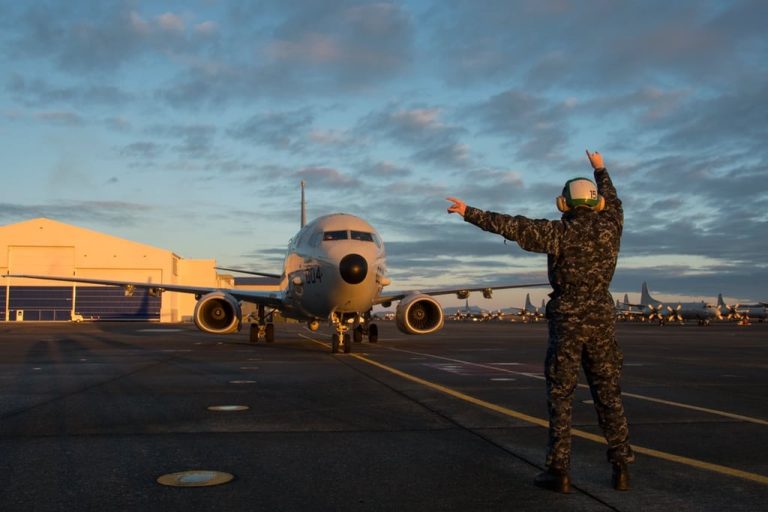
VICTORIA, British Columbia — The Canadian military will start receiving in 2026 Boeing-made P-8A Poseidons it is buying through a deal worth $5.9 billion.

Canadian cabinet ministers, including Defence Minister Bill Blair, made the official announcement Thursday, but defense observers had long expected it after Canada earlier this year requested from the U.S. pricing on the P-8.

Canada will initially acquire 14 of the planes with the option to buy two additional P-8s at a later date.

Blair said the aircraft should be all delivered by the fall of 2027 and the fleet fully operational by 2033.

The P-8A will replace Canada’s current maritime patrol aircraft, the CP-140 Aurora, which has been in service for more than 40 years.

Blair said Thursday during a news conference in Ottawa that it has become increasingly difficult for Canada’s military to maintain the CP-140 fleet because of its age. “It has reached its limit,” Blair said.

He noted the Boeing plane is a proven capability operated by Canada’s “Five Eyes” allies: the United States, United Kingdom, Australia and New Zealand. Blair said Canada did not want to take a risk and look at aircraft now under development.

There will be additional spending on new infrastructure, weapons and simulators for the P-8, he added.

Boeing will be expected to provide investment in Canadian industry equivalent to the value of the contract it is receiving, federal government officials said at a background briefing.

The Royal Canadian Air Force uses the CP-140 on operations around the world, including for hunting submarines and detecting security threats such as illegal fishing, drug trafficking, and polluters along the Canadian coastlines.

Blair noted Canada’s newly acquired CC-330 Husky refueling aircraft fleet will be able to refuel the P-8A.

He told reporters the P-8s will come as Canada is facing increasing threats, particularly in the Arctic. “We are seeing a more aggressive posture from our potential adversaries such as Russia and China,” he added.

The Canadian military had originally planned a competition starting in 2024 to replace the CP-140 Auroras. Bids were to have been submitted in 2027. Both Boeing, with its P-8, and Canadian firm Bombardier, with its special mission Global 6500 aircraft, were interested in competing.

But in a surprise move in March 2023, Canada requested pricing from the U.S. government for a fleet of 16 P-8s. Public Services and Procurement Canada, the federal contracting department, announced the P-8 was the only aircraft that could meet Canada’s needs.

In June, the State Department approved the sale to Canada of 16 P-8A aircraft and related equipment at an estimated cost of $5.9 billion.

That sparked a campaign of political lobbying by Bombardier and its partners, which include General Dynamics Mission Systems-Canada.

Boeing, in a news release Thursday, noted it has 81 Canadian-based suppliers contributing already to the P-8. In addition, it has partnerships with key Canadian firms such as CAE and Raytheon Canada, the firm said.

“The P-8 will bolster Canada’s defense capability and readiness, and we look forward to delivering this capability to the Royal Canadian Air Force,” Heidi Grant, president of business development for Boeing’s defense business, said in the news release. “Together with our Canadian partners, we will deliver a strong industrial and technological benefit package that guarantees continued prosperity to Canada’s aerospace and defense industry.”

David Pugliese is the Canada correspondent for Defense News.

Lawmakers urge Air Force to shift fighters to guard, reserve squadrons

0

WASHINGTON — A bipartisan group of lawmakers on Thursday urged the Air Force to temporarily shift some of its fighters from active-duty units to guard and reserve squadrons to maintain balance as the service retires older air frames.

The letter, which was signed by 16 senators and 27 representatives including Rep. John James, R-Mich., asks Air Force Secretary Frank Kendall to consider a concept called “fleet leveling” as a temporary solution to ensure the Air National Guard and Air Force Reserve does not lose some of its fighter squadrons or experience.

“Absent intervention, the ANG is slated to lose two fighter missions in the next [few] years or will be forced to continue operating with older models,” the lawmakers wrote.

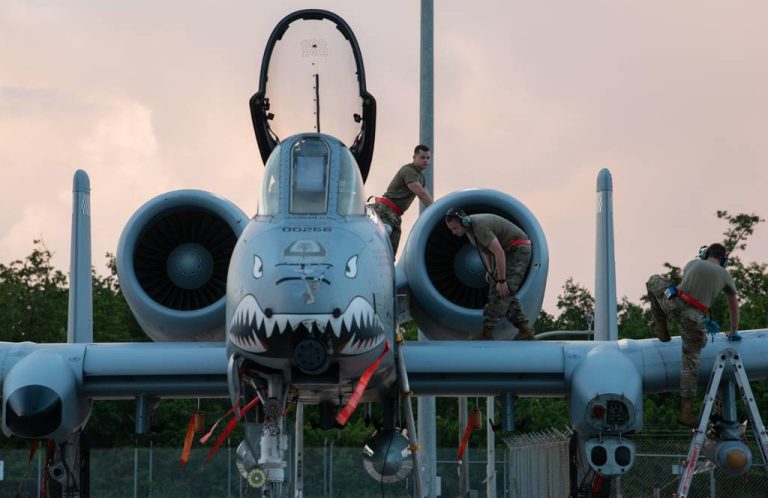
The Air Force is in the process of retiring its fleet of rugged but aging A-10 Warthog attack aircraft by the end of this decade. Two guard squadrons will lose their A-10s in the process — the 107th Fighter Squadron at Michigan’s Selfridge Air National Guard Base, which is in James’s district, in 2027 and the 104th Fighter Squadron at Maryland’s Warfield Air National Guard Base in 2025 — but the Air Force has not yet identified an aircraft to replace them. Many of the lawmakers who signed the letter represent states or districts that could be affected by the retirements.

If the Warthogs there retire before a replacement fighter is found, James and the other lawmakers worry the squadrons at Selfridge and Warfield would lose their missions and lead to a loss of experienced, “combat-proven,” and hard-to-replace pilots, maintainers and support personnel.

Other signatories to the letter include Reps. Steny Hoyer, D-Md., Don Bacon, R-Neb., Debbie Dingell, R-Mich., and Lisa McClain, R-Mich., as well as Sens. Cory Booker, D-N.J., Mike Crapo, R-Idaho, Ben Cardin, D-Md., and John Kennedy, R-La.

The Air Force has for years struggled to train and keep enough pilots and maintainers, and the lawmakers worry the problem could be exacerbated if these guard squadrons lose their Warthogs without a replacement mission. This would force the service to spend significant amounts of money and effort training replacements, they said.

“It takes more than a decade to produce an experienced fighter pilot,” they wrote. “Unlike the active component, closing [a guard or reserve] fighter squadron results in the permanent loss of hundreds of deeply experienced personnel. That experience, and the millions of taxpayer dollars invested to train them, are lost forever.”

Fleet leveling would be a “stopgap measure” to maintain the guard and reserves’ combat capacity while industry builds more fighters to replace the retiring jets, lawmakers said.

A temporary shift of fighters could also help reinforce other guard squadrons that fly older and outdated F-16s and F-15Cs, the lawmakers said.

“Should these pilots be called to service at the request of combatant commanders or our military at large, fleet leveling will ensure that these pilots are ready and able to answer the call,” they said.

Air National Guard director Lt. Gen. Michael Loh has also backed leveling the fighter fleet to strike a more even balance of jets across the service’s components. During a panel at the September 2022 Air Space Cyber conference hosted by the Air and Space Forces Association, Loh pointed out that the guard makes up 27% of the service’s fighter force, yet it has less than 7% of the service’s F-35s and less 11% of its F-22s.

“Right now, there’s huge pressure on the fighter fleet, and we’re at a capability and a capacity issue,” Loh said at the 2022 AFA. “How do we get after that? Level the fleet. … We’re sitting on A-10s, F-15Cs, [older] F-16s, both [the guard and reserve]. We need a strong, healthy recapitalization plan.”

Noah Sadler, a spokesman for James, said the congressman thinks Boeing-made F-15EX would be a good candidate to balance the fleet and is trying to bring those new jets to Selfridge.

An amendment to the House’s version of the 2024 National Defense Authorization Act, which was proposed by James in July, would require the Air Force to buy two more F-15EXs and send them to a guard base without a replacement for its retiring Warthogs. The Senate’s NDAA does not have a similar provision, but James hopes it will end up in the final version.

Stephen Losey is the air warfare reporter for Defense News. He previously covered leadership and personnel issues at Air Force Times, and the Pentagon, special operations and air warfare at Military.com. He has traveled to the Middle East to cover U.S. Air Force operations.