For RFI
(500,000 Lights: Family's Christmas Display Sets New World Record In Australia : The Two-Way : NPR)
40M is dead to me because of lunatics like this…..

For RFI
(500,000 Lights: Family's Christmas Display Sets New World Record In Australia : The Two-Way : NPR)
40M is dead to me because of lunatics like this…..
Practical Explanation ( For Example ) :- `1st of all can you tell me every single seconds detail from that time when you born ?? ( i need every seconds detail ?? that what- what you have thought and done on every single second )
can you tell me every single detail of your `1 cheapest Minute Or your whole hour, day, week, month, year or your whole life ??
if you are not able to tell me about this life then what proof do you have that you didn’t forget your past ? and that you will not forget this present life in the future ?
that is Fact that Supreme Lord Krishna exists but we posses no such intelligence to understand him.
there is also next life. and i already proved you that no scientist, no politician, no so-called intelligent man in this world is able to understand this Truth. cuz they are imagining. and you cannot imagine what is god, who is god, what is after life etc.
_______
for example :Your father existed before your birth. you cannot say that before your birth your father don,t exists.
So you have to ask from mother, “Who is my father?” And if she says, “This gentleman is your father,” then it is all right. It is easy.
Otherwise, if you makes research, “Who is my father?” go on searching for life; you’ll never find your father.
( now maybe…maybe you will say that i will search my father from D.N.A, or i will prove it by photo’s, or many other thing’s which i will get from my mother and prove it that who is my Real father.{ So you have to believe the authority. who is that authority ? she is your mother. you cannot claim of any photo’s, D.N.A or many other things without authority ( or ur mother ).
if you will show D.N.A, photo’s, and many other proofs from other women then your mother. then what is use of those proofs ??} )
same you have to follow real authority. “Whatever You have spoken, I accept it,” Then there is no difficulty. And You are accepted by Devala, Narada, Vyasa, and You are speaking Yourself, and later on, all the acaryas have accepted. Then I’ll follow.
I’ll have to follow great personalities. The same reason mother says, this gentleman is my father. That’s all. Finish business. Where is the necessity of making research? All authorities accept Krsna, the Supreme Personality of Godhead. You accept it; then your searching after God is finished.
Why should you waste your time?
_______
all that is you need is to hear from authority ( same like mother ). and i heard this truth from authority ” Srila Prabhupada ” he is my spiritual master.
im not talking these all things from my own.
___________
in this world no `1 can be Peace full. this is all along Fact.
cuz we all are suffering in this world 4 Problems which are Disease, Old age, Death, and Birth after Birth.
tell me are you really happy ?? you can,t be happy if you will ignore these 4 main problem. then still you will be Forced by Nature.
___________________
if you really want to be happy then follow these 6 Things which are No illicit s.ex, No g.ambling, No d.rugs ( No tea & coffee ), No meat-eating ( No onion & garlic’s )
5th thing is whatever you eat `1st offer it to Supreme Lord Krishna. ( if you know it what is Guru parama-para then offer them food not direct Supreme Lord Krishna )
and 6th ” Main Thing ” is you have to Chant ” hare krishna hare krishna krishna krishna hare hare hare rama hare rama rama rama hare hare “.
_______________________________
If your not able to follow these 4 things no illicit s.ex, no g.ambling, no d.rugs, no meat-eating then don,t worry but chanting of this holy name ( Hare Krishna Maha-Mantra ) is very-very and very important.
Chant ” hare krishna hare krishna krishna krishna hare hare hare rama hare rama rama rama hare hare ” and be happy.
if you still don,t believe on me then chant any other name for 5 Min’s and chant this holy name for 5 Min’s and you will see effect. i promise you it works And chanting at least 16 rounds ( each round of 108 beads ) of the Hare Krishna maha-mantra daily.
____________
Here is no Question of Holy Books quotes, Personal Experiences, Faith or Belief. i accept that Sometimes Faith is also Blind. Here is already Practical explanation which already proved that every`1 else in this world is nothing more then Busy Foolish and totally idiot.
_________________________
Source(s):
every `1 is already Blind in this world and if you will follow another Blind then you both will fall in hole. so try to follow that person who have Spiritual Eyes who can Guide you on Actual Right Path. ( my Authority & Guide is my Spiritual Master ” Srila Prabhupada ” )
_____________
if you want to see Actual Purpose of human life then see this link : ( triple w ( d . o . t ) asitis ( d . o . t ) c . o . m {Bookmark it })
read it complete. ( i promise only readers of this book that they { he/she } will get every single answer which they want to know about why im in this material world, who im, what will happen after this life, what is best thing which will make Human Life Perfect, and what is perfection of Human Life. ) purpose of human life is not to live like animal cuz every`1 at present time doing 4 thing which are sleeping, eating, s.ex & fear. purpose of human life is to become freed from Birth after birth, Old Age, Disease, and Death.

Jimmy Rawles is planning ahead to keep his blog going WHEN it gets wiped off the WWW >>>> The SurvivalBlog – Old School (S.O.S.) Newsletter
DISCUSS

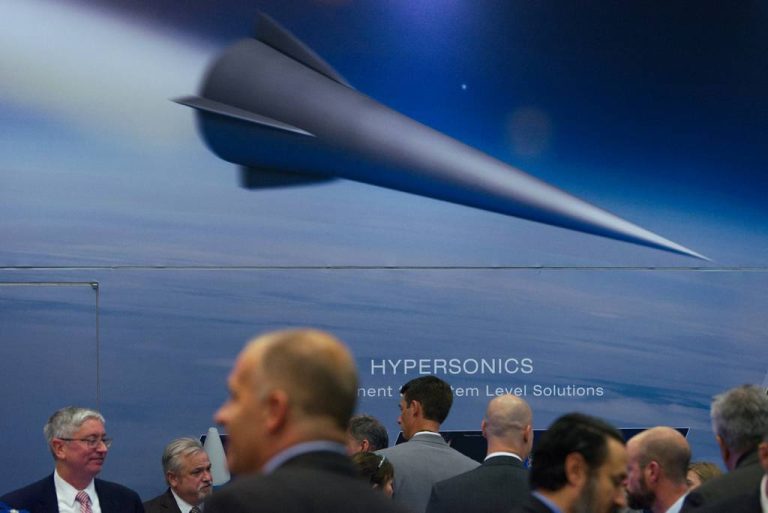
A key motivation driving the development of hypersonic weapons, which glide through the atmosphere at more than five times the speed of sound, is the desire to counter missile defenses. Evading terminal defense interceptors would allow these weapons to destroy missile- and air-defenses early in a conventional conflict, opening routes of attack for other weapons. It would also allow hypersonic weapons to pose a serious threat to ships.
A recent article, citing defense officials, warns that “Even the most advanced US warship in the South China Sea could be defenseless against a hypersonic attack.” In contrast, a March Pentagon press statement says that “Aegis ships equipped with the sea-based terminal [defense] capability can now engage some hypersonic threats.”
What’s the reality? With prospects of a hypersonic revolution pushing U.S. spending and strategy, it is important to understand what hypersonic weapons can and can’t do.
Our recent analysis of hypersonic weapons and hypersonic defense looks at the physics of missile interception and shows that in contrast to common claims, hypersonic weapons can be intercepted by existing terminal defenses.
The hypersonic weapons currently being developed by the US, Russia, and China for conventional uses have maximum speeds below about Mach 10-12. We show that the atmospheric drag on these weapons as they glide and dive to targets on the ground will slow them enough that they can be intercepted by defenses like advanced versions of the Army’s Patriot PAC-3 and the Navy’s Aegis SM-6.
This vulnerability was illustrated when Ukraine used PAC-3 to shoot down multiple incoming Russian Kinzhal missiles, despite their maneuvering flight at hypersonic speeds.
This means that ships are less vulnerable to hypersonic attack than is frequently claimed. Ship-based radars could detect approaching hypersonic weapons at distances of many hundreds of kilometers, which is more than adequate to fire interceptors at them. Ships with interceptors similar to advanced PAC-3 and SM-6 systems should therefore be able to defend themselves from the hypersonic weapons currently being developed.
This finding is supported by a Missile Defense Agency animation showing a carrier group using ship-based interceptors against hypersonic weapons. The video shows a ship-based interceptor like SM-6 engaging hypersonic weapons detected by the ship’s radar.
Developing faster hypersonic weapons could help a country evade current interceptors, but would raise new problems. Faster flight through the atmosphere would lead to much more intense heating of the vehicles, which remains the fundamental challenge in designing these weapons.
And at the same time, countries will be working to develop increasingly fast and maneuverable interceptors to engage the next generation of hypersonic weapons their adversaries might develop.
Our analysis also shows that hypersonic weapons’ ability to maneuver during their glide phase—around defended regions, for instance—is typically exaggerated and comes at a significant cost.
The very high speeds of these weapons means they require very large aerodynamic forces to turn. Generating these forces increases drag and can significantly reduce the speed and range of the weapon.
As an example, consider a Mach 10 weapon that turns by 30o to avoid overflying a particular location and then turns back by 30o to its original direction of flight. Under reasonable assumptions, the drag during this turn would reduce its speed from Mach 10 to about Mach 6 and reduce its total glide distance to less than 60% of the distance it could have flown with no turns.
Adding an engine, like a scramjet, could reduce the loss of speed and range during maneuvers, but adding an engine and fuel would increase the weapon’s size and mass, requiring a significantly bigger booster to launch it. Since scramjets are not a mature technology and operating them is notoriously complicated, powered hypersonic systems will likely be less reliable and more expensive than boost-glide weapons.
Ballistic missiles also fly at hypersonic speeds, and flying them on depressed trajectories can deliver missiles in equal or shorter times than hypersonic weapons, without the heating problems. Ballistic missiles delivering warheads that can maneuver in the atmosphere (using maneuverable reentry vehicles, or MaRVs) can use similar guidance technologies and have similar accuracy as hypersonic weapons. MaRVs can also use lift as they reenter the atmosphere to maneuver and re-target over hundreds of kilometers.
In general, MaRVs launched by ballistic missiles on depressed trajectories out-perform hypersonic weapons in many scenarios. A recent analysis by the Congressional Budget Office predicts they would be a third less expensive than hypersonic weapons.
The hypersonic arms race is likely to increase tensions and military spending internationally without enhancing national or global security. Hypersonic weapons do not live up to many of the grandiose claims about their performance, and there are better options for gaining the capabilities they do offer. The United States needs to take a more realistic view of these weapons and the billions of dollars it is spending on them.
David Wright is a visiting scholar in the Laboratory for Nuclear Security and Policy in the Department of Nuclear Science and Engineering at the Massachusetts Institute of Technology. He has a PhD in Physics.
Cameron Tracy is a research scholar in the Center for International Security and Cooperation, Freeman Spogli Institute for International Studies at Stanford University. He has a PhD in Materials Science and Engineering.

Hi, Everyone
If you’re reading the 26th book in the Schooled In Magic series, you probably already know the basics (but I’ve attached a recap below, for your pleasure). All you really need to know about this novel is that Emily will take on her first apprentice: Marah, whose first appearance was actually in Marah’s Tale – included as part of the Tales Of The Nameless World collection, which I will also forward to anyone interested.
If you are new to this series, you can start here – The Chrishanger
I’m going to try something new – in a sense – and write a number of chapters from Marah’s point of view; I’m also going to mess with a teaser shot from the prologue, then jump back in time a little (mainly to explore possibilities). Please tell me if you think they work.
The Marah POV chapters will be marked so, to avoid confusion.
All comments are welcome; spelling, grammar, continuity problems, moments of dunderheadedness, etc.
For various reasons, I may not be able to write the normal three chapters per day; I’ll be reduced to two. Christmas will also cut into my writing time, but I’ll do my best to proceed as fast as possible.
I’ve been working on expanding my list of ways for people to follow me. Please click on the link to sign up for my mailing list, newsletter and much – much – more.
Thank you
Chris
Schooled in Magic Recap
It is, of course, difficult to summarise twenty-four books (and six novellas) in a handful of pages, but I’ve tried to hit the high points.
Emily grew up in our world. Her mother was a drunkard. Her father a mystery. Her stepfather a leering man whose eyes followed her everywhere. By the time she turned sixteen, she knew her life would never get any better. She lost herself in studies of history, dreaming of a better world somewhere in the past. And then everything changed.
Shadye, a powerful necromancer on the Nameless World, wanted to kidnap a Child of Destiny to tip the war in his favour. He entrusted the task to sprites, transdimensional creatures with inhuman senses of humour, who yanked Emily out of her world and dumped her into Shadye’s prison cell. Unaware he’d made a dreadful mistake, Shadye proceeded to try to sacrifice Emily to dark gods in a bid to gain their favour. Emily would have died if she hadn’t been saved by Void, a sorcerer on the other side. Void took her to his tower, realised she had a talent for magic and arranged for her to study at Whitehall School.
Emily found herself torn between the joy of magic – she had something she was good at, for the first time in her voice – and the trials and tribulations of living in a very difficult world. Befriending a handful of people, including Imaiqah and Princess Alassa of Zangaria (and the older students Jade and Cat), Emily started introducing innovations from Earth to the Nameless World. Shadye, catching wind of how changes were starting to spread, assumed he’d been right all along about the Child of Destiny. Mounting an attack on Whitehall, Shadye nearly killed Emily before she managed to weaponise concepts from Earth to beat him.
That summer, she accompanied Princess Alassa to Zangaria and discovered her changes were not only spreading, but unleashing a whole new industrial revolution. This didn’t sit well with many of the local aristocrats, including King Randor – Alassa’s father – and a number of his courtiers. The latter mounted a coup, determined to take control for themselves before the commoners got any more ideas. Emily helped Alassa to retake control, at the price of seriously worrying King Randor. He had to reward her, by giving her the Barony of Cockatrice, but he feared her impact on the kingdom. The seeds were sown for later conflict as the king’s concerns started to grow into outright paranoia.
Emily’s second year at Whitehall was just as eventful as the first. Emily’s research into magic, including discovering a way to create a magical battery, nearly got her expelled. She might have been tossed out, if events hadn’t overtaken her. The school was plagued by a murderer, later revealed to be a shape-shifting mimic. Emily figured out the truth – the mimic wasn’t a creature, but a spell – and discovered how to defeat it. She also learnt enough from the spell’s final moments to, eventually, duplicate it as a necromancer-killing weapon.
Worse, however, she was starting to attract interest from outside the school. One of her roommates – Lin – was revealed to be a spy, hailing from Mountaintop School. Another nearly killed her, quite by accident. It was a relief to find herself spending her summer on work experience, in the Cairngorm Mountains. She saw, for the first time, the grinding poverty of people living on the fringes – and just how far they’d go to save themselves. It was sheer luck – and a piece of spellwork that triggered a small nuclear-scale explosion – that saved her life from a newborn necromancer.
Planning her return for third year, Emily agreed – at the request of the Grandmaster and Lady Barb – to allow herself to be kidnapped by Mountaintop School. There, she met the Head Girl – Nanette, who’d posed as Lin – and Administrator Aurelius, a magician with plans to reshape the balance of power once and for all. She also met Frieda, a girl two years younger than herself who was supposed to be her servant. Unimpressed with the classism running through the school, and grimly determined to find out its secret, Emily sparked off a rebellion amongst the low-born students and discovered the grim truth. Mountaintop had been sacrificing the low-born students for power. Breaking their spell, she left. She took Frieda with her.
That summer, Emily made a deadly enemy of Fulvia Ashworth, Matriarch of House Ashworth. Calling in a favour, Fulvia arranged for Master Grey – a powerful combat sorcerer who’d been appointed to serve as a teacher at Whitehall – to manipulate Emily into challenging him to a duel. Unaware of this, Emily’s discovery that Alassa and Jade had become lovers (and her first real relationship, with Caleb) took second place to a series of weird events taking place in the school, eventually traced back to a demon that had escaped Shadye’s fortress and slipped into the school’s wards. Backed into a corner, Emily risked everything to free the school from the demon, offering the creature her soul in exchange for letting everyone else go. The Grandmaster stepped in before the deal could be concluded, sacrificing himself so that Emily might live. Pushed to the limit, unwilling to run, Emily faced Grey in the duelling circle and won. The victory nearly killed her.
Her magic sparking, nearly flickering out of control, Emily returned to Zangaria and discovered that the kingdom was plagued by unrest. King Randor hadn’t kept his word about granting more rights to the commoners, prompting trouble on the streets. Worse, the rebels – including Imaiqah’s father – were being aided by a mystery magician, later revealed to be Nanette. Alassa nearly died on her wedding day, shot down by a gunpowder weapon that had grown from the seeds Emily had planted. Furious, King Randor demanded that Emily punish the rebels. Horrified at his demands, unaware the king didn’t know what he was asking, Emily fled. She was not to know that the king’s paranoia had become madness.
She was not best pleased, when she returned to Whitehall, to discover that Grandmaster Hasdrubal had been replaced by Grandmaster Gordian. Gordian was progressive in many ways, including a willingness to open the tunnels under Whitehall and determine what secrets could be found there, but he neither liked nor trusted Emily. She had to balance his concern with her growing relationship with Caleb as she worked with one of the tutors – and a new friend, Cabiria of House Fellini, to explore the tunnels. The tutor pushed too far and nearly caused the school to collapse in on itself. Luckily, Emily saved the school using techniques she’d devised with Caleb, only to find herself steered to the nexus point and hurled back in time …
Emily rapidly discovered that the stories about Lord Whitehall had missed out several crucial details. The Whitehall Commune was on the run, fleeing enigmatic monsters – the Manavores – that seemed immune to magic. Their bid to take control of the nexus point nearly failed – would have failed, if Emily hadn’t helped them. She ensured they laid the groundwork for the school, before figuring out a way to return home. In the aftermath, Emily and Caleb consummated their relationship for the first time.
She was not to know that Dua Kepala, a powerful necromancer, was about to start his invasion of the Allied Lands. Having crushed Heart’s Eye, a school very much like Whitehall, the necromancer intended to invade the next kingdom and take its lands and people for himself. At the request of Sergeant Miles, Emily joined the war effort, fighting alongside General Pollack and his son Casper, Caleb’s father and brother respectively. Separated from the rest of the army, Emily and Casper attacked Heart’s Eye, reignited the nexus point under the school and found themselves locked in battle with the necromancer. Dua Kepala killed Casper and would have killed Emily, if Void hadn’t stepped in and fought Dua Kepala long enough to let Emily gain control of the nexus point and swat the necromancer like a bug. She found herself in sole possession of the nexus point and thus owner of the abandoned school. She and Caleb would later start developing plans to turn Heart’s Eye into the first true university, a place where magic and science would merge for the benefit of all.
Reluctantly, she accompanied General Pollack and the remains of his son to Beneficence, a city-state on the borders of Cockatrice. There, she met Vesperian, an industrialist who wanted her to invest in his rail-building program. Emily barely had any time to realise the problem before the financial bubble Vesperian had created burst, unleashing chaos on the streets as the population realised their savings and investments had simply evaporated. Worse, a religious cult, bent on power, took advantage of the chaos to secure their position, aided by what looked like a very real god. Emily, plunged into battle, discovered it was a variant on the mimic spell, one dependent on sacrificing humans to maintain its power. She stopped it, at the cost of sacrificing her relationship with Caleb. They would remain friends, but nothing more.
Emily returned to Whitehall, at the start of her final year, to discover that the staff had elected her Head Girl, despite Gordian’s objections. She didn’t want the role, but found herself unable to refuse it either. She found herself clashing with Jacqui, a student who wanted the post for herself, as her relationship with Frieda started to go downhill. The younger girl’s behaviour grew worse and worse until she nearly killed another student and fled the school, forcing Emily to go after her. She was just in time to discover that Frieda had been manipulated by another sorcerer, too late to save Frieda from a murder charge brought by Fulvia.
Stripped of her post as Head Girl (and replaced by Jacqui), Emily threw herself into defending Frieda from Fulvia. She rapidly worked out that Jacqui had been subverted by Fulvia long ago, to the point where Jacqui was prepared to risk everything to do her will. Scaring hell out of the other girl, Emily triggered off a series of events that led to Fulvia’s defeat and eventual death. However, her position at Whitehall was untenable. Realising the school no longer had anything to offer her, with an apprenticeship promised by Void, Emily choose to leave.
Unknown to her, events in Zangaria had moved on. King Randor had discovered that Imaiqah’s father had plotted against him, that Emily had chosen to keep this a secret and that Alassa and Jade were expecting their first child. In his madness, Randor imprisoned Alassa and Imaiqah in the Tower of Alexis, intending to take his grandchild and raise him himself while leaving his daughter to rot. Jade sought help from Emily and Cat, launching a bid to free the prisoners from the tower. During the plotting, Emily and Cat became lovers. The bid to free Alassa worked, at the cost of Emily herself falling into enemy hands. Randor sentenced her to public execution, but she was rescued by her friends. As they fled to Cockatrice, Randor – desperate – embraced necromancy and prepared himself for war to the knife.
A three-sided civil war broke out, between the king, the princess and the remaining nobility. The king crushed the nobility, only to be outgunned by the princess’s faction (as it had embraced modern weapons and ideology). Desperate, Randor mounted a bid to kill his daughter – nearly killing Imaiqah, who was stabbed with a charmed dagger – and use magic to crush her armies. Horrified, Emily and Cat planned to kill the necromancer king before he killed the entire kingdom. Their plan went horrifically wrong, forcing Emily into a point-blank fight with a necromancer. She won, barely, but Randor’s dying curse stripped her of her magic.
Seemingly powerless, plunging into depression, Emily threw herself on the mercy of House Fellini, the one magical family with experience in dealing with magicless children. She rapidly found herself dealing with a mystery, from Cabiria’s seeming lack of power to just what happened when the family performed the ritual that unlocked her magic. However. It seemed futile. A clash with Jacqui revealed just how powerless she’d become, leading to a fight that ended her relationship with Cat. Emily wasn’t in the best state to discover that the family had a deadly secret, or that Cabiria’s uncle wanted to claim Heart’s Eye for himself. It took her everything she had to gain access to the nexus point long enough to undo the curse blocking her powers and kill him.
Still reeling from the near-disaster, Emily joined Caleb and a handful of her other friends in preparing Heart’s Eye for its new role. As they explored the school, they discovered the mirrors had been part of an experiment that had gone horrifically wrong. The school was linked to alternate timelines, including one with a surviving Dua Kepala and another dominated by an evil version of Emily herself. They eventually figured out that the school’s original staff had been fishing in interdimensional waters, catching hold of a multidimensional creature that was trying to break free. As reality itself started to break down, Emily managed to let it go.
After briefly returning to Zangaria to meet her namesake – now-Queen Alassa’s daughter, Princess Emily – Emily started her apprenticeship with Void. Pushed to the limits, forced to comprehend levels of magic she’d never realised existed, she found herself preparing for a greater role. Testing her constantly, Void eventually sent her to Dragora with an unspecified objective (seemingly to find out who murdered the king before the regent was appointed). She eventually discovered that the king had been killed by his daughter, who’d been pushed into developing her magic before she could handle it. Unwilling to kill the daughter or let her wreck havoc, Emily took a third option and used the magic-blocking curse to save the daughter’s life and give her time to grow up. Her instincts warned her not to tell Void what she’d done.
Several months later, Emily found herself going to war again. Three necromancers had banded together to invade the Allied Lands, using vast armies of slave labour to cut through the mountains and flood into the lowlands. Working out a plan, Emily used the bilocation spell to ensure that she’d be with the army raiding enemy territory and trying to sneak into the necromancer’s castle to reignite the nexus point (as she’d done earlier at Heart’s Eye). After a shaky start, and the decision to share the battery secret with a bunch of other magicians, she used a mimic to take out the final necromancer and then reignited the nexus point. Unknown to her, the nexus point was the linchpin of the entire network. Reigniting this nexus point would reignite the remainder, frying a handful of necromancers who’d been too close to the drained points when they came back to life. Between the nexus points and the batteries, the threat of the necromancers was gone …
… And, with their defeat, the glue that held the Allied Lands together was also gone.
It did not take long for trouble to begin. In the aftermath of the war, old grudges flared to life. Kingdoms battled for power and position, armies warred over patches of land, commoners demanded political rights and freedoms from their aristocratic masters and magicians started plotting to separate themselves from the mundane world or set up new kingdoms in the formerly Blighted Lands. And, with the White City no longer wholly human and the White Council scattered, it was only a matter of time before the fragile peace was shattered beyond repair.
In a desperate bid to save what they could, the Allied Lands planned to hold a conference at Laughter Academy to settle the questions frozen in time by the seemingly-endless war. But all was not well in the witches school. The girls were growing increasingly reckless, increasingly out of hand, preying on the mundanes below the mountain school while their tutors plotted and schemed to take advantage of the chaos. No one knew why.
Recovering from the trials and tribulations of the war, and eager to resume her apprenticeship, Emily was in no condition to intervene. But when Lady Barb, her former tutor, asked for her help, Emily could not refuse. Heading to Laugher, she took up a teaching position as she searched for the truth. Dragged into a deranged plot to resurrect a long-dead witch, assisted by shadowy figures from outside the school, Emily discovered that the real purpose was to disgrace the school. She was barely in time to save the girls from certain death.
However, she was unaware that – now the war was over – powerful magicians felt they no longer needed her. And, as she left Laughter for the final time, she found herself surrounded by enemies and placed under arrest. Realising they intended to kill her, she tried to escape – fighting a bunch of combat magicians, led by Master Lucknow, to a standstill. Void arrived – summoned by Jan – in time to insist they gave her a proper trial in front of the White Council. It went badly – for them. Queen Alassa and a bunch of Emily’s old friends and allies arrived to speak in her defence. In a bid to save face, Master Lucknow put forward a proposal.
The Kingdom of Alluvia had been rocked by revolution. The king and queen were prisoners, the crown prince and his brother leading an army to put down the rebellion before it spread out of control. The White Council proposed that Emily should meditate between the two sides, in hopes of ending the conflict peacefully. Agreeing, Emily travelled to the kingdom in the company of Prince Hedrick, Lady Barb and Silent, her maid. She arrived to discover that the king had already had his head chopped off.
The mission rapidly proved impossible. Neither the Crown Prince – now King – nor the rebels wanted to agree on terms. Worse, Emily became aware that an unseen force was manipulating both sides, a force using magic. She investigated, all the while trying to convince the two sides to lower their demands, but it was impossible. As matters spiralled out of control, she discovered the worst possible news. Nanette, her old enemy had been posing as Silent. And that meant that it was Void who was pulling the strings.
Hurrying to Whitehall, where the White Council was gathering to discuss the future, she discovered she was too late. Void had already claimed the nexus point for himself, using a combination of Emily’s own spells to take control of the school and declare himself the new ruler of the Allied Lands. He tried to talk her into joining him, pointing out that the White Council were incompetent and the kings and patriarchs self-interested. Emily refused, only to be held prisoner by a spell targeted on her name. Lady Barb saved her, buying time for Emily to escape at the cost of her life.
Unknown to Emily, as she and a handful of companions fled, she was chased by two sets of enemies; Void’s enhanced troops and the remainder of the White Council’s forces, which blamed her for the chaos. Emily was forced to run deep into Alluvia, where she forged an uneasy alliance with Prince – now King – Dater and then into Rose Red, where she joined forces – briefly – with Princess Mariah, Dater’s promised bride. Leaving the newly-married Dater and Mariah behind, holding a nexus point against Void, she and her companions kept moving, encountering rebels – one of whom claimed to be her – and, eventually, being taken prisoner by the White Council’s forces.
Held in Resolution Castle and threatened with the complete loss of her magic (again), Emily was forced to escape, destroying what remained of the White Council’s enforcers in the process. Making it to Zangaria, she was confronted by Void and captured by Nanette, who risked the displeasure of her master to avenge herself on Emily. Helpless, Emily took the risk of opening her mind to Nanette, showing her rival that it hadn’t been her who’d killed Aurelius, Nanette’s former master and father-figure. Convincing Nanette to join her, they made their way back to Zangaria and planned a counterattack. Mustering Emily’s allies, they went on the offensive and eventually won, defeating Void at the last moment.
But it was too late to save the old order. Many kings and aristocrats had been killed in the first terrible moments of the war. Others had been forced to flee and fight for their lives. The old White Council had been destroyed, while the magical communities had been infiltrated and turned against each other. And rebels and revolutionaries want to reshape the world according to their ideals …
The war is over. The peace has yet to be won.
And with new enemies making their appearance, Emily’s life is as dangerous as ever …
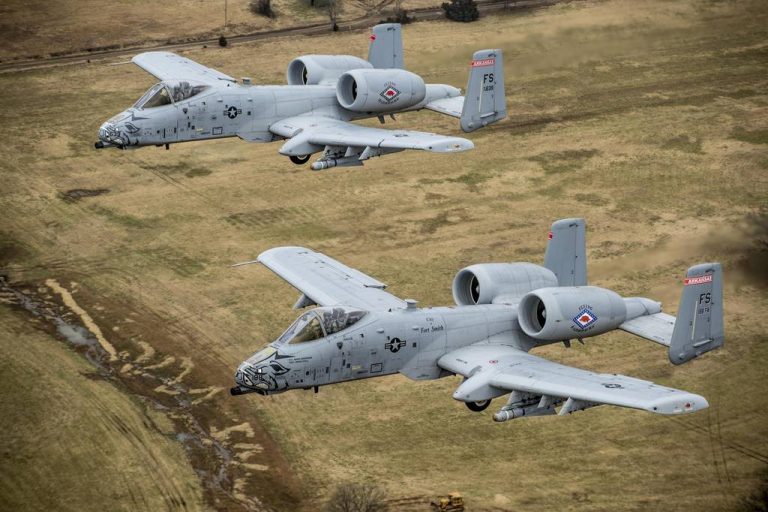
WASHINGTON — A compromise defense policy bill released Wednesday night would grant the Air Force’s request to retire older F-15 Eagle fighters, A-10 Warthogs, and other aircraft, but again block its attempt to mothball 32 older F-22A Raptors.
And lawmakers want to see more of the Air Force’s plans for folding drone wingmen known as collaborative combat aircraft into its fleet at an affordable rate, and how it plans to create the Next Generation Air Dominance future fighter platform, as part of the $874.2 billion conference version of the Fiscal 2024 National Defense Authorization Act.
The Air Force proposed retiring 42 A-10s and 57 F-15 C and D fighters as part of its proposed FY24 budget. This would bring the total number of A-10s down to 218, and the F-15C and Ds down to 92.
The conference NDAA would approve the Air Force’s A-10 request, but would allow the fleet to drop no lower until six months after the service sends Congress a report on how it plans to carry out close air support, combat search and rescue and other Warthog-centric missions.
Redundant
The Air Force and Congress have argued for years over the A-10, with the service saying the plane would not be survivable in a future war. Congress until last year continually blocked the service’s attempts to retire the Warthog.
A Thursday release from Rep. Rob Wittman, R-Va., chairman of the House Armed Services subcommittee on tactical air and land forces, said the NDAA also would authorize the Air Force to retire early-model F-15s.
But Congress is getting ready to halt, for the second year in a row, the Air Force’s effort to retire some Block 20 F-22s the service says are not able to carry out combat missions.
Those 32 F-22s are now mostly training aircraft, and the service has said getting them ready to fight would be prohibitively expensive. In spring 2022, when the service first proposed retiring 33 of those F-22s, officials said it would cost $1.8 billion over eight years to make them combat capable.
However, Congress blocked the first attempt at retiring those F-22s in the FY23 NDAA, and is moving to do so once again.
The Air Force would also be required to keep at least 1,112 fighters in its inventory, a temporary reduction from the minimum requirement of 1,145. However, the Air Force now has roughly 1,800 F-15s, F-16s, F-22s and F-35s and is not near that minimum.
By April 1, Congress wants the Air Force to present a long-term plan for its tactical fighter force’s structure, recapitalization, training and sustainment.
This should include the mix of fighters in the flight that will be needed to meet challenges around the world, and plans to supplement or replace existing piloted fighter capacity with collaborative combat aircraft.
The NDAA would order the Air Force and Navy to send lawmakers reports by May 1 explaining their plans for acquiring fleets of CCAs affordable enough to be lost on missions without busting their budgets.
Lawmakers said in the conference report the Air Force and Navy’s plans to create their own fleets of CCAs could “significantly increase the lethality of existing tactical fighter aircraft.” But they worry the services haven’t explained how they can acquire enough attritable or expendable CCAs, at an affordable cost, to make the concept work.
Congress also wants to see more details on the Air Force and Navy’s plans for their piloted NGAD programs. This would include key milestones, development and testing events, and performance goals for the engineering, manufacturing and development phase of NGAD, as well as expected costs for the EMD phase and low-rate initial production lots for NGAD’s air vehicle, propulsion, mission systems, subsystems, software, and other elements.
These so-called “matrices” would become the baseline for NGAD’s early phases. And the NDAA would also require the Government Accountability Office to review those matrices and identify cost, schedule or performance trends.
Lawmakers would prohibit the Air Force from moving to shut down the production line for the HH-60W Jolly Green II combat rescue helicopter, made by Sikorsky and Lockheed Martin. The Air Force has curtailed its planned purchase of HH-60Ws, arguing they would not be survivable in a high-end conflict with an advanced nation like China.
But the Air Force would get its request to retire two more E-3 Sentry airborne warning and control system aircraft in 2024, which would bring the AWACS fleet down to 16, but no further this year.
The Air Force wants to retire 52 of its older T-1A Jayhawk trainers in 2024. The NDAA would put those on hold until the service confirms it has put into place across the fleet a new flight curriculum dubbed Undergraduate Pilot Training 2.5. Congress wants a report on how UPT 2.5 has helped aspiring pilots finish their training, and how the T-1 retirements might affect the Air Force’s attempt to speed up pilot training.
Another provision in the NDAA addresses Boeing’s decision to start building components of some T-7A Red Hawk trainer aircraft before the Air Force officially issued a contract for the planes.
GAO said in a blistering May report on the T-7 the early initial construction on the planes meant the Pentagon couldn’t conduct all the production oversight needed to ensure the new Red Hawks will meet contract requirements. Boeing told GAO it took that step to keep its suppliers busy and manufacturing costs down, in the face of schedule delays and financial losses.
The NDAA would order the Air Force to submit a plan spelling out when it would accept T-7 production work that was done before a contract was issued and not subjected to the usual oversight. Lawmakers also want the Air Force to conduct an assessment of the risks from overlapping development, testing and production phases on the T-7.
Meanwhile, Congress wants to see the Air Force’s plan for updating its tanker fleet — including the impending recapitalization of the KC-135 fleet, and then procurement of the Next Generation Air Refueling System, or NGAS — before the service can release its acquisition strategy for the KC-135 recapitalization.
This should include a business case analysis, and validated requirements for the contract competition for the next wave of tanker purchases, the NDAA said. The Air Force is strongly considering buying more KC-46 Pegasus tankers from Boeing for the next tranche of tankers, although Airbus is still planning to compete for the contract after its partner, Lockheed Martin, dropped out.
The legislation also requires the Pentagon to consider whether Warthogs slated for retirement or storage could be transferred to another ally or partner nation of the United States.
Some supporters of military assistance to Ukraine have suggested giving it retiring A-10s, although the NDAA does not cite Ukraine in this provision.
Stephen Losey is the air warfare reporter for Defense News. He previously covered leadership and personnel issues at Air Force Times, and the Pentagon, special operations and air warfare at Military.com. He has traveled to the Middle East to cover U.S. Air Force operations.

LINK: Get Maps | topoView
The latest version of TopoView includes both current and historical maps and is full of enhancements based on hundreds of your comments and suggestions. We’ve made finding and exploring USGS topographic maps easier than ever.
Getting Started
1. Enter a location in the location search above to see all maps at that location
-OR-
2. Simply click/tap anywhere on the map to show all maps at that point
-OR-
3. Search by quadrangle name in the map name search above
Use the timeline and scale filters to dynamically refine your search or to visualize the progression of mapping by the USGS throughout history.
You can save in multiple formats including .JPEG and .PDF
Editor’s note: This story was updated at 7:52 p.m. EST with additional information.
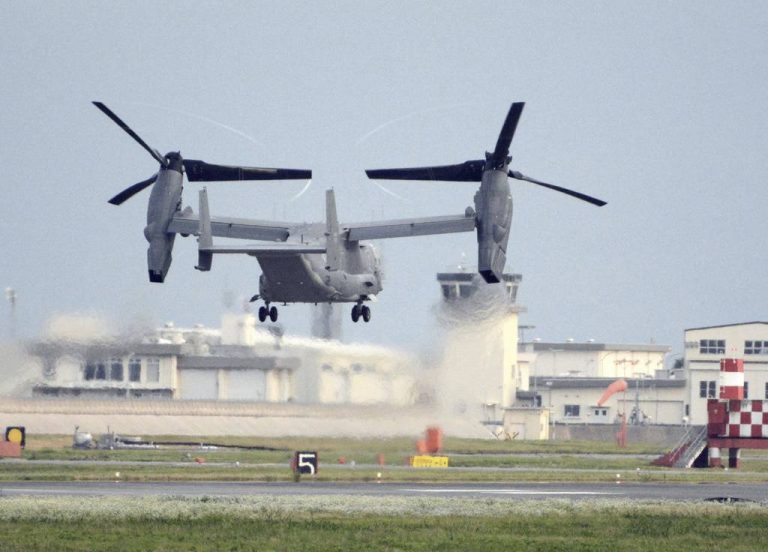
WASHINGTON — The military announced late Wednesday it was grounding all of its Osprey V-22 helicopters, one week after eight Air Force Special Operations Command service members died in a crash off the coast of Japan.
The Air Force, Navy and Marine Corps took the extraordinary step of grounding hundreds of aircraft after a preliminary investigation of last week’s crash indicated that a materiel failure — that something went wrong with the aircraft — and not a mistake by the crew led to the deaths.
The crash raised new questions about the safety of the Osprey, which has been involved in multiple fatal accidents over its relatively short time in service. Japan grounded its fleet of 14 Ospreys after the crash.
Lt. Gen. Tony Bauernfeind, head of Air Force Special Operations Command, directed the standdown “to mitigate risk while the investigation continues,” the command said in a statement. “Preliminary investigation information indicates a potential materiel failure caused the mishap, but the underlying cause of the failure is unknown at this time.”
In a separate notice, Naval Air Systems Command said it was grounding all Ospreys. The command is responsible for the Marine Corps and Navy variants of the aircraft.
The Air Force said it was unknown how long the aircraft would be grounded. It said the standdown was expected to remain in place until the investigation has determined the cause of the Japan crash and made recommendations to allow the fleet to return to operations.
The U.S.-made Osprey is a hybrid aircraft that takes off and lands like a helicopter but can rotate its propellers forward and cruise much faster, like an airplane, during flight.
Its unique design has been a factor in multiple incidents. While the investigation into last week’s crash has only just begun, it renewed attention on the aircraft’s safety record, particularly on a mechanical problem with the clutch that has troubled the program for more than a decade. There also have been questions as to whether all parts of the Osprey have been manufactured according to safety specifications.
In August, the Marines found that a fatal 2022 Osprey crash was caused by a clutch failure, but the root cause was still unknown. In its report on the crash, the Marines forewarned that future incidents “are impossible to prevent” without improvements to flight control system software, drivetrain component material strength, and robust inspection requirements.”
Air Force Special Operations Command has 51 Ospreys, the U.S. Marine Corps flies as many as 400 and U.S. Navy operates 27.
The Osprey is still a relatively young aircraft in the military’s fleet — the first Ospreys only became operational in 2007 after decades of testing. But more than 50 troops have died either flight testing the Osprey or conducting training flights in the aircraft, including 20 deaths in four crashes over the past 20 months.
An Osprey accident in August in Australia killed three Marines. That accident also is still under investigation.
Tara Copp is a Pentagon correspondent for the Associated Press. She was previously Pentagon bureau chief for Sightline Media Group.



