Evil Food Supply: Oat Milk Is Literally A Scam
(and rice milk and almond milk, etc.)
EFS: Oat Milk Is Literally A Scam

Can someone clarify the controversy surrounding ivermectin’s use in COVID-19 treatment?
-
 Thread
I want to be sugar-free
Do I dare do this right around the holidays and right before I’m planning to travel?
Why not?I have been following a low-carb, moderate – high…
-
I know that everyone has different fitness and health goals and even these can change with time and progress.
My current goals are…
-

-
-
-

-

-

-
-

I had a severe case of vertigo after standing from a reclining position where I’d been reading. I intended to step out…
-
Thread
Vaccination: History
if you look at the charts below I think you can see why we argue this issue.
Recommed number of shot for infants and children in
1950=3
2013=36… -
-

-

-



Most common cause of house fires that you can’t put out

And we likely all do it.
I would also extend this to something you probably shouldn’t do before going to sleep.
A leading cause of house fires is people leaving their clothes dryers running when they are not home and the damn thing catches on fire while you are away.
And you can’t put it out of you’re not home.
This kind of falls in line with the personal shtf stuff I’m always talking about.
I have some experience with this. Right before my last trip to Afghanistan in 2016 I dragged the clothes dryer out side. Pulled the back cover off it so I could blast out all the lint with compressed air. Which I have done before.
We got this dryer in 2010 and I had cleaned it before at least 2 other times. Last time was probably 2014.
Well upon removal of the back cover I found some of the lint in the bottom had caught on fire fairly recently from right near the heater coil air intake. This little fire burned it self out for what ever reason.
So I haven’t put a whole lot of faith in them since.
Apparently this is not an isolated incident.
Possible counter measures.
Put a smoke detector above the dryer or in your laundry room.
Locate the dryer outside.
If you go to the store turn it off.
Don’t dry the laundry right before you go to sleep.
Anyone heard of this Survival Group?

Fortitude Ranch
Survive a Collapse | Survival Community | Fortitude Ranch
They’re a resort / SHTF group, actually more like a business whose themes are providing a resort type of experience for their members. Once SHTF presents itself, they morph into survival camp. The CEO says he likes to have a minimum of 50 people in order to provide an effective defense against marauders. They began in West Virginia, but are expanding via franchises. They now have locations in Colorado, Wisconsin and Nevada, maybe a few others as well.
Anyway, I saw an interview with the CEO on Laura Ingram’s show last week, so I looked them up. Emailed and explained that I had remote property, but maybe wanted to look into them as a “Plan B” place to go if my “Plan A” isn’t viable for some reason.
They e-mailed back and asked if I wanted to become their newest franchise, since they had no locations in my state.
Suffice it to say I have reservations, and I don’t want to list those here until after I get some Monkey input.
What do you think?
Coleman lantern as a heater?

It’s not as goofy an idea as you might think. Two of up on opposite ends of the country came up with different designs, but the accomplish the same goal. Taking the chill off under a table while drinking beer. Timm’s pub heater is much simpler and requires only a #10 coffee can, a drill and a tin snips.
Just remove the vent and globe and drop on the can.
Mine was built to mimic the heat drum on Coleman single burner stoves. It required welding, punching metal, removing the lantern bail and some additional parts.

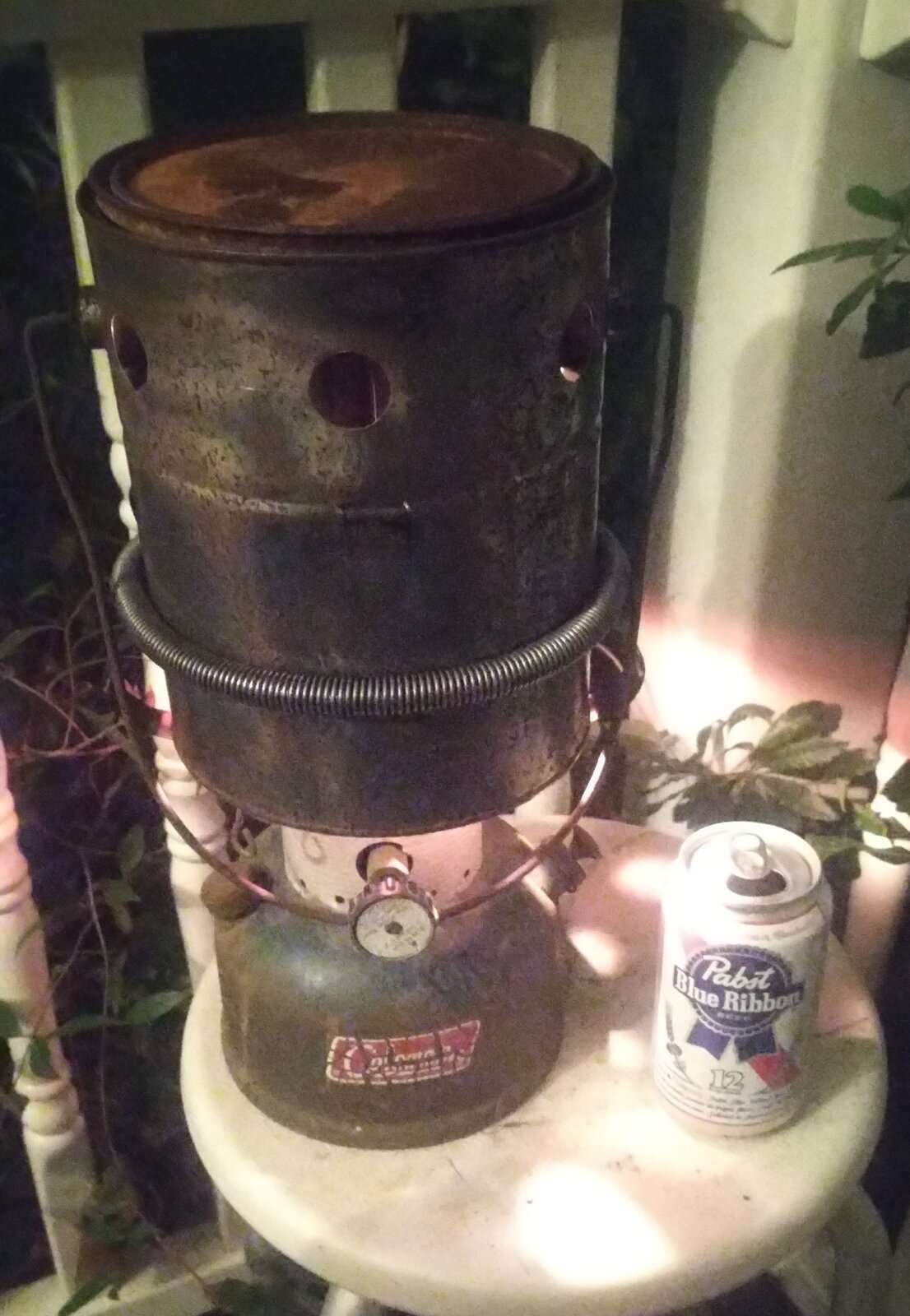
The magic in mine is on the indestructible stainless steel mesh “mantles.” They made from a dollar store grease splash shield that goes over a frying pan. I just cut off a piece, wrapped it around a broom handle and clamped it there with a hose clamp while I smashed it into shape. Once formed it was easily mounted on the lantern burner with stainless steel safety wire.
They get plenty hot enough to heat the generator, burn clean and light up just like a regular mantle.

I’m sure there are better ways, more refinements and some tricks I’ve missed, but it never really gets that cold here at the beach, so it’s been enough for me.
Wonder why US energy "Policy" is so destructive to the US economy?

CCP-tied group is quietly fueling US-based climate initiatives: tax filings (yahoo.com)
Maybe because our enemies are paying for the politics of destruction? Add in the billionare boys club of the CCP and you have a better understaning of the mess.
And the whores in CONgress do nothing.
Bombardier Defense VP Patrick talks deep sensing, Kansas investing

WASHINGTON — The U.S. Department of Defense is in the midst of an information revolution.
A pivot away from the Greater Middle East, where it sunk decades of effort and manpower, to confront the wider ambitions of Russia and China is forcing the department to reevaluate how it collects its battlefield intelligence and the means through which it is shared. Long-range weapons, sensitive radars and powerful jammers mean the U.S. military must glean details from farther away while further insulating digital systems.
Bombardier Defense has taken note, according to Vice President Steve Patrick, and is investing internally to meet the changing demands. The company is among the winners of two recent U.S. Army intelligence, surveillance and reconnaissance contracts, worth hundreds of millions of dollars, and has been working overseas with Saab on early warning aircraft.
In an interview with C4ISRNET, Patrick said flexibility is key to satisfying the needs of modern militaries, as hurdles in Europe differ from those in the Indo-Pacific.
Portions of the conversation below were edited for length and clarity.
The U.S. Army has made clear it needs to see farther into enemy territory, strike harder from that greater distance and be more precise — all at the same time. They’ve dubbed part of the equation deep sensing. Where do you see that concept now and in the future, and how is Bombardier contributing?
I think deep sensing is part of the Army’s vision for the Multi-Domain Sensing System, the MDSS, as they call it. Really, it’s all about being able to see, as you say, farther into enemy territory, and the territory itself is farther away from the homeland.
There’s a real need for capability that allows you to not only see farther, but see farther from farther. So where Bombardier Defense can help in that equation is to bring our platforms to bear. Those platforms are designed to be high-altitude, long-endurance assets that can persist in and around the battlespace and give that ability to look further into enemy territory.
How does it play into this top priority of long-range fires that the Army has?
When you think of long-range fires, the additional word is precision. Precision implies that you need a target. If you’re going to have a target, you need to be able to surveil the area and to identify a target of interest.
Where the Bombardier platform plays is we provide that asset that hosts a radar, or some other sensor, that can identify the target and then pass it back to the command-and-control functions.
RELATED
What makes this converted business jet a good candidate for serious military operations? What would you say to skeptics that believe maybe another option, or something more military hardened, is the better approach?
What we would say is that the attributes that the military needs from a platform are actually quite consistent with the attributes that some of our business-jet customers look for.
First of all, its reliability. The business customer expects the aircraft to perform when they need it, as does the military customer. The mission is critical. So reliability is important, as his performance. A lot of our aircraft have exceptional endurance, high altitude, high speed. They can operate from short runways. That performance gives flexibility to the military customers.
There’s also the fact that they are modern, in-production assets. Our aircraft are in production today. They are going to be in production for many years. So we deal with things like obsolescence and the latest technology in our course of business.
And then, perhaps, the biggest thing that brings the business jet into the equation is the advancement of technology. Twenty years ago, sensor payloads, radars, electronic equipment would fill a room the size of this. Now, that’s shrunk down to the size of maybe an iPhone — so a much smaller footprint to accommodate the same sensors. That makes a business jet very appealing in that market.
Bombardier is participating in the Army’s recently awarded ATHENA-R and -S contracts and the Air Force’s BACN. Why your aircraft? And what are some examples of the payloads?
Why our aircraft? It’s for the reasons I just indicated. It’s all about reliability, performance and availability of the airframe itself.
When we think of each of those missions, the BACN program with the Air Force, it’s really a communications node. Some call it flying Wi-Fi in the sky, linking together all the different waveforms from different users so that everyone can communicate on the same network over vast areas of terrain, whether it’s airborne, maritime or ground assets.
The Army programs, on the other hand, the ATHENA programs, those are really starting to look into intelligence gathering rather than communication, bringing onboard signals intelligence packages, radars, to provide the commanders on the ground with an overview of the battlespace.
RELATED

Where is Bombardier Defense investing internally? What is the company interested in achieving in the near- or medium-term?
Bombardier Defense has been a part of Bombardier Aerospace for many, many years. What we’re now seeing, though, is an increased demand for our products and services. So we’re starting to build up our capability, predominantly in Wichita, Kansas, as the center of activity for engineering and modification.
What we’re bringing forward, what we’re investing in, is reusable solutions.
We find that many customers want additional electrical power, they want cooling capabilities, they want payload volumes. So we’re creating and investing in those kinds of capabilities, as well as our power plants, to make the aircraft almost a Swiss Army knife, ready to be used for multiple missions at very short notice. Highly reusable. Low cost. Rapid to deploy.
Bombardier recently delivered the seventh Global aircraft to Saab to be made into the early warning GlobalEye. How would you describe that international relationship, like you have around the U.S, and what are you hoping to achieve with that program?
One of the things that Bombardier Defense prides itself on is our collaboration with prime integrators. Whether it’s L3Harris Technologies, Sierra Nevada, Raytheon in the states, or Saab overseas, we have a very strong collaborative relationship.
The GlobalEye is a great example of how we work well with another prime mission-system integrator. Our platform, their system coming together to bring a great capability to the market.
The GlobalEye is an airborne early warning aircraft, fundamentally, but also with additional surveillance capabilities. In fact, Saab calls it the Swing Role Surveillance System. The aircraft has been very successful with its launch customer in the United Arab Emirates. We also have an additional customer in Sweden. Together with Saab, we see lots of opportunities around the world for this product, in markets in Asia and Europe, and then the Far East.
Do you foresee growth or additional opportunities for this contractor-owned, contractor-operated arrangement in the defense world?
I think the one thing we all see is a growing demand for intelligence. And how you satisfy that demand can be either through service-owned and -operated assets, or contractor-owned, contractor-operated assets in the COCO model.
We’re here to support both models, whether it be a direct sale to the government or to one of these third-party companies, our aircraft to their payload gives the capability very quickly.
How do you see aerial surveillance or electronic warfare needs changing depending on the theater? The Pentagon is currently trying to balance Russia and China, the Greater Middle East and Africa, et cetera.
The Pentagon has been quite clear with the idea of great power competition and the need to engage with China at distance. That requires a certain type of asset to be able to perform the mission at a long range.
The recent activity with Russia in Ukraine has, sort of, pivoted back towards Europe. It’s a different theater compared to the Far East. Perhaps what that underscores, most of all, is we don’t know exactly what the future theater will be. So you need to be flexible.
The way that we view the problem set is not to have a single solution for a single problem, but have a solution that can satisfy multiple problems, that is redeployable across the globe very quickly, that can be pivoted to where the current crisis is.
The Bombardier solutions, we think, fit that niche very well.
Colin Demarest is a reporter at C4ISRNET, where he covers military networks, cyber and IT. Colin previously covered the Department of Energy and its National Nuclear Security Administration — namely Cold War cleanup and nuclear weapons development — for a daily newspaper in South Carolina. Colin is also an award-winning photographer.
Where Do You Go When The Brown Stuff Hits The Fan?
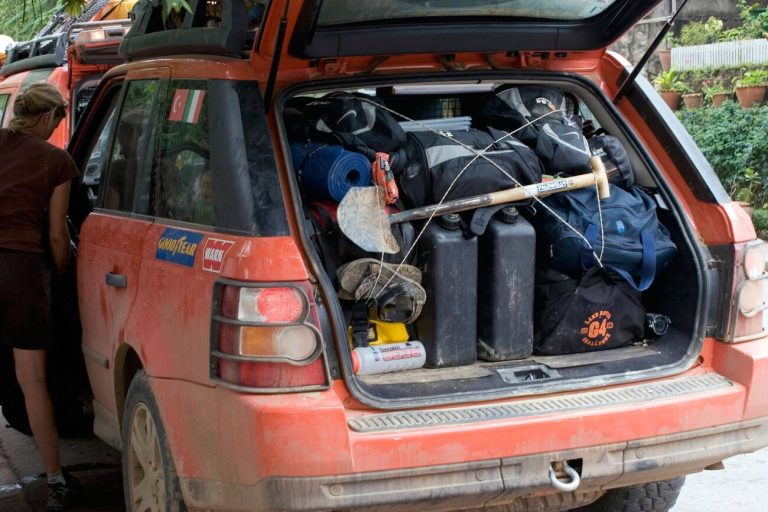
In an ever-changing world, unforeseen challenges can test our resilience and preparedness. From natural disasters to civil unrest and unexpected societal upheavals, having a well-thought-out contingency plan is not just prudent but potentially lifesaving.
When the proverbial “brown stuff” hits the fan, where do you find solace and safety?
This article showcases some strategic bug out locations that can serve as refuge during times of crisis, offering a roadmap for those seeking reliable escape strategies. From the familiar embrace of friends and family to the remote serenity of national wildlife refuges and the vast expanses managed by the Bureau of Land Management.
We’ll look into all these potential safe havens that could become the key to our survival when the world demands quick and calculated responses. So, let’s check the possibilities and considerations that could make the difference between vulnerability and resilience in times of uncertainty.
Friends and family
Undoubtedly, the most prevalent choice for a majority of individuals is relying on friends and family during challenging times due to its inherent convenience. In times of crisis, having a support system of trusted individuals is a natural inclination. However, the stark reality may unfold differently when confronted with a world in turmoil, as various unknown factors can potentially extend one’s stay beyond the initially anticipated duration.
Before designating this option as your primary refuge, several critical considerations should be taken into account. Foremost, it is imperative not to presume that friends and family, despite their willingness, can singularly cater to all your needs and those of your family during an extended crisis. While they may provide initial assistance, should your stay exceed a few days, proactive contributions become essential. Consider procuring and storing necessary supplies, ranging from sustenance and water to toiletries and clothing, at their residence to alleviate any undue burden.
Furthermore, it is paramount to acknowledge the potential limitations in living space, especially if your family is sizable or includes pets. In such instances, a judicious approach may involve discussing alternative arrangements with your hosts, such as camping on their property. If this proves viable, consider investing in the requisite camping gear and storing it on-site for expedient access.
Lastly, the formulation of comprehensive bug-out plans necessitates meticulous discussions with the designated hosts. In an unpredictable crisis scenario, the duration of evacuation remains uncertain, and hosts should be apprised of the potential for an extended stay. Their preparedness to accommodate such exigencies should align with the pragmatic considerations that accompany an extended lodging, fostering a mutual understanding of the expectations in the face of adversity.
Bug out location
When contemplating a bug-out location, the typical mental image often gravitates towards a well-appointed bunker nestled in a secluded area or a fully self-sufficient cabin situated off the grid in a remote wilderness. Realistically, however, the financial feasibility of such locations is beyond the means of most individuals, necessitating the exploration of alternative retreats for times of exigency.
Consider, for instance, the pragmatic approach adopted by certain preppers who opt for more attainable solutions, such as a camper strategically positioned in wooded areas or a shelter established on another individual’s property, constituting their sole bug-out locations. For these individuals, the efficacy of their chosen refuge prevails, and any contemplation of change hinges on the availability of a significantly superior alternative.
The fundamental principle behind selecting a bug-out location revolves around its capacity to accommodate all members of your party while concurrently providing a level of comfort aligned with individual preferences.
The comfort factor varies based on personal skills and the willingness to employ them over an extended duration. For instance, some may prioritize access to running water, while others willingly engage in the collection and purification of water for their necessities. Variances extend to preferences for electricity and modern gadgets; while some individuals find it indispensable, others embrace the prospect of temporarily disconnecting from such amenities.
Ultimately, the root of the matter lies in the bug-out location’s ability to furnish all essential elements, streamlining the survival experience. It need not be extravagant; a practical example may encompass a simple family canvas tent equipped with a wood-burning stove, a foldable table, chairs, and sleeping bags. The essence lies in functionality rather than opulence, emphasizing the adaptability and resourcefulness required for survival with the least amount of inconvenience.

Forest Service lands
Presently, it is approximated that nearly nine percent of the United States’ vast expanse is under the careful stewardship of the U.S. Forest Service, accounting for approximately 200 million acres of national forest.
The realm overseen by the Forest Service distinguishes itself from the jurisdiction of the National Park Service, offering a broader spectrum of possibilities for utilization. Beyond the realm of recreation, these lands extend an invitation to limited resource exploitation, granting access to activities such as hunting, fishing, timber extraction, and mining.
Within this expansive territory, a network of dirt roads unfolds, catering to a diverse array of vehicles, although pockets exist where the intrusion of motor vehicles is strictly prohibited. Renowned as a favored destination, these lands are revered for endowing a unique freedom unparalleled elsewhere.
Extended camping is permissible, contingent upon adherence to the stipulation that a single site is not occupied for more than fourteen days. The flexibility extends to the allowance of firearms for hunting purposes, while traversing vast distances is facilitated by the efficient use of ATVs or off-road motorcycles.
Venturing further into these lands reveals designated wilderness areas, accessible solely by foot or horseback, meticulously preserved to maintain an unspoiled state. Spanning millions of acres, these roadless expanses exhibit minimal traces of human impact, becoming coveted havens for enthusiasts of primitive survival.
In the context of a bug-out scenario, national forest lands emerge as sanctuaries sought after by hunters and aspiring survivalists alike, engendering a competition for the abundant resources concealed within. The allure of these lands lies in their lack of roads, trails, or conspicuous drainages, offering an escape from unprepared crowds and an opportunity to elude potential confrontations.
National Wildlife Refugees
Within the realm of national wildlife refuges, noteworthy examples such as the expansive Okefenokee National Wildlife Refuge in Georgia often boast larger acreages than their counterparts in national forests and parks. While certain wildlife refuges capture the limelight, others remain quietly nestled, evading the notice of the general public. These lands share a common purpose: the preservation of diverse wildlife habitats, nurturing ecosystems that provide a sanctuary for a myriad of species.
It’s interesting to note that certain extensive tracts governed by the federal system within this framework were acquired through the initiatives of private organizations. As government regulations wane in influence, these lands are poised for a shift into private ownership, sparking keen competition among those in search of a fresh start. Much like the pioneering domains of our ancestors, these lands create ideal conditions for safeguarding the most endangered species during critical times—humans.
Consider, for instance, the sprawling expanses of the Okefenokee National Wildlife Refuge, where untamed landscapes mirror the pioneering spirit of preservation. Many wildlife refuges, including Okefenokee, impose stringent restrictions, prohibiting activities such as camping and any human conduct that could compromise the land’s integrity.
This commitment to preservation underscores the crucial role these refuges play in shielding wildlife and potentially serving as sanctuaries for human survival amid the uncertainties of pivotal moments.
Bureau of Land Management Lands (BLM)

The Bureau of Land Management (BLM), a government agency overseeing an expansive portfolio, currently administers nearly 260 million acres of federal lands across 12 western states, including Alaska. This jurisdiction encompasses diverse terrains, ranging from lush forests and sprawling grasslands to arid deserts, firmly placing the BLM at the helm of their regulation.
Amidst these vast tracts, some transform into desolate wilderness areas, widely regarded as prime bug-out locations by discerning individuals. Yet, it’s crucial to recognize that certain BLM territories, despite their potential, remain shrouded in obscurity, known only to a select few.
Uniquely positioned to unlock the full potential of these lands are the locals, possessing an intimate knowledge that enables them to harness these resources effectively. Invariably, these residents are poised to designate these territories as secure havens, staunchly maintaining their positions when interfacing with outsiders.
For those residing in the western states, delving into the BLM lands in close proximity is not merely advisable but an astute course of action. Familiarizing oneself with these vast expanses could prove invaluable, offering insights into potential safe havens and strategic retreats should the need arise.
Concluding
 In the quest for strategic retreats during crises, exploring diverse landscapes managed by government entities reveals unique possibilities. From the embrace of friends and family to rugged expanses controlled by the Bureau of Land Management, and pristine wilderness in national wildlife refuges, each option has distinct considerations.
Navigating potential havens emphasizes adaptability and resourcefulness. Contemplating bug-out scenarios requires preparedness, understanding regulations, and appreciating local insights.
Our choices should align with physical necessities and a deep understanding of landscapes and communities. As we prepare, the key is not just the destination when the “brown stuff” hits but navigating and adapting to unforeseen challenges. An informed approach ensures chosen refuges are sustainable havens for resilience and survival.
Other Useful Resources:
Roadside Emergencies – Keeping Your Getaway Vehicle Running
Find Out What’s the Closest Nuclear Bunker to Your Home
Learn How To Customize Your Bug-Out Vehicle
Learn how to Safeguard your Home against Looters