In the past, the terms “prepping” and “survivalist” evoked visions of rugged mountain men armed to the teeth, living off the land. However, the connotations of these words have evolved significantly over time. While they once brought to mind images of MREs, bug-out packs, and powdered milk, the landscape of preppers today is expansive, encompassing individuals from various walks of life, including the affluent.
Gone are the days when prepping was solely associated with meticulous planning and budgeting. The super rich elite have entered the scene, embracing a lifestyle that involves purchasing helicopters, gas masks, gold coins, and even securing private underground bunkers.
New Zealand has become a preferred refuge—the billionaires’ bolt hole—for those seeking a haven amid uncertainties. Despite their distinct planning methods and escape routes, the common thread among these individuals is the desire to survive any potential collapse.
While most of us embark on the prepping journey with a carefully crafted plan, constrained by budget considerations, the affluent take a different route. For them, prepping is as straightforward as writing a check—literal financial preparedness at its finest.
For the privileged few, prepping becomes a comprehensive package deal, albeit at a considerable cost. While the majority focus on stockpiling essentials, forging community alliances, and taking inventory, the elite have the option to buy their way into exclusive communities dedicated to the survival and protection of their occupants.
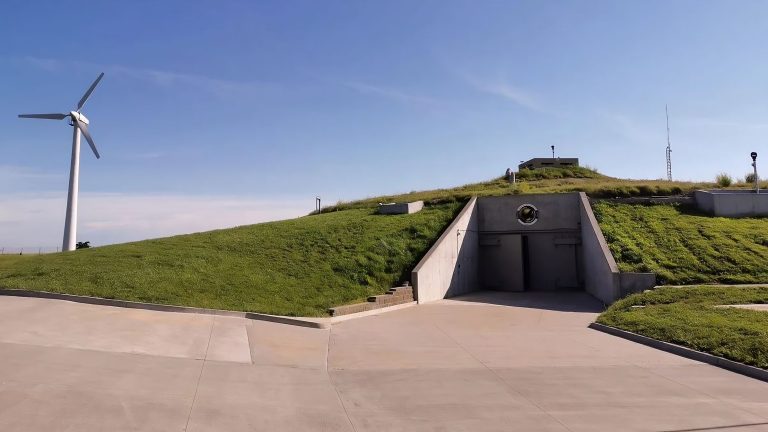
Enter the “Survival Condo,” strategically nestled within an old missile silo. The price tag for a unit in this high-security compound may appear exorbitant, but for those who prioritize the safety of their families and, indeed, life itself, it becomes an investment without a quantifiable limit.
The first phase of this innovative project has already proven its appeal, with all units sold out, dispelling any notion that the concept is inconceivable. As society continues to navigate an unpredictable future, the evolution of prepping is not just a matter of survival—it’s a statement of privilege and preparedness.
How this project came to life
In the aftermath of the September 11, 2001 attacks, Larry Hall conceived the idea of transforming a silo into what he aptly named “The Survival Condo.” This visionary endeavor led him to repurpose an Atlas “F” Missile Silo, resulting in the creation of a fully self-contained and secure Luxury Survival Condo and Resort.
The question arises: How did the owner and project manager, Larry Hall, come into possession of a silo in the first place? Hall, a former developer specializing in providing networks and data centers for government contractors, stumbled upon a unique opportunity in 2008. Leveraging his extensive network and resources from government contracts, he seized the chance to acquire an old missile silo for a mere $300,000.
Originally constructed in 1960 to house and safeguard the Atlas Nuclear Missiles, these silos represented a pioneering development in structural resilience. The Atlas missile silos boasted walls as thick as 9½ feet, constructed from epoxy-hardened concrete—regarded as one of the most robust structures built by humanity. With over 600 tons of high-strength rebar, capable of withstanding 200 pounds of overpressure (equivalent to approximately 500 mph winds), these silos were designed for unparalleled durability. Comprising two underground structures—a two-story and a 14-story complex—the combined space amounted to over 54,000 square feet of underground, nuclear-hardened, protected space.
Beyond their initial purpose, these structures underwent extensive cleanup and monitoring by the Environmental Protection Agency, ultimately receiving a clean bill of health. Larry Hall’s ingenuity and strategic acquisition of this historic missile silo underscore the meticulous planning and effort invested in creating The Survival Condo—an embodiment of resilience and innovation born out of a pivotal moment in modern history.
Floor plans
Within The Survival Condo, there are two distinct residential condo layouts: full-floor and half-floor. The full-floor configurations boast an expansive 1,820 square feet of living space, meticulously designed to comfortably house six to 10 individuals. On the other hand, the half-floor layouts offer approximately 900 square feet, catering to the needs of three to five occupants.
These thoughtfully crafted living spaces are equipped with a range of high-end amenities. Each unit features full kitchens outfitted with top-of-the-line stainless appliances, creating a luxurious and functional culinary environment. Full spectrum LED lighting permeates the spaces, ensuring optimal visibility and ambiance.
Entertainment is taken to the next level with a 50-inch LED TV, complemented by a sophisticated home automation system. This system not only provides remote off-site access but also incorporates keyless entry for added convenience. Practicality meets comfort with the inclusion of a washer and dryer in every unit, ensuring residents have essential amenities at their fingertips.
Beyond the lavish features, each residential unit is provisioned with a five-year supply of freeze-dried and dehydrated survival food per person. This high-quality sustenance, boasting a shelf life exceeding 20 years, is stored in specialized oxygen-free containers, guaranteeing its longevity and freshness.
Remarkably, a full-floor residential unit is stocked with a 30 man-year supply of food, while the half-floor counterpart accommodates a 15 man-year supply—a testament to the meticulous planning and commitment to sustained preparedness embedded in The Survival Condo’s residential offerings.
Embracing resilience: A panorama of protection
 In the realm of preparedness, The Survival Condo goes beyond the ordinary, ensuring a comprehensive and secure living environment. The facility’s lifeblood is its Nuclear, Biological, and Chemical (NBC) filters, which meticulously purify the air supply throughout the entire complex.
Safeguarding the physical air intakes are blast valves—essential guardians against overpressure airwaves generated by nearby explosions, shielding inhabitants from potential harm.
Water, a fundamental resource, is given utmost priority with a three-source (primary plus two backups) water supply and reservoir system. Featuring minimum 75,000-gallon reserve tanks, this system incorporates advanced purification mechanisms, guaranteeing a safe and reliable water supply for consumption.
The Survival Condo takes sustainability to new heights with two floors dedicated to hydroponic gardens, yielding a bounty of fresh produce. Complementing this, an innovative aquaculture system ensures a steady supply of fish for sustenance, providing residents with a source of nourishment independent of external factors.
Remaining connected and secured is paramount within this fortified enclave. A three-source (primary plus two backups) electric supply system, comprising the local electric grid, a substantial wind turbine, and a diesel generator, ensures uninterrupted power.
The security and communication control center, fortified with military-grade measures such as visible and infrared cameras, proximity sensors, microphones, and passive detectors, empowers residents with confidence in their safety.
To alleviate any sense of confinement, LED screens simulate windows, offering a live feed view outside each condo. Security protocols encompass lethal and non-lethal measures, addressing a spectrum of potential threats. Access to a communication center with on-site Internet subset, high-speed fiber optic network, and a digital weather station adds an extra layer of connectivity.
Silo-to-silo network links further enhance communication capabilities, ensuring residents stay informed and connected even in the face of adverse conditions. In essence, The Survival Condo is not merely a shelter; it is a testament to innovative design, foresight, and the unwavering commitment to residents’ safety and well-being.
Beyond the grid: Luxurious survival redefined

In the realm of survival, Larry Hall’s Survival Condo transcends the conventional, offering a plethora of amenities that redefine the concept of off-grid living. Beyond the essentials, residents have access to a comprehensive set of facilities, each contributing to an unparalleled living experience.
Mandatory survival training sets the tone for preparedness, equipping residents with the skills needed to navigate challenging situations. A minor medical/surgery center ensures healthcare support, while an indoor pool with a soothing waterfall provides a relaxing escape. Fitness enthusiasts can maintain their routines in the well-equipped workout room, and cinephiles can indulge in a state-of-the-art home theater.
The learning environment is not forgotten, with a dedicated classroom and library for intellectual pursuits. For socializing and recreation, a pub and game room offer a convivial atmosphere. Bulk storage ensures provisions are ample, and an indoor firing range caters to residents’ security training needs. Adventure seekers can scale new heights on the rock climbing wall, and the walk-in freezer guarantees a sustainable food supply.
Practicality meets convenience with an elevator for effortless mobility, spare parts for maintenance, and a fully-equipped machine shop for resourcefulness. Surpassing expectations, the Survival Condo embraces pet-friendly living, welcoming cats and dogs upon approval.
At its core, Hall’s Survival Condo aims to provide extended off-grid living in the face of major disasters or emergencies. Contrary to media portrayals, the clientele is not comprised of stereotypical “survival nuts.” Instead, residents are successful, educated, and well-to-do individuals seeking peace of mind amid natural or manmade disasters.
While the facility is designed to withstand a nuclear blast, Hall emphasizes a shared concern among him and his tenants—the ability to protect themselves and their families when government support becomes uncertain in the face of major disasters or economic collapse. The Survival Condo thus stands not just as a sanctuary but as a testament to luxury and resilience tailored to the discerning and forward-thinking individuals of our time.

Investing in survival: Securing the future
The Survival Condo project has evolved since its inception, and as of the latest update, all units from the initial phase have been sold, emphasizing the high demand for secure living spaces. The promising news is that Larry Hall’s second silo is currently under construction, with an anticipated completion date in 2024. Prospective buyers are advised to act swiftly, as projections indicate a rapid sell-out for this upcoming project as well.
The available units cater to diverse preferences and needs. Two-level penthouse units, spanning approximately 3,600 square feet, start at $5.5 million. Full floor units, offering around 1,840 square feet, commence at $3.5 million, while half-floor units, comprising approximately 920 square feet, start at $2 million. For those desiring a fully customized silo ranging from 50,000 to 300,000 square feet, the option remains open through Hall and his team.
Considering the financial investment, Hall’s innovative approach leverages the existing infrastructure of the silo, proving to be economically advantageous. The concept revolves around the idea that building a facility of comparable quality and protection from scratch would be financially impractical. While the exact location remains undisclosed for security reasons, it is confirmed that both silos are situated in Kansas.
Geographical distance poses no hindrance for potential buyers, as Hall’s team has meticulously devised three contingency plans to facilitate arrival at the facility. These plans, however, remain confidential and undisclosed, a testament to the strategic foresight embedded in the project.
The Survival Condo project continues to exemplify comprehensive planning and commitment to providing a secure and sustainable living environment. For those seeking not just a dwelling but an investment in preparedness and peace of mind, the evolving landscape of The Survival Condo remains a beacon of innovation and resilience.
The super rich are also doing it on another level

The super rich cannot purchase immunity from mortality, yet they can significantly delay its arrival. The combination of pristine food, high-end healthcare, and personal trainers does extend the lifespan of the super rich beyond the average.
However, it is not the actual inevitability of death that acts as the great equalizer; rather, it is the universal fear of mortality that transcends wealth. This existential concern remains impervious to the towering stacks of money that accumulate.
The futility of meticulously orchestrated attempts to elongate life becomes evident as death draws near. The behaviors of the world’s wealthiest individuals often seem like desperate endeavors to fend off an unstoppable force, akin to someone futilely attempting to halt an oncoming freight train. For the majority of us dwelling in the masses, our solace lies in recognizing that, although we may not match the colossal fortunes of the world’s elite, we can find comfort in the understanding that such wealth is expended on humanity’s oldest folly.
Recent reports suggest that Mark Zuckerberg is in the process of constructing a lavish compound in Hawaii, estimated at a staggering $100 million. This secluded haven, named Koolau Ranch, hints at an undisclosed agenda, possibly associated with the tech mogul’s concealed preparations for potential doomsday scenarios.
As revealed by a Wired investigation into property records and contractor interviews, Zuckerberg’s Koolau Ranch is already partially built and is poised to become one of the most exorbitant personal construction projects in contemporary history.
The compound, situated on Kauai island, is designed to encompass over a dozen buildings, featuring two central mansions connected by an underground tunnel leading to a 5,000-square-foot subterranean shelter. The extensive property is slated to include at least 30 bedrooms and 30 bathrooms, with additional amenities such as guest houses and a cluster of 11 interconnected treehouses suspended by rope bridges.
The underground bunker, a focal point of the construction, is intended to serve as living quarters and a mechanical room, boasting a robust “blast-resistant” door made of concrete and steel. The compound’s various entrances and exits will be equipped with keypad-locked doors and soundproofing.
The library is set to conceal a secret or “blind” door, further emphasizing the dedication to privacy and security. The property is already under constant surveillance, with an extensive network of cameras, some hidden and others in plain sight.
Beyond its security measures, Koolau Ranch aims for self-sufficiency in the face of potential catastrophes. Construction plans indicate a colossal water tank, 55 feet in diameter and 18 feet tall, alongside a pump system to ensure autonomy. Existing ranching and agriculture on the expansive 1,400-acre property contribute to the compound’s self-sufficiency.
Notably, Zuckerberg has enclosed the compound with a 6-foot wall and imposed strict non-disclosure agreements (NDAs) on all contracted workers, regardless of their role or involvement, adding an extra layer of secrecy to the project.
Other Useful Resources:
Roadside Emergencies – Keeping Your Getaway Vehicle Running
Find Out What’s the Closest Nuclear Bunker to Your Home
Learn How To Customize Your Bug-Out Vehicle
Learn how to Safeguard your Home against Looters