V-22 Osprey could see second life, with new drive system, wings in 2050s

0

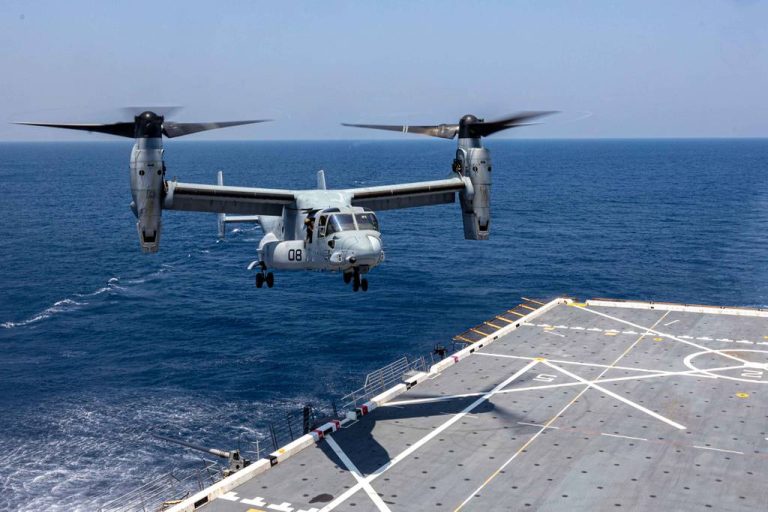
The V-22 program office is studying the future of the tiltrotor aircraft, weighing both a technology refresh as well as whether it could rip off the wings and nacelles to add decades of additional life to the airframes.

U.S. Marine Corps Col. Brian Taylor, the joint program manager for the aircraft, told an audience at the Modern Day Marine conference in Washington that the U.S. military is the only one flying a tiltrotor because it’s a complicated plane with a complicated drive system.

That said, Osprey operators continue to find “the mission sets the V-22 are getting into is absolutely unlimited” because the plane is so robust and flexible.

The program office is eyeing a V-22 Cockpit Technology Replacement, or VeCToR, upgrade effort that will begin research and development in 2026 and would be fielded from 2032 to 2042. That effort aims to bring more off-the-shelf technology to the screens, keyboards, computers and radars in the cockpit, for example.

The office is also in the early stages of studying a Renewed V-22 Aircraft Modernization Program, or ReVAMP, effort that would consider how to keep the fuselage for decades beyond what would otherwise be the end of the plane’s effective life in the early 2060s.

Research and development for the ReVAMP effort would formally begin in 2036, according to his briefing slides, and installations would take place in 2042 to 2050.

“If we had to do V-22 all over again, what would that look like? And really focusing on keeping the fuselage, and maybe you replace the wing and the nacelle, maybe you don’t,” he said during his presentation.

“Something we’re learning about the fuselage is that it is actually kind of life-unlimited, that there’s enough margin in it. And so if we put a new wing and a nacelle on there, we’re probably good for another 40 years,” he added. “So that is a study that’s ongoing, but it’s [all about] how you take this platform and make it available to the services” into the 2070s.

Taylor said the effort is in its infancy and that his office is soliciting ideas and input from industry to shape the effort.

Asked if a V-22 fuselage with new wings and drive system would continue carrying out transport missions or take on other work, Taylor said: “I don’t know, and that’s the fun part.”

Taylor added that the office is considering an optionally unmanned version while it looks at how to make the plane more reliable, maintainable, affordable and safe.

The drive system has been at the heart of several challenges for the platform. In February 2023, the program office halted operations for an undisclosed number of planes until their input quill assembly was replaced. This input quill assembly, which attaches the Osprey’s engine to its proprotor gear box, was causing hard clutch engagements in cases when the assembly was over a certain age.

Taylor said a new input quill assembly prototype that incorporates 15 design changes will be delivered in the next month or so to begin testing.

The proprotor gear box itself may also see changes in the near term, as it has seen reliability issues, including “chipping,” where metal shavings come off during routine operations and can damage the rest of the drive system. Taylor said the Navy is investing in a gear box upgrade for its CMV-22 planes.

Taylor said the idea was that the program office would work with industry to engineer a plan to extend V-22 fuselages for the next chapter of their service lives. That plan would then go to the Marine Corps, Navy and Air Force so they can decide if they want to spend their money on this life-extension plan or if technology is changing such that they’d rather pursue something entirely new to meet their mission needs.

“I’m a little bit biased; I would love to see the V-22 stay in service for the next 100 years. But if there’s a better thing that we need to pivot to, then that’s really kind of up to the services,” Taylor said.

On the VeCToR cockpit effort, Taylor said the program office is struggling to support displays that were developed in the 1980s.

“We are kind of at the tipping point where we are spending enough on just maintaining what we have, that it’s time to do something different,” he said. “Honestly, it was a keyboard that pushed me over the edge, the astonishing bill to keep the keyboard on the aircraft. It’s 26 letters, 10 numbers, maybe a couple other buttons, but it seems like there’s a smarter way to do this stuff.”

As the Marines undertake this effort, Taylor said he also wants to help the plane become more software-centric to allow for faster capability upgrades.

Megan Eckstein is the naval warfare reporter at Defense News. She has covered military news since 2009, with a focus on U.S. Navy and Marine Corps operations, acquisition programs and budgets. She has reported from four geographic fleets and is happiest when she’s filing stories from a ship. Megan is a University of Maryland alumna.

Original Work – The Many-Angled World (Mystic Albion III)

0

Chapter One: London, England, Now.

“Where are you, you little monster?”

Alec kept his head low as he fled into the garden, all too aware his stepmother was right behind him. The woman had never liked her stepson, to the point she’d openly suggested Alec’s father should send him to boarding school or even give him up for adoption. Alec didn’t pretend to understand why his father didn’t send the woman away instead, but he knew there was no point in arguing about it. The woman had been drinking and grim experience had taught him that it was better to be well out of her way, when she opened his father’s drinks cabinet and started pouring wine down her throat. She was unpleasant at the best of times, but when she’d been drinking she was unbearable.

“Come here, now!”

He ignored the woman’s demands as he ran into the darkness. The garden seemed larger than ever before, giving him plenty of room to hide. His father would be back soon, he told himself, and … even his stepmother wouldn’t dare touch him in front of his father’s very eyes. He wondered, not for the first time, if the woman had cast a spell on his father, something to make him fall in love with her. Alec had read enough stories about evil stepmothers – and stepfathers – to convince him that all stepparents were unpleasant, nothing more than hermit crabs crawling into the space left by an absent parent and turning what had once been a pleasant home into a nightmare. He wished, desperately, that his mother hadn’t died, that his parents had stayed together … he shuddered, helplessly, as he heard heavy footsteps coming after him. He’d hoped the darkness would protect him, but … for a moment, the garden seemed both immense and very small. Tears prickled at the corner of his eyes. His stepmother was coming closer and …

“Why so afraid, child?”

Alec stopped, dead. There was a … a something sitting on a leaf, clearly visible even in the darkness. His eyes hurt to look at it, a stabbing pain that felt as if invisible hands were twisting his eyeballs, forcing them to roll in directions he knew to be impossible. He blinked, the pain vanishing in an instant, and opened his eyes again. A little man was sitting on the leaf, no larger than his hand and yet perfect in every detail. He stared, feeling a touch of awe that washed away his fear. He’d been told there were fairies at the bottom of the garden, years ago, but he’d never actually seen one. And yet, he’d believed …

The fairy was tiny, clearly visible and yet the details were hard to pin down. Alec found it hard to see anything, save for the shimmer behind the tiny entity’s back. Wings, Alec supposed, beating so rapidly they could barely be seen. The face was ageless, young and old; the eyes were dark, more like a bird’s than a man’s. His imagination filled in the details, suggesting clothes and a stance that was both friendly and wary. It was impossible to believe the fairy posed any threat and yet, he couldn’t force himself to look away. The fairy gazed back at him, calm and composed. Alec wished, just for a second, he could sprout wings and fly away, to Neverland or Fairyland or somewhere – anywhere – else, as long as his stepmother wasn’t allowed to follow him. He’d thought about running away before, when the old woman had shouted and screamed at him, but now … he could do it.

“I hate her,” he said, feeling all the buried anger bubbling to the surface. It wasn’t fair! Why had his mother died? Why had his father married again, to a monster in human form? Why, why, why …? “She hates me.”

“You’re safe now,” the fairy said. The words appeared in his head, without passing through Alec’s ears. Alec couldn’t even see the entity’s mouth move, as it spoke. It seemed perfectly normal for such a tiny creature. “You can stay with me.”

Alec didn’t hesitate. He trusted the entity … it crossed his mind, a moment too late, that perhaps he shouldn’t, that perhaps talking to a fairy was no better than taking candy from a stranger, but the fairy couldn’t be worse than his stepmother. It just couldn’t. Alec was seven years old and he couldn’t stand the thought of spending another eleven years with his stepmother, not when there was another possibility. The woman hated him. She didn’t even try to hide it.

“I will,” he said. He had no idea what would happen next – if he’d grow wings, if he’d be shrunk until he was as small as the fairy – but he didn’t care. “I …”

Something crashed through the garden, behind him. Alec froze. His stepmother burst into the tiny clearing, a giant smashing through the bushes and trees as if they were made of paper and cardboard. She was a towering woman, large enough to scare him; her eyes, harsh and cold, fixed on him. He cowered back, trying not to breath, as the stench of her breath washed over him. She stank of alcohol and cigarettes, of adult things he knew better than to try until he was a great deal older. She reached for him and her stumbled back, trying to escape as the real world crashed with the fantasy. The fairy …

The fairy was hovering between them.

His stepmother stopped, dead. She had yelled at him, time and time again, for making things up; she had never listened, when he’d told her about his day at school or the stories he’d told with his stuffed toys or building blocks. She wouldn’t have believed him if he’d told her about the fairy … no, she was staring at the tiny creature, her eyes going wide with horror and astonishment. Alec felt a surge of pure glee as she started to step backwards, fear clearly visible on her face. He’d never seen anything actually scare her before. And now …

The fairy spoke a single word. “Mine.”

It changed, so rapidly it made Alec’s eyes hurt. It grew larger, teeth and claws shimmering around it’s growing form, and lunged forward. Alec’s stepmother had no time to run before it was on her, her body seeming to explode into a fountain of blood and gore. Alec saw her eyes explode, followed rapidly by the rest of her head; he fell backwards, his head pounding as pieces of flesh and bone fell everywhere. He hit the ground hard enough to hurt badly, smacking his head against a stone. The fairy seemed to flicker, the tiny form he’d seen earlier somehow transposed with something far darker, and nastier. It was …

Alec opened his mouth to scream, but it was far too late.

***

Sergeant Kenneth Oswald cursed under his breath as he drove through the estate.

The call had been a prank, probably. A dangerous animal, loose on the streets … he had no idea why the dispatcher had ordered him to investigate, not when all hell was breaking loose elsewhere. The police radio net had partly crashed, messages from the nearest station contrasting oddly with bursts of talking and laughter that sounded distinctly inhuman. Kenneth suspected someone had hacked the net, probably intending to distract the police while they did something … or perhaps it was just another prank. The days in which prank callers, kids wasting police time, actually faced any sort of consequences for their crimes were long gone. A few years in jail, or even a month or two picking up litter, would teach them a lesson, but it was politically impossible to do anything of the sort. Kenneth cursed the uniformed politicians in police uniforms under his breath as he parked the car, reminding himself he only had a few years to go until retirement. He’d leave the force, move to a small town miles from anywhere, and forget the nightmare enveloping the cities. It wouldn’t be his problem any longer.

He clambered out of the car, gripping his flashlight in one hand as he looked up and down the street. It was surprisingly dark, the only source of light the stars overhead. The streetlights had been vandalised long ago and never been replaced, leaving the estate trapped in the shadows. Kenneth winced as he locked the door and started to walk, pacing himself as he made his way down the street. The hopelessness was almost a physical force, a grim reminder that anyone born on the estate would be lucky if they made it out. There were too many pitfalls for young men and women – drugs, prostitution, radical politics – and too few chances to leave the estate behind. It was almost a black hole, sucking its inhabitants into the gravity well and keeping them trapped. The wind shifted, blowing a hint of burning embers towards him. Kenneth tensed, eyes flickering further down the street. There was nothing there …

… And yet, his instincts were sounding the alarm.

He kept moving, keeping one hand on his truncheon. The proposals to arm every policeman in London had gone nowhere, and perhaps that was for the best, but his instincts were screaming at him to turn and run. He hadn’t felt so nervous since the first day he’d stepped onto the streets as a uniformed office, empowered to enforce the law and charged to protect the population, even from themselves. It wasn’t easy to be the iron fist in the velvet glove, to be calm and reasonable and yet firm; he knew, deep inside, that it was just a matter of time before he made a career-ending mistake. There were too many provocations, too many radicals intent on embarrassing the police or … he shook his head as he reached the end of the street. It was quiet. Too quiet.

His lips twitched at the thought, although it wasn’t really funny. London never slept. The ordinary law-abiding folks might be indoors, the doors and windows firmly bolted, but the streets were never truly empty. Here, so far from Westminster, the darkness belonged to the druggies or the radicals. His eyes lingered on a boarded-up home, soon to become a drug den if it wasn’t already. The walls were covered with obscene graffiti, making it hard – impossible – for whoever owned it to sell or rent, at least to anyone remotely desirable. And that meant …

Something shifted, a gust of warm air brushing against him. He looked up and down the street, his head spinning – suddenly – as he realised something was there. It was hard, almost impossible, to force himself to see it. A giant hulking shadow, with immense wings and huge red eyes, perched in the middle of the road … his brain stopped, just for a second, as he felt his legs buckle. The creature – the dragon – was simply impossible. It was … a wash of panic ran through him. There might be something in the air, something hallucinogenic … it wasn’t impossible. He’d seen fellow officers get poisoned, when they raided drug lairs, and it was quite possible he’d breathed in something dangerous. His hand dropped to his radio, his mouth suddenly dry as he tried to think what to say. The dispatcher wouldn’t believe him … he found the emergency beacon, concealed in his belt, and pushed it. Every policeman in the area would be on the way within moments, converging on his position. An officer in trouble took priority over nearly everything else.

The dragon moved, rising on its hind legs until it was towering over him. Kenneth found himself stepping backwards, unable to take his eyes off the best. It was impossible – it had to be impossible – and yet, he found himself believing what he saw. The dragon was real in a way he found impossible to deny, a presence that was simply too big … he saw it open its mouth, revealing too many teeth, and stumbled backwards as it breathed fire into the air, illuminating the entire street. A wave of heat brushed against him, an instant before the dragon took flight. Kenneth found himself on his knees as he saw it vanish into the air, tears prickling in his eyes …

It was impossible. He had to be seeing things. But he couldn’t bring himself to believe it.

***

Syeda Ali rubbed her eyes as the plane turned again, cursing under her breath. It should have been a simple flight from Glasgow to London, an hour in the air followed by five hours in the airport before they boarded the flight to Bangladesh. Her aunt had been proud of the bargain she’d secured, booking a very late flight from Glasgow and then a very early one from London. She hadn’t known that their landing would be delayed for hours … Syeda hid her amusement with an effort, even though there was nothing really funny about it. They were already dangerously late for the second flight, if it hadn’t been cancelled completely. She had no idea what was going on below them, but what should have been an hour’s flight had somehow morphed into four hours over London.

She told herself to be glad of the delay, even though she knew it wouldn’t last forever. Her aunt had been tight-lipped about quite why they were going to Bangladesh, suggesting – to a young girl of marriageable age – that she intended to introduce Syeda to a young man and ensure they married before she returned to Britain. Syeda had seen it happen before, time and time again. A youngster would be taken abroad and told they had to marry someone they didn’t know, for the good of the family, and if they said no … Syeda shuddered inwardly, trying to brace herself for the tidal wave of emotional blackmail she knew was in her future. If she said no … she didn’t want to think about what would happen. She would be lucky if she wasn’t completely disowned.

Tears prickled in the corner of her eye. It wasn’t fair. She wanted to get a job and marry someone she chose, but one was impossible and the other … she knew girls who had been forced to leave their jobs, after they married someone who was unable to cope with a wife who earned more than them, or only held their jobs with their husband’s permission. She had dreamed of rising high, of reaching the top of her profession, but it would be impossible if she married the wrong person. She would be reduced, very quickly, to a wife and mother and little else … she shuddered, trying not to think about how her in-laws would treat her. Her mother had treated her sister-in-law like a servant, and now …

She swallowed, inwardly, as the sun rose. The plane was descending, finally. They’d land and see if they could get another flight, and then … she wanted to run, to simply leave, but it would mean cutting ties with her entire family. She would never see her parents or siblings again. She wasn’t even sure where she’d go, if she could go anywhere. There was little hope of escape.

Something moved, in the brightening sky. Syeda leaned forward, wondering if it was another plane. The pilot hadn’t been very informative, but he had told his passengers that they weren’t the only aircraft that had been delayed. Perhaps … she frowned, realising the moving object – objects – were getting closer. Too close … they were coming right at the aircraft. She felt too tired to be afraid, even though she was starting to wonder if they were missiles. Perhaps there had been a terrorist attack, perhaps …

… And then the objects came into view.

Syeda stared in disbelief. Three youngsters, no older than herself, were flying on broomsticks … it was impossible. She was seeing things. A ripple of shock ran through the aircraft as the passengers stared, some standing upright to peer out the windows as the flying people came closer. Syeda swallowed, hard. Two young woman and a young man, wearing robes … their faces were alight with sheer delight, in their own freedom, their hair blowing in the wind as they closed with the aircraft. She felt an odd little lump in her throat as she saw their joyful faces. They were free, able to go wherever they liked, while she …

“It has to be a stunt,” an older man said. There was no conviction in his voice. He was trying to convince himself he wasn’t seeing what he was seeing. “A publicity stunt.”

The flying teenagers flew next to the plane for a long moment – a girl looked at the aircraft, her eyes meeting Syeda’s for a long moment – and then they were gone, vanishing into the distance so fast they were gone before she knew what was happening. Her cheeks felt damp … it took her a moment to realise she was crying, sobbing silently as the real world reasserted itself. She was crying for her own freedom, the freedom she’d lost well before she’d known what freedom was. The girl had grown up with a power and freedom Syeda had never known existed … she knew it to be true, even though she couldn’t have put the feeling into words. She wasn’t the only one, she realised numbly, as the plane flew lower, the airport slowly coming into view. They’d seen a glimpse of a better world, a land of freedom and wonder, a land denied to them … she swallowed hard, forcing herself to sit back in her seat. The older man was still babbling, insisting they hadn’t seen anything, but he was a fool. He couldn’t even convince himself. And …

Syeda knew, deep inside, that it had been real …

… And the world had changed overnight.
 

Bald and Bankrupt is back in the old Soviet

0

Just released now video – Tajikistan – he finally got in.
This Country Tried To Ban Me! Find Out Why (youtube.com)

Usual good, if fast, look.

Turn off the sound and just look at the background. You may just be surprised at how neat and clean things look, as opposed to, say, Philly….

Terra Novae Spes Comment Thread

0

Let me start this since this is an ongoing series that’s going pretty well. I’m actually writing Epic 5 at the moment meaning, yes, I have completed 2, 3 and 4 already…

Posting in due time though lol

Anyhow, I welcome comments, criticisms, concerns, pointing out grammatical and continuity errors and other such feedback on the stories as they go along. That way, the readers can see a “clean” thread as I feel some might be hesitant to comment in the story thread itself.

So, please, comment away as I’d love to hear some feedback.

For those catching up:

Terra Novae Spes – Epic 1

Terra Novae Spes – Epic 2

Terra Novae Spes – Epic 3


Grey Wolf helicopter cuts lead to cost overrun breach

0

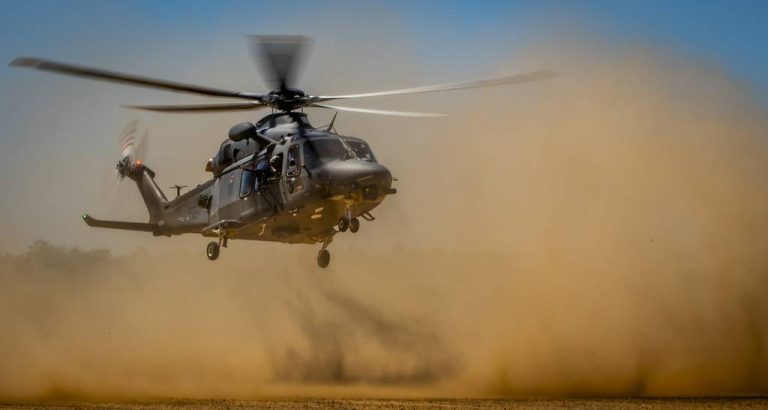
The Air Force’s decision to cut the total number of MH-139A Grey Wolf helicopters it plans to buy has incurred a cost overrun known as a critical Nunn-McCurdy breach.

The service originally inteded to buy 80 of the Boeing-made helicopters, which are slated to replace some of its Vietnam War-era UH-1N Huey helicopters and will be used for security patrols at nuclear missile fields.

But tight budgets prompted the service to dramatically cut its planned purchases of MH-139s in 2026 and beyond, and the service now intends to close out the program with 42 helicopters.

The Air Force expects to keep some older UH-1Ns and fly them at the Air Force District of Washington, Fairchild Air Force Base in Washington, Kirtland Air Force Base in New Mexico, and Duke Field in Florida.

A critical Nunn-McCurdy breach occurs when a major defense acquisition program’s costs increase at least 25% over the current cost targets, or at least 50% over the original expected cost.

An Air Force spokesperson told Defense News the service notified lawmakers about the breach on April 25 and said it was tied to a reduction in the helicopter’s quantities.

House Appropriations subcommittee on defense chairman Rep. Ken Calvert, R-Calif., said during a budget hearing Tuesday the critical Nunn-McCurdy breach of the MH-139A — following a similar breach earlier this year involving the nation’s next intercontinental ballistic missile, the LGM-35A Sentinel — is concerning.

“We also need assurance that your bet on modernization over sustainment will yield success,” Calvert said. “And unfortunately, the track record is not encouraging so far. This follows the Sentinel’s Nunn-McCurdy breach. We need to understand the implications of both of these breach reviews for fiscal year 2025 and beyond.”

A Nunn-McCurdy breach could lead to a program getting cancelled unless the Pentagon certifies to Congress that it is essential to national security, there are no cheaper alternatives that can do the job, the new cost estimates have been deemed reasonable, it is a higher priority than other programs that could get cut to pay for it and the management structure in place will be able to control additional cost growth.

The Air Force has said Sentinel program’s cost overruns were largely caused by its extremely complex construction and real estate development process.

The main difference between the two programs’ breaches, the spokesperson said, is that the Grey Wolf’s cost overruns stem from the plans to cut procurement quantities nearly in half, resulting in a higher per-helicopter cost. The spokesperson said the Pentagon will follow the Nunn-McCurdy process, but it could handle the quantity-related breach in a different way than those caused purely by spiraling costs.

If Congress restores more MH-139s back into the Air Force’s budget, for example, that could solve the Nunn-McCurdy breach on its own without restructuring the program.

The Air Force’s proposed 2025 budget has not yet been approved by Congress, but the spokesperson said it had to manage the program — and declare the Nunn-McCurdy breach — as if its request had already been approved.

The Air Force now has six MH-139s in its fleet, which it is using to wrap up the helicopters’ testing. Boeing is expected to deliver the first 13 low-rate initial production helicopters in 2025, which would bring the total fleet to 19 by the end of the year.

Seven more helicopters are on track for delivery in 2026, the Air Force said. Boeing on Monday announced it has received a $178 million contract to produce those helicopters as well as provide sustainment and training support.

The proposed budget for 2025 requests $333.5 million for MH-139 procurement.

Stephen Losey is the air warfare reporter for Defense News. He previously covered leadership and personnel issues at Air Force Times, and the Pentagon, special operations and air warfare at Military.com. He has traveled to the Middle East to cover U.S. Air Force operations.

Here’s when the US Army will pick next long-range spy plane

0

DENVER — The U.S. Army will choose who is to integrate its long-range, high-speed spy plane this summer, a major step in its effort to overhaul existing fixed-wing aircraft that perform intelligence, surveillance and reconnaissance missions, according to service officials in charge of the program.

The service plans to retire roughly 70 aircraft — its entire ISR fleet — as it brings on the High Accuracy Detection and Exploitation System, or HADES, that will be able to rapidly deploy and provide deep-sensing capabilities.

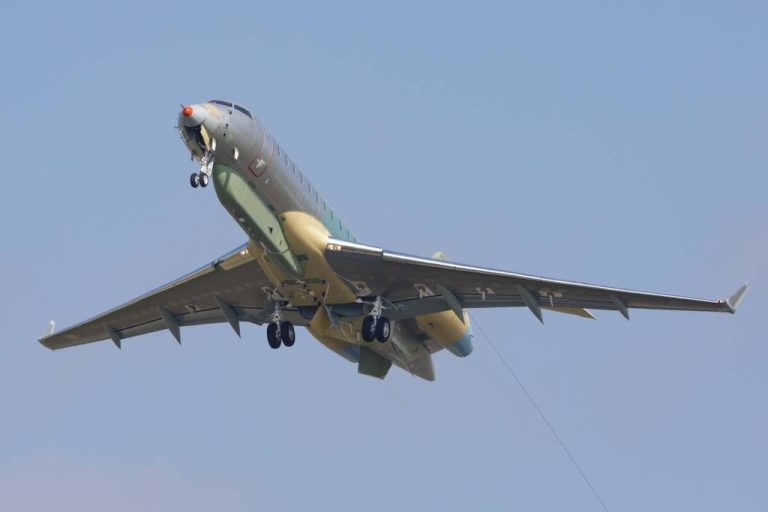
For the first time, the Army is using a large-cabin business jet — the Bombardier Global 6500 — to serve as the airframe for the spy plane. The service awarded Bombardier a contract in December for one aircraft, with an option to buy two more over a three-year period.

Competitors expect the Army to choose the team that will integrate sensors onto the business jet around late June or early July. An L3Harris Technologies, MAG Aerospace and Leidos team is competing against Sierra Nevada Corp. All four companies are involved in ISR fixed-wing prototype efforts with the Army.

What are the Army’s choices?

The Army has spent more than five years assessing ISR fixed-wing prototypes using high-speed jets to inform the HADES program. It began with the deployment of Artemis — or Airborne Reconnaissance and Target Exploitation Multi-mission System — which has flown in the European theater near the Ukrainian border.

The Army in 2019 awarded a contract to HII, and the company subsequently awarded a contract to Leidos to build Artemis using a Bombardier Challenger 650 jet.

Then the service deployed Ares — or Airborne Reconnaissance and Electronic Warfare System — to the Pacific region in April 2022. The Army awarded a contract to Alion Science and Technology, which is now owned by HII. Alion awarded a subcontract to L3Harris in November 2020 to build and fly the aircraft. Ares is based on a Bombardier Global Express 6500 jet.

Combined, Artemis and Ares have flown more than 1,000 sorties, according to Andrew Evans, who leads the Army’s ISR Task Force. They fly roughly 10-hour missions and average 20 sorties a month, he added.

The Army is also preparing to take on four more prototypes that will inform the requirements for the HADES program. The service chose a pair of companies to deliver two jets each with spy technologies to advance long-range targeting plans.

MAG Aerospace and L3Harris will outfit a Global 6500 with ISR sensors for the Army’s radar-focused Athena-R effort.

And Sierra Nevada is providing its RAPCON-X, based on a converted Bombardier business jet, for the service’s singals intelligence-focused Athena-S project.

The president of L3Harris’ ISR division, Jason Lambert, told Defense News at the AAAA conference that the team won its contract in March 2023, began integration in September 2023 when it received the aircraft and held its first flight in February. Since then the aircraft has flown 40 performance handling and quality flights, as well as collected more than 600 data points with a 100% success rate, Lambert said.

“The pilots came back and said it flies just like a Global 6500, despite the fact that we [have] these different outer-mold line changes on it,” he noted. This includes adding a 29-foot-long pod to the bottom of the plane.

The service will receive the two aircraft in the third quarter of 2024 — one in July and another in September, Lambert said. For L3Harris’ HADES submission, the aircraft will be 90% common with Athena-R, he added.

The company expects the service to award a contract for the second HADES prototype about six months after the first. The contract for the third — a production-representative prototype — will follow with a longer time gap in between so the Army can collect data from deployments involving the first HADES prototypes.

Why now?

The Army recognized it would need new piloted, fixed-wing ISR assets to carry out its missions in complex environments — “something that flies much farther, much faster and much higher,” Andrew Evans, the Army’s ISR Task Force director, said.

Using 70 “very capable” Beechcraft King Air and De Havilland Canada Dash-8 aircraft, the Army, “has done some enormous and powerful work in support of the wars in both Iraq and Afghanistan” Evans said during the Army Aviation Association of America’s annual conference this month. But the existing fleet won’t be able to fulfill long-range missions off the coast of China — which the U.S. government considers its top threat — “or really almost any other place in the world if you’re talking about extended geographic ranges with limited basing and access,” Evans added.

“So HADES provides our solution to that, but we have to do it affordably,” Evans noted.

Once the Army picks a team to integrate sensors onto the jet, the process will take 18 months before the aircraft can deploy for a user assessment, the Army estimated. That assessment moves the aircraft from a controlled test environment in the United States to operational environments “to really stress test your systems and figure out what’s working and what’s not,” Evans said.

The Army will deploy HADES for a limited period of time and then start building more aircraft as the early prototype remains deployed, he added.

The service plans to field 14 HADES aircraft by 2035, according to a slide Maj. Gen. Wally Rugen, the director of Army aviation, displayed during a speech at the AAAA conference.

While industry officials said they anticipate the Army will continue to award the same team subsequent contracts to build all of the HADES aircraft, Evans noted that “the guidance to our acquisition teammates was to ensure that we give ourselves as much flexibility as possible in the process.”

What has the service learned?

The Army’s strategy to overhaul its fixed-wing ISR fleet is a unique approach, Evans said, because the service asked industry to provide flight-ready prototypes, rather than select a team to build a system according to specifications. This was meant to help the Army quickly learn while it fills a capability gap.

Indeed, these prototypes are helping the service understand how sensors can keep up with a jet flying higher and at faster speeds, Dennis Teefy, the Army’s project manager for sensors and aerial intelligence within Program Executive Office Intelligence, Electronic Warfare and Sensors, said at the AAAA event.

The Army is currently working through how it refines processing, exploitation and dissemination of an enormous amount of data coming from the platform’s sensors, he added.

“How do we deal with all that volume of data? How do we transport that data across the comms network down to where it needs to go?” Teefy said, noting there are opportunities for industry to continue work on these areas and help the Army figure out how best to move data across the battlefield.

The prototypes already flying have also taught the Army a great deal about adapting sensor needs using a modular, open-system architecture, according to the service’s program manager for fixed-wing aircraft, Col. Joseph Minor.

“It’s different in every [environment] that we operate in, so to be able to change sensors quickly, to be able to adapt, especially on a globally deployable platform, much lower numbers is critical,” Minor said at the AAAA event. “When you are talking about a much smaller number of aircraft that are globally deployed, you’ve got to be able to make those changes on the fly.”

Jen Judson is an award-winning journalist covering land warfare for Defense News. She has also worked for Politico and Inside Defense. She holds a Master of Science degree in journalism from Boston University and a Bachelor of Arts degree from Kenyon College.

Marines to merge air control jobs as new air defense tech comes online

0

WASHINGTON — The Marine Corps will soon merge two air control jobs as it updates its approach to aviation operations and fields a new suite of air defense systems in 2025 in the face of future dangerous, long-distance operations.

Starting as early as 2026, the Marines plan to combine the work of air controllers in two types of roles: those who run tactical air operations centers, and those who staff direct air support centers.

Tactical centers typically provide the big picture of air operations for commanders, while direct support centers sit closer to the fight to offer immediate air support to troops.

“It’s the way grunts have dialed 911 for air support throughout the ages,” Col. Mike McCarthy, who leads the Corps’ aviation expeditionary enablers branch, told an audience at the Modern Day Marine Expo here Tuesday.

The Marine Corps believes it can merge air control jobs as it likewise combines the duties of those separate ops facilities into a new concept — the Multifunction Air Operations Center.

Using the Corps’ new common aviation command-and-control system, which pulls all systems like missile interceptors and other air defense assets into one holistic picture, the Multifunction Air Operations Center is expected to become a one-stop shop for managing those forces. The centralized facility will provide a tactical view of the battlespace, track aircraft and missiles, and strike adversary targets with live rounds and other means, such as electromagnetic warfare.

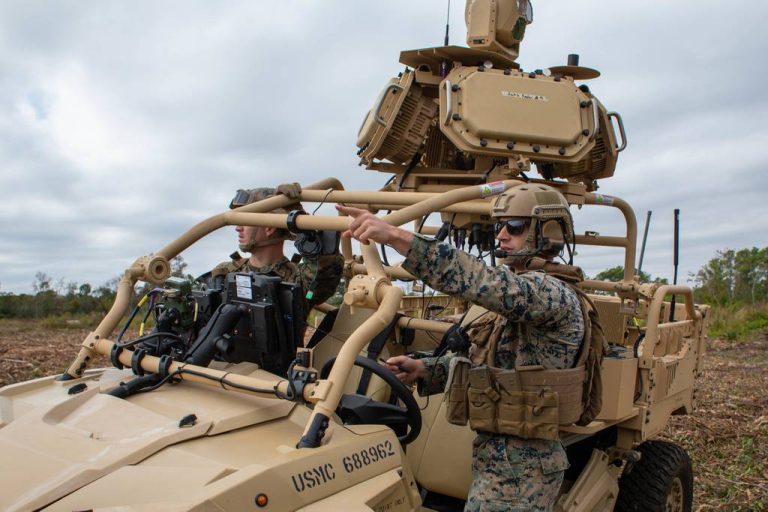
The change comes as the Corps plans to field multiple defensive technologies — adding key new pieces to its air operations enterprise — as soon as 2025. Those include the medium range intercept capability, a cruise missile defense system; the Marine air defense integrated system, two joint light tactical vehicles equipped with electromagnetic warfare tools and a 30 mm cannon; and the light Marine air defense integrated system, a smaller version mounted on an all-terrain vehicle that can fit in an MV-22 Osprey aircraft.

Those systems will flow to the planned 15 air defense batteries the Corps expects to have online by 2029. The Marines had four air defense batteries in 2019, armed with shoulder-fired Stinger missiles and machine guns, McCarthy said.

But air defense isn’t the only change that Marine aviation is tackling as it expects its operational hubs to grow farther and farther apart worldwide.

“We are good at killing things,” said Col. Derek Brannon, director of the Cunningham Group, which merges aviation strategy with new technology. “We have focused a lot on kill webs and kill chains. What we have not focused a lot on, but will drive and allow us to succeed at the end of the day, is the logistics side of that.”

The group is working to maximize the use of communications systems to automatically update a slew of aviation data, like fuel levels and whether a system needs maintenance, to give troops a more accurate understanding of inventory readiness at any given time.

By having that data on hand, aviation planners can in the future use advanced tools like artificial intelligence to better understand how to employ aviation assets worldwide, Brannon said.

To meet its longer-distance sustainment needs, the Corps is developing the tactical aviation ground refueling system — an MV-22 Osprey-transported fuel system specifically designed to gas up vehicles while deployed away from a brick-and-mortar base. The idea is key to Marines’ plan to spread units across vast distances while ensuring they have the supplies they need to fight.

The service is also writing requirements for a P19C fire truck that can be transported in a C-130 Hercules airlifter, and lightweight matting to set up expeditionary airfields on remote islands or austere locations, Brannon said.

Todd South has written about crime, courts, government and the military for multiple publications since 2004 and was named a 2014 Pulitzer finalist for a co-written project on witness intimidation. Todd is a Marine veteran of the Iraq War.

Trijicon ACOG RCO(Rifle,Combat Optic) | Survival Monkey Forums

0


  1. RouteClearance
    Monkey+++


    What else can be said or even explained about this optic that was adopted by both the US Army and Marine Corps.
    This one is mine,
    Trijicon ACOG TA31-D-100367 4x 32 Dual Illuminated Green Horseshoe Dot .223 BAC Reticle Scope

    IMG_0129.

    20240408_132010.


    This unit has a BDC for a 16” barrel firing the older M193 55gr. ball ammo. The reason I chose this BDC was that it also shoots the Mk 262 77gr. BTHP to the same point of aim to 200 meters.

    20240408_132059.

    The dual illumination comes from both the fiber optic on top of the scope and from a by product of nuclear reactors known as tritium gas. A gas that glows in the dark with a half life of 12 years, and is a critical component in making thermonuclear bombs.
    I chose the green horseshoe dot over the red chevron used by the military because it does not wash out in direct sunlight. A trick that we used is to cover the fiber rod with some 100mph tape to avoid the washout of the chevron.


survivalmonkey SSL seal


survivalmonkey.com warrant canary

Marine unit found metal shavings in F-35 fuel, plastic tool in wing

0

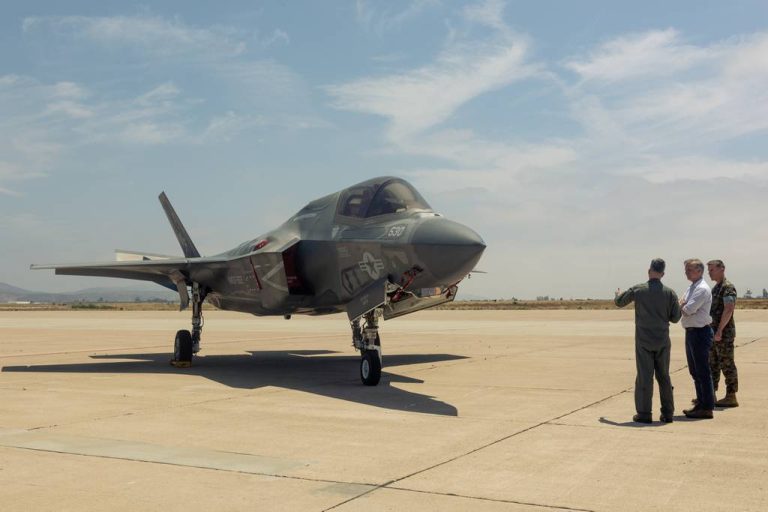
Metal shavings in contaminated fuel, incorrectly assembled parts, and a plastic scraper protruding from a wing fold were among the faults discovered in five new F-35C Joint Strike Fighters delivered to a U.S. Marine Corps fighter squadron in California last year, according to a memo obtained by Defense News.

Marine Fighter Attack Squadron 311, or VMFA-311, at Marine Corps Air Station Miramar in San Diego, California, discovered an array of problems with its Lockheed Martin-made F-35s that ultimately required more than 700 hours of work to fix and wasted more than 169,000 pounds of fuel, the Jan. 7 memo said.

On Dec. 7, for instance, a plastic scraper was discovered protruding from the wing fold of one of the squadron’s jets, after the jet had flown, the memo noted. The 5.5-inch scraper was discovered during a post-flight inspection on the jet and fell to the ground.

The F-35C is the Joint Strike Fighter variant flown by the Navy and Marine Corps, and each plane costs $94.4 million. It can take off from and land on aircraft carriers, and its wingtips are able to fold up to allow more compact storage on aircraft carriers.

The memo was written by VMFA-311 commander Lt. Col. Michael Fisher, who described a pattern of “persistent aircraft delivery discrepancies and premature component failures occurring at Marine Fighter Attack Squadron 311.” Fisher’s memo was approved by Col. William Mitchell, commander of Marine Aircraft Group 11.

“F-35 readiness continues to plague the Marine Corps and degrade our ability to be the nation’s stand-in force,” Fisher wrote. “The number of failed components, expended man-hours and lost sorties is unacceptable to maintain a baseline level of proficiency and consistency at the operational level. An F-35 ready room and maintenance department needs to believe in the quality and production of each F-35 aircraft.”

The severity and scope of the problems the memo described are “very surprising” and “frankly disturbing,” said Dan Grazier, a former analyst for the watchdog group Project on Government Oversight who specializes in defense programs.

Multiple flaws tallied

The quality problems and foreign object debris discovered in these five F-35s snarled the Marine Corps’ effort to stand up VMFA-311, nicknamed the Tomcats, as its second F-35C squadron. The jets had total flight hours ranging between 14 and 157, according to the memo, which was sent to the commanding general of the 3rd Marine Aircraft Wing, Maj. Gen. Michael Borgschulte.

The Marine Fighter Attack Squadron 311 was previously known as Marine Attack Squadron 311, which flew AV-8 Harriers, and the Corps redesignated it as an F-35C unit in April 2023. Then in September, the service declared the squadron “safe for flight,” meaning it had the necessary maintenance programs, processes and trained Marines on hand to be able to conduct flight operations.

But as the revamped squadron began to receive its new F-35Cs, it became apparent each had something wrong with them, according to the memo.

Marine Aircraft Group 11 received the F-35s directly from Lockheed Martin’s factory, and VMFA-311 then conducted acceptance inspections.

All five jets had fuel contaminated with Krytox, a high-temperature lubricating grease, the memo said, and three jets also had metal shavings in their fuel. The jets had to be defueled and refueled two or three times to get the fuel quality up to an acceptable level, with the jets that had metal shavings requiring an extra defueling cycle, the memo added.

Fisher, the VMFA-311 commander, wrote that this meant the squadron had to dispose of more than 169,000 pounds of contaminated fuel.

The seals and segments on multiple jets were not installed correctly, the memo said, and needed to be removed and reorganized.

And multiple parts in the jets — including power and thermal management system controllers, electronic units, and an electric-hydrostatic actuator on a jet’s trailing edge flap — failed, forcing the squadron to remove and replace them, the memo added.

One jet’s left main gear brake assembly also failed, another fighter’s panoramic cockpit display failed and yet another jet’s backup oxygen system bottle was leaking, the memo stated. All components also needed to be removed and replaced.

“This is not an all-inclusive list and other component failures have occurred since this report,” Fisher wrote.

In a statement to Defense News, Lockheed Martin said it is working closely with the Marine Corps, the government’s F-35 Joint Program Office and the Defense Contract Management Agency to address concerns raised in the memo.

“We take pride in the quality of the aircraft we deliver to customers around the world and assess all reported customer feedback on production quality and parts reliability,” the company’s statement said.

Lockheed Martin said it averages fewer than one missed production quality problem per F-35. The company said it closely monitors the reliability of F-35 parts and works with the joint program office to fix parts that fail early. Lockheed Martin also said parts on the F-35 typically last twice as long as those on fourth-generation jets.

The F-35 Joint Program Office declined to comment about the memo and VMFA-311′s F-35s, but said it takes steps to fix problems with new jets delivered to units.

“The JPO and DCMA have various means and teams that are engaged on a recurring basis with industry to evaluate and work corrective actions for quality issues that are reported from the field,” the office said.

Asked whether Lockheed Martin covers the costs of repairs or maintenance stemming from issues found in factory-delivered jets, the office said: “Costs of repairs or maintenance depend on the specific issue.”

The Marine Corps declined to speak to Defense News, saying it would not comment on documents that haven’t been officially released.

The 3rd Marine Aircraft Wing declined to comment on the maintenance issues described in the memo, citing operational security.

Fisher said that to make sure such problems are promptly fixed in the future, a direct communication line should be set up between the F-35 Joint Program Office and Lockheed Martin to those units accepting new F-35s, with responses coming no more than 24 hours after a unit reports a problem.

This needs to be in addition to and outside of the standard action request and occurrence reporting process already in place, he wrote, which “seldomly provides timely feedback or external assistance to repair gripes recorded by the accepting unit.”

Fisher also noted Lockheed Martin “should be accountable and responsible for aircraft discrepancies found during the unit’s acceptance process and functional flight check.” Furthermore, he explained, problems discovered with newly accepted aircraft, including premature component failures, need to be relayed across the entire F-35 fleet, including to other services and units.

Bloomberg in October reported another Marine Corps unit — Marine Fighter Attack Squadron 542 at Cherry Point, North Carolina — had to repair four F-35Bs shortly after arriving.

Grazier said it’s hard to tell whether the reported problems with new F-35s at VMFA-311 are simply a “bad batch” of problematic jets or a sign of a deeper problem.

“But the fact that all five of this squadron’s aircraft have shown up from the factory with problems like this — that certainly indicates a pattern,” Grazier said. “It should be addressed immediately.”

The problems — particularly the massive amounts of contaminated fuel that had to be disposed of — also represent a waste of taxpayer money and Marines’ time and effort, he added. Grazier said a program such as the F-35, which has been in the works since 2001, should have been able to work out such quality issues a long time ago.

“We’re still dealing with problems like this,” he added. “That’s not the way this process is supposed to work.”

Stephen Losey is the air warfare reporter for Defense News. He previously covered leadership and personnel issues at Air Force Times, and the Pentagon, special operations and air warfare at Military.com. He has traveled to the Middle East to cover U.S. Air Force operations.

Orchestrating Files: Perceiving American Article Forming

0

Presentation:

Paper writing in the USA wraps a substitute level of affiliations changed to meet the moved necessities of students and specialists the equivalent. From formal edifying papers to extra superb and story focused pieces, the scene offers a lot of decisions to sort out individual inclinations and basics. In this appraisal, we hop into two clear affiliations: the Unique Paper Forming Alliance and the Story Piece Making Affiliation. Each help offers a striking system for overseeing paper making, putting together different styles, tones, and targets. Together, they address the singing injury around magnum opus of outlining assist with opening in the USA, drawing in individuals to convey their contemplations, experiences, and stories with clearness, creative cerebrum, and exactness.

Paper Making Relationship in the USA: Researching Academic Assistance

Various Commitments

The essay writing service in usa is rich and extraordinary, offering a wide demonstration of decisions to take amazing idea of the changing necessities of students and facilitated informed specialists. From standard quick endeavors to convey pieces like papers and assessment papers, these affiliations cover a far reaching level of making endeavors. Furthermore, the USA shows a flourishing business locale for specialty affiliations, including demands pieces for schools and universities, keep making affiliations, and, particularly, starter making help. This system ensures that individuals can find fitted responses for their specific making needs, whether they’re seeking after savvy significance or searching for gifted headway.

Quality and Cutoff

One of the portraying areas of Article Making Relationship in the USA is the part on quality and accomplishment. Different relationship in this market completely regard using gifted experts who have postgraduate times of plan and express data in various fields. This ensures that clients get a great deal of taught, carefully made articles that fulfill the most raised rules of instructive and competent significance. What’s more, these relationship twirl around buyer force, offering updates and evaluation, in general, plans to ensure that the unquestionable result limits the client’s requesting and nuts and bolts.

Responsiveness and Solace

Regardless of worth and breaking point, Article Trim Relationship in the USA base on straightforwardness and solace. With the presence of online stages and electronic unequivocal contraptions, individuals could for sure whenever get to these relationship from any spot in the country. This straightforwardness contacts the proposing structure, with different affiliations offering direct partnership works with that grant clients toward put orders, talk with creators, and track progress constantly. Likewise, the serious thought of the market consistently achieves sensible evaluation and adaptable piece decisions, making capable making help open to an exceptional number individuals across different cash related establishments.

Reviewing Sublime System: Relaxed Article Making Association

Casual Paper Composing Administration stays as an accessory for individuals hoping to place themselves out there in a free and conversational manner. By no means whatsoever, similar to standard edifying works, which consent to crazy guidelines and formal plans, the Easygoing Paper Making Association offers a more flexible method for overseeing making. Whether it’s sharing individual stories, exploring provocative thoughts, or partaking in enthusiastic discussions, this help embraces the nuances of free making styles, allowing individuals to connect with perusers on a more mystery level.

Changed Help for Obliging Correspondence

In the space of obliging affiliation, convincing straightforwardness is fundamental. The Informal Essay Writing Service wins concerning offering fitted assistance to help individuals with conveying their assessments and assessments with clearness and impact. Whether it’s making blog segments, evaluation pieces, or electronic redirection content, the columnists of this help use a nuanced perspective on language and tone to ensure that each piece resonates with its objective social gathering. By offering pro heading and sponsorship, the Obliging Paper Making Affiliation draws in individuals to yield their considerations, as a general rule and assist with outing perusers in goliath conversations.

Making Creativity and Affiliation

Past from an overall perspective conveying works, the Casual Article Making Connection makes inventiveness and relationship by drawing in people to explore their outstanding points of view and voice. Through consistent parties to pass on memorable considerations and data circles, the makers of this assistance with energizing people to extend the limitations of standard making standards and embrace their imaginative psyche. By giving a stage to veritable clarification and affiliation, the Casual Sythesis Framing Connection attracts people to share their records, pieces of data, and encounters with the world, attracting fundamental affiliations and lighting discussions that reverberate long after the words have been made.

Story Paper Shaping Association: Making Convincing Stories

Making a record structure requires a one of a kind mix of depicting limit and central smart. With a Story Paper Making Connection, people can take advantage of the strength of composed specialists who have some dominance in restoring stories on the page. These affiliations go past standard paper making, zeroing in on reshaping around together stunning records that draw in perusers beginning to end.

Star Narrators accessible to You

The sign of an account paper composing administration lies in its party of master narrators. These specialists have a sharp knowledge of story procedure, character improvement, and plot parts, permitting them to make accounts that resound by and large with swarms. Whether it’s a particular story, a nonexistent story, or a reasonable record, these specialists have the mystery fixing and creative mind to change thoughts into convincing stories that leave a helping through influence.

Amazingly organized Records for Each Event

From school certifications articles to individual journals, narrative essay writing service offer fitted reactions for people endeavoring to share their records in different settings. Whether it’s getting the quintessence of an uncommon encounter or portraying a huge occasion, these affiliations guarantee that records are made with precision and validness. With their prosperity in account plan and portraying frameworks, these affiliations attract people to figure out their encounters and points of view with clearness, feeling, and importance.

With everything considered, the different scene of creation illustrating relationship in the USA mirrors the different idea of thinking of itself. From formal vigilant plans to additional satisfying and story driven pieces, these affiliations manage an enormous number of making needs and styles. The Casual Paper Making Connection offers versatility and imaginative psyche, permitting people to convey their contemplations in a free and conversational tone. Obviously, the Story Piece Making Connection works in making convincing stories that draw in and resonate with perusers on a more essential level. Together, these affiliations highlight the lavishness and social occasion of making support accessible in the USA, attracting people to present their thoughts, encounters, and stories with clearness, validness, and effect.