US Army debates path to buy long-range precision munitions
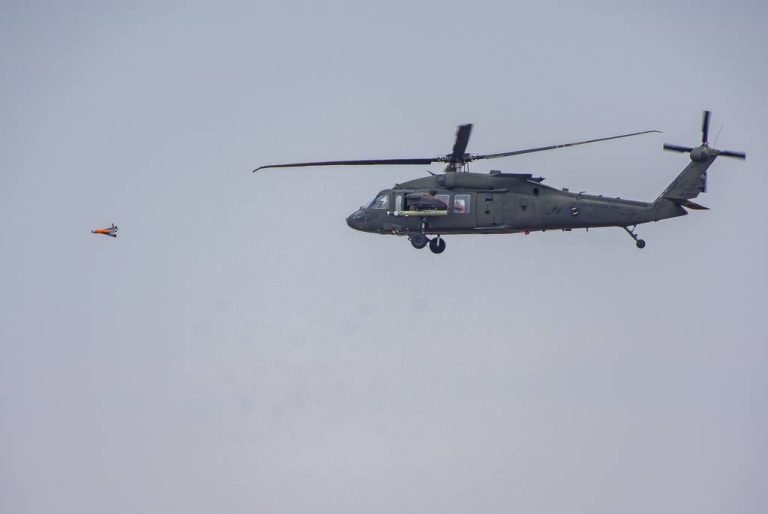
The U.S. Army has spent roughly five years assessing what a helicopter-fired, long-range precision munition would look like. But during that time other options have emerged that could achieve greater commonality with weapons that can be launched from a greater number of platforms, according to the service’s lead for force development.
“Frankly, I have a lot of questions in this space, as the G-8, that I’ve asked for,” Lt. Gen. Karl Gingrich told Defense News in a recent interview.
The Army has procured an interim system for its Long-Range Precision Munition program, or LRPM — Israeli company Rafael Advanced Defense Systems’ Spike non-line-of-site missile. The service is fielding it on a portion of its AH-64 Apache attack helicopters.
The service was expected to choose an industry team to provide a new LRPM in fiscal 2023 following a shoot-off that included the Spike weapon in the fall of 2022, but that decision was delayed.
The Spike “has inherent qualities to it: range, great; sensor, maybe not what we need in the long term,” Gingrich said.
“Is that the solution to proliferate across all Apaches? I’m not sold yet. I need to do some more work,” he added. “LRPM actually is looking an awful lot like a Launched Effects-Medium Range.” Launched effects are expected to deliver capabilities such as targeting, reconnaissance, surveillance, network extension and lethality in a complex environment.
Gingrich said he is considering commonality as a factor. There is a possibility, he noted, that LPRM “just gets pushed into Launched Effects-Medium Range and then now, potentially, we could have a common capability at that range in that form factor that could be air-delivered or ground-delivered from a platform.”
One attribute under consideration, according to Gingrich, is the missile’s speed. A loitering munition is slower. “Do you still need that direct attack that comes in at a higher rate of speed?” he asked. “I don’t know.”
Indeed, the Army still needs something that can achieve extended ranges when considering current battlefields, Gingrich said. “We still have Hellfire [missiles]. We still have [the Joint Air-to-Ground Missile] JAGM, but we’ve never been able to really get the range that we need out of JAGM, which is a great system,” he noted.
The Army is prioritizing the development and acquisition of launched effects that are capable of flying at different ranges and deploying from a variety of air and ground vehicles, particularly with the cancellation of the service’ crewed Future Attack Reconnaissance Aircraft, which made available funding to pursue those programs.
Gingrich is preparing for a session with the Army Requirements Oversight Council to solidify requirements for launched effects. That meeting is scheduled for June 28.
A year ago, the strategy for launched effects was murky. The Army was considering several size classes for launched effects and was prototyping the first version of a small capability. This version was meant to help the service decide how to procure and employ these systems on the battlefield.
There is a great deal of interest from industry. The service held an event in February for launched effects with a large turnout from businesses. The service also plans to experiment with a heavy focus on launched effects at its aviation experimentation event, known as Edge, this fall.
The medium-range launched effects prototype is the result of contributions from five companies that teamed up. The Army plans to wrap up evaluation of the prototypes in September and will then weigh a number of options, from rapid fielding to low-rate initial production to more prototyping.
The service also released a request for proposals in March for a short-range launched effect. A prototyping process for that effort will begin in early FY25.
A long-range version is considered more of a corps-level asset, and prototyping will begin to develop the capability at the tail end of FY25.
Jen Judson is an award-winning journalist covering land warfare for Defense News. She has also worked for Politico and Inside Defense. She holds a Master of Science degree in journalism from Boston University and a Bachelor of Arts degree from Kenyon College.
France to supply Mirage 2000-5 jets to Ukraine, train pilots
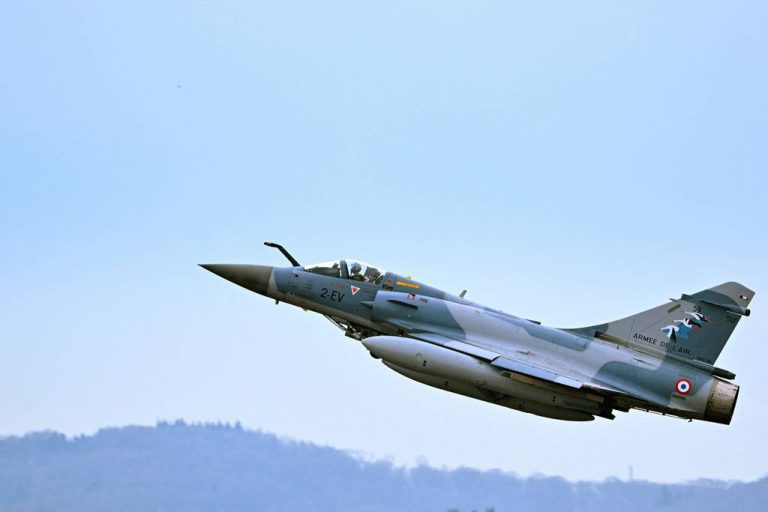
PARIS — France plans to supply Mirage 2000-5 jets to Ukraine and begin training pilots this summer, with the first training completed by the end of the year, French President Emmanuel Macron said Thursday.
France is building a coalition with other countries to provide the jets, similar to the coalition by several other European countries to supply Ukraine with F-16 fighters, Macron said in an interview with broadcasters TF1 and France 2. The French president and Ukrainian President Volodymyr Zelenskyy were in Normandy for D-Day commemorations.
“We’ll be launching a new cooperation program and announcing the transfer of Mirage 2000-5s — French fighter jets that will enable Ukraine to protect its soil and airspace,” Macron said. “From tomorrow, we’re going to launch a pilot training program, followed by the transfer of these aircraft.”
Dassault Aviation produced about 600 Mirage 2000 jets, of which half were exported to eight countries including Greece, the United Arab Emirates and Taiwan. The Mirage 2000-5 is an updated air defense variant with improved radar. It’s compatible with the Mica air-to-air missile as well as the Scalp cruise missiles that France has supplied to Ukraine, which is fighting off a Russian invasion.
Macron declined to say how many jets France will provide, noting details will follow on Friday when Zelenskyy is in Paris.
“The key factor is pilot training time, and so we’re going to propose to President Zelenskyy that pilots be trained as early as this summer — it normally takes five to six months — so that by the end of the year they’ll be able to fly these aircraft,” Macron said, adding that the Ukrainian pilots will be trained in France.
The Dutch and Danish governments last year announced they would provide F-16 jets to Ukraine, with Norway and Belgium joining the coalition. Training of pilots for the aircraft has been ongoing in several European countries.
France will also propose to train and equip a brigade of 4,500 Ukrainian soldiers, according to Macron. He said France and allies are considering training soldiers on Ukrainian soil in response to a request by the embattled country.
“Is this something that is an escalation factor? The answer is no,” Macron said. “Going to train someone in the western zone, which is a free area of Ukraine, is not aggressive towards Russia.”
Macron said Ukraine can use French arms to attack locations in Russia from where the country is being targeted, and restricting such use would be equal to not allowing Ukrainians to defend themselves against being bombed.
“The limit is set by what the Russians do,” Macron said. “We’re not the ones who decide now that we’re going to change our methods and attack Ukraine from Russian soil.”
Zelenskyy will meet with French Armed Forces Minister Sebastien Lecornu in Paris on Friday. He’ll also meet with defense firms KNDS, Thales, MBDA, Dassault Aviation and Arquus, as well as attend the signing of a letter of intent with KNDS to create a unit in Ukraine, according to the Armed Forces Ministry.
Rudy Ruitenberg is a Europe correspondent for Defense News. He started his career at Bloomberg News and has experience reporting on technology, commodity markets and politics.
Men's Health Study Funded By Gun Control Finds Unexpected Result

Anti gunners read it and weep. Study finds that a man's dissatisfaction with his, erm, banana is linearly proportional to the number of guns he owns. This is in opposition to the highly touted but unproven Psychosexual Theory of Gun Ownership which claims the opposite. Thus we can conclude that the smaller the, uh, banana, the less likely that someone will be a gun owner and the more likely they will be in favor of gun control.
Exhibit A:…
Men's Health Study Funded By Gun Control Finds Unexpected Result
US Air Force says it’s on verge of rapid electronic warfare updates

The Air Force is “very close” to being able to rapidly update electronic warfare systems with fresh battlefield data in a matter of hours, one of the service’s commanders said Wednesday.
Col. Josh Koslov, commander of the 350th Spectrum Warfare Wing, has set an ambitious goal of updating EW systems within three hours, instead of days.
In a webcast hosted by C4ISRNET, Koslov said that three-hour goal — which he once referred to as a “moonshot” — is now within reach.
“We’re very close to that, if not exceeding, in most of the systems that we cover in the spectrum warfare wing,” Koslov said. He went on to say that more than half of the 70 EW systems his organization touches across the Air Force are either at or below the three-hour mark for updating.
But many of those systems have unique elements, he said, and the Air Force’s EW systems need to make more use of interoperability and open architecture standards to simplify the process for rapid data updates.
And Koslov said his wing will need enough resources to develop these data production methods that will allow the military to process this data on a large enough scale to work in war, and then transport the data back to the field.
Koslov and Brig. Gen. Ed Barker, the Army’s program executive officer for intelligence, electronic warfare and sensors, said in the webcast that in a future war against an advanced adversary, conditions on the battlefield, threats and targets will likely change so quickly that rapid updates to EW systems will be critical.
‘Data is the weapon’
“We have to be able to continue to add pressure to the adversary in a war in order to seize the advantage and achieve our objectives,” Koslov said. “Data is the weapon that will allow this to happen, and data processing is the way to do that.”
This will include combining data from all sources in the joint force, such as Army units on land, naval ships in the Pacific, or airborne platforms, he said, and then combing through that information to find new threats. The military must then use that data to develop a way to counter that new threat, and then get that new capability back to the field.
To achieve these kind of rapid data updates, Koslov said, the Air Force has revamped its tactics, techniques and procedures to have more of a “warfighting” focus.
When asked whether data updates could be made to systems remotely, or whether they would require something to be physically plugged in, Koslov said that would depend on the EW system. He said information would be transported to Eglin Air Force Base in Florida, where the 350th is located, or other reprogramming centers where more people can process the data.
That will be especially useful during a major conflict against a nation such as China or North Korea, he said, in which joint forces would be spread out across the Pacific region.
“When you come out with a new capability, it’s not good if you just get it into one pocket,” Koslov said. “You have to be able to get it across the force. And so centralizing that is going to be the right way to do that as we move forward.”
The Air Force activated the 350th in 2021, and has since been building up its capabilities by adding more units. Earlier this year, the wing stood up two new electronic warfare squadrons — the 388th at Eglin and the 563rd at Joint Base San Antonio-Lackland in Texas.
The 563rd is focused on building new EW software for operational units to respond to the threats they encounter in the field. And the 388th is focused on studying adversaries such as China to find ways to breach and thwart their digital capabilities.
Koslov said his wing is next focused on building out the 950th Spectrum Warfare Group at Robins, which is expected to be fully activated in 2027. The 950th will be in charge of assessing the EW systems in Air Force’s combat aircraft and improving EW capabilities.
“Everything has to be assessed from a platform perspective — does the platform do what we’ve asked it to do?” Koslov said. “But also our [tactics, techniques and procedures] have to be assessed. … How good are we at fighting and training in the [EW] spectrum?”
Stephen Losey is the air warfare reporter for Defense News. He previously covered leadership and personnel issues at Air Force Times, and the Pentagon, special operations and air warfare at Military.com. He has traveled to the Middle East to cover U.S. Air Force operations.
Airbus, Diehl aim at future air war with drone wingman, remote carrier
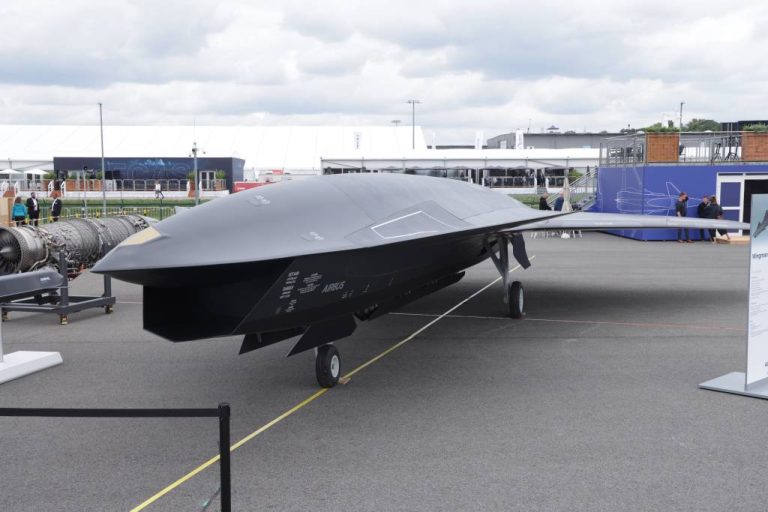
PARIS — Airbus and Diehl Defence provided a glimpse at the future of air combat, presenting concepts for stealthy drone systems that will be able to team up with manned aircraft such as Eurofighter or Rafale years before a future European sixth-generation fighter becomes reality.
Airbus showed off its Wingman concept, a large fighter-type stealth drone to fly alongside piloted jets such as the Eurofighter, at the Berlin Air Show near the German capital on Wednesday. The company also signed an agreement with German defense-software startup Helsing to develop artificial-intelligence technology for a future Wingman system.
Diehl presented a model of a new light remote carrier called Feanix, a drone that can be air launched with payloads including sensors or lethal and non-lethal effectors, and stealth aspects that make it hard to detect by enemy air defenses. The company said it’s been self-financing research into light remote carriers, which it dubbed the missiles of the future.
Germany has called for faster fielding of military drones than the timeline envisaged for the Future Combat Air System (FCAS) being developed with France and Spain. The French senate has said the sixth-generation fighter at the core of FCAS won’t be available before 2045 or 2050, and has called for a wingman drone for the Rafale fighter.
“The current conflicts on Europe’s borders show how important air superiority is,” Airbus Defence and Space CEO Mike Schoellhorn said in a statement on Wednesday. “Manned-unmanned teaming will play a central role in achieving air superiority: with an unmanned Wingman at their side, fighter pilots can operate outside the danger zone.”
Most of the world’s military powers are developing future air-combat systems combining a sixth-generation fighter with unmanned systems. In the U.S., the Kratos XQ-58A Valkyrie drone in 2021 successfully launched a smaller unmanned aircraft from its internal weapons bay, while the U.K. is developing remote carriers as part of the Tempest project.
Many of the developments in unmanned vehicles are in response to a critical need to compensate for a shortfall in the number of conventional combat aircraft, French think-tank Fondation pour la Recherche Stratégique said in an April report.
Airbus is the prime contractor for the remote carriers that will be part of FCAS, with missile maker MBDA and Spain’s Satnus as the main partners. German air force chief Lt. Gen. Ingo Gerhartz said in November that remote carriers resulting from the program were needed “much, much earlier” than the 2040s.
The Wingman concept drone is Airbus’s answer to the German Air Force’s “clear need” for an unmanned companion aircraft before FCAS will be operational, and can result in an “affordable solution” for Germany for the 2030s, according to Schoellhorn. The drone can take over dangerous tasks such as target reconnaissance and destroying or jamming of enemy air defenses.
Artificial intelligence will be a critical component of the system for the German Air Force, Helsing co-CEO Gundbert Scherf said in a statement. “Whilst we will always have a human in the loop, we must realize that the most dangerous parts of an unmanned mission will see a high degree of autonomy and thus require AI,” he said.
Airbus is self-funding the Wingman effort to develop the technologies for entry into service in the early 2030s, in order to operate alongside current-generation aircraft such as the Eurofighter, an Airbus spokesman said in an emailed response to questions. The company is in talks with Germany and Spain about the concept, but no program has been started.
While the most obvious use case is the Eurofighter, the Airbus drone could work with other fighters such as Rafale, Gripen or the F-35, or even larger aircraft such as the A400M transporter or A330 MRTT tanker, the company said.
Dassault Aviation has been working on its nEUROn drone, which the French senate has said could be the basis for an unmanned wingman for the Rafale. The program’s technological demonstrator completed its first flight in December 2012, and first released a weapon from the internal bay in September 2015.
The Airbus Wingman drone on display in Berlin has a wingspan of 12 meters and an overall length of 15.5 meters, and the company expects the aircraft would operate at high transonic speed, so around the speed of sound.
The Diehl drone is significantly smaller, and a length of less than 4 meters and weight of less than 300 kilograms means the unmanned aircraft could be air launched. Pan-European missile maker MBDA has been working on similar remote carriers.
“Remote carriers are a core element of the international FCAS program, but are also used beyond the FCAS role, which is why Diehl Defence aims for an operational availability well before the FCAS realization period of 2040 plus,” the company said in a statement on Wednesday.
The teaming and swarming capability of the system will be a game changer in future scenarios, the company said. Light remote carriers operation will be highly automated and independent from the carrier system, with high numbers providing combat mass, Diehl said.
Rudy Ruitenberg is a Europe correspondent for Defense News. He started his career at Bloomberg News and has experience reporting on technology, commodity markets and politics.
So who do we thank for this?

Health Officials Issue Warning on Measles Exposure at Philadelphia International Airport
Health Officials Issue Warning on Measles Exposure at Philadelphia International Airport
CDC: Whooping…
