Survivalist in South America | Survival Monkey Forums

0

Hello,

I’m living in Brazil, and first, I would like to say hi to you all – so, HI!

Living here is almost like living in a war zone, and human adaptation to the environment is outstanding! This is a country where warlords and criminals have all the weapons, and civilians don’t have easy access to firearms. How I miss the US for this reason.

Anyway, since I’m here, my urge to go off the grid is growing. I have some preparation in survival skills (as a pilot), and I’m a third-generation Air Force military.

​

Sometimes I go into the wilderness alone and spend one to three days, but now I’m really looking to build an off-grid place (bunker), where I intend to live and just get to a nearby city for supplies while it still exists. And this is my primary goal here with you all: to get help on how to build my bunker with the few resources I can get here and be prepared.

What I’m looking for:
– A very straightforward blueprint to build a bunker that I can use as a home too. This bunker must have its own water and air treatment systems, electric generators and batteries, hydro farm, chickens for eggs, gauges to measure everything inside and outside (temperature, oxygen, pressure, wind, etc.), and a disposal system with recycling (e.g., take the gases and use for fire and heat), supply storage.

I intend to build this in a place above 1,000 feet. So, if one of you has some links to help me achieve that, it will be more than appreciated. I have five books on survivalist skills, but none touch the environmental differences for this area (for instance, I have to use a WAC as a map).

So, the first thing: To start building the bunker/house – all ideas are more than welcome.

Thank you all, and if you’re around, or want to get around, I’ll be glad to be in touch.


Progressive insurance opening Big Brother driver watch

0

It’s part of the risk one takes if they want to be part of the program and if they did violate your privacy they’d be in a heap of sheet.

The Progressive Corporation — Snapshot Privacy Statement

Personally I wouldn’t sign up for it or agree to it anyways, but what I was saying is this is very little different than the data collection most people don’t even realize their vehicle is already doing. I don’t care if it takes a court order or not I don’t even want the data to exist in the first place.


FR Shirts for Cheap Affordable Flame-Resistant Shirts Shop Now

0

Forge FR offers affordable FR shirts. Browse our collection for durable flame-resistant shirts. Stay protected without compromising on quality or budget. Shop now and ensure safety without overspending on reliable flame-resistant apparel. Explore our range of affordable FR shirts at Clothing and prioritize safety without sacrificing affordability.

FR Shirts for Cheap

Osprey fleet won’t return to full flight operations until 2025

0

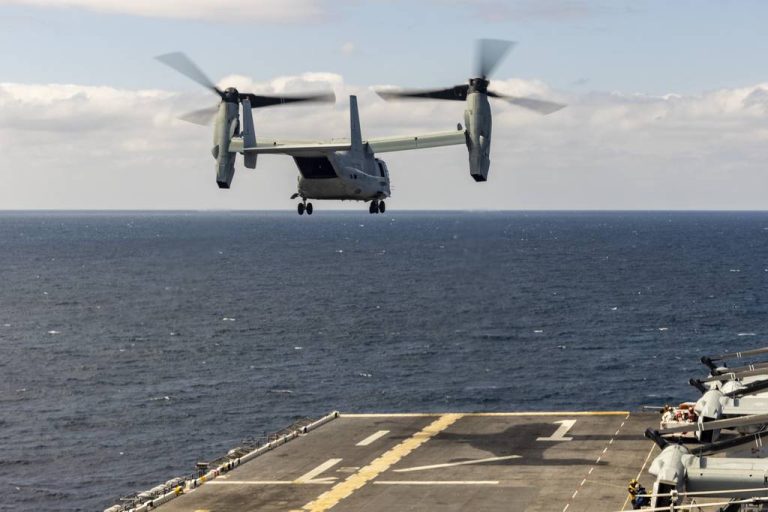
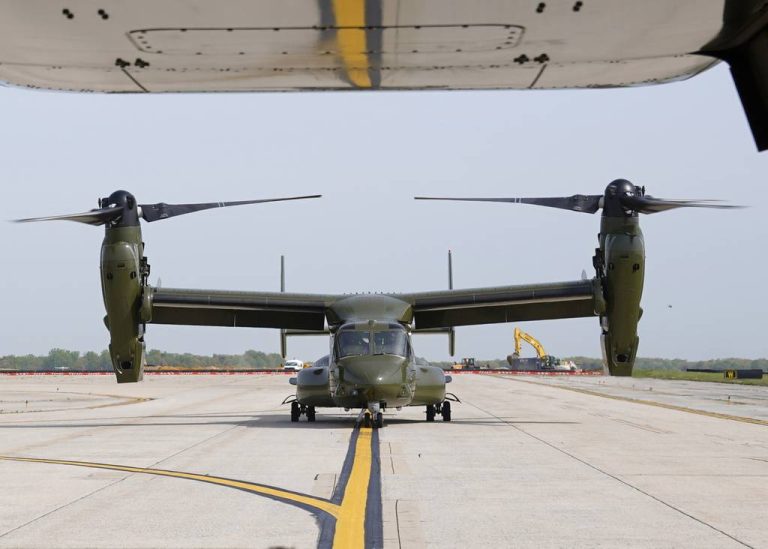
The U.S. military doesn’t expect its fleet of more than 400 V-22 Osprey tiltrotor aircraft to fully resume normal flight operations until at least the middle of 2025, a Navy admiral in charge of the joint program told a House Oversight subcommittee Wednesday.

Naval Air Systems Command boss Vice Adm. Carl Chebi, whose office oversees Ospreys in use across the Air Force, Navy and Marine Corps, said a review that is probing whether the enterprise has adequate manning, training and equipment, will last another six to nine months.

“As we have findings from the comprehensive review, I will take the necessary actions to ensure continued safe flight operations,” Chebi told the panel of lawmakers.

The command allowed the Osprey to begin returning to the air — with flight restrictions in place — in early March, three months after the fleet was grounded in early December following an Air Force CV-22 crash off the coast of Japan that killed all eight airmen on board.

Ospreys can be flown like an airplane and take off and land like a helicopter, making them useful for aircraft carrier landings as well as for special operators entering austere environments.

The Marine Corps operates hundreds of the aircraft, while the Air Force and Navy own around 50 and 30, respectively. Marine Ospreys are starting to reenter the fray; 10 aircraft from Marine Medium Tiltrotor Squadron 268 headed to Hawaii in May in preparation for a training exercise in Australia, while the 24th Marine Expeditionary Unit is using them in Sweden as part of Exercise Baltic Operations.

The Navy’s CMV-22 fleet remains sidelined from performing its carrier support mission at sea, service officials said Wednesday. Despite getting the green light to resume regular missions, the services are barred from flying more than 30 minutes from an airfield where they could land in case of an emergency, according to Military.com.

Osprey crews at Cannon Air Force Base, New Mexico, have begun rebuilding their skills in anticipation of returning to normal ops, and other squadrons are getting close to flying again, Air Force Special Operations Command spokesperson Lt. Col. Rebecca Heyse told Air Force Times.

An investigation into the Air Force’s Nov. 29 CV-22 crash is nearing completion, with briefings for families expected in the coming weeks. The military has said that accident was the result of a material failure that hadn’t been seen before on the Osprey.

Ospreys have suffered a string of fatal crashes since the U.S. military introduced them into special operations more than two decades ago, including four mishaps that have killed 20 service members since March 2022. The military grounded the Ospreys in 2022 and again in 2023, after a series of “hard clutch engagements” that occurred when the input quill assembly, which attaches the Osprey’s engine to its proprotor gear box, wore out earlier than expected.

On Wednesday, Chebi and Gary Kurtz, program executive officer for anti-submarine, assault and special mission programs including the Osprey, told lawmakers that a redesigned clutch is expected to begin testing soon.

“We anticipate that we will have a new clutch fielding in the mid-2025 timeframe,” Kurtz said.

Faced by Gold Star families who held photos of loved ones during Wednesday’s hearing, lawmakers questioned the aircraft’s mishap and readiness rates, the latter of which have struggled in recent years due to woes like corrosion issues and a lack of available parts.

For example, the Air Force CV-22 fleet’s mission-capable rate, or the percentage of time that the aircraft can perform at least one of its core missions, hovered around 50% between fiscal years 2020 and 2022, according to data provided to Air Force Times.

Members of the House Oversight Committee also pushed for more transparency, saying the military wasn’t sharing enough about the findings on its recent crashes.

Some on Capitol Hill are running out of patience.

Rep. Stephen Lynch, a Democrat from Massachusetts, called for the entire fleet to be grounded while the military works works out a fix for the clutch.

“If another Osprey goes down, we’re done,” Lynch said. “This program’s done.”

Courtney Mabeus-Brown is the senior reporter at Air Force Times. She is an award-winning journalist who previously covered the military for Navy Times and The Virginian-Pilot in Norfolk, Va., where she first set foot on an aircraft carrier. Her work has also appeared in The New York Times, The Washington Post, Foreign Policy and more.

NATO allies practice dogfighting as Russia gains ground in Ukraine

0

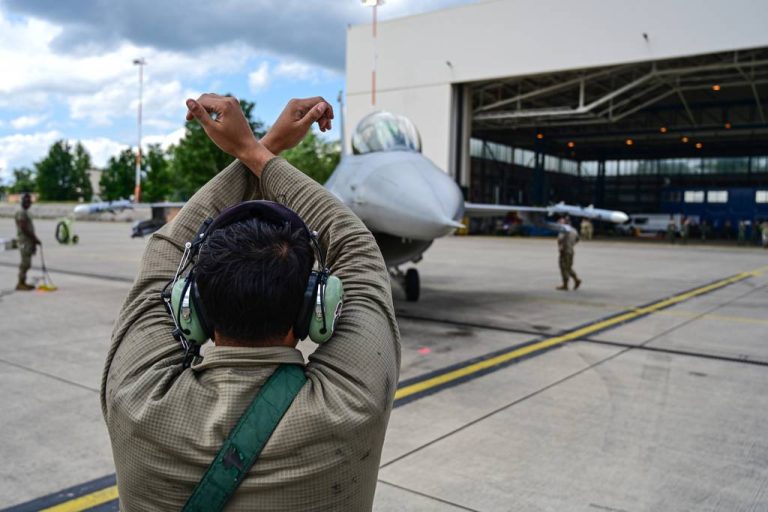
More than three dozen fighter pilots from nine NATO countries convened last week at Ramstein Air Base, Germany, to face off against each other in a first-of-its-kind, U.S.-led exercise to sharpen air-to-air combat skills and coordination between allies.

“Ramstein 1v1″ pitted pilots from the U.S., United Kingdom, Norway, Netherlands, Belgium, Denmark, Finland, France and Germany, against each other in a daylong competition of basic fighter maneuvers, or “dogfighting,” in which rapid decisions and sharp response to an adversary can mean life or death. It featured a mishmash of aircraft, including F-35A Lightning IIs, F-16 Fighting Falcons, Eurofighter Typhoons, French Rafales, F/A-18 Hornets and A-4 Skyhawks.

The exercise was a first for U.S. Air Forces in Europe, and turned Ramstein, a military airlift hub, into a fighter base for a day.

“Basic fighter maneuvering … is a foundational skill set for fighter pilots,” Lt. Col. Michael Loringer, USAFE’s chief of weapons and tactics, said in a statement. “It tests a pilot’s reaction time, physical stamina and situational awareness. … There is no better way to build trust in a pilot’s aircraft or a pilot’s skills than to engage” one-on-one.

The event comes as Russia gains ground in Ukraine in the third year of the war on NATO’s doorstep. The U.S. military and its allies have turned their attention to bolstering aerial combat skills as they prepare for the possibility that tensions with Russia and China might spill into armed conflict, pitting advanced air forces against each other for the first time in decades.

As part of that prep work, the Air Force last September brought back its famed “William Tell” aerial shooter competition after sidelining it for nearly two decades because of high operations tempo in the Middle East. Air Combat Command told Air Force Times Tuesday that a 2025 William Tell competition is tentatively in the works, though a date has not yet been set.

USAFE Commander Gen. James Hecker said last year that NATO pilots will also put freshly honed offensive and defensive maneuvers to the test at a major new training exercise, Ramstein Flag, in Greece at the end of 2024.

“We don’t want to go to war with Russia, and I don’t think they want to go to war with us either,” he told Air Force Times last July. “But we need to make sure that we have the forces capable of deterring them, so that nothing bad will happen.”

During last week’s exercise, U.S. airmen from RAF Lakenheath, England, pitched in to service the Royal Norwegian Air Force’s F-35s. The 86th Airlift Wing at Ramstein handled installation support and flight line operations.

The exercise focused on readiness and building trust, with some friendly competition built in. After a day of flying, a piano was burned in memory of fighter pilots killed in action — a World War II tradition that lives on.

“We are not just NATO allies, but a community bound by genuine friendship and respect,” Loringer said. “I emphasize this point because successful military operations require exceptional teamwork, often critical to survival. And as a pilot, it boils down to trust. It’s crucial to trust your wingman.”

Courtney Mabeus-Brown is the senior reporter at Air Force Times. She is an award-winning journalist who previously covered the military for Navy Times and The Virginian-Pilot in Norfolk, Va., where she first set foot on an aircraft carrier. Her work has also appeared in The New York Times, The Washington Post, Foreign Policy and more.

Remember when folks were scared of "Big Brother"?

0

Nobody was watching Big Business. And more to the point – Big Business, NGOs and 'non-profits' looking to control what you are allowed to ea.

The Enemies of Food Freedom ⋆ Brownstone Institute
Shortish article lying out just who the bad guys are in the upcoming food fight. I find the intersection of the NGOs/Trusts as the real scary part.

Old man Rockefeller would shoot his own GG grandkids for what they…

Remember when folks were scared of "Big Brother"?

Congress still waiting on Osprey crash, safety documents from Pentagon

0

A House Oversight Committee panel that is investigating the safety and oversight of the V-22 Osprey aircraft following a string of fatal crashes has not received critical data or accident reports that its members requested months ago, two committee staffers told The Associated Press.

The aircraft, subject of a hearing Wednesday, has faced safety, maintenance and reliability issues for decades, with 62 service members and civilians killed in 12 Osprey accidents since 1992. The most recent was a crash off the coast of Japan in November that killed eight U.S. service members and led the military to ground the entire fleet. The aircraft, which can fly long distances fast like an airplane but land like a helicopter, began returning to service in March with flight restrictions.

Among the information that the House Oversight Committee’s Subcommittee on National Security, the Border and Foreign Affairs has requested but has yet to receive is the wear and replacement rates on Osprey proprotor gearboxes, a component that was a factor in the 2023 crash off Japan.

Committee members also have asked for internal crash reports that the military conducts with surviving air and ground crews and witnesses. The reports, known as safety investigation board reports, aren’t available to the public and cannot be used to punish a crew — they are in place to identify and quickly share any safety issues among the fleet.

To date, the staffers said they had received about 3,500 pages of documents, but information was redacted, leaving them unable to conduct oversight. The committee staffers spoke on the condition of anonymity to discuss sensitive matters.

The staffers said the documents they have reviewed left them concerned about whether Pentagon leadership has maintained a close watch on the Osprey program. Some of the problems with the aircraft date back a decade or more but still haven’t been fixed.

After mechanical and material failures led to an Osprey crash in California in 2022 that killed five Marines, the military said it had instituted changes to prevent the issue from happening again.

“However, the recent fatal crash and ongoing investigations suggest that more transparency and rigorous testing is needed to verify these claims,” U.S. Rep. Glenn Grothman, a Wisconsin Republican who chairs the committee, said in a statement to the AP ahead of the hearing Wednesday.

Testifying before lawmakers will be Vice Admiral Carl Chebi, head of the U.S. Naval Air Systems Command, which is responsible for the Osprey program across the military.

The committee is concerned about how the Pentagon will be able to sustain the Osprey program long term. Parts are wearing out faster than anticipated, but recent operations and maintenance budget requests by the Pentagon for the aircraft have been cut, Grothman said.

The Marine Corps is planning on using the Osprey through 2050, while Air Force Special Operations Command has already begun to talk publicly about finding another type of aircraft to conduct missions.

Osprey producers Bell Flight, the Boeing Co. and Rolls-Royce, which supplies the engines, are facing a new lawsuit from families of the five Marines killed in the 2022 California crash. The lawsuit alleges that the companies did not address known parts failures or safety issues that were a factor in the crash.

Boeing and Bell have declined to comment, citing the ongoing litigation.

The most recent crash last year in Japan was the fourth in two years which killed a total of 20 service members. The Air Force quickly identified that a material problem with the aircraft was to blame for last year’s crash, and within a week, the entire Osprey fleet — hundreds of aircraft across the Marine Corps, Navy and Air Force — were grounded.

The staffers said the Pentagon has not provided details on what the restrictions are as the aircraft returns to operations.

The V-22 Osprey is loved by pilots because of its speed and ability to land on target like a helicopter. Besides the deadly crashes, there have been additional accidents in which the aircraft were destroyed and service members were injured, but all survived.

Tara Copp is a Pentagon correspondent for the Associated Press. She was previously Pentagon bureau chief for Sightline Media Group.

How To Stop The Bleeding Using A Tourniquet

0

The danger of hemorrhage from traumatic injuries is ever-present, whether in times of peace or chaos, arising from incidents like car crashes, workplace accidents, civil disturbances, or even a hypothetical zombie apocalypse. Without prompt treatment, a severe arterial bleed can render a person beyond medical assistance within mere minutes. Sometimes, the blood loss is so critical that emergency responders can’t reach the victim in time.

Uncontrolled bleeding is the primary cause of death in 90% of potentially survivable battlefield injuries, with most fatalities occurring before the injured can access advanced medical care. Therefore, it is crucial for medics in survival situations to understand how to manage bleeding wounds and have the appropriate tools to control them.

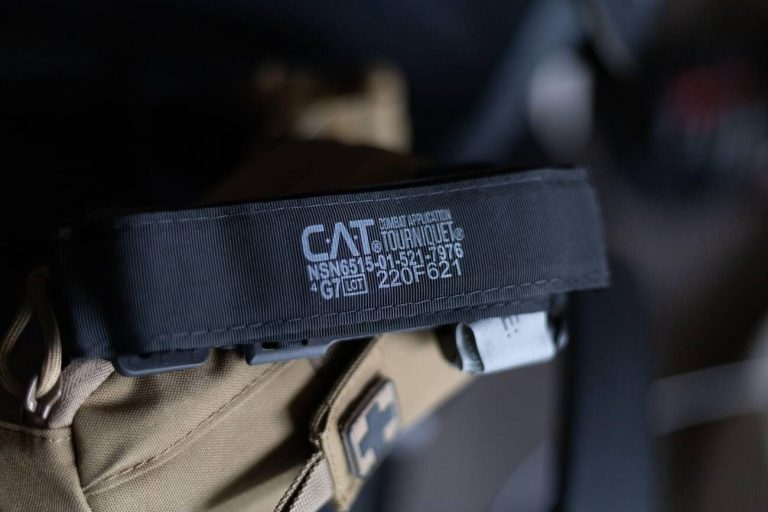
Among these tools, the most crucial is the tourniquet. This device applies pressure to a vein or artery, effectively halting blood flow and preventing further blood loss.

History of  the Tourniquet

Efforts to control battlefield bleeding date back to ancient times, including the era of Alexander the Great. Early methods typically involved using a cloth or strap and a stick to twist and apply pressure to a bleeding limb.

In the early 1700s, French surgeon Jean Louis Petit invented a more sophisticated device: a strap with a screw that could be turned to compress blood vessels and stop bleeding. The term “tourniquet” originates from the French verb “tourner,” meaning to turn. During the American Civil War, over 50,000 strap tourniquets and 13,000 Petit screw tourniquets were utilized to perform more than 29,000 amputations on Union soldiers.

Since then, tourniquets have been both heralded as lifesaving devices and criticized for causing limb loss. In the 21st century, the perception has shifted towards the former. A 2013 study of military experiences in Iraq and Afghanistan revealed that nearly 25% of combat deaths from hemorrhage between 2001 and 2011 could have been prevented with proper equipment and training.

Today, every U.S. soldier carries a tourniquet as part of their individual first-aid kit when deployed in the field.

Bleeding effects on the human body

Although the volume of blood in the human body varies based on factors such as sex, weight, age, and even altitude, an average estimate is about 9 to 10 pints. How does blood loss manifest in the signs and symptoms observed by a rescuer?

The American College of Surgeons categorizes hemorrhage into four classes with distinct signs and symptoms:

Class I: Loss of up to 1.5 pints (0.75 liters)

  • Little to no effect on the victim.
  • Possible slight anxiety due to the presence of blood.
  • Pulse might increase slightly, but blood pressure and respiration rates remain normal.
  • Comparable to donating a pint of blood every eight weeks.

Class II: Loss of 1.5 to 3 pints (0.75 to 1.5 liters)

  • Victim is typically agitated.
  • Rapid heartbeat (over 100 beats per minute) and respirations (20 to 30 per minute) occur as the body compensates to deliver oxygen with fewer red blood cells.
  • Blood pressure stays within normal limits.
  • Skin becomes cool and may appear pale.

Class III: Loss of 3 to 4 pints (1.5 to 2 liters)

  • Blood pressure starts to drop due to reduced blood volume.
  • The body’s ability to deliver oxygen to tissues weakens.
  • Victim appears very pale, agitated, and confused.
  • Heartbeat exceeds 120 beats per minute, and respirations reach 30 to 40 per minute in an attempt to maintain oxygenation.

Class IV: Loss of more than 4 pints (over 2 liters)

  • Victim is extremely pale; confusion progresses to lethargy and unconsciousness.
  • Pulse becomes very rapid (over 140 beats per minute) and weak (thready).
  • Continued blood loss leads to a further drop in blood pressure.
  • Heart rate and respiration begin to decrease as the body struggles to maintain oxygenation.
  • The circulatory system eventually collapses, resulting in hypovolemic shock, putting the victim in serious danger without immediate and significant intervention.

Placing a Combat Application Tourniquet (CAT)

The Combat Application Tourniquet (CAT) is one of the most widely used commercial tourniquets by both military and civilian personnel. Here are the steps for its proper placement:

  1. Put on gloves (if available).
  2. Expose the wound: Cut through clothing to fully visualize the injured area.
  3. Position the tourniquet: Slide or wrap the tourniquet 2 inches or more above the wound.
  4. Secure the strap: Pull the long Velcro strap tight to eliminate any slack.
  5. Twist the windlass rod: Turn it until the bleeding stops.
  6. Secure the rod: Place the windlass rod into its clip.
  7. Fasten the strap: Wrap the long strap over the rod and inside the clip.
  8. Cover the clip: Use the small gray Velcro strap to cover the windlass clip.
  9. Record the time: Write the application time on the windlass strap.
  10. Monitor for rebleeding: Check frequently for any rebleeding.
  11. Contact emergency services: Continue to monitor the victim closely until help arrives.

Medical banner

A few must-knows before use

Understanding hemorrhage and the proper use of tourniquets is essential for an effective off-grid medic. Several key principles must be considered:

Understanding the difference between arterial and venous bleeding is crucial. Arterial blood is oxygen-rich, giving it a bright red color, and it tends to spurt vigorously from the wound in sync with the pulse. This type of bleeding is under higher pressure, making it more challenging to stop. In contrast, venous blood is oxygen-poor and much darker. It flows more steadily due to lower pressure, making it easier to control compared to arterial bleeding.

Using your hands to apply direct pressure on the extremity can stop 80 to 90 percent of bleeding. However, in situations where the injury is clearly life-threatening, applying a tourniquet immediately is usually the best course of action. The chances of survival are significantly higher when a tourniquet is used before the victim goes into shock from blood loss.

Applying pressure is still very effective. When you first encounter a victim, try to put on gloves if you have them, and use a cloth, dressing, or another barrier to apply pressure to the wound. This method can often stop mild to moderate bleeding. If the bleeding stops, keep applying pressure for at least 10 minutes and call for help.

Ensuring your hands are free is essential to access supplies like gloves, dressings, and tourniquets. If needed, you can use your knee to apply pressure temporarily while reaching for a tourniquet, bandages, or other necessary items.

It’s important to note that standard limb tourniquets are not suitable for controlling bleeding in the groin/hip, torso, or armpit/shoulder areas. Specialized devices called junctional tourniquets are required for these types of bleeds.

Successful tourniquet application on extremities relies on understanding the complete extent of the bleeding injury. Using shears to fully expose the limb facilitates a rapid and thorough examination of the hemorrhage source and extent. Position the casualty in a manner that offers optimal visualization, often the “shock” position: lying supine with the legs elevated approximately 12 inches above the heart.

While it’s ideal to place tourniquets on bare skin, in hostile situations, medics may not have the luxury of time to remove clothing and thoroughly assess the bleeding site. In such scenarios, it’s acceptable to position the tourniquet high on the extremity and over the clothing. If there are foreign objects or projectiles embedded in the wound, they should be left in place as they may help control bleeding. Pressure can be applied by packing material around the object on both sides.

Raising a bleeding limb above the heart level might hinder the heart’s ability to pump blood out of the body, but it’s unlikely to completely halt bleeding without direct pressure. Attempting to compress “pressure points” is seldom effective in stopping heavy bleeding for two reasons: firstly, locating the precise spot can be challenging, and secondly, limbs receive blood supply from multiple arteries.

Position the tourniquet approximately 2 to 3 inches above the hemorrhagic wound. Why not directly on the bleed? When an artery is severed, it typically retracts towards the torso, making direct application less effective. However, avoid placing the tourniquet directly over a joint, as this may cause significant nerve damage, particularly in joints like the knee, ankle, or elbow. Instead, apply it higher up to ensure effectiveness and minimize risks.

Applying tourniquet pressure against one bone is more effective than against two. In areas like the forearm and lower leg, bleeding may occur between two bones, such as the radius and ulna or the tibia and fibula. Applying pressure against the humerus in the upper arm or the femur in the upper leg is more effective in controlling hemorrhage in such cases.

Typically, deep bleeds necessitate packing the open wound to access bleeding vessels. If bleeding persists, keep standard dressings in place and add new ones on top. If the wound continues to bleed through subsequent bandaging, consider using hemostatic-type dressings like QuikClot or Celox. For these products to work effectively, they must directly contact the bleeding vessel. In such cases, remove old dressings before applying the hemostatic dressing and apply firm pressure to the area for at least three minutes.

a few must knows before use

Be cautious of “pressure loss,” which describes the decrease in tension under the tourniquet that often happens after the initial minute or two of application. This loosening could lead to rebleeding, so it’s important to monitor the tourniquet’s tightness and readjust if necessary.

The initial tourniquet might not completely halt the bleeding; in such cases, a second one may be required and should be included in every medical kit. Position the second tourniquet directly above the first one, closer to the heart, to enhance effectiveness.

When tightening the tourniquet and twisting the windlass, ensure to apply firm pressure. If the victim doesn’t feel discomfort during this process, it indicates insufficient pressure. It’s advisable to forewarn them that it will be painful. A properly tightened tourniquet should stop both bleeding and any pulse beyond it (farther from the heart). However, traumatic amputations may present exceptions, as some oozing from the bone marrow of the stump may occur despite correct tourniquet placement.

It’s essential to document the time of tourniquet application in a clearly visible location, ideally with a permanent marker. The Combat Application Tourniquet (CAT) often provides a space on the windlass strap for this purpose. Fortunately, leaving the tourniquet in place for up to two hours, or even longer according to some studies, typically carries minimal risk of permanent damage or amputation. In remote or austere environments, you can mark a “T” and the time on the patient’s forehead using ashes or blood for visibility.

Improvised tourniquets, such as those made from a bandanna and a stick, may assist in controlling hemorrhage, but they are generally less effective than commercially manufactured military-tested items. For instance, using a man’s tie may create a cord-like effect that is too thin and can damage tissues. It’s recommended that a tourniquet be at least 4 centimeters wide to avoid nerve damage underneath it. Classic leather-belt tourniquets, often depicted in movies, are typically challenging to tighten with a stick and may not secure in place easily.

When transporting a victim with a tourniquet in place, it’s crucial to continuously monitor for rebleeding. Blankets should cover the victim to prevent shock, but special attention is needed for a tourniquet, especially if it’s improvised, as it could become dislodged due to the jostling during evacuation. It’s important to frequently expose the wound area to check for bleeding. Additionally, splinting the extremity will aid in stabilizing it, reducing the risk of further hemorrhage.

It’s essential to refrain from loosening or removing the tourniquet until the patient is in a controlled environment. Repeated loosening and tightening can potentially exacerbate blood loss and worsen the victim’s condition.

For safety precautions, it’s advisable to transition the tourniquet to hemostatic gauze and a pressure dressing before reaching the two-hour mark. Once the hemostatic gauze is firmly packed inside and the pressure dressing is applied over the wound, slightly loosen the tourniquet (but do not remove it) to assess for any recurrence of bleeding. If bleeding resumes, retighten the tourniquet; if not, loosen it further. Continue to monitor the situation closely, reassessing once all tension has been released from the tourniquet, and maintain constant vigilance.

A last word

non addictive frontier morphine recipe and more v2Medical kits should be as easily accessible in public areas as fire extinguishers, and they should consistently contain a tourniquet. It’s crucial for everyone to be trained in its proper usage. Personally, I believe this training should be integrated into standard school curricula.

The U.S. government has introduced the national Stop the Bleed initiative, aimed at providing training to the general public. This initiative has empowered thousands of Americans to effectively address significant hemorrhages, ultimately saving lives. You can join this effort and become one of those capable individuals.

You may also want to check this:

Knowledge to survive any medical crisis situation during a major disaster

Trauma Scenarios And How To Handle Them

Find Out What’s the Closest Nuclear Bunker to Your Home

Medical Procedure – IV Basics For The Prepper Medic

Alternative Medicine – Bacterial Infection Medication: Azithromycin

0

  1. Azithromycin 500 mg is a widely used antibiotic medication belonging to the macrolide class, which is particularly effective against a variety of bacterial infections. It works by inhibiting the synthesis of essential proteins required by bacteria to grow, thus halting their proliferation and allowing the body’s immune system to eliminate the infection. Commonly prescribed for respiratory infections such as bronchitis and pneumonia, buy azithromycin online that is also effective against skin infections, ear infections, and certain sexually transmitted infections like chlamydia. Its convenience is enhanced by its dosing regimen, often requiring just one dose per day for a short duration, making it a preferred choice for patients and healthcare providers alike. Additionally, azithromycin’s broad-spectrum activity and relatively low incidence of severe side effects contribute to its reputation as a reliable and versatile antibiotic.


  1. Alanaana
  2. Alanaana
  3. Alanaana
  4. Alanaana
  5. Ariasmith
  6. Alanaana
  7. Alanaana
  8. Alanaana
  9. Alanaana
  10. Alanaana
  11. Alanaana
  12. Alanaana
  13. jefferson
  14. Alanaana
  15. jefferson
  16. fl4848
  17. HK_User
  18. Ganado
  19. Ganado
  20. hot diggity


survivalmonkey SSL seal


survivalmonkey.com warrant canary

FEDERAL COURT RULES COVID SHOTS ARE NOT VACCINES, BIG PHARMA LIABLE FOR FRAUD

0


  1. mysterymet and Zimmy like this.
  2. LOL! Like this will change anything. :LOL::LOL:


survivalmonkey SSL seal


survivalmonkey.com warrant canary