New Vacuum sealer | Survival Monkey Forums

0

Finally had a chance to break in the new vacuum sealer today. Ran it through the gamut. Beans and rice to more delicate items, to frozen and wet. Handled it all pretty well. Now we’ll just have to see how the longevity is

Bought this one because it rates good for all those things and was the best at sous vide. Should work out well for when the wife and I are toolin around in the RV.


The Mannerly Art of Disagreement

0

The Mannerly Art of Disagreement or Jeffersonian Debate is Alive and Well on the Internet. A companion piece to Peg Robinson’s “The Mannerly Art of Critique”; both essays are posted monthly to alt.startrek.creative as part of the newsgroup’s FAQ Macedon c1997​

Table of contents:

I. Introduction
II. Rules of Engagement
III. What If One Participant Refuses to Play Fair?
IV. Is It Ever All Right to Break the Rules?

I. INTRODUCTION​

Among the greatest problems faced in a public forum is how participants may disagree without descending into either personal attacks or not-so-witty one-line repartee. There are certain “rules of engagement,” if you will, which can prevent name calling and other debate no-nos.

But first, we must dispel the myth that polite equals namby-pamby. In fact, it is possible to disagree–even to disagree significantly–in a civil manner. Disagreement is never comfortable, but if we refrain from permitting it to become a war (or, on the internet, a flamewar) we might learn something and keep our blood pressure down at the same time.

Disagreement can be fruitful. But it will be fruitful only so long as certain guidelines are followed.

II. THE RULES OF ENGAGEMENT
1. THE paramount rule of Jeffersonian Debate: Grant your opponent respect. This means you must allow that he or she can examine the facts and come to a different conclusion from you. This is harder than it sounds, particularly for those who view disagreement as a personal affront, or a sign of stupidity. Persons who hold such views cannot engage in fruitful debate.​

2. Which brings up the second point: Learn objectivity. Be able to separate others’ disagreement with your ideas from attacks on your person. Beware of the overly subjective individual who identifies with certain ideals/ideas to such an extent that disagreement is considered to constitute a personal threat. Such persons hold to the perception, “You’re either with me or you’re against me.” Should you meet with such a one, disengage immediately unless you enjoy being subjected to Scream and Leap.

3. Part of learning objectivity means recognizing the difference between a fact and an opinion. 2+2=4 is a fact, more or less. That John Mellencamp writes great lyrics is an opinion. In order to disprove a fact, one MUST present contrary evidence. Just saying, “That’s wrong!” isn’t good enough. It’s an opinion, not an argument.

“That’s wrong because…” is an argument. When presenting an opinion in a debate, it’s usually a good idea to indicate in some manner that you realize it’s an opinion. “It seems to me…” or “It’s been my experience…” or (in nettese) the ever-popular, extremely useful IMHO (in my humble opinion). In short, avoid stating your opinion as if it were a fact: e. g. “Romance stories are gross,” or “Action-adventure is boring.” Likewise, another’s experience or feelings cannot be “wrong” or “right.” Don’t confuse the existential with the objective. My experience (the existential) is MY experience and no one else can gainsay it because no one else is living in my head and body but me.

What someone else might justifiably do is question my interpretation of my experience: “Well, it didn’t strike me as….”

Now for the fine point: While experiences can never be right or wrong, opinions arising from incorrectly interpreted experiences can be. When dealing with fiction, in which opinions and interpretation come from the experience of reading, this “fine point” is more than splitting hairs. Without encroaching too much on Peg’s “Mannerly Art of Critique,” being able to recognize that interpretation of fiction is opinion, not fact, is as essential to productive feedback as to productive debate.

4. Refrain absolutely from ad hominem attack. What is ad hominem attack? To criticize or belittle the one who holds a certain position rather than the position itself. Example: “How stupid can you be?” or “That just goes to show you don’t know anything.” Attacking your opponent rather than your opponent’s ideas merely indicates a weakness in your position. It wins no brownie points.

5. Absolutely. Never. Use. Invectives. What’s an “invective”? A verbal attack, often one that employs obscenities. No matter what your opponent says to you, do not respond with obscenities. Doing so shows deplorably bad manners and convinces any onlookers that you were raised in a barn. Locker-room talk doesn’t belong on the debating block. There’s simply no excuse for it. Period. It doesn’t matter who started it. (Incidently, there is a difference between obscenity as invective and simple adjectival use: “**** you” is invective; “That’s a hell of a note” or “You know damn well” is adjectival.)

6. Avoid irrelevancies and non sequiturs. Perhaps that goes without saying, but be sure your points relate to the topic. If your opponent (or someone else) says, “What do you mean by that?” or “Your point/parallel/example doesn’t seem to follow,” you must be able to explain how it does. By the same token, think through points and parallels before you make them to be certain they DO relate. A good way of weakening any argument is by using non sequiturs or bad metaphors.

7. Remember that there may be more than two sides to any debate. You may find yourself agreeing with neither debater, or agreeing with some points made by one, and some points made by the other. Polite debate includes frank admission of where one may agree with an opponent. It’s a debate, not a war. Insisting, “You’re with me or you’re against me” merely points to the lack of objectivity mentioned in point #2 above.

8. In any debate, even polite ones, there is always a certain degree of side-taking: onlookers who are convinced by, or agree already with the arguments of one participant or another. Onlookers who choose to speak out should obey the same polite rules of engagement as anyone else. Also, it is helpful to state why one agrees. “John’s right and you’re wrong” is neither convincing nor helpful. However, “I find John’s arguments persuasive because….” can contribute to the debate in a positive way. It also prevents “side-taking” from becoming mere ego-massage, which in turns helps to keep the focus on the matter at hand, not the personalities involved. It IS permissible to disagree with a friend. This goes back to being able to separate subjective from objective. I may like you very much, but still disagree with your position.

9. Persons who have tender egos should think twice before leaping into a debate. As Apollo advised, “Know thyself!” If you have a tendency to take disagreement personally–stay out of debates! People have skins of differing thicknesses. What may strike you as insulting may have been meant innocently. Assume ignorance, not malice, and inform your opponent if he or she just said something which struck as hostile or personal. Allow the other the opportunity to qualify remarks which may have been innocently meant. If your opponent says, “I didn’t mean it that way!”–accept the refutation. Don’t insist otherwise!

10. By the same token, recognize that phrasing is everything.
Bluntness can be plain rude, not charmingly honest. If you are one who does have a thick skin, realize others may not and take some care with what you say and how you say it. Such simple things as noting that your opinion is an opinion (the “In my experience” or “IMHO” mentioned above) can go a long way toward keeping feathers smooth and unruffled.

11. Don’t be afraid to employ humor, as long as the humor is not a cover for personal attack. Humor in debate keeps blood from boiling.

12. Don’t use religious principles or canons as absolutes. Recognize that not everyone may hold the same beliefs. Some debates directly concern religious points, but introducing them into an otherwise unrelated issue is inappropriate. “The Bible says…” is not an argument unless all participants agree on the Bible as an authority, and on a particular interpretation of the Bible, to boot. Otherwise, the reaction will–justifiably–be, “So what?” The use of religious principles or canons in debate must be treated as opinions, not facts.

13. Be man or woman enough to concede. If one’s opponent convinces–admit it! Those who can never admit to being wrong show fragile ego structure. The real point of any debate is not to win, but to learn.
If one enters a debate merely to win, one has entered for the wrong reasons. Whatever the ancient Greeks thought, life is not a continual contest.

14. Know when to quit. There is a point in any debate when continued discussion ceases to be fruitful and becomes mere argument. Graceful closure is as important as graceful conduct. One does not have to have the last word, and it is permissible to say, “I’m sorry, I’m just not convinced.” Agree to disagree.

15. Finally, watch grammar, especially when debating in written forms such as that found on the Internet. This is not a petty point. One cannot convince others of one’s glittering wit and clever insight if it’s delivered full of misspellings and grammar errors. Instead, participants will wonder how one passed eighth grade English. More, bad grammar or lack of clarity will contribute to misunderstanding.

One may say the opposite of what one means, or say something that is unintentionally amusing. (“Except” means the opposite of “accept,” yet I see the two all-too-commonly confused in internet posts–with sometimes laughable results.)

If these simple rules are followed, even extremely controversial topics can be safely discussed. If these rules are not followed, the most mundane of matters may turn explosive.

III. WHAT IF ONE PARTICIPANT REFUSES TO PLAY FAIR?
In order for Jeffersonian debate to flourish, all participants must be willing to obey the rules of engagement. If one individual refuses, there’s not much the rest can do but ignore him or her.
​

Nevertheless, a couple of things to keep in mind when this happens:

1. Some people feed on conflict; this is how they get their jollies. It’s a sign of unhealthy social adjustment. Such individuals will make inflammatory remarks simply to irritate. On the internet, this may manifest as “trolling”: those who post intentionally controversial or insulting statements simply to stir things up. (Trolls are not usually regular participants in any particular group.) Yet there are also individuals who aren’t trolls but still jump into debates with both feet for the thrill of pissing off others: gadflies. Don’t confuse the two. Nevertheless, the wise response is the same: ignore them and they go away (or at least shut up).

2. Replying to rudeness in kind simply makes you look foolish. As my grandfather used to say, “Don’t lower yourself to their level.” Temper, temper. Grit your teeth and keep the rules of engagement.

3. In the rare circumstance that a gadfly or troll does not leave even after being ignored for weeks, or whenever one takes his or her harassment from a public forum to a private one (such as email), immediately notify that person’s ISP provider (i. e. postmaster@_gadfly’s address_). If the mail bounces–that is, if the real ISP provider has been camouflaged–then immediately notify your ISP provider of the harassment and ask them to track the person down, or to give you a new mail address.

IV. IS IT EVER ALL RIGHT TO BREAK THE RULES?

Aren’t there some topics that just don’t deserve Jeffersonian debate? Aren’t some positions so disgusting that they shouldn’t be dignified by polite responses? What about posts by hate groups, neo-Nazis, pornographers, etc.?
​

This is a problematic question since it may lead down a slippery slope–rather like censorship. The automatic pitfall of free speech is that it IS free: people you don’t like and with whom you disagree have just as much right to state their positions–short of slander–as you have to argue with them. Child pornography or its advertisement is illegal; debate about it is not… however disgusting or horrifying one may find the phenomena.

There are certain topics which are so widely regarded as morally objectionable that if one attacks them with non-Jeffersonian methods such as name-calling and invective, one may be cheered by most if not all the on-lookers. Yet there are other subjects, more controversial, which involve opinions just as virulent–such as homosexuality or abortion–but about which there is far less consensus. Some consider homosexuality or abortion to be as reprehensible as child pornography or murder, and refuse to engage in any polite debate about it because, of course, they are right and everyone who disagrees is wrong (and usually disgusting and stupid, too). The reverse can be equally true: defenders of either may automatically see all opponents as bigoted or irrational (often based on past experience), and refuse to even listen to other positions as they’re too busy screaming their own at the top of their (virtual) lungs.

Neither side is trying to debate. They’re just on rampage and should be treated accordingly: Laugh at them, ignore them, or get out of their way, but don’t lower yourself to their level by copying their methods. Doing so certainly won’t accomplish anything except to make you look just as foolish. If, however, you meet up with someone who IS being polite in debate–no matter what you may think of his or her position–IF YOU WISH TO CONVINCE ANYONE ELSE OF YOURS, stay polite yourself.

In other words, No, it’s never wise to break the rules. Not unless you’re applying for God’s job.


Rolling Blackouts

0

It has been my experience that when they say 15 minutes to a hour that translates to 8-24 hours People in the business of energy tell me the 5GW shortfall is just the start and that it is going to snowball as more regional power plants are closed.

New Member is waiting on approval

0

While down for Thanksgiving. Visiting a Friend in WA , they found me my "Handle " .
Sloth

IMG_3041.JPG

IMG_3040.JPG

30 Signs The US Economy Is Being Surpassed By China

0

With one major difference, we out sourced our manufacturing to China and no longer have the manufacturing base, with the USSR, the division of the country lead to manufacturing being in one “country” and the market being in another country. East Germany, Ukraine, etc, effect was the same however, the area as a whole lost its ability to be self sufficient, and with the EU and NATO, we isolated Russia from much of its former industrial base and were able to destroy most of its ability to challenge our world domination. China has taken notice of those actions and is just trying to do the same thing using different “pressure points”. I just wish that we were able to make America First more than just a bumper sticker. In fact one can argue that at least one faction wishes to destroy our political system and way of life in order to impose their preferred solution in the new order that follows.

While it may be the same as the NAZI short term wins, China has so far been able to finish projects it starts, high speed rail, massive dams, modernizing their manufacturing base, urban population area being created, modernizing agriculture, etc. We seem to have lost that ability, high speed trains in the middle of nowhere, new ships and airplanes that do not work, etc. China may well win by default as we turn more inward and try not to fall totally apart.


June Trip….. | Survival Monkey Forums

0

……went away at the start of June for a little sanity break but it has been so hectic since I returned I completely forgot to post any pics !!

I will say that out here it has been wet….really wet…and still is. Heading up the country things did not bode well….

And yes the place was REALLY wet, in fact the property had had lots more rain that anywhere else, the tracks were slush and to top it off it was bloody cold (that said I prefer being away in the cold). I arrived Friday evening and I normally don’t light the fire till the following day but this time around I cranked it up. Wood was a bit of an issue but we had enough to last a few days (mostly larger pieces not cut up at the end of April that everyone else who may have been there thought too big to burn, took to them with the saw asap).

My friend discovered how wet the tracks were when he tried to do a three point turn and got stuck….
[​IMG]

[​IMG]

….if you look at a previous thread he also got stuck then, that left me questioning the functioning of his auto-locking hubs. So did this ! Upon his return to civilisation he surely found that they were no longer functioning (this explained more than a few issues he had had.

Some hunting….
[​IMG]

….there is a pig in there ! And here it is …
[​IMG]

….. you can see it almost landed on the jaw of a hog I shot in the almost same spot earlier in the year !!

One more…
[​IMG]

….head shot….
[​IMG]

Not mine, one of my friends took a really interesting cull head….!!
[​IMG]

Weather continued to alternate between really cold or wet….!!! In a cold phase I went and topped up the wood box !!
[​IMG]

Sunset……
[​IMG]

Random lunch pic….
[​IMG]

And that was about it, honestly just enjoyed being disconnected for a week and listening to the sound of rain on an iron roof.


Toyota and Honda H2 cars now on the road…

0

Honda Clarity – Wikipedia

*****
2021 Toyota Mirai Fuel Cell Vehicle | Innovation is Power

(fueling explained)
Cali only for now. These car imported to meet Cali law on alternate fuel requirements

IMO, another good reason to flee the State.

H2 is an energy transfer media, not a primary fuel. Still when bumped up against an electric auto for time to a ‘full tank’ H2 is a lot faster.

To me the advances in Fuel cell technology. Once they produce a working reformer, you could use LPG, methane, alcohol etc for ‘fuel’


Recognizing And Dealing With Shock

0

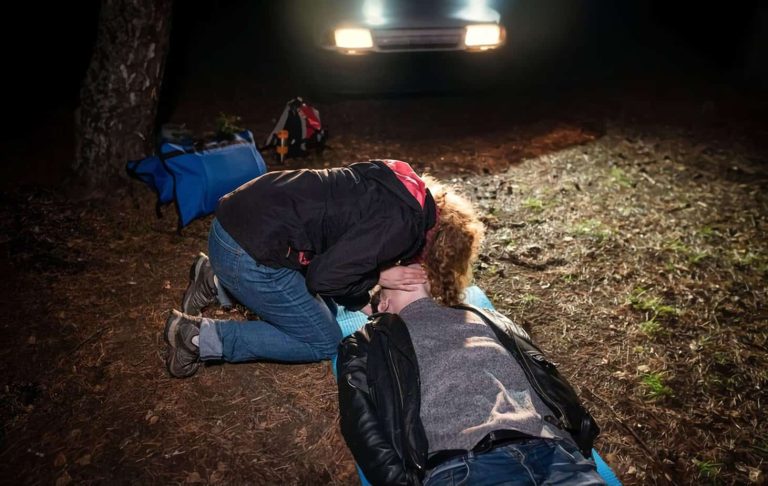
Shock can have many different meanings. A movie’s plot twist could be shocking to some. Touching a live wire could result in a shock. You may be in shock as a result of the death of a loved one or as a result of trauma. Shock, in my opinion, is a terrifying term that predicts poor outcomes despite our best medical efforts.

Despite the best medical care in the best hospitals, mortality rates can range from 40% to 50%.

What will you do if your partner or family member is involved in an accident or suffers a heart attack and goes into shock?

The most important aspect of treating shock is learning to recognize it as soon as possible. The earlier the diagnosis, the sooner the treatment can begin.

What is shock?

To begin, shock is defined as a lack of blood and oxygen supply to the tissues. Tissues and cells starve as a result of a lack of these nutrients. When this happens, the tissues and organs stop working.

The greater the number of organ failures, the higher the mortality rate. The sooner the cells’ nutrients and function are restored, the better their chances of survival.

In order to minimize cell damage, the body has several mechanisms in place to compensate for the lack of tissue perfusion.

Although many organ systems are involved in compensatory mechanisms, the cardiovascular system is the process’s foundation.

A pump (the heart), pipes (the blood vessels), and fluid are required for the cardiovascular system to maintain its pressure in a closed loop (the blood).

In order to minimize cell damage, the body has several mechanisms in place to compensate for the lack of tissue perfusion. Even though many organ systems are involved in compensatory mechanisms, the cardiovascular system is the process’s foundation.

A pump (the heart), pipes (the blood vessels), and fluid are required for the cardiovascular system to maintain somewhat constant pressure in a closed loop (the blood). If any of these components fail, there is a loss of pressure in the system.

If the pressure loss is severe, the tissues and organs will not be nourished with the necessary components for proper organ and body function. Let’s dig a little deeper into this.

The pump output (cardiac output) and systemic vascular resistance control the pressure in the system (changes in vessel diameter or changes in blood viscosity).

The heart rate and stroke volume determine cardiac output (how much blood is pumped with each contraction of the heart). The formula is as follows:

Mean Arterial Pressure (MAP) = Cardiac Output (CO) x Systemic Vascular Resistance (SVR)

Cardiac Output = Heart Rate (HR) x Stroke Volume (SV) Therefore, MAP = (HR x SV) x SVR

To increase systemic pressure, we must either increase heart rate, stroke volume, or systemic vascular resistance (or some combination of the three). When one of these components fails as a result of an injury or disease, the other two attempt to compensate.

This equation is critical for understanding what is happening physiologically to a person in shock.

With that in mind, the shock symptoms should make sense. Hypotension or low blood pressure is very common. Excessive fatigue, dizziness when standing, or faintness may occur.

Low blood pressure causes the body to divert blood away from less important organs, such as the skin. You will notice that the skin turns pale and cold.

The heart rate increases in an attempt to compensate for the low blood pressure. This causes the blood to circulate faster throughout the system in order to utilize the remaining oxygen.

The respiratory rate increases in order to bring more oxygen into the system and to mitigate the effects of increased acid buildup caused by a lack of tissue perfusion.

Due to a lack of blood or oxygen to the brain, a person may become disoriented or confused.

The stages of shock

bor banner remedies

The entire process can progress quickly and is divided into three stages.

The initial, or pre-shock, stage is the first stage. This is the point at which the person sustains an injury.

Blood is lost through a wound in an example of trauma. This is essentially a decrease in stroke volume from the previous equation. This, in turn, reduces cardiac output.

The body will try to compensate by increasing the heart rate and systemic vascular resistance (via vasoconstriction). This mechanism attempts to control bleeding by diverting blood away from less important tissues.

The body will continue to minimize the damage in the second stage (also known as compensatory stage). If you act quickly, this stage is reversible, and it is possible to save tissue and organs.

Because of the decreased cardiac output, the body activates the sympathetic nervous system, and hormones such as epinephrine are released to help increase the contractility of the heart.

The progressive stage occurs when the body fails to compensate. The tissues suffer increased ischemic damage, and lactic acid accumulates in the bloodstream.

The further this stage progresses, the more likely it becomes irreversible, and organs fail. Urine output initially decreases as the body attempts to retain as much volume as possible.

Urine production eventually ceases due to the death of kidney cells. When the liver fails, the coagulation cascade is disrupted, making it easier to bleed. Death becomes imminent.

So, with the effects of shock outlined above, let’s look at how various causes of shock affect that physiology. Shock is classified into two types: differentiated and undifferentiated.

When someone is in shock, we often say it’s undifferentiated because the patient shows signs of shock, but we don’t know what’s causing it. We begin treatment protocols right away because time is of the essence.

When we know what caused the shock (differentiated shock), we divide it into four categories: distributive, cardiogenic, hypovolemic, and obstructive.

Distributive shock

distributive shock

According to the equation we listed above, distributive shock occurs when systemic vascular resistance decreases and blood vessels dilate. The body responds by increasing the heart rate.

We divide distributive shock into septic and non-septic causes. Sepsis is a result of the body’s immune response to infection. Pneumonia, urinary tract infections, and even skin infections are common sources of infection.

The mortality rate with hospital treatment is approximately 40%. The initial insult determines mortality in non-septic causes of distributive shock.

Non-septic distributive shock is classified into four types: inflammatory, neurogenic, anaphylactic, and “other.” The inflammatory component could also be a component of sepsis, or it could be linked to a severe burn, trauma, or heart attack.

Neurogenic shock is typically caused by a spinal cord or traumatic brain injury. The autonomic nervous system is disrupted, resulting in reduced systemic vascular resistance and unopposed vagal tone.

Because of these changes, the hallmark of neurogenic shock is typically a slow heart rate, making it difficult for the body to compensate.

Food allergies, environmental allergies, medication allergies, and idiopathic causes can all result in anaphylactic shock. At the onset of anaphylaxis, injectable epinephrine is critical for survival.

Venomous stings (e.g., bees, scorpions, and snakes) are frequently classified as “other.”

Carbon monoxide, myxedema (due to severe hypothyroidism), and narcotics are also included in this category because of their effect on systemic vascular resistance.

Most of the causes of distributive shock could be avoided or prepared for in a survival situation prior to the irreversible portion of shock.

Keeping antibiotics on hand and wounds clean can help to reduce the risk of infection. At the first sign of infection, you could also try eating garlic or onion. However, once you’re well into the pre-shock stage, this will have no effect.

To help keep a wound clean, you could also try Echinacea, apple cider vinegar, hydrogen peroxide, or turmeric. Remember, these are very early interventions. The availability of readily available epinephrine for anaphylaxis is a no-brainer, especially if you are aware that you have such reactions.

If you have a thyroid disorder, make sure you have enough medication. Chronic steroid users must also take care not to run out of these medications, or they risk adrenal insufficiency, shock, and death.

Hypovolemic shock

This happens when there is a loss of fluid and, as a result, a decrease in stroke volume. To keep blood pressure stable, the heart rate increases to keep cardiac output stable, and the arteries constrict to keep systemic vascular resistance stable.

Hypovolemic shock is classified into two types: hemorrhagic and non-hemorrhagic.

In hemorrhagic shock, the vascular system is disrupted, resulting in a leak. While severe external bleeding can easily identify this, keep in mind that internal hemorrhage may not be as obvious.

This could be due to blunt force trauma causing a rupture in an organ like the spleen or a tear in a major vessel from a car accident.

Pelvic fractures are also associated with internal bleeding. As potential indicators of hemorrhage, look for bruising on the abdomen or flank, as well as abdominal distention.

When there is evidence of internal bleeding or shock, stabilizing a pelvic fracture at the scene can help slow the hemorrhage. You could use a sheet, a blanket, or the SAM Pelvic Sling.

Remember that people taking any type of blood thinner, including aspirin, are more likely to experience severe bleeding.

Other treatments include applying pressure to obvious sources of bleeding to stop the bleeding. If a tourniquet is required for an extremity injury, use it only if you have received proper training.

Coagulant powder is another possibility. If you don’t have any, consider cayenne pepper, juniper sap, turmeric, and other natural remedies.

svmd longbanner1

Because you may be miles from help, the most important thing is to stop the bleeding rather than replace the fluids.

The loss of total body water is significant in non-hemorrhagic shock. Because of water loss (rather than blood loss), blood viscosity rises, and thus systemic vascular resistance rises.

Fluid loss can be severe as a result of vomiting and/or diarrhea caused by enteritis from contaminated food or water.

Heat stroke can also cause severe dehydration, which can lead to shock. If heat stroke is not treated promptly, the mortality rate can reach up to 80%. If possible, sit in a cold stream to help cool core temperatures in cases of heat stroke in the wild.

Water loss from burns can also be significant. The evaporation of fluid from the burned area is much greater due to the loss of the skin barrier. The larger the burn area, the more water is lost.

Due to the loss of the protective skin barrier, a burn can also increase the risk of secondary infection. Even in a hospital, someone with a severe burn (third degree) covering more than 40% of their body has a 40% chance of dying.

In a survival scenario, honey would be an excellent makeshift barrier for a burn, acting as both a barrier and a source of antimicrobial protection.

Finally, in a prolonged survival situation, your ability to maintain nutrition and the amount of protein stored in your body both decrease. As protein levels fall, fluid retention in the vascular space becomes more difficult, potentially leading to hypovolemia (a decreased volume of circulating blood in the body).

Cardiogenic shock

cardiogenic shock

This occurs when the heart fails to function properly. When the heart suffers an acute weakness as a result of a heart attack, there is less muscle available to do work.

Because of heart failure, the cardiac muscle can become weak over time and no longer meet the demands of the body.

These circumstances reduce the heart’s ability to pump blood with each contraction, resulting in a decrease in stroke volume.

Another reason the pump cannot meet demand is a slow heart rate. As the heart rate decreases, the heart muscle must contract more forcefully to push the volume of blood out in order to maintain cardiac output.

If the heart rate is too high (more than 200), the heart will not have enough time to fill with blood between the contractions, and the stroke volume decreases. In the hospital, the mortality rate for cardiogenic shock is around 50%.

Normally, aspirin is administered at the onset of a heart attack; however, if aspirin is unavailable, natural salicylates such as blackberries or red raspberries, willow bark, cayenne pepper, and almonds would be used.

A few days of rest would also be beneficial to the patient. It would be unwise to use a drug to increase heart rate. A heart attack most likely affects the pacemaker area of the heart, and putting chemical stress on the heart could increase the area of heart muscle involved.

Obstructive shock

This happens when the heart is compressed and cannot fill with blood. Because the heart cannot exert enough force to contract, the stroke volume decreases.

Tension pneumothorax and pericardial tamponade are two examples. Air leaks from a hole in the lung into the space between the lung and the chest wall in a tension pneumothorax. If the air cannot escape, pressure builds up within the space, causing “tension.”

The increased pressure in the chest prevents the heart from filling and causes blood pressure to fall. The neck veins (jugulars) swell, and the trachea may even deviate away from the injured side. The use of a decompression needle to allow air to escape and reduce tension is a lifesaving measure. In a non-hospital setting, the decompression procedure is far more dangerous.

When fluid accumulates within the pericardial sac surrounding the heart, pericardial tamponade occurs. Because of the constriction and increased pressure in the pericardial space caused by trauma, infection, inflammation, or cancer, this fluid prevents the heart from filling with blood.

This can also result in a drop in blood pressure or symptoms of congestive heart failure.

Natural diuretics such as onions, garlic, grapes, dandelion, and green tea could be used to treat congestive heart failure; however, the likelihood of these being strong enough or acting quickly enough to overcome the effects of pericardial tamponade is very low.

Concluding

Shock is a devastating process with a 50% mortality rate in the hospital setting. The chances of survival are slim in a survival situation without immediate assistance.

Preparing for causes that can be reversed gives you the best chance of survival (e.g. anaphylaxis, hypovolemia, and hemorrhage).

Maintain proper hygiene to prevent even minor scratches from leading to sepsis. Natural plants can be useful in a variety of situations, but they are unlikely to be potent enough or work quickly enough to make a difference in the case of shock.

If you haven’t already, take a basic first-aid course and continue your education to be better prepared for an emergency.

This article has been written by James H. Redford MD for Prepper’s Will.

You may also want to check this:

Is your first aid kit outdated? – Here’s what you need to know!

Knowledge to survive any medical crisis situation during a major disaster

Wilderness First Aid Basics

Grow this natural antibiotic in your garden for when SHTF

Pulse night club or nightclub

0

A little late I know.
I don't remember a post being started on it and I searched "night club" and "nightclub"as one word and got nothing.

I saw on msnbc this morning that the shooters dad was working with the fbi before the shooting, assuming to get his son locked up.
So it would appear that the authorities are allowing some of these shootings to happen. Because I seem to recall after columbine the police said they were going to go after people showing the warning signs of being a mass…

Pulse night club or nightclub

Let the WAR begin! (MUHAHAHAHAHAHAAAAaaaaa) glock vs 1911

0

Well let’s looks at some facts.

First off old Glock vs. new Glock:

Old Glock had TOUGH (Tennerite) finish on slide.
New Glock – new butter soft finish on slide sucks and wears quickly.

OG (Old Glock) – hardening on internal parts was hard and deep. Almost no wear after 1,000s of rounds, but some parts subject to break.
NG (New Glock) – hardening on internal parts, wait, WHAT HARDENING?! You can wear though what hardening it does have by shooting it a few times! Some parts wear/peen/round off/break often.

OG – grip angle sucks.
NG – grip angle(s) still sucks, but not as bad. Maybe.

OG – Feels like a brick in the hand.
NG – Feels like a slightly more ergonomical brick in the hand. Maybe.

OG – Trigger sucks. Always.
NG – Trigger sucks. Always.

OG – Totally reliable because the chamber was HUGE! A .40 S&W chamber could swallow half a .45 ACP case! Only problem was many .40 S&W pistols blew up, a few other cartridges would too.
NG – Still pretty reliable, but the chambers are not cut nearly as large, many .40 S&W pistols still blowing up, possibly not as many other cartridges. Maybe.

OG – WHEN (not “if”) a case blows out at the rear bottom (the dreaded “Glock bulge”), especially with the .40 S&W which is what nearly always is what blows up due to sloppy, unsupported chamber, the whole gun/frame is trashed. Actually saw five of them do that at my club. Heard of many others that happened when I was not there.
NG – WHEN (not “if”) a case blows out at the rear bottom (the dreaded “Glock bulge”), especially with the .40 S&W which is what nearly always is what blows up due to sloppy, unsupported chamber, the whole gun/frame is trashed. Actually saw five of them do that at my club. Heard of many others that happened when I was not there.

OG – The frames are now wearing out because they are plastic. They crack, chip, peel, get brittle and fall apart after so many years and exposure to air, just like a rubber tire does. It’s PLASTIC!
NG – Wait another 20 years and they will too. It’s STILL plastic!

OG – Due to rifling, you can not use lead bullets as the factory barrel would lead up quickly and blow the gun up, especially .40 S&W pistols/barrels. Other cartridges too.
NG – Due to rifling, you can not use lead bullets as the factory barrel would lead up quickly and blow the gun up, especially .40 S&W pistols/barrels. Other cartridges too.

OG – Ugly as sin.
NG – Ugly as sin.

OG – Sold to many po-lice departments due to being idiot, but not idiot cop, simple. But then nothing is, including a rock.
NG – Sold to many po-lice departments due to being idiot, but not idiot cop, simple. But then nothing is, including a rock.

OG – Not much customizing/changes you can make, what is/as is. If it doesn’t fit you or shoot well, nothing you can do about it, you are stuck. Live with it. Some custom barrels claim they can make a Glock shoot better. Maybe, maybe not. Grip angles still sucks.
NG – Not much customizing/changes you can make, what is/as is. If it doesn’t fit you or shoot well, nothing you can do about it, you are stuck. Live with it. Some custom barrels claim they can make a Glock shoot better. Maybe, maybe not. Grip angles still sucks.

OG – Only made by Glock. No decent clones, or part for part clones.
NG – Only made by Glock. No decent clones, or part for part clones.

OG – Some (but not all) slides/barrels will interchange between some models and some cartridges.
NG – Some (but not all) slides/barrels will interchange between some models and some cartridges.

Next time (when I feel like it) we will look at the 1911.