

A Few Things To Know When Conventional Medical Care Is Unavailable
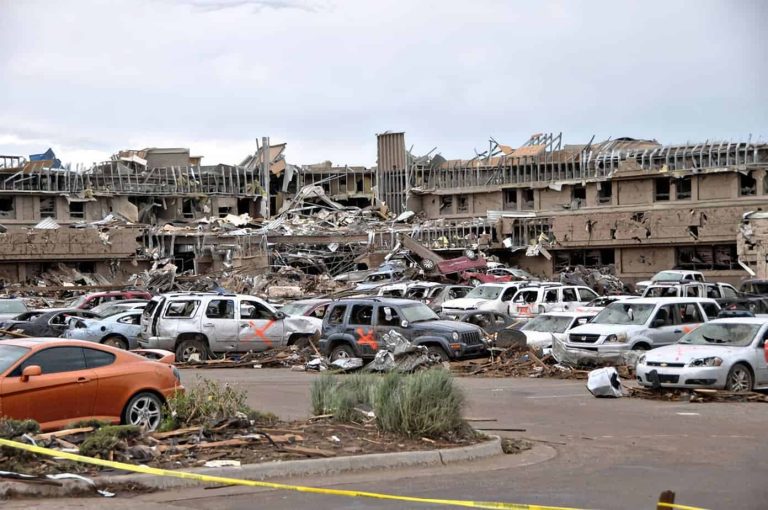
We all do our best to be prepared in case of an emergency; however, unexpected events that we have no control over do occur. When disaster strikes, we frequently take medical care for granted. Hospitals and doctors are usually available when we need them, but what happens when a hospital is destroyed by a natural or man-made disaster?
Are you ready for that possibility? Do you have a strategy?
I asked our contributor James H. Redford MD, what advice he would give in a situation where a disaster has destroyed medical facilities.
Why is it critical to be medically prepared in the event of a disaster?
There is a widespread belief that if something bad happens, the federal government will step in and save everyone. Depending on the scope of the disaster, the government may be unable to assist.
Local disasters occur first. The feds may be too busy assisting others, and it may be some time before they can reach a smaller community.
Communities must know everything about their resources, how they are allocated, and how to respond if something goes wrong. Before the feds arrive, we need to take care of ourselves.
One of the issues is that, before outside help arrives, the hospital staff is likely to be affected by the disaster. They might not even be able to get to the hospital. The disaster has also harmed local service providers. They may also have home emergencies.
In the event of a major disaster, a hospital may have enough backup medical supplies and generators; however, the staff is a critical resource that may be unable to reach the hospital.
What is the mindset of people going through the initial stages of disaster recovery when disaster strikes?
Clearly, there is anxiety. Denial is another major factor in a disaster. Many people must overcome their denial. Bitterness could play a significant role as well.
You must remember the four basic survival principles: fire, water, food, and shelter. Most importantly, have a strategy.
You’re already behind the eight ball if you don’t have a plan. Having a plan puts you in the right frame of mind. There will be less confusion if you have a plan and know how to implement it.
What can folks do before a disaster to help improve their situation during one?
It depends on the type of disaster. The most important thing is that people should make sure they are up to date on the Tdap (tetanus vaccine).
 To help themselves or others, people should have a basic understanding of first aid. If the hospital is destroyed, protocols for dealing with the situation with other agencies should be in place.
People are attempting to become more self-sufficient, in my opinion. I believe that knowing some basic medical terminology will help them a lot.
Basic wound care is critical. Immunizations are critical. Dental health is also important, so obtain an emergency dental kit.
Have a book reference library. Look into home remedies because many of them work.
Bioenvironmental issues… how to clean water. How to use Bleach for disinfecting, and how to boil water to make it potable. Field hygiene is essential.
How will the bodies be disposed of in a long-term disaster where people are dying?
How are you planning to prepare for the old diseases which may come back?
What medical supplies do you always have on hand?
We have analgesics and basic antibiotics on hand (Azithromycin, Ciprofloxacin, and Metronidazole). Check to see if any of these medications have passed their expiration dates.
Many bandages, basic wound care, and dental care items are available (toothpaste, dental floss). Trash bags, condoms, feminine products, hydrogen peroxide, rubbing alcohol, basic suturing kits, and skin staplers. It’s also helpful if you know how to suture or staple.
Acetaminophen, Ibuprofen, and the availability of pediatric doses of these medications are also beneficial.
How frequently do you go through your med kit to ensure it’s up to date?
We usually do a quarterly inventory to ensure that nothing is out of date. If something expires during that quarter, I will pull it and purchase an inventory update.
How many days of supplies do you think people should stockpile?

FEMA tries hard to educate people that a three-day supply is adequate, but a larger-scale disaster may necessitate a much longer supply. Three days is a good starting point, but two to three weeks of supplies is more realistic.
Would there be any medical resources or facilities that would make sense as alternatives if a disaster struck and medical services were not immediately available?
During a disaster, emergency departments can quickly become overburdened. An emergency department has a certain amount of capacity. If a hospital has been destroyed, there are other options.
There are opportunities for assistance, whether through the Red Cross, churches, or universities. Nursing programs at some universities may be useful in a disaster situation.
We have open PODs, where people come for medical aid, when the health department has set up to care for people. There are closed PODs where nursing students from universities can assist. These relationships are already in place prior to the disaster. An urgent care center is another option.
Senior housing developments may be a viable option because they provide nurses and medications that may be beneficial. Before the disaster, medical reserve corps (MRCs) should be established. These are important to establish and consist of medical community volunteers.
When a disaster strikes, many people will want to help. Where should they go to be of most assistance?
You should contact the local emergency management agency. Check with the Red Cross, local churches, and walk-in clinics as well. Hospitals and public health agencies receive some funding and are required to have volunteer programs.
You can look for an incident command post. If you see a tent in a parking lot, someone is in charge. Inform them of your experience and credentials so that they can determine how you can best be used.
Another thing I would say is to not get your feelings hurt if that person does not immediately pay attention to you or put you to work. They must figure out how to safely integrate you into the plan.

What about the influx of volunteers who arrive to assist?
Although agencies have the best of intentions, their actions complicate the process of response recovery. When we go down to help, and it isn’t part of a coordinated effort, there are more people to feed and more places to stay.
This redirects efforts away from those who actually need assistance and toward those who are willing to assist. Now, healthcare must assist not only those affected by the disaster, but also those who are present to assist.
There are a lot of volunteers who just show up, and there’s no way to know what their backgrounds are or what equipment they have. As a result, the volunteers have the potential to overwhelm the system.
The person in charge on the scene must be responsible for both the people affected by the disaster and the volunteers assisting in the disaster. The last thing they want is to be responsible for the volunteer as well.
Not that assistance isn’t required, but the chaos must be managed. Find a company that has experience dealing with disaster services. Volunteer with them to gain experience.
Any final recommendations?

A disaster’s nature is to catch us off guard, so we must be prepared as a community. The community is the glue that holds us together, and we must remember that we are both a national and a local community.
You must be able to care for yourself. If you have a medical condition, you must understand how your body will react in that environment. You must stay in the game in order to assist as many people as possible.
The most important thing is to have a plan, but to be flexible. Don’t be so set in your ways that you can’t think outside the box. There are numerous shades of gray.
Make a plan. Carry your gear around for a while to see if it’s feasible. At the very least, you’re ahead of the guy who didn’t plan ahead of time. It is preferable to be proactive rather than reactive.
Concluding
When a natural or man-made disaster strikes, it may take a long time for help to arrive. Prepare to be self-sufficient. This includes taking classes, honing skills, and devising a plan for surviving the disaster’s aftermath.
Make sure you know what you’re capable of doing in different situations, and practice with your gear. Understand the emotional components that emerge after a disaster and how you manage them in yourself and others.
Maintain flexibility in your thinking as both a survivor and a responder attempting to assist others.
“No one is coming to save you,” I keep telling people, and it is our responsibility to prepare and plan ahead of time.
You may also want to check this:
How to prevent and treat common winter injuries
The realities of food shortage during a crisis
Is your first aid kit outdated? – Here’s what you need to know!
Grow this natural antibiotic in your garden for when SHTF
How to get hard to get medicines?
There are a few things I think everyone should have in storage that I’m having a hard time getting.
Lidocaine – for local nerve blocks in case someone needs to be stitched up or bullets removed, etc.
Epinephrine – for allergic reactions – used to be non-prescription through a veterinary supply house.
Any ideas on where to get these?
Some other things I’ve found if it helps anyone:
Antibiotics – veterinary supply house. Look for “fish medicine”. Injectables and powders are also available.
Opioid pain killers – save them up from surgeries, coughs, torn ligaments, etc.
syringes, sutures, clamps, scalpels – vet supply house again.
Many generic medications are available from overseas pharmacies – just starting to experiment with these – will post the results.
What are you reading?

We've got a whatcha listening to and watching. How about reading?
I'm currently reading
'Currency Wars : The making of the next global crisis' by James Rickards.
THE FINAL LOCKDOWN STREET LIGHTS THAT KILL IN SMART CITIES CBDC, DIGITAL ID

Scanning and Transmission Electron Microscopy Reveals Graphene Oxide in CoV-19 Vaccines
MariaZEEE: Aman Jabbi – The Final Lockdown Street Lights That KILL in Smart Cities CBDC, Digital ID
Vehicle “Build” Thread… | Survival Monkey Forums

…..as some in the “What Are You Driving” thread may have seen, after 23yrs and several hundred thousand KMs I decided to “upgrade” Landcruisers. I say it as “upgrade” as there are certainly things on the new one that I like less than my old one. But that is always going to be the case. Given I am laid up at home post surgery for another week I have some time and am bored, so a good time to type….
On vehicle to vehicle let me start by acknowledging that the VDJ76R I have got is NOT (in Toyota’s build type) the direct replacement for my old HZJ80. That replacement vehicle would be a VDJ200R. Both the 80 I have or 200 I would choose as a replacement for the 80 are the utility/bottom spec/barn door version of their Luxury Wagons. I looked at the 200 (and have several at work I can drive) and – besides the price over what I paid for the 76 – there remained several things that I din’t like compared to my old 80 or the 76. The 200 only comes with an auto gear box for one and is also a twin turbo diesel engine (same power plant as the 76 I have with and extra turbo bolted on) and they are HUGE inside and out ! The other factor was that a 200 of similar age, condition, KMage etc would have set me back at least $20K more and still needed the work I will do on the 76 now.
On what I loose and which I struggle with most, SPACE (this is a pro and con) but the 80 is for me like a “Tardis” (for the Dr Who fans) and there is LOTS of space inside. The 200 has MOOOOOOORE space than the 80 but it is also significantly larger outside – the 80 and 100 series that replaced it, strike the BEST balance on this front to me. Space is followed by an easy to work on power plant, the 1HZ has been around since the late 80s and is still being built and sold by Totoya in 70 series trucks delivered to the Middle East and Africa. There is a reason for this, they go and go and go. But they are also slow and slow and under-powered (I can live with this). I can do most things on a 1HZ that fall in my wheelhouse (I am NOT a mechanic by ANY stretch of the imagination !!) and my final complaint alone is “RIDE” ! The 80 and 100 series are both live axles with coil springs all round. You can made that about perfect for any situation with the addition of a set of poly airbags and the right spring rate and shocks. The 70 is the same in the front (yay) but has big honking industrial leaf springs in the back. So the ride will NEVER match the 80/100 and that is a pill I am still working on swallowing.
On the 70Series…. well it has been in continuous production since @1985, it is the direct replacement for the almost religiously loved 40Series trucks (I had one of these as my first ever four wheeled vehicle – and would have another tomorrow if I were were wealthy and could have a “weekend toy”). In about every way however the 70Series is better. I had lots of exposure to these as a young’n given my best mate (he still is) bought a brand spanking new table top 75Series in 1989 and we added LOTS of distance to it in our travels !!
The 70 was designed to be “light industrial” from the get go, that you see so many OLD ones running around Africa and the Middle East tell you they probably got it right  When I was in Mozambique we spent much time in a 1985 75Series and I didn’t feel at all worried !!! I am no historian of the vehicle but they have been made in MWB with a Fibreglass Top, SWB with steel top, Table Top, Ute (Tub) Back, and LWB Troop Carrier till the late 90s. They then extended the cab a little on the single cab versions and called it a 78Series. Then in the @mid-2000s they had another revamp and added a dual cab version (calling the Cab Chassis versions 79Series and they updated Troop Carrier the 78Series) and in 2007 the 76Series (which is a shorter 4 door version of the Troop Carrier) was added. With the mid 2000s update they added the 4.5L V8Turbo Diesel to the entire range. The first time I saw a 76Series (almost had an accident weeing on at a car yeard as they had not really been announced, just delivered) I knew I would end up owning one at some point.
One of my Godsons drives a 2009 79Series Single Cab with a tray on the back, they thing just goes and goes and goes !!!
Now, let me clarify wht it is I want from a vehicle (as this defines what it is needs to be done and what “success” looks like at the end). For me it is pretty simple, something that can carry me (and maybe a single passenger) long distances, in reasonable comfort, carrying a significant load of gear depending on the needs of the trip. Given the remote locations out here, it needs to be highly reliable, built tough and with SIGNIFICANT range even when loaded up. I am NOT after a rock crawler or something that needs to climb un-climbable tracks just for fun etc. It does need to be able to get through some really bad spots (water, mud, rocks etc) capably. And yes U understand there is a fine line between playing offroad and essential offroading. Lets face it, we do the first to a degree so we can do the later when it matters !!!
What to buy

Right now you can't find handguns that are worth a shit, any AR15 junk, home defense shot guns, ect. But a year ago everything AR15 was rock bottom, 16 year low prices, everyone had everything and manufacturers were dropping like flies.
(I think I know what I'm going to do with my upper that shoots like 12moa)
One thing that caught my eye that there seemed to be a surplus of aside from grenade launchers and form 4 silencers is big long range shootin bolt actions.
Not necessarily 308, at…
Stalking Prey Just As Your Ancestors Did
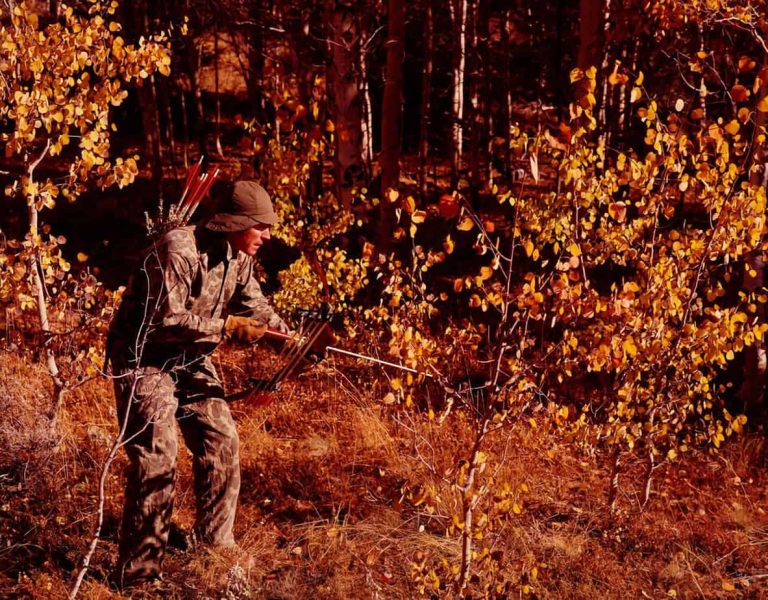
The land on which a given tribe settled influenced every native culture on our continent in a unique way. A good example can be found in the Great Plains, a vast grassland that stretched from what is now known as Canada to Mexico.
The way of the buffalo
The story of survival there can be summarized as follows: the grass fed the buffalo, and the buffalo provided sustenance for the people.
However, the population of these animals was so large that they frequently ate themselves out of local habitat, and they were forced to move on to find more grass. This is why we sing of places “where the buffalo roam.”
To live on the Plains, native people would have to follow these herds of shaggy beasts; thus, Plains tribes were migratory. Nomadic lifestyles necessitated certain logical “rules” for success.
Here are six that have become iconic for these tribes:
- The long distances that had to be traveled eventually resulted in a “horse culture.”
- Constant relocation made it impossible to own heavy or fragile possessions such as pottery.
- There were still necessities that needed to be transported, which inspired the travois.
- Because a home had to be light and portable, the tipi was born.
- Because so many different tribes were moving around the prairie, the need for a universal language led to the development of sign language.
- Smoke signals could be used to send long-distance messages.
The story was very different east of the Mississippi River. A vast, nearly continuous forest covered the land here. Because native homes were more permanent, pottery was highly valued.
Specialist runners who carried messages from village to village covered long distances. The distinctions are numerous.
Living in the forests
The way Eastern tribes hunted was one of their most distinguishing characteristics.
A dense and verdant forest is an excellent hunting ground, but it has two major drawbacks, one visual and one auditory.
In short, a forest is densely packed with physical obstacles such as tree trunks, shrubs, vines, boughs, leafy branches, and so on. An arrow can be deflected from its intended path by even the smallest twig.
The auditory issue includes all of the fallen leaf and branch litter that makes up the forest floor. It appears to be intended as a natural alarm system against intruders. All of those warning sounds are activated by a single footstep.
A trap or snare was one indigenous solution to these issues. These hunting tools were clever because of their remoteness and nonstop work hours, but they were mostly effective on small animals.
A pit for large animals could be dug, but digging even one such pit is a lot of work, and after success at one location, that location would most likely be a known danger to wildlife.
In a real hunt, the other remedies were more proactive. Simply put, the hunter had to close the gap between himself and his prey.
Several solutions were devised to address this issue:
- Wait in a blind or up a tree and let the animal approach the hunter.
- Attract an animal’s attention with an intriguing sound or smell.
- Bring your stalking closer to the animal.
We will explore the last option. Stalking can change your life physically, mentally, and, believe it or not, spiritually if you try it, whether you hunt or simply want to observe.
The lost art of stalking prey

The first and most important rule of stalking prey is to move as slowly as possible. I’m referring to the rate at which a droplet of honey oozes back down the inside of a jar.
Not only with your step. This speed applies to everything you do with your body, including blinking.
Why go so slow?
Because wild animals have a distinct way of detecting danger in the forest. When they hear a sound, they relax their vision to look for the stalker. In this viewing mode, extreme slow motion (think of the honey drop) is not detectable.
This is referred to as “ultra-slow motion” or “USM” by some hunters. A simple experiment can be used to demonstrate the effectiveness of USM.
Sit down and place the thick edge of your right hand on the ground or another mixed surface with varying tones and textures in front of you. Now fix your gaze on an object 2 feet to the left.
Allow your vision to relax to see everything within fullscreen vision without allowing your eyes to stray from that point. Begin the long, long process of closing your hand to a fist by moving your hand as slowly as humanly possible.
If you do this at the correct speed, you will not notice any movement. If you do see it, you are moving far too quickly. Self-discipline is essential. In USM, close that hand.
Try it again while focusing 1.5 feet away. Then one foot. You’re discovering that there’s a way to see through an animal’s vision without being detected.
Consider how much wider a visual range most prey animals have as motivation to strive for perfection in this art. For example, a deer has eyes on both sides of its head. It has twice the range of yours.
Becoming good at stalking prey

All of this sluggishness has an effect on the auditory factor. A simple step into dry leaves and twigs can generate a lot of crunchy sounds. The body weight drops all at once, resulting in an alarming signal.
USM combines all of those sounds into a long chain of tinier ticks and pops that wildlife can hear and not perceive as dangerous. A scurrying beetle, in fact, makes more noise in leaves than a skilled stalker.
A stalker must master three qualities to achieve this quieter-than-a-beetle foot planting: strength, balance, and patience. With practice, each of these aspects of stalking can be improved.
The strength factor enables your legs to function as shock absorbers. One leg supports the body, while the other foot searches for a short-distance landing zone in USM. Once found, the foot creeps to the ground and rests like a feather on top of the leaf litter.
The body weight is still supported by the back leg. The weight is transferred from back to front so slowly that both movement and sound are spread out over time.
One who is new to the skill may be exhausted by the time one step has been taken. However, this will change. Stalking will make you as tough as a bear as you practice.
Most people do not have to think about balance when walking. We develop a habit of purposefully falling forward and catching ourselves. We do it so smoothly that we aren’t aware of the part where we fall.
But we must never fall while stalking. We position ourselves and then float forward.
A good stalker, of course, would do well not to fall and cause an interruption of leaf crunch during that oh-so-slow step. Not only would the wildlife security alarm sound, but your body weight would also be transmitted into the earth.
This is read by animals using an intrinsic weighing meter. If they detect an intruder the size of a human, they may panic. We, humans, are the most terrifying animals on the planet, and if wild creatures have a “most-dangerous” list (which I believe they do), we are at the top of it.
The benefits of stalking prey
As a stalker, you will soon learn to take nothing for granted mentally. You’ll have to work your way up to a wild animal. Never let anyone persuade you that stalking is a supernatural or magical ability. It is just good old practice.
You’ll become more conscious of your surroundings. You will be scouting the terrain wherever you go. You will be able to see everything the animal sees. You might even discover a new way to walk on the sidewalk.
When you go for a run, you might try running with less impact on the ground, which will make you stronger.
 Even on days when there is no dramatic sighting, a stalker experiences something spiritually valuable. You realize you are no longer a visitor or a bystander in the wilderness. As a participant, you’ve become a part of the forest. Your connection to the world extends into the woods.
I can’t emphasize how much this gift changes you.
There’s a lot more to stalking: clothing selection, masking or neutralizing human scent, careful diet selection in the days preceding a serious stalk, wind direction, and so on.
However, the first lessons discussed above are sufficient for a start.
Simply eat indigenous foods for a few days, rub yourself down with a native aromatic plant to which you have no topical reaction—try hemlock needles—and dress in camo or a more complicated pattern like plaid.
Colors are irrelevant, but white is a dead giveaway in all but snow.
Go to a favorite spot and spend an hour being as quiet and still as a stone. The adventure begins when you hear a rustle or see movement.
Suggested resources for preppers:
How To Create Food Plots For Bow Hunting
The #1 food of Americans during the Great Depression
Blood Trailing Tips When Hunting Deer
If you see this plant, don’t touch it!
TOTM December 2022… It's Back!!

OK, My money isn't going as far as it did prior to 2020 and I find that come week three of the month my allotted budget for food is already spent. I refuse to use credit for food as I feel I am still paying for what has already passed, if you get my drift. It got me thinking about this old discussion item that I have neglected for too long and how discussions about how we make ends meet could help in the economic climate we are all in.
I don't buy cut up chicken anymore. No more packages…
The Lounge

My bud E.L. got me hooked on my newest vice about a year ago. Cigar smoking. I smoked cigarettes for 16 yrs and only managed to finally kick the habit when my youngest was born 16 yrs ago. In the intervening years I wouldn't touch any tobacco products for fear of getting addicted to the cigs again. But I have found that with cigars they are not addictive like cigs are. I guess due to the fact that you don't inhale cigar smoke.
I have found that I can take or leave them with no problem. I…