Anyone up on this, Out of Australia
Australian Blushwood Berries Found to Kill Cancer Cells in a Few Days (New Scientific Studies)

Anyone up on this, Out of Australia
Australian Blushwood Berries Found to Kill Cancer Cells in a Few Days (New Scientific Studies)

FX swaps, swap lines and off the balance sheet debts seem to have gotten out of control.
There doesn't seem to be anything anyone can do to mitigate it from what I've read.
If this game comes to an end, I've got no clue how bad we are screwed.
What are your thoughts?

It’s Wednesday and 39 degrees out in my brew shed. I’m going to make coffee and wait for temps to get into the 40’s before venturing out there.
Today I am bottling the remainder of my IPA which means retrieving bottles from cold sterilant and rinsing them in ice cold water then filling and capping ice cold bottles of beer.
Plenty of upper body work moving the brew system so I have room for bottling.  !
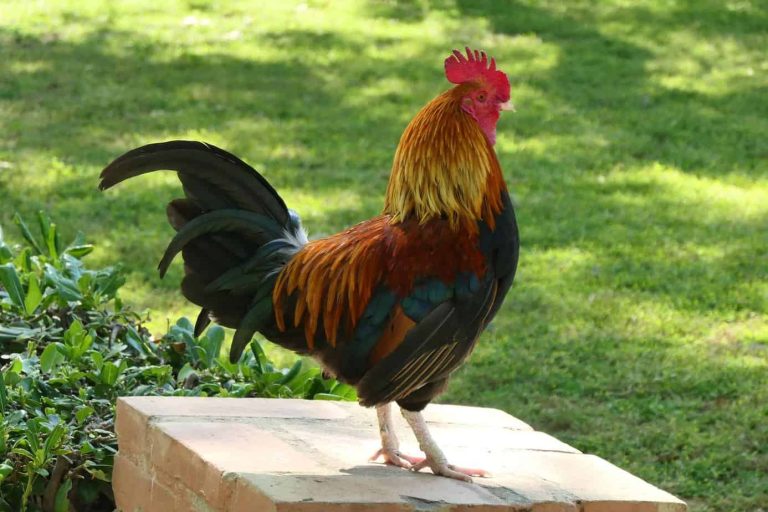
The roosters frequently receive mixed reviews. Some people adore them. Some people despise them. Some people keep them on purpose. Some people cannot have them. Some roosters are vicious. Some people are friendly. Many myths and facts surround these magnificent birds. So, let us investigate.
I’ll never forget the day I discovered I had a rooster in my flock. I had purchased day-old chicks from my local feed store. They were all the same breed, but one was bigger when I picked it out, and it stayed bigger than the others as it grew.
This is by far the most frequently asked question when people are raising chicks. I know; I’ve asked it myself numerous times. It can be difficult to tell.
If you hatch eggs, whether using an incubator or a broody hen, your chances of getting a rooster are 50/50. We once hatched eggs with a broody hen and got all males.
Many others have similar experiences. Sometimes luck isn’t on your side! You also can’t make your own luck by attempting to influence the outcome by adjusting the incubator temperature.
The statistics improve when you buy sexed day-old chicks from a hatchery. Hatcheries are approximately 90% accurate. There’s always a waiting game, no matter how you get your chicks. You observe, you wait, and you wonder. In the end, time will tell.
It can sometimes come down to the point of lay, which means you’ll know when you get your eggs. There are usually signs along the way. However, these signs are not a hard and fast rule.
I used to have a pair of Buff Brahmas who gave me fits. One of them was larger. On one, the comb development was faster and more distinct. I swear I had a rooster and a hen, despite the fact that they were sexed from a hatchery. I was mistaken. They were both hens.
Here are some warning signs to look for as your chicks grow. They may or may not indicate that you have a rooster.
 Roosters do not require the same amount of calcium as hens because they do not lay eggs. Males should be fed a higher-protein, lower-calcium all-flock feed. Of course, what you feed your roosters is entirely up to you.
Many flock owners find it easier to feed layer feed to the entire flock and not worry about the extra calcium. Feeding an all-flock formula is a no-brainer if you host a bachelor-pad coop.
If you choose to separate the feed in a flock of hens and roosters, you can try raising the rooster feeders because males are usually taller than females, or you can feed everyone an all-flock feed and give the hens calcium free-choice because they need it.
Roosters may require maintenance from time to time, so keep an eye on your birds and be aware that you may need to put in some effort to keep them in good condition. Spurs and beaks are the two areas most likely in need of assistance.

The spurs on a rooster’s leg are actually keratin-covered leg bone. They continue to grow and can quickly become long and sharp. This can harm not only hens during mating season but also other roosters and even humans.
Too-long spurs can disrupt your rooster’s gait and curl back into the leg, causing damage. It’s best for everyone if the spurs are kept under control.
Spurs can be trimmed in the same way that pet dog or cat claws are. You can use a file or a large, sharp pet nail clipper. Make sure you do so in good lighting so that you can see the bone, which looks like a quick. It’s a bright white color.
Avoid the bone just as you avoid the quick when you trim a pet’s nails. If you are hesitant to trim the spur, you can file it if your rooster is patient enough.
A spur’s outer keratin layer can also be removed. This is not my preferred method, but some swear by it. You can twist the spur gently until the outer layer pops off.
The best way to do this is to microwave a potato and insert the spur, making sure it’s not too hot and not touching the skin of the leg. Remove the potato after it has cooled, and gently twist the spur off.
When the outer keratin layer is removed, the rooster is left with a soft spur that can be sensitive until the outer layer grows back.

Rooster beaks aren’t always the best at staying filed down. This is where our current rooster falls. He just sits back and watches it grow!
A rooster’s ability to eat, mate, and groom can be hampered if his beak grows too long. You can shape the beak again with nail clippers or a file. As with spurs, avoid cutting into the living part of the beak, which appears darker than the rest. Because the overgrown part of the beak is translucent, it is easily visible. Trim the beak using the original contours as a guide.
If you’re grooming spurs or beaks, keep some baking soda or styptic powder on hand in case of bleeding. It is also important to keep your rooster under control so that he does not move and cause damage. Wrapping your rooster in a towel will help keep him safe.
Having a rooster in your backyard flock has some advantages. A rooster’s primary responsibility is to keep his hens safe so that he can pass on his genetic destiny. He protects the flock. Some roosters are better than others at this. Keep your hen protector if you have one!
During a hawk attack, my rooster was seen gathering his hens and covering them with his wings as best he could. There was no harm done to any of the hens. We have a lot of hawks around, and the roosts always got an eye on the sky.
Along with protecting his hens, a rooster is responsible for ensuring that his hens are healthy because healthy hens equal offspring.
When a rooster discovers some tasty nibbles in the yard, he lets his hens have first pick. You’ll see him signaling his hens, dancing around the food, and making a distinct clucking noise to entice the hens to come to him. When the hens arrive, he’ll point out the morsel and ensure they take a bite.
The roosters also provide self-sufficiency. You must have a rooster if you do not want to rely on a hatchery to increase your flock. The ideal ratio is around ten hens to one rooster. This ratio will prevent hens from being over-mated and causing damage. A single rooster will be able to mate with all of the hens in this size flock, resulting in fertile eggs.
Roosters are also excellent negotiators. They will settle hen squabbles and ensure that everyone gets along. If your hens are unable to resolve their differences, a rooster may be the answer.

1. If you only want to raise chickens for eggs, you don’t need a rooster. Hens will lay their own eggs. The primary function of a rooster is fertilization.
2. Light affects rooster fertility in the same way that it affects hen egg laying. The testes of a rooster, which produce sperm and testosterone, grow with more daylight and shrink with less. As a result, you may notice that your roosters mate with the hens more in the spring and summer and less in the fall and winter.
3. A rooster is designed to attract hens, and his appearance is important to them. Hens prefer roosters with a large red comb and tall points. They also prefer wattles that are evenly formed.To attract a hen’s attention, roosters have more colorful feathers along with long, shiny hackle (neck) and saddle (tail) feathers. Both hens’ and roosters’ combs and wattles will grow and shrink seasonally. They do not completely disappear, but you may notice a difference in size and redness.
4. Roosters lack a penis and external reproductive organs. Their sperm is produced within their bodies and remains viable at their core body temperature of 105 to 107 degrees.Mating is simply the touching of the cloaca. The hen everts her cloaca so that the rooster’s sperm has a better chance of reaching her oviduct, where it can survive for up to two weeks.
5. A flock can have more than one rooster, but this can lead to aggression and the over-mating of hens. It’s best to keep a larger flock of roosters so that each one has enough space. This works best if roosters are raised together or if a new rooster is introduced when new hens are introduced. The roosters will establish a pecking order among themselves.
This isn’t always civil and can result in injuries, so be prepared to intervene. Having said that, some roosters may never get along. Chicken keepers deal with this issue in a variety of ways. Bachelor pads with roosters who get along and live together are becoming popular. Some people will keep entirely separate flocks, each with its own rooster. Others are planning to send roosters to the freezer camp.
Suggested resources for preppers:
Protect Your Chickens From Their Top Predators
The #1 food of Americans during the Great Depression
How To Hatch Eggs With A Broody Hen
If you see this plant, don’t touch it!
Granted most have an EDC knife, be it a pocketknife, fixed blade, sheathed folder, belt clip folder or something else. Personally, I carry a Benchmade clip point belt clip folder but that is not the blade I would want on me when SHTF. My choice would be a Buck 110 folder sheathed.
What is your choice?

CornPop turns out to be a real person, and the incident actually happened. Naturally I would expect a bit of embellishment, especially during the confrontation as Biden left to get to his car.
I wasn’t there (was probably busy eating boogers and trying to not poop my myself), but my guess it that Biden peed his pants, CornPop laughed and decided it wasn’t worth his time.
Years later almost everybody who was there, including CornPop is dead. This allows Biden to tell the story in such a way that he can save face, and since he brought home the pork nobody will call him on it.
CornPop has been identified! (Yes, it’s CornPop not Corn Pop. And he died in 2006)

Or at the very least I’m reducing power consumption while atempting to inch my way off grid.
My first small step towards off grid was power factor correcting my air compressors and welding machines. Originally I did this to allow then to work better on long extension cords, be more efficient and make then draw less amps.
Next step, will be to greatly reduce starting inrush current on air comoressors.
To do this I am going to try the simplest solution first. And that is a using a closed circuit soft starter made for single phase capacitor start motors. But I have a feeling this may only be marginally effective. The soft starter I found is made by hyper engineering and claims to reduce inrush by at least 60%. I have a feeling if I really want to do away with inrush its going to involve a 3 phase variable frequency drive. Pretty much exactly like what inverter heat pumps and inverter refrigerators use.
A single phase soft start for capacitor start motors is fairly simple. It just reduces voltage to the motor while it starts.
But there are a few concerns.
Single phase capacitor start capacitor run motors use a centrifugal switch to control the start windings. If the voltage is too low or the starting load too heavy and the motor doesn’t build up to speed fast enough to disengage the start circuit with in a few seconds it will smoke the start circuit.
Also the armatures of induction motors are not designed to work in excess of 6Hz, so the more time spent below about 3,300rpms will build extra heat in the rotor.
This soft starter appears have terminals for the start circuit so I’m guessing it may be on a timer to prevent burning out the start cap.
I am going to test each compressor on my 5kw, 0 to 300v varrac. Simple test, connect the air compressor to the varrac turn it on and quickly ramp up the power from 0 to 240v within 2 or 3 seconds. Just to figure out which one would works best with automatic reduced voltage starting.
I built all my 240v air compressors out of junk I had laying around, or crap I bought from the scrap yard the only thing I really had to buy new for all of them was pulleys and the shut off pressure switch.
The main problem with them is the single phase capacitor start, capacitor run motors have really bad inrush current.
It also just so happens all my compressors are in the size range for the most common VFD.
I have found that 240v single phase input, 3 phase 240v out put variable frequency drives have been getting a lot cheaper. Dont worry about getting 3 phase motors. Small single digit horsepower, delta wound, 3 phase motors that can be wired for 240 or 480v are everywhere because most average consumers cant use them and they are super common in industrial environments. I would prefer a 4 wire wye motor but I don’t think its going to happen unless I want to cough up a lot of $.
Reason why is I would like to take steps to move off grid, connecting big power hungry air compressors to an expensive split phase power inverter, just seems like its not a good idea.
Right now the only way I have to eliminate compressor inrush current is use my 5hp gasoline powered air compressor which can more than match the output of any one of my 240v powered air compressors, but makes a lot of noise and uses some gas. Or use a 12v compressors my Gast air compressor uses a ton of amps and doesn’t produce a lot of air and my ARB compressor is just tiny. Other way to protect an expensive inverter from compressor inrush is I could connect the air compressor to a huge generator like my 17.5kw generac or my 7kw troybuilt those do not care too much about high inrush across the line starting but those suck down a lot of gas and make a lot of noise and don’t want to run them unless I really need a lot of air.
I would like to at some point greatly reduce the inrush current on one of my compressors with a VFD. I figure I can have the motor kick on at 1 or 2Hz ramp up to the desired speed, throttle down to 20Hz then use the pressure switch to release pressure in the line and hopefully signal a turn off signal to power down second or 2 later.
Depending on the features and inputs I may be able to have it run at 70Hz part of the time when its building up from 0 to 70psi, 60hz from say 70 to 90psi then 50hz tapering down to 20Hz from 90psi to shutoff pressure. Or something like that.
I would need at least a 3 or 4hp, 4 pole motor that could be wired for 240. These are real common. Perfectly good 7.5hp motors are some times scraped where I work because they hire idiots who can’t seem to comprehend how trouble shoot motors. One of these TC213 frame motors would work. I think at some point I will get a 3 phase motor and VFD to play with. It’s only a matter of time.
Another option may be just to get a 24 or 48 volt motor to use with a compressor and just run it straight off the batteries. But I have not made it that far yet.


