How To Set Up A Mini Homestead

0

The world is a frightening place, perhaps more so today than at any other time in history. We are dealing with issues on multiple fronts, including a global pandemic that is still not over, global warming, and political leaders whose motives and abilities are increasingly being called into question.

So, how should we react?

Well, to put it simply, we must take control of the situation.

While some people may go to their secret hideouts in the hills, many do not have the means or skill set to do so. If you fall into the latter category, don’t despair. In this article, I’ll go over a few things you can do to turn your house into a “mini homestead.”

It’s all in your attitude

Survival and prepping are all about staying alive by having food, water, shelter, and the ability to make fire and, potentially, electricity.

Contrary to popular belief, survival and prepping do not rely solely on stockpiling firearms and ammunition. To be self-sufficient, you must abandon the mindset of “someone else will do it”… because no one will do it for you.

You must consider and work toward self-sufficiency—or something close to it.

Start a garden and/or get a few chickens to raise your own food. Prepare yourself, both physically and mentally, for the need to harvest your own food.

For example, the animals you intend to raise will be used to feed your family rather than as pets. Don’t raise livestock if you and your family can’t tell the difference.

Learn to make items from the materials you already have on hand.

Water and energy should be conserved.

Think smart: Make the most of what you have and get out of the habit of relying on consumerism and plastic money. After you’ve done this, you’ll realize that you don’t need half of what you have to survive.

Even on a small scale, homesteading can be a full-time job with no days off. There is always something that needs to be accomplished. Make sure you’re ready for this level of dedication.

Also, make certain that your family is ready for this significant lifestyle change. Managing all of this work requires a collaborative effort. Sure, having a few head of livestock or a dozen chickens can be enjoyable… until you have to venture out in a blizzard to care for them.

Make a plan for your mini homestead

After deciding to be a prepper by becoming more self-sufficient, you must devise a strategy.

Understand your own limitations (money, time, space, and capabilities) as well as those imposed by local regulations. You will not be able to do what someone with 100 acres of land can do.

Local zoning and other restrictions may forbid you from keeping any kind of livestock (including chickens). This must be taken into account from the start. Set your priorities and begin small, as it is easy to become overwhelmed and lose focus. Remember that you are changing your lifestyle and habits, which should be done gradually.

Money will be an issue whether you like it or not. There never seems to be enough of it, but there are ways to make every dollar go further.

To get started, you’ll need a variety of supplies. You may, however, already have some of what you require on hand. Before you go out and buy more tools and materials, take inventory of what you have.

Can you make something you already have work for something else?

This is all part of being a homesteader: adapting, improvising, and overcoming obstacles.

Your plan should prioritize food, water, shelter, and power, but it should also include emergency measures to address risks like drought, flooding, food shortages, and power outages.

Every successful homesteader develops plans for dealing with potential scenarios for where they live and situations they may face over time.

While you can’t plan for every possible circumstance, you can be ready to adapt when things happen.

When times are good, plan for when they aren’t: Cooking and staying warm require constant monitoring of food, water, and fuel. Don’t be caught off guard.

Water for your mini homestead

selfsb b4In these modern times, many people have access to public water, even in what some consider “rural” areas. This often gives people a false sense of security.

“I don’t have to worry about water!” I frequently hear when people water their lawns and wash their cars during a drought. There is no such thing as an infinite supply of water, especially when you don’t control the source.

Whether you use municipal water or have a well, you should always be concerned about your water supply, especially during a drought.

Drought is a very real and visible issue throughout the country, not just in the western and high plains regions (though it is more pronounced there). Drought is a natural occurrence; however, the current massive drought is partially due to our actions. There is a direct link between our use of carbon-based fuels, deforestation, and improper water use and the current water shortages.

Regarding our mini homestead, which is intended to help us survive all types of adversity, what can we do to combat this threat?

Water waste is a good place to start. Here are a few things we can do on our mini-farms to improve our resource efficiency.

Conserve – Don’t water your lawn anymore. It’s a waste of water if you can’t eat it, so consider replacing grass with plants that you can benefit from.

Wash only when you have a full load of laundry. Water-saving devices, such as low-flow toilets and shower heads, should be used. And, do you really need to wash your car twice a week, or even once?

Recycle – According to the University of Michigan Center for Sustainable Systems’ U.S. Water Supply and Distribution factsheet, community water systems delivered an average of 96,000 gallons to each residential connection in 2006.

That’s almost too much to take in!

Consider how much water we waste when we wash dishes and clothes, brush our teeth, and take baths and showers. This “gray water” is filthy, but it is not harmful.

Consider the various applications for this water. You should be fine to use this water in your garden if you use biodegradable or environmentally safe detergents.

Drains from sinks, tubs and showers, dishwashers, and clothes washers can be piped to water your garden or routed into a catchment system for later use. I water my garden with the water from my dehumidifiers. Make the most of the resources you have.

Storage – Collect water from natural sources (rain and snow) and store it in appropriate containers.

That water can be stored in clean, food-grade 5-gallon containers and empty plastic jugs for drinking, cooking, and hygiene purposes.

Rain and snowmelt from your roof can be collected in cisterns connected to your home’s gutters. Cisterns as simple as large plastic drums can be used. This water can also be stored in water-containment ponds, which are designed to provide water for irrigating gardens, growing fish, and watering livestock.

Food

food for the mini homestead

Being self-sufficient on the mini homestead entails doing whatever you can to feed your family—ideally without having to go to the grocery store very often.

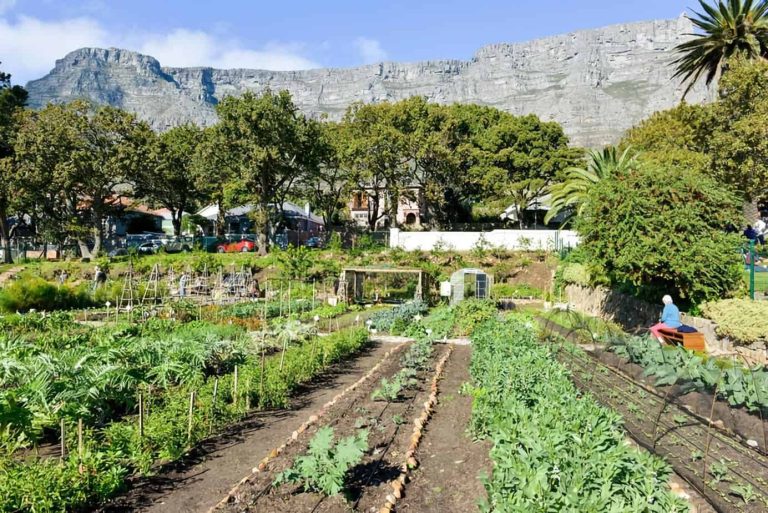
It will take some effort on your part, but you will be surprised at the benefits that even a small garden can provide.

Using the current COVID-19 pandemic as an example (and motivation), consider what happened to grocery store food supplies. Meat of all kinds was frequently in short supply, and what was available was frequently priced out of most people’s reach.

The same was true for fruits, vegetables, and other foods that could be grown or prepared at home. The more you can do on your own mini homestead, the better off you’ll be.

Make your own – Start a garden, if possible, raise livestock, hunt, fish, and forage. Plant fruit and nut trees in addition to a garden. Remember that anything you can provide for yourself eliminates the need to rely on others.

Preserve – If you must buy fresh foods, do so when they are on sale and freeze them for later use. Purchasing a chest freezer will save you money over time. Other excellent methods of food preservation include dehydrating and canning. It is not difficult to learn the canning process and it will provide you with food for a long time.

Collaborate with Your Neighbors – Survival requires a collaborative effort. Exchange extra vegetables and fruits with your friends and neighbors. Join forces with others to buy meat in bulk, such as an entire animal.

freedom water system

Power needs for your mini homestead

Power grids often go down, and areas often have “brown-outs” during peak usage times. In serious cases, outages can last weeks … or longer.

When there is no electricity, there is no fuel for generators or vehicles, as well as no access to everything they provide. You must be prepared for this. Even if you have continuous power, there are things you can do to reduce your consumption… and perhaps even get off the grid.

Conserve – Reduce your energy consumption by simply turning off lights and electronics when not in use. Replace inefficient light bulbs with energy-saving LED bulbs.

Replace energy-efficient or manual appliances. Use rechargeable tools and devices that can be powered by solar or other energy sources. When possible, walk or bike to save fuel for your generator and other essential homestead equipment.

Alternative Energy – Solar power generators are more affordable than ever, and wind turbines can operate continuously. These can be used to replace or supplement your existing power source. Even small portable solar panels can keep phones and computers charged.

Generators – No homestead should ever be without some kind of generator. Check that it is large enough to keep critical devices running and that there is plenty of fuel on standby.

Concluding

Every family’s requirements and homestead are distinct. You’ll modify your strategy as your needs change. Because the mini homestead is always fluid, you must adapt to new challenges and opportunities as they arise. Remember to take things slowly and to see each change as a single step in the right direction.

Stephen Harris has written this article for Prepper’s Will.

Recommended resources for preppers and off-gridders:

Tips to save energy use on the homestead

Building this simple DIY device helps you get water from the air

Butcher basics for the new homesteader

How to make more than 100 long-term survival foods

Plandemic 2, the search for more communism

0

Not trying to join you in any kind of debate , or fight about this whole stupid covid mask fiasco ,,, but there’s just as many, or more people ,, with just as much experience,, saying that mask do not help in reducing the spread of this virus , as there are of people saying it does help. So , if you want to wear one,, wear it ,, if you don’t,, then don’t . It’s free choice. If you’re scared of this virus , or sick , stay home .
But ,, I will admit ,, that the one , and only thing that has actually happened because of this wearing a mask issue is ,,, when I have been out in public ,, there seemed to be a lot less ugly women out there ,, and I’m sure the ladies can say the same thing as well about men ,,,, ,,, so ,, as far as I can say,, that’s the only thing this mask issue has accomplished.

Click to expand…

Heat stroke caution! | Survival Monkey Forums

0

Been getting a bunch of crap from other vendors at some markets that I had to respond to yesterday. When the hot and cold receptors and regulators in your brain are damaged or destroyed….. life becomes a whole different critter in the heat of summer or the cold of winter. Below is what I posted on FB and the Market Forums.

“It must be nice having a trailer with cold air conditioning to step into and enjoy, while the other vendors burn in the heat!”

A comment over the week end that really annoys me! Yes it is really nice to be able to step into it and cool off when I am over heating and force the reset switch in my damaged brain to reset. The trailer IS OPEN to ANY of the Vendors that need to get out of the heat and cool down!

For me however that air conditioner is literally a matter of life and death! When I was sick I had fevers peaking at 112+ degrees and that fried my hot and cold sensors in my brain. In short my ability to regulate my own body temp is shot. At home I have a dog that is very in tune with me, that literally herds me inside to air conditioning when I am starting to overheat, at markets Dee watches me and tells me I need to go into the trailer for a while. I myself can’t tell that I am getting to hot like someone who has a functional Hypothalamus can, neither can I tell when I am getting to cold. If I manage to get too hot and not cool down there is a very real possibility that I will have a heat stroke and fall over dead in front of you :) If I pay close attention to myself I can tell when I need to go into the AC and that thermometer in my shirt pocket is for more than testing food temps, I have found that even in its sleeve it is a good indicator of my body heat and when it gets 10 degrees over the ambient outside temp I need to spend 5 minutes in the trailer. The Shock of walking into the cold resets my brain and it functions fairly normally for 45 min – a hour before it breaks again and I start building heat up again. Otherwise the only way I know I have gotten too hot is my head starts throbbing, the world starts spinning and I sit down whether I intend to sit down or not……. Then I am sick for 3-5 days and can barely function at all [​IMG]:)

At anytime over the years I could have put a AC unit on any of my trailers. I didn’t because I did not need it. This one is not a Look what I have, I am more comfortable and better than you thing. It is…. I literally have a high probability of dying without it. If some people have gotten the impression that it is a luxury for just me, I apologize. That AC unit is as important to me and my continued survival as a pace maker or other critical medical device that keeps other folks alive. And I really am not greedy and happy to share it with folks that need it, or just need a break from the heat. The big fan in my kitchen area serves the same purpose as the as AC and keeps my body temp down and blows some of the heat from the grills away. LOL it gets darn hot in my cooking area surrounded by 200 degree food warmers, a 350 degree smoker and charbroiler and a 360 degree flat top grill. If not for that big fan and that trailer AC I would simply not be able to function at markets or any place else any longer.


Anyone repair their own tools ??

0

I use a lot of power tools ,, when they start breaking down ,, unless they're just completely wore out ,, I will try fixing them before throwing them out and buying new ones .
So now ,, I've got a 5" orbital sander that acted like it had a short so it was loosing power . I took it apart and the brushes are starting to wear out . I took them out and stretched the spring out to keep the contact with the armature ,, so this will last for a little while ,, but my question here is ,, where…

Anyone repair their own tools ??

A Few Tricks To Turn Woods Trash Into Survival Items

0

Unfortunately, garbage can be found almost anywhere, including in wilderness areas. It can be found on beaches, in the middle of the ocean, in cities, and even on Mount Everest. Many of these items, however, can be modified or combined with natural materials to improve your survival skills and equipment.

Every year, nearly 9 tons of plastic enter the world’s oceans. Almost 3 tons of that is washed into the sea by rivers. Archaeologists may refer to us as the “plastic people” in the future. For the time being, many of these items can be repurposed and used to sustain life.

Plastic bottles

To begin making a minnow trap, locate a clear 2-liter bottle. Remove the lid and horizontally cut off the top third of the bottle.

Insert a rock into the lower portion of the bottle to weigh down the trap, and then insert the section you just cut off backwards into the other part of the bottle.

To keep the two halves together, holes can be punched through them, and wire or wooden pins inserted along the edges.

Fill the bottle halfway with water and place it in a creek or stream, open end upstream, to catch minnows and small fish for bait or food. Food scraps can be used to bait the trap.

Minnows and chubs can be mushed and cooked in a stew, bones and all.

A 2-liter bottle, without the label, can also be filled with clear water and used as a lens for starting fires. Make sure you have plenty of tinder and wood on hand before starting your fire, so you don’t have to go looking for fuel once it’s started. You could organize your materials by size.

Fill the bottle to the brim with water. Rotate the bottle so that a fine ray of magnified sunlight shines through the water and into the finest part of the tinder. To facilitate ignition, you’ll need some tinder, such as charred punk wood or cloth.

Plastic sheets and bags

Discarded plastic sheeting or bags can help you collect rainwater, drag firewood, or transport building materials.

The reverse wrap method can also be used to make strong rope and cordage from plastic sheeting or garbage bags. This sturdy cord can be used to secure shelter poles or other materials. Plastic strips or sheets can also be used for signaling or route marking.

Plastic sheeting and garbage bags are excellent building materials. Use duct tape to reinforce areas that will be used as grommets if it is available. When tying out, use taut line hitches and pitch in a tree-sheltered area to keep the wind from destroying your shelter.

A standard survival lean-to can be built by draping plastic sheeting across its front and combining it with other materials to create a super shelter that will significantly increase its effectiveness at sustaining life during the winter.

Hard plastics

Another useful resource is hard plastic, which can be found pretty much everywhere, just like plastic sheets and bags.

Broken toys, used disposable lighters, packaging, discarded electronic devices, and other items containing hard plastic are abundant.

It can be broken and ground on stones to make projectile points, fishhooks, sewing needles, and a variety of other items.

Steel cans

Steel cans are excellent containers for a variety of uses. A large coffee can make an excellent boiler for disinfecting water, but any can will suffice in a pinch.

If necessary, a steel can, can be used as a shovel in the field.

They can be used to store food and water or as reflector signals, if they are new. They are also excellent for transporting fire from one location to another.

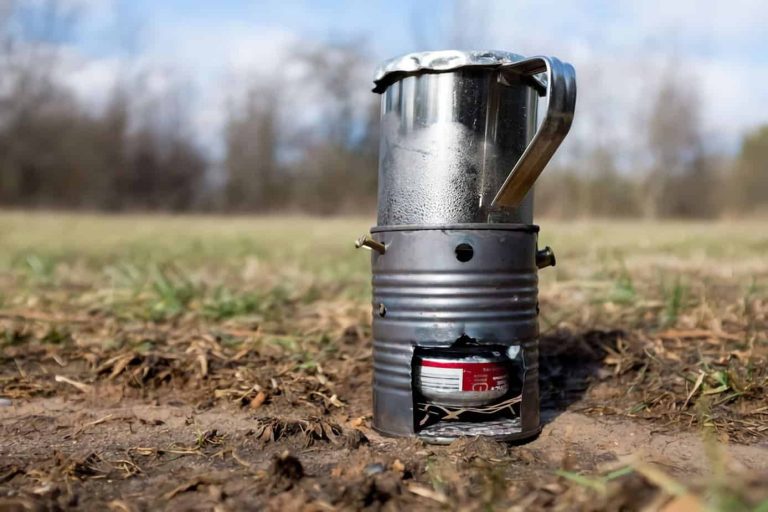
Larger cans can also be used to make hobo-style stoves. Small sticks can be used to start a very hot fire for cooking and boiling.

TLW banner3 new

Inner tubes

Inner tubes are no longer widely used in automobile tires, but they are still widely used in bicycle tires. Bicycles are widely used in cities, particularly outside the United States. They are occasionally found washed downstream from populated areas.

Inner tubes can be cut into segments and used to secure gear as strong rubber bands. A similar band can also be wrapped around a traditional cigarette lighter to prevent liquid lighter fluid from evaporating too quickly.

A slingshot can also be made out of a tree fork and inner tube rubber. Make all of the rubber parts in one piece, with a larger portion left over for a pouch in the middle of the fork.

A survival expert once showed me how to make a band spear out of a straight piece of wood and a section of inner tube. To begin, locate a 3- to 4-foot length of arrow-shaped cane or wood.

Cut a section of the inner tube, tie the ends together to form a rubber band, and tie it to the spear’s small end. Allow the spear to slide between one hand’s index and middle fingers. Wrap the rubber band around this hand’s thumb.

Finally, with the other hand, pull back on the spear’s end, then release, making sure that no part of your or anyone else’s body is in front of the point. This handy spear gun can be used to pin fish to the bottom of shallow water at extremely short ranges (2 to 3 feet), as well as to kill frogs, lizards, and other animals.

Inner tube strips can also be used to make strong, long-lasting shelter bindings and thongs for sandals made from tires or other materials.

Rubber strips also make excellent tinder for starting fires. A small strip of rubber can burn for an extended period of time at high temperatures.

Disposable lighters

Even if the fuel in a disposable lighter has run out, the lighter can still be used to start a fire. Send a spark from its flint into old campfire charcoal or into fine milkweed or thistle.

Once the fire is going, take advantage of the opportunity to make more tinder out of punk wood. Find partially rotten wood from poplar, pine, or other species. The best texture is spongy.

Look for dry wood or allow it to dry by the fire or in the sun. Set it on fire and suffocate it by wrapping it in an old rag or using some other method to cut off air to it. If possible, keep it in a watertight container.

Tinder made in this manner can be lit with a lighter flint or ignited with sparks struck by steel on a rock or from the sun’s concentrated rays. Metal scraps that could be used as fire steels can sometimes be found along old roadbeds or near abandoned mines.

Aluminum cans

It’s a long shot, but the bottom of an aluminum can can be used as a parabolic mirror to focus sunlight and start a fire.

First, polish the can bottom with fine ash from a fire or, if you have some on hand, chocolate. Once it’s shiny, use it to direct a fine white dot of sun-reflected light onto tinder, such as charred punk wood.

Dan Mowinski once demonstrated how to make a loud signal whistle out of an aluminum can by cutting two strips and bending them into shape.

Animal bones

using animal bones for fishing

If you come across animal bones while traveling, they can be shaped into a variety of implements.

Before breaking the bones into smaller pieces, inspect them for natural cracks or fractures. Remember that bone has a natural proclivity to fracture spirally. This can be controlled by taking advantage of the bone’s natural contours on sharply angled pieces of stone.

Once the bone has been cut into pieces, it can be shaped by rubbing it against a stone that is coarse enough to grab the material of your jeans when rubbed against it.

It’s all about what works in a survival or primitive living situation. All that matters is that combining modern materials with natural materials such as bones works. A bone hook with a nylon line, for example, works just as well as a plastic hook with a natural cordage line.

gardenkitb1Concluding

If you want to learn more about reusing various items you can find in the wild for survival purposes, I recommend reading the book “Woodcraft and Camping” by Bernard S. Mason. This book, in addition to being a well-illustrated source on woodcraft pursuits in general, details the creation of frying pans, stoves, buckets, and the like from food tins.

Even if you don’t have a lot of tools to modify these objects, the book may give you ideas on how to use them as survival items.

Experiment close to home to generate new ideas for improving your survival gear with recycled materials. The options are limitless!

Other Useful Resources:

Knowledge to survive any medical crisis situation (including cold injuries management)

Cold Injuries Management and Succesful Treatment

The realities of food shortage during a crisis

Staying outside longer during the winter months

Sig Sauer P320 issues | Survival Monkey Forums

0

There are “claims” by numerous law enforcement agencies of the SIG P320 going off in their holster and otherwise without pulling the trigger. There is one body cam of one going off in a holster.
One agency is dumping 1,900 P320’s in favor of the Glock Model 45.
Every ambulance chasing lawyer (and anti gunner) will jump on any report of Civilians or LEO’s claiming an unintentional discharge with a P320, and could conceivably drive SIG Sauer into bankruptcy.
SIG will almost have to do a recall to cover their a$$.
We have SIG weapons with no issues, but there may be many used P320’s hitting the market soon.

One link, but a search will show more.
Lawsuit filed against Sig Sauer over P320 pistol concerns
CONCORD, N.H. —

Police and federal law enforcement officers are among 20 people from multiple states saying they were wounded by a popular type of SIG Sauer pistol, the latest lawsuit alleging that the gun is susceptible to going off without the trigger being pulled.

The lawsuit, filed last Wednesday in U.S. federal court in Concord, New Hampshire, says there have been over 100 incidents of the P320 pistol unintentionally discharging when the user believed they did not pull the trigger.

[​IMG]


Craftsman and powerbuilt 27 ton log splitter

0

  1. My neighbor who has his own construction business drops off logs at my place to be rid of them.
    The biggest one was a 4 foot diameter elm tree trunk. Well I eventually I got it cut down to size with my 24 inch echo 60cc saw running a stihl yellow chain.
    The thinnest part of the stump I could rip with my echo and the tips of the cuts barely touched.
    I really need a log splitter. So I started reading reviews.
    10 to 13 ton, definitely not big enough. 15 to 20 ton might be big enough mid twenty ton was probably it. 40ton seemed too big.
    So I was looking at lowes 27ton powerbuilt and craftsman log splitters. I think both had Kohler 196cc engine and 14gpm hydraulic pump. Hydraulic controls have a return detent.
    Reoccurring negative reviews on log splitters put together by lows employees were as follows:
    Put together poorly.
    Didn’t work, didn’t start.
    Gas tank and/or crank case had water in it.
    Wheel bearings failed.
    Step 1 identify ones missing parts and had damage. Well all of them had one or the other. One had a crushed gas tank and another one had a bent spindle. Cross those 2 off.
    2 Check for water. One had corrosion in the gas tank, crossed that one off.
    3 see if I can least fupked up one to start. It stated and hydraulics moved. I should have bought a knot to split. But it worked fine.
    So I was left with 1 that didn’t have anything wrong with it other than it was missing a wheel bearing dust cap.
    4 haggle, got the price reduced $300.
    I brought my trailer since I knewfrom the reviews the wheel bearings liked to fail and prior recon I observed 3 out of 4 missing a dust cap on wheel bearings. I knew there was a good chance I would be buying one missing a wheel bearing cap.
    5 I got it home and split some peices of pine then a few knotted chunks of wood before I even took it off the trailer. It worked great.
    6 repacked wheel bearings, while it was still on the trailer. The wheel bearings had a smear of corrosion prevention compound. They would definitely fail after some highway driving. I cleaned them with gasoline and repacked them with real grease.
    So I got the craftsman 27 ton log splitter.
    I got one missing a dust cap on the wheel bearing so they took 10%, plus my 10% military discount. I knew the wheel bearings were going to need to be repacked.
    I warmed up the log splitter with some pine, it didn’t even slow down. A 27ton log splitter is grossly overkill for pine. The most knotted up pine log I had barely slowed it down. Then I put some knotted up chunks of elm on the wood splitter and it busted them apart with little difficulty.
    I still had part of that elm next to my drive way. The top of the stump where the tree limbs sprang fourth it was 250lb or more of green tree knots.
    It was green so it didn’t want to split at all.
    The splitter had some difficulty splitting the top knots apart but it did them in.
    Only complaint I have is after about 45 minutes of use the hydraulics became quite hot. I’ll need to add add cooler.
    The engine runs quite rich, I’ll need the high altitude jet kit.
    Also I have a tree job that will start any day now and will give me about a 3 year supply of wood.
    I’m going to try and break it before the lowes 30 day warranty is up.
    I split all the green knotted chunks I chainsawed off those logs my neighbor dropped off and then went to the field to my knot pile of tree knots and tree roots I didn’t even bother trying to split by hand with wedges, I just threw them on a pile.
    Those knots are 2 to 5 years old so now they are split down to size and are on the ready to burn pile.
    The only reason to buy the 40 ton one is say your neighbor bought a 27 and you had to have one that was bigger and more expensive. The 40 ton is about $2,600. I’m very happy with paying $1,400 including sales tax (Normal price is around $1,700 after tax).


    Last edited: Dec 13, 2022 at 16:22

  2. Wow! Sounds like a real Machine!


  3. The elm has a twisted core like rifling in a barrel.?


  4. Elm is fairly straight grain, has plenty of knots, has strong grain cohesion.


survivalmonkey.com warrant canary

He Wanted a Gun

0

March 2020 things were getting crazy, folks were getting scared. I had a friend who is a true city boy. He knew I was a prepper so he kept calling, asking what to do. As the stores shelves became bare and people started getting that scared look in their eye, my friend started to get really frantic. He called up one day and said,"I need a gun, should I get a gun? What kind of gun should I get? What can I do? I think I should by a gun. How many bullets do I need?"

I told him not to buy a gun,…

He Wanted a Gun