Buying silver, where to start

0

Welcome,

This is my suggestion although there are many opinions out there.

Best place is to look for a local ‘coin dealer’ in your area. Not a cash for gold type place but an established dealer in coins and gold and silver.

Second best for me has been an online broker like APMEX. I’ve done quite a bit of business with them over the years and have always been dealt with professionally and honestly.

All oz (ounce) listings below are Troy ounces. These are not the same as the 16 oz that equal a pound. Never buy anything listed in pounds like on some ebay lots.

Coins would be old US coins that were in circulation until 1965. Also known as 90% silver and “Junk silver”. Junk refers to the fact that it does not have numismatic or collector value. 1 silver dollar contains around .715 oz of silver (rounded for simplicity) 90% silver coins include $1, $.50, $.25 and $.10 pre-1965.

Discs more commonly called rounds. These are full 1oz units that are almost always listed as .999 pure (Sterling silver is .925 pure). Rounds come in a few different forms. US Silver Eagles are put out by the US mint and are stamped $1, Canadian Maple Leafs are denominated at $5 and this can be confusing because they both contain 1 troy oz of silver. The last sort of Rounds are privately minted and can say anything from Englehard to Santa Claus. You may pay a little more for certain ‘brands’ but an oz is an oz is an oz to me.

BBs? don’t know and would stay away from them as they are not recognizable as silver and the burden of proof as to the metal content would be on you should you decide to sell them.

I’d start off with some 90% silver coins and add some 1 oz rounds after that.

Silver spot right at this moment is $16.36 an oz. That price is tracked and based off of paper metal trades, (much like a stock market) and will fluctuate wildly from week to week. It is however the baseline for a dealer to set a price to sell to you. 90% silver trades the closest to that “spot” or “melt” price, (you’ll hear both terms but they mean the same).

So, right now, the “spot” price for $1 of 90% silver coins is $11.69 (16.36 x .715 = 11.69) That would make $10 of 90% = $116.90 and so on.

You won’t find any for sale at that price as there is extra added to the spot price when trading Physical over Paper. You can find 90% for .50 to $1 over spot most of the time. There are also different premiums on the Rounds as well. US Eagles carry a premium that is close to $4 over spot.

The thing about that ‘Premium’ is that you can also expect to get that back when you sell.

Chew on this for awhile and get back if you want any specific advice. How much do you want to spend?


A Bunker Underground an Existing Home

0

How difficult would it be?

It is one thing to have a house built with a basement, but quite another to have a house built with an underground bunker. If you are building remotely and it is a DIY project it could be kept a secret, or if you could tunnel under your existing home by hand and had a place to dispose of the removed soil, I am guessing you could keep that a secret too.

So, what would be the first steps?

You would have to have a plan. Definitely not one submitted to the City, County or State for a permit. A good well thought out plan as to how you would support the existing structure while building your bunker. How would you retain the earthen walls of your dig to prevent sloughing, and what materials you would need to just get started. Soils come in all types from sandy to rocky to expansive clay and that would have to be considered also. What about sewage, water supply, electricity, heat and ventilation?


15 Shelters With A Tarpaulin, And More….

0

Ashli Babbitt murder update | Survival Monkey Forums

0

Thousands of Taxpayer Dollars Were Spent to House Ashli Babbitt Shooter and His Pet for Several Months in ‘Distinguished Visitor Suite’ at Joint Base Andrews

upload_2023-1-9_21-55-52.

The shooting death of Ashli Babbitt is discussed frequently by the corrupt liberal media and their allies in Congress. So, it is up to Judicial Watch to uncover the full truth about the ONLY homicide tied to the January 6 disturbance.

We just received 31 pages of documents from the Department of the Air Force that show U.S. Capitol Police Lieutenant Michael Byrd was housed at taxpayer expense at Joint Base Andrews in Maryland after he shot and killed U.S. Air Force veteran Ashli Babbitt inside the U.S. Capitol on January 6, 2021.

Judicial Watch obtained the records in response to a September 2022 Freedom of Information Act (FOIA) lawsuit filed in the U.S. District Court for the District of Columbia after Joint Base Andrews, the Civil Rights Division of the Justice Department, and the FBI failed to respond to three July 2022 FOIA requests about Byrd’s housing at Joint Base Andrews while his name as the shooter of Ashli Babbitt was being withheld from the public by the government (Judicial Watch v U.S. Department of Defense and U.S. Department of Justice (No. 1:22-cv-02948)).

In our complaint, we explained to the court that we had asked all three government agencies for all records relating to the billeting of Byrd at Joint Base Andrews during the period from January 6, 2021, to July 2022, including authorization papers, housing, meals, transportation, and visitor logs.

The documents show that Lieutenant Byrd and a pet stayed in a “Distinguished Visitor Suite” at the “Presidential Inn” (part of Air Force Inns) under a “Capitol Police Presidential Inn Reservation” for the period July 8, 2021, through January 28, 2022.

A representative at Joint Base Andrews informed us that a “Distinguished Visitor Suite” is typically reserved for officers at the rank of O-7 (Brigadier General or higher.).

An August 2021 email from the assistant hotel manager indicates that the U.S. Capitol Police had been paying Byrd’s bills by phone “every 10 days.”

In an email thread beginning in November 2021, an accounting officer from the U.S. Capitol Police asks the Presidential Inn’s assistant lodging manager to provide detailed invoices reflecting all of the charges incurred by Lt. Byrd while staying at the Inn, in an email titled “Reservation Information-USCP [US Capitol Police] guest.” The manager then provides “folios” for Byrd’s reservation at the Inn from July 8 through November 11, 2021. When asked to explain pricing changes for Byrd’s lodging, the hotel manager explains that higher rates were due in part to the fact that Byrd moved from a “Temporary Lodging Facility” into a “Distinguished Visitors Suite.”

The records and an email dated November 15, 2021, indicate the cost of Lt. Byrd’s lodging fluctuated: from $161 in July 2021, to $158 for August 2021, to $184 for September 2021, to $185 for October 2021, and to $165 for November 2021.

On February 7, 2022, the U.S. Capitol Police again asked the hotel manager for detailed invoices for Byrd’s stay. The manager confirmed that Byrd checked out on January 28, 2022, and that there were “sundry items that were used in the room that were not paid for before the guest left.

The email appears to confirm that the Capitol Police were covering the cost of Byrd’s stay at the Presidential Inn, when a Capitol Police accounting officer tried to clarify Byrd’s hotel bill, asking the hotel manager, “So the hotel is charging USCP for the room and pet fee for January 28-30, or not?”

These extraordinary revelations forced out by our FOIA lawsuit show Defense Department facilities were used to provide long-term housing for the Capitol Hill police officer who shot and killed Air Force veteran Ashli Babbitt.

In June 2022, we produced DOJ records related to the shooting of Babbitt that included a memo recommending “that the United States Attorney’s Office for the District of Columbia decline for criminal prosecution the fatal shooting of Ashli McEntee [Babbitt],” also noting that the shooter, Byrd, “did not create a police report or documents” related to the shooting of Babbitt. A footnote details missing evidence: “During the debrief of Lieutenant Byrd, he did recall writing a few sentences on an evidence bag the evening of January 6, 2021, at the request of a crime scene officer. To date, the bag has not been located by USCP or MPD.”

In November 2021, we received multiple audio, visual and photo records from the DC Metropolitan Police Department about the shooting death of Ashli Babbitt on January 6, 2021, in the U.S. Capitol Building. The records include a cell phone video of the shooting. An audio file of a police interview of the shooter, Byrd, indicates he declined to cooperate.

We previously uncovered records from the DC Metropolitan Police showing that officers reported they didn’t see a weapon in Babbitt’s hand before Byrd shot her and that Byrd was visibly distraught afterward. One officer attested that he didn’t recall hearing any verbal commands before Byrd shot Babbitt. The records include internal communications about Byrd’s case and a crime scene examination report. Investigators who wrote the January 6, 2021, Metro PD Death Report for Babbitt (identified as Ashli Elizabeth McEntee-Babbitt Pamatian) note that the possible Manner of Death was “Homicide (Police Involved Shooting).”

We are engaged in a comprehensive, independent investigation into the January 6 disturbance:

  • February 2022: we filed an opposition to the U.S. Capitol Police’s (USCP) effort to shut down our federal lawsuit for January 6 videos and emails. Through its police department, Congress argues that the videos and emails are not public records, there is no public interest in their release, and that “sovereign immunity” prevents citizens from suing for their release.
  • In November 2021: Judicial Watch – in its FOIA lawsuit asking for records of communication between the Federal Bureau of Investigation (FBI) and several financial institutions about the reported transfer of financial transaction records of people in DC, Maryland and Virginia on January 5 and January 6, 2021 – told a federal court that the FBI may have violated law in its January 6 probes.

Our investigations and litigation are far from complete, so be sure to check back here often for updates.


Earthquakes Today

0

Keep an eye open on the west coast. Cascadia is on high alert.

That's a pretty good swarm.

Weather Satellite

0

This is what I look at daily for weather patterns. Satellite views should update on a regular basis. They do here: Latest Satellite Imagery

North East Pacific

Medical Procedure – IV Basics For The Prepper Medic

0

The prepper with medical training must deal with a wide range of medical issues. When you don’t have access to modern medical facilities, bleeding, broken bones, burns, and infections can pose serious problems.

Many of these issues result in fluid loss from the body. What’s lost will be replaced by oral rehydration, but what if your patient is unconscious?

Normally, this is where intravenous (IV) fluids come in. According to one study, nearly 90% of hospitalized patients have an IV line placed.

Hospitals will be few and far between in a true long-term disaster scenario, but injuries and infections will still occur. In most cases, oral fluids will suffice, but it’s a good idea to understand the fundamentals of IV therapy.

IV infusions can be used to maintain hydration, balance electrolytes, replace blood, administer medicine, and even provide nutrition in the right hands. IV fluids can save lives, but they can also endanger them if used incorrectly. So be cautious when administrating IV fluids.

Types of IV fluids

Giving fluids to a person is more complicated than putting gas in a car. Some terms must be understood in order to grasp the fundamentals of IV fluid administration.

A “solute” is a solid that has been dissolved in liquid. Salt in water is a classic example of a solute. The solute that dissolves in a solvent (water in this case) forms a saline “solution.”

“Crystalloids” are IV fluids that contain solutes dissolved in water. They are the most commonly used options for replacing fluids and balancing electrolytes. Fluids in a blood vessel can be either inside or outside the cells (“intracellular” or “extracellular”). “Plasma” refers to the fluid found in blood vessels outside of cells.

Isotonic, hypertonic, and hypotonic are the three main IV fluid tonicities.

Isotonic fluids – Because they have a solute concentration similar to that found in plasma, they do not cause significant pressure movement of fluid into or out of the patient’s red blood cells. The most well-known IV solutions in this category are 0.9 percent “normal” saline, lactated Ringer’s solution, and 5% dextrose in water. These would be used to replenish fluids lost due to dehydration.

Hypotonic fluids – These fluids have lower solute concentrations than blood, resulting in a tonicity lower than plasma. When blood cells contain more solutes than IV fluid or plasma, they swell as osmotic pressure forces water into them. When a patient has extremely high sodium levels or a condition that dehydrates cells, such as diabetic ketoacidosis, hypotonic solutions are used. “Half-normal” saline (0.45%) and sterile water are two examples.

Hypertonic fluids – These fluids have a higher solute concentration than blood. They are typically used in critical care to treat extremely low sodium levels, which can result in fluid buildup in the lungs. The hypertonic solution will aid in the removal of extra fluid from red blood cells. Dextrose 5 percent in 0.9 percent normal saline solution or even 3% saline is an example of hypertonic fluid.

In practice, the prepper medic who is fortunate enough to have IV setups and a supply of isotonic IV fluids on hand will use them to replace fluids lost due to dehydration or, possibly, hemorrhage.

Adjusting electrolytes such as sodium with hypotonic or hypertonic solutions is dependent on knowing the level, which is typically determined by lab tests. Because such tests are scarce off the grid, this requires some educated guesswork.

Critical dehydration

Deaths from severe dehydration in survival settings can be avoided by administering fluids such as Ringer’s lactate or 0.9 percent normal saline solution.

This is known as “fluid resuscitation.” Water, calcium chloride, potassium chloride, sodium chloride, and sodium lactate combine to form Ringer’s lactate.

Oral fluids can help with most cases of dehydration.

Look for the following signs of dehydration that necessitates IV resuscitation:

  • Thirst
  • Dark urine in small amounts
  • Rapid heartbeat
  • Dizziness or fainting
  • Dry mouth and lips
  • Sunken eyes
  • Fatigue
  • Lethargy
  • Skin discoloration (“turgor”)

To check turgor, pinch the skin on the forearm. Normally, the skin snaps right back, but will remain “tented” in victims of dehydration. Dehydration is more common in people who have a high fever, are diabetic, are vomiting, are alcoholic, or are overheated.

How much fluid should we give to someone who is dehydrated?

The Centers for Disease Control and Prevention (CDC) recommends 30 ml of Ringer’s lactate (preferred) or normal saline per kilogram of body weight (1 kilogram equals 2.2 pounds) in the first 30 minutes, and 70 ml/kg spread out over the next three hours for those over one year of age.

If the patient’s situation does not improve, you can continue for longer periods of time. This may be necessary for someone suffering from cholera, which causes massive fluid loss through watery diarrhea.

Increased urine volume and color, stronger pulses, good skin turgor, resolution of vomiting, and decreased thirst are all signs of improvement. Once the patient’s condition has improved, the IV may be removed and oral fluids administered.

Oral rehydration salts are commercially available to mix with water, or you can make your own. A liter of water should be mixed with 6 teaspoons of sugar and 12 teaspoons of salt.

You can also add a pinch of bicarbonate (baking soda) and a small amount of salt substitute (potassium source) to the mixture. To improve the taste of the solution, a flavoring agent may be added.

Those suffering from dehydration, vomiting, or diarrhea should begin by sipping the solution rather than gulping it down.

svmd longbanner1

Parts of an IV set

Intravenous infusions necessitate the use of specialized materials. A typical IV setup includes several components for therapy insertion and maintenance.

Intravenous fluids – Fluids such as normal saline or Ringer’s lactate were previously packaged in glass bottles. Today, they are almost always in sterile plastic bags. Bags can range in size from 50 to 1,000 milliliters. Because of the volume of fluids required, liter bags are best for dehydration.

Although most IV bags have a port that allows medication injection into the main bag, small bags like 50 ml are used to deliver dilute intravenous medications.

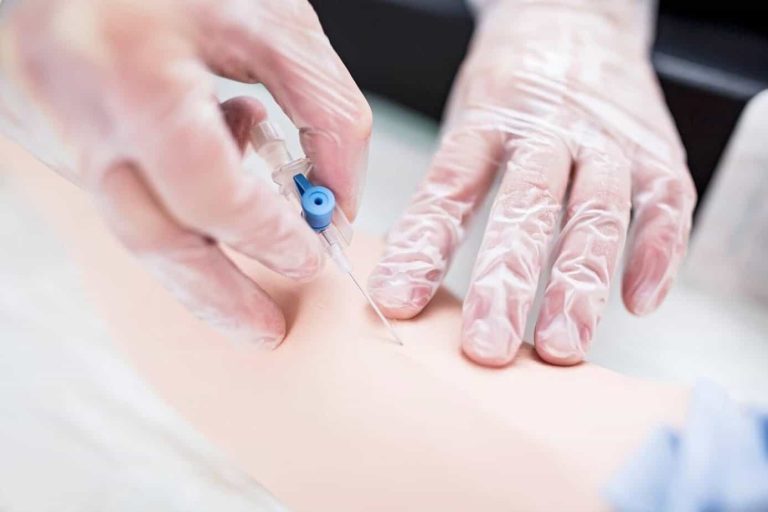
The IV catheter is basically a hollow, plastic tube that has been pre-loaded over a hollow, beveled needle. The needle/tube is connected to a “hub” that is visible above the skin. Behind the hub is a small, transparent chamber that allows the prepper medic to see when blood from the vein flows into the catheter after a successful insertion. The catheter is then attached to tubing, which is attached to the fluid bag.

IV needles are typically 14 to 24 gauge, a measurement that indicates the internal diameter of the catheter. The narrower the catheter, the higher the gauge. Saline can be infused through small gauge needles, but thicker fluids, such as packed red blood cells, require larger gauge needles.

IV tubing – This is the tubing that connects the IV bags to the IV catheter. It is also known as a primary infusion set. A “spike” is typically used to insert one end of the line into the bag.

The set includes a “drip chamber,” which allows you to estimate the rate at which IV fluids flow down the tubing. It also allows gases to escape from the fluid and prevents them from passing down the IV line.

A roller clamp is provided below the drip chamber to control the rate of fluid entering the vein. Primary infusion sets typically include a port further down through which medications can be injected directly. When the extra length is required, extension sets are available. Before connecting to the catheter, the entire line is flushed with fluid to remove air.

Antiseptics, tape, and tourniquets – Prior to the procedure, the skin at the site is cleaned with alcohol or povidone-iodine wipes. To make the vein easily identifiable, a thin tourniquet band is used above the planned insertion site. Tegaderm or another adhesive is used to secure the line in place after the catheter has been placed and the metal needle has been removed. The date and time of placement are recorded.

Suggestions for setting an IV line

suggestions for setting an iv line

Put on your sterile gloves and connect the IV tubing to the fluid bag.

Flow fluid through the entire line.

Choose a vein on the left arm if the patient is right-handed and vice versa.

Begin with the veins furthest away from the torso and work your way up, but if an IV is required in an emergency, it may be necessary to place it in the crook of the arm.

Apply the tourniquet snugly 20 to 25 cm above the site of needle insertion.

Allow the patient to clench and unclench their fist.

Recognize the vein.

It should appear “bouncy” in comparison to the surrounding tissue.

Don’t slap the vein; instead, flick it with your thumb and second finger to make it stand out.

Using an alcohol pad, disinfect the insertion site in the direction of venous flow.

Pull the skin taut just below the entry site once the alcohol has dried to stabilize the vein.

Taking care not to let your gloves come into contact with the needle or catheter.

Insert the catheter into the vein at a 15- to a 30-degree angle.

Going from the side can cause the vein to push sideways, causing you to miss.

To make the needle glide more easily, make sure the bevel is facing upward.

Untie the tourniquet once the catheter is inside the vein to prevent it from blowing due to increased pressure. Pull the needle gently away from the catheter and out. While connecting the tubing, place your finger over the inserted catheter to prevent blood spillage.

Tape the catheter securely in place and gradually loosen the roller clamp to start the infusion.

Other Useful Resources:

Is your first aid kit outdated? – Here’s what you need to know!

These plants can save your life when medical care is not available

Wilderness First Aid Basics every prepper should know

Surviving dehydration – How to obtain water from air!

Improvised Cooking Crane / Pot Hanger system

0

Anything that makes life in the bush easier and more efficient is worth spending a little time and effort to create…the investment in time will pay dividends each time you cook a meal over a fire with this pot hanging system

Having two or more cooking cranes / pot holders adds to the flexibility of the system…different meal components (slow stewing / keeping food warm can be done at one height, and cooking at high heat closer to the coals can be done at a different height.
.

Instead of using a tripod, the cooking crane / pot holder could be used to support an improvised chicken / game rotisserie…drier fleshed game such as rabbit may need some basting

https://www.youtube.com/c/FelixImmler/featured


Irresponsible hunters

0

We walk around the surrounding of our little homestead all the time. A month or two ago, we found a goat carcass about a mile or so away. Last week, a freshly killed pig carcass with just a piece cut off. Today, in the same area, we see the carcass decomposing and a slightly fresher one.

What a waste to leave so much meat behind. And a shame. There are a lot of pigs, sheep, goats, chicken, etc roaming around. And I am all for hunter, fishing and gathering. Don’t kill an animal for…

Irresponsible hunters