Recommended – Greenland >>> TEOTWAWKI Movie – August Premiere

0

https://www.youtube.com/watch?v=3G5Be9-ETvI

Scientists discover that a comet will hit Earth in a few days, and will likely cause the extinction of humanity; the only hope of survival is to take shelter in a group of bunkers in Greenland. The film follows the protagonists’ attempt to get to that shelter.

Greenland is an upcoming American disaster thriller film, directed by Ric Roman Waugh from a screenplay by Chris Sparling. It stars Gerard Butler, Morena Baccarin, Scott Glenn, Andrew Bachelor and David Denman.

It is scheduled to be released on August 14, 2020, by STX Entertainment.


Walk, Walk, more walk… | Survival Monkey Forums

0

Way to go, Motomom34!

You are excatly right.

Mankind is designed to walk (and run) on soft soil carrying heavy burdens. If that exercise is not performed, it’s exactly like a bird not flying. Physical degeneration sets in.

And it sets in fast.

The author Wilbur Smith relates that in “Goldie” (the gold mines) the strong and fit young native men that hire on as miners must be toughened up to withstand the rigors of hardrock mining.

So they are started on a careful set or endurance exercises — which consist of repeatedly stepping up and down on a box one step high. The heat and humidity are slowly increased, and the speed of stepping and length of the conditioning sessions are slowly increased.

Throughout, the heart rate and breathing of each person is carefully monitored, and the exercise rate is adjusted to keep them in the optimum range. They get maximum conditioning without being overworked into heat stress or oxygen deprivation.

Thus, unlike too many high school football players at practice, none of them suddenly fall over dead.

In two weeks the new workers are fully fit and ready to work in the deep drifts.

Here is a littlebit of information most people don’t know: Sweat is not an indicator of good, healthy, exercise.

It’s the body’s desperate last-ditch effort to prevent death from overheating.

It’s your emergency cooling system on overdrive.

The human body is incredibly heat-sensitive. It’s fine at the normal range of 92.8 – 99 degrees F.

The body can tolerate105 degrees F. for a short time. After that, it requires significant medical treatment or it dies.

That’s about the same as saying people are like race cars that can run indefinitely at 5,000 RPM — but if they rev it up to 5,303 RPM their engine explodes.


Interesting article on getting newbies into prepping

0

You have to wade through the ads but it's interesting reading.

13 Clever Ways to Get Non-Preppers On Board

Welcome new site members, from a member (not a mod)

0

First of all, let me just say that I’m not a mod, I’m not the owner, I’m just another member. I’ve been here for a few years but not since the beginning and not as long as many others. This is just me saying welcome…and making a few observations and possibly suggestions.

This is not directed at anyone in particular, so please don’t take offense. Anything here in this post (can’t speak to the entire thread, just what I’ve written) is meant in a general sense and to anyone and everyone.

So, with that out of the way, Welcome! Good to meet you. I hope you can get as much out of the monkey as most of the rest of us do, and share a little along the way. When we all share, we all grow. In that hope, the hope that you stick around, share, learn, grow, I hope that some observations may come in handy.

I don’t want to beat around the bush, and while I hope that the observations and, well yeah, suggestions, will be taken in the spirit in which they are intended, I’m just going to get to the point. I, and I assume others, want your experience here to be good. We want you to join the fold as it were. Generally, we’re happy you are here! Please don’t poop on the living room floor.

Okay, that was blunt, because sometimes it needs to be. So, on with the observations.

  • If you’ve come here with an honest desire to learn and share, to ask and answer questions, to give and receive advice, you will find your time here uplifting and fulfilling.

If, however, you have come here with deep seated preconceptions about prepping, self sufficiency, the end of the world as we know it, world without the rule of law, the $hit hitting the fan, etc. and only want validation for your notions…you are going to run headlong into a brick wall.​

That isn’t because we are mean or cruel or don’t like you or think you are deficient in any way, it’s because nobody likes having their time wasted. Nobody likes to invest in anything to find that it was a bad investment so to speak. If you ask a question, you will get answers (at least at first) and they will almost always be based on experience. They may not align with what you want to hear. Getting yourself all worked up into a lather because someone didn’t tell you what you wanted to hear, but may very well have told you what you needed to hear turns people off. Which leads to…

If you came here to cause trouble, be disruptive, only stir the pot and otherwise make a nuisance of yourself, save your effort. It’s really not worth it and you’ll get a vacation at the very least and shown the door in short order at worst. Why bother? Life’s too short, don’t be a jerk, m’kay?​

  • If you have an honest question, ask it, but do so in what would normally be considered a non-confrontational way. Avoid the use of sweeping generalizations or wild assumptions. Engage in conversation and, if you’ve asked a question and someone responds with a well thought out, reasoned reply, take it for what it is. Someone else’s time and energy to help you. You may not agree with it, but that doesn’t take away from its usefulness.

If you ask a lot of questions and then argue about the answer, it puts people’s hackles up (see above). You asked, they answered, don’t fight them on it. You’ll likely find yourself labeled a troll (whether or not anyone actually tags you with that moniker) and treated as such, even if you aren’t…and believe me, that stigma is tough to shake.​

  • If you have experience with something, share it. If someone else has experience with that same thing, and they engage with you, don’t take it personally. Unless you are asserting that water is wet and someone is questioning your IQ and parentage and stating that water is clearly dry and moreover you are a sheep for falling for the corporate media blitz about supposedly “wet water”, it’s likely a debate, fueled by experience…not an attack. Don’t treat it as such.
  • Use the search feature and follow the linked posts/threads at the bottom of many existing threads. While the search feature isn’t perfect (but you can also use Google to search this site and that’s pretty darned spiffy), it’s still pretty good. The monkey has been around for over 10 years and while there’s fluff and poking and ribbing, there’s also a huge amount of useful, sometimes detailed information on literally hundreds of topics. Take some time and use the search feature.

To that end, don’t get too grumpy if someone points you to the search bar at the top of every page. It’s not that we don’t want to engage, it’s not that we don’t care, it’s not that the mods are jerks and don’t want to help. It’s very likely because what you are asking has been asked (and answered) at least once before and there’s a good chance there is a fairly detailed answer ready and waiting.​

  • There are some on the site who get grumpy because old threads get resurrected as “Featured”. Well, those featured threads aren’t always for the old-timers, they are for everyone and in many cases they are for the new members because they have good, solid, useful information.
  • Lastly (and I reserve the right to modify this post and add to it at a later date), you will be poked, prodded, ribbed, teased and “hazed”. Sometimes just a bit, sometimes a lot. If you show up for class in your underwear, we’re going to call you out and likely point and laugh just a little (or a lot…some of us just can’t help it). The better we know you the better we’ll know the limits but, just like in real life, the better we know you the harder we’re going to tease you too.

We’re a community and I say you’re welcome to join, but just like any community we have our warts and our fights and our pot stirrers and our “troublemakers” (although they are good kids at heart dontchaknow).

Deep down, we’re happy you are here and that isn’t predicated on:

  • Your ethnicity,
  • Your political persuasion,
  • Your educational background,
  • Your nationality,
  • Your religion, or
  • Your stance on the 2nd amendment (or any of them for that matter)
  • Or a whole host of other things that don’t really “define” you.

What we are interested in is that you are here to learn and teach, to be a member of the community, to give and take.

Welcome, from one member to another!


Steiner Binoculars/Customer Service | Survival Monkey Forums

0

Back when I first joined the Army (Dec 88′), one of my first big purchase was a pair of Steiner Binoculars at Clothing and Sale store on post. If I remember correctly, they cost me nearly $500, a princely sum for an E-1 in 1989. I’m pretty sure I used my DPP account (Delayed Payment Program or military member credit account at PX stores except the Class 6 liquor store).

I’ve used and taken them with me everywhere. Egypt, Iraq, Kuwait, Saudi Arabia, South Korea, and all over the United States. I had lost the eye cups, strap, lens cover, and the rubberized armor was soft and starting to peel off. On a whim I checked the Steiner website and found out that they can re-armor the binos for $50. I called got a return number and they said they would inspect them before they re-armor them and contact me for payment info.

About a week later I received an email saying that it needed eye cups ($25), re-armored ($50), and internal cleaning ($130). I was a bit upset at the cleaning charge and called customer service. I told them that I was a disabled veteran on a fixed income, had the binoculars since a private, and that I would forego the cleaning at that price. The customer service guy said he would throw in the eye cups for free and would see what he could do about getting them cleaned for free. I only paid for the re-armoring and can’t wait to see what they look like afterwards. I wish I had taken a photo of them before sending them off, but will post a photo of them when they return and a report on the re-armoring and/or cleaning.


How To Improve Your Property With Agroforestry

0

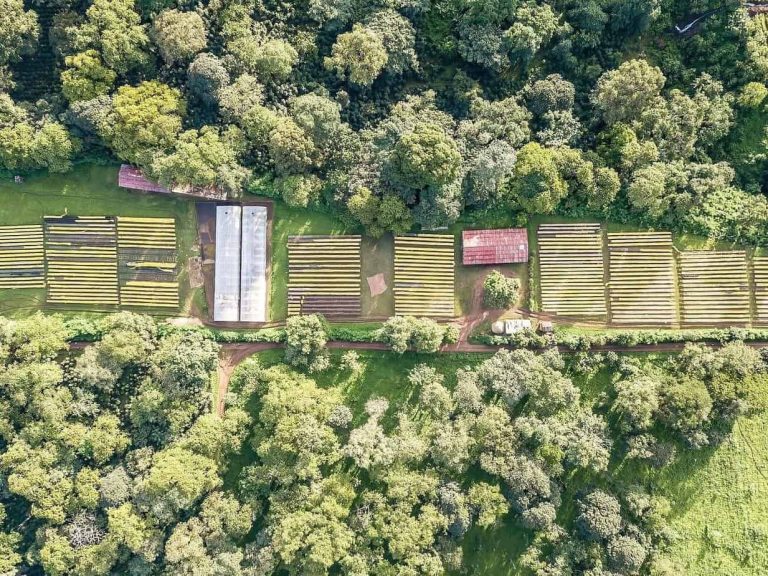
Agroforestry may be easier to explain if we begin with forestry. Forestry is essentially the cultivation of trees for timber harvesting. On many timbered lands, it is frequently the sole enterprise.

Agroforestry, on the other hand, is the cultivation of trees in conjunction with other types of agriculture, such as pasture or crops. Agroforestry has numerous advantages over using land for a single purpose, whether it is forestry, livestock, or crops.

Advantages of agroforestry

The vegetation can capture sunlight over multiple layers and for a longer period of time, resulting in increased productivity and, ultimately, better soil.

Tree canopies can shield underlying crops and animals from the sun and wind.

Tree roots and herbaceous plants beneath can work together to reduce soil erosion caused by wind or water.

Increased plant diversity can reduce the risk that a disease or insect will wipe out the entire crop. At the same time, that diversity will attract a wider range of benign insects, which in turn will attract insect predators, which will control future pest insects.

The risk of a single enterprise experiencing low prices is reduced; the portfolio will be more balanced.

When compared to forest, grass, or cropland, the diversity of crop roots, as well as the extended duration and increased rate of photosynthesis, can improve the rate of carbon sequestration in the soil.

Types of agroforestry

Riparian Buffers

Riparian buffers save soil by protecting the banks of streams and rivers from soil erosion. They also reduce pollution in water from soil particles, pesticides, and fertilizers. To fully protect soil and water, a properly designed riparian buffer should include trees, shrubs, and herbaceous vegetation.

You can choose tree species that produce a harvestable crop, such as maples for syrup or walnuts or pecans for nuts and timber. Riparian areas are home to many high-value trees, including black walnuts and pecans.

Windbreaks

Windbreaks are useful in a variety of ways, including protecting homes, crops, and livestock. The location, spacing of trees, and a number of rows vary according to the intended purpose.

Home protection – Windbreaks can trap snow, reduce wind velocity around homes, and lower home heating costs in areas with cold winds and winter snow.

Animal protection – Windbreaks for livestock can significantly reduce winter feed requirements, improve comfort, and reduce animal mortality from blizzards. Make them perpendicular to the prevailing winter winds and on the animals’ windward side.

Crop protection – Windbreaks are typically placed on the windward side of prevailing hot summer winds for crops. Trapping snow is sometimes necessary for increasing moisture supply; for this, construct windbreaks on the windward side of the prevailing winter winds.

Forest farming

Forest farming refers to the cultivation of crops that thrive in a forest environment. Maple syrup is a well-known high-value forest product.

Many other trees, including birch, sycamore, walnuts, and hickories, can be tapped for sap that can be boiled down into syrup, each with a distinct flavor.

Other forest crops include medicinal plants like ginseng, black cohosh, and goldenseal, mushrooms like shiitake, and fruits like pawpaw and currants. Truffles are an extremely valuable underground fungus.

Alley cropping

Alley cropping, which is common in tropical areas, is the practice of planting widely spaced rows of trees with rows of crops in between.

To protect small trees that can’t withstand livestock browsing or rubbing, it can be a long-term strategy or a transitional stage into silvopasture.

Alley cropping can benefit row crops by shielding them from wind, especially in areas where crop sandblasting is common due to windblown soil or where evapotranspiration is high due to frequent strong winds.

Alley cropping in tropical areas consists of leguminous tree rows alternated with annual crops. After the crop is established, the farmer cuts the tree branches and uses them as mulch between the crop rows to protect the soil and release nitrogen as it decays. This is an effective practice in areas where nitrogen fertilizer is expensive and difficult to obtain.

Alley cropping also provides numerous land management benefits. The basic configuration, a “corrugated canopy” of alternating tall trees and short crops, efficiently captures sunlight for high biological productivity.

Ground-level (often annual) crops produce quickly and help the land provide immediate returns, whereas trees are a long-term crop that may take several years to become profitable. Other advantages include livestock shade, windbreak capacity, and increased biodiversity.

Advantages of silvopasture

bannerlost1

Silvopasture, which combines trees and pasture, resembles a savanna, an ecosystem that produces more animal biomass per unit of land area than any other on Earth. (The remaining African savannas support spectacular animal populations.)

A silvopasture can be created by incorporating trees into a pasture or by incorporating herbaceous vegetation (grasses, legumes, and forbs) into a forest. A silvopasture’s incredible potential productivity is due to a number of factors.

Sunlight capture

Together, trees and pasture can capture more sunlight than either can alone.

A field of evergreen pine trees with a warm-season grass understory, for example, will photosynthesize at a high rate both in summer (due to the efficient photosynthetic capacity of warm-season grasses) and in winter (due to the pine trees that retain their leaves or needles in winter).

A mix of deciduous trees and cool-season grasses takes advantage of the trees getting first use of the light in the summer, with shade-tolerant grasses beneath. During the winter, when sunlight is less direct and available, the trees shed their leaves, allowing more light to reach the grasses.

Animal population increase

Silvopasture can protect animals from extreme heat and sun in the summer, as well as wind in the winter.

According to research conducted in Kentucky, shade can significantly improve animal performance in humid areas during the summer, increasing average daily gain on beef steers by 1.25 pounds of live weight.

Furthermore, wind protection can improve animal performance in the winter. In the fall, specific tree species can provide dropped leaves, fruit, or nuts as supplemental livestock feed.

Plant diversity

A wide variety of plants can provide numerous benefits:

  • Diversity reduces disease and insect pressure on a single plant species.
  • Returning roots, root exudates, and vegetative material to the soil promotes soil development and productivity.
  • Woody debris and fallen leaves are especially beneficial to the development of soil fungal populations, while herbaceous perennial plants are also extremely beneficial to the soil.
  • A mixture of grasses, legumes, forbs, and trees can build soil much faster than any of the individual components.

Some tree species, such as oaks and pines, host ectomycorrhizal fungi, which differ from the endomycorrhizal fungi that most herbaceous plants host; the former can bore into the rocky soils that characterize many pastures and extract water and nutrients from them. This explains why oak and pine trees dominate many rocky areas.

The cycling of nutrients extracted from needles, leaves, and acorns can help enrich soils beneath them, benefiting other plants.

How to manage a silvopasture

how to manage a silvopasture

Silvopasture management necessitates more thought than most land uses because it must consider the needs of pasture, trees, and animals. This requires more careful planning, closer monitoring, and ongoing maintenance.

Animal protection for trees

When trees are small, protective structures may be required to keep animals from browsing and rubbing on them. Rotational grazing may also be necessary to protect trees and tree roots. Incorporate tree lines into paddock subdivision electric fence lines to manage the fencing and reduce livestock eating and rubbing on trees.

Select shade-tolerant forages (that are fairly non-competitive with the trees). Eastern gamagrass is more shade-tolerant than most other warm-season grasses.

Virginia wild rye is shade-tolerant among cool-season grasses, but it may be less productive than other species, such as low-alkaloid reed canarygrass or orchard grass.

Kura clover (or AberLasting clover, a hybrid of Kura and white varieties) is a standout legume, as is the subterranean clover.

Plant species that are competitive must be controlled

Tall fescue and smooth brome are notorious for competing with trees, especially in their early stages of development. This is not to say that these species cannot be used in a silvopasture. In fact, they may offer advantages that other forage species do not, but they must be managed.

Maintain a grass-free zone around the tree bases, for example, or plant shallow-rooted white clover (or currants, ginseng, or goldenseal) for a higher-value, shade-tolerant crop.

If the landowner is not allergic to herbicides, grass can be selectively removed from broadleaf plants or legumes using the herbicide Clethodim.

How to make your own silvopasture

If you want to plan your future silvopasture farm, which will include three distinct pasture types, here are my suggestions. You can use these plans to get ideas for your own silvopasture.

Silvopasture for the warm season

With a willow and mulberry overstory, the understory would be dominated by Eastern gamagrass, alfalfa (lucerne), chicory, plantain, Maximillian sunflower, Korean lespedeza, crabgrass, and a slew of other native warm-season grasses, wildflowers, and legumes.

The grasses would provide summer grazing for livestock, while the high protein willows would provide browse and pick up the slack in late summer as the grasses’ productivity declined.

The trees would be planted north-south so that the prevailing summer wind could blow between them and provide shade all day.

Mulberries would provide pigs with summer fruit and excellent browse for beef animals. Other summer fruits, such as gooseberries, currants, goumi, Lodi apples, apricots, and wild plums, could help the pigs extend their fruiting season.

selfsb b4

Silvopasture for the winter

To block the cold north wind, friendly endophyte tall fescue, red clover, bird’s-foot trefoil, and small burnet — all of which retain their quality well into the winter months — would be planted under east-west lines of pines. Winter-hardy bamboo and shrubs with winter leaves, such as four-wing saltbush, could also be included.

Widely spaced, thornless honey locust trees would produce high-sugar pods that would survive the winter with little deterioration, providing a high-energy supplement for wintering cattle. Plant blocks of pines in the southeast corner of each paddock would provide blizzard shelter.

Silvopasture for the spring-fall

A blend of cool-season grasses, forbs, and legumes, such as low-alkaloid reed canarygrass, meadow brome, orchardgrass, smooth brome, red clover, white clover, alfalfa, bird’s-foot trefoil, chicory, and plantain would be planted under a diverse blend of oaks and chestnuts for high-carb nuts, as well as hazelnuts, walnuts, and pecans for high protein.

For high-energy fruits, additional trees could include autumn olives, apples, pears, and persimmons.

This field can be pastured primarily in the spring and fall, with plenty of pig food and fruits for cattle in the fall. The leaves of deciduous trees will supplement the cattle feed supply in the fall.

These three pastures provide nearly year-round grazing for cattle, even when there is heavy snow cover, as well as fruits and nuts for pigs (or poultry). There will be no diesel, no fertilizer, and no work other than that done by cows and pigs. The entire farm runs on sunlight, and the soil improves year after year.

Additional resources:

Smart tips for gardening on dry soil

If you see this plant in your backyard, don’t touch it!

Tips for preparing gardening soil in winter

The #1 food of Americans during the Great Depression

How Much Is Too Much? (First Aid) EDC/BOB/INCH

0

nto a little hamlet an

THIS!
I saw what went on in Bosnia, the women and youngsters were getting hurt all the time, just trying to survive. What the fighting didn’t do, accidents and lack of knowledge did. We saw lots of broken bones that were not set properly, wounds that should have been stitched or properly closed that were not, festering wounds that were not cleaned or maintained clean, or lacked any medical intervention. we saw amputations that were done poorly, and some that probably shouldn’t have been done in the first place, and gangrene, gangrene was everywhere, you could walk into a little hamlet and smell it, follow your nose to who had it, and know who was going to die from it! The two things that always struck me were; Lack of sterility, Lack of cleaning abilities! Folks had no idea about how to sterilize and keep clean, even the basics, boiling water was a challenge, it required firewood of which there wasn’t much ( and horded), there was no electricity, or natural gas/LP fuel, so,…..
Basic cleaning supplies were long gone, no bleach, no vinegar, no rubbing alcohol, nothing! Any medical supplies had been used up already, of were horded, or had been taken by whom ever came looking. In short, things were pretty bad, and personal hygiene had all but stopped about the same time the wells went bad! Then of course, there was all the child births, young girls who had been raped, or whored out, or those drugged and taken as prostitutes, lots of babies being born, many with Hepatitis, many with jaundice, and lots of other issues! Abortions were absolutely deadly to the mother, so that was a non issue, mostly! Drug use was a major issue in the urban areas, and all the medical issues that came with it, and treating any one was risky, so they usually were left alone to suffer what ever would ultimately kill them, mostly gangrene, or other terminal affliction that gets passed on when sharing needles! Improper handling of the dead bodies was a big issue, burning took forever and required lots of fuel, which they didn’t have, usually a couple of old tires and a few chunks of fire wood and maybe some sod was the best they could do, burying often wasn’t deep enough, or too close to a water supply, or the wild animals got to it and dug it up to feed, and the bugs, my god, the bugs were awful! I carried 2 cans of hard core Deet with me, and didn’t share willingly! Lots of vermin everywhere, and those little bastards got to everything, so you had to clean everything before you tried to use it, and you would get what ever they spread, with the obvious results! Improper food prep, there wasn’t much food, and what there was wasn’t good, ether rotting, or spoiled, so they did what they could, and were often sick from it, what meat there was had turned, gawd, desperate folk will eat anything. You could smell the cooking everywhere you went, boiled Onion every where, often from crops that had been harvested a year or two prior, so these were the rotting leftovers that were still in the ground, same with the other things, carrots potatos, ect,……. and Rat Meat, if they could catch it and kill it, it got put in the stew pot, but they survived! THIS is what hell looks like, and this is what we prep for!

Click to expand…

Why Grow Ginger? | Survival Monkey Forums

0

The popularity of Ginger Ale and Ginger Beer in the 1800’s US was due to indigestion and both provided gastric relief. In fact, the greatest market for medical cures during the westward expansion was for stomach ailments due to the heavy dies of easy to store carbs (wheat flour, rice, beans, corn).

Sound familiar? Most preppers rely on the exact same foods as part of their food strategy, and even those who will supplement with gardens face months of subsistence on these preps before those probiotic friendly veggies are ready to eat. The leaves can be used to make a gastric pain relieving tea, while the root can be use to make ginger ale and ginger beer.

Fortunately, ginger is easy to grow in UZ zones 8 and above adn with care can be grown in almost all zones.

Ginger beer:

Ginger ale:


Recommended – Survival Books-Required Reading-Fiction & Guides – Beginners

0

I have pirated copies of most of that, Tac.

I don’t support the Chinese marketing zombie campaign and our disposable society. If I can find knowledge for free, I will acquire it. To hell with other people’s morals and pride. When it comes to survival, all bets are off – I do what I must.


NRS Pilot Knife – Small And Handy

0

I’ve been looking for a fixed blade knife I could carry vertically blade up on either a shoulder strap or vest, something I could grab in an instant if needed. I’ve looked through hundreds of offerings at the big internet knife storesbut just couldn’t find what I wanted.

The biggest problem with finding what I wanted was that pulling the blade out of a sheath was that the knife would require enough space below it for clearance. Also there are relatively few knives that have a locking sheath that was both secure and could be pulled free without so much force it would shift whatever it was attached to.

I had pretty much given up on the concept and figured I’d have to go with an assisted folder like my EDC SOG Aegis clipped somewhere handy. Then today I needed to run into town to get a replacement keyboard for Mrs. 3M and whadda you know – Across the street from BestBuy is my favorite Sportsmans Warehouse. Some “widow shopping” was mandatory and as I checked through the knife section I ran across the NRS Pilot Knife.

I took one look and realized that this knife was exactly what I had been searching for. It had never bliped on my radar because NRS is a rafting company and the Pilot Knife is specially designed for rafting and water rescue. Because of that it has the locking sheath feature I was looking for. Basically you depress the two silver buttons and the knife all but pops into your hand. Due to the sheath design it needs very little movement for the tip to clear the sheath. This could be vertically mounted within an inch of a mag pouch and would have zero clearance issues. It’s also very flat so it wouldn’t cause issues with getting the mag out either.

Top view in sheath. The knife blade and tang is actually a dark gray even though it looks much lighter in the pictures.

Bottom view in sheath.
upload_2019-9-23_15-46-31.

Right side view. Features from left to right are breacher/skull crusher, lanyard hole, bottle opener, rope hook, serrated edge, straight edge. The blunt tip can be used as a screwdriver. The rectangular cut out and round hole are part of the sheath retention system. The rectangular cutout aldo doubles as an scuba tank valve wrench. The handle is surprisingly comfortable.
upload_2019-9-23_15-44-47.

And left side. Yes, it’s a Chinese blade, but well made and the steel is 420 HC stainless. You can also get it in titanium for extra corrosion resistance.
upload_2019-9-23_15-45-45.

Close up of the bottom edge. This picture doesn’t do justice to how sharp the blade actually is
upload_2019-9-23_15-47-8.

The top edge is not sharpened, but alots begs to have an edge. I’m considering tht along with the tip. The picture also shows the aggressive stippling on the handle.
upload_2019-9-23_15-47-44.

And a size comparison to the Gerber StrongArm.
upload_2019-9-23_15-48-30.

upload_2019-9-23_15-49-10.

What would I change on this knife? While the knife isn’t as reflective as it shows in the picture I would like a matt finish. I’d also like the release buttons to be a matt black as well. It’s likely I’ll pop the out and refinish them. I’d also like the top edge and tip sharpened, but for the purpose this knife was designed I think NRS got it right. Honestly, as is it’s still great for my purpose.

Also, I don’t see this as a primary woods or combat knife, but I think it’s a great backup that doesn’t take up much weight or space.

It’s also not overly expensive at $50 retail.

Manufacturer’s Web site
NRS Pilot Knife at nrs.com

There is also a smaller version called the Copilot
NRS Co-Pilot Knife at nrs.com

Some specs
Blade Material: 420 HC Stainless Steel
Handle Material: Glass-reinforced polypropylene with TPR over mold
Sheath Material: Fiberglass-reinforced nylon
Total Length: 7.38″
Blade Length: 3″
Weight: 5.5 oz
Knife only Weight: 3.5 oz

The obligatory YouTubes