House shoots down amendment to cut F-35 purchase

Democrats on the House Armed Services Committee are lambasting appropriators who want to buy additional F-35 fighter jets in fiscal 2025 above the Pentagon’s budget request.
The House’s FY25 defense spending bill would procure 76 new F-35s, eight more than the 68 requested by the Defense Department. This puts the spending bill at odds with the House’s FY25 National Defense Authorization Act, passed 217-199 earlier this month, which would cut F-35 procurement down to 58 aircraft.
“At a projected total lifecycle cost of over $2 trillion dollars, the F-35 is the largest program in DoD history despite routinely not meeting cost, schedule, and performance metrics,” Rep. Adam Smith of Washington, the top Democrat on the committee, said in a Wednesday statement with Rep. Donald Norcross of New Jersey, the top Democrat on the tactical air and land forces panel.
“This is unacceptable program execution and Congress should not reward this behavior by buying additional aircraft above the President’s budget request,” the statement read.
Smith and Norcross highlighted that the Defense Department stopped accepting F-35 deliveries from manufacturer Lockheed Martin last year “until the enterprise could successfully deliver, test, and field the next version of the Operational Flight Program” — a benchmark it has not yet met nearly a year later.
The two Democrats and Rep. Jen Kiggans, R-Va., introduced a bipartisan amendment that would have cut F-35 procurement in the spending bill and bring it in sync with the 58 F-35s authorized in the National Defense Authorization Act.
But the House Rules Committee, which oversees amendment votes, opted not to put Smith’s proposed F-35 reduction on the floor for a vote. The new House Appropriations Committee chairman, Rep. Tom Cole, R-Okla., previously chaired the Rules Committee.
Smith’s proposed reduction of 18 fighter jets from the spending bill would have amounted to a roughly $2 billion procurement cut for the Air Force and Navy.
The Smith amendment would have shifted funds in the form of $526 million to the Air Force to help address F-35 performance issues with development, production and testing.
“It is the duty of Congress to support the long-term viability of the F-35 program and ensure the vast sums of taxpayer money footing the bill are spent where they can ensure program success,” said Smith and Norcross. “A simple short-term reduction in acquisition rates would enable us to mitigate the known systemic problems, correct course and get the F-35 program and workers up and running at full speed.”
Lockheed Martin has faced intense bipartisan scrutiny from the Armed Services Committee for repeated F-35 delays, most recently with the Technology Refresh 3 upgrades. The TR-3 hardware and software upgrades would provide F-35s with better displays, computer memory and processing power.
Rep. Seth Moulton, D-Mass., attempted to amend the NDAA with a provision that would have authorized the defense secretary to seize intellectual property from Lockheed Martin and open it up to competition, taking aim at the F-35′s software problems.
Moulton sought a vote on the amendment when the Armed Services Committee marked up the legislation in May but had to withdraw it after a Congressional Budget Office cost determination. But multiple committee members, including several Republicans, said they would support Moulton’s efforts to seize intellectual property from Lockheed Martin in the years ahead should F-35 issues persist.
Smith urged caution on Moulton’s efforts, despite his shared frustrations with Lockheed’s execution of the F-35 program.
“In law, we would possibly have to compensate them for that, which would be really, really, really expensive,” Smith said.
Despite efforts from Smith and his fellow Armed Services Committee members to cut F-35 procurement next year, appropriators will have the final word on how many of the aircraft to buy in the defense spending bill.
Further compounding the uncertainty, the Senate version of the FY25 NDAA would procure 68 F-35s — the same number requested by the Pentagon. It remains unclear how many F-35s Senate appropriators seek to procure, as they have yet to release their FY25 defense spending bill.
Bryant Harris is the Congress reporter for Defense News. He has covered U.S. foreign policy, national security, international affairs and politics in Washington since 2014. He has also written for Foreign Policy, Al-Monitor, Al Jazeera English and IPS News.
South Korea orders first batch of KF-21 fighters

CHRISTCHURCH, New Zealand — Nine years after development of South Korea’s KF-21 Boramae began, the government has signed a deal with Korea Aerospace Industries for the production of 20 fighter jets.
The order comes as KAI reports the fighter’s development is currently 80% complete.
The Defense Acquisition Program Administration awarded KAI the 1.96 trillion won contract (U.S. $1.41 billion) for the Block 1 batch, the company announced June 25. The platforms are considered 4.5-generation aircraft.
The first aircraft will be delivered by the end of 2026, and the final from this series by Aug. 31, 2027, according to KAI.
“Despite many challenges and difficulties, the KF-21 system development project was able to reach mass production stably, thanks to the solid cooperation of related organizations,” KAI President Kang Goo-young said in a news release.
Jinseok Song, who works on the firm’s KF-X program management team, named after the initial title for the KF-21, told Defense News last year that the company would manufacture 40 KF-21 Block I and 80 Block II aircraft. However, DAPA has initially ordered 20, per recommendations from the government-run Korea Institute for Defense Analyses.
The government may order another 20 next year, after further verification of the aircraft’s performance.
Song said production for Block II, slated for development from 2026 to 2028, will add air-to-ground capabilities and an expanded performance envelope. About 2,200 test sorties are to be flown by 2026.
KAI has been preparing for this production contract by readying a supply chain of 600 domestic companies, building production facilities and acquiring tools. KAI aims to achieve a localization rate of 65% for the aircraft.
The KF-21 will replace South Korea’s F-4 and F-5 fighters, with the former having retired this month.
Additional agreements
DAPA also recently signed a contract with Hanwha Systems for 20 active electronically scanned array radars for 110 billion won.
And on June 25, Hanwha Aerospace announced it inked a 556 billion won contract to produce 40 General Electric F414-GE-400 engines plus spares for the first score of KF-21s.
The first engine is expected to be ready by the end of 2025 and will be produced at a new factory in Changwon. With the capacity to manufacture 300 engines annually, Hanwha Aerospace broke ground for this new $30 million facility in April.
Hanwha Aerospace has reportedly manufactured more than 10,000 aircraft engines over the past 45 years, 82% of which were produced under license.
“This contract serves as a stepping stone for Hanwha Aerospace’s plans to develop next-generation engine technologies,” the company said.
The firm added that it “is actively pursuing research and development in sixth-generation engine technology.”
Similarly, looking beyond the KF-21, KAI said it will “further develop sixth-generation manned and unmanned system technology.”
Gordon Arthur is an Asia correspondent for Defense News. After a 20-year stint working in Hong Kong, he now resides in New Zealand. He has attended military exercises and defense exhibitions in about 20 countries around the Asia-Pacific region.
Any idea how old?

Got this powder can in a box of other things. The can is over 1/2 full and no rust inside.
The screw on top is about 5/8" in diameter.

Denmark to bring home F-35 jets from Arizona amid upgrade delays

PARIS — Denmark plans to bring home its six F-35 Joint Strike Fighters currently being used to train pilots in the U.S. as the delivery schedule for an upgraded version of the aircraft continues to slip.
The six Danish F-35 jets in TR-2 configuration stationed at Luke Air Force Base in Arizona will be repatriated to the Royal Danish Air Force’s Skrydstrup air base, the Defence Ministry said in a statement on Wednesday. They’ll join the four stealth fighters already there to bring the country’s operational F-35s to ten, as Denmark prepares to phase out its fleet of F-16 jets.
Lockheed Martin is running out of space to park undelivered F-35 jets amid hardware and software delays linked to the Technology Refresh 3 update, or TR-3, whose full delivery will be delayed into 2025, the U.S. Government Accountability Office reported in May. That’s disrupting fleet-replacement plans by the likes of Denmark, Belgium and Norway, whose F16s have been flying for more than 40 years, and whose fleets are counted in dozens of aircraft rather than hundreds.
“It’s very positive that we have now found a solution, so that the delays from the manufacturer affect us as little as possible,” Defence Minister Troels Lund Poulsen said in the statement. “F-35 fighter jets are a major investment for Denmark that will be important for our defense and security for many years to come, and it’s crucial that we follow the phase-in closely.”
The TR-3 software, originally planned for summer 2023, continues to be unstable, the GAO reported in May, with the watchdog saying some test pilots had to reboot their entire radar and electronic-warfare systems mid-flight to get them back online. The update includes improved cockpit displays and more on-board computing power, and is supposed to serve as the basis for a further upgrade known as Block 4 that adds new weapon and electronic-warfare capabilities.
Lockheed Martin will initially deliver F-35 jets with a limited version of TR-3 that can only be used for training purposes, Denmark said. The Danish jets in the older TR-2 configuration will be repatriated as aircraft with the TR-3 software and hardware upgrade are delivered to Luke Air Force Base, the Defence Ministry said.
Bringing home the TR-2 jets will allow Denmark to maintain the operational milestones for phasing in of the F-35 and increase the training level of pilots and support personnel at Skrydstrup, while allowing pilot training at Luke AFB to continue, the Defence Ministry said.
The Danish move feeds into fears by other European F-35 customers, present and future, that their carefully calibrated aircraft-delivery and upgrade schedules could be perturbed by the TR-3 saga.
While the Netherlands and Norway already operate fleets of more than 30 F-35 jets and therefore face less urgency than Denmark or a country such as Belgium, which is yet to receive its first F-35, the delays risk pushing back full operational capability.
Defense officials in Norway said they have made their concerns clear to the Pentagon’s Joint Program Office, which represents the U.S. and international governments involved in the F-35 program. Oslo’s fear in particular is Lockheed Martin feeding a salad of halfway solutions and different versions into the production pipeline that would grow to be unmanageable.
“We don’t want interim configurations,” said a Norwegian defense official, speaking on condition of anonymity to discuss internal deliberations.
The Netherlands anticipated development delays and in late 2022 requested delivery of six aircraft in the TR-2 configuration rather than the upgraded version, saying deliveries could continue through to March, according to an annual government progress report published April 2.
The Dutch were slated to get their first TR-3 configured F-35 in late 2024, and should the software not be available then, the delays will have a “limited impact” on plans to stand up the third Dutch F-35 squadron in the middle of 2027, according to the report.
Denmark has purchased 27 F-35s, and the remaining aircraft will be delivered in TR-3 configuration “towards 2027,” the Danish ministry said. The situation isn’t expected to affect the donation of F-16s to Ukraine, nor Denmark’s obligations to NATO in a crisis situation, according to the Defence Ministry.
The country will stop training Ukrainian F-16 pilots in Denmark after 2024 as Skrydstrup air base switches fully to the F-35, Poulsen was reported as saying at a press conference with his Norwegian counterpart Bjørn Arild Gram on Monday.
The Danish Ministry of Defence didn’t immediately respond to questions regarding the timeline for repatriating the six aircraft from the U.S. or the delivery of the remaining 17 F-35s.
Rudy Ruitenberg is a Europe correspondent for Defense News. He started his career at Bloomberg News and has experience reporting on technology, commodity markets and politics.
Harvesting And Eating Invasive Plants
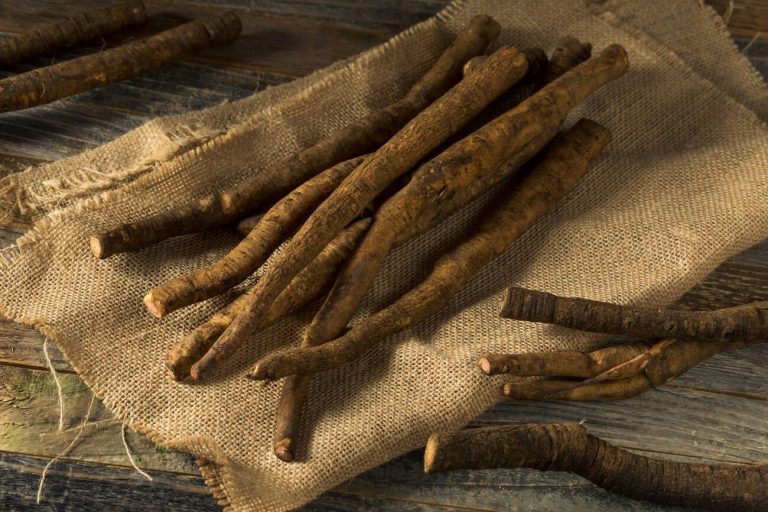
A wealth of edible wild plants is flourishing all around us, often unnoticed. Despite their attractive attributes, many of these wild edibles have been neglected, overlooked, or deemed unimportant. Some remain practically invisible to most people. The edible invasive plants highlighted here are wild foods that I regularly incorporate into my meals when they’re in season.
Edible invasive plants:
Burdock
Status: Commonly found throughout Canada, as well as in the Western and Eastern United States.
Location: Thrives in open areas and gardens; occasionally available in supermarkets and Chinatowns.
Season: Spring and late fall.
Parts Used: Taproot and immature stem.
Culinarily known as “gobo” (Arctium lappa), burdock has been cultivated in Japan for its long, starchy taproot for centuries. Its earthy flavor makes it perfect for hearty, cold-weather dishes, adding a sweet, starchy element to sauces and stews. In wild plants, the root is best eaten late in the first year or during the second spring, as it becomes more fibrous by the end of its growing season. Harvesting a 2-to-3-foot taproot requires determination and skilled digging.
Burdock roots contain inulin, an indigestible carbohydrate that can cause gas. To mitigate this, parboil or soak the roots, as inulin is water-soluble. Alternatively, you can harvest the immature flowering stems in late spring. These stems are easy to forage and have a taste reminiscent of both globe and Jerusalem artichokes when cooked. The best time to harvest is when the stems are between 1 and 3 feet tall, still immature, and in the meristem stage. Once lateral shoots appear, the stems become too fibrous.
Raw burdock stems are succulent and crisp. When cooked, they absorb flavors well and caramelize nicely when sautéed with oil or butter. I like to prepare the stems by cutting them into 1-inch pieces and adding white wine, lemon juice, fennel fronds, coriander seeds, and extra-virgin olive oil at the end. Sometimes, I also include whole garlic cloves or carrot slices. Another option is to sliver the stems lengthwise, blanch them, and then sauté them for inclusion in linguine. Miso and soy sauce pair naturally with the stems, which can be cooked whole and served like asparagus. The peeled midribs of the large leaves are a crisp and tasty vegetable, great when chopped and added raw to salads or pickled.
How to Harvest and Prepare
To harvest burdock stems, start by cutting off the leaves that radiate from the stems. Cut the stem as close to the ground as possible, discarding the skinny top portion. You can keep some of the midribs of the leaves by stripping the leaf from each midrib on the spot. Remember, peeling is crucial.
If you accidentally lick your fingers after handling any aboveground parts of burdock, you’ll notice its intense bitterness. Some foragers collect and eat the young leaves, but they require extensive boiling to eliminate the bitterness.
To prepare the stems, strip and trim every bit of green to reveal the tender, pale cream pith. This process significantly reduces the volume: 1.5 pounds of unpeeled burdock stems yield about 8 ounces of prepared stems. The peeled parts may discolor, but you can prevent this by dropping them into a bowl of acidulated water as you work. Unlike the roots, the stems don’t need to be soaked or parboiled.
For harvesting the roots, it’s easiest in early winter or early spring when the ground is workable but before new leaves appear. Dig deep and straight down around the burdock crown. Once you’ve dug as deep as possible, angle your shovel under the root, tilt, and lift. Severing the root might be unavoidable.
At home, scrub the roots thoroughly and trim off any whiskery side roots without removing the flavorful skin. If making pickles, soak the shredded or cut root in water for at least an hour before rinsing and pickling. If cooking, cut the roots into sections no longer than 2 inches, parboil for 45 minutes, and discard the water.
Garlic Mustard
Status: Invasive biennial herb
Location: Widespread in forests, along roadsides, and disturbed areas
Season: Early spring to late fall
Parts Used: Leaves, stems, flowers, roots, seeds
Garlic mustard (Alliaria petiolata), native to Europe, was introduced to North America as a culinary and medicinal herb. This invasive plant thrives in shaded areas and disturbed grounds, outcompeting native flora and disrupting local ecosystems. It can grow in dense patches, creating a carpet that inhibits the growth of other plants.
The edible parts of garlic mustard are abundant and versatile. The leaves have a garlicky flavor, especially pungent in early spring. The tender, young leaves are best for salads, pestos, and as a garnish. As the plant matures, the leaves become more bitter but can still be used in cooked dishes where the bitterness mellows.
The stems, when young and tender, are excellent for stir-fries and soups. As they mature, they can be tougher but are still usable if finely chopped. Garlic mustard flowers, which bloom in late spring, are small, white, and add a spicy kick to salads and garnishes.
The roots of garlic mustard, harvested in early spring or late fall, have a horseradish-like flavor. They can be grated and used as a spice or pickled for later use. The seeds, forming in slender pods in summer, can be collected and used as a peppery seasoning.
How to Harvest and Prepare
To harvest garlic mustard, look for the young, green rosettes in early spring. These are the most tender and flavorful. As the plant bolts and flowers, the leaves become more bitter. The tender stems can be harvested along with the leaves. Cut them near the base, taking care to leave the root in the ground if you wish to prevent further spread.
The roots can be dug up in early spring or late fall. Wash them thoroughly and peel if necessary. Grate the roots for a horseradish-like condiment or pickle them for later use. The seeds can be collected when the pods are dry. Shake the pods over a paper bag to release the seeds.
Garlic mustard leaves can be used fresh in salads, blended into pestos, or sautéed like spinach. The flowers make a spicy addition to salads and garnishes. The stems can be added to stir-fries and soups, while the roots provide a spicy kick to sauces and condiments. The seeds can be used whole or ground as a seasoning.
Garlic mustard is a versatile invasive plant that offers numerous culinary uses while helping to manage its spread in natural areas.
Black Locust

Status: Common, native to the Southeast and Northeast United States.
Location: Found along streets, in gardens, forests, and parks.
Season: Late spring.
Parts Used: Flowers.
One of the delights for foragers in late spring is the appearance of black locust blossoms (Robinia pseudoacacia). These flowers bloom just as roses and peonies are reaching their peak in gardens. Also known as “acacia” or “false acacia,” black locust trees are widespread across North America. It’s crucial to pick the flowers as soon as you see them in bloom to ensure they are fresh.
The best way to capture the sweet taste and scent of these fragrant edible flowers is through a cold-infused syrup (since heat can destroy delicate flavors) or a fermented cordial. These infusions can then serve as bases for various recipes limited only by your imagination.
The flowers themselves have a delightful texture. The pea-like blossoms are crunchy and sweet. While I prefer them raw, they are also delicious in fritters. Like elderflower fritters, black locust fritters are a rare treat, especially when drizzled with honey infused with fresh flowers overnight.

How to Harvest and Prepare
To harvest black locust flowers, pick open flower clusters and place them in a basket or paper bag. Ensure you select only perfectly fresh flowers, avoiding any bunches with withered blooms. The closed white buds are also edible but lack the aroma suitable for cordials or syrups.
Use the flowers as soon as possible. Process them quickly for infusions to preserve their scent. If necessary, store fresh flowers overnight in a tightly folded paper bag, but avoid refrigeration. Washing the flowers will dilute their scent, so simply shake them gently to remove any insects. If you plan to use the flowers for fritters or salads, they will stay fresh for several days in a covered bowl or wrapped in a plastic bag in the refrigerator.
Dandelion

Status: Invasive perennial weed
Location: Widespread in lawns, gardens, roadsides, and disturbed areas
Season: Spring to early fall
Parts Used: Leaves, flowers, roots
The common dandelion (Taraxacum officinale), originally from Europe and Asia, has spread across North America and beyond, thriving in a variety of environments. Known for its bright yellow flowers and characteristic toothed leaves, dandelion is often considered a nuisance in lawns and gardens. However, it is a highly nutritious and versatile edible plant.
Dandelion leaves are best harvested in early spring when they are young and tender, offering a slightly bitter flavor that is rich in vitamins A, C, and K, as well as minerals like iron and calcium. These young leaves can be used fresh in salads, sautéed, or added to soups and stews. As the leaves mature, they become more bitter but can still be used in cooking to add a robust flavor.
The bright yellow flowers bloom from spring through early fall and can be used to make dandelion wine, jelly, or fritters. The petals add a splash of color and a mild sweetness to salads and baked goods.
Dandelion roots, which are best harvested in the fall, can be roasted and ground to make a caffeine-free coffee substitute or used fresh in various culinary applications. The roots contain inulin, a type of fiber beneficial for gut health.
How to Harvest and Prepare
To harvest dandelion leaves, look for the young, tender leaves in early spring. These are less bitter and more palatable. The leaves can be collected throughout the growing season but may require blanching or cooking to reduce bitterness as they mature. Simply pull the leaves from the base of the plant, and rinse them thoroughly before use.
Dandelion flowers should be harvested when they are fully open and bright yellow. Pick them on a dry, sunny day to ensure the best flavor. The petals can be removed from the green base, which can be bitter, and used fresh or dried for later use.
To harvest dandelion roots, dig around the base of the plant in the fall when the roots are at their largest and most flavorful. Clean the roots thoroughly to remove any soil. They can be sliced and used fresh, or roasted and ground for a coffee substitute.
Dandelion leaves are excellent fresh in salads, bringing a slightly bitter, peppery note. They can also be sautéed with garlic and olive oil, added to soups, or used in herbal teas. The flowers can be used to make wine, jelly, or fritters, or sprinkled fresh over salads. Dandelion roots are versatile; they can be roasted and brewed as a coffee alternative, added to soups and stews, or even used in herbal medicine for their detoxifying properties.
Dandelion is a highly nutritious plant that offers a range of culinary uses while also helping to control its spread in lawns and gardens.
Japanese Knotweed

Status: Noxious perennial weed
Location: Commonly found near streams, rivers, woodlands, and disturbed ground
Season: Spring
Parts Used: Shoots, tender leaf tips, flowers
Originating from East Asia, Japanese knotweed was introduced to the United States as a garden ornamental. This plant, known for its jointed stems and bamboo-like growth, dies back to the ground every winter and re-emerges in spring. Its variety, Fallopia japonica var. compacta, is listed as a noxious weed in many states due to its dense colonies that outcompete native plants and disrupt local ecosystems. Knotweed shoots can even damage asphalt and concrete.
The edible part of Japanese knotweed is its young shoot, resembling an asparagus spear. These tart stems are rich in resveratrol, an antioxidant polyphenol known for its anti-inflammatory properties. The thickest, plumpest shoots are the most tender and juicy, while thinner ones can be fibrous.
Japanese knotweed has an earthy, sour flavor. While mature shoots are more acidic, raw knotweed is less astringent than rhubarb, though it softens similarly when cooked. Moist heat causes knotweed to melt, whereas dry heat gives it a bit more texture, though it can become leathery if left uncovered too long in the oven.
When the shoots are tender, the entire stem can be used. The sour stems are ideal for pickling. Cooked, the stalks mellow and soften, akin to cooked sorrel. They lose their bright color when heated, turning swamp green but retaining their taste. Knotweed pairs well with creamy ingredients like dairy, coconut milk, and eggs. It’s excellent in sauces, mashed potatoes, roasted with baby potatoes, or puréed into leek and potato soups. Many foragers use knotweed as a rhubarb substitute.
Once the stems mature and become tough, the young, unfurling leaf tips remain edible and have more crunch than cooked stems. Briefly sauté them to add to omelets, spring meatballs, green stews with fava beans, or as a tart side dish for rich entrées.
How to Harvest and Prepare
To harvest shoots in early spring, look for areas with last season’s old canes—long, dry, brown, and hollow. Avoid areas with only spindly shoots, as they might have been sprayed the previous year. Cut the youngest, plumpest green shoots at the base. Taller, more mature shoots can be cut higher up, focusing on the tender meristem parts of the plant. Your knife should easily slice through these tender areas. Peel the membrane from tougher stems and discard the tough joints between hollow sections. Tender shoots can be eaten whole.
In summer, tiny, fragrant, white flowers appear on the Japanese knotweed. Cut whole flower stalks and gently shake them to remove insects. Strip the flowers off the stalks at home. They add a sour note to salads or can be used in fermented soda pop or cordial.

Concluding
Embracing these edible invasive plants offers a unique opportunity to turn ecological challenges into culinary adventures. These plants, often regarded as nuisances, are rich in nutrients and flavors, and their inclusion in our diets can help manage their spread while adding diversity to our meals. By learning how to identify, harvest, and prepare these resilient species, we can make sustainable choices that benefit both our health and the environment. So next time you encounter these prolific invaders, consider them not as pests, but as untapped resources waiting to be discovered.
Suggested resources for preppers:
How to find Food in any Environment
The #1 food of Americans during the Great Depression
Survival Foods of the Native Americans
If you see this plant when foraging, don’t touch it!

South American Coup brings out the Para's

Something to be said for a Para with 20 rounds of 147 gr M80 FMJ 2,800 ft/s 2,559 ft⋅lbf
Bolivian general arrested after apparent failed coup attempt as government faces new crisis