mechstdr submitted a new resource:
Mechanical applications – more mechanical fun


Spring is upon us and although it was 36 degrees this morning it has warmed to a blistering 45 and I find myself dreaming about Summer. The pantry is full, I have beers to brew, I want to get busy canning some beef and chicken, making pickles, and hopefully growing some fresh veggies in the garden.
Family will be visiting and there will be a trip South this Spring if we are healthy. Things to look forward to..
What are your expectations of the upcoming months before old man Winter grips…

I think the death of the dollar might be a bit premature.
I’m actually expecting the dollar to remain top dog in international trade long after I am gone.
There is so much debt on the planet denominated in USD, it far exceeds the actual number of dollars that actually exist. And the only way to pay a dollar denominated loan is with dollars … unless the debt holder is willing to renegotiate the terms of the loan.
So until they pay off these debts .. the world will run on dollars.
Granted, that really doesn’t mean that the inflation of the dollar at home due to spending and printing isn’t going to cause a huge amount of pain for us. Dollar has lost, what, 97 percent in the last 100 years. We’ve only got 3 more percent to go before they start all over with new greenbuck.
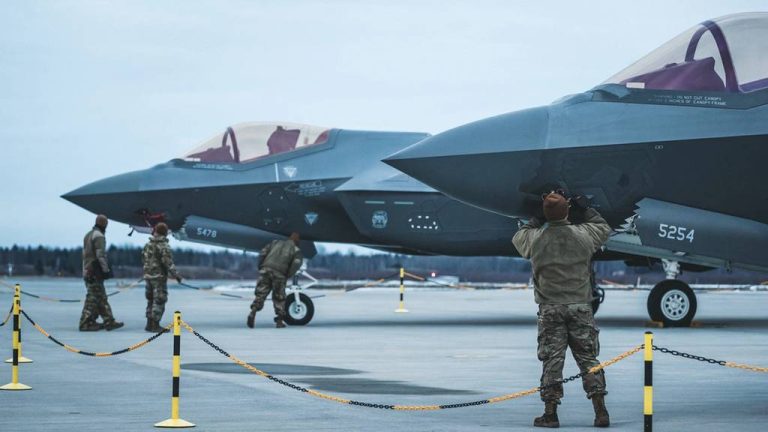
HILL AIR FORCE BASE, Utah — America’s most advanced fighter jet is in its element over Eastern Europe.
As Russia launched its offensive in Ukraine in February 2022, NATO’s eastern flank became an ideal proving ground for the F-35 Lightning II, officials with the 388th Fighter Wing here told Air Force Times during a recent visit.
Members of the active duty 388th FW and the Air Force Reserve’s 419th Fighter Wing became the first American F-35A units to arrive in support of NATO amid the opening volleys of the Russo-Ukrainian War last year. They deployed to Germany’s Spangdahlem Air Base from February to May 2022.
Their mission: Vacuum up as much electronic data as possible from the surface-to-air missiles and aircraft dotting Eastern Europe to build a map to guide NATO operations. And, if the situation spilled into NATO countries, to add some muscle.
“We weren’t crossing the border. We’re not shooting anything or dropping anything,” said 388th Fighter Wing Commander Col. Craig Andrle in a March 20 interview here. “But the jet is always sensing, gathering information. And it was doing that very, very well.”
The mission gave the Air Force a chance to hone its new short-notice approach to deployments. It also illustrated advances in the F-35′s ability to communicate with the joint force and quickly adjust to unrecognized threats. And it offered new insight into what the jets are still missing, as the military warns of future fights with Russia or China.
The 34th Fighter Squadron began awaiting a potential deployment to Europe in October 2021 — their first time leaving home as part of an “immediate response force” that can dispatch units within a week.
Under the new force-generation model, squadrons are supposed to move through four six-month phases: resetting from their most recent travel; training locally as a unit; participating in larger exercises; and going on alert. That approach aims to give units enough time to rest, train and maintain their jets between deployments.
When that final window of peak readiness opens, Andrle said, “We could get a phone call and leave in a matter of days — to an unknown location, for an indeterminate amount of time.”
So, airmen practiced. And they waited.
The 388th Fighter Wing picked jets that could fly for at least three months without major repairs. Airmen readied their combat gear and practiced wearing gas masks. They got their medical paperwork in order, studied European rules of engagement, learned about the airfields they might use.
By mid-February, Russia had amassed more than 130,000 troops along the Ukrainian border. Hill’s intelligence team kept the fighter wings updated on the latest predictions for war.
On Friday, Feb. 11, 2022, the 34th Fighter Squadron received its initial warning call. An official go-ahead the next day, Feb. 12, set their plans in motion.
On Sunday, as Super Bowl LVI blared from a television at the squadron bar, airmen plotted the 5,100-mile trek to Germany. The next day — Valentine’s Day — F-35 pilots said goodbye to loved ones and began to deploy. By Wednesday, Feb. 16, the 34th Fighter Squadron was gone.
It was the first deployment for many pilots in the 388th and 419th Fighter Wings, which also sent maintainers and other support staff. And it was the first time their families didn’t have the stability of an assured six-month deployment on the calendar.
Local leaders and about a dozen spouses gathered on a golf course in the middle of the night to watch the jets leave for Germany, 388th Operations Group Commander Col. Brad Bashore recalled.
“Half of those are probably [seeing] the first time their significant other has ever deployed,” he said. “[There] was a finality to all the preparation. … It was emotional, but at the same time, they were all together as a family.”
Twelve jets and around 300 airmen arrived at Spangdahlem on Feb. 16, 2022. Russia’s assault on Ukraine began eight days later and has since become Europe’s bloodiest conflict since World War II.
F-35s are designed to block and destroy air defenses that could down allied aircraft, paving the way for other aircraft to enter enemy territory. They also soak up electronic emissions from nearby radars to compile a picture of friendly and unfriendly forces in the area.
Airmen saw those threats in Ukraine and Kaliningrad, the Russian province wedged between Lithuania and Poland, Andrle said. The F-35s were able to locate and identify surface-to-air missile sites and pass that information to the rest of the coalition.
“We had all hoped it was going to work like it’s supposed to, but then to see it actually perform very, very well in that role was great,” Andrle said.
Airmen hopscotched from Spangdahlem to Estonia’s Amari Air Base, Lithuania’s Siauliai Air Base and Romania’s Fetesti Air Base, U.S. Air Forces in Europe said in a press release.
The jet didn’t always recognize objects around it, since assets like air defense systems have digital ways of evading notice.
For instance, Andrle said: “We’re looking at an Sa-20 [NATO’s name for the S-300 surface-to-air missile system]. I know it’s an Sa-20. Intel says there’s an Sa-20 there, but now my jet doesn’t ID it as such, because that Sa-20 is operating, potentially, in a war reserve mode that we haven’t seen before.”
But the F-35 flagged the object for troops who updated and re-uploaded the data into the jet. After that, NATO aircraft knew what they were looking at and how to geolocate it. That makes it harder to take NATO by surprise.
“We don’t have a ton of weapons where we can decimate the entire space,” Bashore said of the F-35. It’s the quarterback: “We’re sharing data and making sure that everybody has awareness — surface-to-air and air-to-air — of what’s out there in the environment.”
Even as Russian troops laid siege to Ukrainian cities next door, Bashore said Hill airmen didn’t see anything provocative during their air policing flights in Eastern Europe. U.S. forces passed Belarussian fighter jets friendly to Moscow, and the military buildup in Kaliningrad.
“They’re doing the same thing that we’re doing,” Bashore said. “We just looked at each other. … No direct interaction and nothing that was unprofessional on either side.”
The airmen returned to Hill in early May 2022. They’ve since tried to build on the lessons they learned overseas.
“It was the first time that we had rapidly deployed on the [immediate response force],” Bashore said. “We had as much to learn as the combatant command did about how to accept our forces and how to interweave them into their overall scheme of maneuver and operation.”
The jets proved more flexible than expected.
“For a while, there was the view that this jet needs to be connected all the time,” Andrle said. “Anywhere we go, we’re gonna have to take the servers with us. We’re gonna need to get connectivity. … We are realizing and proving that that isn’t necessarily the case.”
That’s a boon for the Air Force’s pivot to “agile combat employment,” or quick-turn combat operations across multiple regions with minimal staffing. That requires more pre-positioned tools in the field and airmen trained in multiple jobs, rather than fully equipped bases with entire units.
“We got some configurations approved to be able to fly with live missiles and a cargo pod on the inside, so we could carry some of the minimum maintenance things that they needed,” Bashore said.
That freed up space on the C-130 cargo planes or trucks that would bring maintainers in, and ensured those crews had the tools they needed at remote airfields.
But leaders realized those skeleton crews shouldn’t be quite so lean. Deploying also helped clarify the skills those airmen need to have — they may not have to drive a Humvee, but they should be able to load bombs, maintenance officials said.
“We had built this fighting team to go forward, not fully knowing how many locations they would be at,” Bashore said. “We probably needed a little bit more personnel to be able to do distributed operations for multiple locations.”
Their pallet of spare parts was too bulky to easily move around the region, Andrle said. That spurred the wing to make its spares packages lighter and modular.
F-35 pilots told Air Force Times they’ve learned to refuel their own jets and inspect engines in a pinch as well. Agile operations have helped pilots think like crew chiefs to catch issues they may not have noticed before, said Lt. Col. Jesse Proctor, a pilot with the 4th Fighter Squadron.
Leaders here also praised the F-35′s connectivity with other NATO aircraft as a “huge win” for the alliance.
F-35 manufacturer Lockheed Martin has projected that NATO members will have stationed more than 400 of the jets across Europe by 2030. The aircraft is seen as the leader of any future fight in the region.
“No matter what your qualification is — wingman, flight lead, instructor — you will have fourth-gen instructor pilots and flight leads come up to you … to ask you questions about threats, tactics, how we’re going to integrate together,” said Capt. Josh Sturniolo, a pilot with the 4th Fighter Squadron. “They all look to us for the answer.”
The 388th’s status as the first operational F-35 wing has proven to be a double-edged sword: It was the first to deploy in the new airframe and has employed experts who have been with the program for years.
But it also helps other F-35 units stand up, and loses its most seasoned airmen to those efforts.
That means that while the wing is fully manned, its pilot corps is younger than it might like, Andrle said. Until the F-35 enterprise’s growth begins to slow — and unless the Air Force can retain more experienced aviators overall — Hill will continue giving away its pilots.
So far, that experience has been replaced by a generation of tech-savvy airmen who are eager to harness the Air Force’s so-called “flying supercomputer.”
“We’re learning new ways of operating with it,” Andrle said. “Having folks who don’t have the baggage from how we did it for the past 20 years is very beneficial to us.”
Pilots here advocated for new technology at the training ranges that better replicates the threats they might face in a fight with China or Russia. They also want more simulators, which they can use anytime and lets them practice moves they don’t want out in the open.
The European deployment drove home the importance of having access to flight and maintenance simulators anywhere in the world, Bashore said. That can help aircrews stay current on their skills, particularly in the advanced maneuvers they aren’t doing on air patrol missions.
The wing also plans to update its aircraft with fixes designed to stop a potential engine vibration problem that caused an F-35B mishap in Fort Worth, Texas, in December. Andrle said the issue doesn’t affect any of the 388th’s jets.
Highest on the wing’s wish list are two hardware and software updates in the works at Lockheed Martin, known as Technology Refresh 3 and Block 4. TR-3 is slated to start delivering new capabilities this year, but Andrle doesn’t expect to see Block 4 for another five years.
Without those improvements, Andrle said, the F-35 can’t carry a slew of advanced cruise missiles and anti-air defense weapons.
“Slinging [Small Diameter Bombs] and shooting [Advanced Medium-Range Air-to-Air Missiles] … is not where we want to be in the next fight,” he said.
Rachel Cohen joined Air Force Times as senior reporter in March 2021. Her work has appeared in Air Force Magazine, Inside Defense, Inside Health Policy, the Frederick News-Post (Md.), the Washington Post, and others.

If the human race were to disappear tomorrow, only two cultivated plants – rhubarb, in its original variety, and asparagus – would continue to thrive in their current form. In contrast, other fruits and vegetables, if they managed to survive, would likely revert to their wild ancestral states.
Originally native to Asia, rhubarb (rheum rhabarbarum) was first cultivated in China nearly 5,000 years ago. In the 1500s, it was introduced to Europe where it was primarily used for medicinal purposes. However, it wasn’t until the early 1700s that rhubarb became a popular food staple. This was due in part to the declining cost of sugar, which was used to balance out, or perhaps even enhance, the sour taste of the original varieties.
Botanists classify rhubarb as a vegetable, but in the culinary world, it is considered a fruit due to its flavor and usage. The United States Customs Office has even recognized it as a fruit. Conversely, although botanically a fruit, tomatoes are commonly thought of as vegetables. It seems that things balance out in the end.
Until the early 1800s, rhubarb had not yet been introduced to the United States. Its arrival was first documented in Maine and then in Massachusetts. Nowadays, rhubarb is a well-known garden plant, but relatively few gardeners actually cultivate it.
Once upon a time, rhubarb held a much higher status. It was widely regarded as the quintessential spring fruit and was even commonly referred to as “pie plant.” In fact, early pioneers traveling west to settle in new areas often carried rhubarb roots with them, carefully wrapping them in burlap to ensure safe transport.
The roots, known for their toughness, could withstand the journey when occasionally dampened and kept in the dark. Upon planting in the soil of their new homestead, rhubarb became the first and often only source of domestic fruit for making pies and other sweet treats that were so highly sought after by hardworking ancestors.
Did I just say “only fruit”? In fact, almost all the fruit trees we cultivate today were domesticated in the Old World, so when Europeans first arrived in the Americas, they encountered none of the apples, pears, peaches, apricots, plums, cherries, and other familiar tree fruits we know today.
Moreover, since the most productive fruit trees are usually grafted onto wild rootstock, it takes time to establish these trees. It’s no surprise, then, that early pioneers cherished rhubarb as they did. With just two years’ growth, they could have a productive rhubarb patch.
People often say that “Rhubarb is poisonous!” If that were true, I certainly wouldn’t want to eat it. However, there’s a catch: the leaves and roots contain high levels of oxalic acid, which is indeed toxic. While not extremely dangerous in small amounts, it’s still not advisable to cook or eat those large green leaves in a salad.
The part of the plant that is safe to consume are the stems, which are known for their extreme sourness. They are less sour than chokecherries but slightly sourer than pie cherries. Personally, I enjoy sucking and chewing on the stalks, but I must admit that the initial taste can make you pucker up.
Rhubarb is an incredibly versatile fruit. There’s no limit to what you can make with it – from pies, bars, and coffee cake to jam, conserve, jelly, sauce, and much more. Plus, it’s incredibly low maintenance and can last for years, even a lifetime, with very little care.
The original variety of rhubarb was a classic – with white stalks at the bottom, red in the middle, and green at the top. It was tart, but delicious, and is still commonly grown in gardens today. In fact, I have one in my garden that was given to me by a dear friend.
Over the years, plant breeders have developed some improved varieties of rhubarb, with stalks that are red throughout and much sweeter. These are so sweet that I don’t even make a face when I chew them!
One such variety is Canada Red – an older variety that produces long, thick stalks with a dark red color that fades to a lighter red inside. It is very sweet and productive. Another newer variety is Valentine, which is very sweet and a deep red throughout, even after cooking.
Today, there are over 60 varieties of rhubarb available, and most nurseries and mail-order seed companies offer several in their catalogs. While you can grow rhubarb from seed, it takes several years for the plants to mature enough to produce stalks that are ready for harvest, similar to asparagus.
Rhubarb is often shared between gardeners by dividing the mother plant and giving a root or two to a friend. If you know someone with a lot of rhubarb, you can ask them for a root or two to start in your own garden. As the plants grow and get larger, you can divide them to expand your rhubarb patch. If you plan to can or make rhubarb-based products, you may need at least a dozen plants.
If you don’t want to wait for years to increase your supply, you can purchase roots from nurseries or mail-order seed catalogs. The roots are typically thick but not too large, so you won’t need to dig a deep hole to plant them. Rhubarb prefers a sunny spot with well-draining, loamy soil. It’s important to avoid waterlogged areas, so if your garden is in a low-lying spot, consider building a raised bed.
Rhubarb is a heavy feeder, so you should dig a hole three times larger than the root needs. Place a shovel full of rotted manure at the bottom of the hole and add good topsoil around the root. Then, add a shovel full of compost and water the area well. Plant the root at roughly the same depth as it was previously growing, or slightly deeper.
Once the leaves start to emerge, mulch each plant with old straw to retain moisture. During the first year, the plants will grow quickly, but you should avoid picking any stalks as it will weaken the plant. In the second year, you can start harvesting but only a little bit. The following year, the plants will be large and highly productive.
It’s best to plant your rhubarb patch in a spot where it can grow undisturbed for many years. Space each plant at least two feet apart, or even three feet if you have enough room, in rows that are four feet apart. Full-grown rhubarb plants can be over waist-high, with leaves that are two feet long and stalks that are difficult to grasp with just one hand.
 Discovering a neglected row of rhubarb plants in your new garden may seem disheartening. The leaves are small, the stalks thin, and the grass has taken over. You may be tempted to dig it up and discard it, but there is a way to revive the plants. Luckily, rehabilitating rhubarb is a straightforward process.
I once had a patch of two dozen sickly plants on our old farm. The leaves were bug-eaten, the stalks limp, and the grass had taken over. A neighbor suggested digging it up, but I decided to back up our manure spreader to the rotted pile of strawy manure by the barn and heap it on the patch. The neighbor was convinced that I had killed the plants, but I didn’t give up.
The following spring, I walked under the willows to see if there were any signs of life. To my surprise, I found two neat rows of healthy, growing rhubarb, with little fat pointed reddish buds. The plants were taller than my waist, with large leaves and thick stalks. The rhubarb shaded the grass, and there was no grass in the row due to the mulch. Rhubarb thrives on compost and mulch, so give it some tender loving care, and it will reward you with a bountiful harvest for years to come.
Dividing healthy rhubarb plants is easy. If you want to expand your patch or share some with friends and family, simply use a shovel to cut the plant in half or take a piece from the side. Rhubarb roots are hardy, and with proper care, a piece with a leaf bud on it is almost sure to grow.
The best part of growing rhubarb is that it has very few pests. I have never had a problem with bugs or worms, and animals won’t touch it. You won’t need to spray or protect it from critters. Rhubarb is an easy, tasty, and versatile plant that can also be used for decorative purposes. It makes a beautiful contrast to brightly colored flowers and is a lovely addition to flower beds and foundation plantings.
To harvest rhubarb, wait until after a rainfall or watering, then grab a sharp knife and approach a plant. Pull the stalk down low and quickly whack off the bottom and leaves. Drop the leaves on the path to make instant mulch that will prevent weeds. Carry a basket or box and cut as much as needed for your recipes. A pie usually requires three or four stalks, while 10 pounds of rhubarb are needed for a batch of baked or canned rhubarb.
If you need to store rhubarb before canning, place it in the fridge or stand it in a few inches of cold water to keep it hydrated, but don’t submerge the stalks. Cut off the very bottoms of the stalks when you use them as they tend to split and curl quickly.
Don’t pull all the stalks from one plant; leave the smaller ones intact and take only the largest. Cut off any flowering stalks as soon as they appear as they will make the plant stop producing new stalks and leaves. You can continue harvesting rhubarb as long as it remains tender, but as the weather gets hotter, the stalks will become tough and woody. When this happens, the harvest season is over, and the plant needs to store up food for the winter.

When it comes to rhubarb, my mind always jumps straight to pie. After months of canned fruits, there’s nothing like the taste of a fresh fruit pie. While strawberry-rhubarb is a common favorite, my family’s go-to recipe is our classic rhubarb meringue. As luck would have it, springtime yields a bountiful rhubarb harvest just as our chickens are laying their finest eggs, providing us with endless tasty opportunities.
If you’re looking for a more traditional option, a strawberry-rhubarb pie is a great choice. To make it, simply line a 9-inch pie pan with pastry for a 2-crust pie, then combine sugar and flour in a small bowl. Add in 2 cups of fresh rhubarb cut into ½ inch pieces and 2 cups of fresh strawberries (cutting larger strawberries as needed). Pour the mixture into the pie crust, dot with butter, and top with another crust. Sprinkle sugar on top and cut vent holes before baking at 350°F for 50 minutes until golden brown. Serve warm with ice cream.
If you’re in the mood for something different, rhubarb cake is a tasty option. Toss 2 cups of rhubarb cut into ½-inch pieces with 1 cup of sugar, then dump the mixture into the bottom of a greased, floured 9 x 12 cake pan. Spread evenly and add batter from a white, yellow, or strawberry cake mix. Bake at 350°F until done and serve warm with whipped topping.
Despite the fact that summer heat can make rhubarb tough and stringy, there’s no need to give up on this versatile ingredient. Canned rhubarb can be used in all your favorite recipes, just like fresh rhubarb. To make it, cut rhubarb into 1-inch lengths without removing the skin, then place it in a large roaster pan and add 1 cup of sugar for each quart of rhubarb. Cover the pan and bake until tender, then pack into hot jars and process in a boiling water bath canner for 10 minutes. Rhubarb sauce is also great over ice cream or oatmeal in the winter.
Rhubarb makes great jam and jelly, but my family’s favorite is the old-fashioned rhubarb conserve. To make it, wash 5 pounds of rhubarb stalks, cut them into pieces, and cover with boiling water. Drain after 5 minutes and add 8 cups of sugar, 3 cups of weak vinegar, grated rind and juice of 2 oranges, ½ tsp. cinnamon, 2 cups of raisins (ground in a meat grinder), and 2 cups of chopped walnuts. Cook slowly until thick, stirring frequently to avoid scorching, then pour into sterilized jars and process in a boiling water bath canner for 10 minutes. Use the conserve and jam on cookies or as a meat glaze.
Lastly, you can also dehydrate rhubarb by slicing the stalks into pieces about ½-inch thick and boiling them for 5 minutes. Lay them in a single layer on your dehydrator trays or on a brown grocery bag laid on a cookie sheet in your oven with only the pilot light on or set at the very lowest setting with the door open. Once they’re dry and hard, you can re-hydrate them by soaking them in boiling water until tender and adding sugar to make rhubarb sauce, or use them as you would fresh. Overall, rhubarb is a versatile and delicious addition to any garden.

Recommended resources for preppers and homesteaders:
How to build an underground cellar for less than $400
Food Storage Plan For The Long Run
How To make an air fountain to obtain water from the air
Survival Foods of the Native Americans

Defeating the enemy from within…Fox Pravda!
Does anyone here own Monero?
I was interested in purchasing some, but the only way I can see to purchase Monero “somewhat” anonymously, is to find someone who owns bitcoin, send that person dollars or a check, and have them transfer their bitcoin to monero and somehow send it to your wallet.
I’ve never done the crypto thing before, but I was considering giving it a shot.
Is there anyone on here who has Bitcoin, who might be willing to try this experiment with me?
Maybe I could send you a check for $500 dollars (to start) and $50 dollars for your assistance, so a check for $550 in total. And you can try transferring $500 dollars with of Bitcoin to Monero to my wallet.
Would any out there be willing to assist me with this? If so, PM me.