Testimonial from our buyer for our Services.
******Good for quickie meals, hamburger soup, sloppy Joe’s, tacos or to have on hand for emergencies.
****** So, I love yoders, I grew up eating it.
Yoder’s Canned Hamburger Ground Beef 12 cans (2.5 size cans)
MSRP $300.00
Listed Price- $210.99
Save- $89.01 + Extra 5%
BUY NOW
Yoder’s Canned Chicken Chunks 12 cans (2.5 size cans)
MSRP $300.00
Listed Price- $202.99
Save- $97.01 + Extra 5%
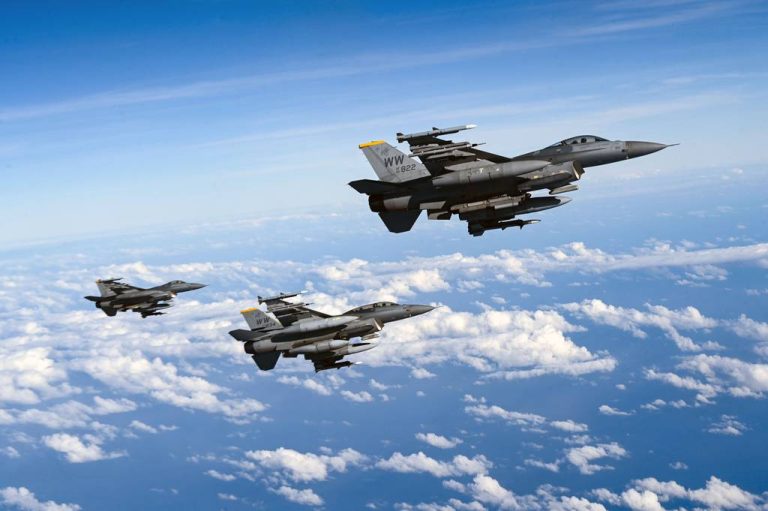
WASHINGTON — A new batch of Northrop Grumman-made electronic warfare upgrades for the F-16 fighter has passed simulation testing in a U.S. Air Force emulator, the company said Tuesday.
The firm said the upgrades — dubbed AN/ALQ-257 Integrated Viper Electronic Warfare Suite, or IVEWS — performed better than the benchmarks that were set in the simulation testing.
Northrop said the new electronic warfare system will allow the F-16 to counter threats using modern radio frequencies, and find and defeat newer, more advanced sensors and weapons than the fighter’s older systems can. The company said the IVEWS has more efficient broadband power amplifiers and adaptive countermeasure modulations, and will allow the aircraft to respond more quickly while covering extended frequencies and broader areas. IVEWS uses a modular open-systems design, the company added.
“As advanced radio frequency threats continue to proliferate, the protection afforded by IVEWS is essential,” James Conroy, Northrop’s vice president for navigation, targeting and survivability, said in a statement. “This successful evaluation under very challenging conditions is an important step on the path to fielding the suite.”
The Air Force chose Northrop Grumman, among others, to start prototyping a design for the F-16′s new electronic warfare system in 2019.
In January 2021, the Air Force tapped Northrop to finish the project as the sole contractor. Northrop said at the time its new system would be compatible with the jet’s AN/APG-83 Scalable Agile Beam Radar, which the company also makes.
Northrop received another contract from the Air Force in May 2022 to get IVEWS ready for developmental testing and full hardware qualification.
Defense News has asked the company how much the Air Force is paying it to create IVEWS.
Northrop said the testing process “injected” simulated air defense radar pulses into the electronic warfare system to ensure it could recognize and counter advanced threats.
The testing, which is now complete, took place in the Air Force’s Laboratory Intelligence Validated Emulator, Northrop said, which allows for the testing of electronic warfare technology in realistic environments. This was the first time IVEWS’ ultra-wideband architecture was tested in that emulator, the firm added.
Stephen Losey is the air warfare reporter for Defense News. He previously covered leadership and personnel issues at Air Force Times, and the Pentagon, special operations and air warfare at Military.com. He has traveled to the Middle East to cover U.S. Air Force operations.

Today was one seriously long day! Started out at 2AM to get there for all of the waiting and surgery prep stuff and I pulled in the driveway at 7PM. I stayed at the Hospital until Dee was out of Surgery and in the recovery room she was going to be in the recovery room for 3-4 hours before they moved her into the ICU and is going to be out of it for at least the next 48 hours, so not much point in me being there and even for spouses access to the ICU is very restricted. Longer day for Dee even if she is unaware of it.
The surgery went actually better than expected and the Surgeon was done at the 8 hour mark and meeting with me in the confrence room about 30 minutes after that. Dee asked her to take some pictures of the tumor, the portion of the pancreas removed and her insides….. LOL Surgeon did as requested and was all eager to show me pics on her phone. Seen one split open body cavity…. you have seen them all and she didn’t get quite the shock value she was expecting from me LOL. Not much difference in a hogs guts and a humans guts.
Everything went pretty much as expected with only one minor complication that the MRI and CT imaging didn’t show. The Tumor was well attached to one of the big arteries that runs under and against the pancreas. She cut a section of the artery out and reconnected it back together. She wanted to be sure to remove any tissue that might have cancer cells. Everything in the reconstruction went very well and smoothly. Basically she cut tissue out, a runner took it to the lab tested for cancer cells and sent the runner back with the results guess the turn around time on testing and results was about 8 minutes, if there were cancer cells present more tissue was removed and tested and repeated until no cancer cells were found. She removed quite a bit of tissue 1/3 of the pancreas, part of the bile duct, all of the lymph nodes, a section of the small intestine and a section of artery. Then she pulled, stretched and reconstructed it all to be as functional as possible without the missing parts and pieces.
Prognosis for the recovery is good with 3-5 days in the ICU and another 4-6 days in a regular room. The surgeon believes that she got all of the cancer infested tissue. I have a lot of faith in Doctor Jester the Surgeon, she obviously knows her shit and is very good at what she does. She is is also a very blunt straight shooter and lays it all out there and answers any questions with the same straight forward tact. She was pretty clear that she did not expect any major complications in Dee’s Surgery but things can and sometimes do go horribly wrong and sideways when what is really there VS what the imaging says is there don’t jive. Everything went within her range of expectations.
That being said the recovery is going to be very long and Dee is going to have some major restrictions as to what she can do for the next 8-12 weeks as well as some pretty strict dietary restrictions. A lot of fragile tissue needs a long time to heal and bond together as strongly as it can.
Neither of us can see any reason for me to travel to Evansville every day to visit. And I have A LOT to do here with the Normal Daily Chores, the usual spring work and getting things ready for her return home. We have our phones and she has the laptop so communicating with calls, messages and video chat is all right there and does not involve me making a 4 hour round trip drive for a 1 hour visit. If I need to get there fast I can hop in Red and make the trip in 1 hour 15 minutes with the warp engine.
Guess they will start testing for cancer markers in her blood in a week or so and continue that testing. After she is well recovered from the surgery she will undergo 4 more cycles of Chemo with a much less aggressive cocktail than the previous chemo had. To give the best odds that any missed cancer cells are eliminated.
And that is where we are at right now and going into the immediate future. Been a damn long hard road to this point. Not a easy road for the last stretch but a lot less pot holes in it than this time last night And We can finally see the end of this road off in the distance!
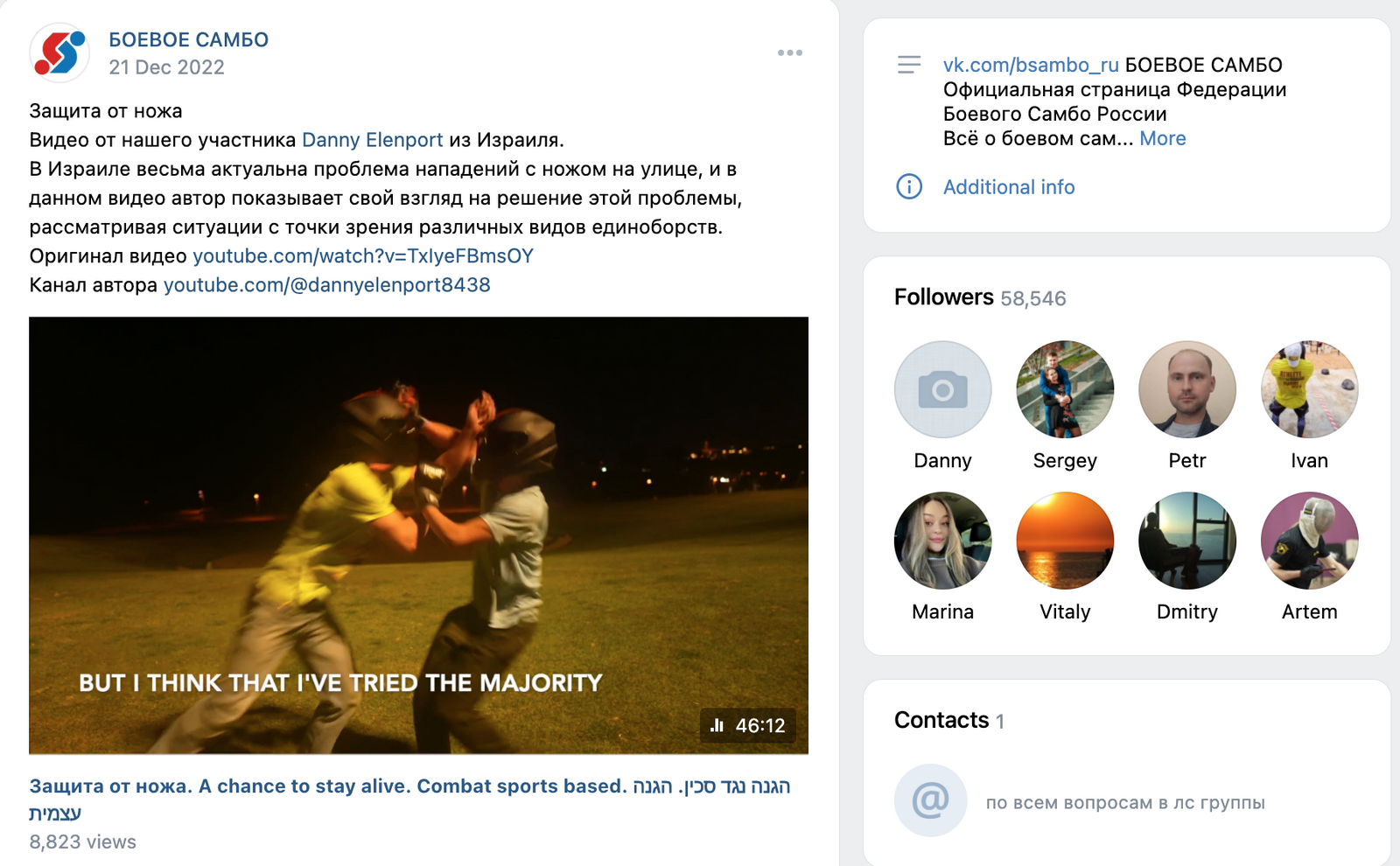
Hey. During the last 2 years, when I was a student in Jerusalem, there were waves of knife terror attacks, and students were afraid of going out. As a result I researched the subject thoroughly, tried most of the existing techniques against resistance, combined it with my knowledge (Former national Judo youth Champ, few times. Martial arts as a hobby afterwards- MMA fan and training with my wrestling/bjj/ boxing/Judo friends on a casual basis).
The video was approved and uploaded by the official page of the Russian Combat Sambo Federation as the added file shows.
Do you take any supplements?
Already taking:
– Centrum Silver(1/day)
– Aspirin 81MG(1/day)
– Zinc 50mg(1/day)
– Super B(1/day)
– Ginkgo Biloba 120mg(1/day)
– Ubiquinol CoQ10 100mg(1/day)
– Vit C 500mg(1/day)
– Vit D3 50mg(2/day)
– Vit K-2 100mcg(2 per day)
– Omega-3s 1065mg(2/day)
– Berberine 500mg(2 per day)
– Qunol Tumeric 1000mg(2/day) “Curcumin”
– Bacopa Monnieri 350mg(2/day)
– Odorless Garlic 3600mg(3/day)
– Resveratrol 800mg, Quercetin 250mg, MCT 850mg (3/day)
I also plan to buy and take:
– Magnesium
– Probiotics
– Alpha-lipoic acid (ALA)
– N-Acetyl Cysteine (NAC)
– Fisetin
– Nicotinamide Riboside (NR) or Nicotinamide Mononucleotide (NMN)
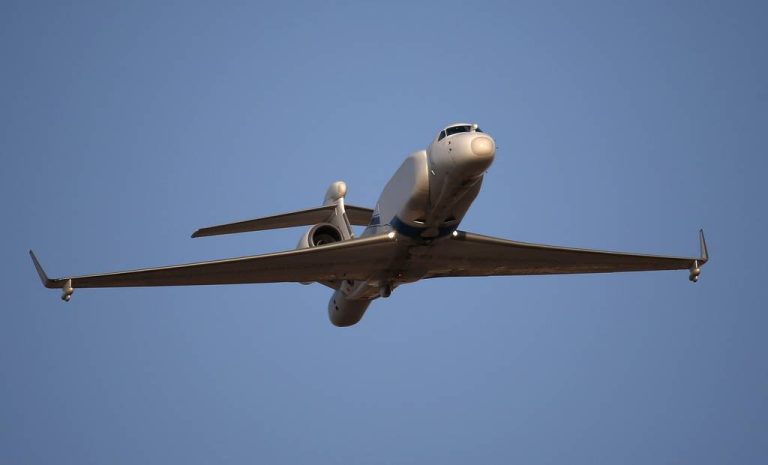
ROME — The Italian Air Force plans to convert two Gulfstream jets into electronic attack Compass Call variants, with an option for a third, a source with the service told Defense News.
The jets are to be converted from six Gulfstream aircraft Italy already has on order, with the remainder to be converted into early warning variants, said the source, who spoke on the condition of anonymity because he was not authorized to speak to the press on the record.
The decision ends uncertainty over what the Air Force plans to do with the unconverted Gulfstream jets it ordered.
Last year, Air Force chief Gen. Luca Goretti told Defense News the service wants six aircraft converted into a mix of electronic attack and early warning versions, without providing further details.
The U.S. is currently testing the electronic attack version of the Gulfstream G550. The aircraft, known as the EC-37B Compass Call, contains electronics transferred from older EC-130H aircraft, which have been in service for decades with the U.S. Air Force and cannot manage the speed and altitude of the more modern Gulfstream.
The aircraft’s systems are designed to disrupt enemy command-and-control, communications, radars, and navigation systems.
Italy is now trying to receive U.S. approval to update its Gulfstreams to the same standard. An Italian Defence Ministry document published last month indicated such an arrangement would involve a commercial deal with American defense contractor L3Harris Technologies — which is working to integrate Compass Call electronic warfare technology into the G550 — and a foreign military sale negotiated through the U.S. government for the acquisition of the mission system.
If the U.S. approves the deal, it will enhance the capabilities of the Italian Air Force’s 10-strong Gulfstream fleet, which stemmed from the 2012 acquisition of two jets in the Conformal Airborne Early Warning format from Israel Aerospace Industries.
The jets have spent the last year flying missions close to Ukraine to monitor the airspace near the country, which is fighting a Russian invasion.
Italy also cut a deal in 2020 with the U.S. to obtain two more G550s for signals intelligence in a standard dubbed Airborne Intelligence, Surveillance, Reconnaissance, and Electronic Warfare.
The government document released last month said Italy would pay €1.22 billion (U.S. $1.33 billion) for those two jets and the other six unconvereted G550s. A further €925 million would cover conversion work on four of the six aircraft, and another €167 million for specific work on the Compass Call conversions, the document stated.
Tom Kington is the Italy correspondent for Defense News.
Correction: A previous version of this story overstated the U.S. Air Force’s fighter acquisition plans. Rather than guarantee, the service anticipates it will again request 72 fighters.
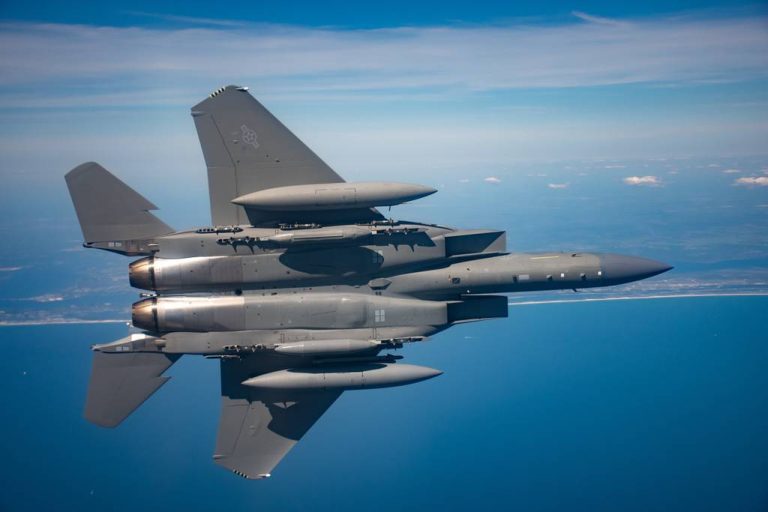
WASHINGTON — For the first time in recent history, the U.S. Air Force this year directly asked Congress for the full complement of 72 fighters it says it needs in its next budget request. And the general in charge of planning for the service’s future said Thursday this might not be the last time.
Top Air Force leaders have said for years that it needs to buy at least 72 new fighters each year to both modernize its fighter fleet and lower the age of the average plane. If it doesn’t bring on that many new fighters annually, generals warn, the service won’t have enough new aircraft to replace aging and retiring fighters, such as the F-15C.
But that goal has long been out of reach. For years, Congress has approved fighter procurements that are below the Air Force’s desired goal, sometimes significantly so, and the service hasn’t asked for everything its leaders say it needs.
The fiscal 2024 budget proposal released in March broke that trend by directly asking for money to buy 48 new F-35As and 24 F-15EX Eagle IIs.
And in an online forum hosted by the Mitchell Institute for Aerospace Studies, Lt. Gen. Richard Moore, the Air Force’s deputy chief of staff for plans and programs, said that won’t be “a one-time thing” — a sign of how the service is changing its strategy for budget planning.
“This year, for the first time since I’ve been in this business, there are 72 new fighters in the Air Force’s budget,” Moore said. “We’re super excited about that. … I certainly think you’ll see it again.”
Typically in recent years, the Air Force has not asked for everything it wants in its base budget request and included some desired items in an unfunded priorities list.
For example, the FY23 budget request originally asked for 33 new F-35As and 24 F-15EXs — 57 in all. The service asked for seven additional F-35As as part of its $4.6 billion wish list that year.
Congress eventually approved a total of 43 F-35As, along with 24 F-15EXs, for a total of 67 fighters.
But the Air Force is shifting away from that approach as it tries to more reliably plan for future needs, Moore said.
“Some of the things we’ve talked about over the last several budget cycles are now a part of the base budget,” Moore explained. “They’re not a part of the unfunded priorities list, they’re not a wish list. Seventy-two fighters is a great example.”
The Air Force’s $2.5 billion wish list for FY24 was a little more than half the size of the previous fiscal year’s list, and did not ask for any additional fighters.
It asked for more than $633 million to accelerate the delivery of the Boeing E-7A aircraft that will replace the E-3 Sentry, and nearly $64 million to buy a dozen conformal fuel tanks for the F-15EX, which will extend their range and weapons capacity.
But while the Air Force wants to make it a trend to ask for 72 fighter, Moore said some of this depends on Lockheed Martin’s ability to build F-35s.
“As we reach what we believe is a sustainable fleet size in what we need in the F-15EX, we’ll have to see what capacity is available in the F-35 world, or whatever else it may be that we look at,” Moore said. “Right now, it’s predicated on the fact that we have two hot fighter production lines, and that will be the case by the middle or the end of the” Air Force’s spending plan over the next five years.
The service now plans to buy a total of 104 F-15EXs, with the final 24 scheduled to be requested in FY25. Air Force budget documents show the service expects to request 48 new F-35s each year through FY28.
Moore said the defense-industrial base also has limitations, including lingering supply chain and workforce issues stemming from the COVID-19 pandemic, that would make it hard to bring on more than 72 fighters per year.
“We will bring on advanced capabilities at the max rate we can,” Moore said. But “the defense-industrial base can only support so much procurement.”
Moore also said the budget proposal shows how the Air Force intends to update its fighter fleet with future capabilities — some of which are still being designed — to be able to counter China in a possible future war.
Moore said the Air Force’s plan to retire 32 block 20 F-22A Raptor fighters would save roughly $2.5 billion over five years, which would be steered toward the sixth-generation Next Generation Air Dominance platform.
“It is crystal clear to us that in order to get into the early to mid-[20]30s with a force that can win, we have to get to a sixth-gen fighter, and that’s NGAD,” Moore added.
While those F-22s earmarked for retirement are fifth-generation fighters, Moore said, they aren’t combat-capable and never will be without a significant investment. Updating them with modern communications systems, electronic warfare capabilities and weapons would take about a decade to get started, cost about $3.5 billion and take Lockheed Martin’s already short-staffed engineers away from the F-35 program’s block 4 modernization effort.
“That is a trade to us that doesn’t make any sense at all: to upgrade aircraft a decade from now at great expense, while impacting the F-35 block 4 at the same time,” Moore said. “We don’t think that’s a viable course of action.”
Moore also said focusing on research and development investments is a top priority for Air Force Secretary Frank Kendall.
In a sign of how important Kendall sees this effort, the Department of the Air Force’s proposed budget for research, development, test and evaluation would rise nearly $5 billion to $55.4 billion in its FY24 budget proposal — a nearly 10% increase, and most of the department’s proposed total budget increase of $9.3 billion.
That wave of R&D is crucial, even if some of those programs don’t end up going into procurement.
“The secretary actually is fine with that,” Moore said. “He believes that if we don’t do the research and development now while we have time on our side, when the time comes that we need to put things into procurement, there’ll be nothing to procure because the research and development won’t have been done yet.”
Stephen Losey is the air warfare reporter for Defense News. He previously covered leadership and personnel issues at Air Force Times, and the Pentagon, special operations and air warfare at Military.com. He has traveled to the Middle East to cover U.S. Air Force operations.
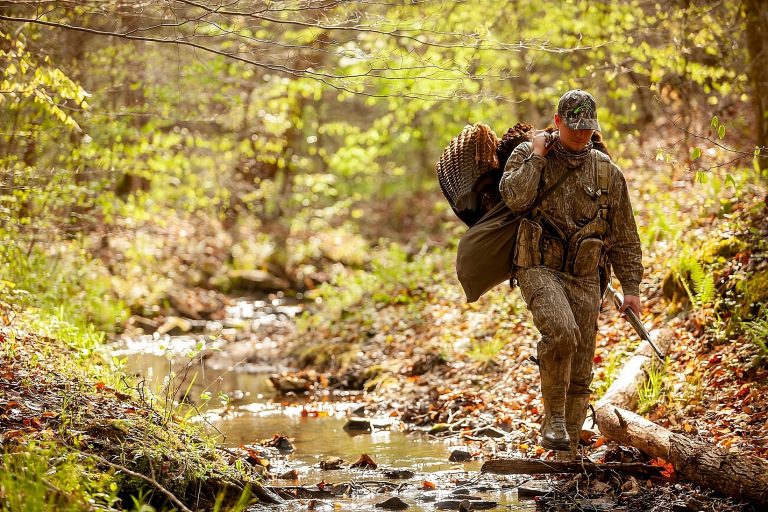
Turkey hunting is a challenging and exciting pursuit that requires skill, patience, and a deep understanding of the birds’ behavior and habitat. Whether you’re a seasoned hunter or a beginner, there are many tips and techniques that can help you be more successful in the field. In this article, we’ll cover the basics of turkey hunting.
The history of wild turkey populations in the United States has been one of decline and restoration. At one point, wild turkeys were on the brink of extinction, with only a few remaining in the most remote areas of the country. However, thanks to extensive restoration efforts, wild turkey populations have rebounded and can now be found throughout most of the country.
The decline of the wild turkey population began in the latter part of the 19th century and continued through the 1930s. The reasons for the decline were numerous, but habitat loss and overhunting were the primary factors. As settlers moved westward, they cleared land for agriculture and development, which destroyed much of the turkey’s habitat. Additionally, hunters killed turkeys in large numbers for food, sport, and feathers.
By the time World War II ended, the wild turkey population had dwindled to the point where it was in danger of disappearing altogether. However, in the years that followed, individual states, conservation groups, and hunters began working to bring the species back from the brink. These efforts included habitat restoration, captive breeding and release programs, and strict hunting regulations.
One of the most significant restoration efforts took place in the 1950s and 1960s, when the National Wild Turkey Federation (NWTF) was founded. The NWTF worked to raise awareness about the plight of wild turkeys and to promote conservation and restoration efforts. The organization also helped to fund research on turkey biology and behavior, which led to the development of new management strategies.
Today, the wild turkey population is thriving, with an estimated 6.5 million birds in the United States. The population is made up of five subspecies, each with its own range and habitat preferences. The Eastern subspecies is the most abundant and is found primarily in the eastern half of the country. The other subspecies are the Florida, Merriam, Rio Grande, Gould’s, and Oscellated, each residing in specific regions.
Despite the success of restoration efforts, hunting wild turkeys remains a popular pastime in the United States. Many hunters enjoy the challenge of pursuing these elusive birds, which are known for their keen senses and wary nature. However, there is some debate about the use of specialized equipment and gear in turkey hunting. While some hunters swear by high-tech gear like electronic red dot sights and specially designed shotguns, others argue that such equipment is unnecessary and can detract from the experience of hunting in the wild.
The art of turkey hunting requires the right equipment, and the shotgun you choose is one of the most important factors in your success. While some hunters may try to convince you that a new shotgun is necessary for turkey hunting, your trusty old 12-gauge may be all you need. It’s true that there are advantages to newer models, but let’s take a closer look at what’s truly essential before you shell out your hard-earned money.
Turkeys are known for their toughness and resilience, and it can take a significant amount of pellet energy and multiple shots to bring one down. The key to a successful hunt is to center your shot pattern on the bird’s head and neck, which are small and difficult targets. Your shotgun must be capable of placing as many pieces of shot as possible in these areas to ensure a clean and humane kill.
While some hunters may use shotguns other than 12-gauges, this caliber is generally considered the best choice for turkey hunting, and it should be choked full. A shotgun with a 3-inch chamber can provide a slight advantage over a 2-3/4-inch chamber, as it allows you to put more shots into the bird’s head and neck.
Shotgun shooting is not an exact science, as the broad shot pattern of the shotgun can result in some errors. However, as long as you can keep the head and neck of the turkey within your shotgun pattern at a reasonable range, you should be in good shape. You do not necessarily need fancy sighting options like scopes to be successful; in fact, they may be a marketing ploy to get you to spend more money.
When it comes to turkey hunting, the most important thing is to choose a shotgun that you are comfortable with, and that is capable of delivering a lethal shot. With the right equipment and a little bit of skill, you’ll be well on your way to bringing home a delicious wild turkey for your next holiday meal.
When it comes to hunting turkeys, choosing the right ammunition can make all the difference. While everyone has their own preferences, my recommendation is to prioritize a larger shot charge over velocity. This means opting for a 2-3/4-inch chambered 12-gauge loaded with 1-3/8 or 1-1/2 ounces of lead shot, or a 3-inch chambered 12-gauge loaded with 1-7/8 ounces of shot.
Shot size is another important factor to consider. Some hunters prefer a larger number of smaller shots for more impact, while others prefer heavier and larger shots for deeper penetration. Shot sizes can range anywhere from #7s to #4s, but my personal preference lies somewhere in the middle with #5s for most hunting situations.
No matter what shot size you choose, it’s important to pattern your shotgun at about 30 yards in order to evaluate the pattern density as compared to the size of a turkey’s head and neck. This will ensure a clean and humane kill. Remember, turkeys are tough birds, and it often takes a lot of pellet energy and multiple impacts to bring them down. Choosing the right ammunition can increase your chances of success and make your turkey hunting experience more enjoyable.

Using decoys can be a smart strategy when turkey hunting for a couple of reasons. Firstly, the sight of the decoys can attract the birds, encouraging them to come closer and giving you a better chance for a successful shot.
Additionally, decoys can help distract the turkeys, keeping their attention focused on the decoys instead of on you. Turkeys have excellent eyesight, so having a decoy to draw their gaze can give you the opportunity to move and prepare for your shot without being detected.
You don’t necessarily need to invest in a lot of expensive decoys, as even just one or two can be effective. There is a wide variety of options to choose from, ranging from simple silhouettes to inflatable or full-bodied decoys. Personally, I prefer the lightweight blow-up kind, as they are easy to pack and set up.
When setting up your decoys, it’s important to choose an area within your shotgun range and with a clear view, so the turkeys can quickly spot them. Placing the decoys around 30 yards apart can also be helpful as a range indicator when a bird comes into view.
Remember, while decoys can be a useful tool for turkey hunting, they are just one aspect of a successful turkey hunt, and it’s important to also have a solid understanding of turkey behavior and hunting techniques.
Compared to the challenging art of duck and goose calling, turkey calling is often considered relatively easy to learn. However, one of the first things new turkey hunters will notice is the abundance of turkey call types to choose from. The most basic choices are the slate or friction call, the box call, the push-pull, and the mouth or diaphragm call, each with its own unique subtypes.
In addition to turkey calls, a locator call can also be helpful to have. Unlike other calls that mimic turkey sounds, locator calls produce unfamiliar sounds that may attract turkeys’ attention. A crow or hawk call is a popular choice for a locator call, but any loud sound may encourage turkeys to gobble, indicating their presence to the hunter. An amusing story highlights this fact: once, while preparing to hunt, an anti-hunter in a car honked his horn to disturb the nearby game. Instead, the turkeys began gobbling in response, leading the hunter in the right direction.
While all turkey calls have their uses, the mouth or diaphragm call can be the most challenging to master due to its uncomfortable feeling in the mouth. However, it is a hands-free option that reduces movement and is not affected by the weather. The push-pull and box calls, on the other hand, are the easiest to master and produce sound through a scratching movement. These calls are not ideal for wet conditions because they rely on wood and friction.
The slate call, while slightly more difficult to master, is a popular choice that includes a pot and striker. This call can produce various turkey sounds, including soft clucks, chirps, and loud yelps. By adjusting the striker’s angle, movement, and pressure, the hunter can create a range of sounds. Ultimately, each turkey call has its strengths and weaknesses, so hunters should choose the one that works best for their needs and preferences.

Utilizing turkey calls can prove to be highly advantageous while hunting, and I strongly advocate for their use. As previously mentioned, mastering turkey calling is not an arduous task, and a comprehensive guide is often included within the call’s packaging. Additionally, there are numerous online resources available, including YouTube videos, that provide detailed instructions on producing the required sounds. I highly recommend taking advantage of these resources to improve your turkey-calling abilities.
Turkeys are blessed with exceptional eyesight, making it crucial to remain hidden and minimize movements when hunting them. Most turkey hunters consider full camo, including a face net, mandatory rather than optional. While some hunters prefer face painting, I personally favor netting as it can be easily removed or rolled up when not in use. Regardless of the method you choose, it’s important to employ some form of camo to avoid standing out like a sore thumb.
Using a small portable blind can also be beneficial, but proper camouflage allows you to utilize the natural surroundings to conceal yourself. In addition, using a barrier to ward off moisture is essential. Many hunters carry a cushion, some of which can be attached to your belt for easy access. Although I haven’t used one, they appear to be quite comfortable, particularly when you’re leaning against a tree for support. I usually pack a backpack or fanny-style pack and keep a black garbage bag inside for this purpose. It’s also helpful for other purposes.
Carrying a pack is useful, but if you don’t have one, you can place your calls and other gear inside whatever you have available. Just make sure it isn’t a color that would attract the turkeys’ attention. While some hunters prefer a shotgun rest, I find it unnecessary while shooting. However, it can be a convenient place to rest your shotgun while you wait for the turkeys, keeping your movements to a minimum.
 Turkey hunting can be an exciting and challenging outdoor activity that requires a combination of skill, patience, and the right equipment. From mastering turkey calls to employing effective camouflage techniques and staying comfortable during long hours in the field, there are many factors to consider when pursuing these elusive birds.
However, with the right preparation and dedication, turkey hunting can be a rewarding experience that allows hunters to connect with nature and test their hunting skills. So, if you’re looking for a thrilling adventure in the great outdoors, consider giving turkey hunting a try and see if you have what it takes to outsmart these wily game birds.
This article was submitted by Darryl Potter.
Suggested resources for preppers:
A Few Ways To Make Your Land Turkey Friendly
The #1 food of Americans during the Great Depression
Tips For Hunting Turkeys With A Bow
If you see this plant in the wilderness or in your backyard, don’t touch it!