What Walmart’s pullback from Chicago says about Corporate America’s limits

0

The Chicago employee pension fund is in the hole over 30 billion dollars, only has enough to cover 25% of new retirees. The new mayor wants to add a $4 per employee tax for companies with HQ’s in Chi-town the current budget is $1oo’s of millions in the hole.
One mayoral candidate wanted to add cops the one that won wants to “reallocate” police resources and add taxes.

Chicago Crime, Murder & Mayhem | Criminal Infographics | HeyJackass!

Now wally world is closing half their stores..so far. Joining Walgreens, CVS and other smart retailers
The largest retailer in the country announced plans this week to close four of its eight stores in the city, citing growing financial losses. Three are in predominantly Black and low-income neighborhoods, and their closures with little warning mean residents — including elderly citizens and people without reliable transportation — will have to travel further to buy groceries and pick up their medications.

“These stores lose tens of millions of dollars a year, and their annual losses nearly doubled in just the last five years,” Walmart said. Despite years of different strategies, the company said, it did not see a route to profitability for these stores. Walmart, which made $20.6 billion in 2022, did not specify why losses were growing in Chicago.
What Walmart’s pullback from Chicago says about Corporate America’s limits | CNN Business


All True | Survival Monkey Forums

0

  1. I actually did write a book, I’m not sure if I can move forward with the title though. The Million Dollar Da$h was a low estimate of the value of my dash, lol. I’m not sure if it’s even interesting but the main part gets a lot of laughs from almost everyone except my family. Oops. You see, I made a mistake and the “survival instinct” kicked in. (A DUI is a death sentence in my trade) Here’s an actual excerpt from my book. “As I took off into the woods the underbrush grabbed my right shoe and then my left, gone! Finding them in the pitch black would be impossible, the rest of this dash would have to be done in my socks!” I filled the rest of the book in with what I find to be funny, heartbreaking and other interesting tales of an “ordinary” family. Of course I used no names and generic places throughout. The Original Prepper, Dad, gets a lot of pages. Truly one of a kind. Anyway we shall see how it plays out, stashed in my garage or a book and a movie deal. Lol. I choose Woody Harrelson if it goes that far.


  2. Title it, “It’s all True, Except what isn’t!”


survivalmonkey SSL seal


survivalmonkey.com warrant canary

An inspiring Story

0

I've seen several of these kinds of stories, where someone attempts to disprove God and ends up being converted. And it is usually the highly intelligent, the academic minded, but always those who are not closed minded. When they examine the evidence with a purely rational and intellectually honest way they tend to become convinced.
The atheist will condemn the religious as mindless sheep, following unquestioning along, believing whatever fairytale they are told. They cannot conceive that…

An inspiring Story

My Book | Survival Monkey Forums

0

Introduction

In 2018, my wife has been on a big writing kick. Since we are so different, I thought writing was one thing we can do together. One of her published articles planted the seed for this book you are holding and hopefully, about to enjoy.

Having done a variety of martial arts since I was a kid, I have a pretty eclectic experience and background, as one of my students would tell me. While I am not very good at any of them, they all play a part in influencing how I see each separate art. They all help me to be more well-rounded and shape my understanding of things.

I have always liked stories and how they make a point. The “parable approach” is more memorable than facts or my instructions. Stories can help me relate better to something or someone, so when I teach martial arts, I use stories a lot to make a point or to illustrate a technique, and just to amuse myself.

Practicing martial arts over five decades was both fun and inspirational to me. I hope you enjoy and can get something out of the life lessons I picked up on my journey so far. Everything really happened so I am protecting everyone with nicknames. Yes, the people are real.

The lessons are real too. The first one is so obvious that it doesn’t even need a chapter.

Many people think, “Wow! 50 years of experience, you must be good.” Let’s get this out of the way in the beginning. NO. That just makes me old. So let me get on with this before I forget. My students tell me not to say that I am old. Age is just a number. Honestly, I still feel like a kid inside. My body though… It is a little beat up, so I think I am approaching middle age.

Also, I enjoy quotes and sayings, so there are a bunch in the book too. Those hold good messages to me.


Space X cleared for launch of Starship orbit!

0

SpaceX cleared by FAA to launch first orbital Starship flight (cnbc.com)

Monday may be launch day…. Be a hoot if they just sent it to the moon as a stunt….

Russia trains Belarusian pilots in nuclear weapons use

0

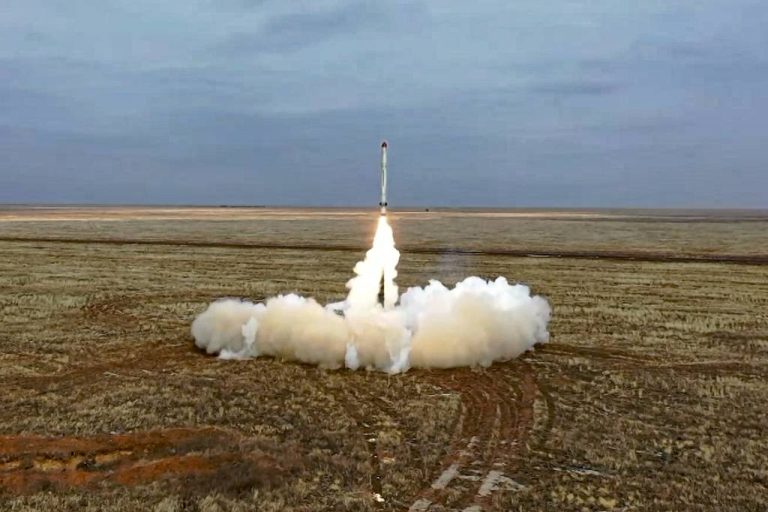
MOSCOW — Belarusian Air Force crews have completed their training for using tactical nuclear weapons as part of Russia’s plan to deploy the weapons to its ally amid fighting in neighboring Ukraine, the Russian Defence Ministry said Friday.

The ministry released a video in which a Belarusian pilot said that the training course in Russia had given the crews of the Belarusian Air Force’s Su-25 ground attack jets the necessary skills for using the weapons.

Russian President Vladimir Putin declared last month that Moscow planned to put some of its tactical nuclear weapons in Belarus. It was another attempt by the Kremlin leader to dangle the nuclear threat to discourage the West from supporting Ukraine.

Russia has a union agreement with Belarus that envisions close political, economic and military ties. Russian troops used Belarusian territory to roll into Ukraine from the north in February 2022 and have maintained a presence in Belarus.

The deployment of Russian tactical nuclear weapons to Belarus would put them closer to potential targets in Ukraine and NATO members in Eastern and Central Europe. Belarus shares a 1,250-kilometer (777-mile) border with NATO members Latvia, Lithuania and Poland.

Such weapons are intended to destroy enemy troops on the battlefield. They have a relatively short range and much less power compared with nuclear warheads fitted to long-range strategic missiles, which are capable of obliterating whole cities.

Putin said that construction of storage facilities for tactical nuclear weapons would be completed in Belarus by July 1. Russia also has helped modernize Belarusian combat aircraft to adapt them for carrying nuclear weapons. Russia also provided Belarus with Iskander short-range missiles that could be fitted with a nuclear warhead.

Putin has emphasized that Russia would retain control over any nuclear weapons deployed to Belarus, just as the U.S. controls its tactical nuclear weapons on the territory of its NATO allies.

The authoritarian president of Belarus, Alexander Lukashenko, has suggested that some of Russia’s strategic nuclear weapons might also be deployed to Belarus along with part of Moscow’s tactical nuclear arsenal.

Belarusian Defence Minister Viktor Khrenin again mentioned the possibility Friday, saying “it could be the next step” if the West continued what he described as its hostile course.

“We will respond to force only with force. Otherwise, they don’t get it in the West,” Khrenin said. “We are already preparing the sites that we have.”

Belarus, Kazakhstan and Ukraine had Soviet nuclear weapons stationed in their territory but handed them over to Russia after the 1991 collapse of the Soviet Union.

West Coast thought experiment | Survival Monkey Forums

0

I have been watching the ash cloud from the recent eruption of Russia’s Shiveluch volcano with some interest.

The thing that strikes me most is how slowly things move. As preppers we all have those worst case scenario dramas we like to play out in our imaginations where we drop everything and rush to survive, but really the process of survival is agonizingly slow, and likely favors the methodical. We didn’t notice the event until a day or more after it happened and it will likely be yet another day before the ash cloud actually hits the Coast. The weather people are saying they don’t expect ash fall on Alaska, but airline movement is likely to be disrupted for a week or longer.

My imagination wanders, how should I be responding right now if this had been a mushroom cloud and not just Volcanic activity?


South Korea to develop electronic warfare aircraft, buy helicopters

0

MELBOURNE, Australia — South Korea’s defense procurement agency has approved two major acquisition programs, paving the way for the country to develop a new electronic warfare aircraft and buy new heavy-lift helicopters.

The Defense Acquisition Program Administration announced Thursday its approval of a $1.41 billion program to develop a new airborne electronic warfare platform. The project is expected to run from 2024 to 2032, and the new aircraft will seek to improve joint operational capabilities and the survivability of the country’s air assets by jamming and disrupting adversarial air defenses as well as command and communications systems.

This latest acquisition will form part of South Korea’s future electronic warfare response system, and it represents the government’s latest effort to acquire or develop a range of aircraft for special missions.

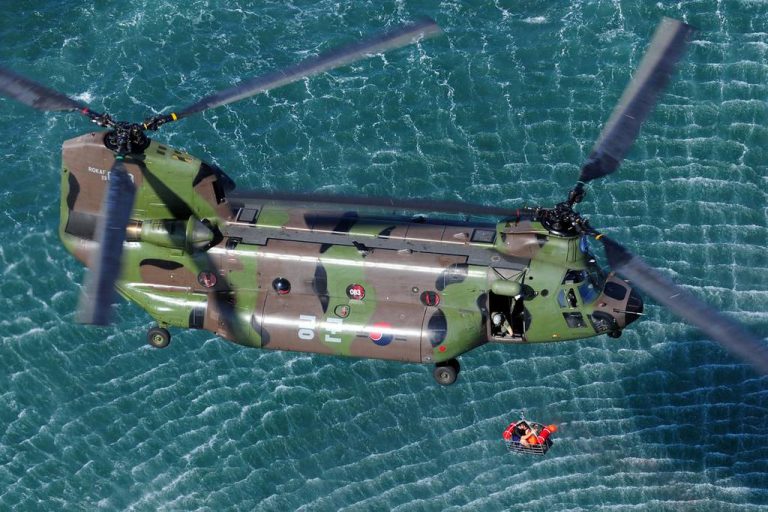
DAPA also greenlighted the $2.84 billion acquisition of “heavy helicopters” to replace older helicopters currently used by South Korea’s Army and Air Force for special operations as well as search and rescue missions.

The agency did not identify the platform selected for either requirement, although the use of the term “heavy helicopters” hints at the Boeing-made CH-47F Chinook. South Korea already operates an older version of the Chinook, with both the Army and Air Force flying the type.

The Army currently operates 26 CH-47D and six CH-47DLR heavy-lift helicopters, while the Air Force has 11 HH-47Ds for transport and combat search and rescue roles.

DAPA had approved a smaller acquisition of CH-47Fs in March, clearing $1.14 billion to buy helicopters for the Army. Neither announcement disclosed the number of helicopters it will acquire, although the U.S. Defense Security Cooperation Agency cleared a South Korean request for 18 CH-47Fs in December 2022 that was estimated to be worth $1.5 billion.

Another South Korean effort to acquire or develop aircraft for special missions includes a previous contract award to Korea Aerospace Industries to convert four Dassault Falcon 2000LXS business jets into Baekdu surveillance platforms.

The new platforms will replace four older Hawker 800XP (RC-800SIG) intelligence, surveillance and reconnaissance aircraft operated by the Air Force and acquired under the Peace Pioneer program in the late 1990s. The new jets are expected to enter service in 2026.

South Korea has an ongoing need for ISR capabilities, chiefly to monitor neighboring North Korea’s nuclear and ballistic missile programs.

The South Korean Air Force already has the Boeing-made E-7A Peace Eye airborne early warning and control aircraft; the Northrop Grumman-made RQ-4 Global Hawk surveillance drone; and the Peace Krypton reconnaissance aircraft.

Mike Yeo is the Asia correspondent for Defense News.

Don't Make Me Use The Claws…

0

Don't Make Me Use The Claws…

After tragedy, US Air Force probes English training for foreign pilots

0

JOINT BASE SAN ANTONIO-LACKLAND, Texas — Two years after a Japanese air force pilot and his American instructor died in a military jet crash in Alabama, officials are mulling whether a U.S.-run program that teaches English to foreign aviators is partly to blame.

The incident has prompted U.S. Air Force leaders to take a closer look at the quality of the instruction they provide, and consider how to better accommodate foreign students. It has opened fresh discussion of how much time and money the program needs to succeed.

It has also highlighted a breakdown in communication between the Air Force-led Defense Language Institute’s English Language Center here, the organizations that oversee it, pilot training units across the service, and the nations that send their students to Texas.

“The Japanese are nervous because of what happened,” said Terry Harsh, an instructor at the center, in a recent interview here. “They come through here, asking, ‘I don’t want the same thing to happen to me — why did he die? Why did a professional American instructor pilot die with him?’ These are language issues, and they’re very concerning.”

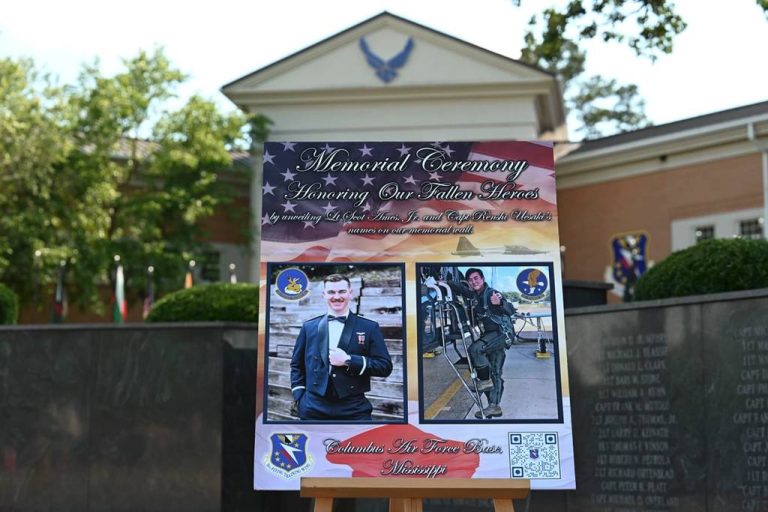
The fatal T-38C Talon training sortie on Feb. 19, 2021, killed 24-year-old 1st Lt. Scot Ames, an instructor pilot at Mississippi’s Columbus Air Force Base, and his 25-year-old Japanese trainee, Capt. Renshi Uesaki.

An official accident investigation concluded that Ames and Uesaki made errors in judgment that caused the crash. Investigators noted that Uesaki struggled with the language barrier despite completing six months of English training in 2019.

That “directly impacted his ability to receive and process instruction as well as listen and talk on the radios,” the report said. “This challenge was exacerbated while flying instrument sorties, which required more frequent communications” with air traffic control.

Uesaki passed his English comprehension test upon arriving at Lackland but needed more time to improve in conversation. He finished the course as an “‘average’ to ‘slightly above average’” student, according to the accident report.

But he continued having difficulty speaking and understanding technical aviation vocabulary, which affected his ability to comprehend instructions and make radio calls while flying. Those communication challenges often overwhelmed Uesaki and caused him to lose focus in the cockpit, the report said.

“The cause of the mishap was [Ames’s] loss of situational awareness on final approach and failure to take timely and necessary actions as a dangerous situation developed,” the Air Force wrote in its accident report. “[Uesaki] substantially contributed to the mishap after becoming task-saturated in the traffic pattern and placing and leaving the throttles in idle.”

Foreign pilot deaths in U.S.-led military training are infrequent, but they do occur. At least four foreign airmen have died in the U.S. in the past decade: Uesaki; two Iraqi pilots, Brig. Gen. Rasid Mohammed Sadiq and Capt. Noor Faleh Rassan Al-Khazali; and a Taiwanese airman, Maj. Kao Ting-cheng.

All but Uesaki were flying F-16 Fighting Falcon jets over Arizona when they crashed in separate incidents in 2015, 2016 and 2017.

Foreign deaths account for around 6% of the 80 people who have died in U.S. Air Force-affiliated aircraft mishaps since 2013, according to the Air Force Safety Center.

But losing an American instructor pilot brought scrutiny of the program to a new level, Harsh said. The crash sparked meetings across the U.S. Air Force’s training enterprise and with Japanese military officials to discuss what went wrong — and how to stop it from happening again.

“The Air Force command structure went into a different gear,” said Harsh, a former scout helicopter pilot who has taught at the center for over a decade. “They were like, ‘What do you teach? What’s going on at DLI?’”

Teaching the world to fly

The English Language Center has been the first step on the path to a military air career for thousands of people around the world.

Its college-level aviation program is one piece of the center’s broader security cooperation mission that reaches around 6,000 students from more than 100 countries each year. The school offers a general English curriculum and remedial classes ahead of more difficult courses that prepare troops for military jobs.

Each country picks the airmen it wants to send to the U.S., where they receive a more in-depth education in English — the official language of the skies — than they may otherwise get at home.

To join, people must pass a series of proficiency tests that judge their speaking and listening abilities. They have to score at least a two — meaning they could shop for groceries or rent a car — on a scale where three is fluent, Harsh said.

The nine-week aviation course prepares airmen to hold conversations with pilots in flight, crew members in the back of an aircraft, and air traffic control towers. Anyone from air traffic controllers to flight nurses can attend the course, which offers fixed-wing and rotary-wing specialties.

Around 350 foreigners from about 50 countries go through the aviation program each year, Harsh said. NATO airmen don’t often attend because they tend to be more fluent in English than people from other parts of the world.

Students are drilled on NATO’s “alpha-zulu” phonetic alphabet and the niche vocabulary, acronyms and scenarios that crackle across U.S. military radios — no accents allowed.

“These little differences have led to accidents in the past, and we really want to emphasize the importance of being clear on the radio,” Harsh said.

They take lessons on subjects like crew management and leadership, with occasional time in simulators, while learning from American airmen and their foreign classmates.

The center also tries to work through the cultural differences that can lead to safety issues, like deference to older or higher-ranking airmen. Teachers urge the international students to get comfortable asking questions.

“It’s not really a rank thing when you get in the cockpit,” Harsh said. “If you don’t ask, the instructor pilot is going to assume you know.”

If something seems amiss, he added, “Don’t assume that the IP is not making a mistake.”

“You have the right — it’s your life — to challenge that instructor pilot respectfully,” he said.

The goal is to get students up to speed so they can enter the next phase of training, like undergraduate pilot school, without a significant language barrier.

But Harsh said there’s a big difference between how fluent they need to be to finish the program and how fluent they should be to fly safely. He estimates that airmen need at least another six months of class time to be comfortably proficient, for which the United States or the partner countries would need to foot the bill.

“We’ve tried to emphasize to the military departments, this does not succeed without you,” he said. “You’ve determined the language prerequisites. DLI wildly succeeds in meeting that mark. But that’s not what the students need.”

Nearly everyone who arrives at the center passes, Harsh said. But when they reach their next stop, like undergraduate pilot training, that completion rate falls to around 78%.

“That training gap is a safety issue,” he said. “[The solution is] time and money. And nobody wants to pay that.”

Changes needed

The Defense Language Institute is updating the aviation English program, a process that will take another few years to come to fruition.

One of the biggest changes the English Language Center could make is forging closer ties between military experts, the follow-on training units and the curriculum team, Harsh said.

The curriculum is largely written by civilians without expertise in real-world military aviation, he said. That creates an artificial standard that makes students feel prepared until they reach their training unit.

He argues the solution is to embed military experts in the curriculum department who can act as a liaison between the training unit and the English program. That way, the expert could keep the English program apprised of what instructor pilots need and vice versa.

Harsh wishes the school had a better system in place to collect feedback from its students, like interviews, but acknowledges that it would add time and effort for already busy staffers and stressed students.

Once a year, center staff visits the follow-on training units that take its students to see how well the foreigners do within the first month. That still doesn’t paint the full picture, Harsh said.

He wants more qualitative and quantitative data on how students are faring: Why did someone need to log extra hours in the cockpit? What have their instructors said in post-flight reports?

“That is gold to us. I’ve never seen it,” Harsh said. “Without that feedback loop, we’re shooting arrows in the dark.”

And he wants the instructors that receive the students down the line to be more aware of who they’re getting.

Airmen need to establish “safe words” before they fly, he said. If an international student gets overwhelmed in the air, they can use the safe word to let their instructor know they need to pause to discuss what they’re doing.

Those simple steps can protect the instructor pilots, too.

“Be somewhat accommodating,” he said. “This is incredibly difficult. Imagine going to Japan or Korea or an Arab community to try to learn how to fly.”

Now the Air Force is trying to make clearer how proficient a student will be when they leave the language program, and what should be expected of students who finish it.

In February, Air Force international affairs staffers, flight instructors, and members of the Defense Language Institute, Air Education and Training Command and 19th Air Force — a subunit that manages pilot training — met to review the English language course’s curriculum and how it is delivered, said Air Force spokesperson Marilyn Holliday.

The English Language Center has worked on a rubric for instructor pilots to gauge how well their international students communicate, she said. Instructor pilots are helping the center make videos to familiarize international students with pre- and post-flight briefings, and pilot training bases have also provided the center with scripts so that students can rehearse conversations about take-off, flight patterns and landing.

“The visit … served as a forum to identify and bridge training and academic gaps between English language curriculum and instruction as it applies to international students,” Holliday said. “The working group will reconvene in mid-April to re-engage and assess progress on all tasks.”

The Japanese Self-Defense Forces did not respond to a request for comment on their discussions with American air training officials.

Business as normal

Business has continued as usual after the 2021 crash, said Col. Joe Schaefer, commandant of the English Language Center.

The U.S. Air Force still graduates around 50 foreign pilots each year; Schaefer said the program has maintained its relationship with Japan, a key ally in the Pacific. It retains a Japanese liaison officer who looks out for the country’s students while in the U.S.

On the first anniversary of Uesaki’s death, Schaefer said the Japanese liaison delivered a letter to Lt. Gen. Brad Webb, then the head of Air Education and Training Command.

It was a note from the pilot’s mother: Thank you for caring.

Rachel Cohen joined Air Force Times as senior reporter in March 2021. Her work has appeared in Air Force Magazine, Inside Defense, Inside Health Policy, the Frederick News-Post (Md.), the Washington Post, and others.