Air Force staff director tapped to run service’s Indo-Pacific branch

0

The U.S. Air Force may soon get a new face for its presence in the Pacific.

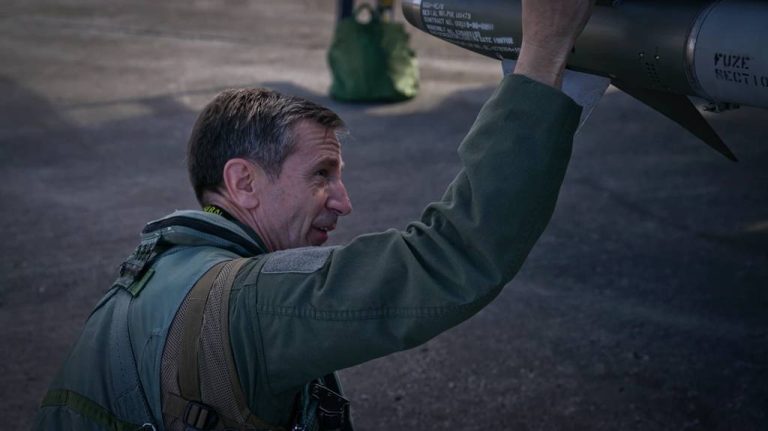
The Biden administration on Monday tapped Lt. Gen. Kevin Schneider to lead Pacific Air Forces, the branch in charge of organizing, training and equipping American air units from Alaska to Guam. His nomination would bring a seasoned fighter pilot with years of experience at PACAF headquarters to the region as the U.S. looks to stave off Chinese aggression and bolster its own long-range capabilities there.

As PACAF commander, Schneider would ensure that squadrons of fighter and bomber jets, surveillance aircraft and more are ready to be tasked by the larger U.S. Indo-Pacific Command on missions around the region. Around 46,000 troops and civilian staff are spread across Air Force bases in Alaska, Hawaii, South Korea, Japan and Guam.

If Congress approves the move, Schneider would also earn a promotion to four-star general. He currently works as the staff director at Air Force headquarters in the Pentagon.

Before moving to Virginia, he spent six years in leadership positions around the Indo-Pacific, including as chief of staff at PACAF and INDOPACOM and commander of U.S. forces in Japan, according to his official biography.

Early in his career, he also spent several years at South Korea’s Osan Air Base and Japan’s Misawa Air Base, and returned to the Korean Peninsula as the 80th Fighter Squadron commander at Kunsan Air Base in 2003.

He is a 1988 graduate of the U.S. Air Force Academy in Colorado.

A career fighter pilot, Schneider has flown more than 500 hours in combat in the F-15 and F-16 fighter jets as part of Operations Southern Watch, Enduring Freedom, Iraqi Freedom and Inherent Resolve — the U.S. missions in Afghanistan, Iraq and Syria.

Schneider is a decorated commander who has received the Defense and Air Force Distinguished Service Medals, the Defense Superior Service Medal and the Legion of Merit. He has also earned at least two Bronze Star medals, an award recognizing meritorious achievement in connection with operations against enemy forces.

One Bronze Star was awarded in 2014 after his year in command of the 380th Air Expeditionary Wing at Al Dhafra Air Base in the United Arab Emirates. The wing boasts one of the most varied sets of Air Force missions and was a key launching point for the U.S. wars on terror groups in the Middle East and Southwest Asia.

Schneider would return to PACAF headquarters in Hawaii as the U.S. looks to strengthen its long-range strike, maritime and island-hopping capabilities in the region to bolster its own standing and to defend U.S. ally Taiwan against a Chinese invasion.

U.S. officials argue the Chinese military is the top “pacing threat” for American forces, spurring efforts to develop new hypersonic and nuclear weapons, stealthier aircraft and more flexible combat tactics to outrun Beijing’s technological advances. Pacific Air Forces is also part of a recent push to further strengthen ties with Australia, a longtime U.S. intelligence-sharing partner, and to contain other regional threats like North Korea.

The Pentagon has not announced a next assignment for Gen. Kenneth Wilsbach, who has served as PACAF’s top officer since July 2020.

Lt. Gen. Scott Pleus is next in line to replace Schneider as Air Force staff director, the Defense Department added Monday. He is currently the deputy commander of U.S. Forces Korea, among other titles.

The Biden administration has also picked Maj. Gen. Laura Lenderman to serve as Schneider’s deputy at PACAF headquarters, as well as for promotion to lieutenant general. She is currently U.S. Transportation Command’s operations director in Illinois.

It’s unclear how quickly the latest slate of nominees may move through the congressional approval process. Sen. Tommy Tuberville, R-Ala., has stalled military confirmations for weeks to protest the Pentagon’s efforts to ensure service members can access reproductive health care after the Supreme Court struck down Roe v. Wade last year.

Around 200 military officials are currently awaiting confirmation votes in the Senate. None have been confirmed since March 30.

Other Air Force nominees announced Monday include:

  • Maj. Gen. David Harris Jr., for promotion to lieutenant general as the service’s deputy chief of staff for long-term future planning at the Pentagon. Harris is currently the deputy commander of Air Forces Central at Al Udeid Air Base in Qatar.
  • Maj. Gen. David Iverson, for promotion to lieutenant general as the deputy commander of U.S. Forces Korea, among other titles. He is currently PACAF’s air and cyberspace operations director in Hawaii.
  • Brig. Gen. Dale White, who was nominated for promotion to major general in March, is now on the fast track to lieutenant general. He is on tap to become the Air Force’s highest-ranking uniformed acquisition official, the military deputy to the assistant secretary for acquisition, technology and logistics. White currently oversees the Air Force’s portfolio of fighters and advanced aircraft in Ohio.

Defense News Congress reporter Bryant Harris contributed to this story.

Rachel Cohen joined Air Force Times as senior reporter in March 2021. Her work has appeared in Air Force Magazine, Inside Defense, Inside Health Policy, the Frederick News-Post (Md.), the Washington Post, and others.

On the View recently “Taliban vs. Christianity”

0

Another beacon of light on The View recently gushed moronic insisting there is no difference between the Taliban and Christians. She said she is astonished that people are ignorant of the fact that Christians are virtually indistinguishable from the Taliban. Speaking of facts, let’s make a simple comparison to test the claim these two groups are identical.

Beheading: a widespread method of execution?
TALIBAN: Yes CHRISTIANITY: No

Women executed for minor infractions?
TALIBAN: Yes CHRISTIANITY: No

Bans TV, radio, music, cinema, and dancing?
TALIBAN: Yes CHRISTIANITY: No

Prohibits women from getting an education?
TALIBAN: Yes CHRISTIANITY: No

Endorses throwing acid in the face of a woman wanting education?
TALIBAN: Yes CHRISTIANITY: No

Allows women to be beaten if they are disobedient?
TALIBAN: Yes CHRISTIANITY: No

A woman or girl who alleges rape without producing 4 male witnesses is guilty of adultery.
TALIBAN: Yes CHRISTIANITY: No

A woman found guilty of adultery is executed?
TALIBAN: Yes CHRISTIANITY: No

A woman found not wearing a head scarf can be legally raped?
TALIBAN: Yes CHRISTIANITY: No

Genital mutilation a common practice?
TALIBAN: Yes CHRISTIANITY: No

Combines religion, civil government, social customs, and military into a centralized theocracy that demands across-the-board compliance.
TALIBAN: Yes CHRISTIANITY: No

Sharia Law is central. One tenet allows for the wanton killing of unbelievers.
TALIBAN: Yes CHRISTIANITY: No

Salvation by works alone?
TALIBAN: Yes CHRISTIANITY: No

Uses terrorism to subjugate outsiders?
TALIBAN: Yes CHRISTIANITY: No

Believers demand world domination?
TALIBAN: Yes CHRISTIANITY: No

An unbeliever may be a slave, pay for citizenship, or face execution.
TALIBAN: Yes CHRISTIANITY: No

Support the idea of freedom of religion?
TALIBAN: No CHRISTIANITY: Yes

Endorses the rule of law, equal protection, equal standing, and presumption of innocence?
TALIBAN: No CHRISTIANITY: Yes

Supportive of individual liberty, freedom of speech, and freedom of thought?
TALIBAN: No CHRISTIANITY: Yes

Believes Jesus Christ is God, very God?
TALIBAN: No CHRISTIANITY: Yes

Case closed.

Taliban vs. Christianity


2023 Purple Martin Report

0

They're baaaack! Really late to arrive at the house, although I did see a small flock of Martins in the area on April first. Judging from their behavior I got the feeling that the trees may have finally gotten too close for their liking. This year the first one spotted in the house was almost a month later than their 26 March arrival last year.

We heard their chatter yesterday and I spotted one male coming out of an upstairs apartment just as the sun was…

2023 Purple Martin Report

Survivorman Off the Grid

0

Good video

US Army preps mission tech for future helicopter, despite engine delay

0

WASHINGTON — Despite a delay in new engine technology, the U.S. Army is continuing to develop systems for its Future Attack Reconnaissance Aircraft that go beyond the airframe, according to the two-star general in charge of the service’s vertical lift modernization.

As part of the Improved Turbine Engine Program, a General Electric Aerospace-developed engine will replace those in the UH-60 Black Hawk and AH-64 Apache helicopters, and power the Future Attack Reconnaissance Aircraft. But the FARA effort is delayed since prototype flights reliant on the new engine won’t take place until the fourth quarter of fiscal 2024, according to the latest Army budget documents.

The plan was to execute a first flight for each aircraft in late 2023. That flight schedule had already been postponed by roughly a year, according to a comparison of FY22 and FY23 budget documents.

Both competitors — Textron’s Bell and Lockheed Martin’s Sikorsky — have said their FARA prototypes are built and just awaiting the new engine.

The Army has collected “a ton of data” within the FARA program already, Maj. Gen. Wally Rugen, the service’s Future Vertical Lift Cross-Functional Team director, told Defense News in an interview.

“I know everyone’s wanted to fire off the engines and fly, and I do too,” he said ahead of the Army Aviation Association of America’s annual conference, taking place April 26-28 in Nashville, Tennessee. “But [the Army] is tying a developmental engine to a developmental aircraft. We didn’t do that with [the Future Long Range Assault Aircraft].”

The Army selected Bell to build FLRAA in December after building competitive technology demonstrators and flying them for several years. A Sikorsky and Boeing team lost that competition.

FARA is a “much higher bar,” Rugen said. “I would argue that a scout aircraft is probably technically a bit more advanced than maybe an assault aircraft.”

“So the engine is slowing us down,” he added, “but we’re willing to take that to get the transformational capabilities that ITEP is going to bring, which is the specific fuel consumption and higher shaft horsepower.”

Rugen said an engine was in the test cell two weeks ago, demonstrating 3,100 shaft horsepower.

‘Double whammy’

General Electric’s problems with the ITEP engine began as a result of the coronavirus pandemic.

“We got our butt kicked in COVID,” Rugen said. GE not only ran into problems with sub-suppliers, but also “had a brain drain” with the exit of experienced quality-control managers, engineers and other technical employees during that time, he added.

“That’s a double whammy of a talent deficit and a supply chain problem,” Rugen explained. “I think they’re done with any excuses on that and they’re moving out. Am I thrilled? No. But it just becomes triage and a very clinical process of how do we keep our momentum … and we’re committed to it.”

During a hearing last week before the House Tactical Air and Land Forces Subcommittee, Army acquisition chief Doug Bush said recent ITEP delays are specifically related to quality control of subtier vendors.

GE “had trouble making some new components including some new methods like 3D printing to the level of quality required for engines that we can actually put in test aircraft,” he said.

The company, he added, believes the program is “under control. My team of experts believes their current estimates are reasonable, but it is a delay.”

The Army has also begun an analysis of alternatives for the FARA program, which is also slowing down the effort, Bush said, adding that the Army won’t reach the technology maturation phase of the program until the first quarter of FY26.

The Army plans to complete engineering and manufacturing development for ITEP in the third quarter of FY26, according to FY24 budget documents, and won’t reach initial operational capability until the third quarter of FY29, an almost two-year delay from the timeline based on FY23 budget documents.

In the meantime

While the Army waits for the engine, it is developing the weapons systems and a critical modular open-system architecture for the aircraft, Rugen said. “This is our effort to claw back schedule and claw back scope.”

The Army continues to release draft design requirements to industry for the FARA weapon system, and the service continues to take steps to mitigate risk to the development effort, he added.

The eventual modular open-system architecture is meant to host mission systems such as survivability equipment and the Army’s internally developed Modular Effects Launcher. The open system allows the Army to bring in new technology when it is ready and relevant, Rugen said.

The Modular Effects Launcher is already gaining traction with other services; in particular U.S. Special Operations Command and the Marine Corps are adopting the technology, Rugen noted.

Building the weapons systems architecture includes efforts to focus on FARA as a “deep sensing” capability, something that can see farther and use missiles, rockets or nonlethal effects like electronic warfare to attack threats at greater distances.

And the mission systems architecture is meant to connect soldiers and sensors on the battlefield through a robust aerial tier network. The Army Requirements Oversight Council will decide whether to continue to advance the aerial tier network before the end of this calendar year, Rugen said.

The service previously evaluated technologies within the architecture through experimentation exercises like Project Convergence and the aerial tier-focused event Edge, heading into its third year in May, Rugen noted.

Jen Judson is an award-winning journalist covering land warfare for Defense News. She has also worked for Politico and Inside Defense. She holds a Master of Science degree in journalism from Boston University and a Bachelor of Arts degree from Kenyon College.

Tucker Swanson McNear Carlson Canned @ Faux

0

Why? The Murdoch’s does not like paying $787.5 million and counting for his lies.

“FOX News Media and Tucker Carlson have agreed to part ways. We thank him for his service to the network as a host and prior to that as a contributor.Mr. Carlson’s last program was Friday April 21st. Fox News Tonight will air live at 8 PM/ET starting this evening as an interim show helmed by rotating FOX News personalities until a new host is named,” a network spokesperson told the Washington Examiner in a statement.


One Way Aerospace to demo Ukraine-made kamikaze drones to NATO

0

MILAN– Ukraine-based start-up One Way Aerospace, which makes low-cost, domestically produced kamikaze drones, said it will demonstrate a long-range system to the country’s Ministry of Defense and an undisclosed European NATO partner.

Both the company’s AQ-400 and the AQV-150 Scalpel Heavy drones are expected to be tested and showcased in late May at an unknown location. Founded eight-months ago by two veterans of the British and Australian militaries and a Ukrainian engineer, One Way Aerospace has made rapid leaps in widening the set of platforms it markets to customers.

Disposable, one-way or “kamikaze” drones offer the advantage of low cost and ease of replacement. If one gets shot down, it is not that relevant, since they typically cost far less than cruise missiles and can be purchased in larger amounts. This is known as the quantity-over-complexity strategy, where successful outcomes on the battlefield can be generated by a larger quantity of lower-tech weapons rather than relying on fewer, more costly and more complex munitions.

“Our mission was created after we saw a direct market-need to procure systems that are simple, affordable and disposable from a commercial basis,” James Earl, co-founder of One Way Aerospace, told Defense News. “We thought to ourselves, the only way this concept was going to work was if we saw our products not necessarily as precious assets, but more so in the same way that cruise missiles are seen.”

Production is set up through a network of small sites and engineering companies manufacturing similar platforms on the ground. Although One Way Aerospace sources some components from outside Ukraine – primarily from the West, including Germany and the U.K. – the company seeks to localize manufacturing as much as possible.

This will soon involve the establishment of a larger facility of at least 1,000 square meters in Ukraine to ramp up the production of their latest AQ-400 Scythe platform. This long-range kamikaze drone was designed to be rapidly assembled and mass-produced at low prices. It can be launched from a short runway or catapult and can carry payloads up to 70 pounds (32 kilograms).

“The AQ-400 will begin development for turbine power and low-level terrain following type flight control, which will take us one step closer to the affordable cruise missile goal: 1000 kilometers, at a speed of 350 km/h for less than $100,000,” Earl said in an interview, adding that when combined, the AQ-400 and AQV-150 could form a disposable multi-strike system. The goal is to eventually be able to hit 10 targets at 150 kilometers from the launch site, he said.

Russian targets

This month, the company released video footage showing its AQV-Scalpel, using a small first-person view system, in Ukraine targeting Russian military trenches, personnel carriers and even destroying a TOS-1A thermobaric rocket launcher vehicle.

As these types of systems fly at lower speeds and have finite flight time, they are easier targets and at higher risk of being hit by kinetic strikes. Another element to consider about the quantity over complexity claim is that it is not automatically applicable to all conflict zones or types of environments. Individual states’ security requirements may differ from one to the next, a limitation the company recognizes.

“The starting point of this market for us was fulfilling a particular, important challenge Ukraine was facing, one perhaps other countries do not have on their doorstep… It is a single-use case of a type of system [and way of delivering capabilities] being incredibly useful, but one that does not necessarily transport everywhere well or the same,” Earl said.

Elisabeth Gosselin-Malo is a Europe correspondent for Defense News. She covers a wide range of topics related to military procurement and international security, and specializes in reporting on the aviation sector. She is based in Milan, Italy.

More missiles, less vehicles: Australia unveils strategic review

0

MELBOURNE, Australia — Australia’s defense minister released the public version of the long-awaited Defence Strategic Review on Monday, which is meant to provide a blueprint to counter China’s influence in the Indo-Pacific region.

The 110-page report calls for fundamental changes to the structure of the Australian Defence Force to counter modern and emerging threats, but does so at the expense of capability acquisition and base infrastructure projects. While some efforts will simply undergo a delay or “re-scoping,” others will get canceled outright.

The review was conducted over several months by Angus Houston, a former Australian Defence Force chief, and Stephen Smith, a former defense minister. The effort was “the most ambitious review of Defence’s posture and structure since the Second World War,” according to the document.

“A large-scale conventional and non-conventional military build-up without strategic reassurance is contributing to the most challenging circumstances in our region for decades,” Defence Minister Richard Marles stated in his introduction to the report. “Combined with rising tensions and reduced warning time for conflict, the risks of military escalation or miscalculation are rising.”

The report also said the United States is no longer the unipolar leader in the region amid a return to strategic competition among major powers.

“As a consequence, for the first time in 80 years, we must go back to fundamentals, to take a first-principles approach as to how we manage and seek to avoid the highest level of strategic risk we now face as a nation: the prospect of major conflict in the region that directly threatens our national interest,” the report read. “Strategically, we may have already entered a decisive period for the Indo-Pacific. As a result, our ability to address the reduced strategic warning time identified in the 2020 Defence Strategic Update has come into sharper relief.”

That 2020 document acknowledged Australia’s traditionally held view that the nation would have a decade of warning time to prepare itself for conflict no longer applied. The latest Defence Strategic Review takes this one step further, calling for a three-stage strategy beginning with a two-year period between now and 2025 to address “matters which must be prioritised and addressed urgently.” A second period would follow between 2026 and 2030, and then a third “beyond 2031.”

The Defence Strategic Review also recommended the government commission a new version every two years in place of the sporadically released defense whitepapers of the past.

Furthermore, it calls for a change in the military’s Defence of Australia doctrine — adhered to over the past 50 years — to one which will see a more integrated force able to respond to rapidly changing risks.

“The current Australian Defence Force (ADF) force structure is based on a ‘balanced force’ model that reflects a bygone era. It does not adequately address our new strategic environment,” the review stated. “The ADF needs a much more focused force that can respond to the risks we face. It should be informed by net assessment and able to effect a strategy of denial.”

For the first time, the review addresses the need to harden Australia’s air bases and secure fuel supplies against attack from Australia’s north. In the past, these were couched in general terms; there are currently no hardened defense facilities.

Capability needs

The review calls for the military to apply several “critical capabilities,” including:

  • Maritime drones that can perform intelligence, surveillance and reconnaissance missions on the surface and underwater.
  • An enhanced integrated targeting capability.
  • Enhanced long-range precision strike weapons for all domains of warfare.
  • An amphibious-capable combined-arms land system.
  • All-domain maritime capabilities for sea-denial operations.
  • A networked expeditionary air operations capability.
  • An enhanced integrated air and missile defense system.
  • A joint and expeditionary theater-logistics system.
  • A theater command-and-control network.
  • A network of northern bases for logistics support, denial and deterrence.

The Royal Australian Navy’s plan to acquire a nuclear-powered attack submarine under the AUKUS framework is also a lynchpin of the new Defence Strategic Review, as is the government’s continuous naval shipbuilding strategy. The AUKUS deal between Australia, the United Kingdom and the United States is meant to improve information and technology sharing efforts between the allies.

“The acquisition of conventionally-armed, nuclear-powered submarines will transform Navy’s capability,” the report read. “Nuclear-powered submarines are key assets both in effecting a strategy of denial and in the provision of anti-submarine warfare and long-range strike options.”

The government should expand efforts to acquire long-range precision strike weapons, including the recently announced plan to buy the American-made High Mobility Artillery Rocket System, and support plans to co-develop and purchase the American-made Precision Strike Missile, according to the review.

The military should also speed up the Army’s littoral combat maneuver program, the report said.

“Defence must rapidly accelerate and expand Army’s littoral manoeuvre vessels (medium and heavy landing craft) and long-range fires (land-based maritime strike) programs. This will require Army to re-posture key capabilities,” the document stated. “It is essential to immediately accelerate the acquisition of Land 8710 Phases 1 & 2 — Army Littoral Manoeuvre Vessels (Landing Craft Medium and Heavy) and expand the scope of this capability. Without this, only limited numbers of major land capabilities can be projected offshore.”

Change of plans

Meanwhile, cuts are to be made to fund the military’s future model. Key among these is confirmation that Army’s Land 400 Phase 3 program for a tracked infantry fighting vehicle — with an estimated value of AU$25 billion (U.S. $17 billion) — will be slashed from 450 vehicles to 129. That new quantity could equip a single mechanized battalion for littoral maneuver.

The second phase of the Army’s Land 8116 protected mobile fires project — an effort to acquire 30 more AS9 self-propelled howitzers and K10 ammunition resupply vehicles made by South Korea’s Hanwha — would also get scrapped under the review’s plan.

Furthermore, the review calls for an independent analysis of the Royal Australian Navy’s surface combatants by the end of the third quarter of this year. This could impact the service’s plans to build nine Hunter-class frigates and the generally unarmed Arafura-class offshore patrol vessels.

The report also quashes a suggestion that the Royal Australian Air Force acquire a small number of Northrop Grumman-made B-21 Raider strategic bombers.

“The Review has undertaken detailed discussions in Australia and the United States in relation to the B-21 Raider as a potential capability option for Australia. In light of our strategic circumstances and the approach to Defence strategy and capability development outlined in this Review, we do not consider the B-21 to be a suitable option for consideration for acquisition,” it stated.

The Defence Strategic Review also calls for a reform of the Capability Acquisition and Sustainment Group’s acquisition policy, labeling it as unsuitable for Australia’s current strategic circumstances. The group falls under the purview of the Defence Department.

Instead, in what appears to be a major blow for the Australian defense industry, the document calls for the rapid acquisition of more capabilities via a “sole source or off-the-shelf procurement” mechanism.

While applauding the forward-looking aspect of the review, Tim Dore, who serves as acting CEO of the defense industry trade association Defence Teaming Centre, warned of problems ahead for local business.

“We understand why the significant overhaul was needed. We are in a considerably different geopolitical environment than in 2020, and the DTC appreciates the government requesting the review early on in their tenure,” Dore said.

“However, there are numerous businesses who have lost out on work and who have lost hundreds of thousands of dollars in investments they had made to upskill their workforce and equipment based on Defence’s previous requirements, only to see the Government’s direction once again change. Neither the taxpayer nor the warfighter benefits from this indecision,” Dore added.

The Australian government has agreed — at least in principle — to all of the report’s recommendations. Further details regarding defense funding are expected to come in the federal budget on May 9.

Nigel Pittaway is the Australia correspondent for Defense News.

Edible Desert Plants You Can Safely Use When There’s No Food

0

The United States of America is home to some of the most diverse and fascinating landscapes on the planet, and the deserts are no exception. These arid regions cover vast swathes of land across the country, with some major areas being particularly renowned for their unique flora.

If you take a closer look at a map of the U.S., you’ll notice that several major areas are classified as deserts. The Great Basin, for instance, is a massive desert that stretches across much of Utah and Nevada, characterized by its vast stretches of dry plains and rocky plateaus.

Meanwhile, the Mojave Desert is a truly immense expanse that covers much of California, Nevada, and Arizona, famous for its stunningly beautiful sand dunes, mesas, and canyons. Finally, there is the Sonoran Desert, which extends from Southern California south into Mexico, featuring unique and diverse plant and animal life.

Surviving with the help of the land

Despite the harsh, inhospitable conditions of these desert regions, there are still a surprising number of plant species that thrive in these environments. Some of these plants are adapted to the extreme temperatures and lack of water, and have been used by Native American communities for centuries as a source of food and medicine.

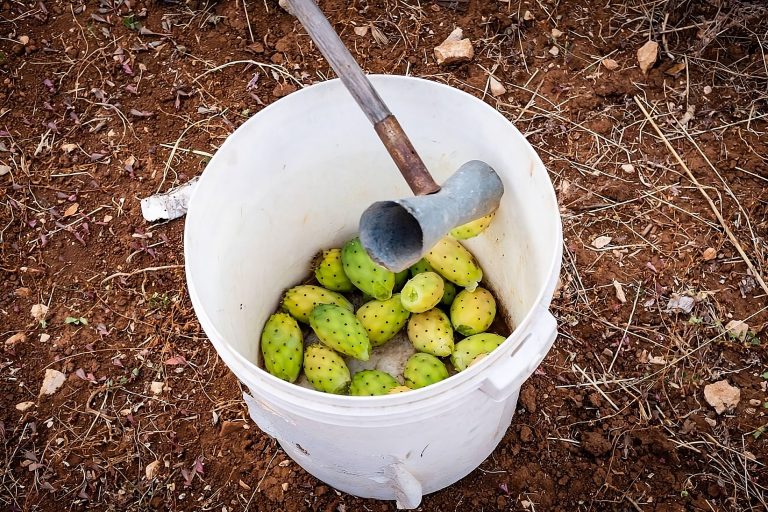
Learning about these desert foods can provide a fascinating glimpse into the traditional ways of life of the people who once lived off the land in these areas. For example, the prickly pear cactus is a common sight in many desert regions, and its fruit is edible and packed with essential nutrients. Similarly, the mesquite tree produces a type of flour that was traditionally used to make bread, and the jojoba plant produces an oil that is used in a variety of cosmetic products.

Knowing about these plants and their uses not only enriches our understanding of the natural world around us but can also potentially save our lives in a survival situation. In a desert environment, where water and food can be scarce, having knowledge of the edible and medicinal plants that grow in the area can make all the difference between life and death.

Edible desert plants that will save your life

Chia (Salvia columbariae)

Chiais a low-growing annual plant that belongs to the mint family. It is known for its finely wrinkled leaves and square stems that grow no more than a foot or so in height. The plant matures in July, and the seeds were gathered by the desert Indians and used as a high-protein food.

Chia seeds are not the same seeds that are commonly sold in health food stores, although they are a close relative. The seeds can be added to drinks and coffee, tossed into salad, or added to bread and cake batter. If you’re foraging for chia, look for it in wide-spread, large flat expanses of the low desert, and sometimes in higher elevations. Chia is a high-protein food that can be added to drinks and food.

Onions (Allium canadense)

Onions are a real treat when you find them in the desert, or anywhere. There are varieties found only in the desert, and some varieties that are found in almost every environment in the US. They look like little green onions, and they smell like onions. The flower has three sepals and three identical petals, so it appears to be a six-petalled flower. Wild onions are widely used with meat dishes, salads, soups, stews, etc. However, if you are not 100 per cent certain you have an onion, don’t eat it.

Onions look very much like other members of the Lily family, and some members of the Lily Family are poisonous. The obvious onion aroma is one of the best ways to identify this wild desert plant. Forage for onions during the spring and summer months, and use them fresh or store them in a cool, dry place. Onions have a distinct onion aroma and are used in a variety of dishes, but it’s important to be sure you have identified them correctly.

Cactus (Opuntia spp.)

Cacti are known for their sharp spines and prickly appearance, but they can also provide a source of food in the desert. The tender and palatable parts of the prickly pear cactus are the young pads, which can be cleaned of their spines and glochids and eaten raw or added to various dishes. The fruit is also edible, but care must be taken when collecting to avoid getting the glochids on your skin. The flavor of the raw pad is similar to that of a sour green pepper, while the fruit can be sweet and juicy.

In addition to being a food source, cacti have been used for medicinal purposes for centuries. The juice of the cactus can be used to treat wounds, burns, and insect bites. The prickly pear fruit is also high in antioxidants and can help reduce inflammation in the body.

Wild rhubarb (Rumex hymenosepalus)

Wild rhubarb is often mistaken for curly dock (Rumex crispus), but it is a distinct species. Its leaves are sour, much like curly dock, but tend to be too sour for use in salads. When you find a wild rhubarb plant, you can collect some of the youngest leaves to add to cooked dishes. If you make a spinach-type dish from these leaves, they are best boiled, then change the water and cook again for a mild dish.

The mature seeds can also be collected in late summer and can be added to bread batters or soup dishes. Wild rhubarb can be found in arid regions of the southwestern US, often growing in rocky soils along washes and streambeds. It’s best to forage for wild rhubarb in the spring, as the leaves become tougher and more sour as the season progresses. Wild rhubarb has sour leaves that are best used in cooked dishes, and its seeds can be added to bread and soup dishes.

TLW banner1

Mormon tea (Ephedra spp.)

When it comes to edible desert plants, Mormon tea is one of the plants you shouldn’t have problem identifying. Mormon tea is a shrub that is commonly found in the desert areas of the western United States. This plant is known for its appearance of leafless sticks, which can make it easy to miss. However, it has been used for medicinal purposes for centuries.

The twigs of the plant can be brewed in water to make a pleasant and refreshing beverage. The tea has many medicinal properties, chief among them being its ability to relieve difficult breathing conditions, such as those experienced during asthma attacks. Mormon tea also has anti-inflammatory properties and can help to reduce inflammation throughout the body.

California fan palm (Washingtonia filifera)

In addition to its use as a food source, the California fan palm has been an important resource for desert native peoples for thousands of years. The dried leaves were used for thatching, weaving baskets and mats, and making sandals. The fibrous bark was used for cordage and the trunk was used for building shelters. The heart of the palm, known as the “cabbage”, can be cooked and eaten, but harvesting it can kill the tree.

Indian Cabbage (Caulanthus inflatus)

Indian cabbage is a plant that grows in the southwestern United States and northwestern Mexico. It is an annual plant that is typically found in sandy and rocky areas. The plant produces yellow flowers in the spring, which can make it easier to spot. The leaves, while tough and strong-tasting, are rich in vitamin C and other nutrients, making them a valuable food source in the desert. The plant was also used for medicinal purposes, including the treatment of headaches and colds.

Jojoba (Simmondsia chinensis)

Jojoba is a shrub that is primarily found in the Southwest deserts of the United States and Mexico. It is widely known for the high-quality oil produced from its fruit. The fruit typically ripens in the summer and is harvested at this time.

The seeds of the jojoba plant can be eaten as a nibble, and desert Indians have traditionally ground and roasted the seeds before using them to make a beverage. Additionally, the jojoba flour can be used to make cakes that are eaten as a food source. The oil extracted from the jojoba plant is used in many cosmetic products due to its moisturizing properties.

Yucca (Hesperoyucca whipplei)

cooking yucca

The yucca plant is widespread throughout desert regions, and there are various types of yucca that have similar food properties. Hesperoyucca whipplei, also known as chaparral yucca or Our Lord’s candle, is one of the most commonly used species. The new shoots of this plant can be cut and eaten, and they are best cooked to bring out their flavor. The flavor of the shoots is similar to that of jicama. The flowers of the yucca plant can also be boiled and seasoned or added to flour and formed into patties. This is perhaps one of the most well known edible desert plants and its uses go back thousands of years.

Additionally, young fruits of the yucca plant can be boiled or roasted for consumption. It is important to note that the yucca root sold in markets is not related to the desert yucca and should not be consumed.

Mesquite (Prosopis glandulosa)

Mesquite trees are a common sight in the Southwest deserts, often growing along rivers and roadsides. The plant has a fern-like appearance and spines on the stalk. The fruits, which resemble yellow beans, hang from the tree in early summer and can be eaten when mature, with the seeds being spit out. The entire pod can be ground up to produce a sweet flour, which can be used in various dishes such as drinks, cakes, and bread.

Mesquite wood is also highly prized for smoking and grilling due to its unique flavor profile. In addition, the roots of mesquite trees have been used to make a tea that is said to have medicinal properties, such as treating coughs and diarrhea.

cabbage banner 250Palo Verde (Parkinsonia microphylla and P. florida)

The palo verde tree is a widely spread shrub in the Southwest, valued for its drought tolerance and beautiful yellow flowers in the spring. The seeds from the pods can be collected in the summer and ground into a flour that can be used for porridge, cakes, or biscuits. The flour produced from palo verde seeds has a sweet, nutty flavor and can be used as a substitute for wheat flour in many recipes.

The palo verde tree is also known for its nitrogen-fixing abilities, which means it can convert nitrogen from the air into a form that plants can use. This makes it an important tree for improving soil quality in desert regions. Additionally, the wood of the palo verde tree is used for firewood and charcoal.

Concluding

In conclusion, the deserts of the Southwest are home to a diverse array of edible desert plants that have sustained indigenous peoples for thousands of years. From cacti like the prickly pear, to shrubs like jojoba and mesquite, and even palms like the California fan palm, these plants have provided not only nourishment, but also materials for shelter, clothing, and medicine.

Despite the harsh conditions of the desert, these plants have adapted to survive, and those who know how to harvest and prepare them can enjoy their unique flavors and nutritional benefits. Edible desert plants are truly a remarkable example of the resilience and ingenuity of nature.

Suggested resources for preppers:

Harvesting and canning wild greens

The #1 food of Americans during the Great Depression

Survival Foods of the Native Americans

If you see this plant when foraging, don’t touch it!
Bark River bravo 1 | Survival Monkey Forums

0

https://cdn11.bigcommerce.com/s-k2pame/product_images/uploaded_images/bravo-1-a2-2022-closed.jpg

Been thinking about getting this knife; from what I understand the bark river bravo 1 is one of the best bushcraft knives you can get. The convex edge just does a better job of cutting through wood. I’ve seen it demonstrated on YouTube videos. Does anybody have experience with these knives? I think there fairly easy to sharpen as well. Just run it back and forth a few times on a strop loaded with compound and you get the edge back. Don’t have to worry about rounding the bevel like you would with a scandi-grind because the edge is already convex.