So sweet | Survival Monkey Forums

0

I told wifee we had some ripe guavas. We always called them yellow strawberry guavas, but I guess they are the lemon ones.

When I pointed them out, she did what she usually does. She stood that and ate all the ripe ones.

I spied more ripe ones, so I just ate some of them. They were sooooo sweet.


DIY fodder system | Survival Monkey Forums

0

HIGH TECH FODER SYSTEM
Quartz Ridge Fodder System 2.0

LOWTECH FODER SYSTEM
Sprouting fodder for livestock is similar to sprouting seeds for human consumption, but in an extreme degree. Think more along the lines of sprouting wheatgrass than the little bean sprouts you would put on a sandwich. By sprouting grain and harvesting it (feeding it to your animals) right before the sprouts get their second leaves at about 7-10 days, you do not need to use anything more than water to grow them –not even fertilizer. The action of sprouting amplifies the natural proteins, vitamins, mineral, enzymatic activity, omega 3’s, amino acids, natural hormones, and stimulates immune response. Of course the increase in these wonderful benefits varies grain to grain.

The sprouted fodder, no matter what seed or grain you choose to use, is fed whole; greens, seeds, and sprouts as a whole. Commonly used grains for fodder are barley, wheat, and whole oats. Barley, which is the easiest to grow, has a crude protein percentage of 12.7 percent and a crude fiber percentage of 5.4 percent as a seed. These percentages jump to a crude protein percentage of 15.5 percent and a crude fiber percentage of 14.1 percent after an average of seven days of sprouting. By sprouting, the digestibility of the grain increases from 40 percent to 80 percent so livestock will not need to consume as much fodder compared to commercial feed because they are obtaining more nutrition from a smaller volume of feed.*

As far as setting up your own fodder sprouting system, there are many options out there for purchase. The only problem you will run into is that there are no fodder sprouting systems for smaller operations, like say, a homestead where you only have one horse, or a few goats, or a small herd of rabbits, or a modestly sized flock of chickens. For us, you will be left to build your own. But no worries folks! A system can easily be set up using materials you already have laying around or using items from the local discount or dollar store. You’re in good hands here DIY’ers.

HOW MUCH FODDER DO YOU NEED TO GROW

Here is a rough estimate for the more common homestead animals, but please do your own research on feed amounts and if necessary, consult your veterinarian. As any responsible animal or livestock caretaker, you will not only need to transition your animals onto fresh fodder, you will need to monitor their growth and maintenance rates to keep them in a healthy condition while you get used to feeding fodder. One month is a good amount of time to transition your animals to fodder. Ruminants especially need a few weeks to adjust their gut flora and rumen to new feed. Some animals will also require roughage or mineral supplements. Please only use these amounts as a guide.

• Horse: 2-3 percent of their body weight in fodder; 1.5% body weight in dry hay

• Beef Cow: 2-3 percent of their body weight in fodder; barley straw ration

• Dairy Cow: 3-5 percent of their body weight in fodder; barley straw ration

• Sheep: 2-3 percent of their body weight in fodder; hay ration

• Goat: 2-3 percent of their body weight in fodder; mineral and hay rations

• Dairy Goat: 3-5 percent of their body weight in fodder; mineral and hay rations

• Alpaca: 2-3 percent of their body weight in fodder; hay ration

• Pig: 2-3 percent of their body weight in fodder

• Rabbit: 3-5 percent of their body weight in fodder; hay ration for roughage

• Chicken: 2-3 percent of their body weight in fodder; grit and calcium supplements

ITEMS YOU NEED

• 2” deep trays (look for inexpensive baking pans or dish pans at your local dollar store) with a moderate amount of small holes drilled in the bottom.[​IMG]

• bulk bag of untreated, feed grade, whole grain seed; barley, wheat, or oats (oats are the more difficult of the three common grain seeds to sprout and is more prone to mold)

• large bucket

• rack or shelf to keep your trays of seed on

Optional: water pump and hose to re-circulate the water used. Should you choose to recirculate the used water, I would recommend adding a quality water filter.

For the best growing results, I recommend that the temperature of your fodder system stays between 63 degrees F and 75 degrees F. The fodder can be grown with only ambient light, so although grow lights or direct sunlight can and will benefit your fodder, direct light is not necessary.

Mold is the most common problem reported in growing sprouted grains. To prevent mold:[​IMG]

• Be sure to rinse your grain very well before soaking. Your soaking water should be clean and clear of any dirt, debris, or empty husks.

• Add a 1% vinegar solution to the soak water. As a general measurement, you may use 1-2 teaspoons per gallon of water. The solution is just enough vinegar to kill most mold spores, but not the grain itself.

• Be sure to provide adequate air circulation

• Keep the sprouting fodder between 63 and 75 degrees Fahrenheit. Any cooler or warmer may result in pests, mold, and stunted growth.

• Clean all of your supplies and trays very well with vinegar or bleach.

When setting up a rack to put your sprouted fodder trays on, keep in mind that the rack will likely become wet during watering. A simple metal “storage” rack would be wonderful to use especially if a plastic tub of some sort can be placed underneath to catch any water poured through the system. Arrange the fodder trays so that the level below is lined up to catch any water from the tray above. Another good idea would be to drill holes in one side of each tray and then raise the un-draining side by about 1-2 inches. Alternate which side is raised on each consecutive level so that the first tray drains into the second tray, the second tray drains into the third, and so on. You can pour water from a bucket into the first trays or you could set up a small fountain pump on a timer with a hose leading to the top trays to water all of your fodder. Good air circulation is key to keeping mold from growing in your fodder so choose a location for your system that receives plenty of fresh air.[​IMG]

Here is an easy system to follow:

(Remember: in order to keep your sprouted fodder growing in a cycle for fresh fodder every day, be sure to start a new batch of seeds every day. )

Step 1: Soak the needed amount of dry seed/grain in a large bucket. Fill the bucket with cool water at least two inches above the seeds. Allow the seeds to soak for 12-24 hours or even overnight. A shorter soak time may result in less seeds germinated.

Step 2: After the seeds have soaked, drain the water and dump the seeds into the appropriate amount of trays. The seeds should never exceed 1/2 inch deep otherwise mold may develop due to poor air circulation.

Step 3: Rinse or water each tray 2-3 times daily. The goal is to provide water for growth, but not allow standing water in the trays. Be sure after watering that each tray has drained well.

Repeat Step 3 for seven to nine days depending on the growth. Ideally, you will have about six inches of growth by day nine. Growth is very dependant on temperature and water.

Step 4: Harvest! Flip your tray over or pull the fodder from the tray and feel confident that you are feeding your animals a more natural feed! Feed the sprouted fodder whole; greens, seeds, and root mat. Because how densely the root mat that develops over the nine days, the fodder can be cut into serving portions with a box-cutter or knife much like a roll of housing carpet.

It really is that simple to grow sprouted fodder for your livestock. Just soak, drain, water and harvest! The most complicated element of this system will be sourcing grain or seeds to use. Of course if you have a local farm supply store, feed supply store, or local grain mill, it will be the most likely place to find seeds to use. Alternatively, seeds or grain in bulk can be found from online resources like Azure Standard, Tractor Supply Company, and state grain mills. A simple google search will probably find just what you need.

* Source: Cuddeford (1989), based on data obtained by Peer and Leeson (1985).[​IMG]

[​IMG]


US Air Force plans to award Next Generation Air Dominance deal in 2024

0

WASHINGTON — The U.S. Air Force plans to award a contract for its Next Generation Air Dominance platform in 2024.

The service said in a Thursday release that it sent industry a classified solicitation for an engineering and manufacturing development contract for the secretive and highly classified NGAD program.

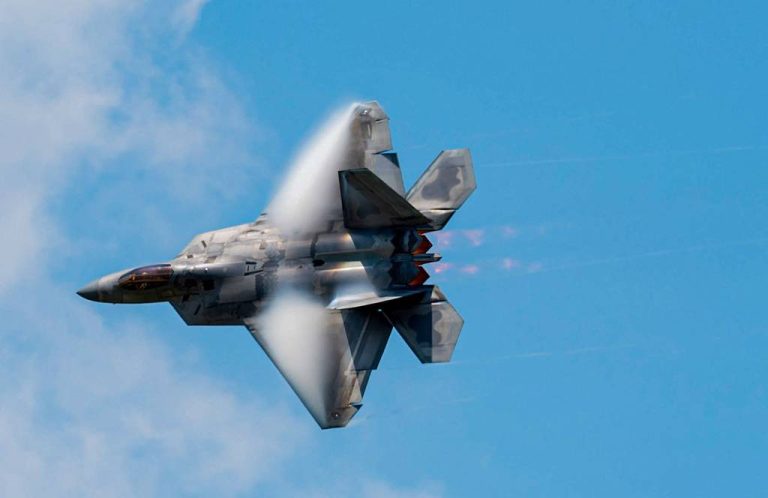
The release of this solicitation formally begins the process of selecting a contractor to build the Air Force’s next advanced fighter system, which will replace the F-22 Raptor. The solicitation came with requirements the Air Force expects companies to include in their NGAD designs.

However, this solicitation and source-selection process does not include the drone wingmen the Air Force refers to as collaborative combat aircraft, the service said.

“The NGAD platform is a vital element of the air dominance family of systems, which represents a generational leap in technology over the F-22, which it will replace,” Air Force Secretary Frank Kendall said in the release. “NGAD will include attributes such as enhanced lethality and the abilities to survive, persist, interoperate and adapt in the air domain, all within highly contested operational environments.”

“No one does this better than the U.S. Air Force, but we will lose that edge if we don’t move forward now,” Kendall added.

The Air Force has repeatedly said its concept for an NGAD platform will not exactly mirror a traditional crewed fighter such as the F-22 or F-35, but will instead be a “family of systems” that incorporates a crewed aircraft component as well as collaborative combat aircraft. Increased sensor capabilities as well as advanced abilities to connect with satellites, other aircraft or other assets could also be part of NGAD’s family of systems.

The Air Force on Thursday said its acquisition strategy for NGAD “will invigorate and broaden the industrial base to deliver rapid and innovative warfighting capabilities.”

As the service develops NGAD, the statement said, it will use lessons learned from other recent acquisition programs, and will use open-architecture standards. The service said this will allow it to take advantage of as much competition as possible throughout NGAD’s life cycle, create a larger and more responsive industrial base, and cut down on maintenance and sustainment costs.

The Air Force said other technical and programmatic details on NGAD are classified “to protect operational and technological advantages.”

Kendall and other service officials said last year they hope to start fielding the crewed component of NGAD by the end of the decade, with collaborative combat aircraft possibly arriving first.

In June 2022, Kendall raised eyebrows when he said at a Heritage Foundation event that the service had “now started on the EMD program to do the development aircraft that we’re going to take into production” — a remark that some took to mean NGAD was already in the engineering and manufacturing development stage.

Kendall later walked back those comments, explaining that he was using the term EMD in a colloquial sense. He said NGAD was still being designed and had not yet gone through the Milestone B review process.

Milestone B marks the point where a program’s technology maturation phase finishes and an acquisition program formally starts in which the service takes its preliminary design and focuses on system integration, manufacturing processes and other details ahead of production.

Air Force spokeswoman Ann Stefanek said in an email to Defense News that when the source-selection process finishes, NGAD will go to the service’s top acquisition official — who is now Andrew Hunter — for the Milestone B decision to award the EMD contract to the winning company.

Boeing, Northrop Grumman and Lockheed Martin have expressed interest in pursuing the Air Force’s NGAD contract.

It’s unclear how much the contact would be worth, but Kendall told lawmakers in an April 2022 hearing that each aircraft could cost “multiple” hundreds of millions of dollars, though he did not get specific about the potential price tag.

Stephen Losey is the air warfare reporter for Defense News. He previously covered leadership and personnel issues at Air Force Times, and the Pentagon, special operations and air warfare at Military.com. He has traveled to the Middle East to cover U.S. Air Force operations.

New Zealand unveils defense budget, with Army in the lead

0

WELLINGTON, New Zealand — New Zealand’s military will receive about NZ$5.3 billion (U.S. $3.3 billion) under the country’s 2023/2024 defense budget, unveiled May 18.

Last year, the New Zealand Defence Force received about NZ$4.9 billion. Inflation to December 2022 was just over 7%, according to Statistics NZ.

New Zealand’s Army has the largest share of funding among the armed services, receiving NZ$1.1 billion. The Army received about NZ$1.1 billion last year.

The government is allocating about NZ$1 billion — compared to NZ$941 million last year — to the Royal New Zealand Air Force.

The Royal New Zealand Navy is set to get about NZ$714 million — an increase from last year’s NZ$667 million.

An additional NZ$574 million will go toward protecting New Zealand’s territorial sovereignty and contribute to regional and global security efforts. And more than NZ$30 million is meant to assist with “the employment of New Zealand’s Armed Forces overseas, and to enable the provision of military capabilities overseas.”

The Government Communications Security Bureau, which specializes in gathering intelligence from electronic communications, is to receive almost NZ$402 million — a 25% increase from last year.

The Defence Ministry is set to get about NZ$1.3 billion for the “procurement of major military capabilities.” This includes NZ$605 million for five new C-130J-30 Hercules airlifters to replace the existing C-130H fleet, which has been in service with the Air Force since 1965, and almost NZ$14 million for P-8A Poseidon maritime patrol aircraft. The third P-8A of four ordered is to arrive in New Zealand on May 19.

The budget also includes more pay for military personnel, with increases ranging from NZ$4,000 to NZ$15,000, beginning July 1 and costing NZ$419 million over four years. Defence Minister Andrew Little said the increase has led to the withdrawal of some resignation letters.

The budget for resource and border protection operations increases from NZ$610 million to NZ$634 million.

Nick Lee-Frampton is the New Zealand correspondent for Defense News.

EDC Bags – with insulated compartments?

0

Hello, everyone. New member here, used to be a big fan of SB. I posed this same question on their forums and got banned without warning or reason, so I am a little hesitant here. I reviewed the rules here just like that site, so I really hope that if there is something wrong with my post that someone please actually tell me. :/

A week ago, I bought a 35 L mealprep backpack from Wolfpak. I would link it here like I did on SB, but I don’t want anyone thinking I am advertising. I wasn’t. I wanted to make it easier for people to see what I was talking about. It is a backpack with two larger compartments, a front section that is insulated, and another, smaller compartment above that. I am NOT affiliated with the company.

I was wondering if anyone knew of a similar backpack? The 35L is a little big for me to carry in and out of work, and I’m not sure if the 25L would be much different. I’m afraid the 9L would be too small. I like being able to pack a little extra plus my snacks/lunch all in one go.. so before I drop another chunk of money on a slightly smaller bag on a brand I’m really not familiar with, I hoped to get some advice. I used to use the maxpedition neatfreak, which I love, but I can’t carry everything in it and Maxpedition doesn’t seem to make what I would like to have (with the insulated compartment).

I don’t understand why the other forum blocked me for asking this same question, worded in roughly the same way. I have had trouble finding backpacks like this out there, but it is so useful. I keep a bug out bag in my car, so this bag’s gear can be a little lighter (and has to be work appropriate, lol). I am hoping that you guys can help me with some advice, I appreciate you taking the time to read this long post. ‍


Why Gen. Allvin is the frontrunner to become Air Force chief of staff

0

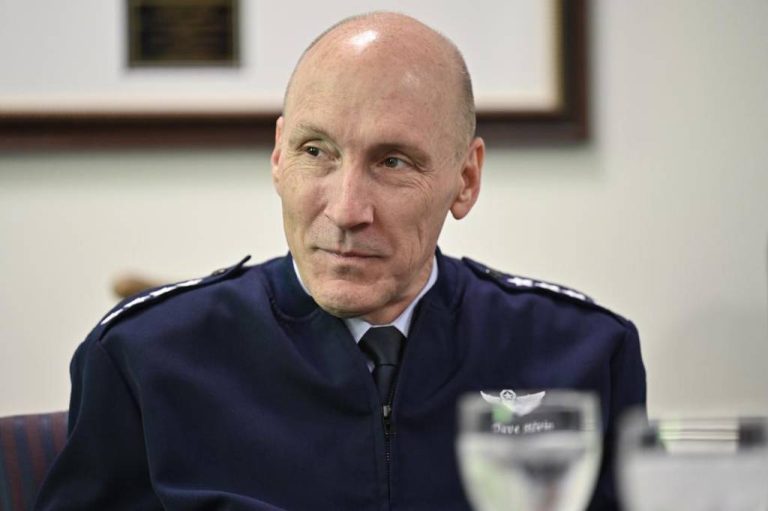
Gen. David Allvin, the Air Force’s No. 2 officer, is the frontrunner to become its next chief of staff, four people familiar with the deliberations told Air Force Times.

Allvin, a career mobility pilot and strategist who has served as Air Force vice chief of staff since November 2020, is the service’s internal pick for chief, according to one current military officer, two retired officers and another expert outside of the Pentagon, all of whom were granted anonymity to discuss the issue.

He is the preferred candidate of Gen. CQ Brown Jr., the Air Force’s current top officer who is expected to earn President Joe Biden’s nomination for chairman of the Joint Chiefs of Staff. The competition has been “very personality-dependent,” based on who Brown wants as his successor, one source said.

Lt. Gen. Jim Slife, the Air Force’s deputy chief of staff for operations and a leader in the special operations community, is in line to become Allvin’s right-hand man as Air Force vice chief of staff, two sources added.

If nominated by Biden and confirmed by the Senate, Allvin and Slife would take over the third-largest branch of the armed forces, a nearly $180 billion portfolio spanning around 689,000 uniformed airmen and civilians. They would inherit a sweeping effort to modernize the service’s inventory of decades-old aircraft, adapt the force to the digital era and encourage young Americans to enlist.

The pair still requires Biden’s approval for the top jobs, sources cautioned.

Their nominations aren’t a “done deal,” said one former military officer with knowledge of the discussions. Another source believes the process is around 80% complete and that the race has been stable for a few months.

U.S. Transportation Command boss Gen. Jacqueline Van Ovost could still be in the running as well if Biden seeks to interview her, according to current and former officers. Sources in and out of the federal government have viewed Van Ovost, who previously oversaw the Air Force’s airlift and tanker fleets, as a top contender for the job. She is one of three female four-star officers in the Defense Department.

Another potential pick, Pacific Air Forces boss Gen. Kenneth Wilsbach, was recently nominated to lead Air Combat Command.

It’s unclear when candidates would interview with Biden or when he would sign off on the nomination.

An Air Force spokesperson said it’s premature to comment on whether Allvin is in line for chief of staff. The National Security Council did not respond to a request for comment.

“Presidents don’t always accept or follow the ‘recommendations’ of the DoD as to who for a particular position, especially a service chief,” said Arnold Punaro, a defense consultant and retired Marine Corps two-star general who served as the staff director on the Senate Armed Services Committee.

For example, Defense Secretary Lloyd Austin could reject the service’s suggestion and put forward his own favorite, as could the president himself, Punaro said.

A retired four-star who spoke on condition of anonymity said Allvin and Austin have worked together but the vice chief spends more time in meetings with Deputy Defense Secretary Kathleen Hicks.

Once senior military nominees are approved by the Pentagon, they head to the White House Military Office and the National Security Council for further scrutiny.

“While the basic process is well-known and well-used and has lots of paperwork, even for the military, each administration and each president has their own approach for the most senior military nominations,” Punaro added. “Once the president makes a decision, then there is a host of SASC and Senate paperwork that has to be completed.”

In short: “There is no such thing as a routine four-star nomination,” he said.

The ‘consummate insider’

A 1986 graduate of the U.S. Air Force Academy, Allvin began his career as a cargo pilot in the C-12F Huron and C-141 Starlifter while stationed in Washington state and Germany.

He changed tack to become a test pilot in 1994, flying the C-17 Globemaster III and C-130J Super Hercules airlifters as the Air Force built its first squadrons of those airframes in the mid-1990s.

Allvin hoped to parlay his test pilot experience into a job as an astronaut, but decided it wasn’t the right time to join NASA and turned to academics instead, a former general told Air Force Times.

He spent two years as a student at the Air Command and Staff College and School of Advanced Airpower Studies at Maxwell Air Force Base, Alabama, and joined Air Mobility Command headquarters as part of the commander’s action group in 1999.

Over the next decade, he would bounce between command positions at pilot training wings nationwide and policy jobs in the Pentagon. All told, Allvin amassed more than 4,600 flight hours in nearly a dozen airframes.

He pinned on his first star in September 2010 and took command of NATO’s aviation training command in Afghanistan, then returned to Air Mobility Command at Scott Air Force Base in Illinois a year later.

There, he led the 618th Air and Space Operations Center — AMC’s hub for tasking tanker and airlift missions around the world — from April 2012 to June 2013. He also served as its vice commander for eight months.

As a general officer, Allvin has risen through multiple strategy and planning roles at the Pentagon, Air Force headquarters, U.S. European Command and the United Nations over the past decade. That experience has positioned him as the “consummate insider,” a stronger advocate for Air Force interests and deft navigator of the federal bureaucracy, sources said.

After Russia illegally annexed Ukraine’s Crimean peninsula in early 2014, Allvin — who became EUCOM’s strategy and policy director in 2015 — drew up a new war plan for the command, the retired four-star said. That landed him a job on the Joint Staff in 2018 as the vice director, then director, of strategy, plans and policy.

“When he was a J-5, he was thinking in a way that’s bigger and different,” said Clint Hinote, who recently retired as the Air Force’s lieutenant general in charge of long-term force planning. “That’s been a hallmark, and I think that is going to be something we need.”

‘The one in the trenches’

Allvin took over as Air Force vice chief of staff in November 2020, where he plays a central role in shaping the service’s budget and managing its acquisition programs.

Sources described him as a well-read, professorial leader with the self-discipline and Washington know-how to make an impact.

He seeks out insight across and outside of the federal government when crafting an opinion on a subject, and is secure enough in his own perspective to respectfully debate others, multiple retired officers said.

“I have had sparring matches with him that I think a lot of senior leaders would have been very off-put by having a three-star challenge them,” Hinote said. “We’ve actually grown closer in our working relationship because of it.”

One of Allvin’s most significant accomplishments as vice chief has come as the leader of the Joint Requirements Oversight Council and other strategic planning groups within the Pentagon, Hinote said. His leadership ensured more Air Force priorities were included in the Defense Department’s recent budget requests than may have been otherwise.

“We got a tremendous amount of victories and plus-ups in the budget,” Hinote said. “There’s so much that is different than what we had before, and I think he really deserves a lot of credit for that because he’s the one in the trenches every meeting, trying to make the case for the Air Force.”

While Allvin has a wealth of Pentagon experience, he has less operational command experience than predecessors like Brown and Gen. David Goldfein. That may concern some observers, but Hinote thinks there are ways to solve the issue.

“I actually think you can use social media a little bit differently, and you could have a lot of town halls and listening sessions” to bring in the perspectives of rank-and-file airmen, Hinote said.

Allvin has sought out those perspectives.

He has spearheaded a new group to rethink recruiting policies and professional development initiatives to help airmen pursue nontraditional careers in the service, and mentors generals and other staffers that are earlier on in their careers.

His version of the annual “Vice Chief’s Challenge” invites airmen to submit their ideas on agile combat employment, the Air Force’s term for deploying quickly and without a large logistics footprint to respond to threats more easily.

He has cultivated a close relationship with Air Force Secretary Frank Kendall and works well with Slife, a similarly strategic thinker who looks to improve airpower overall rather than push parochial interests, sources said.

Slife, a former helicopter and drone pilot, arrived at the Pentagon in December after leading Air Force Special Operations Command for more than three years and serving as the vice commander of U.S. Special Operations Command.

“He’s not very patient. He’s not willing to look at things and shrug his shoulders,” one retired general said of Slife. “I think they’ll probably be, kind of, [Allvin] as the idea guy … and then Slife as the executor.”

It’s the first time in more than a decade that neither the Air Force chief of staff or its vice chief hail from a fighter background.

Gen. Norton Schwartz, a mobility pilot, and vice chief Gen. William Fraser, a bomber pilot, served as the Air Force’s top two leaders for about a year together in 2008-2009. Schwartz overlapped with Gen. Larry Spencer, a finance officer, for less than a month in 2012 as well.

“Some will say it with a sense of, ‘This could be really good for the Air Force because you’re not having the groupthink problem.’ And then there’ll be some people that say, ‘Oh, my God, the Air Force is going to pot. They’re not even letting combat pilots lead it anymore,’” Hinote said.

He believes the Air Force’s plan to divest airframes like the older F-15 Eagle models and the A-10 attack plane, and to buy fewer F-35 Joint Strike Fighters than initially planned, while investing in more advanced drones and communications technology would happen regardless of what top brass previously flew.

Another source pointed out that Lt. Gen. Scott Pleus, a career fighter pilot currently serving as deputy commander of U.S. Forces in Korea, is nominated to move to the Pentagon as the Air Staff director to ensure that perspective isn’t lost.

As the new face of the Air Force, Allvin will need “sharp elbows” to fight for the service’s interests in upcoming budget and strategy debates within the Pentagon and with Congress, and convince the public of its value, one retired officer said.

The Air Force is pushing Congress to grant its $185 billion budget request for fiscal 2024 and green-light a sweeping plan to retire hundreds of older aircraft that leaders say will be ineffective in future wars.

If Allvin is selected, he will inherit “a lot of the same problems” that Brown has faced, the retired four-star said, “which are primarily how to convince the system that, after 30 years of underfunding the Air Force, it’s going to take some fairly drastic measures to let them catch up with the efforts China has made.”

The new chief will also play a key role in reversing the Air Force’s struggle to recruit and retain airmen — particularly pilots, maintainers and cyber operators.

After nearly 40 years in the military, Allvin believes he has more to give to solve those problems.

“He really wants the job,” the retired four-star said. “He thinks he can do a good job at it and he thinks there are things that need to be done.

“He thinks he’s prepared, and his family is prepared, to go through this,” he added. “And that’s important.”

Rachel Cohen joined Air Force Times as senior reporter in March 2021. Her work has appeared in Air Force Magazine, Inside Defense, Inside Health Policy, the Frederick News-Post (Md.), the Washington Post, and others.

Supreme Court refuses to block assault weapons bans in Illinois

0


  1. stg58
    Monkey+++
    Founding Member


  2. BTPost

    BTPost
    Stumpy Old Fart,Deadman Walking, Snow Monkey
    Moderator

    The Seventh Federal Court of Appeals has a hearing on the merits of this case next month, so it is not time for SCOTUS to intervene, yet… but if the Seventh doesn’t follow the Buern Precedent, then SCOTUS has already stated, they will “Slap Down any more CASES THAT DO NOT FOLLOW Buen”, period


survivalmonkey SSL seal


survivalmonkey.com warrant canary

How to use hemostatic agents

0

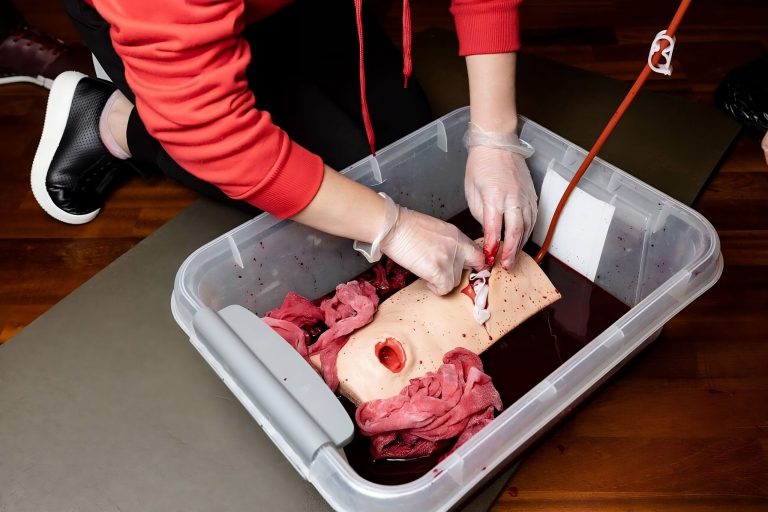
Achieving hemostasis, also known as rapidly stopping bleeding, is a crucial skill that the survival medic must master. In survival situations, bleeding can stem from a range of sources, including falls on rough terrain or confrontations with hostile groups. If bleeding wounds are not treated effectively, it can result in avoidable fatalities among survivors.

Blood clothing basics

Blood clotting, or coagulation, is a complex process that involves multiple steps and various components of the blood. The primary function of blood clotting is to prevent excessive bleeding after an injury, but it can also lead to the formation of clots in the blood vessels, which can cause serious health problems.

When a blood vessel is damaged, the body responds by constricting the vessel to reduce blood flow to the site of the injury. This vasoconstriction is followed by the activation of platelets, which are small cells in the blood that help to form clots. Platelets adhere to the site of the injury and release certain chemicals that attract more platelets to the area. These platelets then begin to aggregate and form a temporary plug to stop the bleeding.

The next step in the clotting process is the activation of the coagulation cascade. This involves a series of chemical reactions which convert a protein called fibrinogen into fibrin, a stringy protein that forms a mesh-like network over the platelet plug. The fibrin network reinforces the platelet plug and forms a stable clot that seals the injured blood vessel.

The coagulation cascade involves many different proteins and factors that work together to ensure that the clotting process is effective and controlled. Some of the most important proteins involved in the cascade include prothrombin, thrombin, and fibrinogen.

Prothrombin is a protein that is produced in the liver and circulates in the blood. When the coagulation cascade is activated, prothrombin is converted into thrombin, an enzyme that plays a key role in converting fibrinogen into fibrin.

Fibrinogen is a protein that is also produced in the liver and travels in the blood. When the coagulation cascade is triggered, fibrinogen is cleaved by thrombin to form fibrin.

In addition to platelets and the coagulation cascade, the clotting process also involves the action of several natural anticoagulants that help to prevent excessive clotting. These include antithrombin III, protein C, and protein S.

Stop the bleeding to save lives

It was estimated that close to 25 percent of combat deaths in military conflicts could have been survivable with prompt and appropriate actions. A skilled survival medic equipped with the right knowledge, training, and tools can save lives in such situations. For instance, a caregiver equipped with a tourniquet is more likely to be successful than one without.

Hemorrhage control agents, also known as “hemostatic” agents, are available commercially and can effectively stop heavy bleeding. However, the ideal hemostatic agent should work quickly, be portable, have few complications, not interfere with tissue healing, and be reasonably priced. Unfortunately, the most effective dressings, such as QuikClot, Celox, and ChitoSam, are costly, making it challenging for the average person to stockpile enough to manage multiple bleeding wounds. Prices can vary depending on the specific product and the quantity purchased, but they can range from around $20 to $50 per unit.

However, it is important to note that these products can be highly effective at stopping bleeding and could potentially save a life in an emergency situation. The cost of these products may be worth the investment for individuals who may face potential trauma scenarios or for those who live in remote areas where medical care may not be readily available.

But in austere settings where commercial supplies are scarce, improvisation is crucial.

Direct pressure on the wound with both hands and the full weight of the body may be effective, but what if it isn’t?

In an environment where resources are scarce, the solution may lie in certain plants that are known for their blood-clotting properties. It is essential to either cultivate them in a medicinal garden or know where they can be found in the wild. While some of these items lack solid scientific proof of their effectiveness, they may be the only option when commercial materials are unavailable.

Plant-based blood clotters

Cayenne Pepper

Cayenne pepper, or Capsicum annuum, as many preppers learned, is not just a spice for their food, and it is also thought to have coagulating properties for mild bleeding and some antibacterial effects due to its capsaicin content.

To achieve hemostasis, a significant amount of potent cayenne pepper powder should be used. Apply the powder directly to the wound, cover it with gauze or other cloth, and apply pressure for several minutes. Repeat the process if necessary. While some people may be concerned about cayenne pepper causing pain, I can attest that the burning sensation is usually minimal.

Yarrow

Yarrow, also known as Achillea millefolium, was used in ancient times for its ability to stop the flow of blood from wounds. It was so highly regarded for this purpose that it was referred to as “herba militaris,” and the Greek hero Achilles was believed to have carried it during the Trojan War.

Yarrow is found almost everywhere in the Northern Hemisphere, from sea level to altitudes of more than 10,000 feet, and is commonly used as a powder made from dried leaves and flowers to stop bleeding. However, fresh plant material in a poultice can also be used to achieve hemostasis. To use yarrow, cover the wound with the poultice and apply pressure while elevating the affected limb if necessary.

Tea

Black or green tea, also known as Camellia sinensis, can be used for dental bleeding following an extraction. Teas contain tannins, which can cause blood vessels to constrict and help the blood to clot. They may also have antiseptic properties. Caffeinated teas are thought to be more effective.

To use tea for hemostasis, take a tea bag that has been steeped and cooled, wrap it in thin gauze, and place it on the bleeding area with pressure. If the bleeding is from a tooth extraction, ask the person to bite down on the tea bag. If the bleeding is inside the mouth, place the tea bag against the bleeding area and apply pressure from outside the mouth with it closed.

I’ve also used tea compresses with mild external cuts on the skin, and they do a fairly decent job. Press a dry tea bag against the wound, cover it with a cloth, and apply pressure.

Witch hazel

Witch hazel, a North American shrub, has an astringent effect when distilled, which tightens the skin, constricts small blood vessels, and promotes clotting. Apply a small amount of pure witch hazel to a compress and press it onto the wound. Witch hazel can be found in most drugstores and you can easily order it online.

Other plants, such as plantain, rose, and horsetail, can also have an astringent effect. However, some people may be allergic to certain plants, so it is important to monitor closely for signs of an allergic reaction.

svmd longbanner1

Blood clotters which are not plant-based

Contrary to popular belief, the main ingredients in expensive commercial blood-clotting products are not plant-based. In fact, they are made from two surprising sources: clay and the shells of shrimp and other crustaceans. These non-plant substances have been shown to effectively stop bleeding in various medical settings.

Kaolin Clay

QuikClot, the popular commercial hemostatic agent, owes its effectiveness to kaolin clay, which is the main ingredient. When kaolin comes in contact with blood, it activates Factor XII, a crucial element in the clotting process, and immediately stops bleeding. This has been scientifically proven.

Kaolin clay can be purchased commercially in powder form and can be applied directly to a bleeding wound or on a dressing. Cotton gauze or cloth can also be dipped in water, covered in kaolin powder, and allowed to dry to create improvised kaolin dressings. For kaolin to have a full effect you need to apply direct pressure on the area for several minutes.

One important note is that kaolin does not cause burns, unlike its predecessor, zeolite, which is why QuikClot made the switch to kaolin.

Chitosan – A Natural Blood-Clotting Agent

Chitosan is a natural component of the exoskeletons of crustaceans such as shrimp. It is processed to prevent reactions in those allergic to shellfish and is highly effective as a blood-clotting agent. It can be found in products like ChitoSam and Celox.

When chitosan comes into contact with blood, it bonds with it and forms a gel plug that acts as a clot. This is beneficial because, unlike kaolin, chitosan does not use up the body’s clotting factors, which is important for those who may have a deficiency of these substances.

Chitosan can be purchased in powder form, and to make hemostatic dressings, moisten gauze pads with vinegar and dip both sides into a bowl of the powder. One can also use a dehydrator or oven on low heat to make their own dressings.

Tranexamic acid

Tranexamic acid is a medication that works by preventing the breakdown of blood clots, thus helping to stop bleeding. It is commonly used in medical settings, such as in surgeries or for treating heavy menstrual bleeding, and is also available in oral and topical forms for home use.

Tranexamic acid is generally considered safe for use in most people, but like any medication, it may have side effects and interactions with other drugs, so it is important to consult with a healthcare provider before using it.

Ice

Ice can help in reducing swelling and allowing a clot to form quickly in minor bleeds. It constricts small blood vessels, similar to some astringent plants. To use ice to stop minor bleeds you will need to wrap it  in a clean (preferably sterile), dry cloth and apply only gentle pressure on the wound, thus avoiding traumatizing the skin.

Sugar

sugar to stop the bleeding

While not a typical choice, granulated sugar can actually help to stop bleeding in a pinch. Sugar crystals can help to promote clotting and also have antibacterial properties

Sugar has been used as a home remedy to control bleeding for many years. When applied to a wound, sugar can help form a protective layer that can promote the formation of a clot. Sugar is also believed to be able to draw moisture out of the wound, creating an environment that is less favorable for bacterial growth.

To use sugar as a hemostatic agent, clean the wound thoroughly and then apply a small amount of granulated sugar directly to the bleeding area. The sugar should be kept in place by applying pressure to the wound with a clean, dry cloth or bandage.

Antiperspirants

Some antiperspirants contain aluminum chloride, an astringent that might constrict small blood vessels. In a scientific study, even low concentrations (as low as 5%) of aluminum chloride were deemed effective in promoting clotting. Aluminum sulfate, which is found in styptic pencils used to treat bleeding from shaving cuts, is a related product.

Styptic pencil

A styptic pencil is a small, rod-shaped tool that is used to stop bleeding from small cuts and nicks. It contains an astringent ingredient, such as aluminum sulfate or potassium alum, that causes the blood vessels to constrict and stop bleeding.

To use a styptic pencil, wet the tip of the pencil and then apply it to the bleeding area. Apply gentle pressure to the wound until the bleeding stops. Styptic pencils are commonly used for shaving nicks and can be found in most drugstores or online.

Petroleum jelly

For shallow cuts, petroleum jelly can be an option to slow down the bleeding. It is commonly used by boxing managers to treat their fighter’s injuries. Apply a layer on the wound with direct pressure. When the bleeding stops, remove the jelly and clean the wound.

Tampons and pads

Tampons can be an option for controlling bleeding in certain situations, such as nosebleeds or other minor bleeding. However, it is crucial to keep in mind that they should never be used as a substitute for professional medical care, especially in cases of severe bleeding or trauma.

homedoctorb5It’s important to use only sterile tampons for this purpose to avoid introducing bacteria into the wound, which could cause infection. Tampons are designed to absorb menstrual blood and can absorb up to about 15 grams of blood. Therefore, they are useful in managing small amounts of bleeding.

But, if the bleeding continues or is more severe, it is essential to seek professional medical attention immediately. Delaying medical care could lead to more significant health complications, including shock, organ failure, or even death.

In addition to tampons, pads can also be an option for controlling minor bleeding. They are designed to be worn externally and can absorb blood from wounds. Like tampons, it’s crucial to use only sterile pads to avoid introducing bacteria into the wound. Pads can be an option for managing small amounts of bleeding until professional medical care is available.

It’s important to remember that these options should be used with caution and only for minor bleeding. In cases of severe bleeding, it’s crucial to seek immediate medical attention. Delaying medical care could lead to more significant health complications, and in severe cases, it could be life-threatening.

Concluding

Although improvisations such as sugar, styptic pencils, kaolin, and other items can help control minor bleeding, they do not match up to the efficacy of high-tech commercially-made hemostatic dressings. Products like QuikClot, Celox, and ChitoSam undergo standardized production processes and assure sterility, making them the ideal choice for treating moderate to severe bleeding.

However, in times of emergency or when commercial products are not readily available, improvisations can still save lives. It is crucial to have some commercial hemostatic dressings stored in your medical kit, especially in off-the-grid situations where the risk of infection is higher. Nevertheless, it is better to use improvisations than nothing at all when no other options are available.

You may also want to check this:

Knowledge to survive any medical crisis situation during a major disaster

Surviving drought – How to obtain water from air!

A few survival foods everyone should learn how to make

The vital self-sufficiency lessons our great grand-fathers left us

Uncle Evans: A Modern Political Dystopian Novella Update 5/17/2023

0

Texas Hill Country. June.

Kyle sat in his bed with his laptop open. The morning sun shone in through the window. Dust motes drifted in the light, and a video played on the laptop.

“The nation remains shocked and devastated after the brutal, politically motivated executions of peaceful protestors in North Carolina.” The anchorman spoke earnestly into the camera. The video kept playing, but it jumped to another newsman, on another channel, in another city. This one said, “Shocked and devastated, that is how our nation feels as it mourns the peaceful activists brutally executed in North Carolina.” Another jump, this time to an anchorwoman in San Diego. “The brutal, politically motivated execution of peaceful activists in North Carolina has left our nation shocked and devastated.” Another jump, this time to Denver. “All Coloradoans remain shocked and devastated after the brutal and politically motivated executions of peaceful activists in North Carolina.”

The video Kyle watched was a collection of news footage taken from local stations across the country, all edited together into one long set. There were different commentators in different cities, but they all said the same thing practically verbatim. Kyle took a deep sigh. In this digital age, it was not as if it wouldn’t be noticed that all the news personalities were saying the exact same thing with the exact same words. KOMO 5 News in Seattle was only a click away from Fox 10 in Phoenix. Kyle didn’t know what the word Orwellian meant, but he knew wrong when he saw it. Disgusted and upset, Kyle kept watching.

Boston: “These peaceful protestors were shot executions style, likely by right-wing neo-fascists.”

Salt Lake City: “It was likely right-wing neo-fascists who shot the peaceful protestors, execution style.”

Tampa: “It was here outside this otherwise tranquil suburban neighborhood that the peaceful protestors were shot, execution style. Authorities suspect ultra-right-wing neo-fascism to be linked to these brutal crimes.”

Cleveland: “The peaceful protestors were outside this suburban neighborhood when they were shot, execution style. The murderers are believed to have ties to right-wing neo-fascism.”

The edited video kept going, kept jumping around to different commentators, on different channels, in different cities, all saying slight variations of the same thing.

“These executions of peaceful political activists are truly a threat to our democracy.”

“Political leaders around the country say that these political executions truly threaten our democracy.”

“Jane, I feel that these executions of peaceful political activists are a true threat to our democracy.”

“When peaceful political activists are executed in the streets, well Dan, I think we all agree that that is truly a threat to our democracy.”

“It is all so tiresome,” Kyle muttered aloud, and he closed his laptop. He could smell his uncle cooking breakfast downstairs. He went through the morning routine of getting up and getting moving. On the way downstairs he took a detour into his uncle’s office. He admired the weapons in the ready rack for a moment, but what he really came in to look at was the decorated paddle hanging on the wall, the one that addressed Uncle Evans as, “Frankenstein.” He looked it over for some clue as to how that nickname came to be. He found none. Disappointed, but only a little, he headed down for breakfast. It was bacon and eggs. Again. And again, his uncle sat at the table sipping his chai tea. The scene didn’t feel repetitive. It felt comfortable. And it felt distant from the chaos and violence taking place around the country and on the screens of electronic devices. Kyle sat down with a plate.

“I wanna show you something,” he said to his uncle. He pulled out his phone and played the same video for his uncle. His uncle didn’t seem moved at all.

“Yeah, that’s been going on for a while now. Just a few big companies own all those local affiliates. They feed them all the same talking points.”

“It is creepy,” Kyle said, and immediately after saying that he regretted his word choice. “Creepy,” made him sound like a kid, and no 16-year-old wants to sound like a kid, especially to his wise, old, combat-hardened uncle.

Evans sipped at his chai tea and said, “You want creepy? When you wake up tomorrow, see if that video is still up or if it’s been pulled off the internet.” He set down the glass cup and added a heaping spoonful of raw sugar to the tea. “But we’ve got more important problems to solve. Think you can get the trailer hooked back up to the truck? We need to go down the road and pick up a skid steer from one of our neighbors. I’ve got some yard work in the back I need to get done.”

“Sure,” Kyle said.

“Think you can do it on your own? Remember how I showed you to do it?”

“Yeah, I guess. Maybe.”

“Well, give it your best shot. I’ll get the dishes and then meet you outside.” Kyle finished his breakfast, took the truck keys off the hook on the wall, then went to work connecting the truck to the trailer. Evans went to work on the dishes and watched his nephew through the kitchen window. He was proud of his nephew. The city kid’s handling of the truck and trailer wasn’t skillful, but he’d get there. It was just a matter of practice, and with practice would come confidence. And they had all summer. Maybe more, if his sister and Keith moved out here like they planned.

Evans moved slowly as he cleared away the dishes. His mind was on the “executions” of last night. The PVD was better armed, better equipped, and better organized than ever before. Their efforts had been coordinated with the federal authorities. That was obvious to anybody willing to pay attention. Those efforts were further coordinated with the media and with the tech platforms that killed all the national feeds on order. The end result was a bunch of Americans lying dead on some street, and nobody would know for sure who they were. And the “executioners” were just middle-class tax-paying Americans who wound up on the wrong side of the revolution. When they went out to defend their homes, they had no idea that they would be the villains in this narrative. They didn’t understand the nation was different now. Their world was different now. They were the bad guys. It didn’t matter how much they paid in taxes, or how many soccer games they coached, or when and how and where they might have served their nation in the past. It didn’t matter that the PVD fired first. It didn’t matter that they were just trying to defend their homes and families. They were the villains now. Cut and dried. Simple as that.

Evans kept a small radio in the kitchen, tuned to an oldies station. Not what somebody Kyle’s age would consider oldies, but oldies to an already old man like Evans. A song came on, Silver Springs by Fleetwood Mac. Music can stir up emotions, and this song certainly stirred emotions in Evans. None of them were good. The muscles in his face tightened and his jaw set. He ground his teeth. Without being conscious of his actions, Evans reached over and shut off the radio and then went outside to help Kyle. He left the sink full of dirty dishes, something quite out of character.

“We’re not going far, just towards the back end of the development,” Evan said. Kyle nodded. They drove downhill from Evans’ place, away from the entrance to the community. They dipped down, went up another hill, then down the hill and up another. There was no shortage of hills. They rose and fell in all directions. Each hill had three, maybe four homes on it. Kyle had the window down. It was early enough in the morning that the air was still cool.

“The houses were built closer together near the front of the development. Out here, the plots of land got bigger and the houses farther apart,” Evans explained. “Out in the very back of the development, they didn’t even build houses. They just sold land.”

“What are we doing again?” Kyle asked.

“Our neighbor George is building a house out here. We’re going to borrow his skid steer. I need to do some digging.”

They reached the top of the next hill and the paved road ended at a dirt track. The dirt track ended at the decent beginnings of a house that would someday be best described as palatial. The foundation was laid and suggested a home of 6,000 square feet or more. Two swimming pools were underway, along with a pair of tennis courts. Stacks of building materials were scattered about the site, as were various pieces of machinery and big steel gang boxes for tools. Nestled close against this aspiring mansion was a rather uninspiring camping trailer. A lean-to had been built against the trailer and it housed a couple of old motorcycles in various states of disrepair. The door to the camper opened and a man with a rifle came out.

“George, put that fucking rifle away,” Evans yelled from the truck.

The man with the rifle squinted. When he recognized Uncle Evans he smiled, set the rifle back in his camper, and gestured obscenely with both hands.

“Park it here for now,” Uncle Evans said, and he climbed out of the truck.

“It is good to see you today,” the man who had the rifle said, grinning. “But I think your calendar is wrong. Asshole day is tomorrow my friend.”

Evans smiled. “George, this is my nephew Kyle. He’s helping me out. Kyle, this is George Jimenez.”

Kyle reached out and shook George’s hand. Evans nodded in approvement. George looked to be in his late twenties and had dark hair, grey eyes, and skin that might be a little on the pale side if not for the Texas sun. He stood maybe 5′ 9”. His face was kind. His smile was easy.

“George is building a house for his family.”

“My extended family, not my own family,” George corrected. “And I’m not really building. I oversee the building. I do the scheduling, the contractors…” George waved a hand towards the future mansion. “But it is slowly going. These days, it is hard to find the proper materials. When you do, they are not cheap. Slow going.”

“Money should be no object for a rich man like you.”

“I am not rich. The family and the business are rich. I am just like you; another poor, dumb-shit Texan.”

Evans turned to Kyle, “Don’t let him bullshit you. George’s family owns their own construction company back in Columbia. They’re loaded. The part about him being a Texas dumb-shit is true though. He went to school here in the states, but only because his dad bought his way in.”

“This is true,” George said. “But now I am here in Texas. The family wanted a house in Texas so, I’ll get the house built. But it is slow going as I said. No proper materials. No proper workers. When I find the proper workers, they are all too busy. Very slow.”

“Why do you want a house in Texas?” Kyle asked.

“To tell you the truth, the family is very rich, but this can be a bad thing. Colombia can be a dangerous country. Not like before, with the FARC and the cartels, and the Cubans coming in too. But who can say what the future will hold? The family wanted a place in Texas to go to, to be safe. And to protect the money. Real estate in the United States is always safe. Only these days…” George looked at Evans. “Only these days the United States maybe not so safe. Maybe you need to get a house in Colombia you can go to.”

“I’m not buying any house your family built.”

George grinned. “We’ll build one especially for you. It will fall down right on your stupid head.”

Evans grinned too and Kyle found himself grinning at the two older men’s banter.

George addressed Kyle next. “But your uncle, he should not go to Colombia. His Spanish is not so good.”

“My Spanish is better than your Spanish,” Evans protested.

“Your uncle is wrong,” George said to Kyle. “He doesn’t speak Spanish. He speaks Mexican. Or Texas-Mexican. I don’t know which, but it is not good.”

“It was good enough the two years I lived in Mexico,” Evans protested. George waved a hand dismissively.

“You didn’t live in Mexico. You lived on a base with the other Americans.”

“I didn’t know you lived in Mexico,” Kyle said to his uncle. “I thought you were in the Middle East.”

“I was everywhere,” Uncle Evans said. “Uncle Sam can send you a lot of places in thirty years.”

George said, “Too bad they didn’t send you to into the real Mexico. Maybe somebody would have kidnapped you. Although they’d be pretty upset when they found out you were just another dumb-ass Texan with no money. They’d probably pay you to go away.”

They laughed. George spoke directly to Kyle again. “I make fun, but I like talking to your uncle. We can insult each other and he does not get upset. With some Americans, I cannot do this. They are very sensitive.”

“What the hell was the rifle for?” Evans asked.

George cursed in Spanish and then said. “Yes. That bitch dog was out here last night. Running loose. No leash. Barking. Dog tried to bite me. Lori, she came up on her little electric car. She screamed at me. I told her, ‘your dog comes here again, I’m going to shoot it.’ That made her even madder. She said she would call the police. She said she would call immigration.”

“Great,” Uncle Evans said. George smiled and waved a hand again dismissively.

“Joke is on her. I have a US passport. Dual citizen. She can call the police as much as she wants.”

“I’d still be careful,” Evans said. “If she calls the cops, she’ll probably tell them you have a gun or you tried to rape her or something. She’s vindictive. She called the cops and the fire department on us the other day.”

“Yes, John told me about that. She is vindictive,” George agreed. “So, you ready to borrow my machine?”

“Yes. But before we load it up, what’s going on with the bikes?” Evans asked. He pointed to the lean-to.

“Yes,” George said, and he nearly bounced with excitement. “John welded up some cargo racks for the back. Custom. So, I’m one step closer. I found a couple of old Bultaco’s down at Elmendorf that would be good for parts. John was going to take me down to get them, but his truck is not running.”

“John needs to fix that Dodge’s driveshaft,” Evans said. Then he explained, “George has got some grand plans. He’s going to take that old motorcycle and tour all of South America.”

“It’s a Bultaco. Spanish. The best. While the house gets built I’m customizing the bike and saving up money for the trip. Make this Bultaco a little better here. Make it a little bit better there. Then…” George made a slipping gesture with his hand. “Then take a year and travel around South America. See things. Eat. Drink. Fall in love. Fall out of love. Maybe take two years. Then, time to get serious and into the family business.”

“Sounds like fun,” Kyle said.

“Sounds like an adventure. Just be careful. South America can be dangerous,” Evans added.

“Everywhere is dangerous. South America is dangerous. Mexico is dangerous. But the United States is dangerous now. Texas is dangerous too. Dangerous and getting more dangerous. It is dangerous because most of you Americans don’t know how good you have it. You took it all for granted.” George pointed at Kyle. “That’s why I like men like your uncle. The veteran men. They’ve traveled all over the world. They know how bad things can be. They know how good things can be too. They don’t take these things for granted.”

“What about you, Kyle? You up for a little adventure?” Uncle Evans asked. “You ever ridden a motorcycle?”

Kyle looked from his uncle to George, to the motorcycle under the lean-to. He wasn’t quite sure if his uncle was serious. He said, “No. I’ve never driven a motorcycle.” The older men laughed.

“First lesson, you don’t drive motorcycles.”

“I meant ride,” Kyle said. Evans turned to George.

“Doesn’t look like you’re doing much building today. You want to give a motorcycle class? Teach this kid how to ride.”

George smiled. “How much you paying?”

“How about I don’t beat your ass in front of my nephew?”

George smiled. “You’re a powerful salesman, for a Texan.”]

“Make sure he wears a helmet and don’t go too damned fast,” Evans said out the truck window. He had the skid steer loaded onto the trailer. George and Kyle stood on either side of the Bultaco. Both waved. Kyle was all smiles. He looked like he was in heaven. That made Evans smile. He drove back to his place with the skid steer and left the other two to the lesson. He had a hole to dig.

When Uncle Evans came back a couple of hours later, Kyle and George were sitting on old crates in front of the camper, drinking cans of pop. The Bultaco stood on its kickstand nearby. Kyle and George were both covered with dust, but Kyle’s big smile shone brightly.

“He’s a natural,” George said. “Get him a motorcycle of his own. When I go down south he can come along.”

“Good,” Evans said. Then he addressed Kyle, “Sounds like you know how to ride now. You have fun?” His nephew’s smile seemed to grow by a foot at each end.

“It was great. It was. I want a bike of my own.”

“Well, you better clear that with your parents first. I’m not getting you a motorcycle without your mom’s say so. She’d probably kill me just for these lessons today. That reminds me. You better call her tonight.”

George gestured towards the truck. The skid steer wasn’t on the trailer. “You didn’t get all your holes dug?”

“I got one more to dig,” Evans answered. “Let me hang onto it for another day or two.”

“No problem.”

“And thanks for the riding lessons.” Uncle Evans said. He turned to his nephew, but Kyle didn’t need any prompting.

“Yeah, thanks for the time on the bike,” he echoed.

When they got back to the house, Kyle saw the pile of scrap metal by the barn was gone and so was the storage tank. The stack of rusting barbed wire bales was still there.

“Where’d the tank go?” Kyle asked his uncle.

“Don’t worry about it,” Evans said. “Call your mom. I’ll make us some dinner.”

“You want to watch the riots after?”

“Sure, if they are on. But I need to take care of something in the barn first. I’ll meet you up in the office after I’m done.”

The barn wasn’t really a barn. It was a detached garage full of tools, boxes, random parts… the typical American clutter. It smelled of sawdust and machine oil. Evans unfolded a stepstool and took a cardboard box off a plywood shelf mounted high on the wall. He set the box on a workbench between a drill press and a belt sander. He opened the box and rooted through its contents. He found the first thing he was looking for right away. It looked like a big baby’s bib, only it was camouflage and covered with various pouches. He set that aside then dug deeper in the box and found the other thing he was looking for. He took out what looked like a big metal flashlight and set it next to the camouflage bib. The flashlight-thing was well used. Its surface was covered with small dents, and scratches, and worn down to bare metal. A yellow sticker on the flashlight-thing was almost completely rubbed away but two words were still readable, “Laser Radiation.”

Evans put the box back on its shelf, then he opened a cabinet beneath the workbench. Inside were two five-gallon metal containers labeled, “Transmission Fluid.” What he needed was behind those containers.

Evans spent a long time looking at those two metal buckets. When he was ready, he gently, ever so gently, moved the containers out of the way. He moved them one at a time, more gingerly than if they were eggs. With the transmission fluid out of the way, he took a mechanical tower out of the cabinet and set it beside the bib and flashlight-thing. The tower was painted the same color as desert sand. That done, he sat down, took a deep breath, and carefully considered the buckets of transmission fluid again.

While Evans worked in the barn, Kyle went back up into the office and turned on the computer. The monitors came to life with their electric glows. Kyle wanted to check the streams, but first, he wanted to know more about what happened in Raleigh the night before. His fingers typed away. The information the internet issued forth was not reassuring.

First off, the incident the night before was uniformly referred to as the Raleigh-Durham Executions. They weren’t called the Raleigh Murders, or the Raleigh Shooting, or the Peaceful Raleigh Protest that happened to go a little sideways. They were called the Raleigh-Durham Executions by each and every mainstream outlet Kyle checked. And there was no use of the qualifiers “alleged” or “allegedly.” These were executions. Period. End of Sentence. Consensus was achieved. The science was settled. The debate was over. “Their uniformity is a dead giveaway,” he could hear his uncle saying. Kyle searched further.

Who were the Raleigh Executioners? That was easy enough to find out. Their booking photos were all over the internet; middle-class, middle-aged faces. Men and women. Sad and scared. Shocked and disbelieving. They looked like ordinary, law-abiding people who just learned out of the blue that they’d been sentenced to death. And they had. Their names and ages were published along with their booking photos, but there was more. Their addresses were also put out on the internet and not just by the fringe elements on the web, but by the big three-letter media outlets. Their addresses were published. The names of their employers were published. The names and photos of their spouses. The names of their children and where they went to school. What banks they used. Even their IRS records were accessible with just a few clicks and keystrokes.

What could not be found on the internet was who the executed were. The media outlets that were so forthcoming, so detailed about the identities of the villains were vague about who the victims were. Words like, “multiple victims,” or “many victims” were used. But a specific number of victims was never given. Kyle watched an exchange from a press conference earlier that day. A blue-suited government lawyer spoke to a crowd of reporters.

“One of the executioners we arrested is Thomas Ramon. Mr. Ramon works at Greenhills Middle School where he teaches science and coaches girls soccer. He has two daughters, Tracy and Gia, and they both attend the same school. From electronic devices we seized at his residence, we were able to link Mr. Ramon to anti-establishment and conspiracy-theory internet movements, as well as fascist right-wing white supremacist movements that communicate via the dark web.

“The weapon Mr. Ramos used to commit these fascistic executions was purchased at Superior Pawn, located at 612 Wharf Avenue, Raleigh Durham. The owner of Superior Pawn is Crispin Hoskins. He leases the property from Gilman Commercial Equities and Investments. Their contact information will be made available on our webpage. He also took out several business loans from a variety of lending institutions. We will post their information on the website as well.

“A stockpile of arms, ammunition, food and anti-government literature was seized from Mr. Ramon’s house. Also seized were a powerful telescope and two sets of binoculars that could have been used to spy on government facilities. We believe he was able to purchase and stockpile these war supplies through the extra money he made coaching and the money his wife Joanne made working at Shade Hill Mortgage and Trust located in Greenhill North Carolina. We believe he also hid some of his income to avoid taxes. In the interest of transparency, and in coordination with the IRS, we’ve made his tax records available to the public.”

“Can you tell us how many victims there were?” A reporter asked.

“I’m sorry, but we don’t comment on active investigations,” The spokesman with a straight face.

Kyle drifted through the internet, moving away from the Raleigh-Durham Executions and toward tonight’s activities. Most of the major cities held candlelight vigils for the nameless and numberless victims of the Raleigh-Durham Executions. Streamers moved through the crowds and past the candle arrangements. Kyle thought those all looked too choreographed, too slick, and the logistics too carefully planned to be authentic. Kyle surged some more. The sun was setting on the West Coast. Kyle found a live-stream out of Portland. Some protestor-looking kids had overdosed on the street. The paramedics were trying to get to the kids, but more protestors were shouting them down and chasing them off. They threw trash. A barefoot woman with a fistful of crystals and prayer beads sat over one of the overdose victims, trying to open his charkas and release the negative energy. The kid’s lips were blue. Somebody heaved a chunk of concrete into the paramedic’s ambulance. The windshield cracked and the ambulance drove away.

“Anything happening,” Uncle Evans asked. He came into the room with a box of stuff and set it down next to the computer desk. There was a slight chemical smell in the air. Kyle felt the inside of his nostrils burn. He sneezed. Then sneezed again. Uncle Evans left to go wash his hands. When he came back into the office he said, “Why don’t you shut that computer down.”

Kyle took one last look at the computer and shut it down. Uncle Evans took the mechanical tower out of the desk and set it on the desk beside the computer.

“What’s that?” Kyle asked.

“Salvage from one of my trips overseas. It’s a camera system that mounts on the roof of a vehicle. We used it to find bombs on the sides of the roads. It has a regular camera, a thermal camera, and night vision. It has a pretty powerful zoom, at least for its time. It has a spotlight and an infrared light built into it. It all works off a remote control. You can pan, tilt, pivot, zoom in and out, everything.”

“Where does the video go?” Kyle asked.

“It routed into its own monitor, but we can run it wireless into the computer monitors,” Uncle Evans said. He gestured towards the monitor array on the computer desk. “We’re going to mount this onto the roof of the house. It will give us a view of the neighborhood at least as far down as Lori’s house.

Kyle looked the big tower over. He wiped some light tan dust off an edge. “It’s pretty big. It looks pretty old,” he said.

“It was state of the art over a decade ago. It ain’t pretty or small, but it will work. We’ll have to fiddle around with it though. It is meant to run off vehicle power but I want to wire it into the house.”

“Worried about the riots and the PVD?” Kyle asked.

“Not exactly,” Uncle Evans said. “I’ve been meaning to do this for a long time. Now I’ve got the motivation.”

Kyle looked into the box, reached in, and pulled out the flashlight-looking-thing. “What’s this?” Kyle asked.

“That’s called a dazzler.”

“What is a dazzler?”

“It is a powerful laser pointer. We used them overseas to get people’s attention. Mostly to keep them driving through our roadblocks or crashing into our convoys.”

“Did it work?” Kyle asked.

Evans shrugged. “Sometimes it did. Sometimes it didn’t. If the dazzler didn’t work then we usually went to guns. A lot of people got shot for no other reason than they were bad drivers. But that was a long time ago. Anyway, we’re going to mount this onto the tower along with the cameras and lights.”

“You know how to do that?” Kyle asked.

“I can figure out the mechanical part. The electrical part, I’m not so sure about. Same with the tower itself. It was designed to run off vehicle power, but I want to wire it into the house. I could probably figure it out myself, but we’ve only got one of these and I don’t want to fry any components because I crossed the wrong wires or didn’t do the math right. I’ve got a friend down the street who used to be an electrical engineer. We’ll take it by him for a look.”

Kyle ran his hands over the camera tower. “It shouldn’t be too hard to add the laser and wire it all up. I took a robotics class for a year back in California back when I was in junior high.”

“Did you like it?” Uncle Evans asked. Kyle thought about that.

“I did like it. I should have stuck with it. I could have gotten more out of it.”

“Skills,” Uncle Evans repeated. “You can’t have too many.”

“Yeah,” Kyle agreed. He looked back into the box. “And what is this thing?” He pulled the camouflage bib with all of its attached pouches out of the box.

“That is called a RACK,” Uncle Evans. “RACK stands for Ranger Assault Carrying Kit. I traded a Ranger for it a long time ago. I can’t remember what I gave him for it. Anyways, these pouches here are for all the stuff you might need in an emergency: magazines for that carbine, water, a first aid kit, flashlight, knife, everything.

Kyle looked over the vintage piece of military surplus appreciatively. Uncle Evans went on.

“We’re going to keep the RACK in here, by the rifles. It is the best place for it. If we need it, we’ll know right where it is.”

Evans froze, reached into his pocket, and pulled out his old-man phone. He looked at the screen and asked, “Was anything happening with the protests?”

“Nothing really. Candlelight vigils for the Raleigh-Durham Executions,” Kyle said. He immediately regretted saying “Raleigh-Durham Executions.”

“Turn the computers back on. Look for a feed from Oklahoma City. Something is going down there.”


Left of Bang | Survival Monkey Forums

0