LANGKAWI, Malaysia — Malaysia has signed more than 40 agreements worth $2.2 billion for confirmed and potential defense acquisitions, including for light combat aircraft, armed drones and maritime patrol aircraft, at the ongoing Langkawi International Maritime and Aerospace, or LIMA, exhibition here.
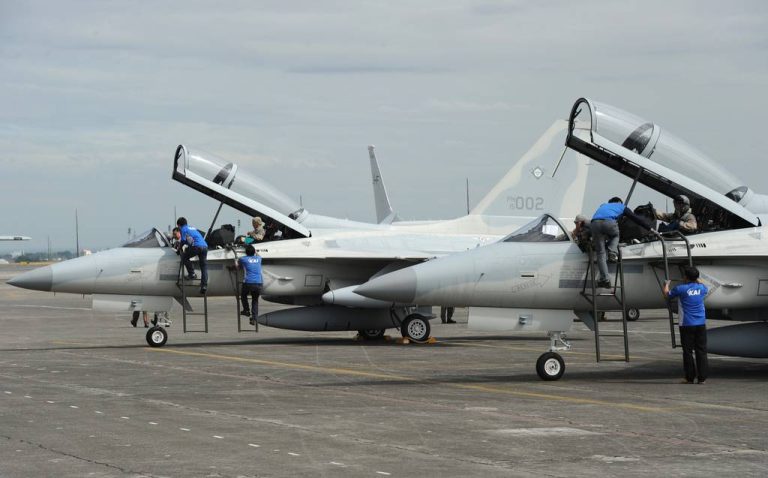
The largest of the contracts was a deal for 18 Korean Aerospace Industries FA-50 light combat jets. The Royal Malaysian Air Force will use these jets for the fighter lead-in training and light combat roles.
In February, it was announced that Malaysia had selected the FA-50 as its light combat aircraft, with KAI stating at the time the value of the order was $920 million. Malaysia has an eventual requirement for up to 36 jets.
Speaking to Malaysia’s national news agency Bernama, KAI chief executive officer Kang Goo-young confirmed the RMAF will begin receiving the FA-50 Block 20 “Fighting Eagle” aircraft in 2026, with the first four jets built in South Korea while the remaining 14 will be assembled locally.
He added that the jets will come with active electronically scanned array, or AESA, radars, although he did not identify the radar model.
South Korea’s LIG Nex1 is developing the ESR-500A AESA radar for the FA-50, while Raytheon Technologies announced earlier this month its PhantomStrike radar will be equipping the FA-50.
Among the other contracts signed at the LIMA ceremony was a deal for two maritime patrol aircraft from Italy’s Leonardo for $150.78 million.
Malaysian defense minister Hishammuddin Hussein in October announced the selection of the ATR-72MP, which is based on the ATR-72 twin-turboprop regional airliner, for its longstanding requirement.
Leonardo says the ATR-72 is equipped with its Airborne Tactical Observation and Surveillance mission system, which integrates the aircraft’s sensor suite that includes a Seaspray 7300E V2 and enables it to perform a variety of missions, including maritime patrol, anti-submarine, airborne surveillance and intelligence gathering.
A deal with Turkish Aerospace Industries for its Anka medium-altitude long-endurance drones will see Malaysia buy three of the unmanned aircraft, which can be armed with guided bombs and missiles.
Malaysia’s acquisition of the drones is valued at $92 million and will be the first armed drones to enter service with the RMAF.
It was also announced at LIMA that Malaysia will lease four Sikorsky UH-60A+ Blackhawk transport helicopters from local company Aerotree Defence and Services. The helicopters are secondhand aircraft and will be flown by the Malaysian Army’s air wing for training and operational duties.
Mike Yeo is the Asia correspondent for Defense News.
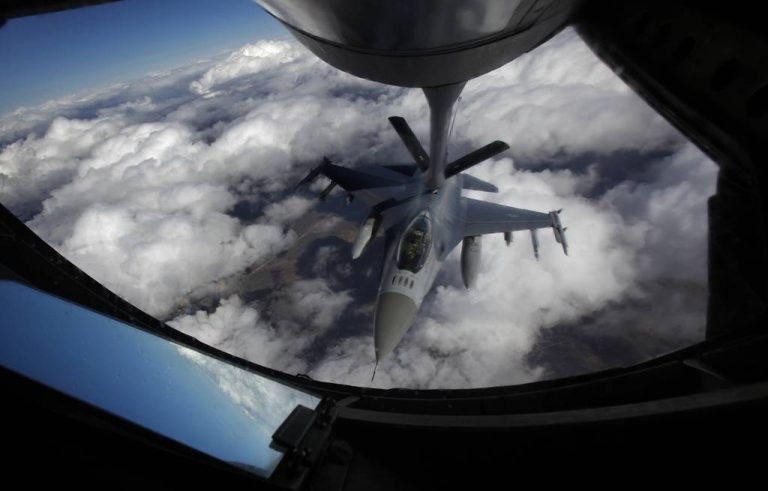
WASHINGTON (AP) — Defense Secretary Lloyd Austin said Thursday he hopes that training for Ukrainian pilots on American-made F-16 fighter jets will begin in the coming weeks, bolstering Ukraine in the long run but not necessarily as part of an anticipated spring counteroffensive against Russia.
Austin spoke as defense leaders from around the world assembled for a virtual meeting to discuss the ongoing military support for Ukraine. They were expected talk about which countries will provide F-16s, and how and where the pilot training will be done.
The officials will also get an update on the war effort from Ukrainian leaders, including preparation for that anticipated counteroffensive and how the allies, who have faced their own stockpile pressures, can continue to support Kyiv’s fight against Russia.
“We’re going to have to dig deeper, and we’re going to have to continue to look for creative ways to boost our industrial capability,” Austin said before the military leaders began their closed session. “The stakes are high. But the cause is just and our will is strong.”
European countries have said they are talking about which countries may have some of the F-16s available. The United States had long balked at providing the advanced aircraft to Ukraine, and only last weekend did President Joe Biden agree to allow other nations to send their own U.S.-made jets to Kyiv.
“We hope this training will begin in the coming weeks,” Austin said. “This will further strengthen and improve the capabilities of the Ukrainian Air Force in the long term. And it will complement our short-term and medium-term security agreements. This new joint effort sends a powerful message about our unity and our long-term commitment to Ukraine’s self-defense.”
The leaders will also likely discuss Ukraine’s other continuing military needs, including air defense systems and munitions, artillery and other ammunition.
It was not immediately clear whether they will make any firm decisions on the F-16 issue, but initial steps have begun.
Josep Borrell, the European Union’s foreign policy chief, said Tuesday that training for Ukrainian pilots had begun in Poland and some other countries, though Polish Defense Minister Mariusz Blaszczak said training was still in the planning phase. The Netherlands and Denmark, among others, are also making plans for training.
“We can continue and also finalize the plans that we’re making with Denmark and other allies to start these these trainings. And of course, that is the first step that you have to take,” Dutch Defense Minister Kajsa Ollongren said, adding that initial discussions about who may have F-16s available to send is underway.
Ukraine has long sought the sophisticated fighter to give it a combat edge as it battles Russia’s invasion, now in its second year.
The Biden administration’s decision was a sharp reversal after refusing to approve any transfer of the aircraft or conduct training for more than a year because of worries that doing so could escalate tensions with Russia. U.S. officials also had argued against the F-16 by saying that learning to fly and logistically support such an advanced aircraft would be difficult and take months.
Air Force Brig. Gen. Pat Ryder, the Pentagon press secretary, said this week that the U.S. decision on the F-16 was part of a broader long-term commitment to meet Ukraine’s future military needs. He said the jets would not be relevant in any counteroffensive expected to begin shortly.
Here is my Long awaited ( and Long Winded) Review of the Ruger Hawkeye Guide Rifle in .30/06 Sprg.
First, my Mission Criteria, I demand a lightning fast handling and shooting bolt action in the hard hitting calibers, and I want certain high end features as well as FACTORY irons. Think Scout Rifle, only in a much more powerful caliber but without the stupid and impractical scout scope, of which there are very few options! Lastly, I demand a rifle with exceptional accuracy in all field…
The open bar with no cover charge was 2018. Unfortunately the only memorable ammo related purchases I made in 2018 was a case of shotgun primers and 3 bricks of small rifle, bought walmart out of all their rem subsonic 22lr a few times and filled out my 17hmr stash quota.
This is me selling decades old 22LR in ziplock bags, opened partial boxes of ammo, mixed lots of manufacturers, bullet weigh and styles in late 2020. Prices were crazy, all rifle ammo, at least a $ per shot, all magnum wheel gun ammo $2 per shot, 12ga buckshot was $2 to $4 per shot.
Your ability to improvise is crucial as a survival skill. The outcome of sudden survival scenarios is often determined by your resourcefulness in utilizing available items to fulfill your needs. Like any other survival skill, practice is key to achieving perfection.
Including the practice of survival improvisation in your regular preparedness training is essential. It’s a straightforward process – select an item or product not specifically designed for survival and engage in brainstorming sessions to generate as many survival applications as possible. When brainstorming, consider various survival categories such as shelter, water, fire, food, first aid, and self-defense. It’s acceptable if you don’t have solutions for every category.
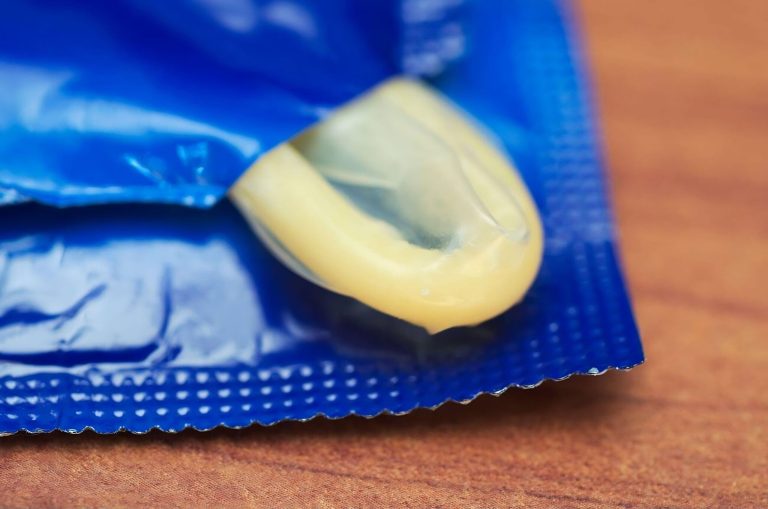
Let’s consider an improbable and arbitrary example: the condom. You’d be surprised by the multitude of ways a condom can assist in meeting fundamental human survival requirements. Unorthodox? Sometimes unconventional solutions are the most effective.
Tinder
When it comes to survival fire, utilizing a condom can offer a clever solution. One of the most apparent ways to use a condom in this context is to safeguard dry fire tinder. While the weather might be favorable at the moment, there’s no guarantee it will remain that way.
In damp and rainy conditions, finding dry fire tinder can prove extremely challenging. However, with a condom, protecting your dry fire tinder becomes a simple task. All you need to do is fill the condom with your best tinder and store it away for future use. It’s a straightforward and effective method that requires no specialized knowledge.
In fact, a single condom can even preserve an entire bracket fungus, which happens to contain a considerable amount of natural tinder. This means that by utilizing a condom, you can safeguard a valuable resource that can be crucial for starting and maintaining a fire in adverse weather conditions. With this additional piece of information, it becomes evident that condoms have the potential to serve as versatile tools for survival, providing practical solutions for various challenges that may arise.
Waterproof Fire Starter
In addition to using condoms as fire tinder, they can also be used as protective covers for other fire-starting materials, such as cotton balls soaked in petroleum jelly. By placing the fire starter inside a condom, you create a waterproof container that can be easily ignited when needed, providing a reliable source of fire even in damp conditions.
Thumb loops
Thumb loops can greatly assist in the challenging process of fire-by-friction, specifically with the hand drill method. Among primitive fire-starting techniques, the hand drill is known to be one of the most difficult. Without proper practice, achieving the ideal balance of pressure and spindle speed becomes quite challenging, making it difficult to generate sufficient heat for ember creation.
To address this challenge, thumb loops prove to be beneficial. By incorporating thumb loops, users can apply additional pressure on the spindle while also maintaining consistent hand rotation in a fixed position. Creating thumb loops involves notching the top of the spindle and securely tying each end of the condom to your thumbs.
By utilizing thumb loops, you enhance your ability to effectively perform the hand drill method for fire starting. This small adjustment allows for better control and increased pressure, enabling you to generate the necessary friction and heat to create an ember. With this practical addition, your chances of successfully starting a fire using the hand drill technique are significantly improved.
Water
Including condoms in a survival kit is a practice that has been around for quite some time. They have proven to be valuable additions due to their versatility and compactness. One notable use is their remarkable ability to serve as water containers.
When handled properly, condoms can hold up to two liters of water. It’s quite surprising how the latex material can stretch to accommodate larger volumes than one would expect.
However, it’s important to acknowledge that while condoms excel in elasticity, they do have limitations in terms of durability. The thin walls of latex make them vulnerable to sharp objects and punctures. To overcome this challenge, there are strategies for carrying water with a condom that provide added stability and protection.
One effective method involves removing a sock and filling the condom inside it. The sock not only provides stability but also acts as a safeguard, reducing the condom’s vulnerability. Alternatively, one can wrap the condom in a t-shirt or fill it inside a backpack or helmet. Stretching the condom slightly beforehand, similar to preparing to blow up a balloon, can also facilitate the process.
To ensure easy access to the water, it’s advisable to tie the mouth of the condom around a stick that is approximately the diameter of your thumb. This way, untying it becomes relatively straightforward. Simply knotting it without the stick can make it challenging to open again when needed. Since you may need to reuse the condom multiple times, it’s important not to rush the process and handle it with care.
Burning rubber
In addition to its water-holding capabilities and overall versatility, the condom itself serves as exceptional fire tinder. When exposed to an open flame, such as a match or a cigarette lighter, a latex condom ignites nearly instantly and burns vigorously for several minutes. This extended burning time provides you with ample opportunity to build and establish your fire.
Especially in challenging fire-starting conditions where dry tinder is scarce due to dampness, the ability to ignite latex can become the decisive advantage you need to successfully initiate a survival fire. By incorporating burning latex into your fire-starting strategy, you gain a valuable tool that increases your chances of overcoming adverse circumstances.
Magnify
In situations where you lack matches or a ferro rod, a condom filled with clear water can be transformed and utilized as a magnifying tool. By shaping and manipulating the condom, you can concentrate and focus the sun’s rays through it. These intensified sun rays can then be directed towards dry fire tinder, such as punky wood or cattail down, to initiate smoldering.
Once you have successfully created an ember through the magnifying effect of the condom, the next step is to transfer the ember into a tinder bundle. Carefully place the ember into the bundle and proceed to blow on it gently, encouraging the flame to ignite. By employing this technique, you can effectively utilize the condom’s properties to harness the sun’s energy and initiate the fire-starting process.
This method serves as an alternative fire-starting approach, particularly when conventional tools are unavailable. By understanding the practical applications of a condom filled with water, you can leverage its capabilities to concentrate sunlight and create an ember that can be further nurtured into a flame, ensuring your ability to start a fire even in challenging circumstances.
Signal Mirror
In emergency situations, a condom filled with water and tied off can serve as a makeshift signal mirror. The reflective surface of the condom can be used to attract attention by directing sunlight or other light sources toward potential rescuers or search parties.
Slingshot
Condoms can be surprisingly effective when repurposed as slingshots. It’s important not to underestimate the hunting potential of a simple slingshot, especially when it comes to small game. Personally, I have successfully taken down frogs, birds, rabbits, and squirrels using a slingshot, and I consider it a valuable tool to have in a survival situation.
To transform a condom into a makeshift slingshot, I made a few modifications. Instead of using a traditional pouch, I carved notched mini-darts that can be securely attached to a piece of string connecting the two sections of the condom bands. This alteration resulted in a highly powerful and accurate improvised slingshot designed specifically for small game hunting.
By adapting a condom into a slingshot, you gain a compact and versatile tool capable of providing sustenance through hunting in survival scenarios. It’s remarkable how such a simple item can be transformed into an effective hunting implement, proving once again the importance of resourcefulness and improvisation in challenging environments.
Bobber
A condom bobber can be a surprisingly effective tool for fishing in makeshift circumstances. Instead of simply tying off an air bubble in the condom, I’ve discovered that it works even better when filled with cattail fluff. Cattail down has natural buoyancy and water-resistant properties, making it an ideal filling for the bobber. To create this fishing set, you can utilize natural bark cordage, a bone gorge, and a condom bobber.
By incorporating a condom as a bobber, you have a versatile and readily available fishing accessory. The addition of cattail fluff as a filling not only enhances buoyancy but also ensures that the bobber remains visible and functional in the water. This innovative use of materials highlights the ingenuity that can be applied to fishing techniques in survival situations.
Please note that while a condom bobber can be a useful makeshift solution, it’s important to prioritize safety and adhere to local fishing regulations. Proper fishing equipment and techniques are always recommended for optimal results and conservation efforts.
Cordage Substitute
Condoms can be stretched and used as a temporary cordage substitute for various purposes, such as tying shelter components, securing gear, or creating traps. While they may not be as strong or durable as traditional cordage, they can provide a quick solution in situations where cordage is unavailable.
In situations where first aid is necessary, a condom can serve as a makeshift rubber glove. In the worst-case scenario, when proper medical gloves are unavailable, utilizing a condom can provide a protective barrier between your hands and a wound. This not only prevents contamination from your hands but also safeguards you from potential exposure to the wound if you’re tending to someone else.
By repurposing a condom as a crude rubber glove, you can maintain a hygienic environment while addressing first aid concerns. This resourceful use of a condom emphasizes the importance of improvisation and utilizing available materials to ensure safety and proper care in emergency situations.
In addition to serving as a crude rubber glove, condoms can be utilized in various other ways for first aid purposes. Here are some additional applications:
Waterproof Bandage: When traditional bandages or adhesive tapes are not available, a condom can be stretched and secured over a wound to create a waterproof barrier. This helps protect the wound from external contaminants and keeps it clean and dry.
Improvised Tourniquet: In situations where severe bleeding occurs, a condom can be used as an improvised tourniquet. By tying it tightly above the wound, it can help restrict blood flow and minimize bleeding until proper medical assistance is available.
Blister Protection: When blisters form on the feet or hands during strenuous activities, a condom can be used as a protective layer. By cutting off the tip and rolling it onto the affected area, it can reduce friction and provide temporary relief.
Emergency Water Container: While not directly related to first aid, a condom can be repurposed as an emergency water container. If there is a need to clean wounds or irrigate them, a condom can be filled with water and used as a gentle irrigation device.
Finger Splint: In the case of a finger injury, a condom can be filled with a small amount of water or air to create a temporary finger splint. This helps stabilize the injured finger and provides support until professional medical assistance is available.
It is essential to note that while condoms can provide temporary solutions in certain first aid situations, they do not substitute proper medical supplies. Seeking professional medical help as soon as possible remains crucial for comprehensive and appropriate care.
Protecting Equipment
Condoms can be used to protect sensitive equipment, such as compasses, flashlights, or cell phones, from moisture, dust, or dirt. Simply covering these items with a condom can create a temporary waterproof barrier, helping to preserve their functionality in wet or dirty environments.
Concluding
This article has highlighted the diverse survival uses of condoms in emergency scenarios. From serving as makeshift gloves for first aid to functioning as fire tinder, water containers, slingshots, and more, condoms demonstrate their versatility and adaptability in challenging situations. It is important to prioritize safety and adhere to local regulations when using condoms or any improvised tools.
While condoms can provide temporary solutions, they should not replace proper equipment or medical care. Overall, embracing resourcefulness and thinking creatively can enhance resilience and improve chances of survival in emergencies.
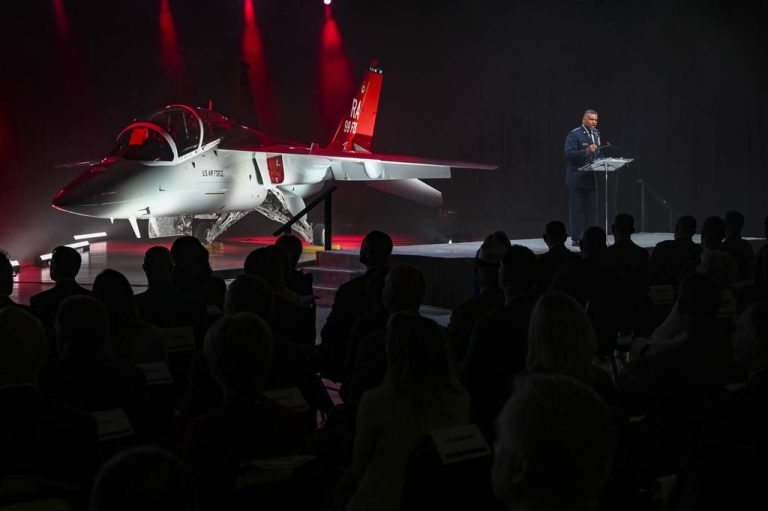
WASHINGTON — Boeing’s effort to build a new trainer aircraft for the Air Force is plagued by safety problems, schedule and testing delays, and the risk the T-7A Red Hawk could fall even further behind schedule, the Government Accountability Office said in a scathing report.
Boeing’s relationship with the Air Force has also been strained by the T-7′s issues, GAO said in the May 18 report, with service officials describing their ties as “tenuous.”
As the program proceeds and Boeing losses, which already exceed $1 billion, mount, GAO said, program officials expect more disagreements between the Air Force and the contractor. While the Air Force waits for the T-7 to be delivered,its own costs related to maintaining older jets could grow, the report warned.
Boeing said in a statement to Defense News it plans to keep working with the service to fix the problems highlighted in the report, but did not address specific issues asked about by Defense News.
“Boeing and the U.S. Air Force are partnered on a path forward regarding these issues,” the company said. “Additionally, we continue to evaluate findings and discovery during testing activities, which is standard practice when developing a new aircraft.”
Boeing in 2018 won an indefinite delivery contract, estimated to be worth up to $9.2 billion, to build the Air Force’s new jet trainer, set to replace the more than half-century-old T-38 Talon.
Student pilots will be able to use this advanced trainer to learn to fly jets akin to advanced fighters such as the F-35, which hascapabilities that didn’t exist when the T-38 was first built. Newcapabilities the T-7 will bring include fly-by-wire controls and high-altitude maneuverability.Additionally, this trainer will allow students to learn advanced air-to-air maneuvers and be able to accommodate pilots of varying sizes, including men and women.
A shaky schedule
The T-7 has seen several schedule delays. Most recently, problems with a potentially dangerous escape system and ejection seat caused the Air Force to postpone to February 2025 a milestone C production decision on the T-7. The Air Force originally expected that decision to come in late 2023.
This means Boeing is now expected to start delivering the T-7 in December 2025, and the Air Force is preparing for it to reach initial operational capability in spring 2027 at the earliest. That would be nearly a decade after the Air Force originally hoped to have student pilots flying in its advanced trainer.
But program officials told GAO that even the new schedule Boeing laid out in January 2023 is “likely optimistic” because it “depends on favorable assumptions.”
Boeing’s revised T-7 schedule assumes the program will have a high success rate through the rest of its development and testing, Air Force officials told GAO. This leaves “little to no margin” for error, including test failures, unexpected software revisions, a possible need to redesign the escape system, or other surprises, GAO said.
If something goes wrong, the report added, the T-7 program could fall even further behind — perhaps significantly so, potentially jeopardizing even the revised production decision date and further pushing back production and delivery.
The Air Force is now planning to have the T-7′s development, testing and production phases considerably overlap, GAO said, which will add a great deal more risk to the schedule.
This approach, known as concurrency, can lead to rising costs or further schedule delays because if testing finds hidden problems, the contractor could have to go back into aircraft that have already been built to fix those issues.
Program officials told GAO they doubted overlapping development and testing would lead to major changes to the T-7, and said concurrency had not driven up program costs.
But such problems have happened before, GAO said, citing a previous 2018 report that found it would cost an additional $1.4 billion to fix problems in F-35 Joint Strike Fighters that had been built before testing was complete.
Boeing also plans to start building the first production T-7s before the Air Force officially places its order, GAO said, which could carry further risks. Boeing started building some parts for the T-7 in early 2022 on its own dime, GAO said, and plans to start assembling the first aircraft by early 2024, the report said.
A T-7A Red Hawk aircraft sits in a partially built state at Boeing’s St. Louis production facility. (Courtesy of Boeing)
GAO said this means construction would start about a year before the Air Force plans to place its first order for the aircraft, which will happen no sooner than February 2025 after development and a great deal of testing has been finished. And by the time the Air Force places its order, the report said, government officials believe Boeing could have finished building seven to 10 T-7s it could present to the service.
GAO said Boeing told the Air Force in March 2022 it had already started building some parts that would go into the T-7 — even though the Air Force warned Boeing two months earlier it was under no obligation to buy trainer jets built with those parts until it placed an order. The Air Force also told Boeing any work it does has to meet all requirements for future orders.
Boeing told GAO it began initial construction on planes that could eventually be delivered to the Air Force because it faced pressure to keep its suppliers busy and manufacturing costs down, particularly with schedule delays and financial losses mounting.
But this presents “significant risks” to the Air Force, GAO said. Because no contract is in place for building those aircraft, GAO said, the Air Force and the Defense Contract Management Agency can’t conduct all the production oversight needed to make sure the planes will meet contract requirements. Even conducting oversight, DCMA warned the Air Force, could have the unintended effect of committing the Air Force to accept some of Boeing’s work on the T-7, even without a contract, the report said.
The T-7 could also change significantly between the test phase and the award of a low-rate production contract, which would then have to be retrofitted on already-built planes, GAO said. DCMA has already spotted more than 8,000 differences between the five test T-7s Boeing has already built, and the Air Force’s own contract specifications, the report added.
Older trainers, rising costs
While these delays likely won’t drive up the T-7′s price for the Air Force, GAO said they could lead to other rising costs. With the T-7 still years away from becoming operational, the service will need to keep training student pilots in its existing fleet of 504 T-38s and — to handle the more advanced aspects of pilot training — the F-22, which costs more than eight times as much to fly per hour than the T-38 and T-7. In all, GAO estimated trainer delays could cost the Air Force almost $1 billion.
The Air Force is also at risk of higher costs if it can’t order all 351 T-7s it plans to buy before the ordering period expires, GAO said. The Air Force now expects Boeing to start building the first four production T-7s in 2025 and gradually ramp up production until Boeing builds 48 Red Hawks each year between 2030 and 2033. The final 18 T-7s are expected to be built in 2034.
In an issue that echoes a lingering headache with the F-35 program, the Air Force told GAO it doesn’t have all the data from Boeing that it needs to maintain the T-7.
By January 2023, Boeing had provided the Air Force one-third of the list of parts and quantities used to build and maintain the T-7, known as a bill of materials. That is more than three years later than the contract specified, GAO said, and some of the information the Air Force needs to conduct its own maintenance was redacted.
Boeing told GAO some suppliers were not under contract at first and said its periodically updating the program office.
The Air Force wants to do as much “organic,” or in-house, maintenance on the T-7 as possible. But without that data, GAO said, it may be forced to rely upon Boeing for maintenance and repairs.
The Air Force also needs the list of parts so it can manage its supply chain, and find replacements for parts as they become obsolete, GAO said. Without that bill of materials, the Air Force told GAO it won’t know what equipment it will need to maintain the test aircraft the service plans to begin flight-testing at Edwards Air Force Base in California this September.
Ejection seat delaying tests
Problems with the T-7′s escape system have already delayed the plane’s testing, GAO said, and the system will likely need several more revisions to its design and test before it is safe enough to use.
The Air Force only allowed men to fly when older planes such as the T-38 were originally built, so their cockpits were not designed to accommodate some women or people with smaller frames. The T-7 is intended to be safe and comfortable for pilots with a wide range of body sizes and shapes.
A manikin ejects from a Boeing T-7A Red Hawk in June 2021 during ongoing qualification tests of the ejection system for the T-7A at Holloman Air Force Base, New Mexico. (Air Force)
But GAO said tests of the T-7′s escape system show considerable risks for many pilots — even larger people — including potential concussions, spinal injuries, or eye and neck injuries. Tests conducted with the largest manikins barely pass the Air Force’s safety standards, the report said, and smaller and average-sized manikins were at greater risk.
After 2021 tests raised alarm bells about the T-7′s escape system, Boeing worked to improve it. The Air Force said minor adjustments to the seat improved safety and reduced the risk to pilots.
A subsequent sled test in February 2023 showed enough progress that the service plans to proceed with a limited military flight release, allowing its pilots to begin test-flying the T-7 while the final problems with the escape system are fixed. In a sled test designed to simulate an ejection sequence, the Air Force accelerates a rail-mounted cockpit with a manikin inside to speeds similar to a T-7 in flight before launching the manikin.
But even that testing plan means the Air Force is likely almost two years away from showing the escape system meets all the safety requirements.
The Air Force and Boeing also disagree over how close the T-7′s flight control software is to being finished, GAO said. Boeing expects the software will be done by the middle of this year, the report said, but the Air Force’s own software experts said five or six more revisions to the software will be needed to fix problems with the trainer’s flight control, particularly as the T-7 takes on more challenging flights such as conducting maneuvers when climbing or diving at high angles of attack.
Each iteration could take six more months, Air Force experts told GAO, which could delay the completion of the software by more than two years and — if the changes are significant — could disrupt flight testing.
In a sign of the tensions over the program, Air Force Secretary Frank Kendall on Monday said the concept of digital engineering — which Boeing has touted as a revolutionary advancement in how new aircraft can be built — has in some ways been “overhyped.”
Engineers have been using digital tools to design aircraft for decades, Kendall said at a breakfast roundtable with reporters hosted by the Defense Writers Group, after being asked about the T-7′s delays and the fanfare that accompanied its digital design. Modern computing and data storage advancements have given engineers the ability to process vast amounts of information and swiftly communicate with one another, he said, allowing digital design processes to be fully integrated, he said.
This has led to notable cost and schedule savings, Kendall said. But digital advancements won’t replace real-world testing, he said — particularly when engineers are trying to “push the envelope” on entirely new designs and don’t have models upon which they can fully rely.
“It is a significant improvement, but it has been overhyped,” Kendall said. “More integrated digital designs, better modeling all help, but they’re not revolutionary. They’re a significant improvement, [but] they don’t replace testing entirely. When you’re doing something that’s going to be radically different than prior programs, you’ve got to get it into testing.”
Stephen Losey is the air warfare reporter for Defense News. He previously covered leadership and personnel issues at Air Force Times, and the Pentagon, special operations and air warfare at Military.com. He has traveled to the Middle East to cover U.S. Air Force operations.
Earlier this month, Georgia Republican Governor Brian Kemp signed a new bill creating a state commission board to monitor – and potentially fire – district attorneys who refuse to enforce the law. The innovative approach to holding rogue left-wing prosecutors accountable could soon become a staple in other red states as well.
The bill, SB 92, provides for the establishment of an eight-member commission that can recall district attorneys or solicitors general for a number of reasons, including “willful misconduct,” “persistent failure to perform his or her duties,” and “conduct prejudicial to the administration of justice.” SB 92 passed the Georgia Senate 32 to 24 and the Georgia House 97 to 77 in March before Governor Kemp signed it into law on May 5.
The commission, officially titled the Prosecuting Attorneys Qualifications Commission (PAQC) has also been granted the authority to further investigate instances in which local prosecutors may have been unduly influenced by “bias,” “conflicts of interest,” and “financial interest,” as well as factors completely unrelated to the facts of the prosecution at hand.
In a press release, Kemp declared, “As hardworking law enforcement officers routinely put their lives on the line to investigate, confront, and arrest criminal offenders, I won’t stand idly by as they’re met with resistance from rogue or incompetent prosecutors who refuse to uphold the law.” Moreover, he stated, “The creation of the PACQ will help hold prosecutors driven by out-of-touch politics than commitment to their responsibilities accountable and make our communities safer.”
Kemp also channeled the frustration of many Americans – in Georgia and elsewhere – living under prosecutors who have embraced the far left’s “restorative justice” agenda that includes not prosecuting “minor” crimes like drug possession and robbery. As Kemp put it, “People are just fed up. People are fed up of local prosecutors who are not doing their job. They’re not fulfilling their duties and their oaths under the law and prosecuting crimes that are on our books.”
The other day, an AI generated picture of a supposed explosion at the Pentagon made the markets drop, it was quickly cleared up but with the divide in the USA what happens when not if the Chinese, Russians, Iranians or ??? Plant a fake/AI picture that can't be cleared?
The bad guys will learn from this and do it better when needed.