Should You Include A Small Caliber Hand Gun In Your Survival Kit?

0

When it comes to determining the ideal firearm for a compact bug-out situation, it is crucial to delve into an essential question: “In the face of impending chaos, which is the most reliable and effective low-caliber gun that I am prepared to entrust my life and the lives of my dear ones to?”

When contemplating a small-caliber bug-out gun, factors such as portability, ammunition availability, and stopping power must all be taken into account.

During turbulent times, whether it be a natural disaster or a societal upheaval, the ability to swiftly evacuate and navigate through uncertain environments becomes paramount. Carrying a firearm that strikes the delicate balance between compactness and proficiency is key. As we discuss this matter further, let us explore various considerations that can aid in making a well-informed decision.

Expanding your defensive option with a subcompact firearm

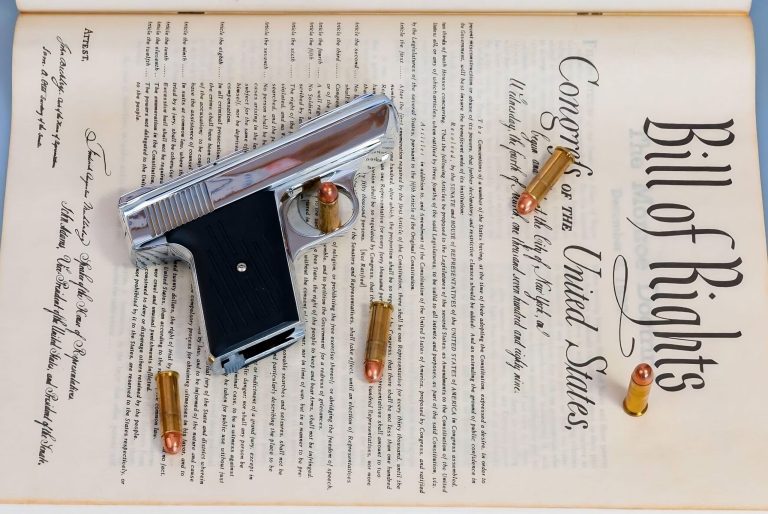
When it comes to selecting a handgun for urban self-defense scenarios, it is crucial to consider the appropriate caliber. In my recommendation, a minimum of .380 ACP should be the standard for a last-resort, self-defense firearm. In this article, I will focus exclusively on semiautomatic handguns chambered in this caliber, as they offer a balance of power and practicality.

Choosing a caliber smaller than .380 ACP raises the stakes on shot placement, requiring pinpoint accuracy to deliver a decisive and incapacitating wound. While revolvers can be exceptional options, especially those chambered in 38 Spl/357 Mag or lower calibers like 22LR or 17 HMR, for the purpose of this discussion, we will focus solely on semiautomatic handguns.

It’s worth noting that there is one noteworthy exception, namely the Taurus M380 stainless revolver with an alloy frame chambered in .380 ACP. This particular revolver could be an excellent choice for those who prefer this platform. However, it’s important to bear in mind that revolvers typically require more practice to reload efficiently compared to semiautos. The 380 Taurus utilizes full moon clips for reloading, adding an extra layer of consideration when assessing its suitability for a bug-out scenario.

Opinions vary on whether a larger-caliber handgun or a smaller caliber is more appropriate for a bug-out bag. Some knowledgeable individuals advocate for larger calibers, while others argue that limited space in compact urban bug-out bags necessitates smaller calibers. It is worth mentioning that smaller handguns chambered in larger calibers, such as .45 ACP, pose challenges in terms of recoil control. Mastering the handling of these smaller handguns requires considerable practice and training, unlike their smaller-caliber counterparts.

Ultimately, the choice of a subcompact firearm for your arsenal should be based on careful consideration of factors like stopping power, maneuverability, and personal proficiency. By selecting a reliable and manageable handgun chambered in .380 ACP, you can enhance your defensive capabilities while maintaining optimal control in high-stress situations. Remember, thorough practice and training with your chosen firearm are essential to ensure your readiness to face any urban self-defense challenges that may arise.

The advantages of small caliber handguns

Including a small-caliber handgun in your bug-out bag offers several distinct advantages worth considering. One notable benefit is their compact size. By opting for a smaller firearm, you save valuable space, allowing you to allocate more room for other essential items in your bag.

Additionally, these compact handguns are often available in single- or double-stack magazine configurations, enabling you to carry a substantial number of rounds without adding significant bulk to your gear. The smaller size also makes it convenient to carry spare magazines, ensuring you have an ample supply of ammunition readily available.

When it comes to reliability and compactness, the Glock G42 deserves special mention. This single-stack .380 ACP pistol delivers exceptional dependability while maintaining an incredibly slim and compact design. Depending on your bag size and personal preference, the Glock G42 can be an excellent choice.

Another advantage of small-caliber handguns is their lower recoil. This characteristic proves advantageous when it comes to quick follow-up shots, allowing for better accuracy and control during high-stress situations. Additionally, the reduced recoil makes extended practice sessions at the range more comfortable and less fatiguing compared to larger-caliber handguns. For instance, firing 200 rounds of .380 ACP during practical shooting drills is noticeably less strenuous than firing the same quantity of 230-grain .45 ACP hardball ammunition in a typical range session.

By opting for a small-caliber handgun, you not only gain the benefits of compactness, increased magazine capacity, and lower recoil, but you also extend your practice time, further honing your skills and proficiency with your chosen firearm. These advantages collectively contribute to your overall preparedness and confidence in utilizing your bug-out bag’s contents effectively.

The disadvantages of small caliber handguns

specopsWhile small-caliber handguns offer certain advantages, it is important to consider the drawbacks associated with relying on them in a survival scenario. One significant drawback is their reduced stopping power compared to their larger-caliber counterparts. Larger-caliber handguns are capable of producing larger exit wounds and inflicting greater damage, making them more effective in quickly incapacitating a threat. In contrast, smaller calibers require precise shot placement as their stopping power diminishes with caliber size.

To compensate for the tradeoff in stopping power, proper bullet selection becomes crucial when using small-caliber handguns. Due to their lower cross-section and velocity, smaller caliber bullets tend to have limited expansion. However, bullet manufacturers have made significant advancements in engineering bullets for maximal expansion, penetration, and overall performance in small-caliber projectiles. Conducting thorough research on bullet selection can help offset some of the limitations associated with smaller calibers.

Another drawback of smaller-caliber handguns is their ergonomic fit, particularly for individuals with average to larger-than-average hand sizes. When deploying a pistol in a defensive situation, achieving a proper grip and quickly indexing the pistol to the target can become challenging with smaller firearms. Realistic range time and practice are crucial in addressing these issues. If you carry a small-caliber handgun in your bug-out bag, it is essential to allocate time for practicing scenarios that you anticipate encountering in real-world situations. Engaging in range drills, such as drawing from the bag and engaging targets at close distances of 3 to 7 yards, can help improve your proficiency. It is advisable to begin these drills with an empty pistol and practice dry-firing until you feel comfortable drawing a loaded handgun from the bag. As a safety precaution, always keep the loaded pistol holstered while it is inside the bag to ensure the trigger remains covered.

By considering these limitations and actively engaging in realistic practice, you can mitigate some of the drawbacks associated with small-caliber handguns, enhance your proficiency, and make more informed decisions when utilizing them in a survival context.

Evaluating a few small caliber handguns for your survival kit

When it comes to selecting small-caliber handguns for your bug-out bag, there are several exceptional choices available. Let’s explore some of the top options, listed in no particular order, that offer reliable performance and compactness.

Glock G42: The Glock series has long been favored by military, law enforcement, and civilian users. The slim G42 is the smallest pistol ever produced by Glock, measuring 5.9 inches in length, 4.1 inches in height, and under an inch in width. It offers excellent reliability, a good magazine capacity, and incorporates the renowned Glock Safe Action System. With a 6+1 magazine capacity and optional night sights, the G42 is an ideal bug-out bag companion.

SIG P238: The SIG P238 combines a stainless slide with an alloy frame, offering durability and all-weather capabilities. With additional options like a Cerakote finish, tritium sights, and weighing only 15 ounces, this compact pistol is a reliable choice. The P238 features a 1911-style action, making it suitable for those accustomed to carrying or using 1911-style single-action semiautomatic pistols in cocked-and-locked mode (Condition One).

Colt .380 Mustang Pocketlite: The Colt Mustang has earned its reputation as a reliable and well-made pistol over decades. It offers consistent controls similar to its full-sized 1911-style counterpart, making it a suitable choice for those already familiar with the platform. The Mustang Lite variant features a polymer frame for even lighter weight, an ambidextrous thumb safety, and an accessory rail for attaching small lasers.

Kahr CT380: The Kahr CT series provides multiple options for small-sized double-action-only (DAO) pistols chambered in .380 ACP. These pistols offer decent stopping power in a reliable package. With a capacity of 6+1 rounds and a polymer frame paired with a stainless slide, the CT380 is corrosion-resistant, ensuring durability even in wet conditions.

Ruger LC380: Ruger’s LC380 semiautomatic pistol operates in a double-action-only (DAO) mode, featuring a small form factor. While the blued steel construction may be susceptible to rust, the pistol compensates with three-dot sights, a 7+1 capacity, and outstanding reliability. Ruger also provides options for fiber-optic three-dot sights, tritium sights, and tactical lights to enhance versatility.

NAA-380 Guardian: The NAA-380 Guardian boasts a 6+1 cartridge capacity and is constructed entirely from stainless steel. Available in a double-action-only (DAO) configuration, this well-made pistol offers great value for its price.

While small-caliber handguns have their advantages, it’s important to consider that larger-caliber bug-out guns can offer similar capacities but in a larger size, with more recoil, weight, and occupying more space in the bag. If you have sufficient room and opt for larger calibers, full-sized 1911-style guns or striker-fired, double-stacked pistols with increased magazine capacity, such as the Glock M22, SIG P226, or Smith & Wesson M&P, could be appealing options.

Ultimately, the choice of a small or large-caliber bug-out gun depends on your specific needs, preferences, and the available space in your bug-out bag. Assessing your requirements and considering the trade-offs will aid in selecting the ideal handgun for your survival preparations.

Picking the right ammo

picking the right ammo

When considering a small-caliber bug-out gun, it is crucial to discuss the ammunition selection. In the case of .380 ACP chambering, choosing the most effective round is essential. The primary goal in an armed confrontation is to halt the threat, making bullet placement and performance critical factors.

As the caliber size decreases, the importance of bullet performance and placement increases, creating an inverse relationship. Let’s explore some recommended ammunition options for .380 ACP pistols.

Hornady .380 Auto 90-grain XTP: This ammunition from Hornady offers reliable feeding, good expansion, and excellent penetration. It is designed to deliver effective stopping power in defensive situations.

Black Hills .380 60-grain Extreme Defense and 90-grain JHP: Black Hills provides two excellent options for .380 ACP. Their 60-grain Extreme Defense rounds offer reliable performance, while the 90-grain JHP (Jacketed Hollow Point) delivers solid expansion and stopping power.

Barnes TAC-XPD Defense 80-grain: Barnes manufactures high-quality defense ammunition, and their 80-grain TAC-XPD rounds for .380 ACP are no exception. These rounds offer reliable feeding, good expansion, and penetration, making them a viable choice for self-defense.

Federal Hydra-Shok 90-grain and HST 99-grain: Federal is known for producing a wide range of exceptional performance rounds for the .380 ACP. Their Hydra-Shok 90-grain and HST 99-grain rounds are proven performers, offering reliable feeding, controlled expansion, and reliable terminal ballistics.

invisible bph banner 2

Concluding

In conclusion, it’s important to remember that there is no one-size-fits-all solution when it comes to selecting the best pistol for a bug-out gun. The ideal choice depends on factors such as the size of your bag and personal shooting preferences. It is advisable to try out different pistols from your collection or borrow handguns from shooting buddies to determine which option works best for your specific situation. Conducting hands-on testing and evaluation will help you make an informed decision.

Suggested prepping learning:

Turning the lady in your life into a reliable female shooter

Time tested lessons to protect your home against intruders

The Best Folding Guns You Can Get

Must-Have Knowledge to survive any medical emergency

Latest Acqisition: Mossberg 151K (22LR), Walther P22

0

Just picked up a Mossberg 151K .22 LR (circa 1950-1951) for $130 at a local shop. I am still interested in a Mod 63, but they are salty..I will wait and keep looking. In all, it is a fine rifle (151K), and I can’t wait to take it out and fire a hundred rounds through her. Right now, I am going to strip it and clean it well. I know it fires since we tested it earlier.

As for the Walther P22, well it was a quick decision really. I wanted one for a bit now, but I never could justify 3 bills for one. It is a snap to take down, but upon reassembly, I have to use a small piece of plastic (rod) to get the mainspring from folding (obviously not the best design). I will also take her out and plink a few dozen cans or so.

The 151K:

ex151k_Mossberg_22LR.


Hello! | Survival Monkey Forums

0

Discussion in ‘New Member Introductions‘ started by AnmlstcBhvr, Jun 2, 2023 at 2:29.


  1. AnmlstcBhvr

    AnmlstcBhvr
    Neophyte Monkey


    Hello from this side of the world!


survivalmonkey SSL seal


survivalmonkey.com warrant canary

Cooking & Food – BALL. BLUE BOOK of CANNING and. PRESERVING RECIPES

0

I was looking for inexpensive amber bottles for storeing colloidal silver and ran across this site for cheap canning supplies
AMBER Ball Collection Elite WM 32 oz Jars w/B&L

they also have a blog that has great recipes and has alot of suggestion for freezing in jars, if that is your thing

Freezing in Canning Jars 101
Whether you plan on freezing leftovers or following a “freezer style” recipe, there are some questions that usually come to mind.

Which jars can I freeze in?
Jars that do not have shoulders (ones that are straight sided or “tapered”) are the easiest because the contents can expand upward in the jar during freezing, especially if you’re freezing liquids (jams, jelly, soup, broth, etc). You can use other food grade jars, as long as the expansion of the food isn’t a problem. We often freeze single serving sizes of grilled chicken, beef BBQ, or meatballs in other jars since the straight sides really aren’t a requirement.

Jars with necks (sauce & woozy bottles etc.) are not recommended, as the contents will expand upward into the part of the glass with a smaller diameter causing breakage. If the description of the jar doesn’t mention that it is safe for freezing, double check with your supplier. The chart below indicates Ball jars that are freezer safe.


Which lids should I use for freezing?
You’ll want to use a lid with a plastisol liner or a foam liner to create a good airtight seal. This is a great time to re-use your already spent flat canning lids or single piece lids because all you need is a good seal to keep flavors in and air out! The single piece lids are nice for jams and products that you will be getting into often. You may also use the plastic lids with a foam liner or the plastic lids by Ball. Another great lid option – iLids Storage Lids – they come in a wide variety of colors, which is very useful if you want to be super organized and color code your freezer items.

How much can I put in a jar?[​IMG]
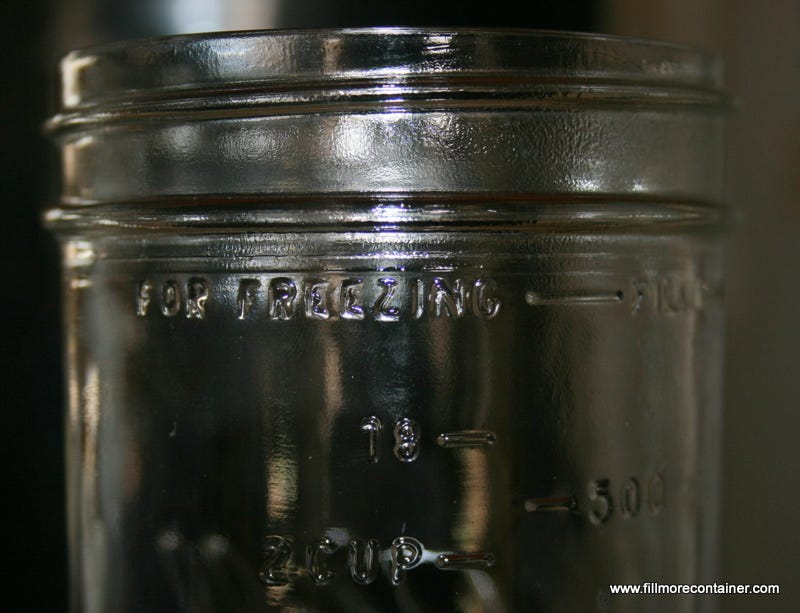
Allow enough headspace for the expansion of your product. Some, but not all of the Ball jars have a “FOR FREEZING——FILL HERE” line embossed on the glass. A general rule of thumb for any jar is to only fill to a little below the collar of the jar.

What’s the best way to thaw a jar and its contents?
Remember most food grade glass exhibits a 90-degree thermal shock differential! When canning, you can’t pour hot contents into a cold (or sometimes even room temperature) jar. For the same reason, you shouldn’t expose your jarred frozen items to sudden heat. Set them on a dish towel or paper towel on a plate or tray (to hold/absorb the melting condensate) and allow thawing in the refrigerator overnight, or on your counter if you are able to monitor them. If you need to speed up the process, you may set them in a few inches of lukewarm water. Do NOT try to microwave a frozen jar.

If you’re not comfortable freezing in glass try Ball’s Plastic Freezer Jars – available in 16 oz & 8 oz sizes.

Freezing in Canning Jars 101 – Fillmore Container


Future F-35 cooling needs unknown as DoD eyes engine upgrade

0

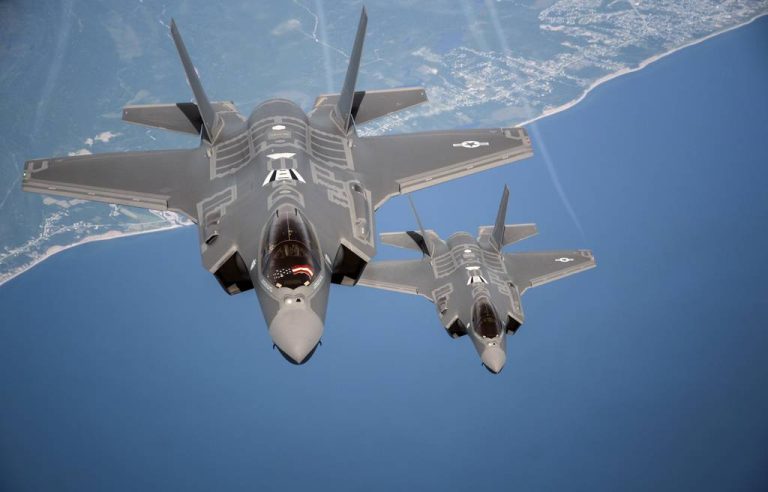
WASHINGTON — The F-35 program only knows how much cooling the Joint Strike Fighter’s engine will need through 2035, government auditors said in a new report.

But that’s a few years after the F-35 program needs to finish upgrading its thermal management system to be able to support rapidly arriving new capabilities, the Government Accountability Office said in a Tuesday report.

And GAO said it’s hard to predict how long the planned upgrades to the F-35′s power and thermal management system, or PTMS, and engines will be effective, though the fifth-generation fighter is expected to fly for another 50 years. PTMS uses the “bleed air” from the engines to cool systems throughout the fighter including weapons and radars.

The finding spotlights the uncertainty the program faces as it prepares for a major upgrade to the Pratt & Whitney-made F135 engines, dubbed the Engine Core Upgrade. Just a few years after completing the effort, the F-35 program “will face a period of unknown requirements” for its future capabilities — and may be in danger of future cost overruns and other mistakes, according to the new report.

“Without defined PTMS and engine modernization requirements, the F-35 program is at greater risk of repeating prior missteps,” GAO said. “By proceeding with planning and development of future capabilities without considering the demands on the PTMS and engine, the program endorsed capabilities that neither could support. The program risks repeating a similar mismatch between PTMS and engine capability and future modernization needs if the military services select an option without first defining future requirements.”

GAO said the F-35 program can’t fully predict how much power and cooling the fighter will need until the military services flying the aircraft define their own requirements.

But already, new capabilities being added to the F-35 are stretching its cooling capabilities beyond their original design, causing the engines to wear out faster. An upgrade program known as Block 4 — a $16.5 billion project to add new sensors, more advanced weapons, and more powerful data fusion and advanced electronic warfare — will further tax the engines’ cooling capabilities.

Without an engine upgrade, GAO said, the added heat could drive up the cost of maintaining the existing engines by $38 billion.

In a statement to Defense News, the F-35 Joint Program Office said it is confident the ECU engine upgrades can “minimize” the $38 billion in costs GAO highlighted.

“The ECU will restore engine life, and the [power thermal management system improvements] will ensure that the air vehicle can support future capability growth,” JPO spokesman Russ Goemaere said in an email.

GAO recommended the Pentagon order the JPO, before moving forward with the engine modernization effort, to re-evaluate its analysis of how to upgrade the F-35′s engines after the services spell out what power and cooling capabilities they will need.

The Pentagon disagreed with that recommendation, saying the F-35 program will re-evaluate its analysis when necessary as the services’ requirements are updated.

The JPO did not respond to an inquiry about whether it knows what the F-35′s post-2035 requirements will be and whether Pratt’s planned engine upgrade will provide enough power and cooling to meet those needs.

Goemaere said the JPO is in the early design stages as it weighs several options for improving the fighters’ thermal management systems, which will take place alongside the F135′s core upgrades.

The upgrades to the engines’ core and thermal management system are expected to be fielded in the early 2030s, he said, though the exact schedule will depend on what design is ultimately approved.

However, that means the engine upgrades necessary to handle the added heat may come a few years later than the F-35 will receive its Block 4 upgrades, now projected to be finished in 2029.

More engine cooling — but will it be enough?

In a briefing with reporters Wednesday, Jen Latka, Pratt & Whitney’s vice president of F135 programs, said the current engines would be able to handle the Block 4 upgrades, albeit at an increased maintenance cost. An upgrade to the engine’s core alone would let the F135 more fully enable Block 4, she said. And an upgrade to the power thermal management systems would allow the F-35 to handle future upgrades beyond Block 4, Latka said.

She said the engine core and thermal system upgrades together “provides a tremendous amount of cooling margin” — more than enough to comfortably allow future F-35 capability upgrades beyond 2035, without further improvements to the engine.

“If we’re back here talking about a potential engine upgrade in another 15 years, my guess is it’s for a different reason,” Latka said. “The amount of cooling that will be feasible with the ECU and the upgraded [thermal] system … there’s a tremendous amount of design margin there.”

The Defense Department considered two main options for upgrading the F-35′s engines — Pratt & Whitney’s upgrade to the current engines, and a General Electric Aerospace-made engine it dubbed the XA100 that uses an adaptive design. The so-called adaptive engine uses three streams of air, instead of two, to cool the engine and the aircraft, and can adjust to the configuration that would give the plane the most thrust and efficiency in the moment.

But during the 2024 budget rollout in March, the Pentagon said it decided to upgrade Pratt’s engines instead of going with a new design under the Adaptive Engine Transition Program, or AETP.

Air Force Secretary Frank Kendall said at the time that while GE’s adaptive engine would provide more thrust and cooling capability, it was only certain to fit in his service’s F-35A variants. This meant the other services were not interested in an AETP engine, and the cost was too high for the Air Force to bear on its own, Kendall said.

GAO said in the report the Navy’s carrier-based F-35Cs would also be able to use an AETP engine.

But GAO said AETP engines would not fit in the Marine Corps’ F-35B, which has a unique vertical take-off capability, without a major redesign that would drive up costs and sacrifice commonality across all three variants.

In the roundtable with reporters, Latka said the GAO report supported the company’s position that an F135 upgrade was the best option for upgrading all three fighter variants’ propulsion systems at the best cost.

But in an email, GE spokesman Adam Kostecki said the report shows how important it is for the Pentagon to anticipate what the F-35 will need in the future and start investing in technology to meet those requirements. The XA100 would be able to provide considerably greater range, acceleration and cooling capacity, he said, and GE urged Congress to support its engine — effectively overruling the Pentagon’s decision — as lawmakers continue to craft the 2024 budget.

Stephen Losey is the air warfare reporter for Defense News. He previously covered leadership and personnel issues at Air Force Times, and the Pentagon, special operations and air warfare at Military.com. He has traveled to the Middle East to cover U.S. Air Force operations.

Well Its Gay Pride Month… Again

0

Factually incorrect, but your ignorance of US public recognition of members of the US military services, and veterans and their families is outstanding, for someone who is apparently a ‘patriot’.

Public recognition of the armed services takes place over the whole month of May
called National Military Appreciation Month. (established 1999)

and…within that month there are specific days for commemorating the US military.

Furthermore:

The Whole of November each year is National & Military Families MONTH (established 1996) Veterans & Military Families Month 2022

Handy resources for military families
National Veteran and Military Families Month
https://www.nctsn.org/sites/default…btq_youth_tips_for_parents_and_caregivers.pdf

GLBTQIA+ folk get a month per year in the USA in recognition of the fact that they exist, and that they are an integral part of American society. The National Gay Pride Month is celebrated each June, since 1999, except when Republican Presidents occupy the White House (excepting Donny STrumpet, who did a bit of pandering for the GLBTQ vote in 2019).

It should be noted that the US Military has always had a proportion of GLBTQIA+ personnel in its different services, generally proportionate to the representation of GLBTQIA+ folk in the general population. Their service also warrants recognition in National Military Appreciation Month, National Veterans & Military Families Month, and where applicable, Veterans Day and Memorial Day.

[​IMG]
How Exclusion From the Military Strengthened Gay Identity in America
[​IMG]
Trailblazing Military Leader and LGBTQ Civil Rights Advocate Delivers Disabled American Veterans Lecture Sponsored by LSC – Legal Services Center

[​IMG]
LGBT service members are allowed to be out and proud, but a fear of repercussions persists

[​IMG]Coming Out Under Fire: The Story of Gay and Lesbian Service Members | The National WWII Museum | New Orleans

[​IMG]
LGBTQ military leaders to salute on Veterans Day

[​IMG]
Perry Watkins | Making Gay History

Pride Month recalls military LGBT champions > Defense Logistics Agency > News Article View
GAY WARRIORS: Artist photographs same-sex military couples | The American Military Partner Association

Instead of whingeing and whining about Gay Pride Month, @enloopious…celebrate the fact that military personnel, veterans, and their families get more recognition and appreciation than do GLBTQIA+ folk.


Newbie | Survival Monkey Forums

0

Discussion in ‘New Member Introductions‘ started by KaynBrefen, Jun 1, 2023 at 7:14.


  1. KaynBrefen
    Neophyte Monkey


    Hello guys to all from California, I’m new here :D


survivalmonkey SSL seal


survivalmonkey.com warrant canary

Will The ATF Make You A "Brace" Felon Tomorrow (6-1-2023)?

0

Not me..
It seems the NRA & GOA are not all that aggressive on the brace issue.

Air Force general set to lead Missile Defense Agency

0

WASHINGTON — Air Force Maj. Gen. Heath Collins will pin on a third star and become the Missile Defense Agency’s next director, according to the Pentagon’s general officer announcement on May 31.

Collins will replace Vice Adm. Jon Hill, who has served as director since 2019.

The Air Force general is currently the MDA’s program executive officer for Ground-Based Weapons Systems at Redstone Arsenal, Alabama. Within that $3.4 billion portfolio, Collins manages the Ground-Based Midcourse Defense System, consisting of interceptors in the ground at Fort Greely, Alaska, and Vandenberg Space Force Base, California, designed to intercept potential intercontinental ballistic missiles from North Korea and Iran.

Also under his purview is the Terminal High Altitude Area Defense system, four Joint U.S. and Israeli programs and other classified programs.

Collins previously was the Air Force’s program executive officer for weapons and director of the armament directorate, where he worked on the Air Force’s $92 billion non-nuclear weapons, munitions and ammunition portfolio.

The general began his military career in 1993 as a missile analyst in the 83rd Fighter Weapons Squadron at Tyndall Air Force Base, Florida.

As the services are moving to develop offensive hypersonic capability, Collins recently oversaw the ups and downs of the Air Force’s AGM-183A Air-Launched Rapid Response Weapon development, or ARRW, which experienced a successful test last year. Amid a slew of failed test events before and after its successful one, the Air Force decided to drop the Lockheed Martin-developed program earlier this year.

Now, Collins will oversee an MDA program in its nascent phase of development — an interceptor capable of taking out hypersonic weapons in the glide phase of flight, a difficult technical challenge.

MDA has also spent the last four years working to upgrade the GMD system, which resides in Collins’ current portfolio. Two teams are competing to build a next-generation interceptor for the system as the current system undergoes a service life extension program.

Collins will also manage the MDA portion of a major new venture in Guam to develop a highly capable air and missile defense architecture to defend the island territory from continuously evolving and growing threats in the region. Some elements of that architecture include systems already in his purview.

The MDA’s $10.9 billion fiscal 2024 budget request continues to prioritize regional and homeland missile defense with a major focus on building the defensive architecture in Guam.

Jen Judson is an award-winning journalist covering land warfare for Defense News. She has also worked for Politico and Inside Defense. She holds a Master of Science degree in journalism from Boston University and a Bachelor of Arts degree from Kenyon College.

Walking Sticks | Survival Monkey Forums

0

Discussion in ‘General Discussion‘ started by Meat, May 31, 2023 at 9:24.


  1. Meat
    Monkey+++


survivalmonkey SSL seal


survivalmonkey.com warrant canary