New Mexico wants to go full retard

0

Well a bunch of new dems have been voted in.
They haven't even taken their seats yet and the crazier ones are already talking about univeral background checks, assault weapons ban, high capacity magazine bans all the retarded stuff that has already been proven to do nothing to make people safer, reduce crime, make children safer you know all the BS they claim it does.

The dem governor won one of those races where they "kept fining more votes" after the Republican had already been declared…

New Mexico wants to go full retard

Air Force revives air-to-air battle competition, with a Pacific twist

0

The Air Force is reviving its storied “William Tell” aerial shooting competition with an eye on the Pacific, as the service renews its focus on air-to-air combat after decades of ground warfare.

It’s been 19 years since the Air Force last convened the biennial air-to-air weapons meet, which began in the early days of the Cold War in 1954.

The competition is named for the legend of William Tell, a 14th-century Swiss farmer who — as the tale goes — had to fire an arrow so accurately that it would knock an apple from his son’s head, lest they both be killed for insulting the Austrian Habsburg empire.

For decades, the shootout provided a stage for ambitious fighter pilots to show off their skills for bragging rights, a trophy and the title of “Top Gun.”

The Air Force has held just one William Tell competition in the 27 years since it paused the regular meets in 1996. The event reconvened for its 50th anniversary in 2004, before the War on Terror spurred a 19-year hiatus.

Now with U.S. forces out of Afghanistan and a substantially smaller footprint in Iraq and Syria, the Air Force is turning its attention to a faster-paced, more complex kind of air war.

This year’s William Tell, slated for Sept. 11-15 at Savannah Air National Guard Base in Georgia, will reflect military competition in the Indo-Pacific — namely, the U.S.-China rivalry — posed by savvier enemy pilots, high-tech jets and advanced anti-aircraft artillery.

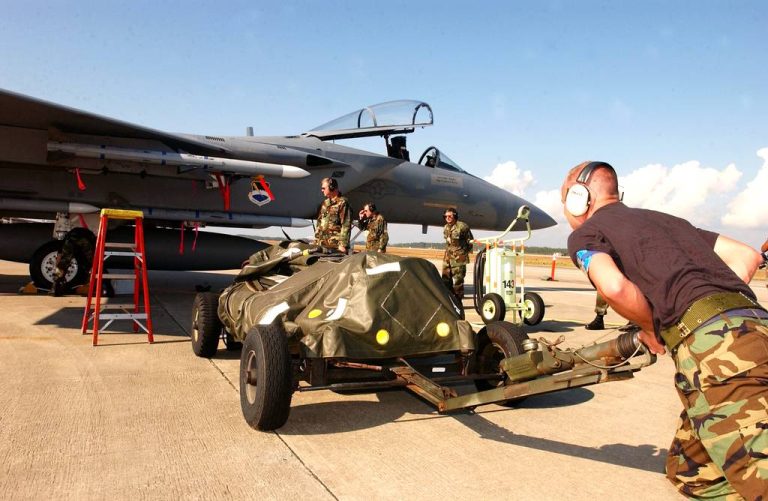
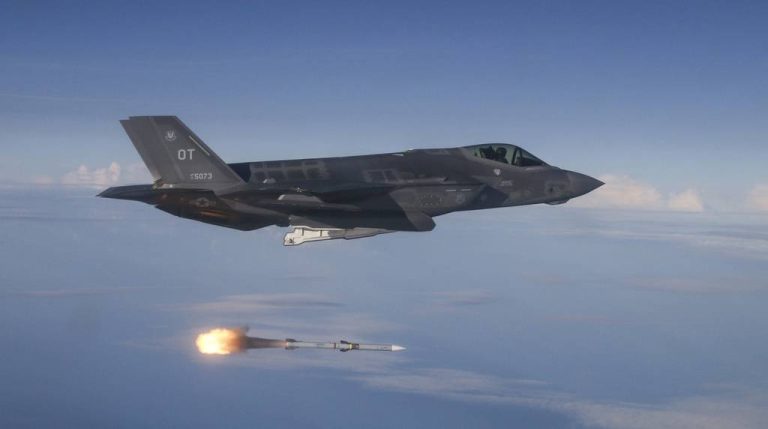
F-35 Lightning II, F-22 Raptor and F-15 Eagle units will go head-to-head in a gauntlet of simulated air combat scenarios, weapons loading, maintenance and weapons director competitions.

Fourth- and fifth-generation aircraft will act as the adversarial “red team,” Air Combat Command spokesperson Mike Reeves told Air Force Times. It’s unclear whether William Tell will bring in the Air Force’s red air contractors like Top Aces and Textron subsidiary ATAC, which fly the F-16 Fighting Falcon and Mirage F1 jets, or turn to drone targets like the remote-controlled QF-16s.

Pilots will be tested on their offensive and defensive prowess against simulated enemy air forces, and on how well they maneuver when an adversary aircraft is in sight.

“There will be a heritage event with live air-to-air gun employment against a towed banner,” Reeves said. “There will also be … weapons loading, command and control, and intelligence competitions.”

Wings across Air Combat Command and Pacific Air Forces are allowed to send teams of 10 to 14 airmen, depending on the type of aircraft. Each team needs one captain, an aircrew of up to eight people, two intelligence airmen and three weapons loaders. Command-and-control wings can also send three members apiece to participate.

Participants will compete for individual and team awards. The group that best thinks outside the box in collaborating with other jets will be crowned the top “fighter integration team,” to show that the aircraft are “most lethal when used as a cohesive fighting force,” Reeves said.

Planners hope the resurgence of William Tell will help prepare airmen for real-life combat operations in the Indo-Pacific, where they could face off against Chinese jets like the J-16 fighter that buzzed an American RC-135 Rivet Joint reconnaissance plane on May 26.

The U.S. considers China its top strategic threat and has pledged to protect Taiwan, the autonomous island nation that Beijing claims as its own territory, if China were to invade.

“Our unwavering commitment to air dominance remains steadfast,” Air Combat Command boss Gen. Mark Kelly said in a release. “We reiterate our steadfast dedication to maintaining control of the skies in support of our joint force and multinational partners.”

Rachel Cohen joined Air Force Times as senior reporter in March 2021. Her work has appeared in Air Force Magazine, Inside Defense, Inside Health Policy, the Frederick News-Post (Md.), the Washington Post, and others.

50 Cal rifle explodes | Survival Monkey Forums

0

This is just proof of the adage “You get what you pay for”. I’ve owned and been shooting .50 cals for a couple of decades now. When they first starting gaining popularity in the late 90’s they were very expensive. A lot of companies then and since have tried to come out with “more affordable” ones. In other words, cheaper made. This led to a string of failures like in the video. The .50 cal shooters boards were filled with warnings about the different, dangerous, and junk guns on the market.
.50’s are a safe and extremely fun to shoot rifle but the chamber pressures are nothing to take lightly. It doesn’t matter what ammo you shoot in them, if they are cheaply made you are taking your life in your hands. I have shot a lot of milsurp, including AP, API, and APIT. Those rounds were made for the M2 machine gun and like all machine gun ammo the powder load can vary somewhat from round to round. That variant usually is not enough to make much of a difference except in ballistics. But it is possible to get an extremely hot round that could possibly damage a quality firearm and almost certainly damage or even destroy a cheap one.
I have a lot of milsurp I use for practice, especially the API as it makes it easier for the spotter to see the hit with it. But for competition I only shoot quality, expensive, factory ammo.
So yes, it is true, you do get what you pay for. Especially in something as powerful as a .50 cal, spend the extra money now and you might well save the hospital and or funeral costs later.

“The Serbu RN-50 was put out so cheap it’s allowed anyone to be able to afford a 50 caliber rifle. However one of the ways costs were kept down was by skipping out on some key safety features that are present in most firearms”

Serbu RN-50

Found this, part of a video that Mark Serbu came out with to respond to this. Sounds like some CYA to me.

“Mark Serbu, the designer of the rifle that exploded, also released a video to “assure people that the RN-50 is a safe gun … regardless of, yeah, it blew up and almost killed a guy.”

“Guns blow up every day, but it’s not talked about a lot,” Serbu said, saying the detonation of a “screwy” round “would have blown up any gun.””


Multiyear missile buys would stabilize industry

0

WASHINGTON — The Pentagon needs to give the defense industry a more consistent demand signal on how many missiles, munitions and spare parts companies will need to build, Air Force Chief of Staff Gen. CQ Brown said on Wednesday.

Two ways the Pentagon can provide that steadier business include multiyear procurements for weapons and greater use of predictive maintenance, Brown said during a discussion with the Mitchell Institute for Aerospace Studies.

Brown said the military has focused too little keeping a steady flow of munitions production and procurement. “In some cases, because you don’t have a threat on your doorstep, munitions aren’t maybe high on our priority list,” he said.

But with the threat now posed by China and Russia, “that’s different now,” he added.

“This is an area that we’ve got to continue to pay attention to, to ensure that we bring [munitions] along as well,” said Brown, who President Joe Biden last month nominated to be the next chairman of the Joint Chiefs of Staff.

He cited the Korea readiness review, which the military conducted during his tenure as Pacific Air Forces commander, examining what would be necessary to counter a threat from North Korea as an example of the kind of advance munitions planning that must take place. Part of that review, Brown said, was to “look really hard at munitions.”

Brown reiterated the Air Force’s call in its proposed fiscal 2024 budget for multiyear procurements for three key weapons: the Raytheon Technologies-made AIM-120 Advanced Medium Range Air-to-Air Missile, and the Lockheed Martin-made Joint Air-to-Surface Standoff Missile-Extended Range as well as the Long-Range Anti-Ship Missile.

Air Force officials said in March during the budget’s unveiling that the service wanted to use about $1 billion so industry could procure long-lead items for those weapons, as well as other steps that would send a longer-term demand signal to industry. The FY23 National Defense Authorization Act granted the Air Force the authority to make those multiyear purchases.

The Air Force’s proposed FY24 budget would roughly double its overall spending on missiles, from $2.3 billion in FY23 to $4.7 billion.

The Pentagon is also seeking lawmakers’ approval to conduct multiyear buys of Raytheon’s Patriot surface-to-air guided missile system and Lockheed’s Guided Multiple Launch Rocket System, fired from the M142 High Mobility Artillery Rocket System. The U.S. government has provided those weapons to Ukraine as it fights off a Russian invasion.

And if the military wants industry to be able to surge munitions production capacity in an emergency, Brown said, it must make such multiyear buys a regular part of how it does business. That way, industry will have a more reliable demand signal and can keep its production lines flowing.

“I believe that’s just a start,” Brown said, referring to the multiyear buys in the FY24 budget request. “We’ve got to look at multiyear procurements so that it helps give a predictable demand signal to industry. And it’s not just the prime [contractors], it’s all the subs below them so they actually have supply chains laid in, they’re [set up with the proper facilities], they have the workforce, and it’s not a little bit up and down and unpredictability.”

Brown also said it will be important to ensure allies and partners have access to these munitions — and that industry can build enough to keep both them and the United States armed.

“It’s great for them to have the airplanes, but they’ve also got to have the munitions that are capable,” Brown said. “How do we make sure that we have enough munitions on the shelf to support us and our allies and partners? This is something that we need to focus on.”

Brown said the digital engineering of munitions will make it easier to take a more modular approach to building some weapons, similar to the way new aircraft, such as the B-21 Raider, use a modular architecture.

Brown also said the Air Force’s desire to conduct more predictive, conditions-based maintenance on aircraft — where maintainers track how long parts have been on an airplane and try to replace them before they wear out and break — could also help provide a steadier demand signal for industry.

“With data, you know based on the service life of this part how long before it’s going to break,” Brown said. “You don’t wait until it breaks. You’re able to replace it a little bit sooner, which also can help create the demand signal for the supply chain.”

Brown said the Air Force’s Rapid Sustainment Office has been looking closely at ways to use maintenance data to not just decide when maintainers should replace parts, but also to help industry predict how it needs to manage its supply chains.

Stephen Losey is the air warfare reporter for Defense News. He previously covered leadership and personnel issues at Air Force Times, and the Pentagon, special operations and air warfare at Military.com. He has traveled to the Middle East to cover U.S. Air Force operations.

NATO prepares unprecedented air exercise in show of force to Russia

0

BERLIN — Germany is preparing to host the biggest air deployment exercise in NATO’s history, a show of force intended to impress allies and potential adversaries such as Russia, German and American officials said Wednesday.

The Air Defender 23 exercise starting next week will see 10,000 participants and 250 aircraft from 25 nations respond to a simulated attack on a NATO member country. The United States alone is sending 2,000 U.S. Air National Guard personnel and about 100 aircraft to take part in the June 12-23 training maneuvers.

“This is an exercise that would be absolutely impressive to anybody who’s watching, and we don’t make anybody watch it,” U.S. Ambassador to Germany Amy Gutmann said.

“It will demonstrate beyond a shadow of a doubt the agility and the swiftness of our allied force in NATO as a first responder,” she told reporters in Berlin.

“I would be pretty surprised if any world leader was not taking note of what this shows in terms of the spirit of this alliance, which means the strength of this alliance,” Gutmann said.

“And that includes Mr. Putin,” she added, referring to Russian President Vladimir Putin.

While the drill was planned for several years, Russia’s invasion of Ukraine in February 2022 ear has jolted NATO into preparing in earnest for the possibility of an attack on its territory. Sweden, which is hoping to join the alliance, and Japan are also taking part in the exercise.

“We are showing that NATO territory is our red line, that we are prepared to defend every centimeter of this territory,” said Lt. Gen. Ingo Gerhartz of the German air force, which is coordinating the exercise. “But we won’t, for example, conduct any flights toward Kalinigrad. So this is intended to be defensive.”

Kalinigrad is a Russian exclave located on the Baltic Sea between Poland and Lithuania.

Lt. Gen. Michael A. Loh, director of the U.S. Air National Guard, said the exercise goes beyond deterrence.

“It’s about the readiness of our force. It’s about coordination, not just within NATO, but with our other allies and partners outside of NATO,” he said.

Loh said the exercise would be an opportunity for younger U.S. airmen, many of whom have mainly gotten experience serving in the Middle East, to build relationships with allies in Europe and prepare for a different military scenario.

“So this is about now establishing what it means to go against a great power, in a great power competition,” he said.

Authorities have said the drill will cause some disruption to civilian flights in Europe during the period.

forum goin down fer emergency maintenance

0

forum goin down fer emergency maintenance

now

testin | Survival Monkey Forums

0

Discussion in ‘Site Announcements‘ started by sec_monkey, Jun 7, 2023 at 8:18.


  1. sec_monkey
    SM Security
    Administrator

    testin

    test.


  2. VisuTrac

    VisuTrac
    Ваша мать носит военные ботинки
    Site Supporter+++

    fireit.


  3. sec_monkey

    sec_monkey
    SM Security
    Administrator

    testin

    test2.


survivalmonkey SSL seal


survivalmonkey.com warrant canary

What the US should do with its A-10 Thunderbolt

0

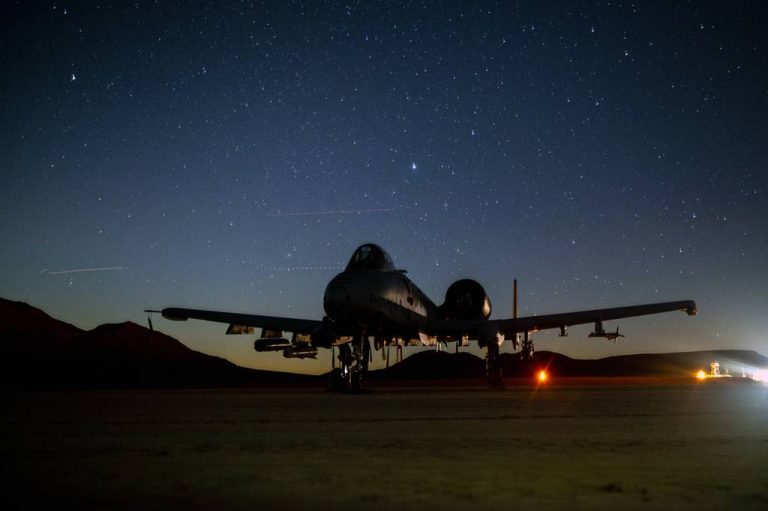
After years of obstruction, Congress is finally approving the Air Force’s plan to retire the A-10 Thunderbolt. This is the right call, as the A-10 is no longer suited to America’s geostrategic needs. However, we should not simply dispose of this venerable plane; in the hands of our international partners, it can continue advancing the national interest.

The U.S. government created the A-10 in the 1970s to provide close-air support to American ground troops. At the time it was an effective counterweight to the threat of Soviet tanks, and in the decades since it has served the military faithfully.

The A-10 proved especially useful in the Gulf War, when it flew 8,100 sorties and destroyed thousands of Soviet-era combat vehicles and equipment. Later, it helped the U.S. destroy hardened enemy positions in the war on terrorism.

But major military operations in the Middle East have ceased. Today, our greatest adversary is communist China, whose tanks and emplacements are much more advanced than those used by the Soviets or Islamic terrorists.

To prepare to counter Beijing in a future conflict, we must make the best possible use of our limited hangar space and procurement dollars. To do that, we must retire the A-10, as senior military leaders have called for. This will make room for aircraft like the F-35 Lightning II, and free funds for the development and construction of next-generation missiles and missile defense systems, which will be invaluable in any future Indo-Pacific conflict, whether that’s in Taiwan, the South China Sea or the Korean Peninsula.

However, the A-10 can still do a lot of good if transferred to allies and partners in need of it. The most obvious example is Ukraine, which is preparing to mount a counteroffensive against Soviet-era tanks and entrenched Russian positions.

At the recent G7 summit, President Joe Biden stated he supports training Ukrainian forces to operate F-16 Fighting Falcons, a critical first step to allies providing the planes to Ukraine. But there is good reason to wonder if an air-to-air fighter makes the most sense. Ukraine’s defense intelligence chief, for one, believes Ukraine would fare better with A-10s. Moreover, F-16s require 6,000 feet of tarmac — increasingly rare in bombed-out Ukraine — to take off and land, while A-10s only require 4,000 feet of dirt runway.

Beyond Ukraine, potential beneficiaries of an A-10 transfer program include African countries in the Sahel fighting ISIS and Boko Haram, or even Latin American nations combating paramilitary rebels and drug cartels in the jungle.

Such a program would be neither unprecedented nor unusual. The U.S. manufactures and sells vehicles and platforms the U.S. military no longer uses on a semi-regular basis. For instance, production of the A-29 Super Tucano employs hundreds of Floridians in Jacksonville and supports counterterrorism operations in Africa and Colombia.

Simply put, phasing out the A-10 by transferring it to allies and partners is the smart thing to do. Not only would it help America adapt to the challenges of the 21st century, it would also help our friends confront their own challenges without deep U.S. intervention. That’s killing two birds with one stone — the best kind of public policy.

Sen. Marco Rubio, R-Fla., is vice chairman of the Select Committee on Intelligence, and services on the Foreign Relations Committee.

A Few Natural Insect Repellents You Should Try This Summer

0

When we think of summer, we envision moments of relaxation, leisurely breaks, basking in the sun, enjoying the ocean, and indulging in long, balmy evenings. However, the arrival of summer also brings along some unwelcome companions in the form of bothersome and biting insects. Mosquitoes, in particular, have the potential to ruin our summer pleasures and disrupt a peaceful night’s sleep.

While countless insect repellents flood the market, readily available for purchase, it’s important to note that many of these commercial products are laden with harmful chemicals. Fortunately, there are numerous alternatives to repel insects naturally. Although they may be slightly less potent, these natural insect repellents can be used repeatedly without guilt, as their reduced effectiveness is balanced by their eco-friendly qualities. Infused with essential oils that are pleasant to the human nose yet repugnant to insects, these repellents are worth a try.

To utilize these natural insect repellents, one can apply them directly to the skin or clothing (it is advisable to test them first on the inner side of the clothing to ensure they do not cause any stains). For individuals with sensitive skin, it is recommended to conduct a skin tolerance test before full application. Simply spray a small amount of the repellent on the inner area of the elbow and wait for 24 hours, ensuring that no negative reactions occur.

By embracing the power of natural insect repellents, we can enjoy summer’s offerings while keeping those pesky insects at bay, naturally.

Vinegar insect repellent

This unconventional insect repellent has a rich herbal history dating back to ancient times. Personally, I have put it to the test, and it proved to be quite effective, although I found the scent of vinegar slightly bothersome. Nevertheless, it serves as an ideal repellent, even warding off ticks during adventurous forest walks. So, what ingredients do we need to prepare this natural concoction?

Gather 17 oz / 500ml of apple vinegar and one tablespoon of each of the following dried herbs: salvia, rosemary, lavender, thyme, and mint. Find a common preserve jar and place the herbs inside, then pour the vinegar over them. Allow the mixture to macerate by leaving the jar at room temperature for 2-3 weeks, remembering to shake it daily. Once the maceration period is complete, strain the mixture through a sieve and store the resulting liquid in the refrigerator.

For direct application to the skin, dilute the vinegar repellent with water in a 1:1 ratio and spray it as needed. It is advisable for individuals with sensitive skin to conduct a skin tolerance test before widespread use, ensuring that no adverse reactions occur.

Mild insect repellent for children

This gentle insect repellent is suitable for young children and excludes alcohol from its formula. For this preparation, you will need a 3.4 oz / 100ml spray bottle and the following essential oils: 5 drops of mint oil, 5 drops of lavender oil, and 5 drops of clove oil. Incorporate 0.5 oz / 15ml of glycerin, followed by a thorough shake of the bottle. Finally, add distilled water until the volume reaches 3 oz / 90ml. Shake the bottle once more before each use.

Essential oil insect repellent – Recipe #1

To prepare this insect repellent, you will require a 3.4 oz / 100ml spray bottle and 1 oz / 30ml of potent alcohol. Dissolve the following essential oils in the alcohol: 55 drops of eucalyptus oil, 15 drops of cedar oil, 15 drops of lavender oil, and 15 drops of rosemary oil. Additionally, incorporate 1 oz / 30ml of neem oil, known for its potent natural insecticidal properties. Prior to each use, it is necessary to shake the mixture thoroughly, as the oil tends to separate from the alcohol.

Apply the spray directly to the skin (individuals with sensitive skin should perform a skin tolerance test beforehand) at hourly intervals for optimal protection against insects.

By harnessing the power of these natural insect repellents, you can navigate the outdoors confidently, knowing that you are utilizing effective and eco-friendly solutions.

Strong essential oil insect repellent – Recipe #2

For this potent variation of insect repellent, gather a 3.4 oz / 100ml spray bottle and 1 oz / 30ml of strong alcohol. Dissolve the following essential oils in the alcohol: 0.1 oz / 3.5ml of geranium oil, 22 drops of cedar oil, 43 drops of lavender oil, and 10 drops of mint oil. To achieve a total volume of 3 oz / 90ml, add distilled water to the mixture. It is recommended to leave some space in the bottle and shake it before each use. Apply as needed for optimal effectiveness.

Essential oil and glycerin insect repellent

To create this insect repellent blend, prepare a 3.4 oz / 100ml spray bottle and 1 oz / 30ml of strong alcohol. Dissolve 30 drops of tea tree oil and 15 drops of geranium oil in the alcohol. Next, add 0.5 oz / 15ml of glycerin, ensuring a thorough shake of the bottle. Complete the mixture by adding distilled water to reach a total volume of 3 oz / 90ml. Remember to shake the bottle before each use to ensure proper blending.

Single use insect repellent – Recipe #1

This single-use insect repellent mixture is designed for direct application to the skin. Adjust the volume as needed. Prepare 0.5 oz / 15ml (1 tablespoon) of grapevine oil and combine it with two types of essential oils: 5 drops of lemongrass oil and 3 drops of geranium oil. Apply the mixture accordingly.

Single use insect repellent – Recipe #2

Similar to the previous single-use repellent, this mixture is suitable for direct application to the skin, and the volume can be adjusted as desired. Begin by preparing 0.5 oz / 15ml (1 tablespoon) of grapevine oil. Then, incorporate three types of essential oils: 4 drops of lemon oil (note its photosensitive nature and keep it away from sunlight), 2 drops of basil oil, and 2 drops of mint oil. Apply the mixture as needed, ensuring proper coverage.

BOR article1

Wasp repellent spray

During outdoor activities in the summertime, wasps can become quite bothersome. To combat their presence, why not be prepared with a natural solution? For this homemade anti-wasp spray, gather a 1.7 oz / 50ml spray bottle, 1 oz / 30ml of strong alcohol, 0.17 oz / 5ml of lavender essential oil, and 0.5 oz / 15ml of clove essential oil. This potent repellent can be safely sprayed into the air surrounding your seating area, while you sunbathe, swim, or engage in outdoor play.

Pet friendly anti-flea spray

Insects can be a nuisance not only to us but also to our beloved pets. Therefore, it’s essential to consider their well-being too. For a natural and pet-friendly anti-flea spray, acquire a 3.4 oz / 100ml spray bottle and 0.7 oz / 22ml of strong alcohol. Dissolve the following essential oils in the alcohol: 33 drops of eucalyptus oil, 66 drops of May Chang oil, 16 drops of lemon oil, and 5 drops of mint oil. Complete the mixture by adding distilled water until the total volume reaches 3 oz / 90ml.

Apply the spray to your pet’s fur once a week, avoiding the areas around its eyes and ears. It can also be used on their bedding. Note that for cats, a reduced dosage of essential oils is recommended due to their heightened sensitivity.

Natural sting relief balm

In the event of a mosquito or bee sting, this natural balm offers soothing relief. To create this remedy, you will need a small bowl and a pot for a water bath. Combine approximately 0.07 oz / 2 g of beeswax and 0.17 oz / 5ml of St. John’s wort oil (a macerated oil of St. John’s wort) in the bowl, then melt them together. Incorporate 15 drops of lavender essential oil and 5 drops of mint essential oil into the warmed mixture. Before transferring the balm into a jar or empty lip balm tube, add a drop of vitamin E for added nourishment. Apply the balm to the affected area of the skin several times a day to alleviate discomfort naturally.

Concluding

By utilizing these natural insect repellents and remedies, you can enjoy the great outdoors with peace of mind, knowing that you are taking a natural approach to insect control and finding relief from stings.

Recommended resources:

A few survival food recipes everyone needs to learn

How to use medicinal herbs for self-healing

TOTM June 2023 | Survival Monkey Forums

0

  1. After prepping for a short term interruption in food and necessities, it is ominously apparent that you cannot prep enough. Those with land, good soil, decent growing conditions, space for raising self perpetuating animals for food without having to provide purchased feed, the facilities to butcher that food source and preserve it will have a chance.

    What are your chances come a major food crisis?


  1. Minuteman
  2. jefferson
  3. Motomom34
  4. Dunerunner
  5. Coyote Ridge
  6. duane
  7. chelloveck
  8. Dunerunner
  9. ditch witch
  10. Dunerunner
  11. Ganado
  12. JC Refuge
  13. Dunerunner
  14. Yard Dart
  15. Ganado
  16. JC Refuge
  17. Dunerunner
  18. JC Refuge
  19. JC Refuge


survivalmonkey SSL seal


survivalmonkey.com warrant canary