Just got back from grocery shopping, $225 for a family of 2 with a garden. While shopping I met a member of our church. Businessman in town, owns his own company, employs about 200 people, been in business for 30 years or so. Been ill so haven't seen them for a few months. We were talking about religion, abortion, the rise of the movements, eg BLM, rainbow groups, immigrants, hate speech, raid on Trump, etc and the Bible's comments on things.. Nothing very much to the far right and…
Supreme Court Restricts Ghost Guns in Emergency Ruling

Ghost Gun another stupid name.
It will be interesting to see how they come down on the pending pistol brace cases.
……………………………………………………………………
Supreme Court allows continued regulation of so-called ‘ghost guns’
The U.S. Supreme Court has sided with the Biden administration, temporarily allowing enforcement of regulations over so-called “ghost guns” that can be made from kits at home.
The administration appealed a federal judge’s earlier ruling tossing out the regulations. In a 5-4 vote, the high court put that ruling from Texas on hold while the case is appealed further on the merits. The regulation will be enforced while the case is appealed to the 5th U.S. Circuit Court of Appeals in New Orleans and possibly further to the Supreme Court.
Justices Thomas, Alito, Gorsuch, and Kavanaugh would have allowed the lower court ruling to go into effect.
The federal regulation was put into place a year ago, and would put ghost guns under the same control as other fully assembled firearms, making it easier to trace serial numbers, background checks, and sales. The rule requires unfinished parts of a firearm like the frame of a handgun or the receiver of a long gun to be treated like a completed firearm. These parts need to be licensed and must have serial numbers.
Geo Political – Tribalism | Survival Monkey Forums
Birds, monkeys, fish and other animals form groups and bond with each other for protection, survival, and reproduction. Hairless apes are tribal for those reasons too but we are tribal for a number of less natural reasons, such as nationality, class, gender, sexual preference, race, politics and religion. Insiders are those who look, act and believe as we do. Outsiders are those who don’t look, act and believe as we do. There are good, bad and ugly consequences of…
Click to expand…
Ontario Knife Sold and Shutting Down long Time Plant
Ontario knives have always held up well for me.
I don’t know anything about the buyer, they may have just bought the name since they are shutting down the factory, firing the experienced workers and may just slap the name on ChiCom junk.
Ontario Knife Co. in Franklinville sold, 56 employees to lose jobs
Ontario Knife to end Franklinville operations after sale
Servotronics has agreed to sell its Ontario Knife Co. subsidiary, which will spell the end of the knife maker’s operations in Cattaraugus County.
Elma-based Servotronics plans to sell Ontario Knife for $2.1 million to Blue Ridge Knives, a distributor based in Virginia, according to a filing with federal regulators. The deal is expected to close Aug. 1.
Ontario Knife, which has made knives for consumers and government agencies, employs 35 people. Some of the employees will be offered jobs at Servotronics, said William Farrell Jr., CEO of Servotronics.
“Severance packages have been provided to all current employees which include efforts to help them find new employment in Franklinville,” Farrell said.
In late March, Servotronics revealed its intention to sell Ontario Knife, in order to focus on its core motion control equipment business.
“This was a difficult decision for the company to make,” Farrell said. “However, the financial conditions of the (Ontario Knife) business are not meeting our expectations.”
Servotronics’ consumer products group, which consists of Ontario Knife’s operations, generated $8.6 million in sales last year — a 3% drop from 2021. By comparison, Servotronics’ advanced technology group generated $35 million in sales, according to filings with the Securities and Exchange Commission.
In the first quarter of this year, the consumer products group reported an operating loss of $720,000.The cutlery business had operating losses of $21,000 last year and $1.6 million in 2021.
Eighty-four percent of Servotronics’ first-quarter revenues came from its advanced technology group.
Ontario Knife traces its roots to 1889 and was founded in Ontario County. The business moved to Franklinville in 1902; Servotronics bought the business in 1967.
The Olean Times Herald reported a Springville man, Dave Fenske, led a group of area investors that unsuccessfully sought to buy Ontario Knife, to keep its operations in the region.
For Sale – Clearance SALE – MREs (Meals Ready-to-Eat)


MREs (Meals Ready-to-Eat) clearance sale. These military-grade meals are perfect for camping, hiking, or outdoor activities. They are also an excellent option for emergency preparedness.
Each MRE has a main course, side dish, dessert, crackers, beverages, and utensils. They also contain vitamins and minerals to keep you healthy and energized.
We have a variety of MREs to choose from, so you can find the perfect ones for your needs. I also have a variety of quantities available, so you can buy as many or as few as you need.
What challenges will the next Missile Defense Agency director face?
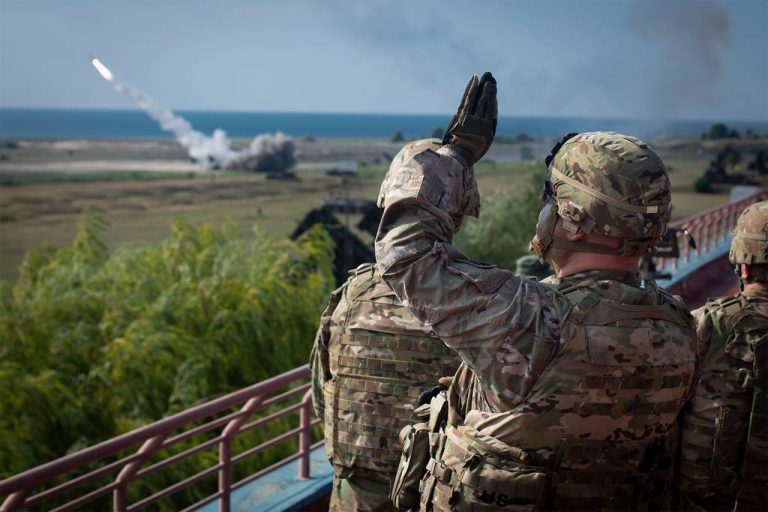
WASHINGTON — Maj. Gen. Heath Collins spent the last year managing some of the United States’ largest homeland and regional defense programs. Now, he’s poised to lead the Missile Defense Agency, where he would oversee key modernization programs, some of which will overlap with his lengthy background focused on space and satellites.
President Joe Biden in May tapped Collins to be the next MDA director, succeeding Vice Adm. Jon Hill, who has served as the agency’s leader since 2019.
Collins “has an ideal resume for MDA,” said Air Force Brig. Gen. Jason Bartolomei, who served as a deputy to Collin, who was the service’s program executive officer for weapons and led the Armament Directorate. Bartolomei now holds those titles.
“I think his experience in space, nukes, aircraft and weapons has prepared him very well for this opportunity,” he told Defense News.
Among the agency’s efforts the next director will oversee are developing a capability to destroy hypersonic missiles, increasing the use of space sensors, and upgrading the homeland missile defense system to counter increasingly complex ballistic and non-ballistic threats. The agency also recently began building a robust air and missile defense architecture in Guam to protect the island from attack.
Collins “is going to be ideal for the job,” according to Trey Obering III, who led MDA from 2004 to 2008.
“Heath has a great background for not just going to space with his space experience, but also the integration,” he told Defense News “We are fighting in a very integrated world now where we have to tie space, air, land, sea, cyber all into a coherent, integrated warfighting capability.”
Defending the homeland
Collins is now MDA’s program executive officer for ground-based weapons systems at Redstone Arsenal, Alabama. He oversees a $3.4 billion portfolio, which equates to roughly a third of the agency’s overall budget. The portfolio includes the Ground-based Midcourse Defense system, which is undergoing major upgrades.
The GMD system, which dates back nearly two decades, is made up of interceptors in the ground at Fort Greely, Alaska, and Vandenberg Space Force Base, California, that are designed to intercept intercontinental ballistic missiles, potentially fired by North Korea or Iran.
MDA is preparing to update the entire system, including its command-and-control elements, so it can both tackle more complex, emerging threats as well as remain operational. The most significant upgrade is a new, more capable interceptor.
During his tenure, Hill has prioritized homeland missile defense and keeping the GMD system capable of defeating rapidly emerging threats. Underway is a competitive development effort to replace current ground-based interceptors in the GMD system with a Next Generation Interceptor, or NGI.
A Northrop Grumman and RTX team is competing against a Lockheed Martin and Aerojet Rocketdyne team to replace the ground-based interceptors with Next Generation Interceptors.
The aim is to field the NGI by 2028, but industry competitors indicated they can move quicker. A 2021 independent analysis from the Cost Assessment and Program Evaluation office found NGI’s development price tag could total $13 billion, while procurement, operation and sustainment could come to a little more than $2 billion.
Since becoming program executive officer for ground-based weapons systems last summer, Collins has directly overseen the NGI program. The chief MDA role is a six-year term, although most directors serve three to four years. If Collins serves the full length, he could see NGI all the way to the developmental finish line.
“Given the singular importance of the Next Generation Interceptor — the program arguably most closely tied to MDA’s long-term institutional identity — it would be fortuitous for an acquisition professional so close to the program to be able to shepherd it and related efforts to fielding later this decade,” Tom Karako, a missile defense expert at the Center for Strategic and International Studies think tank, told Defense News.
Space-based defense
Even with enhanced missile defense capability from the ground, the next MDA director will need to continue proliferating space-based sensors for tracking and defeating missile threats, Obering said.
Defending the U.S. from Iran and North Korea, while also keeping in mind possible threats from China and Russia, “is going to take a combination of space-based precise tracking and other types of tracking, as well as traditional interceptors with terrestrial capabilities.”
Collins’ experience with satellites dates back to 20-plus years, when he was the manager of advanced satellite payloads at the National Reconnaissance Office in 2001. After two years in the role, he became the chief vehicle engineer at the organization until 2005.
He then spent several years working on wideband satellite communications efforts at the Los Angeles Air Force Base, and about a decade ago he became a deputy director of space and special programs at a Pentagon intelligence office.
The MDA is working with the Space Force to get its Hypersonic and Ballistic Tracking Space Sensor on orbit in fiscal 2023. Hill has said the existing sensor architecture allows for seeing and tracking some hypersonic threats, but being able to do so from space would bolster the agency’s capabilities.
The two HBTSS satellites are expected to launch later this year and will go through on-orbit testing over the next year. If successful, the sensors will be transferred to the Space Development Agency.
Hypersonic threats
MDA is also in the early phases of a program to develop an interceptor to defeat hypersonic missile threats in the glide phase of flight.
From July 2020 to July 2022, Collins was the Air Force’s program executive officer for weapons. In that role, he oversaw the service’s hypersonic weapons programs, including the AGM-183A Air-launched Rapid Response Weapon, a boost glide hypersonic weapon; and the Hypersonic Attack Cruise Missile, which uses a scramjet to breathe in air to reach hypersonic speed.
The AGM-183A ARRW, developed by Lockheed Martin, experienced three test launch failures during 2021 before recovering with a string of successful flight tests in 2022. But a failed all-up round test in March 2023 dealt a serious blow to the program, and its future is now in question.
Collins had ushered the Hypersonic Attack Cruise Missile program through its systems requirements phase; just prior to his 2022 departure, he announced the Air Force would pick a vendor later that year to continue development. A few months after he left the job, the Air Force selected an RTX and Northrop Grumman team to develop the weapon.
If confirmed by the Senate as MDA director, he will manage the agency’s Glide Phase Interceptor, or GPI, effort for regional hypersonic missile defense. The agency has tapped Northrop and RTX to rapidly develop prototypes.
Hill has said MDA wants to accelerate the plan, which now calls for the first delivery in the early 2030s.
‘The hardest three-star job’
The MDA director job “is probably the hardest three-star job in the military,” Obering said, “because first of all it has been controversial … because it causes the divide between Democrats and Republicans, between the arms control and the warfighting folks, between even things like the use of space for warfighting or for peace.”
Collins will need “people skills and leadership skills” to navigate those complexities and bridge divides, Obering added.
And according to Bartolomei, Collins is just that. “He is a good listener. He is cool under pressure, very steady. I think he is an excellent strategic thinker.”
Collins declined a request for an interview ahead of the confirmation process.
When Hill took the MDA director job in 2019, he told Defense News his No. 1 challenge was dealing with the “poorly defined” MDA charter provision that required the agency, once it finished developing a missile defense capability, to transfer it to one of the services.
MDA transferred the Patriot air and missile defense system to the Army, for example, but Hill said not every program lends itself to such a move.
At the time, lawmakers wanted to move the Terminal High Altitude Area Defense program to the Army. Hill warned that transfer could end up “fracturing a program during a time where it’s most critical to have those programs stable and taking care of the warfighter.”
Lawmakers ultimately backed off, but the debate could resurface, as Collins is likely to face increased attention from Congress on MDA’s work.
For instance, a group of New York lawmakers is pushing for a third homeland missile defense site on the East Coast, something previous MDA directors resisted due to budget constraints.
Also in recent years, lawmakers showed interest in what MDA and the services were doing to develop an air and missile defense architecture for Guam, in addition to pushing for a missile defense radar in Hawaii that the agency refuses to fund.
For example, a provision in the Senate Armed Services Committee’s FY24 defense authorization bill requires MDA to produce a strategy for “developing, acquiring and operationally establishing an integrated air and missile defense architecture” for not just Guam but the entire Indo-Pacific theater.
The House version of the bill calls on the agency’s director to produce a report on options for enhancing missile defense protection of the homeland “to hedge against the uncertainty of the future missile threats and technical risk in the U.S. missile defense development plans.”
Jen Judson is an award-winning journalist covering land warfare for Defense News. She has also worked for Politico and Inside Defense. She holds a Master of Science degree in journalism from Boston University and a Bachelor of Arts degree from Kenyon College.
What if We’re the Bad Guys Here?

Here is a very good opinion piece in the NYT.
Well worth the time to read!
Opinion | What if We’re the Bad Guys Here?
DAVID BROOKS
What if We’re the Bad Guys Here?
Aug. 2, 2023
By David Brooks
Opinion Columnist
Donald Trump seems to get indicted on a weekly basis. Yet he is utterly
dominating his Republican rivals in the polls, and he is tied with Joe Biden in
the general election surveys. Trump’s poll numbers are stronger against
Biden now than at any time in 2020.
What’s going on here? Why is this guy still politically viable, after all he’s
done?
We anti-Trumpers often tell a story to explain that. It was encapsulated in a
quote the University of North Carolina political scientist Marc Hetherington
gave to my colleague Thomas B. Edsall recently: “Republicans see a world
changing around them uncomfortably fast, and they want it to slow down,
maybe even take a step backward. But if you are a person of color, a woman
who values gender equality or an L.G.B.T. person, would you want to go back
to 1963? I doubt it.”
In this story, we anti-Trumpers are the good guys, the forces of progress and
enlightenment. The Trumpers are reactionary bigots and authoritarians.
Many Republicans support Trump no matter what, according to this story,
because at the end of the day, he’s still the bigot in chief, the embodiment of
their resentments and that’s what matters to them most.
I partly agree with this story, but it’s also a monument to elite self-
satisfaction.
So let me try another story on you. I ask you to try on a vantage point in
which we anti-Trumpers are not the eternal good guys. In fact, we’re the bad
guys.
This story begins in the 1960s, when high school grads had to go off to fight in
Vietnam but the children of the educated class got college deferments. It
continues in the 1970s, when the authorities imposed busing on working-class
areas in Boston but not on the upscale communities like Wellesley where
they themselves lived.
The ideal that we’re all in this together was replaced with the reality that the
educated class lives in a world up here and everybody else is forced into a
world down there. Members of our class are always publicly speaking out for
the marginalized, but somehow we always end up building systems that
serve ourselves.
The most important of those systems is the modern meritocracy. We built an
entire social order that sorts and excludes people on the basis of the quality
that we possess most: academic achievement. Highly educated parents go to
elite schools, marry each other, work at high-paying professional jobs and
pour enormous resources into our children, who get into the same elite
schools, marry each other and pass their exclusive class privileges down
from generation to generation.
Daniel Markovits summarized years of research in his book “The
Meritocracy Trap”: “Today, middle-class children lose out to the rich children
at school, and middle-class adults lose out to elite graduates at work.
Meritocracy blocks the middle class from opportunity. Then it blames those
who lose a competition for income and status that, even when everyone plays
by the rules, only the rich can win.”
The meritocracy isn’t only a system of exclusion; it’s an ethos. During his
presidency, Barack Obama used the word “smart” in the context of his
policies over 900 times. The implication was that anybody who disagreed
with his policies (and perhaps didn’t go to Harvard Law) must be stupid.
Over the last decades, we’ve taken over whole professions and locked
everybody else out. When I began my journalism career in Chicago in the
1980s, there were still some old crusty working-class guys around the
newsroom. Now we’re not only a college-dominated profession; we’re an
elite-college-dominated profession. Only 0.8 percent of college students
graduate from the super-elite 12 schools (the Ivy League colleges, plus
Stanford, M.I.T., Duke and the University of Chicago). A 2018 study found
that more than 50 percent of the staff writers at the beloved New York Times
and The Wall Street Journal attended one of the 29 most elite universities in
the nation.
Writing in Compact magazine, Michael Lind observes that the upper-middle-
class job market looks like a candelabrum: “Those who manage to squeeze
through the stem of a few prestigious colleges and universities in their youth
can then branch out to fill leadership positions in almost every vocation.”
Or, as Markovits puts it, “elite graduates monopolize the best jobs and at the
same time invent new technologies that privilege superskilled workers,
making the best jobs better and all other jobs worse.”
Members of our class also segregate ourselves into a few booming metro
areas: San Francisco, D.C., Austin and so on. In 2020, Biden won only 500 or
so counties, but together they are responsible for 71 percent of the American
economy. Trump won over 2,500 counties, responsible for only 29 percent.
Once we find our cliques, we don’t get out much. In the book “Social Class in
the 21st Century,” the sociologist Mike Savage and his co-researchers found
that the members of the highly educated class tend to be the most insular,
measured by how often we have contact with those who have jobs unlike our
own.
Armed with all kinds of economic, cultural and political power, we support
policies that help ourselves. Free trade makes the products we buy cheaper,
and our jobs are unlikely to be moved to China. Open immigration makes our
service staff cheaper, but new, less-educated immigrants aren’t likely to put
downward pressure on our wages.
Like all elites, we use language and mores as tools to recognize one another
and exclude others. Using words like “problematic,” “cisgender,” “Latinx”
and “intersectional” is a sure sign that you’ve got cultural capital coming out
of your ears. Meanwhile, members of the less-educated classes have to walk
on eggshells because they never know when we’ve changed the usage rules
so that something that was sayable five years ago now gets you fired.
We also change the moral norms in ways that suit ourselves, never mind the
cost to others. For example, there used to be a norm that discouraged people
from having children outside marriage, but that got washed away during our
period of cultural dominance, as we eroded norms that seemed judgmental or
that might inhibit individual freedom.
After this social norm was eroded, a funny thing happened. Members of our
class still overwhelmingly married and had children within wedlock. People
without our resources, unsupported by social norms, were less able to do
that. As Adrian Wooldridge points out in his magisterial 2021 book, “The
Aristocracy of Talent,” “Sixty percent of births to women with only a high
school certificate occur out of wedlock, compared with only 10 percent to
women with a university degree.” That matters, he continues, because “the
rate of single parenting is the most significant predictor of social immobility
in the country.”
Does this mean that I think the people in my class are vicious and evil? No.
Most of us are earnest, kind and public-spirited. But we take for granted and
benefit from systems that have become oppressive. Elite institutions have
become so politically progressive in part because the people in them want to
feel good about themselves as they take part in systems that exclude and
reject.
It’s easy to understand why people in less-educated classes would conclude
that they are under economic, political, cultural and moral assault — and why
they’ve rallied around Trump as their best warrior against the educated
class. He understood that it’s not the entrepreneurs who seem most
threatening to workers; it’s the professional class. Trump understood that
there was great demand for a leader who would stick his thumb in our eyes
on a daily basis and reject the whole epistemic regime that we rode in on.
If distrustful populism is your basic worldview, the Trump indictments seem
like just another skirmish in the class war between the professionals and the
workers, another assault by a bunch of coastal lawyers who want to take
down the man who most aggressively stands up to them. Of course, the
indictments don’t cause Trump supporters to abandon him. They cause them
to become more fiercely loyal. That’s the polling story of the last six months.
Are Trump supporters right that the indictments are just a political witch
hunt? Of course not. As a card-carrying member of my class, I still basically
trust the legal system and the neutral arbiters of justice. Trump is a monster
in the way we’ve all been saying for years and deserves to go to prison.
But there’s a larger context here. As the sociologist E. Digby Baltzell wrote
decades ago, “History is a graveyard of classes which have preferred caste
privileges to leadership.” That is the destiny our class is now flirting with. We
can condemn the Trumpian populists until the cows come home, but the real
question is: When will we stop behaving in ways that make Trumpism
inevitable?
The Times is committed to publishing a diversity of letters to the editor. Weʼd like to hear what you
think about this or any of our articles. Here are some tips. And hereʼs our email: [email protected].
Follow The New York Times Opinion section on Facebook, Twitter (@NYTopinion) and Instagram.
David Brooks has been a columnist with The Times since 2003. He is the author of “The Road to
Character” and, most recently, “The Second Mountain.” @nytdavidbrooks
Maintaining Your Window Blinds: Dos and Don’ts for Long-Lasting Performance

When looking for a window covering that suits you cozily, you don’t just want something that looks nice. It would help if you had those types that are reliable and durable too. In that case, window blinds can be your best bet. These structures perfectly balance form and function as they refine your home’s privacy, … Read more…
Emerging tech-focused firms could reshape the Top 100
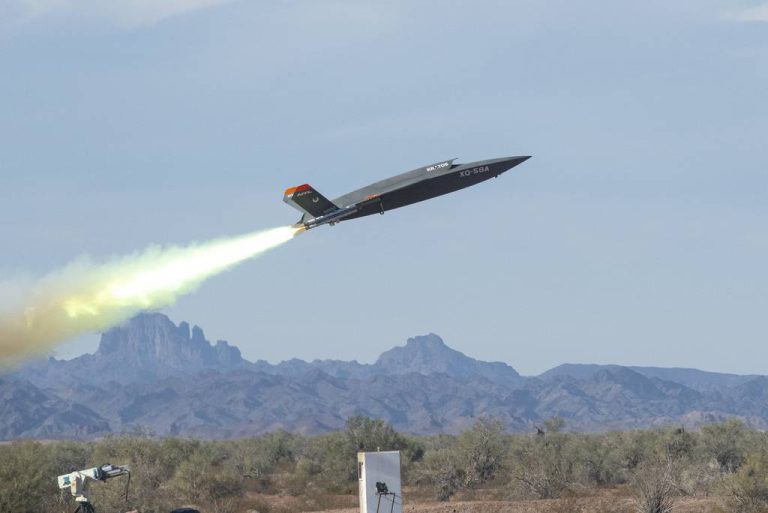
WASHINGTON — A new 30-foot-long, gray drone quietly arrived at a U.S. Air Force base last fall, without a public announcement until weeks later.
The drone’s arrival was discreet, but represented a key moment for its manufacturer Kratos Defense and Security Solutions — and the potential for a wave of business opportunities.
The service’s 40th Flight Test Squadron at the Florida base took possession of its first Kratos-made XQ-58A Valkyrie, and a second followed soon thereafter. Inside the drone’s core was intricate programming to allow it to fly on its own, without humans directly providing instructions or controlling it.
Within weeks, airmen began flying the new Valkyries, using rockets to launch them off rails and, in at least one case, flying them in tight formation with an F-16 fighter jet.
For nearly four years, the Air Force had experimented with the Valkyrie and other drones as it grew increasingly confident the idea of autonomous drone wingmen in combat could work — and become a cornerstone of how to fight wars.
Click here to see the Top 100, a ranking of the largest defense companies in the world.
Steve Fendley, president of Kratos’ unmanned systems business, said the Air Force’s acquisition and testing of those two Valkyries showed the emerging possibilities for the company and other similarly sized firms.
In the 2023 edition of Defense News’ Top 100 list, which ranks companies around the world based on their defense revenue, Kratos took 88th place — appearing on the list for just the second time in nearly a quarter century.
While the same group of large contractors remained at the top of this year’s list, unveiled Aug. 7, experts say there’s growing evidence the defense market may be evolving to offer better and more work to mid-tier firms, particularly those specializing in technologies central to the Defense Department’s modernization plans.
For years, Defense Department officials have spoken about the importance of a diversified industrial base, and tried to create opportunities for companies beyond the top-tier firms that have traditionally dominated the market.
Five years ago, Fendley told Defense News in June, the best shot for a company like Kratos was to sell the DoD a part for a subsystem. A top-tier defense firm would then put that into a major system. Today, Fendley said, firms his size have a shot at scoring contracts for the subsystems themselves. And, he noted, greater opportunities could soon start opening up for smaller and mid-tier firms to compete at the major system level.
“That momentum is still building,” he said. But in the near future, “there will be receptiveness toward small and mid-tier companies even providing systems. Certainly in five [years], maybe one or two.”
Top service officials have repeatedly said that in order to win the next war, the military must deploy more than traditional fighters, bombers and ships of the past. Instead, it should look to autonomous drones, unmanned surface maritime vessels, hypersonic weapons traveling at more than five times the speed of sound, and waves of small, cheap airborne drones armed with explosives.
To make this a reality, the services are attempting ambitious modernization efforts — many of which hinge on technologies such as autonomous software and advanced rocket engines, often produced by nontraditional firms.
An upstart has little chance of becoming one of the top-ranked businesses that typically lead major, multibillion-dollar programs, defense contracting expert Alan Chvotkin told Defense News. But, he added, the bottom half of the Top 100 rankings could see a reshuffling in years to come — and that for a smaller company, a little growth could go a long way.
“If you think about hypersonics and things of that sort, those are tailor-made for the mid-tier and the technology-oriented companies,” Chvotkin said. “I see opportunity there for awards, and for growth. … Ten percent growth in a smaller company is very different than what a larger company needs to sustain the beast.”
Defense industry analyst Byron Callan of Capital Alpha Partners said that while tech-centric companies such as Shield AI and Anduril have not yet cracked the Top 100 list, they have an opening to do so in the years to come.
“This isn’t so much about bending aluminum, or carbon fiber,” he said. “It’s about software. Typically when you see new entrants in the defense sector, it’s because they ride a wave of new technology. … It’s going to be things like [collaborative combat aircraft, or drone wingmen], or brand new software that will drive this forward.”
And there are signs it may be starting to happen, including at Kratos.
Its unmanned systems division has seen revenues grow 67% since 2018, to nearly $222 million. The steady growth in this area has helped Kratos bolster its bottom line, with the company landing back on the Top 100 list. This is the second time Kratos has made the list in nearly the last quarter century; in 2021 it notched a spot at 94th before falling back off the list.
Defense News each year ranks the top defense contractors for its Top 100 list, by collecting and tallying information on firms’ revenues from the companies, their annual reports, analysts and other research. Defense News tallied defense revenue of $534 billion in fiscal 2022 — a 10% decline from the $595 billion recorded the previous year. Nearly 56% of the defense revenues in FY22, or $298 billion, went to the 10 largest defense firms.
Callan said the decline in revenue in FY22 was likely due to a variety of factors — including different companies making the list, international currency fluctuations, merger and acquisition activity, and individual companies’ bottom lines shifting for their own reasons — and not a sign of overall weakness in the industry.
‘The tide has shifted’
For years, the Top 100 list has been dominated by mega-corporations such as Lockheed Martin, Boeing, Northrop Grumman, General Dynamics, BAE Systems and Raytheon, now known as RTX, with only minor fluctuations in rankings.
But the lower half of the list typically shows more churn, with new companies coming on and others falling off as their fortunes and the defense market shift.
Spirit AeroSystems — a Wichita, Kansas-based airframe manufacturer that supplies top defense firms — returned to the Top 100 list in 86th place this year. Its defense revenues grew 11% in FY22 to $650 million. Since Boeing spun off the firm in 2005, Spirit has made the list twice, with the other instance from 2021 when it eked into 99th place.
In recent years, Spirit has provided structural components used in the E-7 Wedgetail, V-280 Valor Future Long Range Assault Aircraft and B-21 Raider to defense giants Boeing, Bell and Northrop Grumman, respectively. Spirit will also build the struts and nacelles for the B-52 bomber′s major re-engining program.
In earnings calls this year, Spirit executives sounded bullish on the company’s opportunities for future growth, even setting a goal of reaching $1 billion in defense and space revenues by 2025.
In a February call with analysts, a company executive said Spirit sees five growth areas: hypersonics, unmanned aerial systems, next-generation effects, next-generation aircraft and space.
Meanwhile, AeroVironment, whose Switchblade loitering munition has become a notable weapon in Ukraine’s arsenal against Russia, also recorded an 8% increase in defense revenue to $294 million in FY22. It didn’t make the Top 100 list, but its prominent role in the Russia-Ukraine war and its growth over the past year make it emblematic of the shifting landscape for smaller defense firms.
AeroVironment’s chief executive, Wahid Nawabi, said in a June interview that the shift from waging war in the Middle East — which relied heavily on drones — to preparation for a great power conflict doesn’t mean the end of smaller uncrewed systems.
“For more than a century, the world thought about defense and warfare [in terms of] tanks, aircraft carriers, submarines, ships,” Nawabi said. “It doesn’t mean that those things are not going to play a role in the future — they will. But this concept of a distributed warfare, where smaller teams, smaller forces [are involved], is what we see in Ukraine. Small drones and loitering munitions have enabled Ukraine to do massively different things that nobody thought they could even do.”
The defense market still favors the largest prime contractors with the lobbying power and political influence against which smaller companies can’t compete, Nawabi noted.
Lockheed Martin and RTX led this year’s Top 100 list, and they remained unchanged at slots 1 and 2 respectively. Northrop Grumman — the prime contractor on major programs such as the B-21 Raider bomber and LGM-35A Sentinel intercontinental ballistic missile — rose one slot to 3rd this year, and Aviation Industry Corp. of China moved up from 6th to 4th.
Boeing, which had been 3rd last year, slid to 5th, as its defense revenues dropped 12% to $30.8 billion. In 2022, Boeing’s defense sector struggled with billions of dollars in charges on troubled programs such as the KC-46 Pegasus tanker, T-7 Red Hawk trainer and VC-25B Air Force One presidential aircraft.
Dan Grazier, a military analyst for the watchdog group Project on Government Oversight, said the so-called revolving door of former Pentagon officials leaving public service for lucrative industry jobs often benefits major companies. This can make it harder for smaller firms to take advantage of such relationships, he explained.
Grazier pointed to his organization’s report titled “Brass Parachutes,” which found the top 20 defense contractors in FY16 had hired 645 former senior government officials, military officers, lawmakers and senior legislative staff as lobbyists, board members or senior executives in 2018. Nearly half of those revolving door hires, 312 of them, went to five of the largest U.S. defense firms in FY16: Lockheed Martin, Boeing, Raytheon, General Dynamics and Northrop Grumman.
“Big defense contractors have pretty deep pockets,” Grazier said. “There are probably a lot of these smaller companies that want to break into this market, that are trying to figure out ways that they can attract some of those high-profile, former Pentagon officials.”
That has started to change in recent years, with ex-Trump administration officials, including former Defense Secretary Mark Esper, Army Secretary Ryan McCarthy and Air Force acquisition chief Will Roper, going to nontraditional firms after leaving the government.
Nawabi said a movement is underway that is creating an opening for companies such as AeroVironment to broaden their share.
“The tide has shifted,” Nawabi said. “The U.S. DoD has been more open to seeking companies like us to be more involved and have a better shot at these things. But it’s still a struggle; it’s nowhere near where it needs to be.”
Seeking growth
With the Air Force ramping up its effort to develop drone wingmen, the service is working with roughly 35 companies providing both aircraft and autonomous capabilities, service acquisition chief Andrew Hunter said in a May 18 discussion at George Mason University’s Arlington, Virginia, campus. And over time, many more could join the effort, Hunter said.
Hunter said the Air Force has a “heavy focus” on nontraditional providers as it develops collaborative combat aircraft, or CCA, though traditional firms are also involved. Hunter did not identify those companies, and Kratos’ Fendley declined to say what his company is specifically doing for the CCA program, citing its classified status.
But other companies and systems likely to be involved include Boeing, maker of the MQ-28 Ghost Bat drone flown as part of Australia’s loyal wingman program, and Lockheed Martin, whose Skunk Works division has been working on its own drone wingmen concept.
Asked about Northrop Grumman’s plans for the CCA program, chief executive Kathy Warden said in a July 27 earnings call the company is “looking at it closely.”
Hunter said businesses won’t need to be able to create an entire CCA to participate in the program. If “a company has real game” and can produce a specific portion of an autonomous system, he noted, there is a place for it at the table.
The Air Force wants to “lower the stakes” and have continuous competition on the CCA program so more companies can participate — and live to fight another day if one bid doesn’t go their way, Hunter said.
“If you don’t succeed in the first increment of CCA, if you’re not selected, that may be a one-year bump in your business plan, and you can come back strong the next year and win,” he explained. “No one is ever out of the game if they still have game to offer.”
Since Eglin received its Valkyries, Fendley said, the base’s work with the drones has rapidly progressed and focused on key technology areas related to autonomy and the operational effectiveness of manned-unmanned teaming. Kratos has also sold Valkyries to the Navy and Marine Corps to conduct similar tests.
The company has expanded its production facilities and staffing to support that work, Fendley noted, and now the Valkyrie is in low-rate production for several customers to accommodate the growing demand for drones.
Fendley said large, comprehensive drones are an example of the kind of complex systems mid-tier and smaller firms might provide within five years.
“Our biggest discriminator is our ability to look at a requirement and develop a very affordable solution against that requirement,” Fendley explained. “It’s not going to be the gold standard. We don’t try to be the gold standard. We try to be the affordable solution that can satisfy the need.”
The most important thing the Pentagon can do to foster this kind of growth, according to Callan of Capital Alpha Partners, is to start picking winners and awarding those kind of smaller firms significant contracts. That doesn’t mean giving those companies awards simply for the sake of propping them up, he said, but the Pentagon must keep an open mind when considering bids, rather than reflexively reaching for the big-name primes.
The Defense Department has long talked a good game about wanting to foster more diversity in the industrial base, Callan noted. But if they don’t put real money behind it — as soon as the FY25 budget proposal — the investors some smaller companies rely upon will start to look elsewhere, he said.
“Frankly, DoD at times is going to have to take risk” on companies that don’t have as extensive a track record as traditional firms, Callan said. “It can’t just be $5 [million] or $10 million contracts. If the contracts aren’t there, the capital is going to dry up and people are going to find other sandboxes to play in.”
Stephen Losey is the air warfare reporter for Defense News. He previously covered leadership and personnel issues at Air Force Times, and the Pentagon, special operations and air warfare at Military.com. He has traveled to the Middle East to cover U.S. Air Force operations.
Crazy Night Here!

Pic is at 12:50AM I don't recall ever seeing so many bolts of lightening come together to make one Super Bolt of Lightening like this one was! We got it easy South of us got totally hammered and news is reporting massive damage from the storm in the picture. At this point I made the video and took the pictures in near dead calm and no rain. Reminds me of pics of nukes going boom.