


Digital avionics coming to aging US Air Force C-130s

WASHINGTON — The days of analog cockpit gauges, clunky navigation systems and pilots lugging around laptops are numbered for the Air Force Reserve and Air National Guard’s C-130H Hercules transport aircraft.
The U.S. Air Force is transitioning most of its aging Guard and Reserve C-130Hs to a new, almost-entirely-digital avionics and navigation system that it hopes will dramatically simplify how aircrews fly them, the service said Tuesday.
The new system, dubbed Avionics Modernization Program Increment 2, will update the C-130′s cockpit with six interconnected digital displays. These large glass multifunctional displays will replace all but three of the old analog gauges, which date back to the C-130′s nearly 60-year-old original design.
“This is much larger than just a software or hardware upgrade,” said Maj. Jacob Duede, an experimental test pilot for the 417th Flight Test Squadron at Eglin Air Force Base. “It’s reconstructing and modernizing the aircraft’s entire cockpit area.”
The Air Force has about 118 C-130Hs total in its Guard and Reserve fleets, most of which are more than 30 years old. The service is replacing them with newer C-130Js, which active duty mobility units fly, but amid that yearslong effort, the service needs to upgrade its C-130Hs to keep them up to date.
The Air Force said the cockpits of more than 23 Reserve and 54 Guard C-130s will receive upgrades over the next five years, with each modification costing about $7 million.
The 417th Flight Test Squadron, part of the 96th Test Wing, began developmental testing of the new avionics system on the first C-130H to receive the upgrade in August, the service said. More Hercules will start receiving upgrades this month.
Developmental testing, which began in 2021, will continue at Eglin Air Force Base through December. The aircraft will then move to Little Rock, Arkansas, for the Air National Guard Air Force Reserve Command Test Center to start operational testing.
The cockpit upgrade also brings with it a new flight management system, autopilot, an updated global positioning system, a digital engine instrument, and a terrain and warning system, the Air Force said.
It will spell the end of a painfully cumbersome navigation process Guard and Reserve C-130 pilots have operated under for years, Duede said — one that required aircrews to bring tablets or laptops onboard to pull up the necessary navigational software.
“Aircrew essentially had to print the directions before flying and then type the information in using latitude and longitude, or use ground-based navigation aids,” Duede said. “This new mod is the newest GPS navigation with a by-name search function and autopilot, all built into the aircraft.”
The new system will also make it easier for aircrews to modify their flight plans midair, the service said. Under the old system, pilots had to coordinate with air traffic control to change their flight plan and then look up the new latitude and longitude on a tablet or laptop. The pilots would then enter those coordinates into the aircraft’s system. This could take anywhere from 30 seconds to 3 minutes, depending on the proficiency of the crew, Duede said — “either of which is a long time when in the air moving at 4 miles per minute.”
The Air Force said the new displays, with their built-in navigational software, would allow the pilot to change the flight plan by hand in less than 30 seconds.
The new integrated terrain awareness and warning system is a version of the ground- and object-avoidance program used in commercial aircraft, but upgraded with Air Force tactical flying requirements. To test that warning system, the service said, aircrews sometimes fly toward the ground or at obstacles to ensure it works as quickly and clearly as intended.
The aircrew study all parts of the new avionics system during developmental flight tests so the service can tell the manufacturer if anything needs changed.
“This is an entirely new system,” Caleb Reeves, a test engineer with the 417th Flight Test Squadron, said in the service announcement. “Everything we’re testing here is being done for the first time ever in this aircraft.”
Stephen Losey is the air warfare reporter for Defense News. He previously covered leadership and personnel issues at Air Force Times, and the Pentagon, special operations and air warfare at Military.com. He has traveled to the Middle East to cover U.S. Air Force operations.
How To Survive Domestic Violence

Domestic violence is a deeply disturbing issue, and when an abuser targets a loved one, it becomes even more abhorrent. Regrettably, domestic violence is more prevalent than many might imagine, with significant consequences. In fact, the statistics reveal the gravity of the situation.
According to recent FBI data, the extent of this problem is staggering. Approximately one-third of female murder victims fell victim to their intimate partners. This chilling statistic underscores the severe consequences of domestic violence, showing that it can, in far too many cases, escalate to lethal proportions.
While not every case of domestic violence ends in tragedy, it is essential to understand that breaking free from an abusive relationship is often the most favorable long-term option for both the victim and any children involved. However, it’s crucial to acknowledge that this critical step can also be the most perilous period within the relationship.
If you find yourself trapped in an abusive relationship, there are proactive measures you can take to enhance your safety, but there are also actions you should avoid. Here are some recommendations for both, rooted in the sobering reality of domestic violence statistics.
Ten things you should do to survive domestic violence
Commit to surviving domestic violence
Surviving domestic violence requires unwavering commitment. You must wholeheartedly commit to overcoming the violence in your life. First and foremost, recognize that you deserve to live a life filled with happiness and well-being.
Your worthiness should fuel your determination to improve your circumstances, ensuring a brighter future free from the shackles of abuse.
For those with children, your commitment must extend to their well-being as well. Children who witness domestic violence in their homes are at a higher risk of either becoming perpetrators or victims of such violence in their future relationships.
Additionally, it’s crucial to acknowledge that the abusive partner may harm your children physically or sexually when you are not present. Be ready to make the challenging decisions necessary to break free from the cycle of violence and thrive in the days to come.
Reach out for support
Help is available for those experiencing domestic violence. Various resources exist to assist victims in their journey towards safety and recovery. Many local communities have shelters that offer support and guidance, and it’s important to note that you can seek help without the obligation to stay at these shelters.
Assistance agencies are accessible through a simple internet search or by dialing the 2-1-1 referral line, making it easier than ever to connect with the aid you need.
Create an escape plan
Creating a well-thought-out escape plan is vital when attempting to break free from a violent relationship. It’s crucial to anticipate that the abuser may react violently as they realize they are losing control.
Your escape plan should include details on when and how to leave while minimizing the risk to your safety. Decide on the best timing for your departure and prepare for the steps you’ll take once you do leave. Make arrangements in advance for where you will live to ensure a smoother transition to a life free from domestic violence.
Have an escape bag ready
In the fight against domestic violence, preparation is key to ensuring a safe and smooth separation. One crucial step is to prepare an escape bag, a lifeline in critical moments. Store this bag in a secure location, like with a trusted friend or at a family member’s home. Renting a small locker at a local gym or storage facility is another option.
The escape bag should be packed with essentials, including crucial documents, cash, a change of clothing, and a list of important phone numbers for family and local resources. Don’t forget to consider obtaining a pre-paid phone for the bag, as your regular phone could be seized by the abuser or used to track you in extreme situations
A financial path to independence
For survivors of domestic violence, financial independence is a critical step toward reclaiming control. Opening a separate bank account in your name can provide you with the opportunity to establish a banking relationship and discreetly save money. It’s vital to ensure that the account is with a different bank than the one you and your abuser currently use, safeguarding your financial autonomy.
Ensure your children’s well-being
When dealing with domestic violence and considering escape plans, it’s important to communicate with your children. Reassure them while being cautious not to disclose specific plans. A child may unintentionally reveal sensitive information, potentially jeopardizing your safety.
If your child is old enough, establish a “safe word” that can be used in emergencies. You may inform the child that when this word is used, they should leave the house (or refrain from coming home if communicated over the phone) and immediately call 911.
Consider obtaining a protective order for domestic violence protection
Protective orders, also known as injunctions for protection or temporary protection orders depending on your state, are crucial legal instruments to restrain an abusive party from contacting the victim. These orders can encompass various instructions, including prohibiting the abuser from contacting the victim and the victim’s family, as well as potentially evicting the abuser from the residence and awarding custody of any children to the victim. They are a vital legal protection against domestic violence.

Empower yourself through Self-Defense
Empowerment is key when confronting domestic violence, and self-defense training can be a valuable asset. Abusers often rely on physical dominance to intimidate victims. Learning self-defense techniques can provide you with the means to protect yourself. Self-defense encompasses a range of options, from pepper spray and stun guns to firearms, and good training will teach you when each is appropriate.
If you opt for a concealed weapons permit, keep in mind that the process can take several months. However, some states offer provisions to expedite the process for those believed to be in immediate danger. For instance, Colorado allows for a 90-day emergency permit issuance by the sheriff, and Kentucky recently enacted a law enabling domestic violence victims with protection orders to obtain an emergency concealed weapons permit from the state police.
Vigilance for personal safety
When you find yourself entangled in a domestic violence situation, staying vigilant about your surroundings is paramount. If you are still living with the abuser, it’s crucial to be aware of rooms you should avoid when under the threat of an attack.
Identify spaces that lack avenues for escape, such as small, enclosed rooms, and make a mental note of them. If you have already separated from the abuser, maintaining situational awareness is equally important. Abusers are known to stalk their victims, making vigilance a vital part of your personal safety strategy.
Consider learning self-defense techniques to boost your confidence in protecting yourself. These skills can empower you to react effectively in high-pressure situations. Furthermore, establish a network of trusted friends, family members, or neighbors who can provide support and a safe haven when needed.
Obtain effective locks and surveillance
After successfully separating from the abuser, fortifying the security of your new home becomes a priority. Invest in high-quality locks and consider implementing a robust security system. Surveillance systems have become relatively affordable, making them an accessible choice.
These systems serve a dual purpose: not only do they deter potential intruders, but they can also document any violations of a protection order that the abuser may commit.
A well-secured home can provide peace of mind, giving you the confidence to rebuild your life without the constant fear of intrusion. Moreover, if you have obtained a protective order, this added layer of security can be instrumental in ensuring that you remain safe and free from the threat of domestic violence.
As an additional safety measure, establish a code word or signal with your support network, enabling you to quickly communicate distress without raising suspicion. This extra layer of protection can be invaluable in times of crisis.
Ten things you should not do if you want to survive domestic violence
Don’t blame yourself for domestic violence

It’s common for abuse victims to internalize blame, wrongly believing that they are responsible for the violent behavior of their partner. However, it is essential to understand that the sole individual accountable for the violence is the abuser. Shifting this mindset is the first step towards healing and escaping domestic violence.
Self-compassion and self-forgiveness are crucial for rebuilding self-esteem and mental well-being. Seek support from professionals and support groups to help overcome the destructive self-blame that often accompanies domestic violence situations.
You’re not alone in domestic violence
Abusers frequently employ tactics to isolate their victims from friends and family. Victims might be coerced into moving away from loved ones, abandoning their social connections, or quitting their jobs to maintain control. It’s important to realize that you are not alone. Many individuals and local agencies are ready and willing to provide assistance to those experiencing domestic violence.
By reaching out to local support agencies, you may be surprised at the network of people who are eager to offer help, guidance, and emotional support as you break free from the cycle of abuse. This network can be a lifeline as you work toward a safer, violence-free future.
Trust your intuition
Every situation of abuse is unique, making it impossible for outsiders to provide 100-percent accurate advice. Trusting your instincts and making decisions that you believe are best for your safety and well-being is essential. Recognize that you are the expert in your own life and that your intuition can be a powerful guide.

Be truthful with law enforcement in domestic violence cases
During a domestic violence incident, you might be tempted to provide false information to law enforcement. However, it’s crucial to understand that lying to officers can have severe consequences, ranging from undermining your credibility in future incidents to potential arrest for obstructing an investigation. Honesty can be your best ally when seeking protection and justice.
Maintaining open and truthful communication with law enforcement ensures that your side of the story is accurately documented. This can be vital for building a case against the abuser and obtaining the protection and justice you deserve.
Seek support from your family in domestic violence situations
Families often sense when something is amiss in your relationship, and their concern can be a valuable resource. Rather than shutting them out, rely on your family for emotional and practical support. They can provide you with a sense of security and stability during challenging times.
By opening up to your family, you are not only protecting yourself but also strengthening the bonds that can aid in your journey to recovery and safety. Domestic violence is a complex issue, and the collective support of your loved ones can make a significant difference in your path to healing.
Believe in your ability to escape domestic violence
It’s easy to believe that you are trapped in an inescapable cycle of violence, but the truth is that there are many individuals and organizations ready to assist you when you reach out for help. Believe in your ability to escape the violence, and trust that a brighter, safer future is within reach.
Reject religious approval of domestic violence
It is crucial to understand that abuse is not a manifestation of love, and no faith condones the abuse of a partner or family member. Some abusers manipulate religious texts to justify their actions, but it’s essential to reject this false interpretation and recognize that your faith should never be used to legitimize harm.
Don’t decline medical assistance

In cases of domestic violence, it is understandable to feel embarrassed or concerned about the cost of medical treatment. However, declining medical assistance can be a potentially fatal mistake, especially when dealing with forms of abuse like strangulation. Such incidents can lead to severe injuries or even death if not promptly treated by medical professionals.
Be cautious of returning to an abusive relationship
Abusers can be charismatic and manipulative, especially after an episode of violence. They may temporarily exhibit kindness and caring, appearing to be the person you initially fell in love with. However, it’s crucial to remain skeptical of sudden positive changes. Abusers typically do not change overnight, if at all. Reentering an abusive relationship can be extremely risky and may lead to more violence and harm.
Don’t give up
Regardless of how challenging the situation may seem, remember that things can improve. Escaping a violent relationship demands effort and involves risks, but the possibility of a fulfilling, peaceful life is worth every ounce of determination and resilience. Don’t give up; there is hope for a brighter future free from domestic violence.
A final word
In the face of the harrowing challenges posed by domestic violence, it is crucial to remember that you are not alone, and help is available. The courage to break free from the cycle of abuse and the strength to rebuild your life are within you. By following the guidance provided in this content, you can take steps toward securing your safety, physical and emotional well-being, and ultimately, a brighter, violence-free future.
Please understand that it is never too late to seek assistance, to trust in your instincts, and to believe in your ability to overcome this adversity. Your journey may be arduous, but the pursuit of a fulfilling, peaceful life is a pursuit worth every ounce of your determination and resilience.
Remember, countless individuals and organizations are ready and willing to support you as you navigate the path to healing and a life free from domestic violence. You deserve safety, happiness, and a future filled with hope, and it is our hope that this content has provided you with valuable information and guidance in that pursuit.
Other Useful Resources:
Sexual Assault, Self-Protection Strategies for Women
Learn how to Safeguard your Home against Looters
How To Defend Yourself with Random Objects from Your Home
Knowledge to survive any medical crisis situation during a major disaster
Tuberculosis | Survival Monkey Forums
I was just reading this:
NYC struggles with spike in tuberculosis cases as illegal immigrants spread previously contained disease
NYC struggles with spike in tuberculosis cases as illegal immigrants spread previously contained disease – NaturalNews.com
I’ve got a trip planned to NYC in the beginning of Nov. I’m not very concerned about all of the Hammas/Palestinian/Israel protest stuff. I’m sure that’s isolated to certain areas.
But the Tuberculosis cases are a little unnerving. I think it’s pretty rare. I don’t care about myself that much. Just more spreading it to family/friends.
I looked at my birth vaccinations, and I don’t think I ever got the TB shot. It sounds like the TB vaccine is pretty effective, so I think that’s why the Globalists stopped giving it to people.
Czech Republic enters talks with Embraer for C-390 aircraft deal

WARSAW, Poland — The Czech government is entering negotiations to buy an undisclosed number of Embraer C-390 Millennium transport aircraft for the nation’s military, the Defence Ministry announced Tuesday.
“The Armed Forces of the Czech Republic currently do not own a medium- and long-range aircraft with a flight time of at least 12 hours which would also be capable of taking off and landing at airports with unpaved runways,” the ministry said in a statement.
The Czech company Aero Vodochody supplies to Brazil’s Embraer various components used to make the C-390.
It’s unclear how much the planned acquisition is worth.
Should Prague decide to award an order to Embraer, this would represent another contract for the manufacturer in the region, following Austria’s decision last month to buy four C-390s for the nation’s armed forces.
In a bid to replace its aging fleet of three C-130 Hercules cargo aircraft with new C-390s, Austria’s Defence Ministry announced Sept. 20 it will to spend between €130 million and €150 million (U.S. $137 million to U.S. $158 million) per plane.
Jaroslaw Adamowski is the Poland correspondent for Defense News.
Have You Been Chipped Already And If Not- When?

Bah – it’s far worse than most think.
Andrew Weissmann: FBI wants real-time Gmail, Dropbox spying power.
Despite the pervasiveness of law enforcement surveillance of digital communication, the FBI still has a difficult time monitoring Gmail, Google Voice, and Dropbox in real time. But that may change soon, because the bureau says it has made gaining more powers to wiretap all forms of Internet conversation and cloud storage a “top priority” this year.
Last week, during a talk for the American Bar Association in Washington, D.C., FBI general counsel Andrew Weissmann discussed some of the pressing surveillance and national security issues facing the bureau. He gave a few updates on the FBI’s efforts to address what it calls the “going dark” problem—how the rise in popularity of email and social networks has stifled its ability to monitor communications as they are being transmitted. It’s no secret that under the Electronic Communications Privacy Act, the feds can easily obtain archive copies of emails. When it comes to spying on emails or Gchat in real time, however, it’s a different story.
That’s because a 1994 surveillance law called the Communications Assistance for Law Enforcement Act only allows the government to force Internet providers and phone companies to install surveillance equipment within their networks. But it doesn’t cover email, cloud services, or online chat providers like Skype. Weissmann said that the FBI wants the power to mandate real-time surveillance of everything from Dropbox and online games (“the chat feature in Scrabble”) to Gmail and Google Voice. “Those communications are being used for criminal conversations,” he said.
While it is true that CALEA can only be used to compel Internet and phone providers to build in surveillance capabilities into their networks, the feds do have some existing powers to request surveillance of other services. Authorities can use a “Title III” order under the “Wiretap Act” to ask email and online chat providers furnish the government with “technical assistance necessary to accomplish the interception.” However, the FBI claims this is not sufficient because mandating that providers help with “technical assistance” is not the same thing as forcing them to “effectuate” a wiretap. In 2011, then-FBI general counsel Valerie Caproni—Weissmann’s predecessor—stated that Title III orders did not provide the bureau with an “effective lever” to “encourage providers” to set up live surveillance quickly and efficiently. In other words, the FBI believes it doesn’t have enough power under current legislation to strong-arm companies into providing real-time wiretaps of communications.
Because Gmail is sent between a user’s computer and Google’s servers using SSL encryption, for instance, the FBI can’t intercept it as it is flowing across networks and relies on the company to provide it with access. Google spokesman Chris Gaither hinted that it is already possible for the company to set up live surveillance under some circumstances. “CALEA doesn’t apply to Gmail but an order under the Wiretap Act may,” Gaither told me in an email. “At some point we may expand our transparency report to cover this topic in more depth, but until then I’m not able to provide additional information.”
Either way, the FBI is not happy with the current arrangement and is on a crusade for more surveillance authority. According to Weissmann, the bureau is working with “members of intelligence community” to craft a proposal for new Internet spy powers as “a top priority this year.” Citing security concerns, he declined to reveal any specifics. “It’s a very hard thing to talk about publicly,” he said, though acknowledged that “it’s something that there should be a public debate about.”
French firms to triple 155mm ammo production, boost weapons output

PARIS — French defense firms have boosted production of self-propelled guns, artillery shells, fighter jets and anti-air missiles, the country’s armed forces minister said Monday.
The announcement by Sébastien Lecornu comes as France aims to boost the delivery of weaponry to Ukraine, which is fighting off a Russian invasion, and more than a year after French President Emmanuel Macron called for the country to embrace a “war economy.”
France plans to increase its monthly deliveries of 155mm shells, from 1,000 per month in January 2023 to 3,000 per month in January 2024, Lecornu said.
“Concrete results of a shift to a war economy,” Lecornu wrote on X, formerly known as Twitter, following a visit to a local Nexter Systems facility in Roanne, which manufactures the truck-mounted 155mm howitzer Caesar. “To replenish our capacities transferred to Ukraine and to continue to supply all of our allies.”
Nexter has raised production of the Caesar to six per month from two at the start of 2022, Lecornu added, and the pace will increase to eight systems per month from the start of next year.
The company is providing operational support for all Caesar systems in service in Ukraine, using virtual reality to guide Ukrainian engineers through maintenance operations, Nexter CEO Nicolas Chamussy told Defense News at an industry forum outside Paris this month. He said a total of 49 Caesar systems were sent to Ukraine, including 19 from Denmark.
Lecornu had said last month that Nexter will supply an additional six Caesar weapons to Ukraine, in addition to 18 already supplied from French Army stocks and 12 that Ukraine acquired directly from Nexter’s parent firm KNDS.
Meanwhile, MBDA has doubled its production of the Mistral short-range surface-to-air missile to 40 per month; Dassault Aviation has tripled production of the Rafale fighter aircraft to three per month; and Thales has tripled its radar production capacity, according to Lecornu.
Russia’s ongoing war against Ukraine has meant France must shift to a long-term war economy, Macron said at the Eurosatory defense show in June 2022, while the country needs land-based weapon systems and sufficient funding for national security.
France passed a military budget in August for the 2024-2030 period that boosts defense spending next year by 7.5%, to €47.2 billion (U.S. $49.6 billion).
Rudy Ruitenberg is a Europe correspondent for Defense News. He started his career at Bloomberg News and has experience reporting on technology, commodity markets and politics.
The Air Force is launching an era of transformation. Can it work?
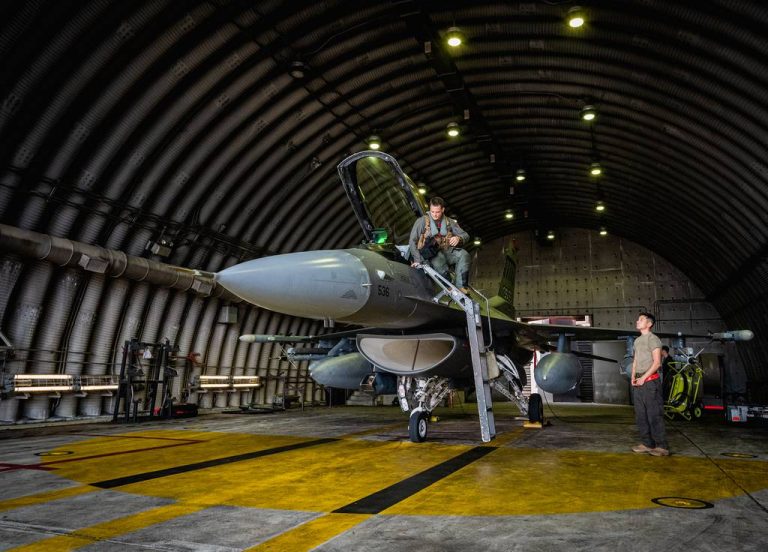
The Air Force is entering what leaders say could be its most transformational period in a generation, as the service looks to position itself as a global powerhouse for decades to come.
If their vision comes true, the Air Force would enter the 2030s as a smaller but more flexible force that is better positioned to win America’s wars, with sharper leaders and savvier airmen.
Just give it time.
“You’re going to see more change in the next four to six years than I’ve seen in my entire over-30-year career,” Chief Master Sergeant of the Air Force JoAnne Bass told Air Force Times Aug. 28.
Facing its first period of relative stability since the Sept. 11, 2001, terror attacks kicked off more than 20 years of U.S. military involvement in the Middle East and Southwest Asia, the Air Force is seizing the opportunity to overhaul everything from how it trains and promotes its members, to the jobs they hold and how they deploy overseas.
Those updates come amid a historic downturn in recruiting, which saw the Air Force miss its annual goal across all three components for the first time since 1999, and growing concerns that China’s bid to outpace America as a global superpower could lead to war.
“We want China to succeed, but to succeed by working within the rules that benefit all nations, including China,” Air Force Secretary Frank Kendall said in a Sept. 11 keynote address at the Air and Space Forces Association’s annual Air, Space and Cyber Conference outside Washington.
“If our power projection capability and capacity are not adequate to deter Chinese aggression, against Taiwan or elsewhere, war could occur,” he said. “If it does, and we cannot prevail, the results could cast a long shadow.”
Restructuring the force
Understanding the big picture starts with numbers.
After plunging to around 311,000 active duty troops in 2015, the Air Force has rebuilt its workforce to hover around 325,000 members — far below its Cold War peak of around 608,000 airmen in 1986.
Service leaders say that’s enough to handle today’s largely peacetime mission. But fighting another country whose military capabilities rival that of the U.S. will require something better.
“We are … asked to do a mission [that] we are not able to, based on our workforce,” Lt. Gen. Caroline Miller, the Air Force’s personnel chief, told Air Force Times Sept. 8.
But neither Miller nor Bass said they buy the argument that the Air Force doesn’t have enough people. Instead, they said, the service needs to use its manpower differently.
“I’m not convinced that we don’t have enough airmen,” Bass said. “We need to make sure that we’re focused on what the Air Force needs to look like and [if] we have the programs in place to … win our nation’s wars.”
Last year, the Air Force began an intensive effort to undo its top-heavy enlisted corps that it believes lacks enough experience in middle management and has too few lower-level troops for daily grunt work.
Ideally, the Air Force says, the project will create a robust corps of midlevel enlisted to manage a larger pool of younger airmen. If the plan works, half of the enlisted Air Force will occupy the ranks of E-4 or below.
In its first year, the effort has shrunk the number of master sergeant and technical sergeant jobs by 0.5% each, and 0.6% of staff sergeant jobs — shedding several hundred of those billets in total, according to figures provided to Air Force Times. Conversely, the E-4 corps grew by 2.2%, or about 1,300 senior airmen.
Master Sgt. Deana Heitzman, an Air Force spokesperson, said that because of higher than expected retention, the service ended up with more noncommissioned officers — staff sergeants and technical sergeants — than planned in 2023, despite plummeting promotion rates to those grades.
The service still needs to cut 0.2% of its senior airmen airmen jobs; 1.4% of its staff sergeant jobs; and 1.5% of its technical sergeant jobs, to meet its goals in fiscal 2025.
“The Air Force has continued to make progress towards the desired grade structure and restoring noncommissioned officer experience,” Heitzman said Aug. 30. “The Air Force continues to advance toward the FY25 target.”
On the officer side, tailoring the promotion system to be more responsive to the needs of each career field has helped higher-caliber airmen stand out from their peers and started to even out manning across fields, Miller argued.
How airmen are judged for promotions is changing, too. The Air Force has begun emphasizing interpersonal skills and technical expertise and stopped considering how long someone has been in the service, among other tweaks to the software they use and when they file job reviews each year.
Leaders want to know: “Can you communicate? Can you set a strategic plan? Can you make sure that your airmen are ready?” Miller said.
“Previously, it was whatever you wanted to say,” she said of performance reviews. “‘You did great at the chili cookoff,’ or whatever. It did not matter.”
Now it should be easier for supervisors to see if an airman is lacking a particular skill, or missing crucial job experience.
“We can have a much more robust conversation based on what we value,” Miller said.
Time will tell whether well-rounded airmen begin moving up the ladder more often.
But the transition has not been easy. Some enlisted airmen have taken to social media to grumble about failing to meet a higher bar for promotion, despite studying for the battery of tests on which midlevel troops are judged and compiling what they believe are impressive resumes and performance reviews.
Some said they’ll consider separating from the Air Force instead of being stuck at lower ranks. Others encouraged their wingmen to stick it out and focus on personal goals, whether they earn another stripe or not.
One Reddit user argued that low promotion rates demoralize airmen who are passed over despite a “promote now” or “must promote” recommendation from their supervisors.
“You end up with dudes with ‘promote now’ and years of solid service being told ‘you still are not good enough,’” user FlyingThrowAway2009 wrote in August 2022. “It is straight up insulting.”
Bass urged airmen to consider the broader needs of the service and their field instead of making rank.
“More experience is a good thing,” Bass said. “I think that we will see the fruits of our labor as time goes on.”
The next generation
The military’s recent recruiting slump further complicates that process. Billets that move to the lowest enlisted ranks can sit empty without a steady flow of airmen through boot camp and technical school.
About 39,000 new enlistees joined the Air Force in fiscal 2023. More than 3,800 of them came in under a program that offers thousands of dollars in bonus pay for entering the service’s most in-need fields, like special warfare and cyber operations, Heitzman said.
Recruiters will try to improve on that performance as they drive toward a loftier goal of 25,900 active duty recruits in fiscal 2024.
It’s unclear how the service’s failure to bring nearly 48,000 enlisted airmen into the active duty Air Force, Air National Guard and Air Force Reserve this year will affect operations at home and abroad.
Missing the goal this year is likely to stress communities that are already chronically undermanned and may hinder some of the Air Force’s broader force management initiatives.
Bass indicated it will place further burden on noncommissioned officers to pick up the slack of a smaller cadre of newcomers — something else to juggle amid the other effects of enlisted force restructuring.
“We are … looking for what impacts we’re going to have and how to lessen that impact at the most tactical level,” Bass said. “What it’s going to mean is that our NCO corps shoulders the challenges.”
Air Force Recruiting Service leaders warned in April that lagging recruitment would exacerbate a shortfall of 1,800 maintainers, 700 security forces, 300 munitions specialists, 100 fuel experts and more.
“Airmen will almost certainly be asked to work longer hours, cover more shifts and make sacrifices in their personal lives to meet the mission demands essential to our national security,” Maj. Gen. Ed Thomas, who retired in June as the service’s recruiting chief, wrote to the force. “The nation is depending on us.”
Get in, stay in
Once Americans join the Air Force, it’s up to the military keep them.
The Air Force retained about 93% of its officers and 90% of enlisted airmen in fiscal 2023, Heitzman said. Those numbers are on par with retention rates over the past several years.
That’s a bright spot in an otherwise gloomy personnel outlook, leaders said: When people join the Air Force, they tend to stay.
The service is trying to ward off any sharp dips in those numbers by offering bonuses to stay in uniform and multiple programs to improve airmen’s quality of life.
Around 900 airmen have opted to reenlist since April under the latest enlisted retention bonus program, Heitzman said.
More than 870 aviators have signed new contracts to extend their time in service under a pair of programs created to keep pilots in uniform. Nearly 7 in 10 officers who are in their last year of the time they promised the Air Force after finishing flight school have opted to stay longer.
Gen. David Allvin, the Air Force’s current vice chief of staff who is nominated to lead the service, told lawmakers Sept. 12 the service has issued waivers to allow enlisted airmen to remain in uniform past their “high year of tenure,” or the year they must retire if they are not promoted to the next rank.
The Air Force has also asked outside researchers to identify other ways to retain airmen. Service leaders acknowledge that tackling tough problems, like ensuring that troops have sufficient pay, health care, child care and food, are part of that solution.
Katherine Kuzminski, a military personnel expert at the Center for a New American Security, raised the possibility that a now-resolved funding snafu, which caused the Air Force to pause airmen’s moves to new bases and bonus pay programs, could have a chilling effect on retention.
The service must offer airmen and their families stability through “effective forecasting and the predictable and consistent application of policy and process,” especially in stressful situations like moving, she said in an email.
Keeping people in uniform is one step toward making the military’s workload more bearable. Another is ensuring that people are effectively distributed across those jobs, whether at the national or local level.
Speaking to reporters Sept. 12, Air Force Reserve boss Lt. Gen. John Healy recalled a recent town hall where airmen complained about their growing list of duties.
That typically happens in units that have a glut of people in certain roles but too few in others, he said. But it’s a problem he can’t control.
“I was like, ‘You’re 113% manned right now. You have overages in the spots that you don’t need them,’” Healy said. “‘What do you want me to do? Balance the units.’”
‘Break the AFSC structure’
Now the service must make the most of the people it has.
Leaders see the mid- to late-2020s as a crossroads at which the Air Force needs to embrace the digital age or lose its future wars. On top of bolstering the NCO corps and training airmen to think strategically, that means taking a critical look at what tomorrow’s jobs entail.
Air Force officials are considering what the overall pool of jobs should look like, and how to distribute troops among them. Those talks come as the service plans to retire hundreds of its stalwart airframes, some without direct replacements, and repurpose airmen into new missions.
Other aircraft that are replacing older models, like the C-130J Super Hercules airlifters and EC-37B Compass Call, require fewer crew members onboard. What to do with those troops?
Bass argues the Air Force could stand to lose some specialties. She believes there are too many Air Force Specialty Codes overall, and too few in areas like information warfare and cyber operations.
The service should look decades into the future to decide what skills will be most important and start building those career fields now, she said.
Asked what success would look like, Bass said it’s too early to tell.
“The working groups that we have set up right now that incorporate some of our futurists, and the people who are thinking deeply about the mission sets and the weapon systems that we have, are all doing some of that homework,” she said.
Bass has also asked the Air Force’s career field managers to consider what their jobs might look like in 10 years — or if they’re still needed at all.
Miller suggested airmen could see the types of careers being offered begin to change in the next two to three years.
Assignments could become less specialized, she said, or require airmen to hold different certifications. The goal is to shrink the Air Force’s overseas footprint by packaging a smaller number of airmen with a greater set of skills into a deployed unit.
That’s part of a larger push to turn the Air Force into an organization that prioritizes support to combatant commanders around the world over staffing home bases.
“I don’t know where we’re going to end,” Miller said. “It may be that we completely break the AFSC structure.”
Airmen will also start to see new career opportunities within specialties as well.
The Air Force will test the possibility of splitting career fields into two tracks: one to build commanders of operational squadrons and one to build subject matter experts. The experiment will begin with cyber operations officers, or the “17D” field, Miller said.
It’s unclear how widely airmen will embrace the idea. In 2018, the service tried a similar approach with mobility pilots that offered airmen the chance to spend their career in the cockpit or to transition into leadership roles. Just two people applied for the “flying-only” track.
The Air Force hasn’t considered bringing back that program, Allvin told Congress in September.
Whether the service’s ambitious slate of reforms lead to the outcomes it wants remains to be seen. But officials say they’re already starting to see airmen more fully embrace the call to service — to deter enemies and fight when needed.
“I think we have a better sense of why we wear this uniform, and what we have to do to make sure that every single airman is prepared appropriately … to defend our nation,” Bass said. “The strategic IQ has absolutely increased … and that’s probably what I will be most proud of as the chief master sergeant of the Air Force.”
Rachel Cohen joined Air Force Times in March 2021. She served as senior reporter until October 2023. Her work has appeared in Air Force Magazine, Inside Defense, Inside Health Policy, the Frederick News-Post (Md.), the Washington Post, and others.
Shell Bark VS Shag Bark.

How To Overcome Survivor Guilt

You find yourself on a peaceful train journey, traveling from the bustling city of Minneapolis to the charming town of Grand Rapids. In a sociable mood, you strike up a conversation with the woman seated across from you. The train ride is a bit shaky, but it’s nothing you haven’t experienced before.
Out of the blue, an unexpected event disrupts the tranquil atmosphere. The lights in the train car flicker, and the emergency alarm begins to blare. Startled, you grab your attention with a hint of worry. It’s clear that something is not right, and a sense of unease starts to fill the air. The train car comes to a jolting halt, and the sudden braking makes everyone lurch forward.
With a touch of concern, you realize that this is far from ordinary; it’s a situation that no one anticipated. An eerie silence replaces the usual sounds of the train’s movements, and an unsettling feeling washes over you. The doors of the train car remain sealed, and you can’t help but wonder what has caused this abrupt stop.
As you look around, you notice the fear and confusion on the faces of your fellow passengers. You lock eyes with the woman seated across the aisle from you. Her expression mirrors the anxiety you’re feeling, and you share a silent exchange of apprehension.
As time seems to drag on, your thoughts race with uncertainty. Then, slowly, you start to hear muffled voices and the distant sounds of emergency personnel. It becomes apparent that something has gone terribly wrong, and the situation remains precarious. You’re left with an unsettling feeling of vulnerability, not knowing what lies ahead.
You wake up in a hospital room, surrounded by the soft hum of medical equipment. You’re relieved to be alive, but you’re unsure how you managed to survive the ordeal. Hours later, you learn the tragic news that the woman you’d spoken to on the train didn’t make it. It’s a somber moment that leaves you with a heavy heart.
In the aftermath of this unexpected turn of events, a myriad of emotions wash over you.
What are you feeling?
Survivor guilt
Following a harrowing brush with death, most individuals might experience a profound sense of relief – the thought of “I’m alive!” resounding in their minds. This newfound lease on life can be accompanied by a profound feeling of gratitude, an overwhelming appreciation for the precious gift of survival. In the face of such close calls, they may consider themselves truly blessed.
However, a different, much darker emotional spectrum can envelop others. Instead of feeling blessed, they bear the heavy burden of feeling cursed, and this curse takes the form of guilt, more specifically, a phenomenon known as “survivor guilt.”
Survivor guilt is a complex psychological reaction often associated with post-traumatic stress disorder (PTSD). PTSD is a condition that frequently arises in those who have endured intensely distressing situations or events resulting in severe injury, loss, or even death. Within the realm of PTSD, anxiety tends to be the dominant emotion, overshadowing many other emotions.
But survivor guilt, as the term suggests, predominantly centers on a profound sense of guilt, a gnawing feeling that one does not deserve the life they still possess when others have lost theirs. It’s as if they carry the weight of the world’s misfortune on their shoulders, even though they had no control over the circumstances. This overwhelming guilt can lead to a cascade of emotions, often culminating in deep depression.
The burden of survivor guilt can be so overwhelming that it drives some individuals to the brink of despair, pushing them to contemplate the unthinkable, including thoughts of suicide. The tormenting question of “Why me?” lingers in their minds, and they grapple with a sense of unworthiness, constantly haunted by the memories of those who didn’t make it.
In addition to feelings of guilt and depression, individuals with survivor guilt often experience a sense of isolation. They may find it difficult to relate to others who haven’t experienced a similar trauma. As they witness the world moving forward, they may feel stuck in a never-ending loop of guilt and grief, unable to escape the relentless grip of their emotions.
Navigating the treacherous terrain of survivor guilt is a formidable challenge. It demands not only resilience but also a deep understanding of the complex interplay of emotions and the need for professional help to process and manage these overwhelming feelings.
The ABCs of emotions
Understanding the complex terrain of survivor guilt necessitates delving into the origins of our emotions. To truly comprehend why we feel the way we do, it’s essential to explore the “ABC” model. This model provides a framework for deciphering the intricate interplay of our emotions.
At point A in the ABC model, we encounter adversity, often exemplified by surviving a traumatic event. At point C, we find the consequence, which is the emotional reaction we experience, such as guilt. Many people tend to attribute their emotions (C) directly to the traumatic event (A), often seeing it as a straightforward cause-and-effect relationship: “This event occurred, so I feel this way.”
However, this perspective is not entirely accurate, and in this inaccuracy lies a silver lining. Why is this a fortunate realization? Because if our emotions were solely a byproduct of external events, we would be left feeling powerless, perpetually at the mercy of life’s unpredictable twists and turns. We would be victims of our circumstances, incapable of influencing or altering our emotional responses to life’s challenges.
Thankfully, we are not destined to be perpetual victims. Within the ABC model, a crucial component exists, represented by B—our beliefs and self-talk. It’s not A that directly gives rise to C; instead, it’s B. What we believe and the narratives we construct about event A determine the emotions we experience.
In simpler terms, it’s not the occurrence of event A, such as surviving a traumatic incident, that automatically triggers the emotion of survivor guilt (C). Rather, it is the content of our thoughts, our beliefs, and the internal dialogue we engage in (B) about having survived that wields the power to shape whether we experience survivor guilt or not.
To illustrate these principles, let’s examine a real-life case. While the names have been altered, the events themselves are undeniably authentic. This case study serves to highlight some of the beliefs and thought patterns that underpin or contribute to survivor guilt, but it also demonstrates how these beliefs can be challenged and ultimately transformed.
By exploring the multifaceted nature of survivor guilt through the lens of the ABC model and real-life experiences, we gain valuable insights into the intricacies of human emotions and our capacity to effect positive change in our emotional responses.

Dozing behind the wheel – Breaking free from self-imposed burdens
College student Alex and her friends were returning from an adventurous weekend in the mountains. Alex, usually a front-seat enthusiast, found herself in the back seat this time. Her friend, Sarah, had called “shotgun” earlier, securing the coveted front-seat spot beside the driver, Ella. Initially, Alex felt a pang of disappointment but soon settled into the back seat, cocooned with her cozy blanket and immersed in her music.
It was a late and pitch-dark night, and the long day had taken its toll on everyone. Alex drifted into sleep, an experience shared by the driver, Ella. Tragically, it was at that moment that their car veered off the road, colliding with a stand of trees. The accident claimed the lives of both Ella and Sarah, leaving Alex as the sole survivor, physically unharmed but profoundly scarred emotionally.
“I should have called ‘shotgun’ first,” Alex muttered to herself, her voice tinged with a heavy burden of guilt. She was well aware that her words held a certain truth: if she had been in the front seat, it could have been her life that was taken instead of Sarah’s. But the guilt she felt extended far beyond this acknowledgment.
In the midst of her anguish, Alex began to convince herself of falsehoods. She believed that she should have been in the front seat, that it was her duty to keep the driver awake, and worst of all, that she should have foreseen the danger of Ella falling asleep at the wheel. These self-imposed “should” statements plunged her into what psychologists often term the “tyranny of the should.” Her inner monologue was irrational, a reflection of distorted thinking and illogical conclusions. However, Alex clung to these beliefs, never pausing to question whether she was unjustly condemning herself. She put herself on trial within the confines of her own mind and declared herself guilty without presenting a fair defense.
But hope and clarity emerged. Alex’s beliefs were subjected to scrutiny, and the evidence was closely examined. She came to realize that she had no way of predicting the tragedy that unfolded. She bore no responsibility for the accident, nor did she dictate Sarah’s decision to sit in the front seat or Ella’s exhaustion behind the wheel.
With the guidance of compassionate support, Alex began to understand that she couldn’t control what had occurred. What she could influence, however, was her internal dialogue. Condemning herself as guilty didn’t serve her or her friends’ memory. The truth was that she had committed no wrongdoing, even though it felt as if she had.
Alex embarked on a journey to identify and challenge her thought patterns. As she altered her self-talk, her emotions began to shift. The weight of guilt diminished significantly, allowing her to mourn the loss appropriately. The accident was undeniably tragic, but it wasn’t her fault. Alex was free to experience deep sorrow for her friends’ untimely demise without carrying the unnecessary burden of guilt.
Survivor guilt and self-preservation

After a tragic natural disaster struck a close-knit neighborhood, a survivor named Emily was interviewed about her experience. Emily’s next-door neighbor, James, lost his life in the disaster, while she miraculously survived. In the midst of recounting the harrowing events, Emily hesitated and then admitted something that many might find surprising.
She confessed that, upon learning about the tragedy, a fleeting thought crossed her mind: “I’m relieved it wasn’t me.” This confession initially raised eyebrows, but as Emily continued to explain, her sentiment became more understandable.
Emily clarified that her initial reaction was not a desire for James’s misfortune. She had cherished their neighborly bond and grieved deeply for his loss. However, that initial thought was a candid acknowledgment of her profound relief that she had been spared. It was a testament to the instinctive human drive for self-preservation.
The reaction she shared was a reflection of her innate value for her own life, emphasizing that it’s a natural, unfiltered emotion that often occurs in the wake of a tragedy. Many others who had been through similar ordeals quietly nodded in agreement. They had felt the same, and it was a shared emotion that transcended judgment.
For Emily, coming to terms with this instinctive response was an essential part of her healing process. She recognized that this initial thought didn’t diminish her grief for James or her sense of empathy for those who lost loved ones. It was merely a momentary acknowledgment of her own survival, driven by the powerful instinct of self-preservation.
By sharing her experience and addressing this natural response, Emily encouraged a more open and compassionate conversation about survivor guilt, ultimately helping others in the community cope with their own complex emotions and find solace in the aftermath of the disaster.
Addressing survivor guilt through rational thinking

Survivor guilt often takes root in our minds, driven by a relentless barrage of self-questioning. It can be effectively challenged by asking a fundamental question: “Have I committed any wrongdoing?”
The key is not whether you “feel” like you’ve done something wrong; it’s a matter of determining whether you have actually transgressed. It’s crucial to differentiate between feelings and thoughts on one side and actions and behaviors on the other. Guilt arises when we’ve violated a standard or broken a rule of behavior. The pivotal question is whether this standard you believe you’ve transgressed is based on a realistic benchmark or if it’s an artifact of the “tyranny of the should.” This tyranny represents standards that are unrealistic, demanding perfection, and convincing you that you must adhere to them.
Survivor guilt finds its foundation in this flawed thinking. The path to liberation begins with the challenge of these misguided beliefs. Replace them with accurate, rational messages, and you’ll witness survivor guilt gradually receding, if not disappearing entirely. It’s essential to understand that sound thinking yields positive results, paving the way for emotional healing and self-compassion.
This article has been written by James H. Redford MD for Prepper’s Will.
You may also want to check this:
Knowledge to survive any medical crisis situation during a major disaster
Learn how to Safeguard your Home against Looters
Find Out What’s the Closest Nuclear Bunker to Your Home
The vital self-sufficiency lessons our great grand-fathers left us