Germany spends $2.3 billion on Airbus light attack helicopters

0

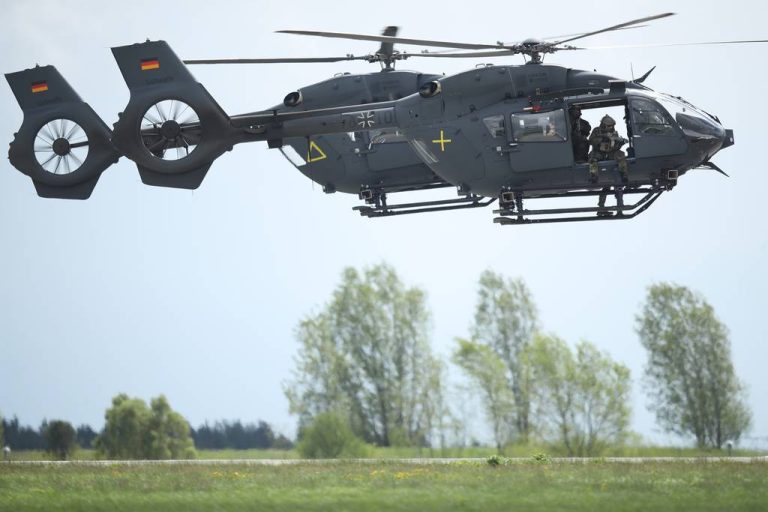
COLOGNE, Germany — The German Defence Ministry has signed a contract with Airbus for 62 H145M light attack helicopters, with a portion of the fleet equipped to fight tanks from afar — a direct lesson from the fighting in Ukraine.

Under the order, 57 of the aircraft will go to the Army and five to Air Force special operations forces. Twenty more are envisioned under a future option, Airbus Helicopters said in a Dec. 14 statement. Deliveries will begin in 2024, according to the vendor.

German lawmakers approved the requisite funding request of €2.1 billion (U.S. $2.3 billion) on Dec. 13. All aircraft will be capable of carrying an armaments package that is slated to include the Spike LR guided anti-tank missile, but only 24 will initially be set up to that end, according to parliamentary defense sources in Berlin that spoke on the condition of anonymity due to the sensitivity of the topic.

The purchase, including the envisioned anti-tank capabilities, comes against the backdrop of new insights into the requirement for standoff capabilities when countering tanks. In Ukraine, Russian helicopters were able to pick off Ukrainian armored vehicles by firing their missiles from a safe distance.

The latest version of the Spike LR missile, an Israeli design marketed by Eurospike in Europe, can reach targets 10 kilometers (6 miles) away when fired from helicopters, according to the manufacturer.

“We will ensure that the Bundeswehr [German military] receives the helicopters in accordance with the very ambitious delivery schedule which includes first deliveries in 2024 less than a year after contract signature,” said Bruno Even, CEO of Airbus Helicopters.

The new helicopters are slated to replace Germany’s fleet of Tiger choppers. Despite the hefty buy, defense officials consider the H145M fleet a “bridging solution” until a new generation of drones and loitering munitions are ready for fielding in the longer term.

The H145M is a military-specific derivative of a family of helicopters also available to the law enforcement market. The German military already operates 24 of the twin-engine aircraft for special operations as well as search and rescue missions, an Airbus statement read. The U.S. Army’s 500-strong fleet of Lakota light utility helicopters is based on the same design.

Sebastian Sprenger is associate editor for Europe at Defense News, reporting on the state of the defense market in the region, and on U.S.-Europe cooperation and multi-national investments in defense and global security. Previously he served as managing editor for Defense News. He is based in Cologne, Germany.

Texas takes steps to restoring freedom

0

Texas Open Carry Bill HB 910
Effective January 1, 2016

Texas Open Carry Overview

After 20 years (1995-2015) the familiar Texas Concealed Handgun License (CHL) officially changes to a Texas License To Carry or LTC — because it now protects both discreet and open carry of sidearms.

Bit by bit, the lost right to bear arms in Texas is being restored — at least for those with government carry papers — after decades of near-total infringement. Texas now has 826,000 license holders, a source of pride to many, but it means 97% of all Texans’ rights remain infringed — carry without papers remains banned in Texas. Still, it is a step in the right direction, for the pro-rights side (the left dislikes this liberty intensely).

As Texas joins the rest of the nation in varying degrees of freedom to bear arms in public, I advise caution while the kinks are worked out, authorities get used to the new standards and procedures, social norms develop, shop keepers acclimatize, the public gets used to the new normal of open carry, some bad apples test the limits of endurance and civility (not recommended), and a few of you become test cases to clarify the gray areas. Even here in Arizona where I am, with free (paperless) open carry legal since statehood in 1912, there’s a little more to it than just putting on your boots.

Do your best to avoid being a test case. The anti-rights advocates out there and some authorities will be looking for the very worst examples to make into test cases, to hurt our rights, make gun owners look bad in public, and set precedents that limit exercise of the Second Amendment. They’ll be seeking to “prove” the BITS myth — blood in the streets — like they tried in vain when CHL passed. Don’t argue in public while armed.

Especially in the early days of open carry, watch out for each other and be on best behavior. We don’t live in the same wild west any longer. Belligerence or anything less than calm civilized behavior while you’re reasonably well dressed and carrying openly is an invitation for scrutiny and attention you would do best to avoid. I’m being nice about that (from a state that now enjoys full Constitutional Carry). Go slowly as you test the waters.

Open carry has advantages, especially the “inoculation effect” on the uninitiated, when they see reasonable people going about business politely armed. Because you can switch over as circumstance merits, your carry options grow. Criminals get the message, and things get better (despite lunatic ravings… in the “news” media).

But if I’m open, I am constantly on alert for a grab (exhausting), and I know I’ve given up tactical advantage, along with all the chilling glances open carry attracts like super-conducting magnetism. So I need a reason for it, like convenience on a range trip, or any of the many open carry banquets (“tasteful open carry appreciated”), political meetings and other events where it’s the modern normal. Like…

Gunburger — coordinated meals out, arranged periodically with like-minded people at gun-friendly restaurants work well, and the joints love the revenue from good people. “Safest room in town.” Otherwise, discreet wins out usually. Why be a target, attract eyeballs and hostile gunfire.

It’s a double-edged blade to be sure. Sure, while it’s new and you try it out, what an experience. Some acceptance, some disapproval, some fearful departures from your sight, some high fives and thumbs up, a woman clutches her child, talk about a conversation starter. Trying to act natural around traffic cops even when you know you’ve done nothing wrong… amplified ten times when you’re both wearing loaded guns… where do you put your hands… let’s chat about it next time we’re together.

P.S. Reporters will seek you out for a while, many are snakes who will act nice and bite. Read this, on how to handle hostile interviews: Handling hostile interviews

DESCRIPTION OF ALL THE CHANGES

— Delete the word “concealed” in 60 places in 50 Texas gun laws. The round numbers are a coincidence. This has the effect of changing “a license to carry a concealed handgun” to “a license to carry a handgun,” a simple, elegant way to revamp all the laws. The list is in the statute itself:
http://www.legis.state.tx.us/tlodocs/84R/billtext/html/HB00910F.htm

— In The Texas Gun Owner’s Guide Texas Gun Owner’s Guide by Alan Korwin, change every occurrence of “CHL” to “LTC.”

The actual changes, in the order they appear in the bill, HB 910:

— Statute GC §411.188(b): The classroom portion of LTC classes, going forward, must now teach: “use of restraint holsters and methods to ensure the secure carrying of openly carried handguns.” GC §411.190(b) gets a similar change. Those terms are not defined, and DPS will no doubt develop instructions about this for LTC trainers. Use of restraint holsters is not required, just teaching about them. People with current licenses, which become LTCs automatically, don’t need to go back to class. New licensees and renewals will get the additional instruction, and the look of new licenses will change.

— OC §1702.206(b): A personal protection officer who is not in a security officer uniform must carry concealed, and if in uniform must carry openly.

TRESPASS, AND KEEPING GUN CARRIERS OUT

— PC §30.05(f) It remains a defense to prosecution — not an exemption from law — to be armed, openly or discreetly even with a license, on someone’s property where they ban gun possession without consent and you fail to leave (trespass). What this means is you can be charged with trespass while armed and get to defend yourself in court. You can produce a valid license, the “defense to prosecution,” to get off (or suffer consequences).

When you are carrying discreetly your risk is obviously reduced. If you are carrying openly though, your exposure is evident, and you could be charged more easily, and “tell it to the judge.” An officer has no duty to resolve your case for you, just to charge you. If asked to leave be smart and do it.

THE NO-GUNS SIGNS

— PC §30.06 is amended so armed trespass with an LTC while concealed is a Class C misdemeanor with a maximum $200 fine, unless you refuse to leave when told orally, which makes it a Class A misdemeanor, up to one year in jail and a $4,000 fine.

— The PC §30.06 concealed-carry trespass sign is amended so the sign or card only applies to licensees carrying concealed (a new §30.07 sign covers open carry). Because statute says the sign must be precise and it is now slightly different, all existing signs are flawed (they do not give proper notice), and so will have to be replaced if they are to ban LTC entry.

— A new section, PC §30.07, is added to introduce trespass by people carrying openly, basically similar to concealed-carry trespass. A §30.07 sign or card says:

— “Pursuant to Section 30.07, Penal Code (trespass by license holder with an openly carried handgun), a person licensed under Subchapter H, Chapter 411, Government Code (handgun licensing law), may not enter this property with a handgun that is carried openly”

— Like the §30.06 sign, this must be posted in contrasting colors, in block letters at least 1-inch high, in English and Spanish, posted where it is clearly visible at each entrance. Places that want to keep guns out must now post both §30.06 and §30.07 signs.

— The rules for guns in places that serve alcohol (the “51” signs) are not affected. If the place exceeds the 51% alcohol revenue rule, no guns, if less, it’s their option.

— If other states’ experience is an example, you will see many signs spring up, including many total bans, some encouraging armed patrons and some welcoming concealed only. Similar to the change to discreet carry, trespass by a licensee while openly carrying is a Class C misdemeanor with a maximum $200 fine, unless you refuse to leave when told orally, which makes it a Class A misdemeanor.

— It is not a defense to prosecution that you were properly carrying in a shoulder or belt holster. The ban on carrying openly does not apply to property owned or leased by a governmental entity if it is not a premises or other place on which the license holder is prohibited from carrying the handgun under §§46.03 or 46.035 (the long list of prohibited places, found on pages 31-33 in The Texas Gun Owner’s Guide).

What this means is government facilities, as a general rule, are not off limits. Clarifying a confusing gray area, a state attorney general’s opinion declared that, when a court proceeding is held in a government facility, only the court portion is off limits, not the rest of the facility. Do yourself a favor and get The Texas Gun Owner’s Guide Texas Gun Owner’s Guide by Alan Korwin so you have all the lists and details.


Click image to order your copy

THE TEXAS GUN OWNER’S GUIDE
Texas Gun Owner’s Guide by Alan Korwin

“The book everyone uses.”

All the rules in plain English.

Only $14.95 (+$4 S&H)

[​IMG] [​IMG]

Get two copies with free shipping! Save $5!
Only $29.90!
[​IMG]
[​IMG]
One for you, one for a friend or a gift.

— So now that you’re carrying open:
Do you know all the threatening, brandishing, intimidation laws?

The Texas Gun Owner’s Guide Texas Gun Owner’s Guide by Alan Korwin

“VEHICLE LEGAL”

— PC §46.02(a-1) is amended, so the former offense of intentionally, knowingly or recklessly carrying a handgun in plain view in a motor vehicle or watercraft you own or have under your control, is eliminated — if you have an LTC and you are carrying in a shoulder or belt holster. In plain English, a shoulder or belt holster makes fully or partially visible handguns “vehicle legal” for land and water vehicles.

WEARING IT

— The statute does not use the word or require wearing the holster, and other parts of statute distinguish clearly between having a handgun on or about you, or having one holstered. For example, the law controlling guns in “bars” distinguishes between guns on you, about you, concealed, and holstered two ways (PC §46.035(b)), and the campus-carry ban also notes a difference: “regardless of whether the handgun is holstered, on or about the license holder’s person” (PC §46.035(a-1).

The implication is strong: whether you wear the holster or not, the law affects it while you possess it “on or about you,” but the point could be adjudicated and very well may be. The person whose name goes on that case will go through years of very expensive agony and get indelible history, win or lose.

Some commenters have assumed the holster is worn, and some officials appear to want it that way, a conclusion not supported by the current language. The extra freedom of having a holstered gun that isn’t worn on your body proves valuable often, especially on a day when you switch back and forth from open to discreet to vehicle storage for entry into a place that denies your rights. That sort of blatant civil-rights discrimination (denying entry) causes massive screaming from the “news” media and outrageous protests from some segments of society, but not for this specific, enumerated, fundamental constitutional right to bear arms. Yet.

A holstered but carried (non-worn) gun is common when bringing a firearm to a friend, the range, for putting on later especially with clip-on holsters, or when transporting more than a few firearms. This last point seems overlooked in the heady buildup to Day One when people seem so eager and focused on trying out this new fangled freedom. Even seatbelts interfere with wearing holsters, as many Texans are about to find out, making clip-ons and paddle types on a passenger seat more common (note to stores — stock up!).

— PC 46.035 is amended, to provide an exception to the offense of (former CHL) intentionally letting a handgun show in public, if the person is an LTC and the firearm is in a shoulder or belt holster. Basically, you can carry openly where you could formerly carry discreetly (watch out for specified schools), but while you can carry discreetly in any manner (free of holsters), open carry requires the shoulder or belt holster.

NOTE: The uncomfortable wording here provides “an exception to the application” of the offense, instead of properly eliminating the offense altogether. It’s a bald affront to the Second Amendment. Letting a gun show is not a true crime. Banning that is infringement, and the responsible parties earn punishment, not the public. Brandishing a gun intending to cause a negative reaction ought to be chargeable. But if letting a gun show inadvertently causes someone dread where none is actually warranted, remedial education, or counseling for that person is always an option. Bearing arms is not some right hidden in penumbras and emanations. Folks used to have such biased reactions when people of color ate at lunch counters. It’s time for such prejudice to be recognized for what it is, and end.

— (a-1) Also in this section, we have the new offense of intentionally letting a properly open carried firearm show at an institution of higher education or private or independent institution of higher education, or on any public or private driveway, street, sidewalk or walkway, parking lot, parking garage, or other parking area of such a school.

This means these schools will be concealed-only zones, when SB11 takes effect for campus carry on Aug. 1, 2016 (for 4-year schools) and Aug. 1, 2017 (for 2-year schools) under school rules that are still being worked out. Concealed carry remains the rule on the ancillary areas around those schools, unless a school activity is taking place there, according to a recent attorney general opinion.

====

SIDEBAR 1:
So do you have to be actually wearing the shoulder or belt holster to legally have a sidearm with you? Or can you just holster it and make it openly legal? It’s an obvious question for a test case. If I was the judge and I wanted a protective approach to Texans’ precious right to arms, I would read the law precisely, and as long as that gun was in anything that could remotely pass for a shoulder or belt holster, even an ankle holster attached with a short belt, I would find it perfectly legal anywhere in a vehicle or possessed, stop bothering these good people officer. Next case. [I’m not a judge, this is not legal advice, we’re just citizens discussing an issue of common interest under the protection of the First Amendment.]

On the other hand, if I hated guns, thought all you rabble are too dangerous to have guns, and I know better than you all, I would read the law precisely and know the legislature clearly intended belt and shoulder holsters to be worn as belts and on shoulders, so unless they were perfectly fitted through belt loops with the latest best retention models as I judge them, you would be in violation, bring in the next victim. This is called: “A nation of laws.”

SIDEBAR 2:
The §46.02 Problem. Intentionally bearing a handgun in public is currently illegal under Texas statute. The statute goes on to provide a list of exceptions. An apparently direct violation of the U.S. Constitution (which brooks no infringement), it is so ingrained in Texas it is sometimes hardly noticed. Because your right to bear arms should be inviolate under the U.S. Constitution, state law ought to go no further than to outline and provide punishment for the crimes that can be committed or enhanced with firearms, not outlaw the basic right and then carve out exemptions. Too late.

This leads to the current problem with the LTC law. The license gives you an exception to the crime, but anyone seeing you openly armed can’t tell by looking that you have the exception. By appearance you’re in violation. Sacre bleu! Sorry, press 1 for English (I had this French girlfriend, it’s a long story). Should LEOs routinely stop folks on the street, ask everyone, no one, spot check, profile the bubbas, look for probable cause, seek articulable suspicion… should you wear your license in a plastic convention badge holder? Nah. Maybe?

Police aren’t sure how to handle this, and they are not unified on the point. It’s complicated. Look it up on line. I’m waiting to see it how it comes out. Don’t be the test case. But I repeat myself.

This update will be available as an easy-to-print insert for your copy of The Texas Gun Owner’s Guide Texas Gun Owner’s Guide by Alan Korwin in a few days, after comments come flooding in. Just reply to this memo.

Look at the updates to the Texas gun laws for the last 15 years right here:
Bloomfield Press – Position Papers

Get my 12th book, After You Shoot: Your gun’s hot. The perp’s not. Now what? After You Shoot by Alan Korwin, virtually as important, so you don’t end up in more trouble than the crook.

[​IMG]

After You Shoot: Your gun’s hot. The perp’s not. Now what?

Don’t get in trouble for saving your life

Click here for single retail copies:
After You Shoot: Your gun’s hot. The perp’s not. Now what?
Retail Price $14.95 each


[​IMG]
[​IMG]

Get it on Kindle, only $9.99
http://www.amazon.com/dp/B009L5F76C/?tag=survivalmonke-20

40% Discount at Wholesale!
minimum order is 12 ($107.64)
[​IMG] [​IMG]

Order two and get free shipping! Save $5!
[​IMG] [​IMG]
One for you, one for a friend or a gift!

Tell your friends — Permission to circulate granted — and encouraged.

Please Don’t Donate To Us
BUY STUFF!
If you want to donate to our efforts, just buy our goods from us.

Capitalism and free enterprise.
Use charity elsewhere (it’s also good):

GIVE THE GIFT OF KNOWLEDGE

Here:
Bloomfield Press Books and DVDs Main Index

A plug for a worthwhile enterprise. MM
 

Jordan Peterson explains how tyranny is normalized

0

Blaze Media – 13 Dec 23
Joe Rogan’s mind is blown when Jordan Peterson explains how tyranny is…

Bad things happen in small steps, and no one knows this better than Jordan Peterson. “Things get to terrible places one tiny step at a time,” Peterson told Joe Rogan in a past interview. “If I encroach on you and I’m sophisticated about it, I’m…

“Things get to terrible places one tiny step at a time,” Peterson told Joe Rogan in a past interview. “If I encroach on you and I’m sophisticated about it, I’m going to encroach two millimeters. I’m going to encroach right to the point where you start to protest, then I’m going to stop.”

“I’m going to wait, then you’re going to calm down, then I’m going to encroach again. Right to the point where you protest, then I’m going to stop,” he continued.

“I’m just going to do that forever, and before you know it, you’re going to be back three miles from where you started.”

more on site… IMHO a very interesting read!!!

Jordan Peterson explains how tyranny is normalized


Fairytale of Gun Control | Survival Monkey Forums

0

One thing that kept coming to my mind is that the villain in every Disney story is seeking to, in some way, control others. The Evil Queen from Snow White wants to take the lives of those who simply want to enjoy the beauty of love, freedom, and happiness. The Wicked Sorcerer wants to enslave or kill those who are simply living their lives. Some of the villains are male, some are female, and others are dragons or even snakes.

Regardless of their form, the one thing they have in common is their desire to control and take something from someone doing them no harm. I couldn’t help but reflect on how I’ve felt this way at times as a Responsibly Armed Citizen who simply wants to protect and defend what I love.

The people who want to chip away at our freedom to keep and bear arms seek what feels like a similar type of control over your life and mine. Oftentimes it comes with a “pretty face” or dressed up in some fashion that makes it challenging to disagree. They call it “smart gun laws,” or “common sense gun control,” and tell you it is “for the children.”

In the world of Disney and fairytales, the antagonists and adversaries often cast their spells using cleverly worded phrases and rhetoric to trick well-meaning people into mindlessly nodding their heads in agreement. In the same way, those who attempt to restrict gun ownership are like modern-day pied-pipers, they siren call their way into the words that spew from the mouths of our favorite Hollywood actors and feisty young politicians. And those of us who haven’t fallen under the spell are oftentimes painted with the brush of being small-minded social outcasts who love our guns more than our children.

more on site… worth a read IMHO

Villains and the Fairytale of Gun Control


A look South to see OUR possible future?

0

How does a modern country climb out of an insurmountable debt hole, especially if it is already in debt to the IMF and a technical default is not an option (especially since said country has already defaulted nine times).Well, in the case of Argentina which check all of the above boxes, and it has already tried hyperinflation multiple times (like right now for example), the only other option is currency devaluation. Which is precisely what the country’s new president, Javier Milei, announced as the first step of his shock therapy to rescue the insolvent south American nation.

As Bloomberg reports, the new administration weakened the official exchange rate to 800 pesos per dollar, a 54% devaluation, Economy Minister Luis Caputo said in a televised address after the close of local markets on Tuesday. That compares with a 366.5-per-dollar level before the addrees.

(“There Is No More Money”: Milei Announces 54% Devaluation Of Argentina Peso As “Shock Therapy” Plan Begins | ZeroHedge (1ft.io))
while not a fan of this site, this is the first I’ve seen of the devaluation.


F-35 engine upgrade money could run out in months if budget not passed

0

WASHINGTON — The Pentagon’s program to upgrade the F-35′s engines could start to run out of money early next year if a budget is not passed in time, officials told lawmakers Tuesday.

The Engine Core Upgrade program, which seeks to give the fighter jet’s current Pratt & Whitney-made F135 engines more power, thrust and cooling ability, has enough money to last through roughly February, F-35 program executive officer Lt. Gen. Michael Schmidt said in a hearing before the House Subcommittee on Tactical Air and Land Forces.

But beyond that, “if we don’t get appropriations, I’m in a rough spot in a couple of months,” Schmidt said.

The Pentagon budgeted $75 million for the Engine Core Upgrade, or ECU, program for fiscal 2023; its proposed budget for fiscal 2024 would increase that to more than $400 million.

But since the new fiscal year began two and a half months ago, the Pentagon has operated under continuing resolutions that keep funding programs at 2023 levels. This has meant the ECU program has not yet received its expected budget increase and is now limited to last year’s funding, Schmidt said.

“We’re supposed to be ramping up [spending in ECU] significantly this year,” Schmidt said. “We’re capped at that level, and then we’re actually at risk of it running out if we don’t have an appropriation soon.”

Pratt & Whitney declined to comment to Defense News on how another continuing resolution would affect the engine program’s timeline or budget.

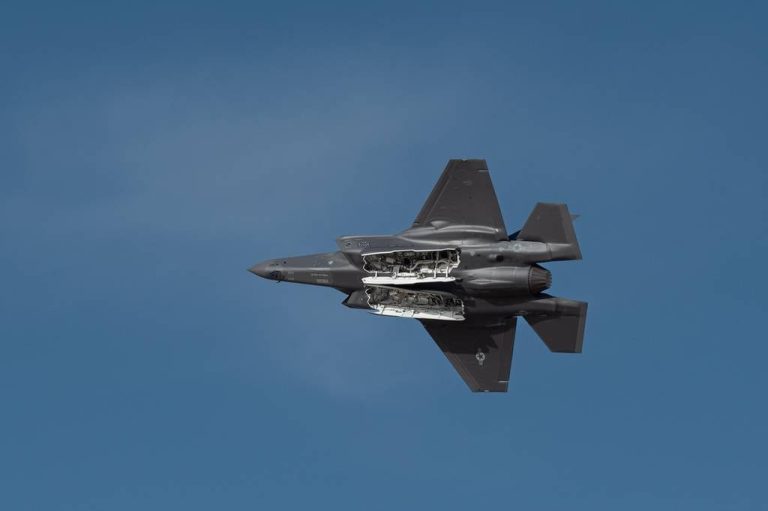
The engine core upgrade and its greater power and cooling ability is needed to allow future modernizations for the F-35, particularly the upcoming improvements known as Block 4. Those upgrades will allow the jet to carry more weapons, new sensors, and better electronic warfare and target recognition capabilities.

The Pentagon expects to start issuing the first in a series of sole-source contracts to Pratt & Whitney in the second quarter of fiscal 2024, and continue through the end of 2031. A company executive in December 2022 estimated the cost of ECU’s development at $2.4 billion.

Schmidt told reporters after the hearing that running out of money would be “not good at all” for ECU’s ability to stay on schedule, though an exact timeline is not set because the program is in its nascent stage.

Pratt & Whitney said in November it wants to start delivering ECU’s increased power capabilities in 2029. But Schmidt said Tuesday he’s unsure whether that date is feasible, adding that the program has not yet reached the engineering and manufacturing development phase.

“If [my director of propulsion] told me I’m going to field in October of [20]29, I’d be like: ‘You’ve got 1,000 things to prove to me before I’m signing up to that date,’ ” Schmidt said.

Pratt & Whitney expects to finish ECU’s preliminary design in December 2023, and noted the government’s review will take place about a month later.

Schmidt also raised concerns about the effect on Pratt & Whitney’s workforce of 600 that it assigned to the engine upgrade project. If the firm lost engineers due to a lack of funds, Schmidt said, it would be difficult to replace those employees.

“Especially in the environment that we’re in today, engineers are a premium” skill set, Schmidt said. “We have to make sure we keep them — not just at Pratt, I’m talking across the board. These [continuing resolutions] are a significant impact to the [Defense Department]. When we lose people … whether it’s in the government or in industry, getting them back is really, really hard.”

Bill LaPlante, the undersecretary of defense for acquisition and sustainment, told lawmakers that the Pentagon may have to rethink its funding strategy for ECU if money starts to run out early next year.

A related effort to upgrade the F-35′s power thermal management system, which would allow future improvements to the aircraft, is also sorely in need of increased funding to begin, Schmidt said. That technology uses the “bleed air” from the F-35′s engines to cool systems such as weapons and radar.

Rep. Carlos Gimenez, R-Fla., questioned the Pentagon’s decision to upgrade the F-35′s current engines instead choosing a new, so-called adaptive engine for the jet. GE Aerospace created such an engine, the XA100, under the Adaptive Engine Transition Program, which the Pentagon seriously considered for the F-35.

“If I’m in the jet and I’m the fighter pilot, I want the engine that takes me faster and takes me longer,” Gimenez said.

While LaPlante noted the Adaptive Engine Transition Program’s technology successfully delivered a 30% improvement in engine efficiency, and that he hopes developments continue, the department could not afford to fund an engine that it was only certain could work in the Air Force’s F-35A variant.

The Pentagon concluded GE’s engine would not fit in the Marine Corps’ F-35Bs and may not fit in the Navy’s F-35Cs, thus the department chose the F135 upgrade.

Logistics in jeopardy

The Pentagon has also paused negotiations with F-35 manufacturer Lockheed Martin on a performance-based logistics deal for the aircraft, after costs came in higher than expected and time started to run out on extending a standard sustainment contract.

Lockheed Martin has for years pushed for such a performance-based logistics deal, or PBL, saying it would save the government money, quicken repairs and increase the availability of spare parts. PBL deals mean contractors are paid on expected performance outcomes, not for discrete parts and services, as occurs under a typical transactional contract.

But before the Pentagon can enter into such a contract, lawmakers in 2022 required it to first show a PBL would either lower costs or improve aircraft readiness over the current annual sustainment contract for the F-35.

This current contract, which covers 2021 to 2023 and was originally worth up to $6.6 billion, has already been extended through March 2024, LaPlante said, and another extension to bring the contract through next June is in the works.

LaPlante added that the PBL proposal Lockheed submitted in June 2023, and then updated in October, didn’t hit the desired cost or performance targets. He also said tabletop exercises on sustainment in the Pacific region have shown that a PBL deal would need to be able to surge capability to the region in an emergency.

In a statement to Defense News, Lockheed said it is “disappointed” with the Pentagon’s decision, but pledged to keep working with the government and other F-35 customers to deliver the sustainment support and mission readiness they need.

“We continue to view performance-based logistics contracting as the primary way to increase part availability, readiness and affordability for the long term as the F-35 fleet scales,” Lockheed added.

Lockheed said it is still talking to the Pentagon about a potential PBL contract. But in case a deal can’t be reached, the company noted, it is working on an alternate deal that would take effect beginning July 2024.

When asked if that might be an updated version of the standard sustainment contract, Lockheed said it could not offer further details, but it is working with the JPO to figure out what the alternate contract solution would look like.

In his testimony, LaPlante did not close the door on striking a PBL deal with Lockheed, but noted his negotiations team had to shift focus and concentrate on extending the current contract to keep sustainment activities going.

“About a month ago, it was clear we were not going to get a [satisfactory] cost proposal with the performance that we’d feel comfortable with,” LaPlante said. “Simply, we were not going to approve a PBL that did not perform well and didn’t get the cost savings.”

“We have not given up on it, but we’ve got a lot of work to do there with industry,” he added.

For a PBL to work, LaPlante explained, it must last at least five years. Finding ways to measure how well a contractor is living up to its end of the bargain can also be tricky, he noted.

“Sometimes at the system level, performance-based logistics is very hard to do … if the contractor themselves or the program office doesn’t have control over the metric” used to evaluate performance, LaPlante said.

He added that the government plans to push for more of the F-35′s data from Lockheed Martin as part of its PBL negotiations.

Schmidt also said the F-35 program is closing in on a milestone C decision on full-rate production on the jet, now that a series of Joint Simulation Environment tests are finished. Those trials aimed to replicate complex, real-world scenarios the F-35 is likely to encounter in combat. The data will help LaPlante make the official decision on full-rate production, which he expects in March 2024.

However, Lockheed is already building F-35s near full capacity, meaning the effect of a full-rate production decision is likely to be muted.

Stephen Losey is the air warfare reporter for Defense News. He previously covered leadership and personnel issues at Air Force Times, and the Pentagon, special operations and air warfare at Military.com. He has traveled to the Middle East to cover U.S. Air Force operations.

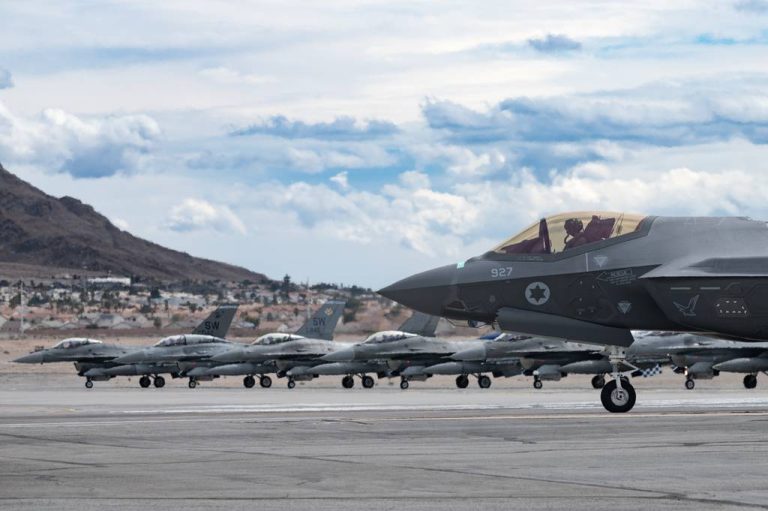
US quickly updated Israeli F-35s after Hamas attack, officials say

0

WASHINGTON — The United States sped capability updates to Israel’s F-35 fighters after Hamas’ Oct. 7 attack, the top officer in charge of the Joint Strike Fighter program said Tuesday.

Lt. Gen. Michael Schmidt, program executive officer for the F-35, declined to identify to reporters the capabilities sent to Israel in the two-plus months following the attack, noting the program strives to keep all nations flying the jet supplied with spare parts and capabilities.

But speaking with reporters after a hearing before the House Subcommittee on Tactical Air and Land Forces, Schmidt confirmed the improvements rushed to Israel occurred after Hamas’ deadly attack that killed at least 1,200 people. The Palestinian Health Ministry said more than 18,000 people have died as a result of subsequent Israeli air and ground attacks in the Gaza Strip.

Bill LaPlante, the U.S. undersecretary of defense for acquisition and sustainment, said at the hearing the F-35 program was recently able to hurry updated mission data files to a nation in a week or week and a half. Schmidt confirmed after the hearing that LaPlante was referring to Israel.

Mission data files are a “brick,” as LaPlante described them, containing the jet’s memory of threats it might encounter on an operation and other information needed for combat.

The F-35 program “is still not where it needs to be on these mission data files,” LaPlante said. But the recent rapid updating of these files is a good sign, he added, and the lessons learned from doing so will be used across the program.

LaPlante said in written remarks that Israel has 35 of its 39 F-35s operating and carrying out missions, with the help of a surge in sustainment support to maximize the nation’s aircraft readiness.

The subcommittee’s ,chairman Rep. Rob Wittman, R-Va., said at Tuesday’s hearing the F-35 Joint Program Office “moved at a breakneck speed” to support Israel by accelerating its jets’ weapons capabilities and increasing the flow of spare parts.

Schmidt told lawmakers Israel’s F-35s have performed “absolutely outstanding” in its war to eliminate Hamas, with high rates of aircraft able to carry out their missions.

“We have added some capabilities to that airplane in a very short period of time,” he said. “Our team is doing everything we can to continue to move the ball forward there.”

Stephen Losey is the air warfare reporter for Defense News. He previously covered leadership and personnel issues at Air Force Times, and the Pentagon, special operations and air warfare at Military.com. He has traveled to the Middle East to cover U.S. Air Force operations.

What You Should Know When Using Vehicles For Cover

0

For over a century, automobiles have played a significant role in gunfights, marking a tumultuous era where the symphony of the Roaring ’20s intertwined with the staccato rhythm of Tommy Guns and the ominous hum of black sedans.

In the early ’30s, a strategic shift occurred as federal agents and cunning gangsters opted for .38 Supers, known for their high-velocity 130-grain FMJ bullets capable of piercing through cars more effectively than the .45-caliber FMJs.

Gunsmith Hyman Lehman elevated the obsession with .38 Super, ingeniously crafting “baby machine guns” from modified Colt .38 Supers for mob clientele. As the 1930s drew to a close, major ammunition companies responded by producing specialized anti-vehicle loads like “Hi-Way Master” and “Highway Patrol” in .45 ACP, .38 Special, and .357 Magnum. These ammunition innovations spawned urban legends of “block-busting” calibers, weaving themselves into the fabric of American folklore.

Fast forward to today, where law enforcement and military engagements frequently unfold in the vicinity of automobiles, reminiscent of the notorious drive-bys carried out by gangs. Recognizing the gravity of criminals firing from cars, the FBI’s ballistic testing protocol includes rigorous evaluations measuring bullet performance against simulated car doors and windshields, a practice mirrored by other law enforcement agencies.

In my journey, I’ve conversed with various law enforcement trainers, witnessed bullet-penetration tests against diverse barriers, and even took shots at cars myself. Through these experiences, I’ve gained insights into the unique challenges of engaging active shooters in automobiles. Consequently, it’s time to sift through the wealth of information, separating valuable insights from the extraneous details.

Common myths when using vehicles for cover

Dispelling misconceptions surrounding the use of vehicles for cover involves debunking the notorious “block-buster” myth, which is one of two prevalent misunderstandings when bullets and automobiles intersect in hostile scenarios. The second fallacy revolves around the belief that a car provides reliable cover.

Contrary to the notion of a bullet effortlessly busting through an engine block, the reality is nuanced. While some bullets may traverse a fender and partially penetrate an engine block, it doesn’t guarantee the immediate halt of the vehicle. Depending on the bullet type and entry point in the engine block, the car might come to a swift stop or continue running at a diminished performance level. Consequently, soldiers aiming to immobilize motor vehicles wisely target the driver, ensuring that a suspect vehicle will eventually cease, at least until a replacement driver takes control.

However, the potential for unintended consequences looms large, as targeting the engine or driver can send a car into chaos, posing serious harm to innocent bystanders. Consequently, shooting at moving vehicles is a measure reserved for extreme circumstances.

While busting an engine block may prove challenging, modern street loads equipped with bonded JHP and solid-copper or gilding-metal bullets easily penetrate car doors, seats, and windows. Even military ball ammunition can breach vehicle defenses, although its tendency to deflect poses a threat within the confined spaces of a car. Soldiers deployed to the Middle East grapple with this reality, often dubbing cars as “bullet magnets” targeted by enemy forces to trap occupants and swiftly conclude conflicts.

Having engaged in extensive shooting at cars, it’s astounding how quickly pistol and rifle bullets can saturate the interior of a stationary vehicle. While cars may offer concealment, they generally fall short of serving as effective cover unless in motion at speeds exceeding 30 miles per hour. At this velocity, the curved steel and glass surfaces of the moving car amplify the likelihood of bullet deflection, posing risks to bystanders. Consequently, shooting at moving cars should be a last resort, emphasizing the importance of restraint unless absolutely necessary.

Medical banner

Live fire testing

Engaging in live fire testing provided a firsthand opportunity to debunk prevalent myths surrounding the durability of automobiles under ballistic assault. The setting was an abandoned car from a previous shooting event, presenting an opportunity to conduct penetration tests on various sections, challenging the urban legend of the “block-buster” and the belief in cars as reliable cover.

The initial focus was on the engine block, a formidable structure composed of multiple layers of robust metal. Armed with a vintage 6-inch S&W Model 19, I unleashed a barrage of contemporary deep-penetrating loads in common handgun calibers. From Federal’s 158-grain American Eagle JSPs to CorBon’s 125-grain all-copper DPXs and Black Hills’ 100-grain .38 Special +P Honey Badger ammo, the results were consistent across the board—none of the loads managed to breach the engine block.

Even the 5-inch-barreled Ruger SR1911 Target in .45 ACP, armed with 185-grain Black Hills +P ammo and Underwood Ammunitions’ 200-grain +P Extreme Penetrator rounds, along with a 9mm Glock 43 equipped with various loads, failed to pierce the resilient engine block.

To simulate a real-world scenario, a target depicting two hostile silhouettes was affixed to the lower right fender and wheel well, representing armed assailants taking cover behind the engine block. Positioned at a protected firing point approximately 15 yards from the left fender, attempts were made to hit the target by shooting through both fenders and the engine.

Surprisingly, none of the loads inflicted any damage to the target—defying expectations and dispelling the notion of bullets easily penetrating the engine block.

Undeterred, I then employed an IO Inc. AKM247 loaded with two Wolf 123-grain 7.62x39mm rounds, featuring “bimetal” spitzer bullets with copper-coated steel jackets. Despite the increased caliber and robust ammunition, the results remained consistent, with nothing managing to breach the formidable engine block.

This live fire testing underscored the resilience of modern vehicles against conventional handgun and rifle ammunition, challenging commonly held misconceptions about their vulnerability in hostile situations.

A few mentions about the interior of the vehicle

a few mentions about the interior of the vehicle

Continuing the comprehensive assessment, the three handguns and their respective loads were employed to shoot through the car’s interior from the exterior, shedding light on bullet behavior in this unique context. The initial phase focused on shooting through the windshield, a critical aspect in assessing potential bullet deflection.

Concerns about ball ammunition and hollow-point rounds deflecting through windshield safety glass prompted the selection of a mannequin in the driver’s seat as the target. To enhance realism, a silhouette target was taped over the mannequin, creating a three-dimensional representation of a person behind the wheel. Shots were fired from the left-front fender, aiming at the center of the 10-point triangle in the middle of the head. Another target depicting two assailants in the backseat added complexity to the test.

Utilizing the .357 S&W Model 19 with CorBon .357 Magnum and Black Hills .38 Special +P loads, both rounds successfully penetrated the windshield, striking the head’s 10-zone on the primary target. They then traversed through the front seat, reaching the lower abdomen of the target in the backseat. Transitioning to the Ruger SR1911 Target, the Black Hills and Underwood .45 ACP rounds hit the front target’s left eye and the rear target’s lower abdomen. The 9mm loads formed a 3-inch group on the edges of the 10-zone in the first target’s head and struck low in the abdomen of the target in the backseat.

Moving on to the driver’s side door, shots were fired from a kneeling position at a 45-degree angle, aiming toward the front of the target. The door’s composition of multiple layers and varied materials posed a challenge, leading to increased bullet deflection, especially given the angled impact. Despite these complexities, all bullets found the target, predominantly hitting the left torso and shoulder, impairing the driver’s ability to continue operating the vehicle.

The examination extended to firing at the rear of the car, exploring the potential for shots through the trunk to reach the driver. Employing the deepest-penetrating loads for each handgun, such as CorBon DPXs for the S&W and Underwood loads for the SR1911 and Glock 43, all shots penetrated the trunk and struck the target in the front seat before embedding themselves in the dashboard.

This thorough analysis unequivocally debunks the second myth—the notion that an automobile interior provides a safe haven during a gunfight when utilizing medium- and large-caliber handguns loaded with deep-penetrating ammunition. The results underscore the vulnerability of occupants from various directions, reinforcing the importance of situational awareness and strategic considerations in vehicular gunfights.

banner sos

You shouldn’t be using vehicles for cover

This concise test serves as a compelling demonstration, highlighting the need to approach “conventional wisdom” with a substantial degree of skepticism, especially when it comes to the intricate relationship between bullets and automobiles.

It unequivocally challenges the commonly held belief that automobiles inherently provide reliable cover in hostile situations. In reality, the protective capabilities of a car diminish rapidly, rendering it an insufficient barrier against incoming fire.

Even if one were to take refuge behind the engine block—an instinctive choice for many seeking cover—the effectiveness of such protection is short-lived. The vulnerability becomes apparent when faced with assailants initiating flanking movements. In such scenarios, the once-perceived cover of the car becomes a liability, leaving the individual exposed and defenseless.

The pragmatic response to a fired-upon vehicle extends beyond the futile reliance on the automobile for protection. Stepping on the gas, when feasible, emerges as the optimal course of action, prioritizing swift evasion over the illusory safety of the car. In instances where acceleration is not an option, the strategic decision to swiftly dismount and seek hard cover becomes paramount.

This underscores the importance of agility and adaptability in dynamic situations, where relying on preconceived notions about the protective capabilities of vehicles may prove detrimental.

Moreover, this test raises broader considerations about situational awareness and the need for proactive responses in the face of threats. It accentuates the limitations of conventional thinking and encourages a nuanced understanding of the complex interplay between ballistic elements and the practicalities of using vehicles for cover.

In essence, this brief examination not only dispels a prevailing myth but also invites a deeper exploration of tactical choices in the realm of personal safety. The lessons drawn from this test resonate beyond the immediate context, emphasizing the critical need for individuals to reevaluate and recalibrate their responses to threats, moving beyond simplistic assumptions and embracing a more informed, adaptive approach to personal security.

Suggested resources for survivalists:

Learning The Differences Between The Cover And Concealment Concepts

Find Out What’s the Closest Nuclear Bunker to Your Home

10 Reliable Pocket Pistols For Your EDC

The latest innovation in solar pannels – 3D technology

Newest F-35s stalled by slow production of key parts

0

WASHINGTON — Lockheed Martin has finished building fewer than half of the upgraded F-35 Joint Strike Fighters it promised this year, as slow production of key parts are holding up multiple new jets, the Pentagon’s top officer in charge of the program told lawmakers Tuesday.

Lt. Gen. Michael Schmidt, the F-35′s program executive officer, said at a House Armed Services tactical air and land forces subcommittee hearing Lockheed Martin is under contract to deliver 52 jets enabled with improvements known as Technology Refresh 3 by the end of this year. The company has finished construction on 21 of those.

But production on a handful of key components needed for the TR-3 hardware has ramped up slower than expected, Schmidt said, and the rest of the newest jets are still sitting at Lockheed Martin’s factory in Fort Worth, Texas, waiting for those parts. Schmidt declined to describe these parts to reporters after the hearing.

“The hardware is good,” Schmidt told reporters after the hearing. “It’s the rate at which they’re producing them to meet our production and retrofit needs. It is literally a small number of components, but I need all the components.”

TR-3 upgrades include hardware and software improvements to the F-35, such as better displays, computer memory, and processing power. They are needed for a more expansive upgrade called Block 4, which will improve the F-35′s weapons capacity, target recognition, and electronic warfare, among other features.

The Pentagon and Lockheed Martin sought to have TR-3 ready by April 2023. That date has now slipped considerably, largely because of persistent software and integration issues. Schmidt said Tuesday TR-3 might be done by mid-spring, though he was not confident in that deadline. The government and Lockheed Martin said previously it could be as late as next June.

The government is not accepting the newly built F-35s, because the military has not been able to carry out the test flights necessary to make sure they work properly.

Subcommittee chairman Rep. Rob Wittman, R-Va., said in the hearing that while the F-35 is a “technological marvel,” its repeated delays in fielding capabilities are disturbing.

Schmidt said part of the problem has been with underperforming labs the program has used to try to test TR-3, and that the program is trying to create more capacity in its labs to handle the greater capabilities intended for the F-35.

“Our labs are not properly representing the flight environment, and there’s way too much discovery happening in flight test,” Schmidt said.

He told reporters Lockheed “is paying a significant price” for its inability to meet its contractual requirements on the TR-3 jets, though he would not detail these penalties.

“Lockheed is very much incentivized to deliver,” he said.

Lockheed Martin did not immediately respond to a request for comment.

The slow component production right now is only affecting new jets, he said, because the F-35 program hasn’t started working on retrofitting older jets.

But if the production issues aren’t ironed out, that could lead to more problems, he said.

“They’ve got a little time here to ramp up, but they need to do it quickly,” Schmidt said. “It’s not good to get to a certain point in the production line where this part needs to go into that part, and that part’s not there.”

Stephen Losey is the air warfare reporter for Defense News. He previously covered leadership and personnel issues at Air Force Times, and the Pentagon, special operations and air warfare at Military.com. He has traveled to the Middle East to cover U.S. Air Force operations.

L3Harris says Viper Shield electronic warfare tool for F-16s nears goal

0

NATIONAL HARBOR, Md. — Executives with L3Harris Technologies said the company will hit a development milestone for its Viper Shield electronic warfare package this month, with production on track for 2025.

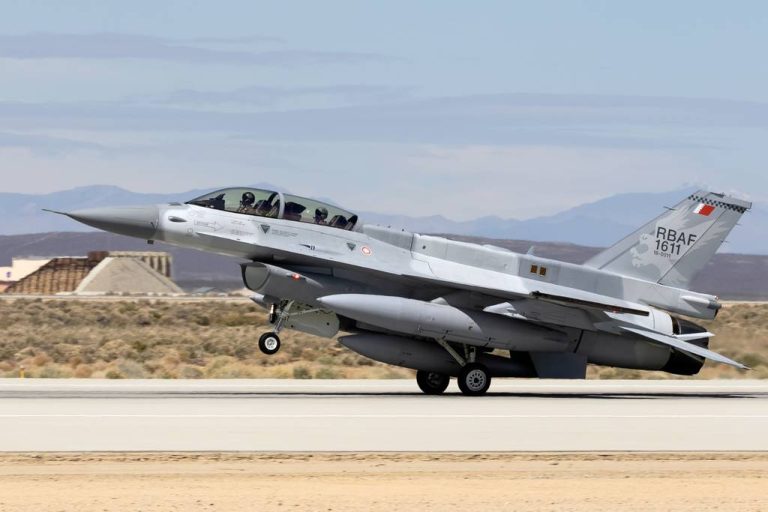
L3Harris is constructing Viper Shield, a collection of digital protections and countermeasures, for fitting aboard Lockheed Martin F-16 Block 70/72 jets sold to foreign militaries. More than a dozen countries planned to fly the variants when the company was first tapped for the work.

The soon-to-come milestone, known as “drop 3,” signifies initial radar warning receiver capability, meaning the system can detect emissions of adversarial radar.

“Winning in the next fight isn’t just about what you can do platform by platform. It’s being able to harness all of that data that’s out there, and being able to do that in real time, or near-real time,” Jen Lewis, president for advanced combat systems at L3Harris, told C4ISRNET on the sidelines of the Association of Old Crows conference in Maryland. The company this year said Viper Shield passed a separate review involving Lockheed and the Air Force.

“I think we’re really ahead of the field here, in terms of thinking about how you get after the electromagnetic spectrum operations and data problem,” Lewis added.

Aircraft must navigate environments teeming with radars, missiles and other threats. Penetrating — or slipping past — those defenses is critical. Both Russia and China have constructed anti-access and area-denial infrastructure to keep at bay forces and weapons that could otherwise overwhelm.

The U.S. Department of Defense is prioritizing sophisticated EW tools as it moves away from smaller counterinsurgency fighting in the Greater Middle East and prepares for larger-scale, higher-tech battles envisioned for the future.

“Democratization of technology has enabled adversaries to develop things rather quickly. We have been comfortable, as a nation, with having superiority in that domain. But, again, with your playbook on display, folks get smarter about how to counter it,” Paul DeLia, a director of strategy development at L3Harris, said. “I’m very happy to see a reinvigoration of electronic warfare. It’s a necessary bullet, if you would, in the gun in order to be successful in the next conflict.”

L3Harris is the ninth largest contractor in the world when ranked by defense-related revenue, according to Defense News Top 100 analysis. The company earned nearly $14 billion in 2022.

Colin Demarest is a reporter at C4ISRNET, where he covers military networks, cyber and IT. Colin previously covered the Department of Energy and its National Nuclear Security Administration — namely Cold War cleanup and nuclear weapons development — for a daily newspaper in South Carolina. Colin is also an award-winning photographer.